Your browser is out-of-date!
For a richer surfing experience on our website, please update your browser. Update my browser now!
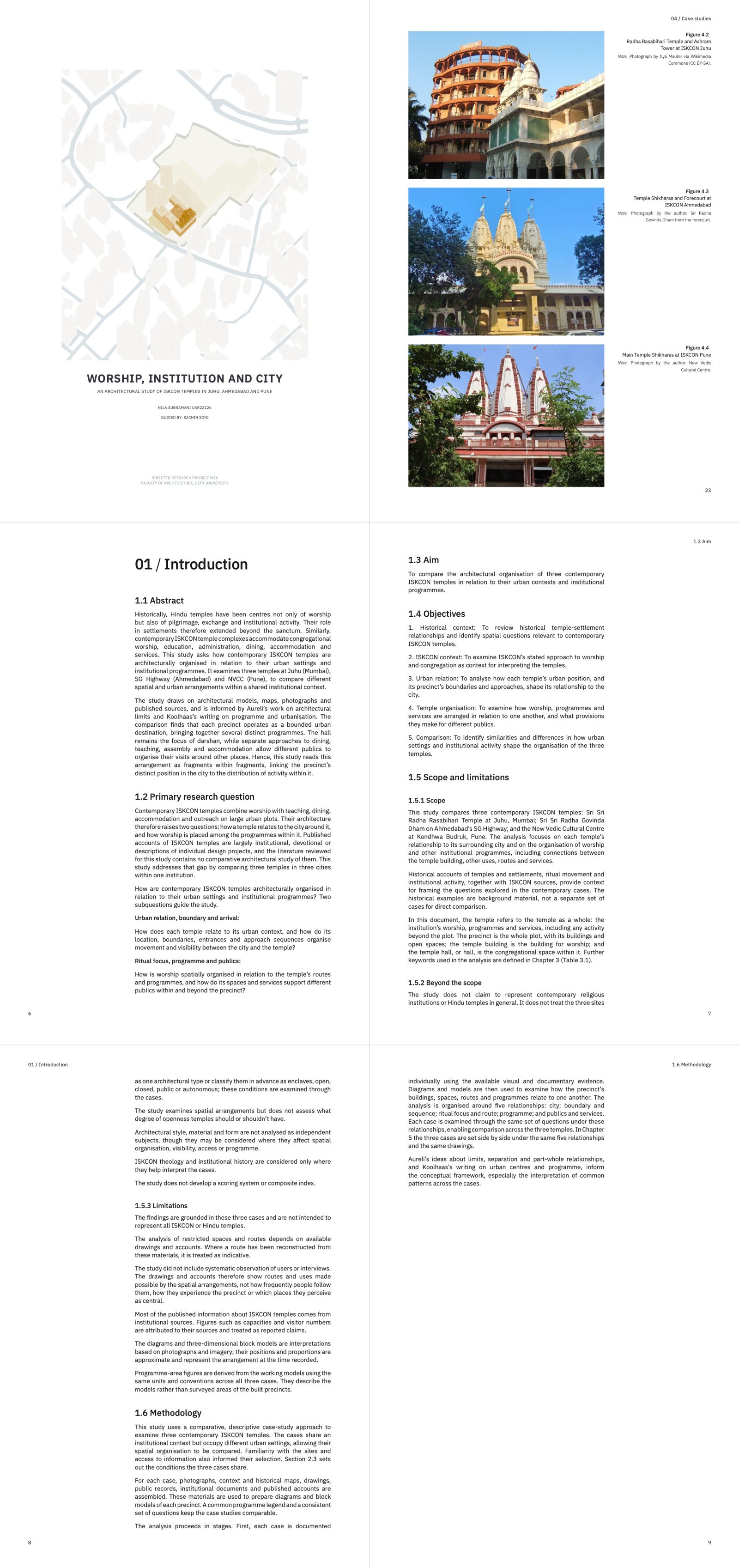
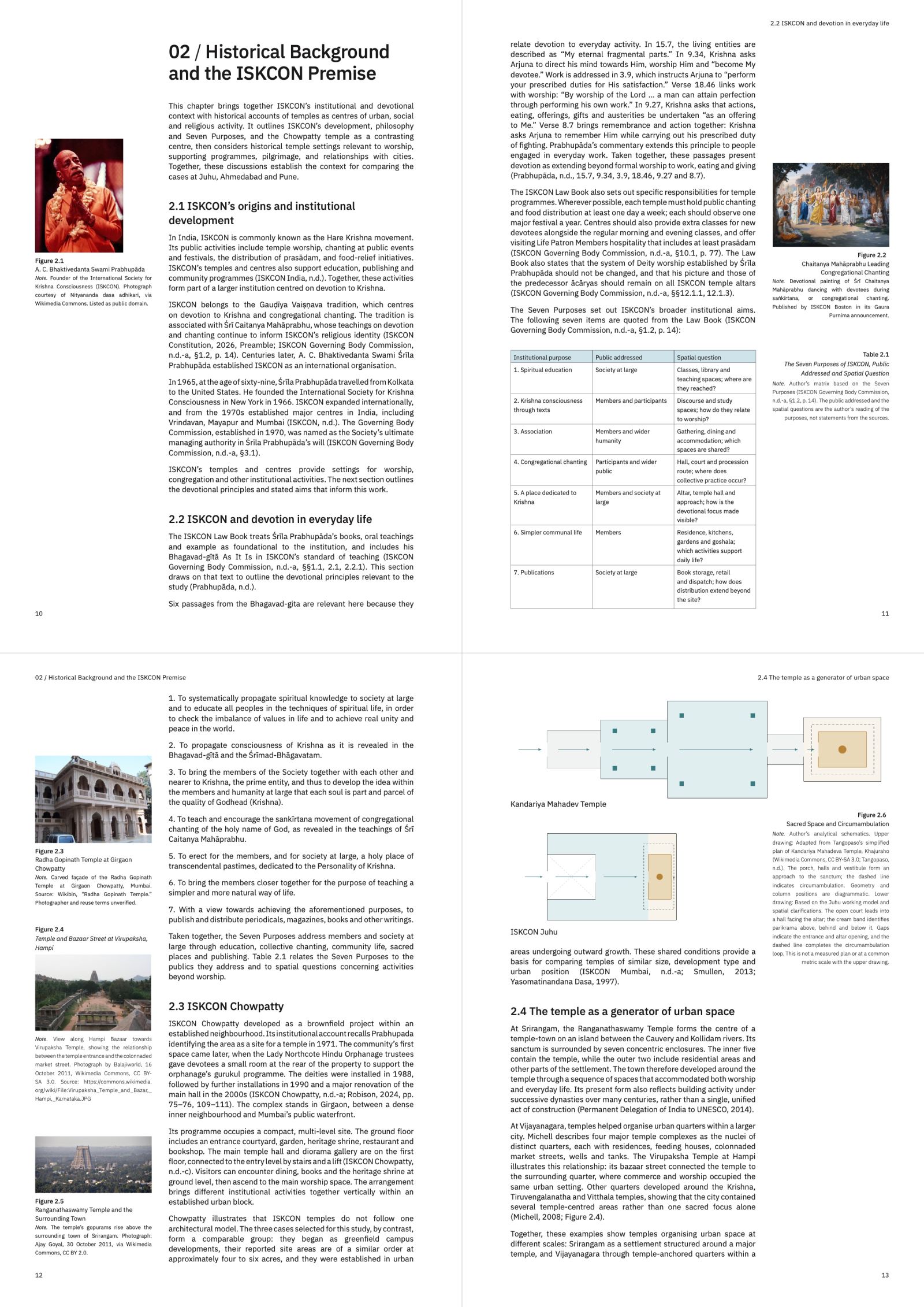
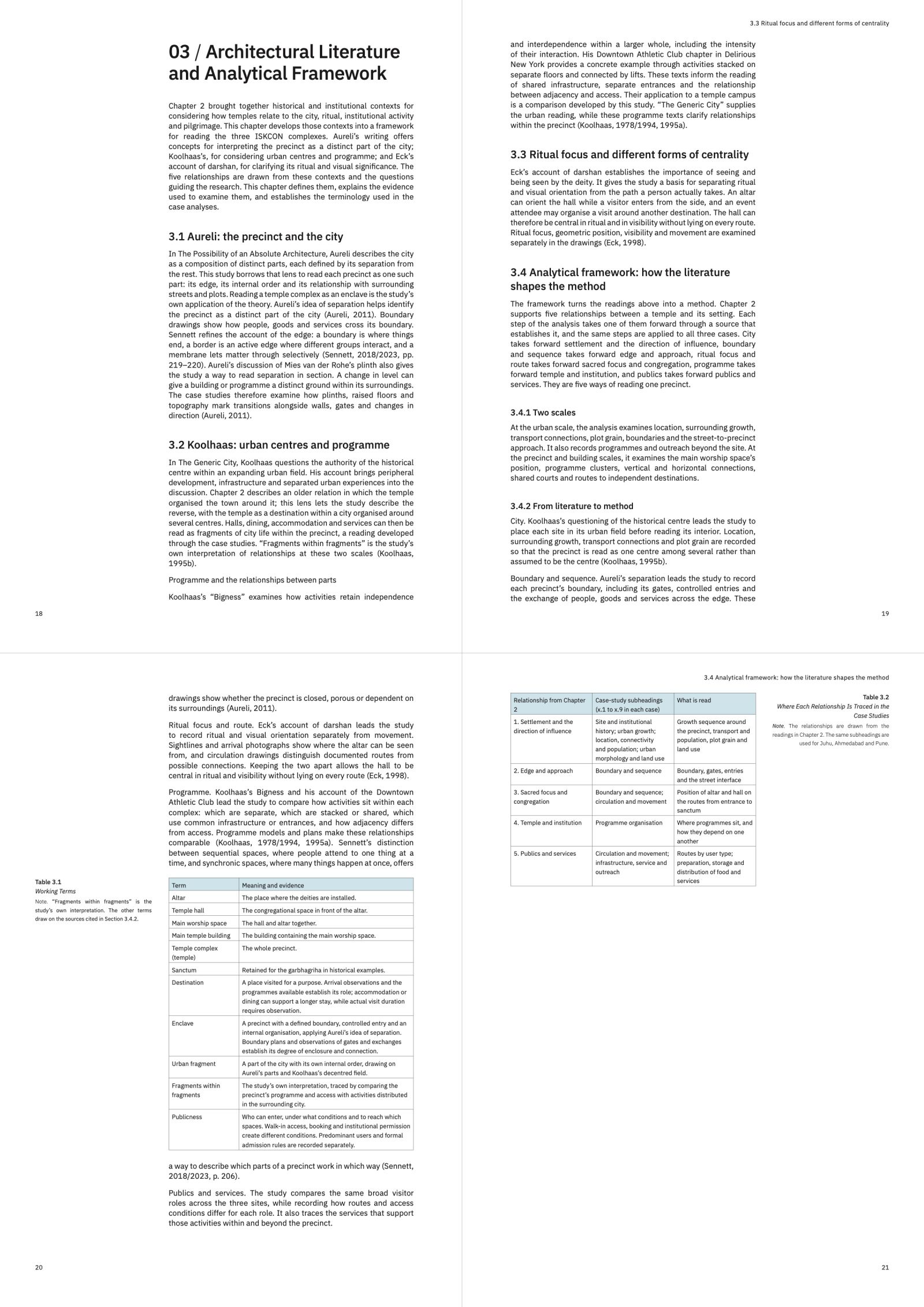
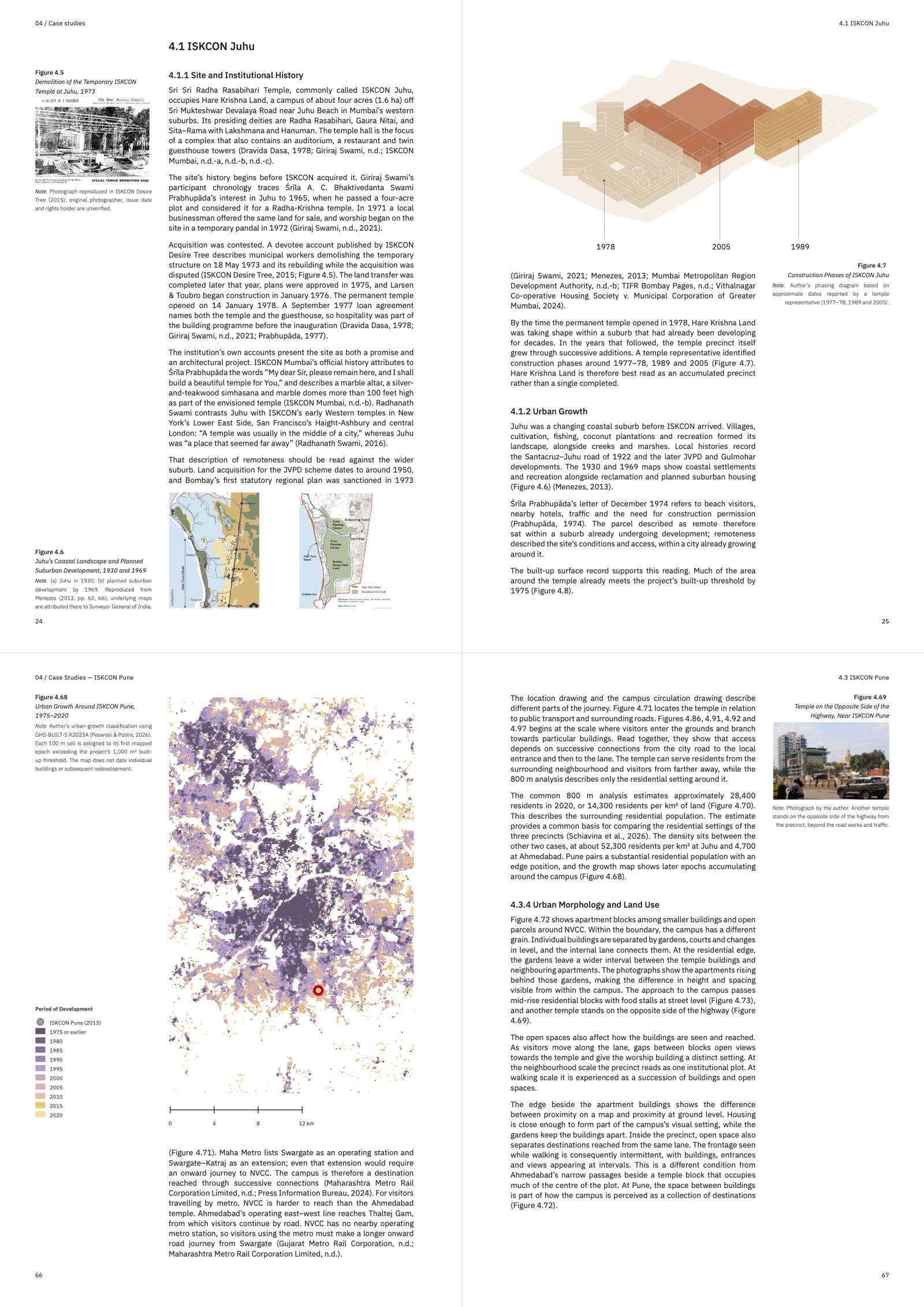
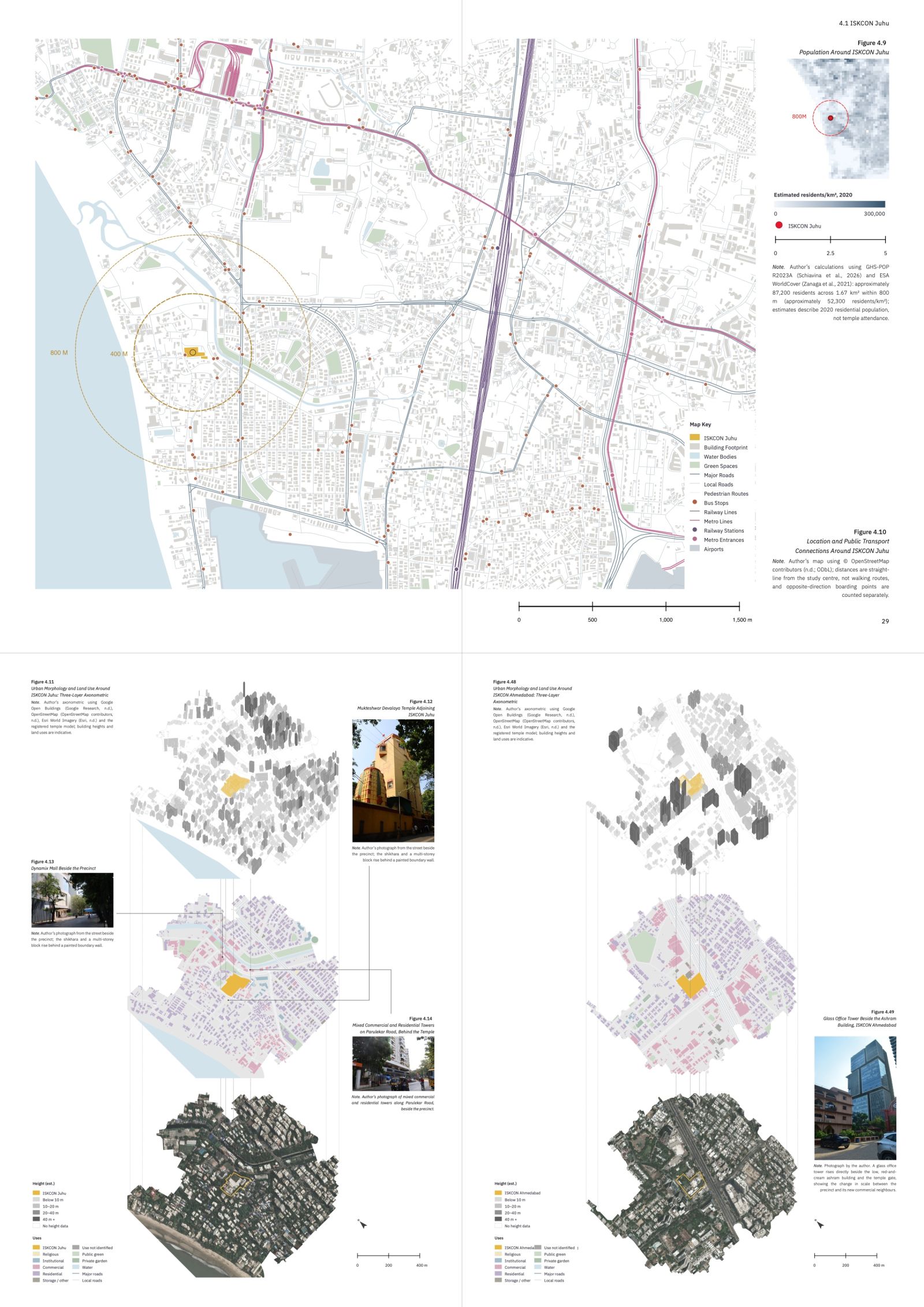
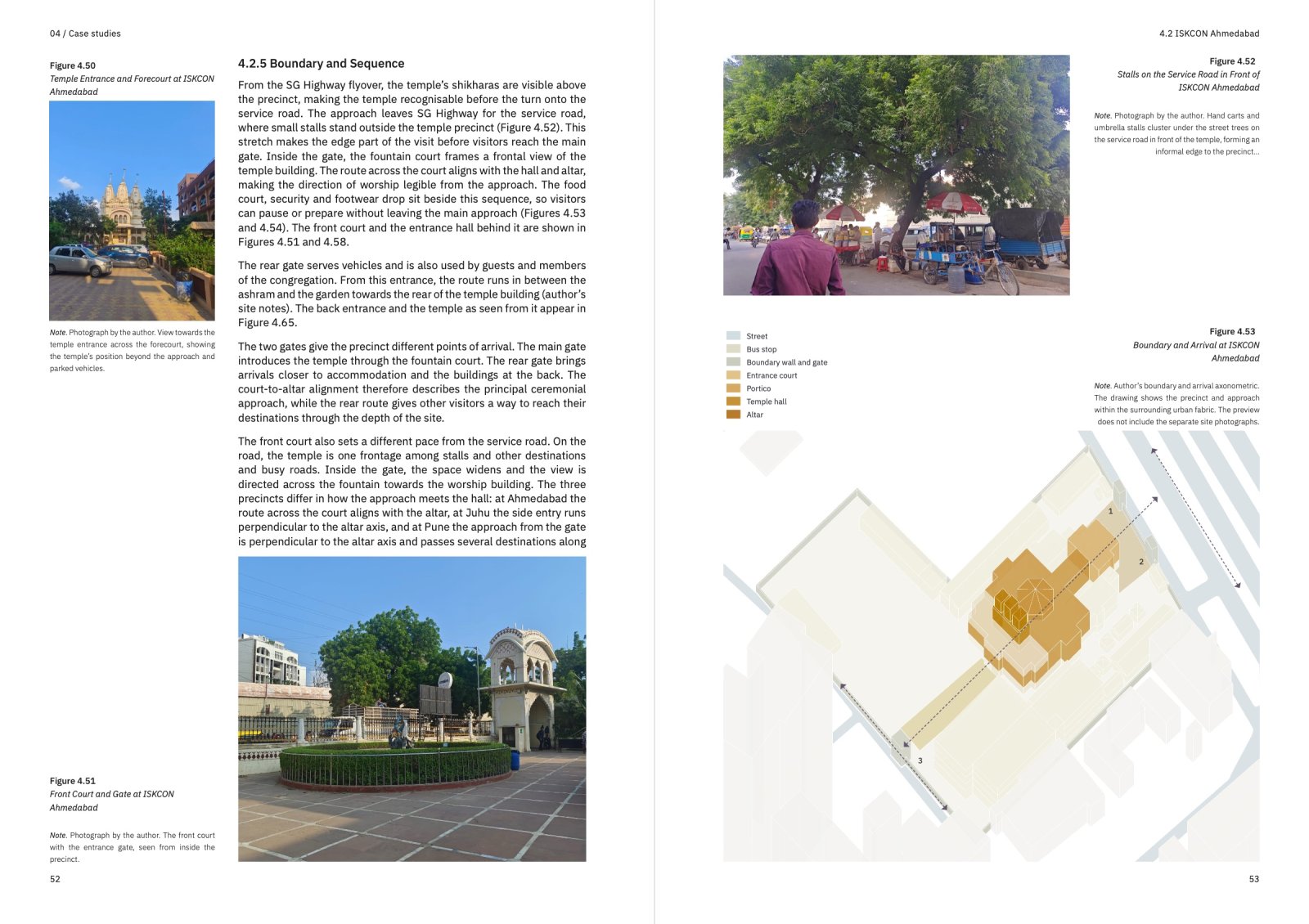
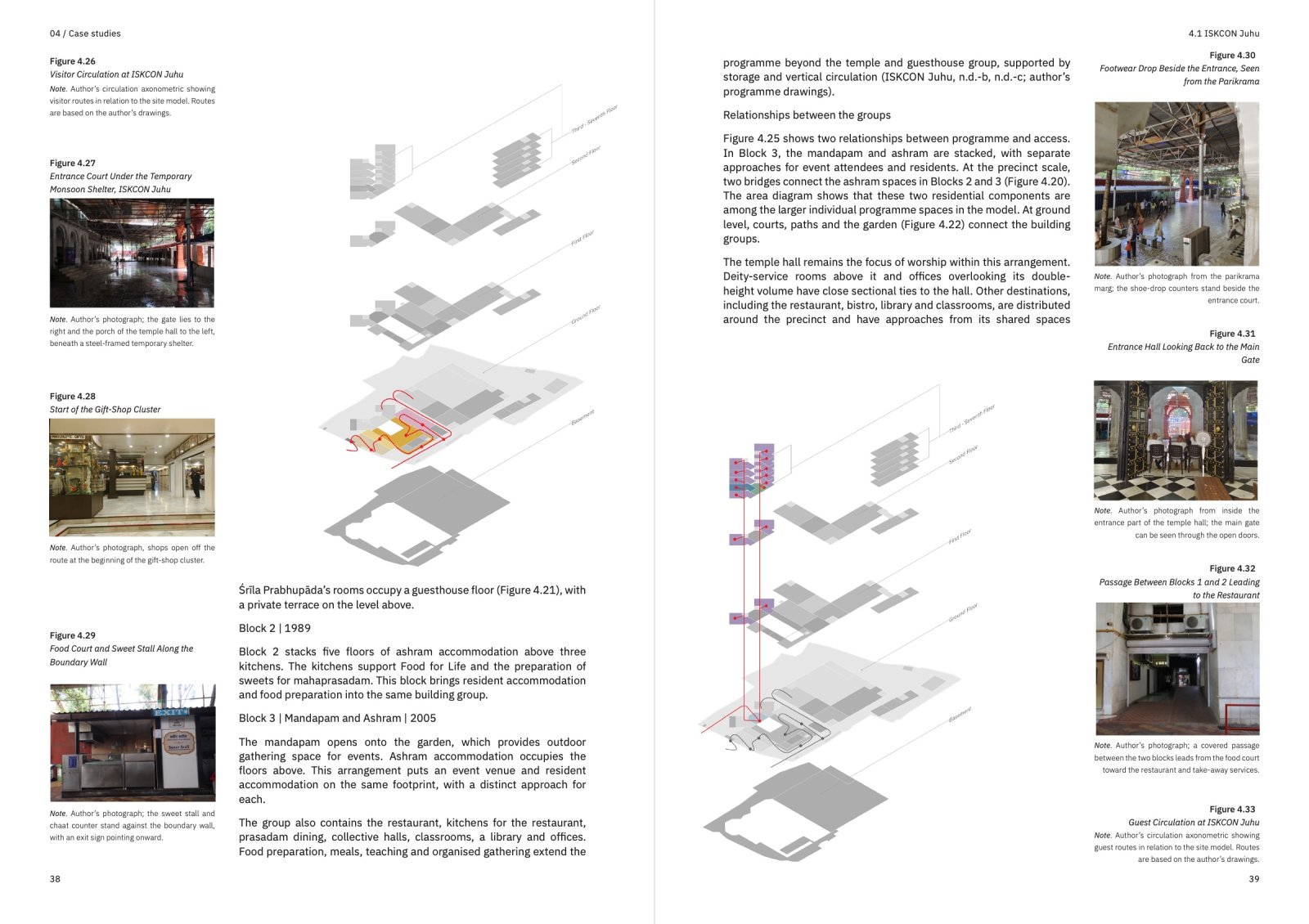
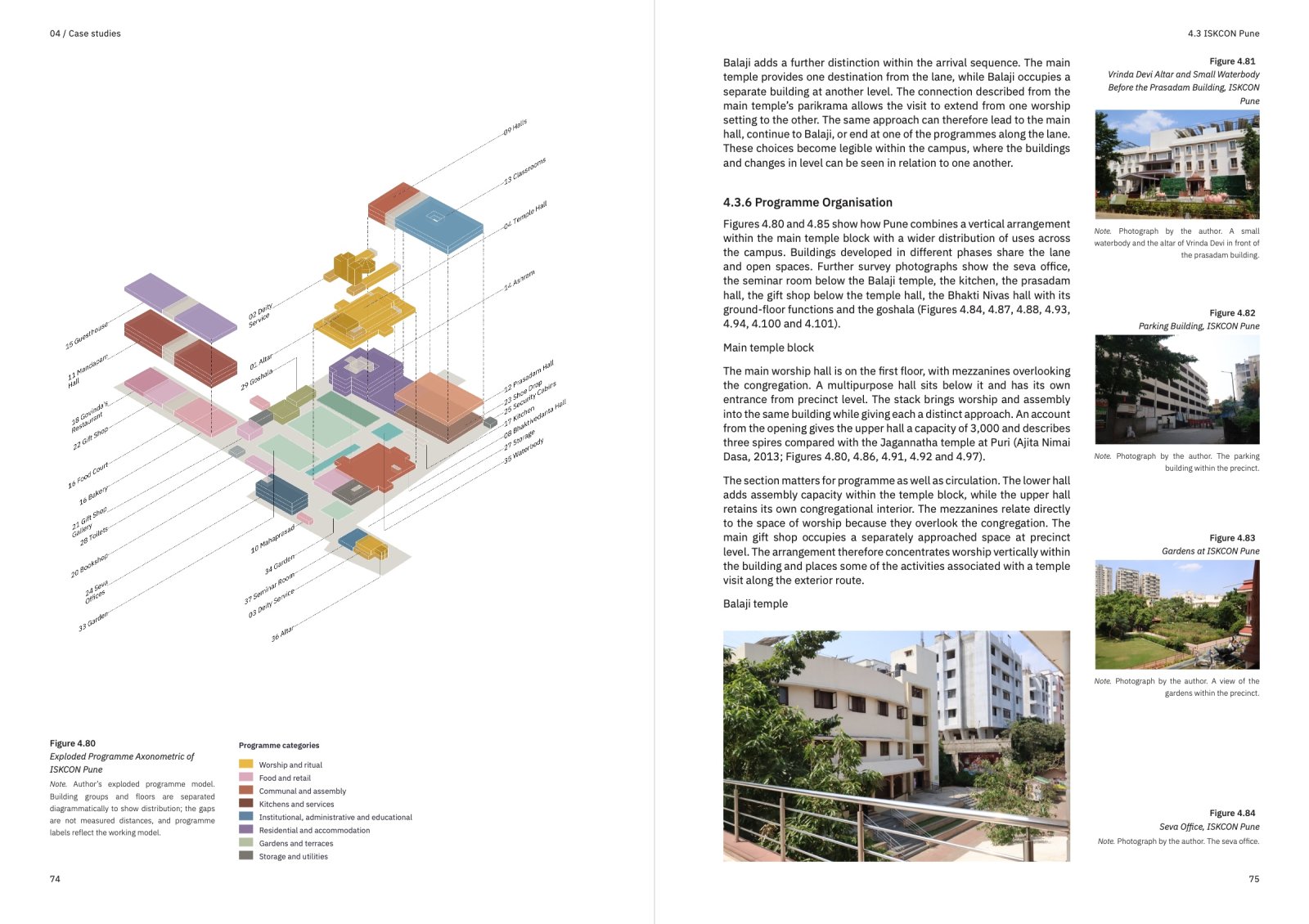
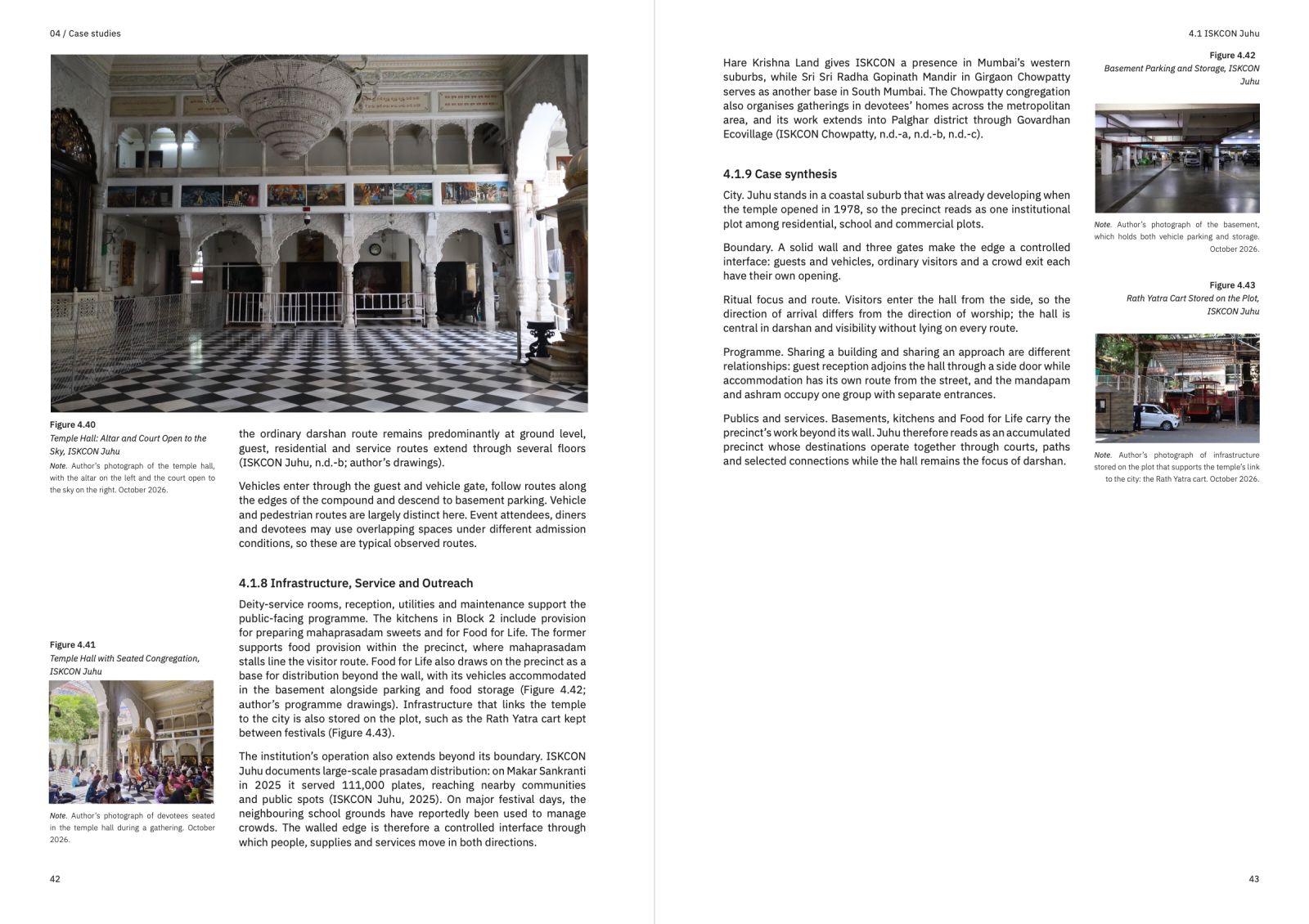
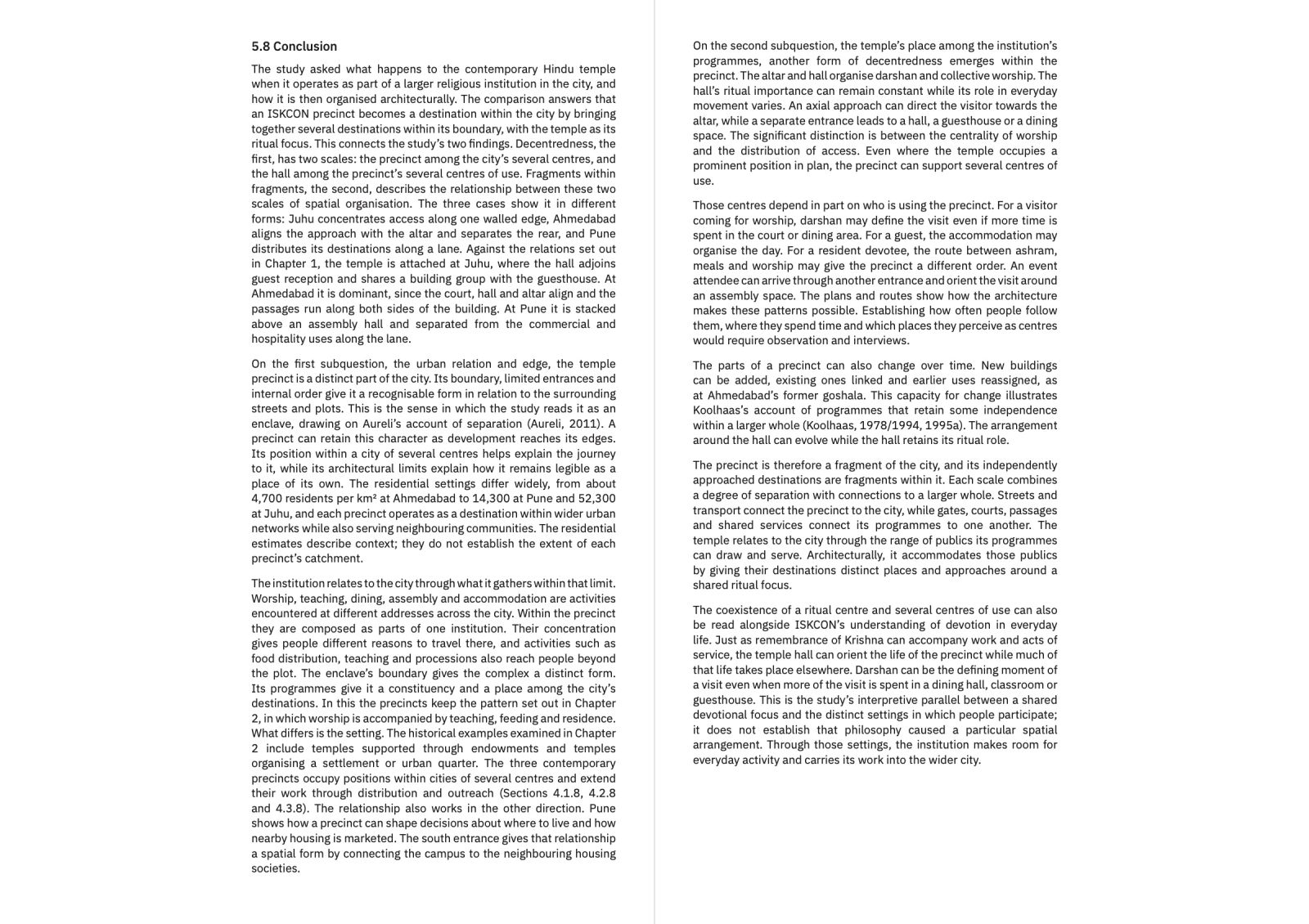
This directed research project compares three contemporary ISKCON temples, in Juhu (Mumbai), on SG Highway in Ahmedabad and at the New Vedic Cultural Centre in Pune. Each is a precinct rather than a single temple. Worship, dining, teaching, assembly and accommodation share one plot, and the temple hall is only one part of a larger institutional programme.
The study asks how these precincts are organised architecturally in relation to their urban settings and institutional programmes. It builds its argument from maps, photographs, drawings and 3D block models of each site. Aureli's writing on the city as a set of distinct parts and Koolhaas's writing on programme and urban centres give it a way to read each precinct at two scales: the city and the precinct itself.
Each precinct works as a destination within the city, made up of several smaller destinations that serve different publics. The three cases arrange this differently, shaped by their sites, their approaches and the way their programmes are distributed. Comparing them shows how a single institution takes different spatial forms in different urban settings.