Your browser is out-of-date!
For a richer surfing experience on our website, please update your browser. Update my browser now!
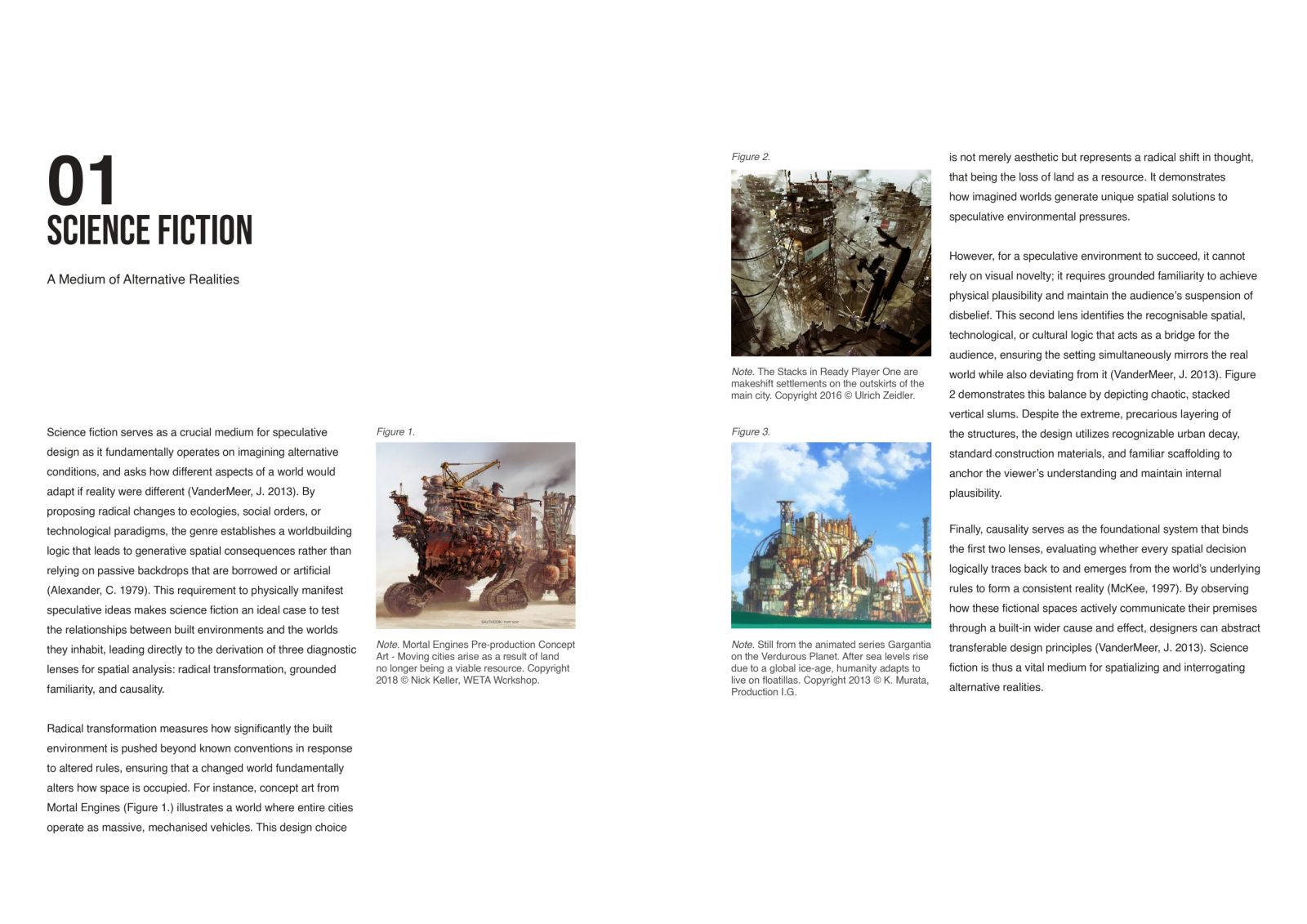
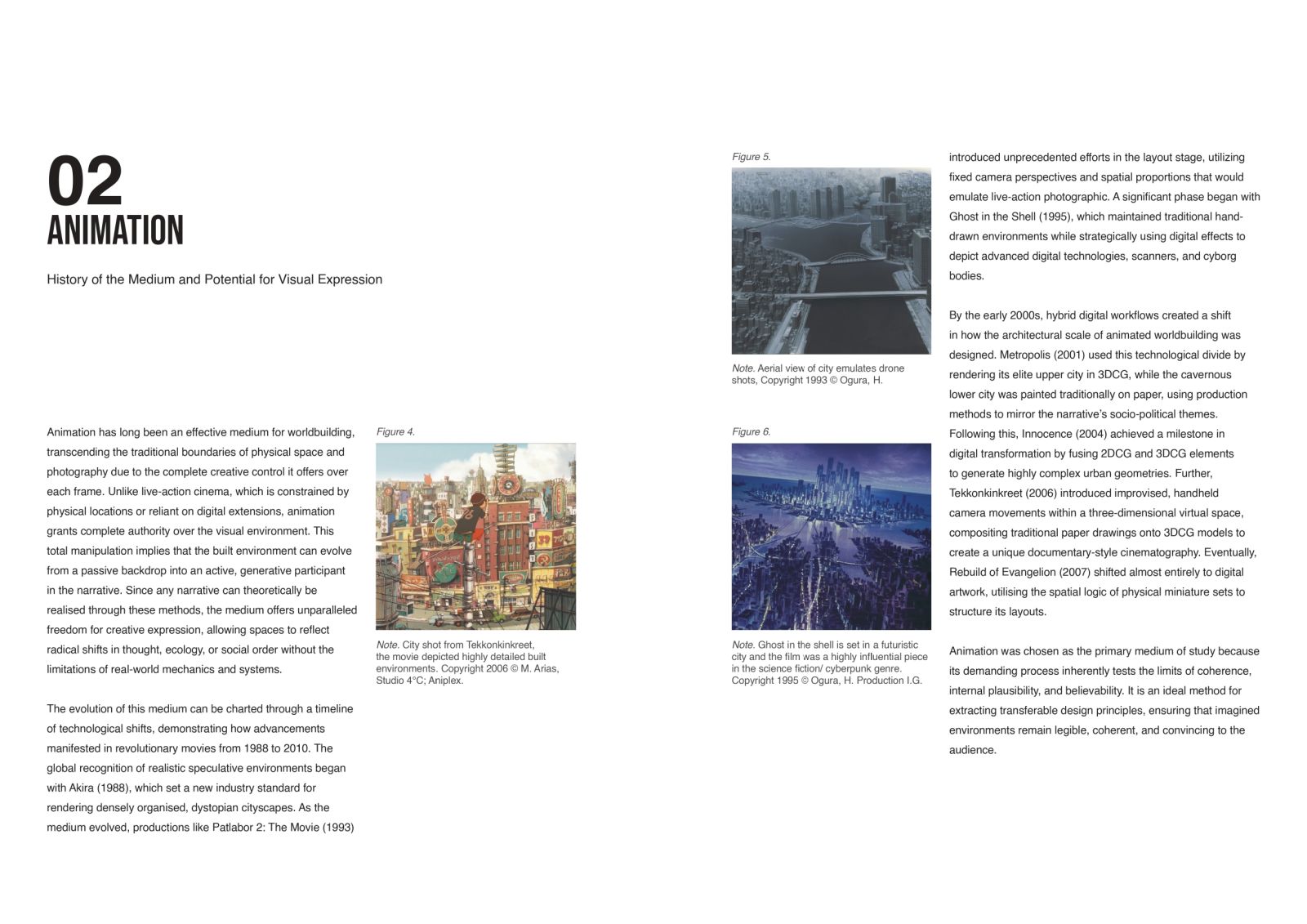
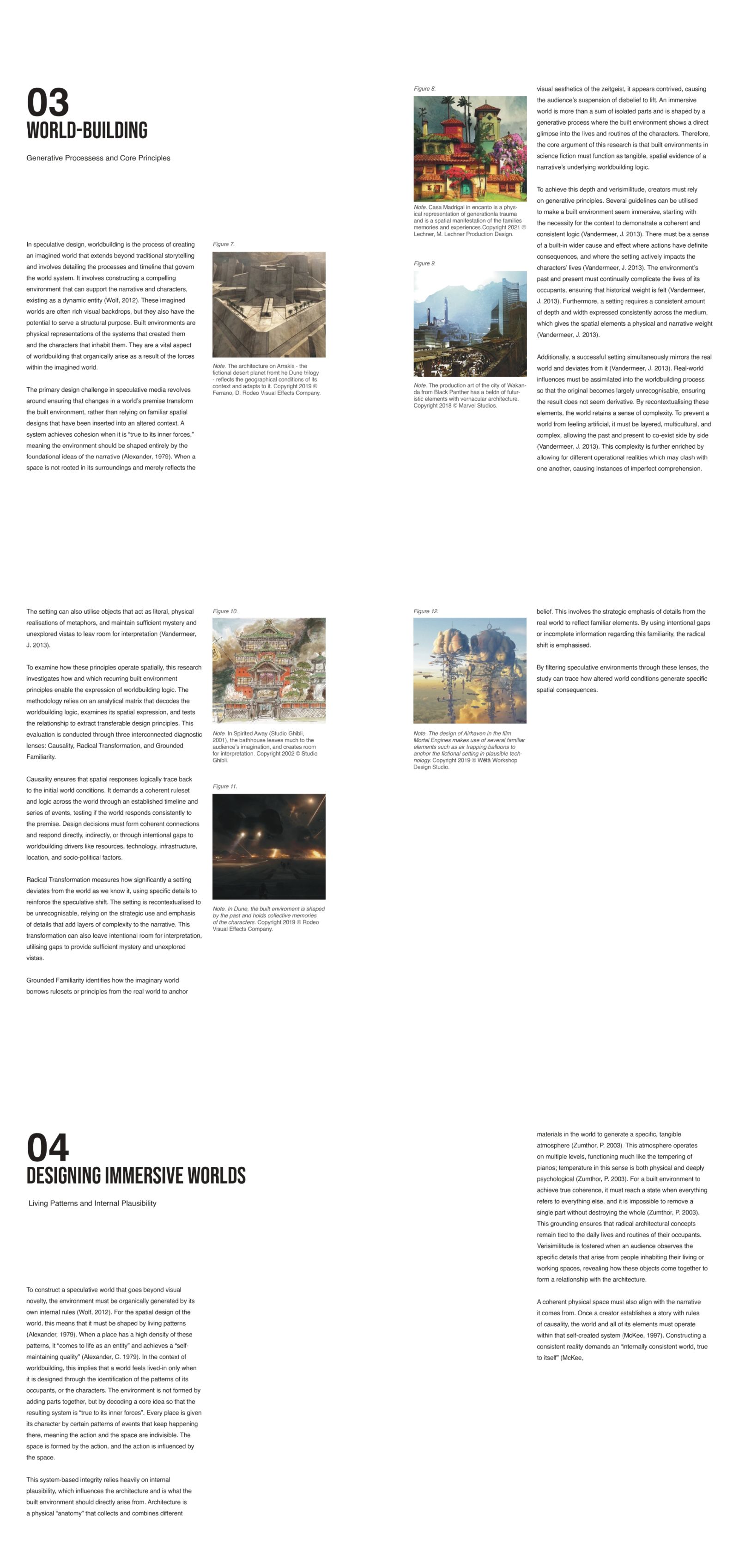
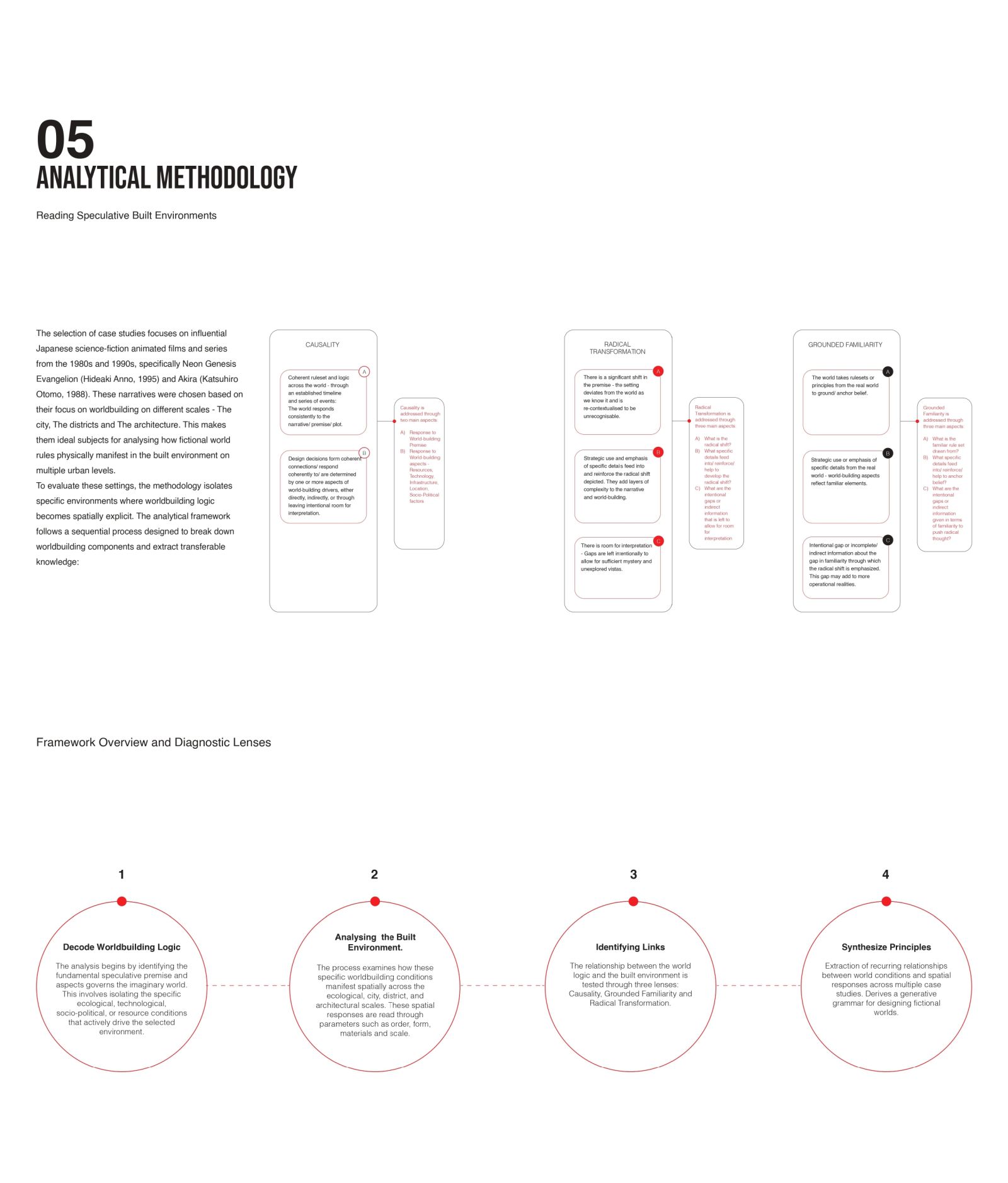
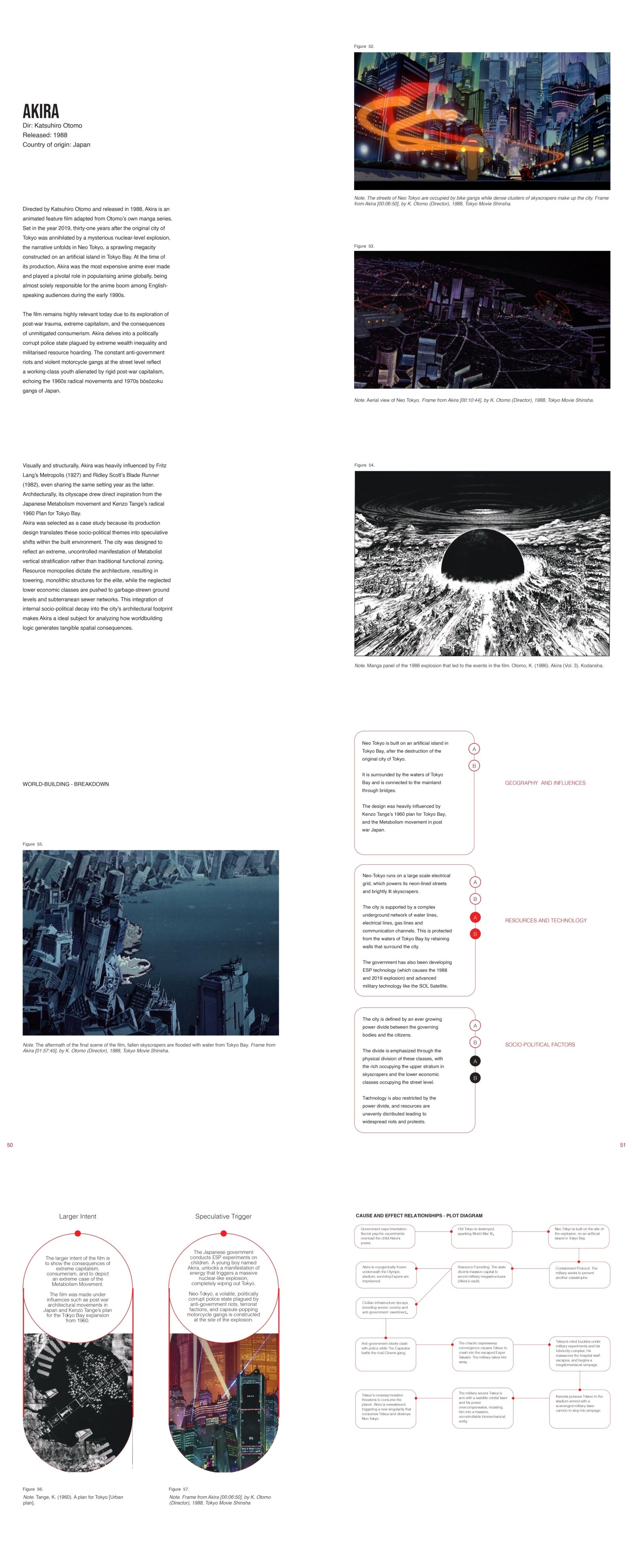
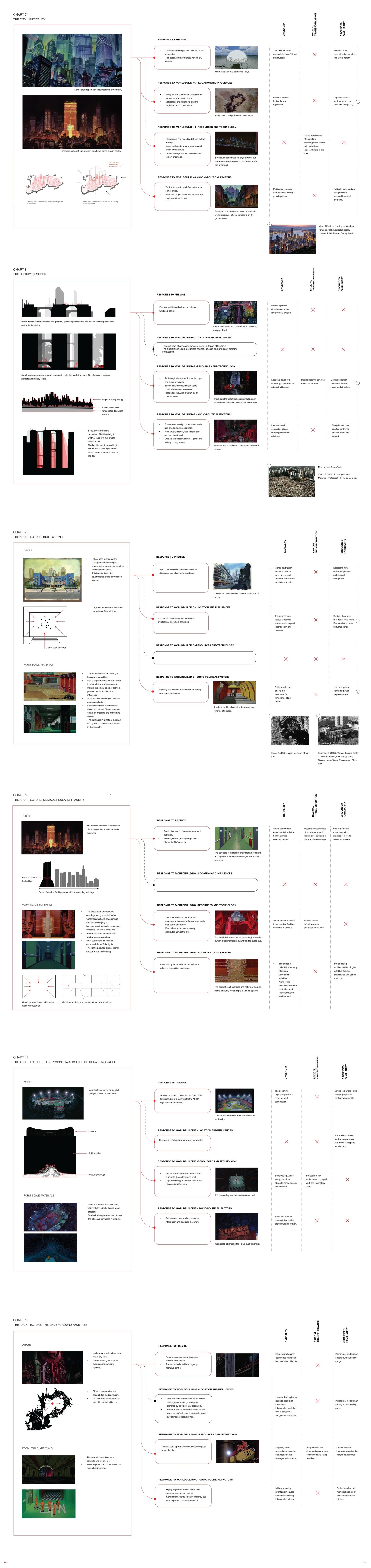
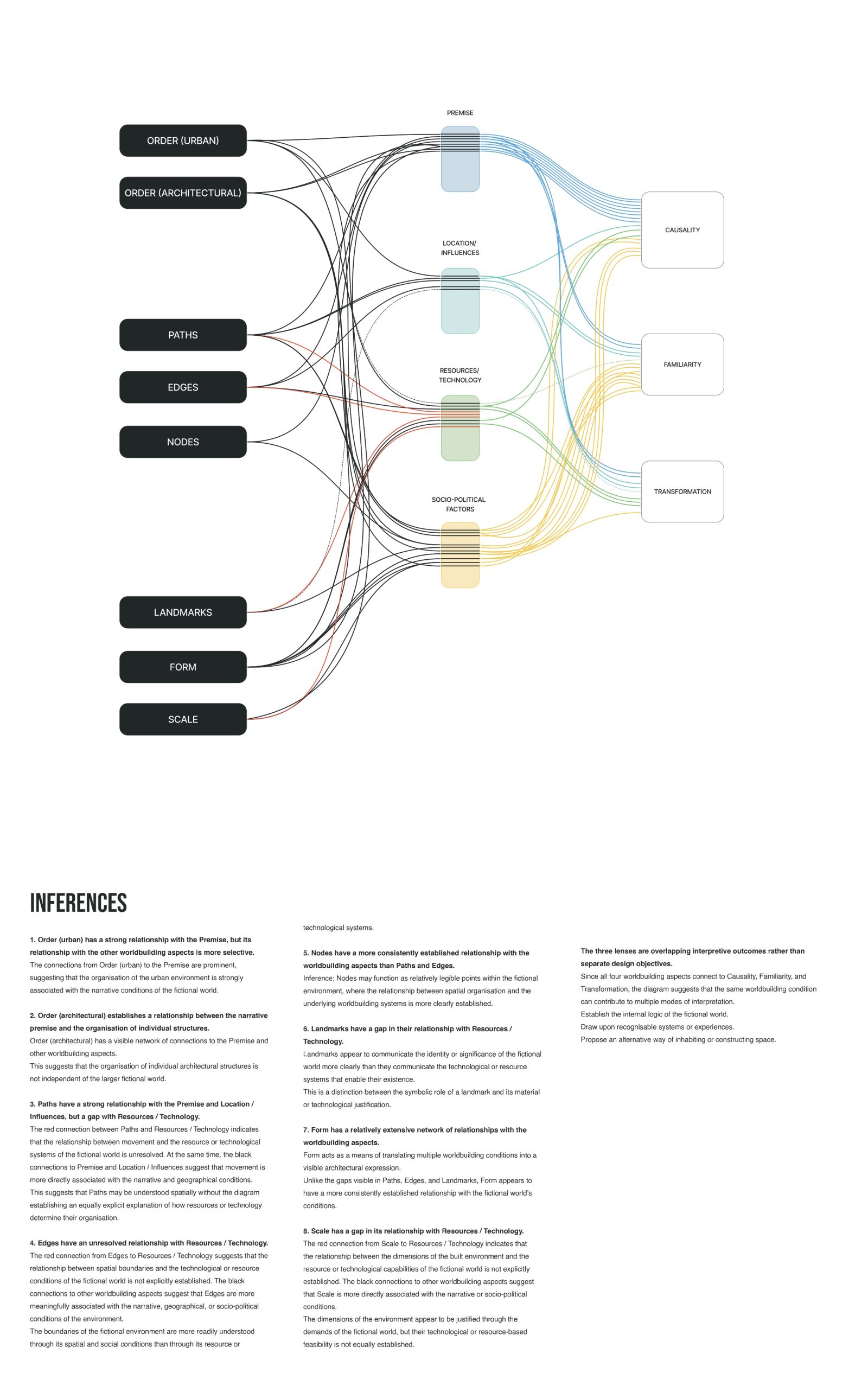
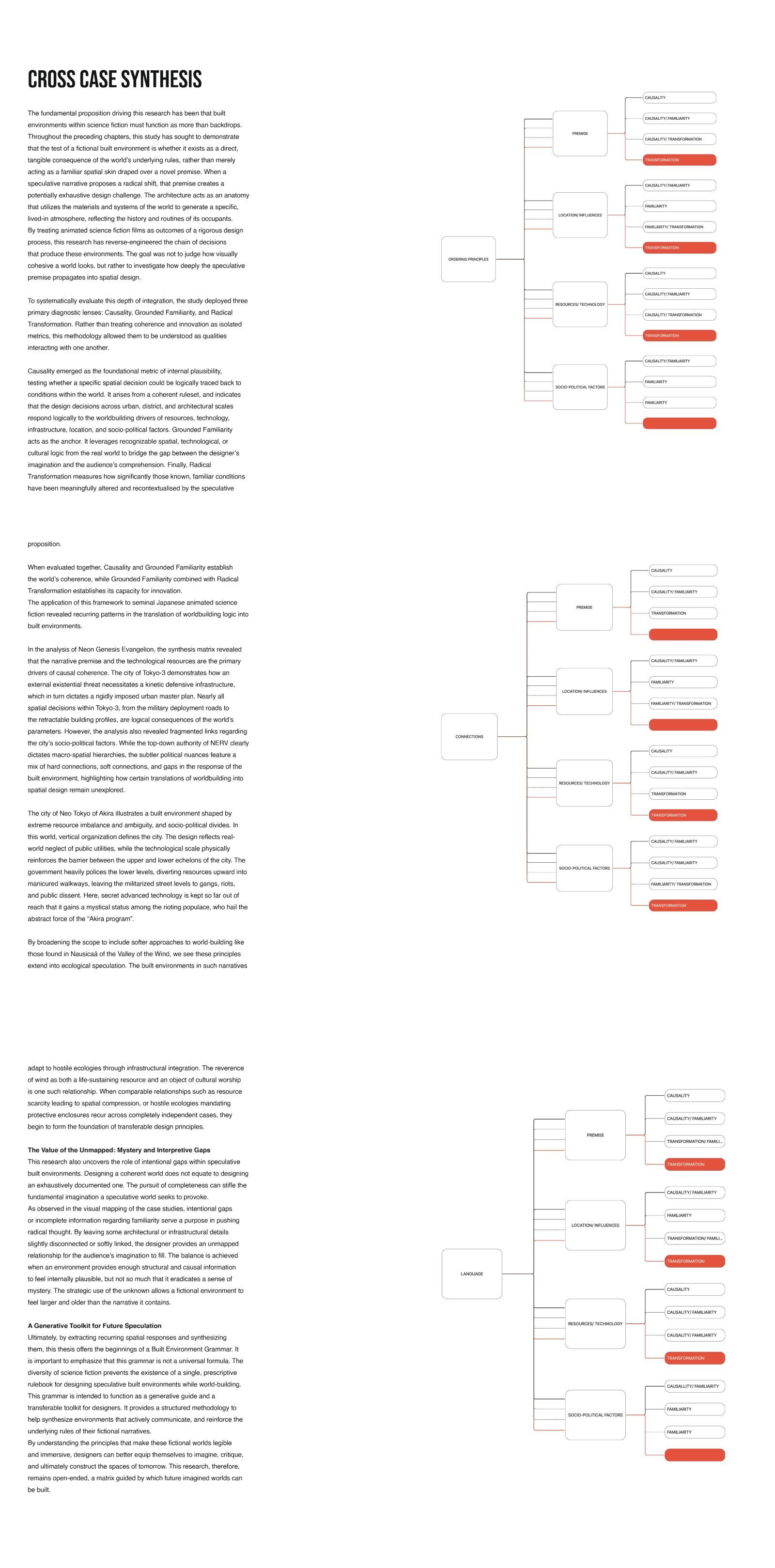
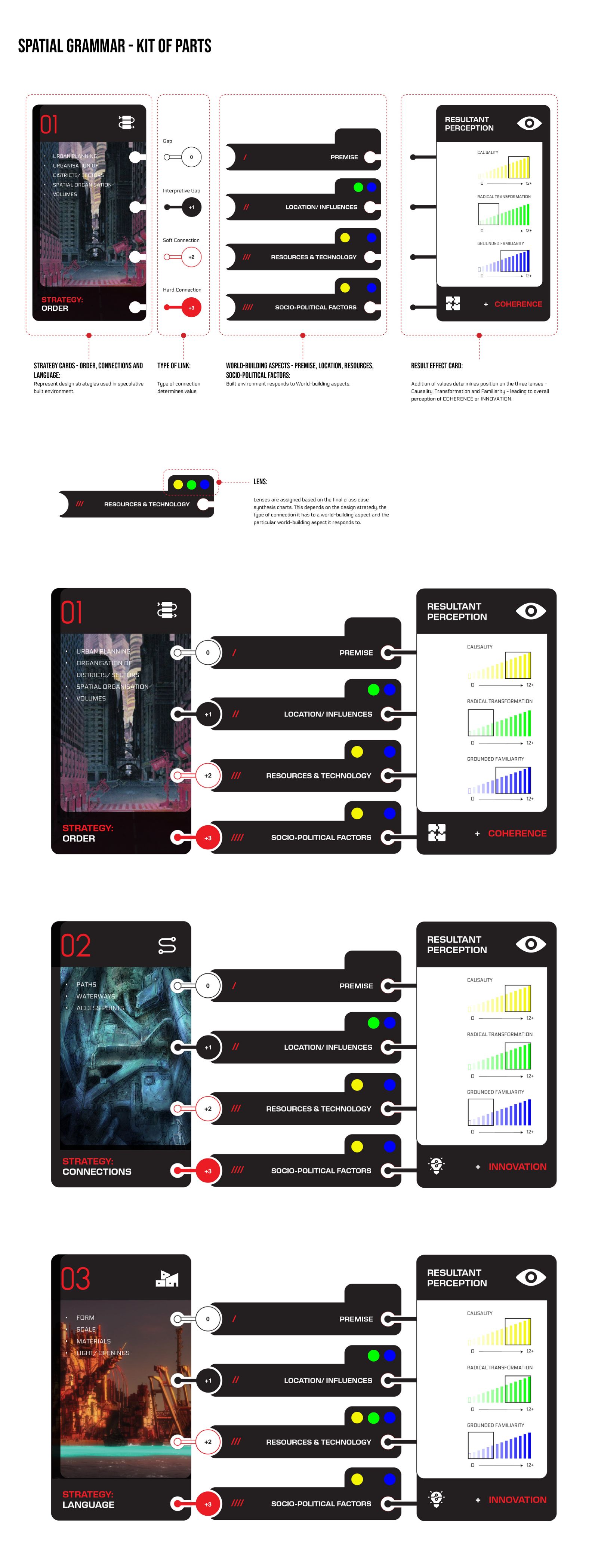
A fictional built environment is convincing when it operates as a direct spatial consequence of the world’s underlying rules rather than as a visually novel skin. This research treats animated science fiction films as design documents to decode how speculative premises propagate across ecological, urban, and architectural scales. Animation was chosen as the medium as it allows for complete creative freedom of visual expression; every frame is constructed from scratch, making it an ideal laboratory to examine pure design intent and test internal coherence. Through an analytical matrix anchored by three diagnostic lenses: Causality, Grounded Familiarity, and Radical Transformation, the study reverse-engineers three seminal animated worlds: Neon Genesis Evangelion, Akira, and Nausicaä of the Valley of the Wind. Selected for their critical acclaim, cultural influence, and multi-scalar worldbuilding, these cases illustrate distinct ecological, technological, and socio-political realities. Ultimately, the research aims to move beyond isolated film analysis to extract recurring world-to-space relationships, synthesizing them into a transferable kit of parts - a spatial grammar that guides designers in creating coherent speculative environments.