Your browser is out-of-date!
For a richer surfing experience on our website, please update your browser. Update my browser now!
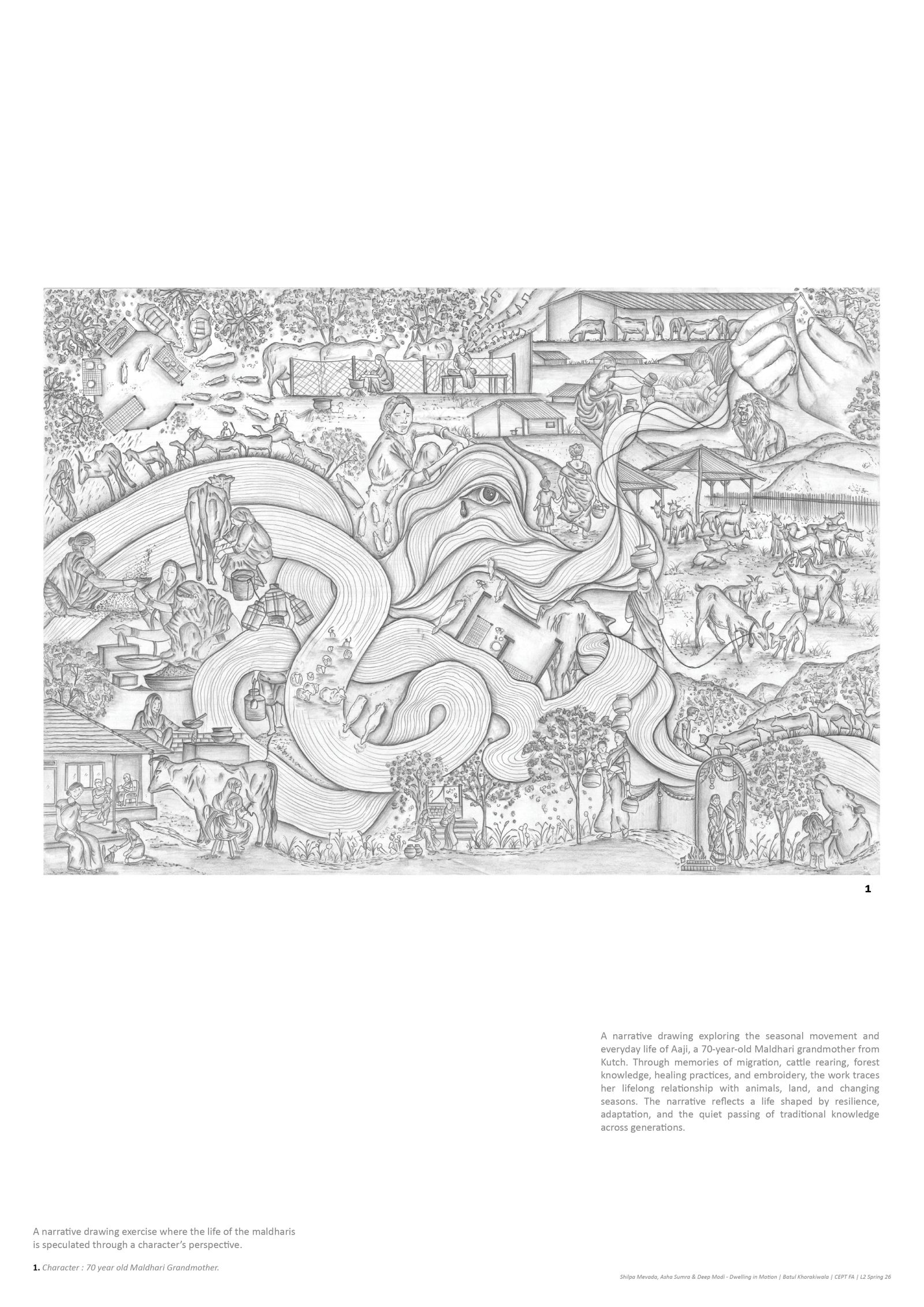
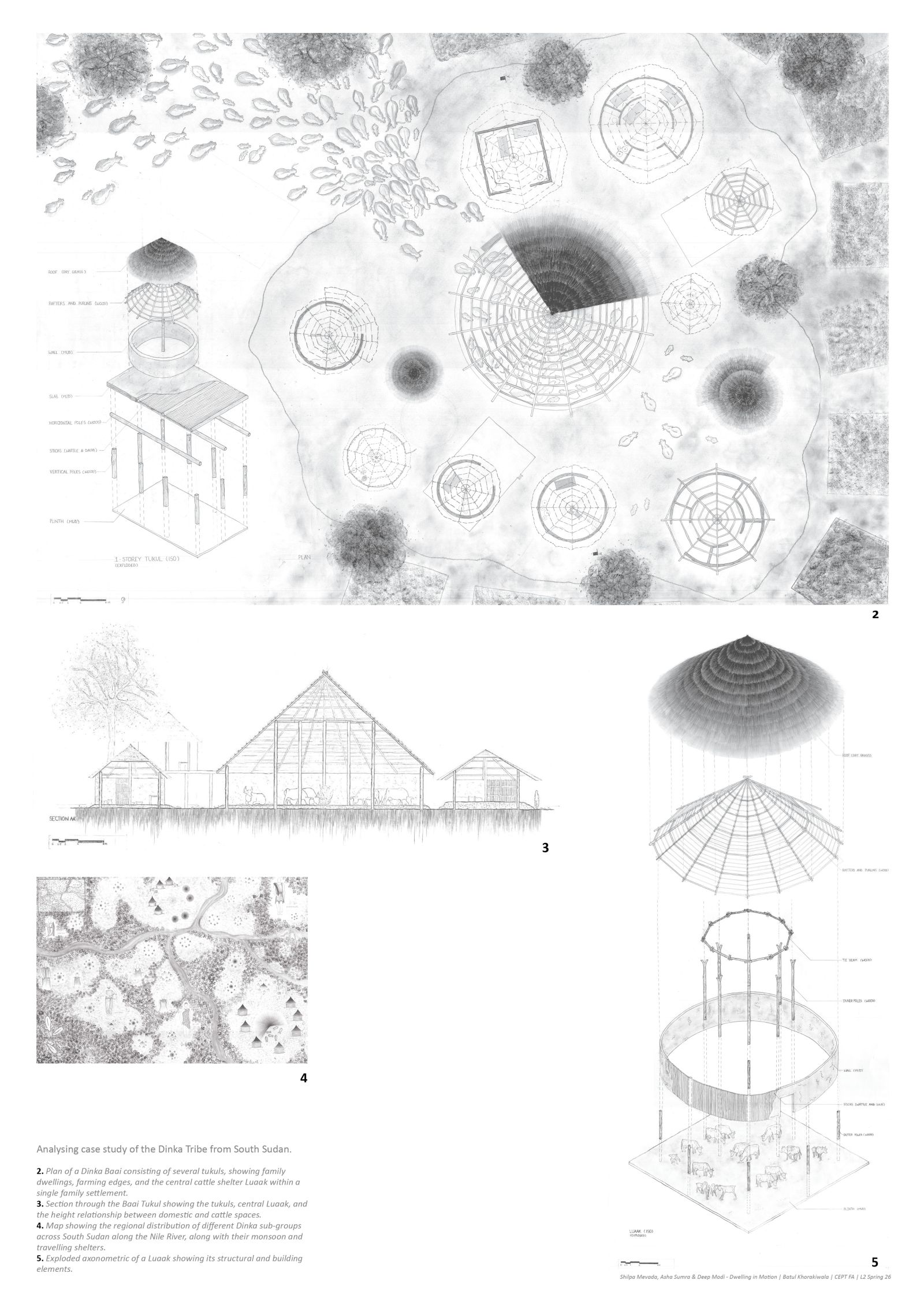
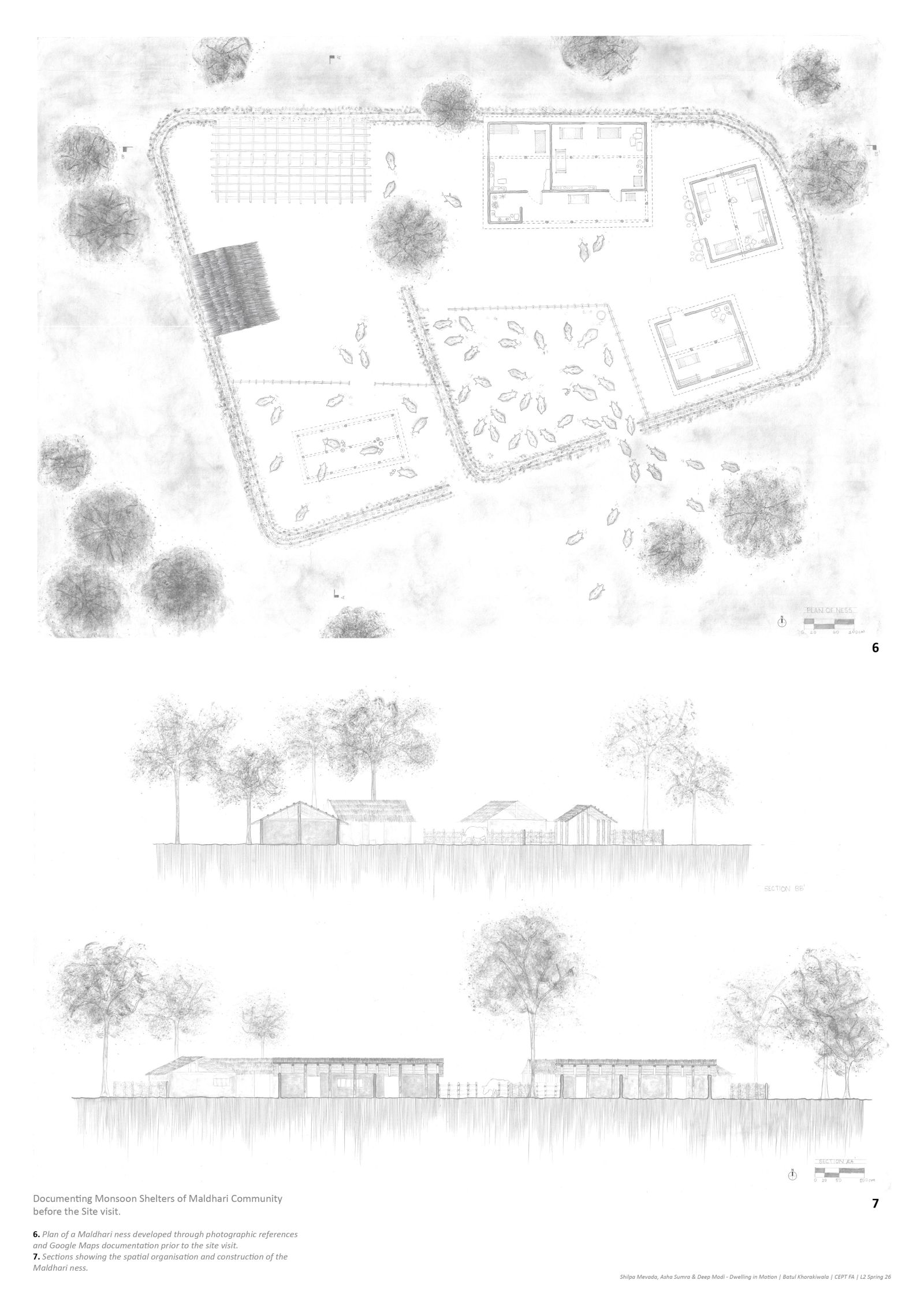
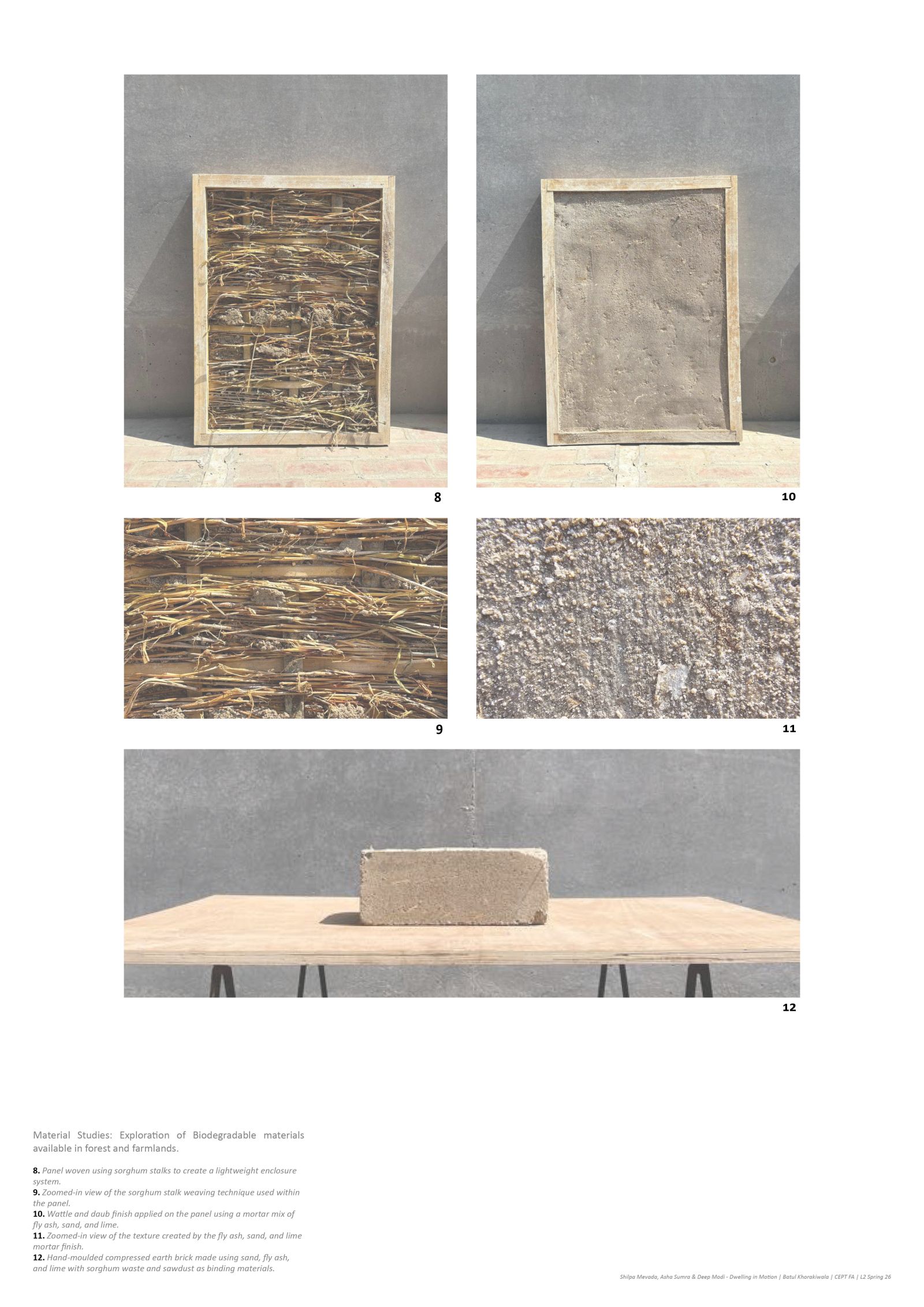
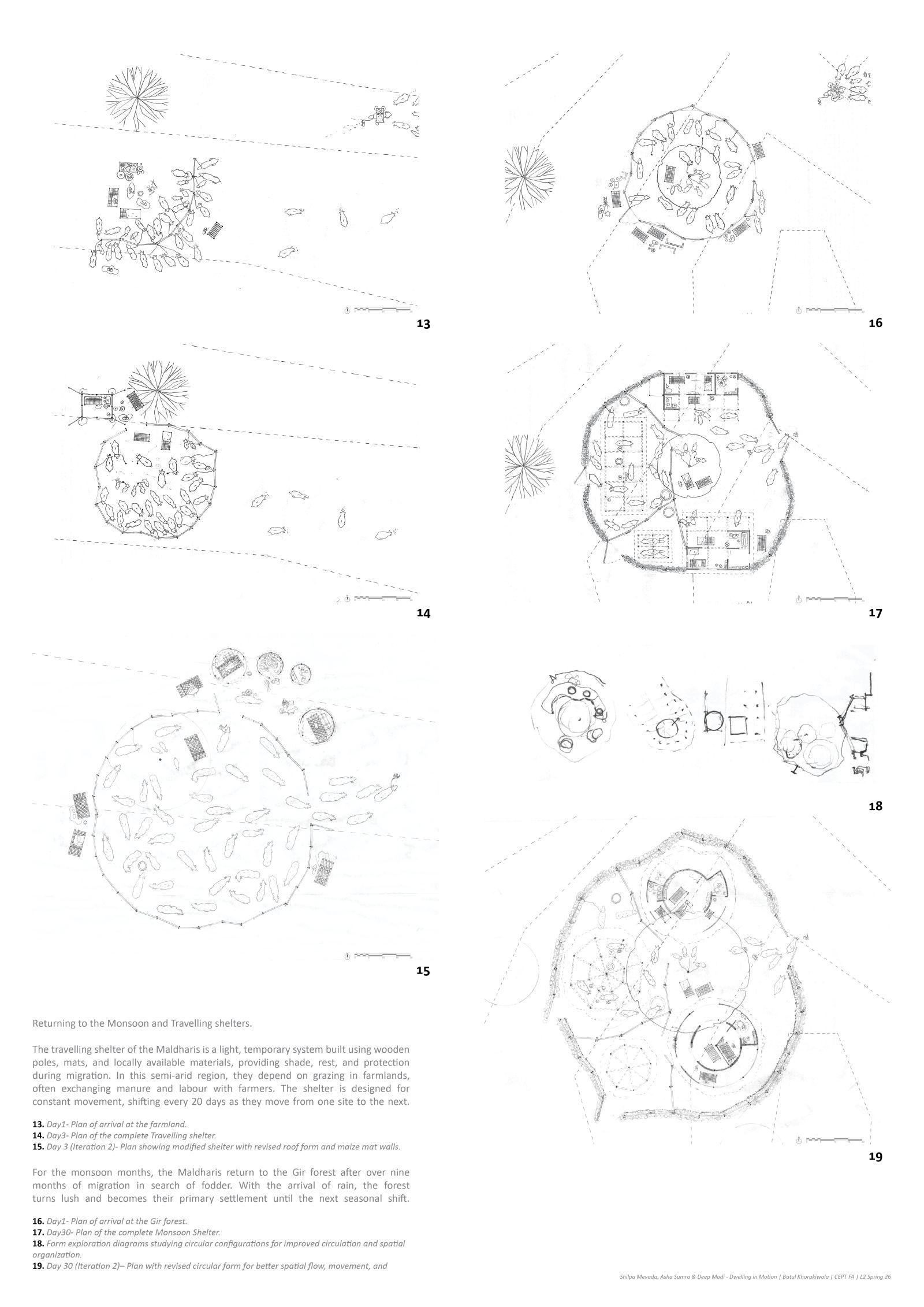
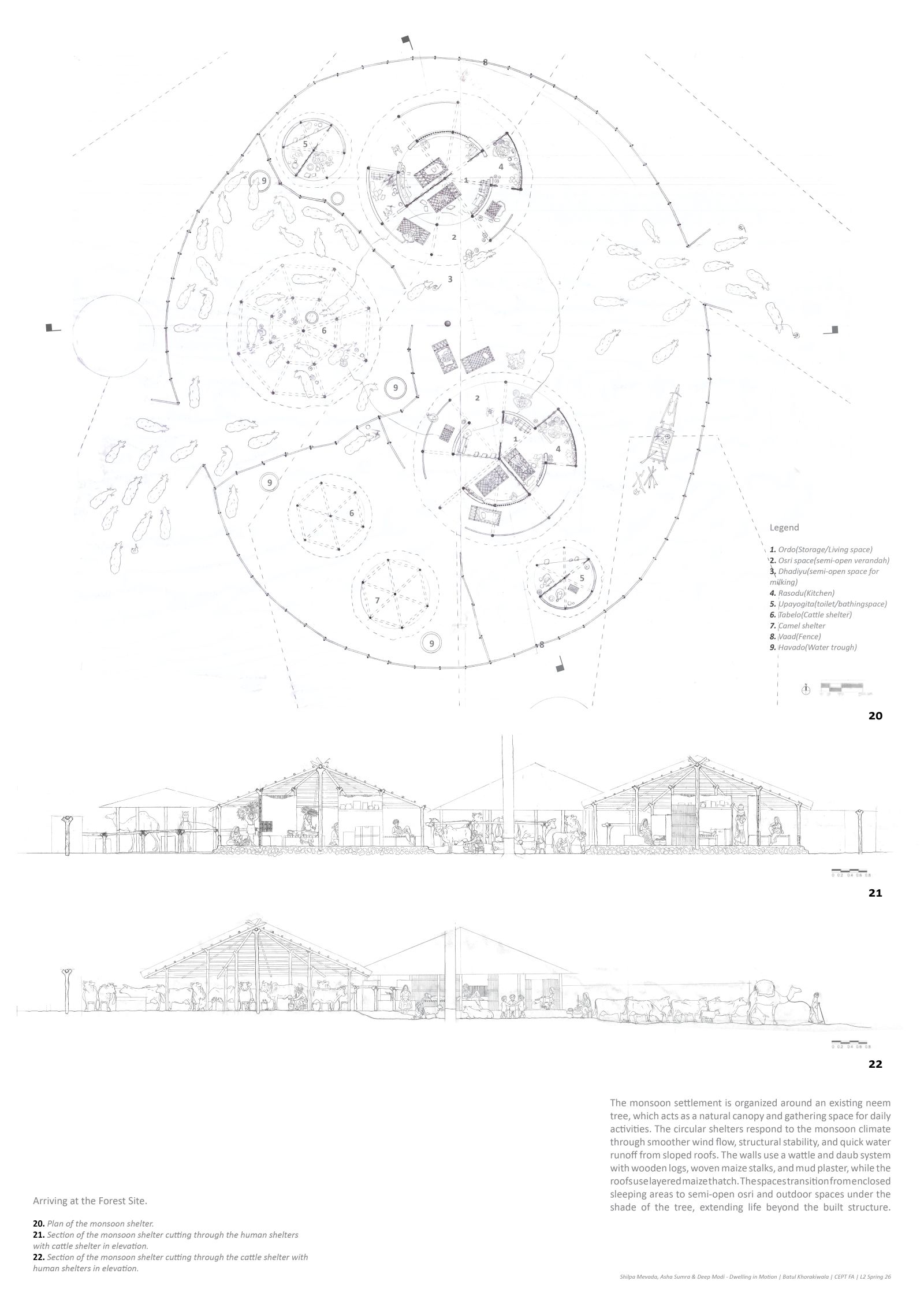
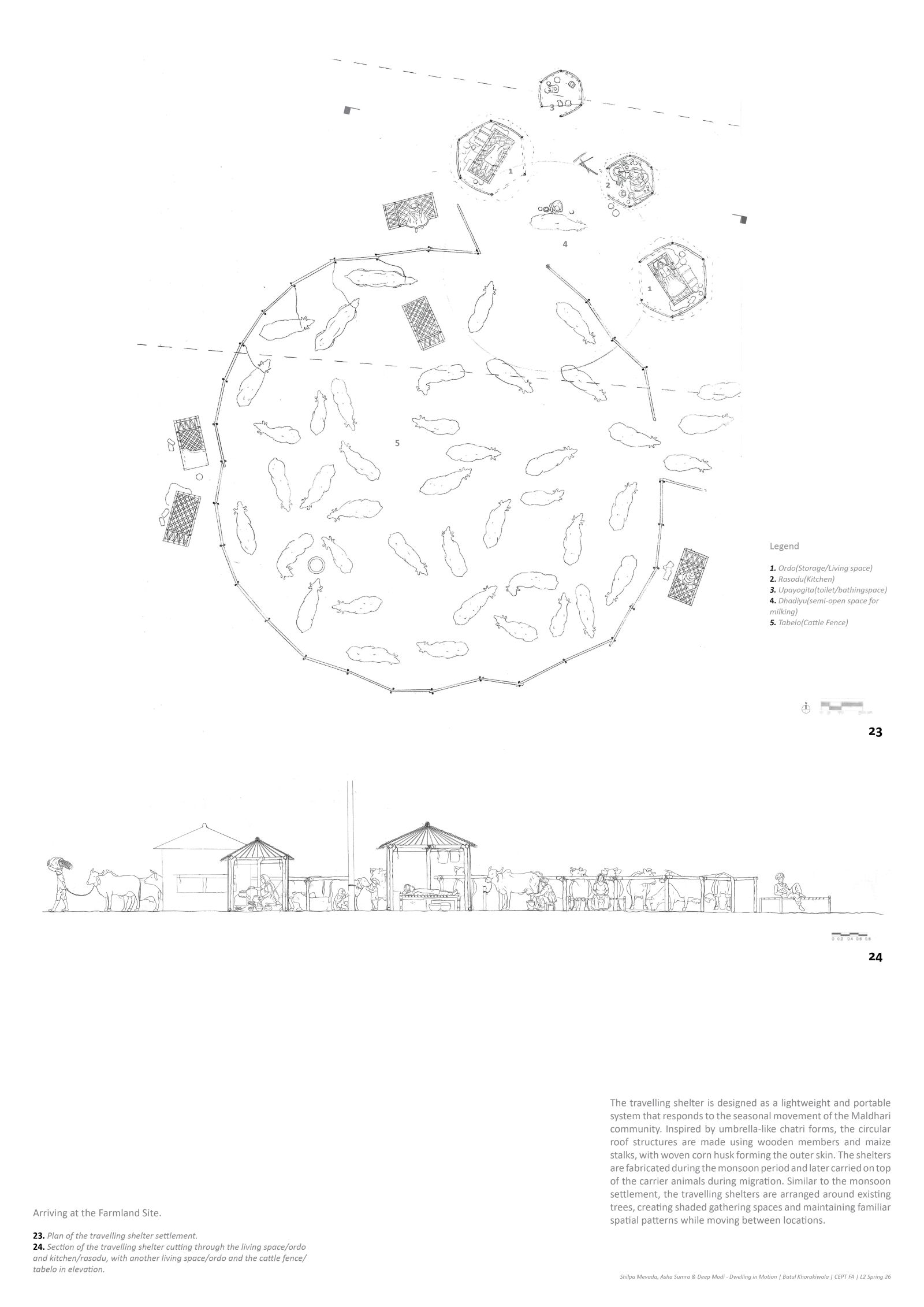
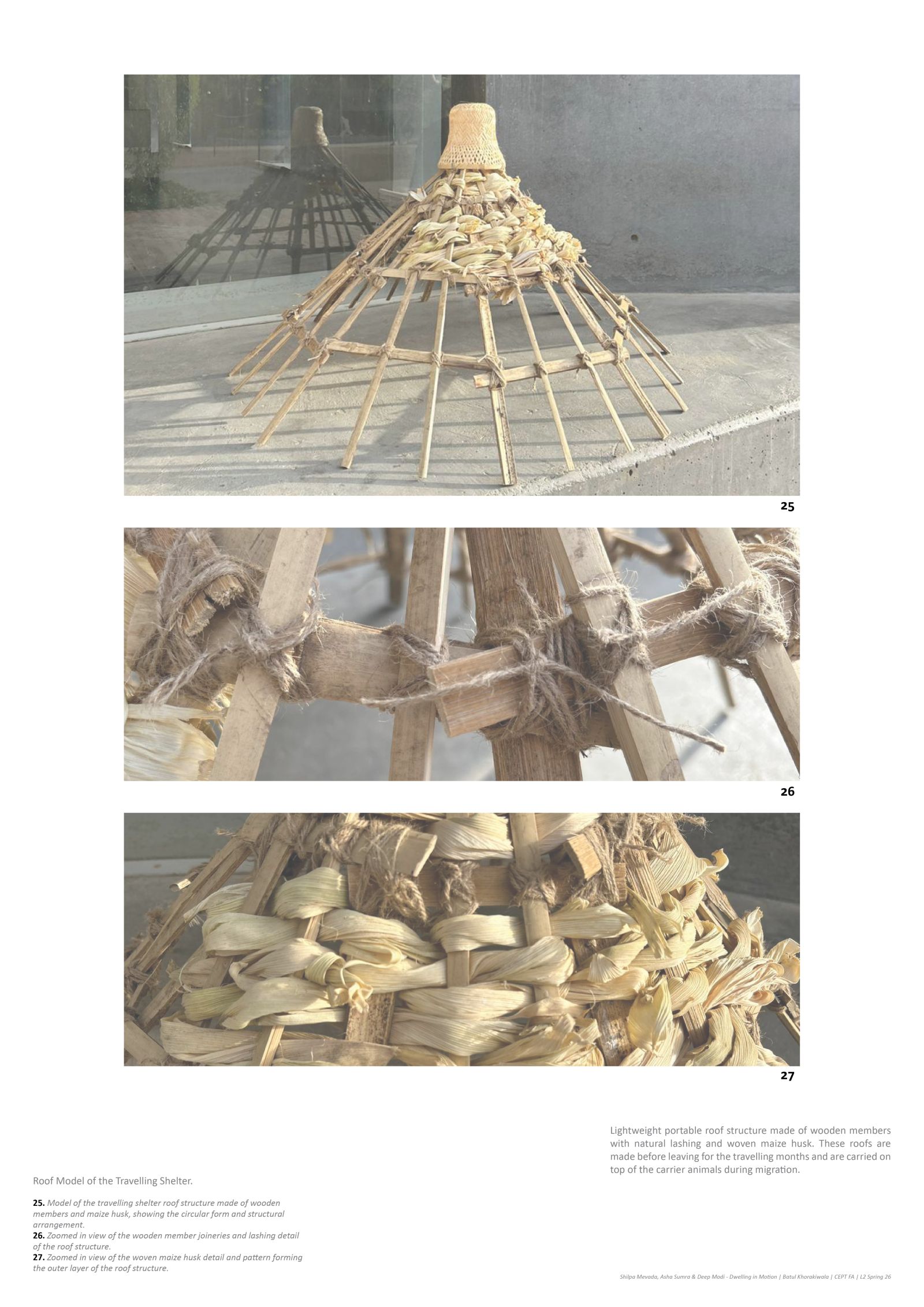
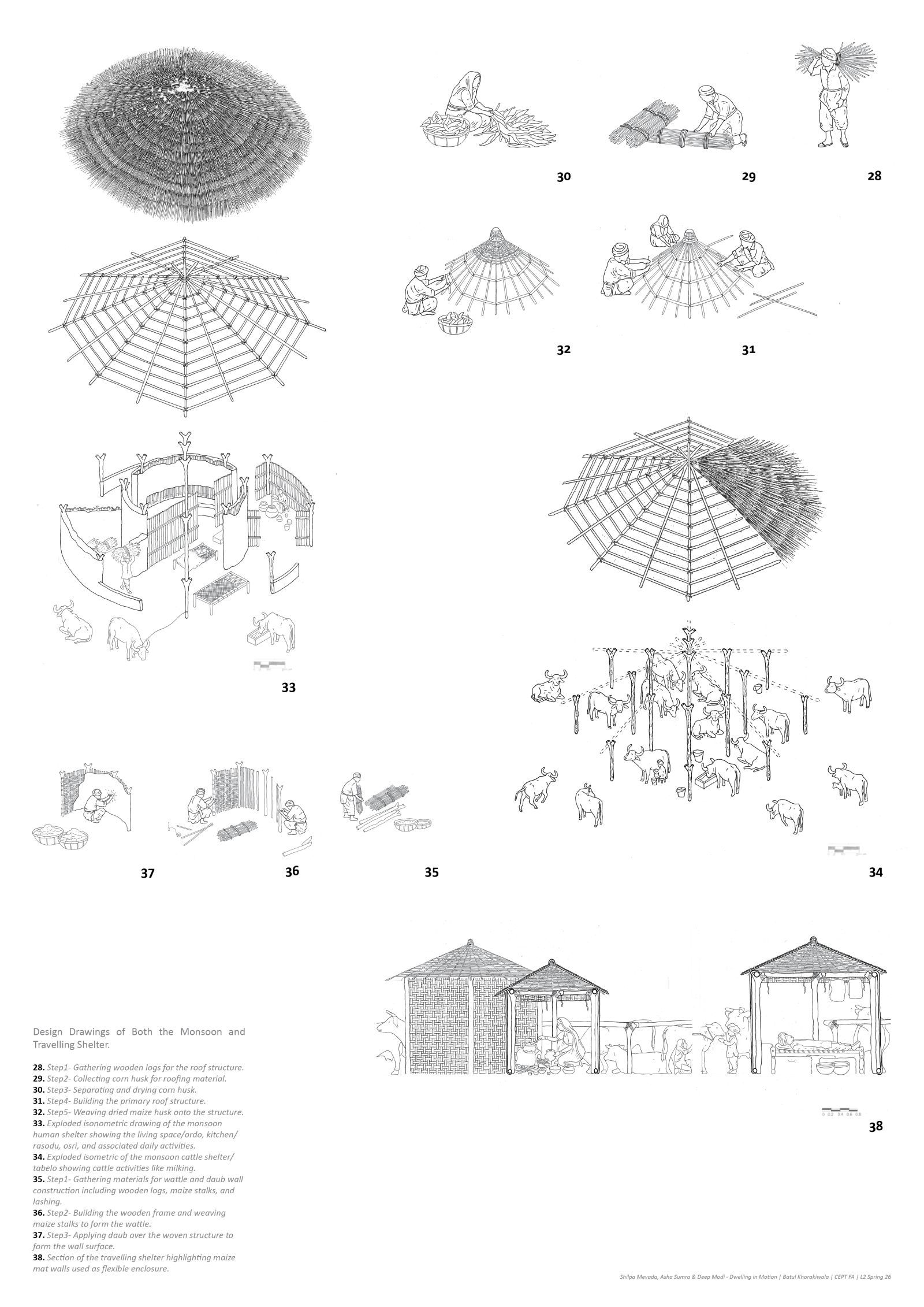
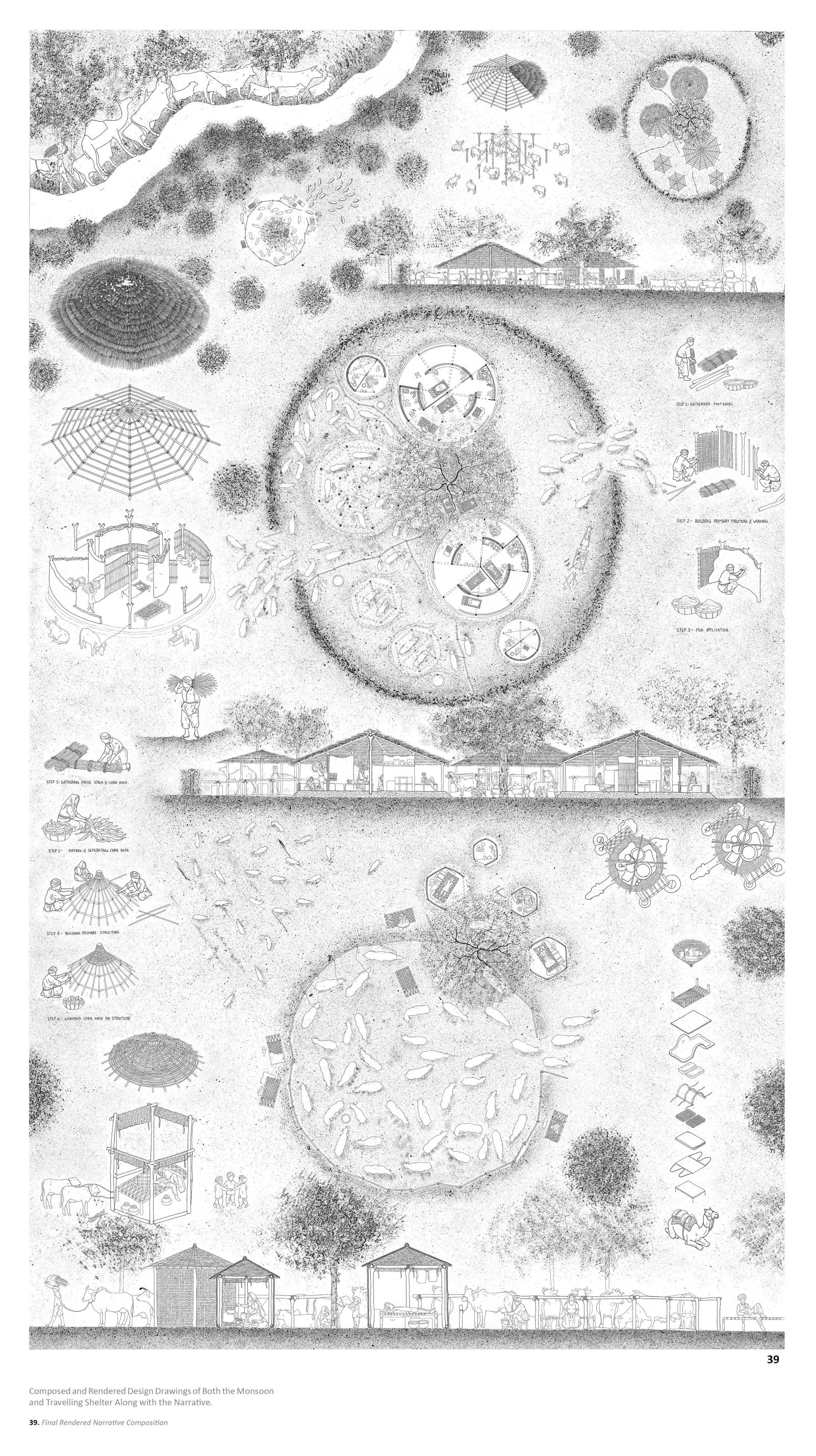
This project responds to the seasonal lifestyle of the Maldhari community through the design of two interconnected systems, a monsoon settlement and a travelling shelter. Existing trees guide the placement of shelters, acting as natural anchors for shade, microclimate, and spatial organization. In the monsoon settlement, a neem tree forms the centre for living spaces, cattle shelters, and daily activities, while travelling shelters are arranged around teak trees to maintain familiar spatial patterns. The monsoon shelters use circular forms and sloped roofs inspired by tukuls of the Dinka tribe for better wind flow, stability, and water runoff. Walls are built using a wattle and daub system with wooden logs, woven maize stalks, and mud plaster tied with natural creepers. The travelling shelter develops a lightweight, portable roof using wooden members, maize stalks, and woven corn husk, designed as umbrella-like structures carried during migration and assembled around trees. Using local agricultural byproducts and biodegradable systems, the project explores adaptable living rooted in climate, mobility, and everyday practices.
View Additional Work