Your browser is out-of-date!
For a richer surfing experience on our website, please update your browser. Update my browser now!
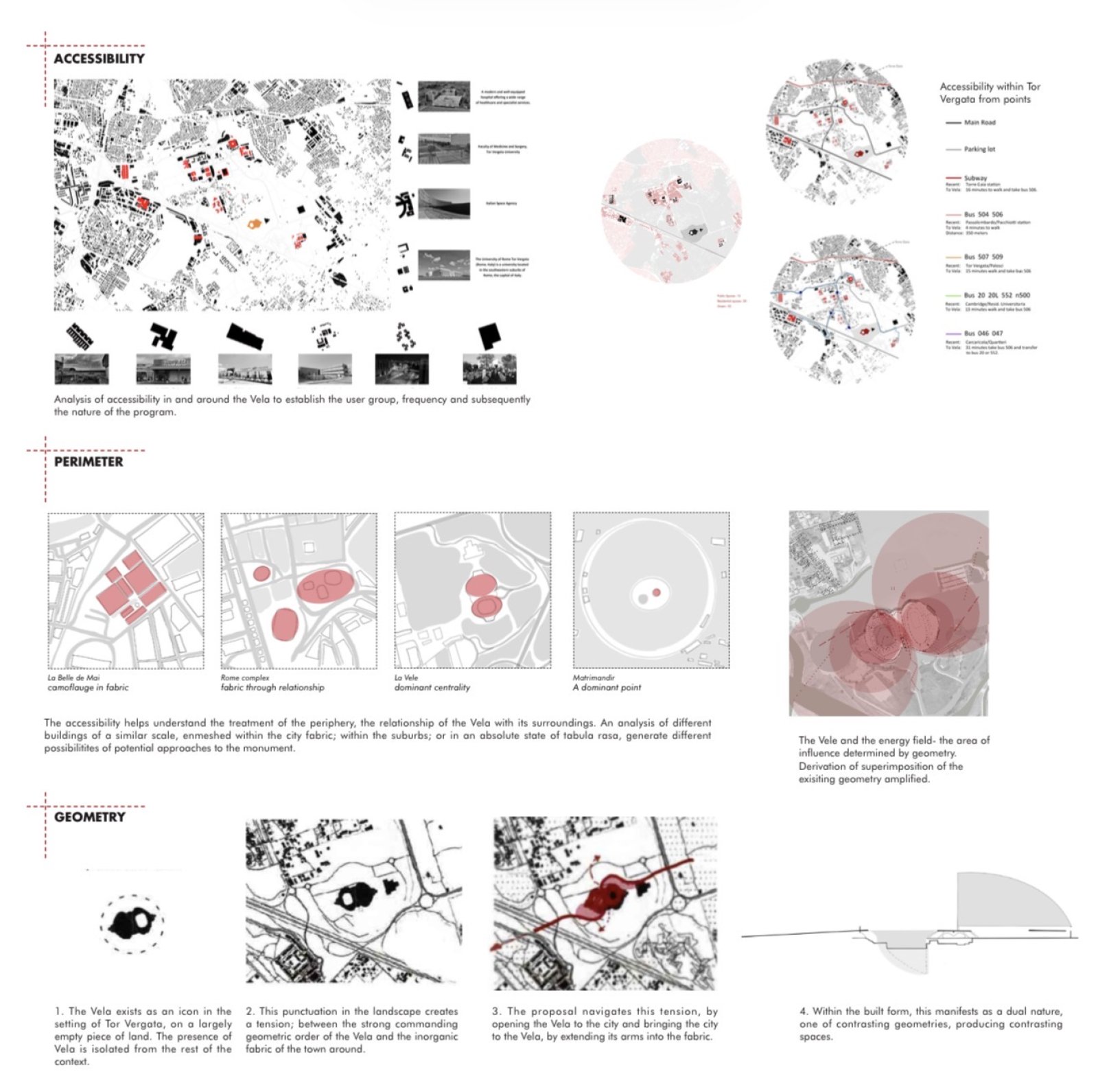
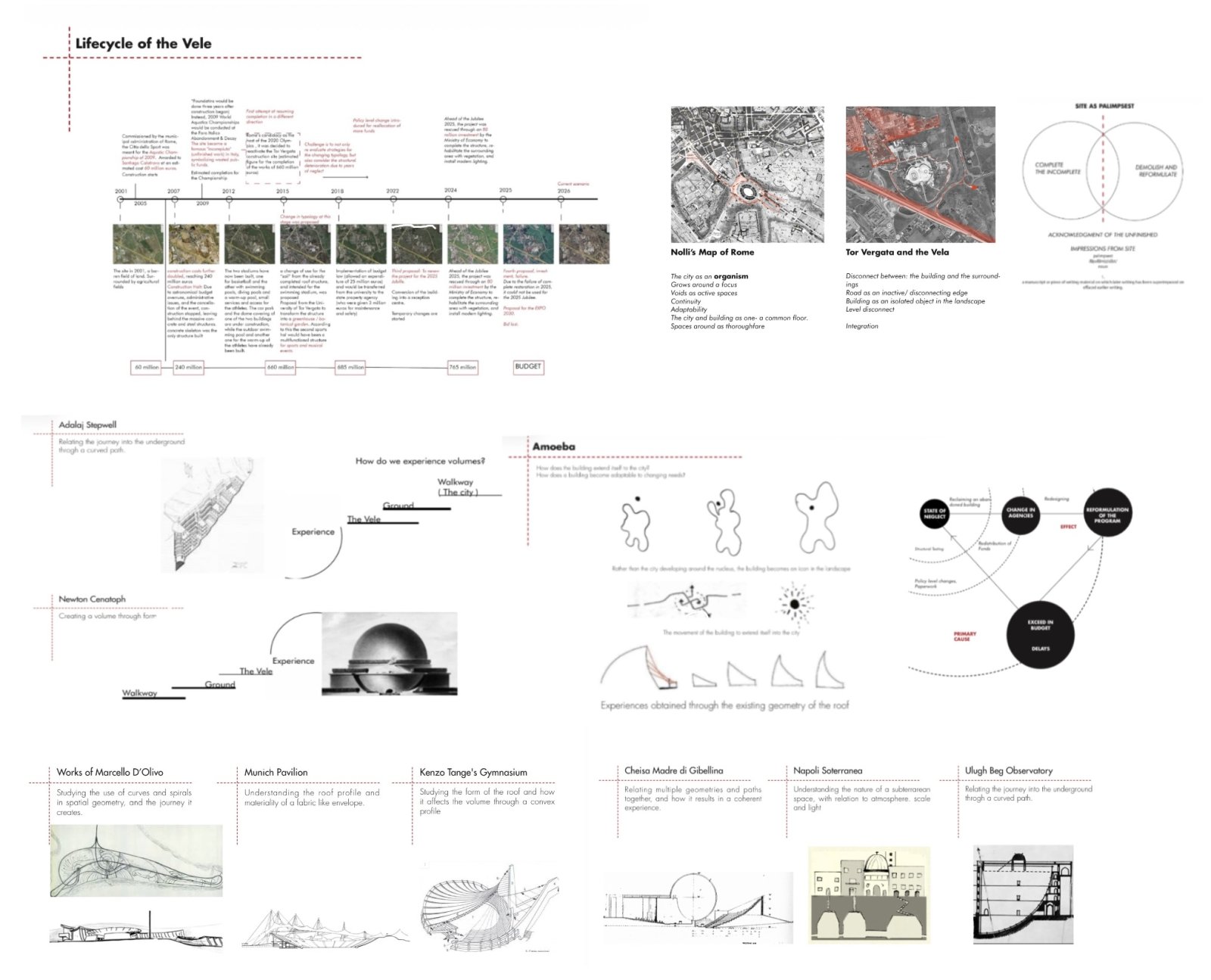
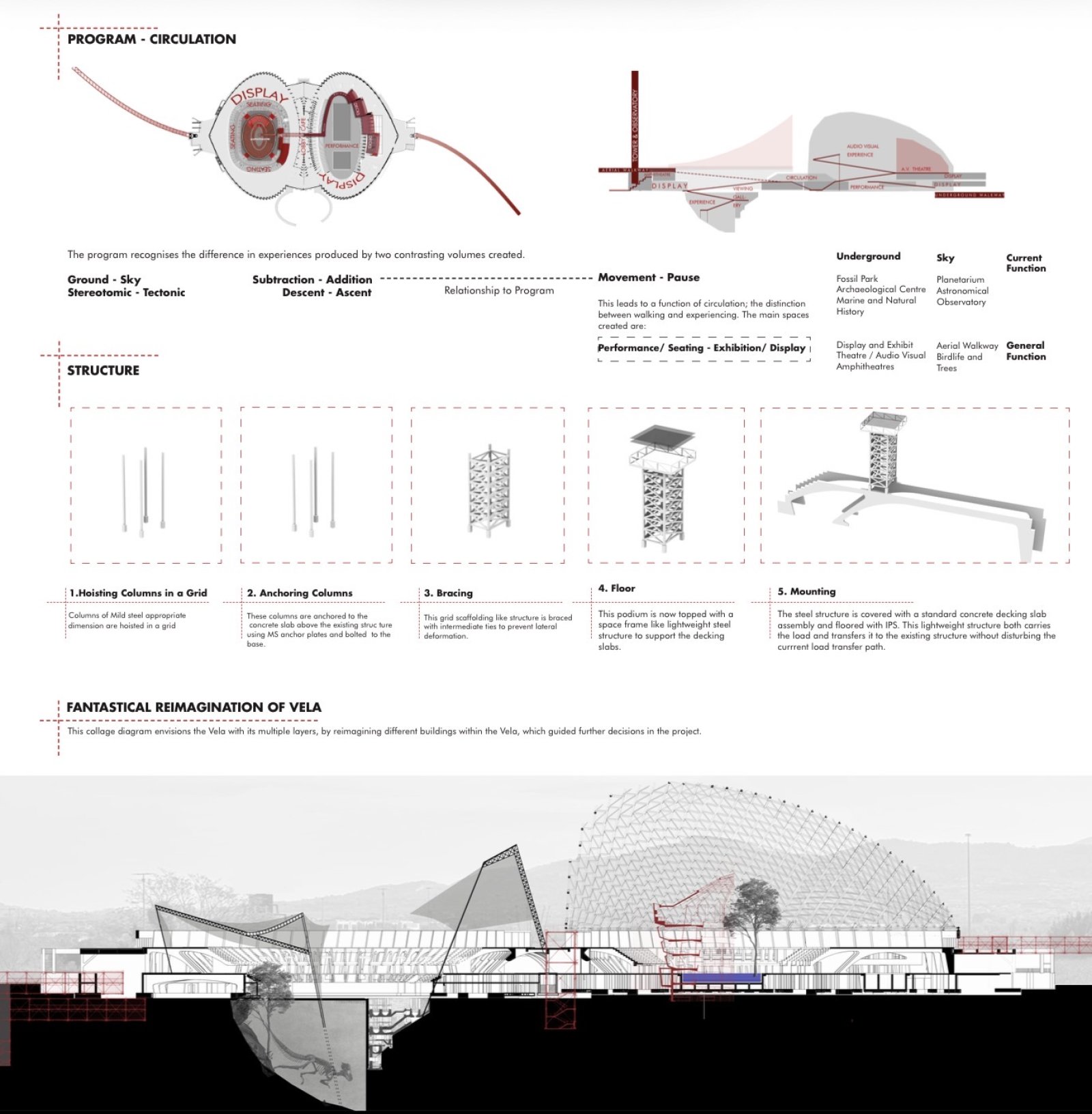
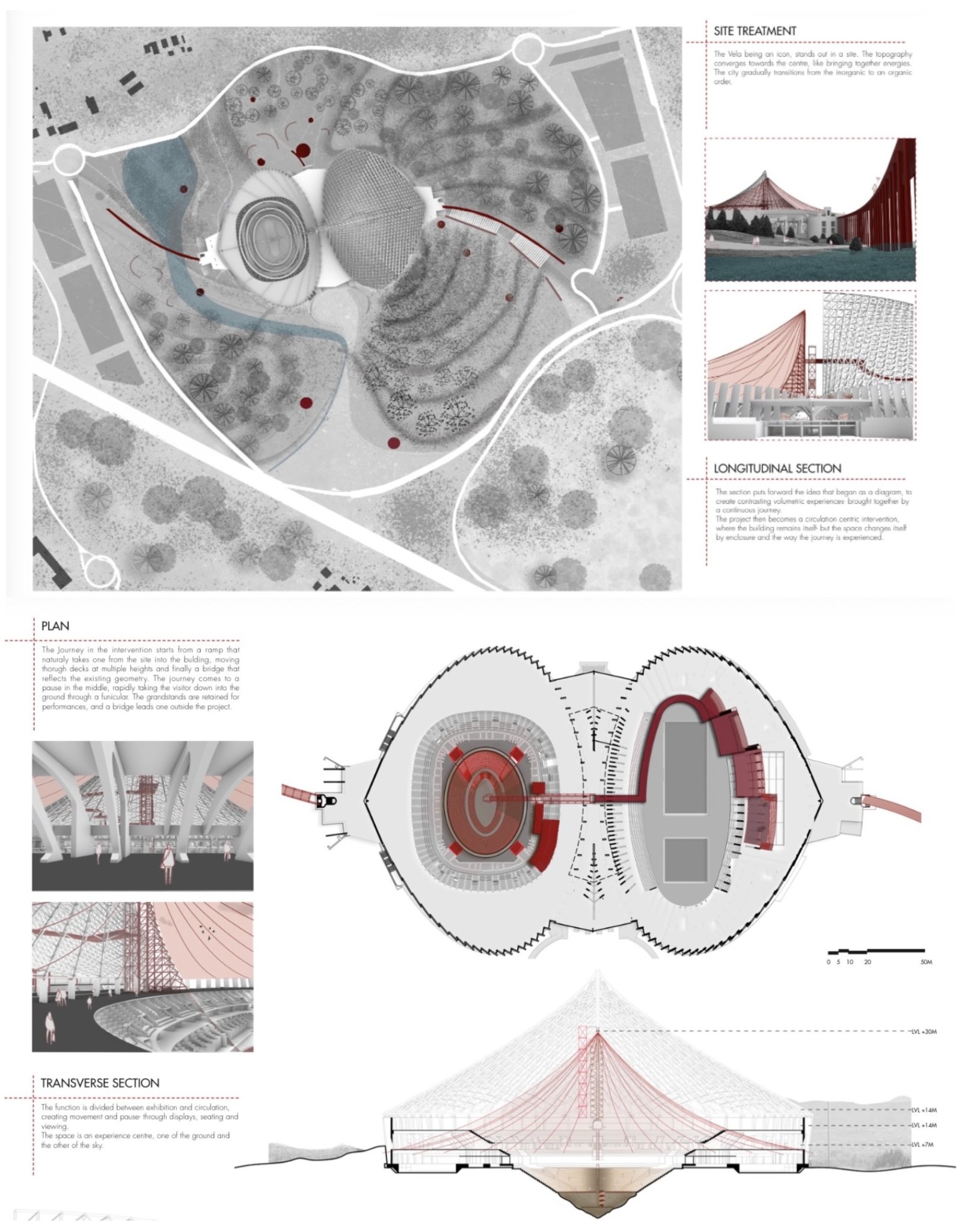
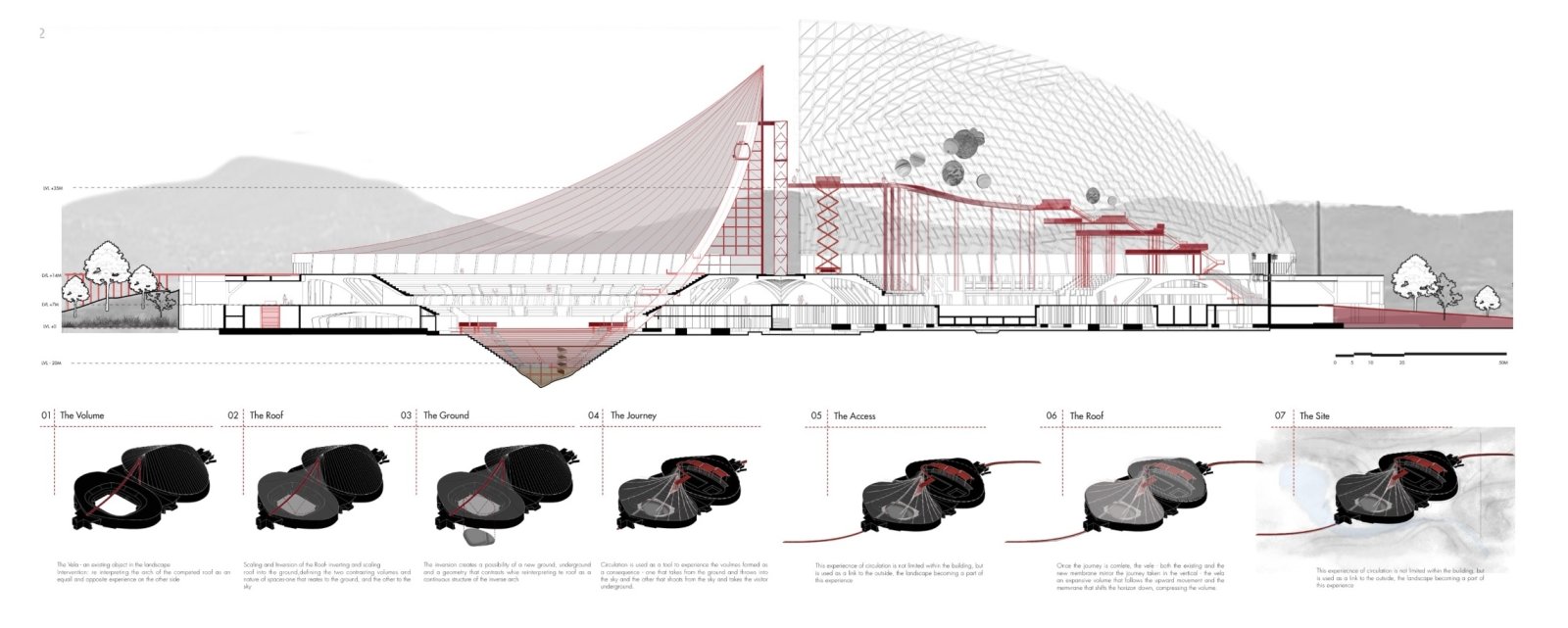
Architects interpret, reinterpret and theorise history, as in the case of Rome Interrupted, to imagine institutions, like the Colosseum in the present context. Layered history, sport and the community converge; but what happens when a newer symbolic architecture attempts at inverting the relationship that a building holds with its fabric. In the case of Calatrava's Vela, institutional failure, systemic delays and drying funds, put a pause on the construction of the massive Vela di Calatrava, a pair of stadiums conceived on the outer periphery of Rome. A reuse proposal transforms the shell of the stadium; from a program specific building, to one which extends into the fabric of the city. By designing for not a singular program- but identifying conditions that make possible permutations and combinations, the reimagination creates a circulation, exhibition and performance space, while celebrating the experience of two large volumes that the existing makes possible. Using minimally invasive structure, an ultralightweight and frugal yet functional system, a circulation system traverses the volumes.