Your browser is out-of-date!
For a richer surfing experience on our website, please update your browser. Update my browser now!
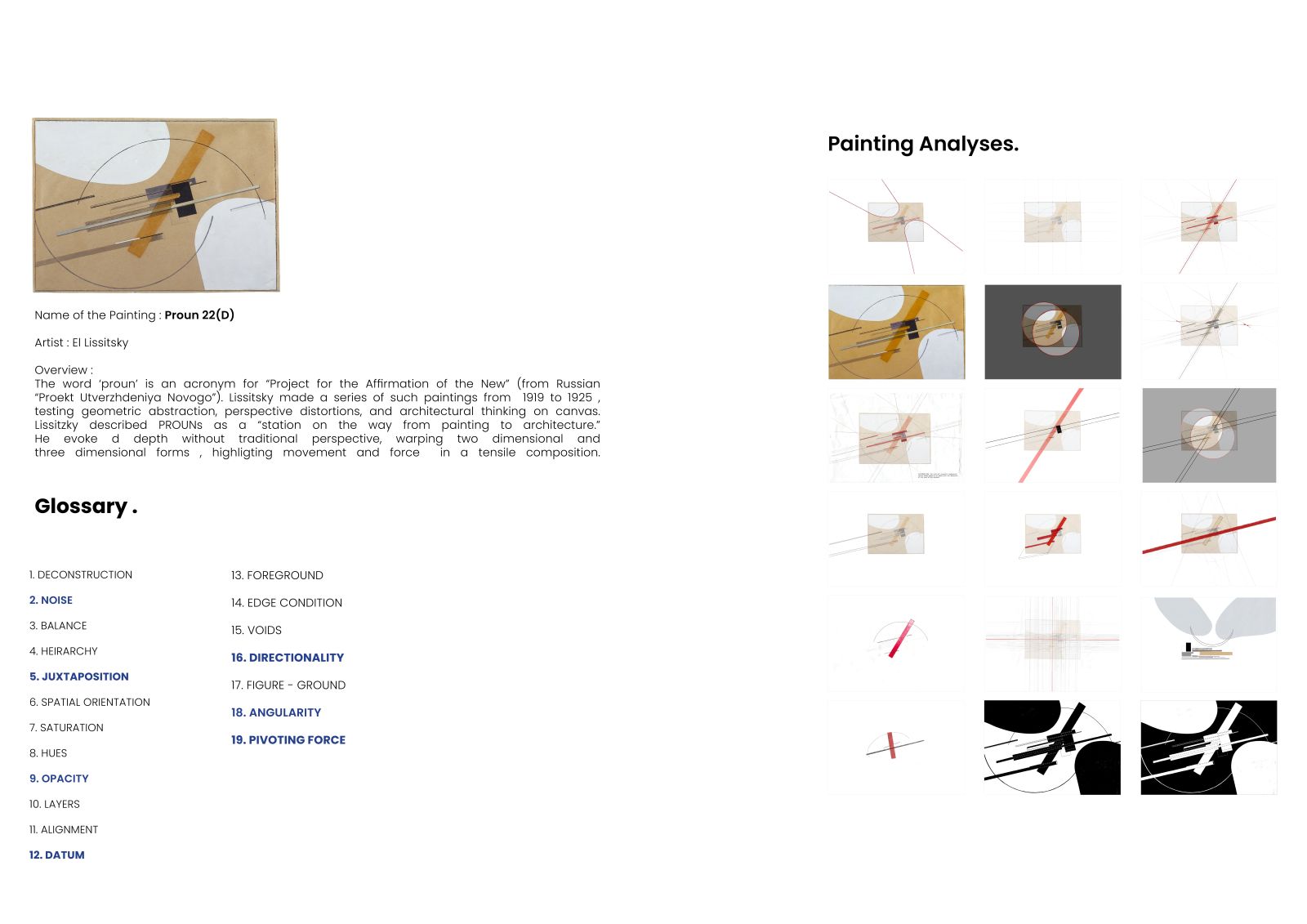
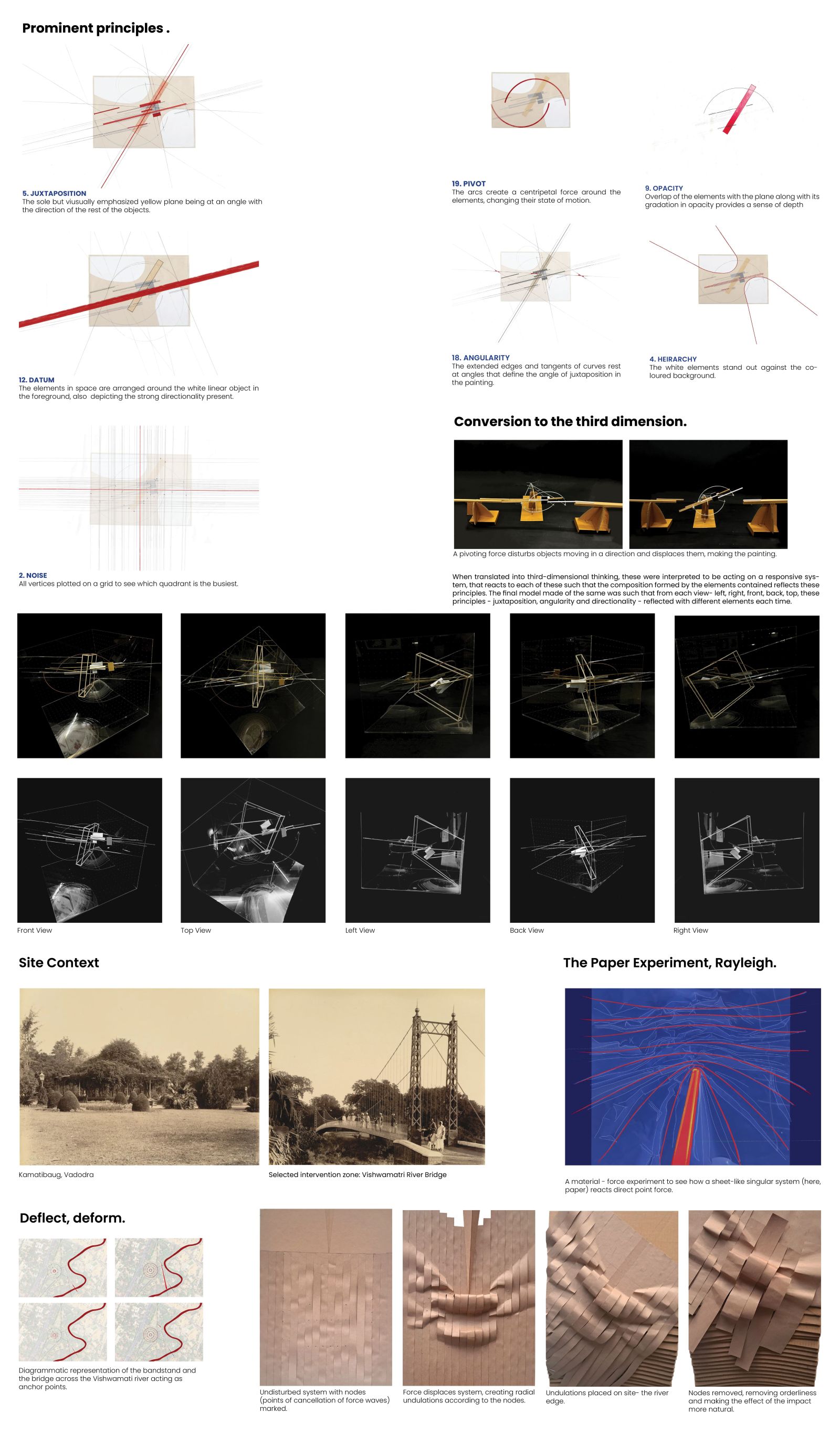
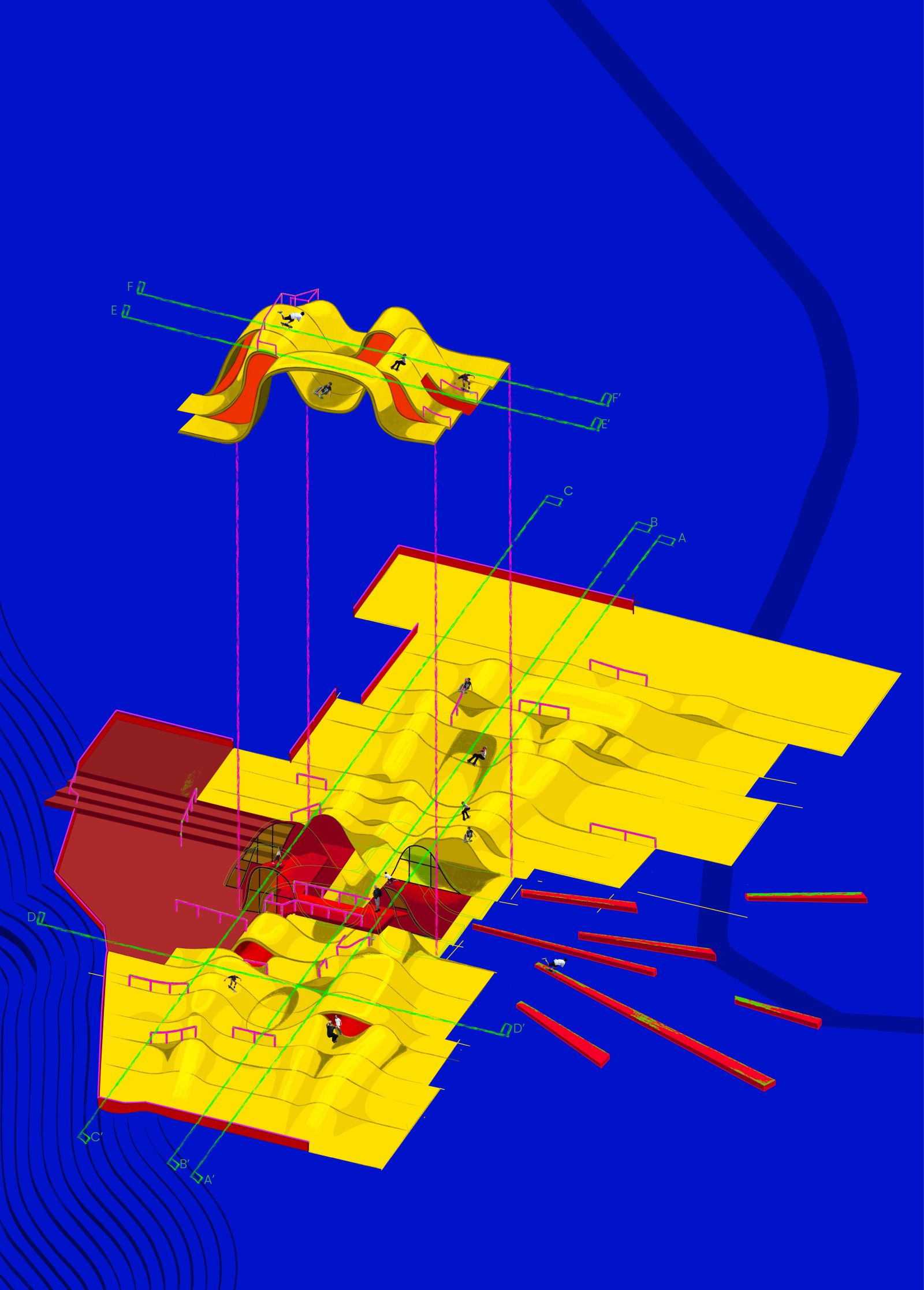
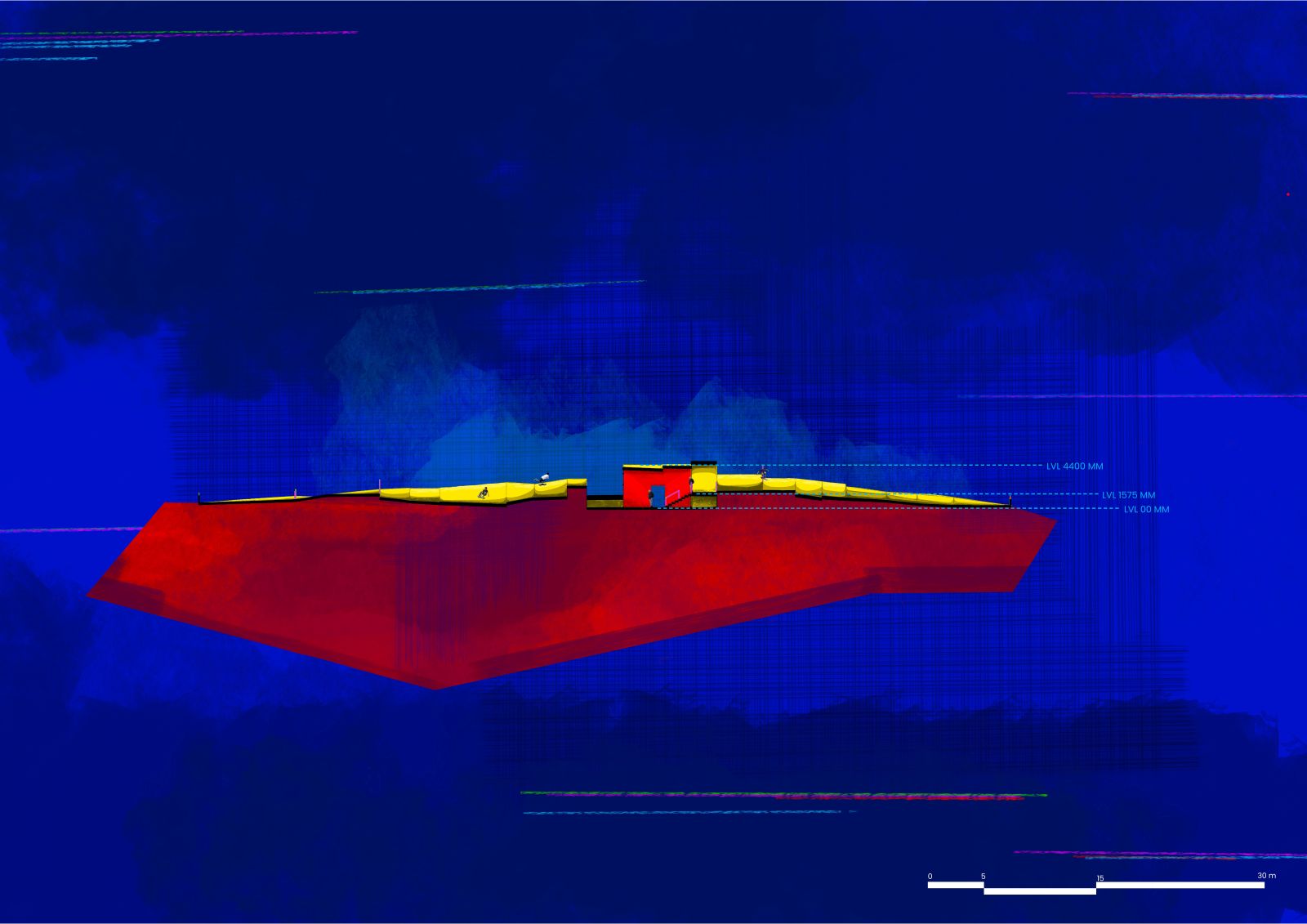
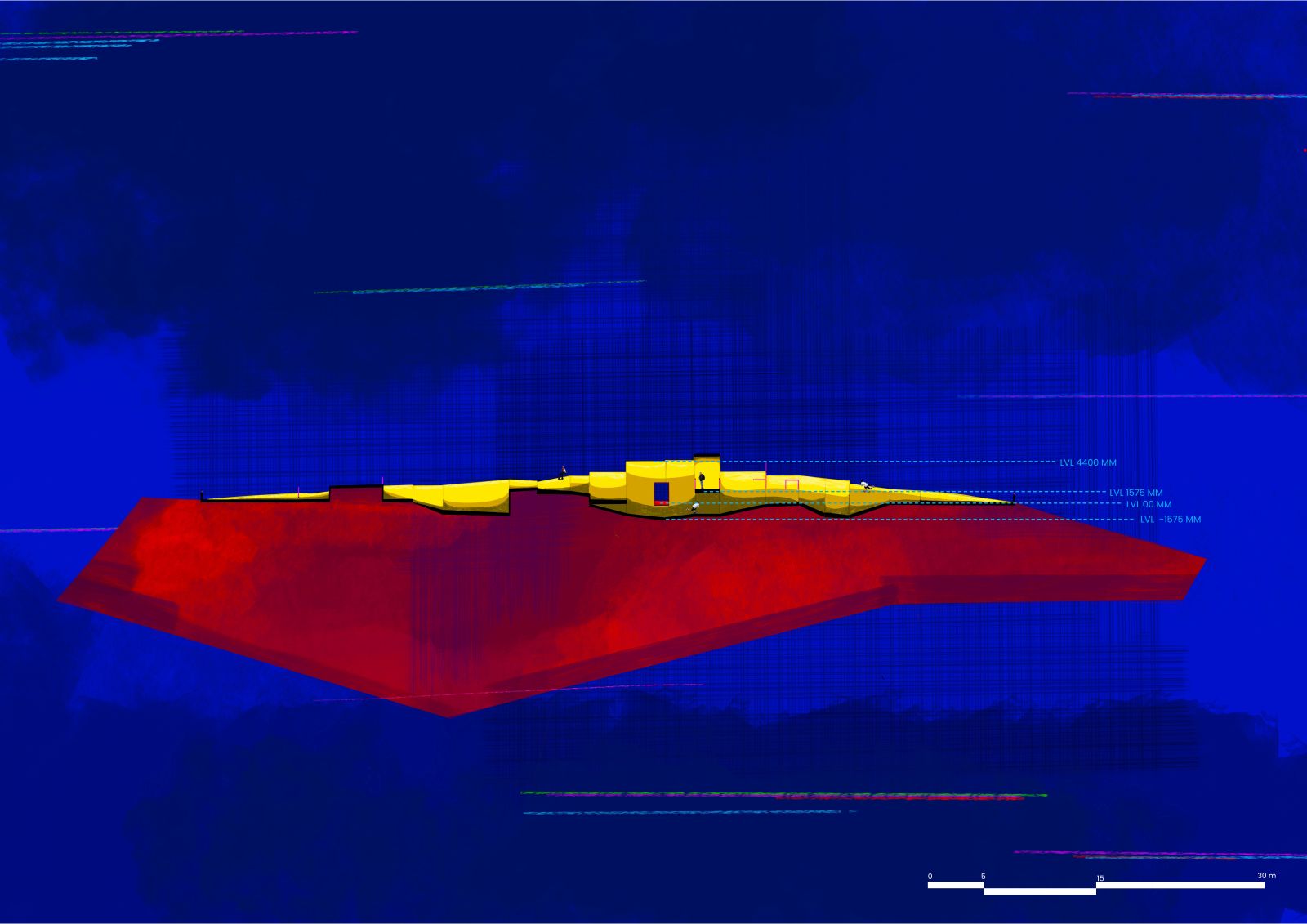
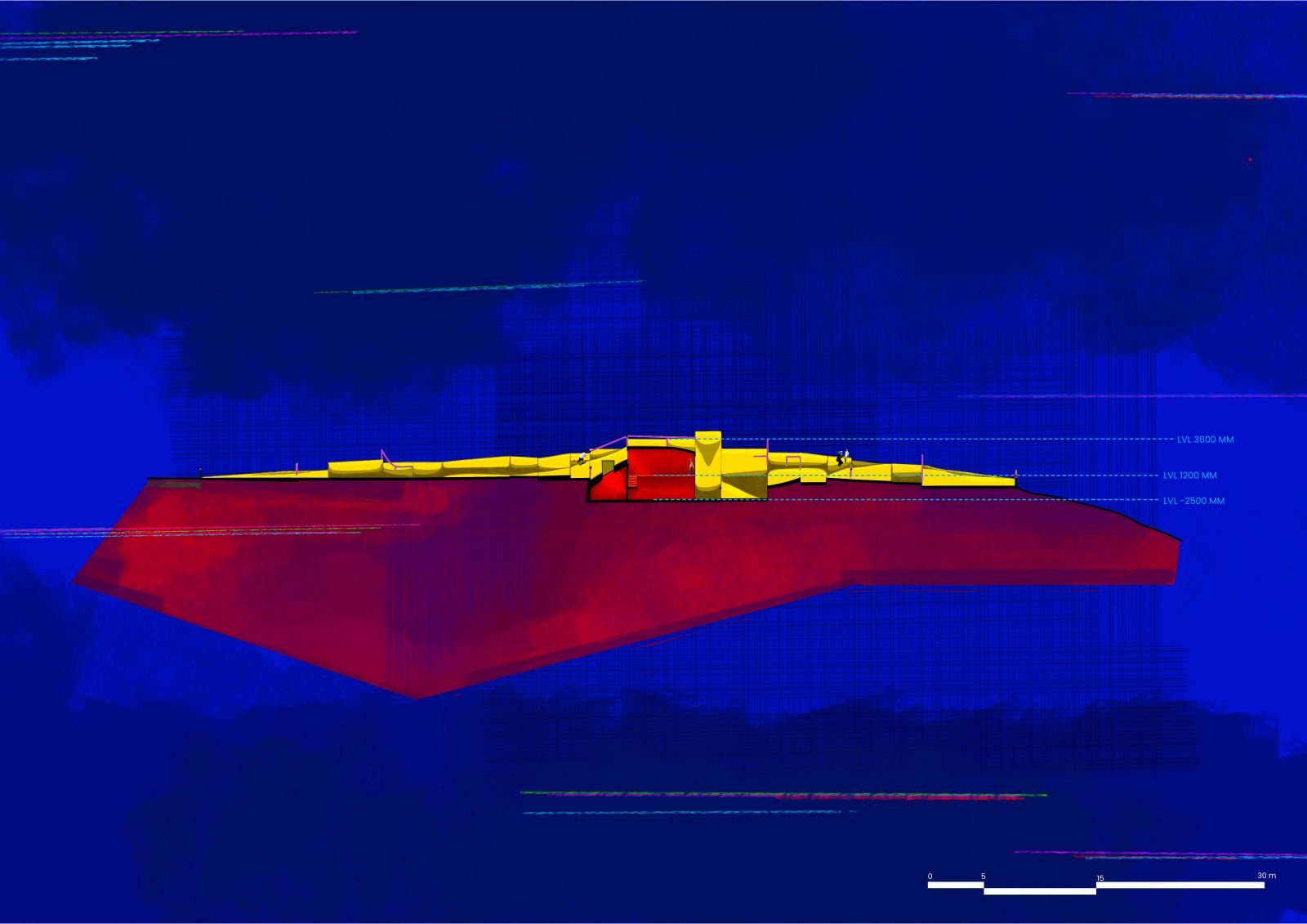
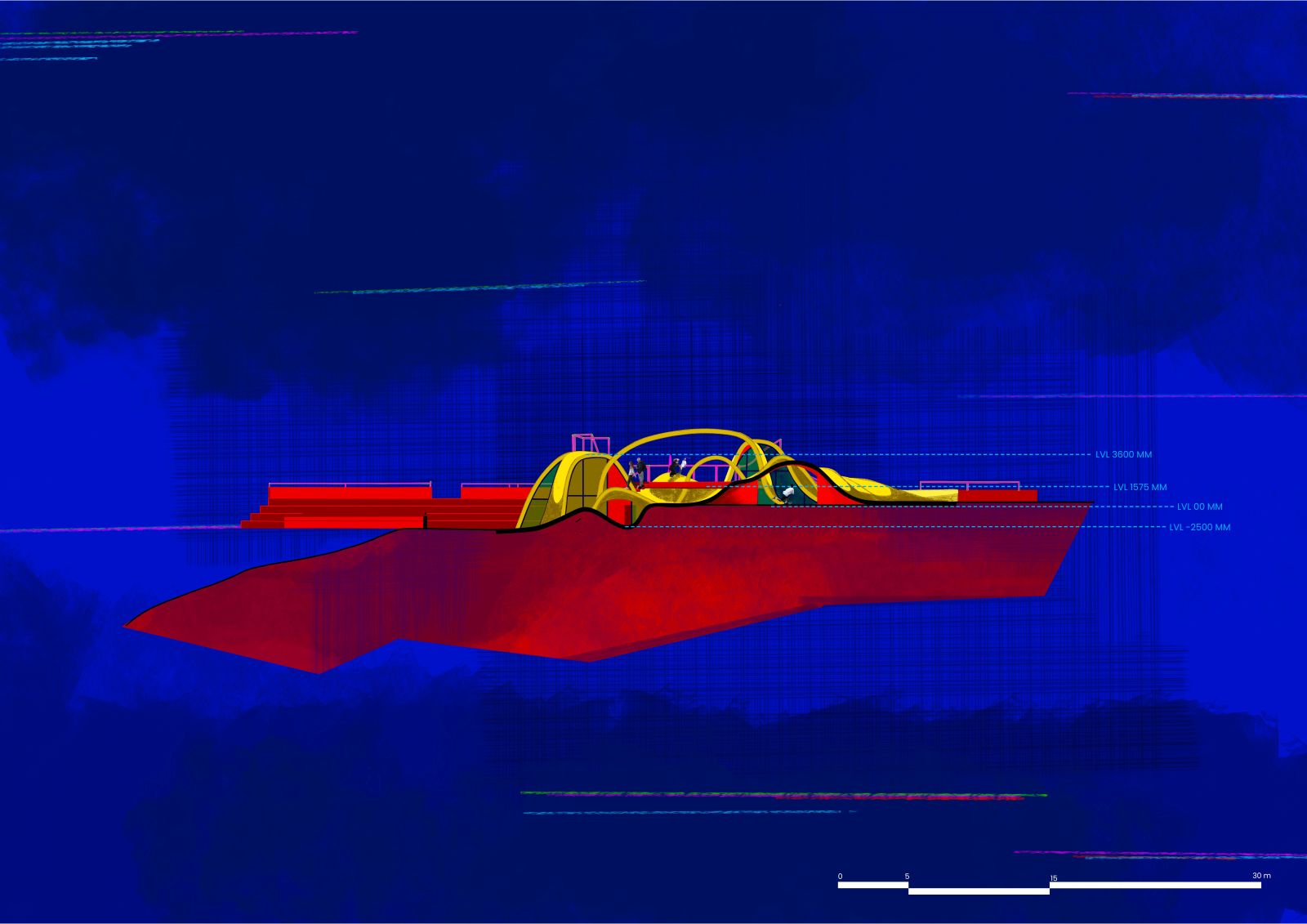
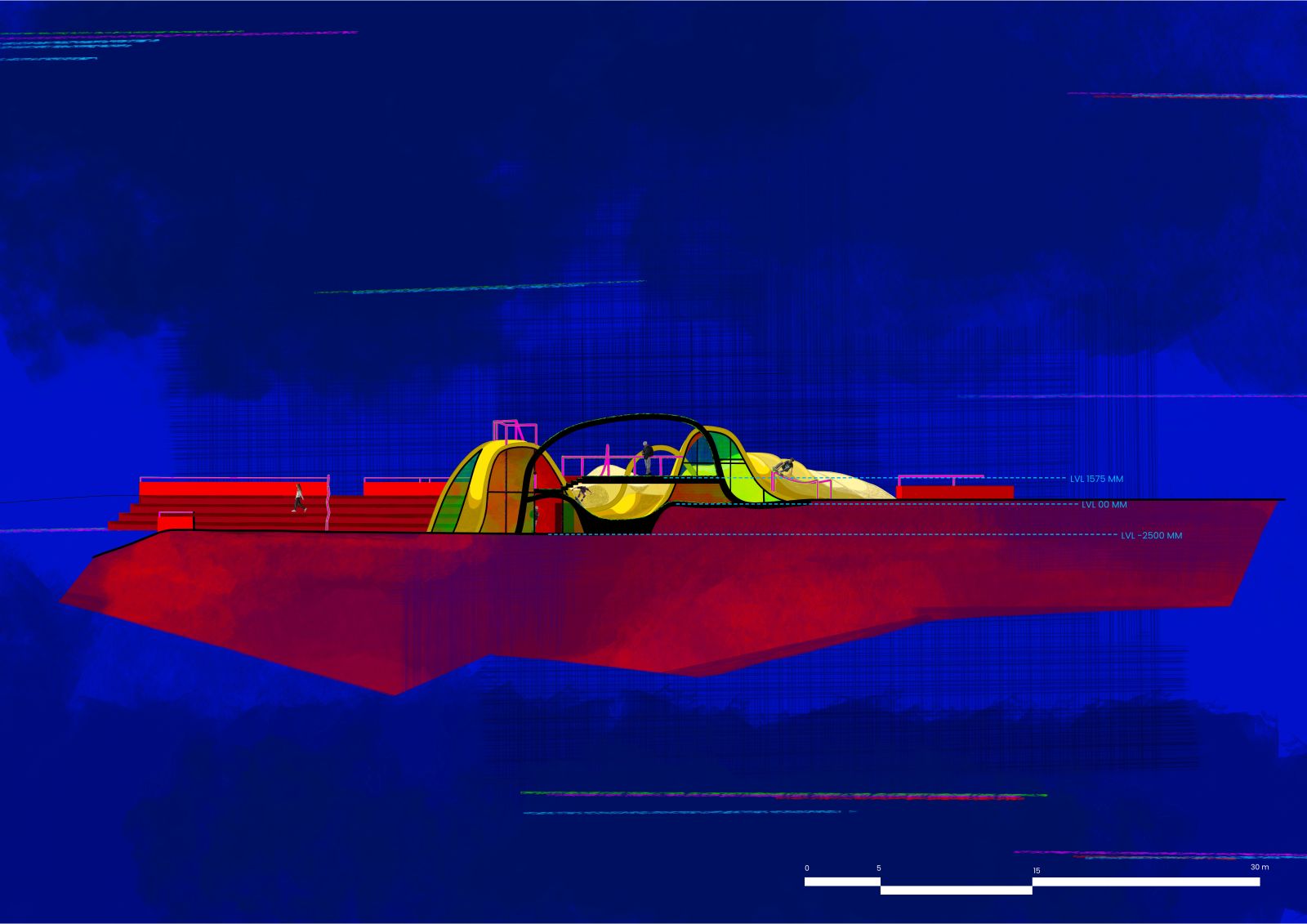
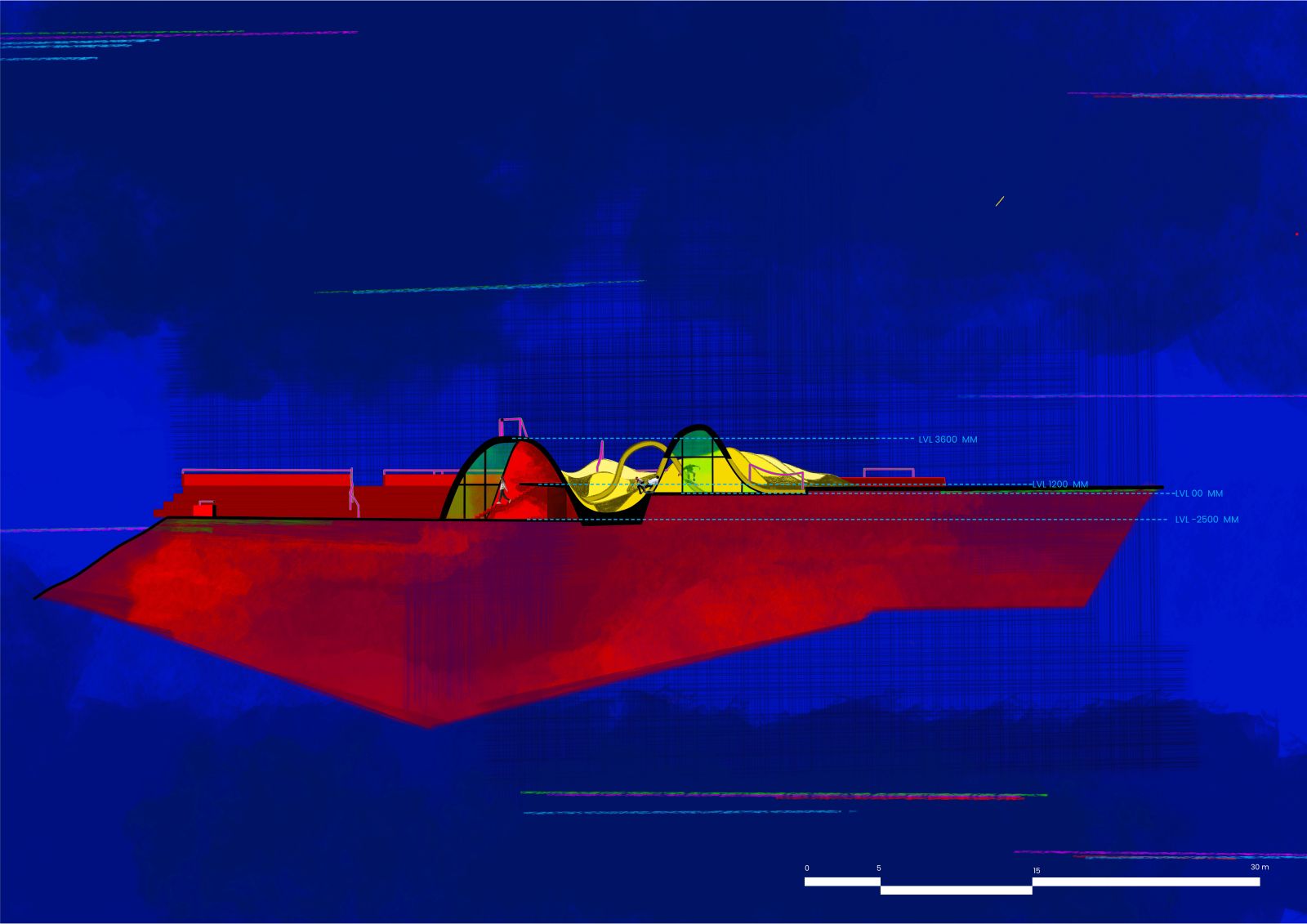
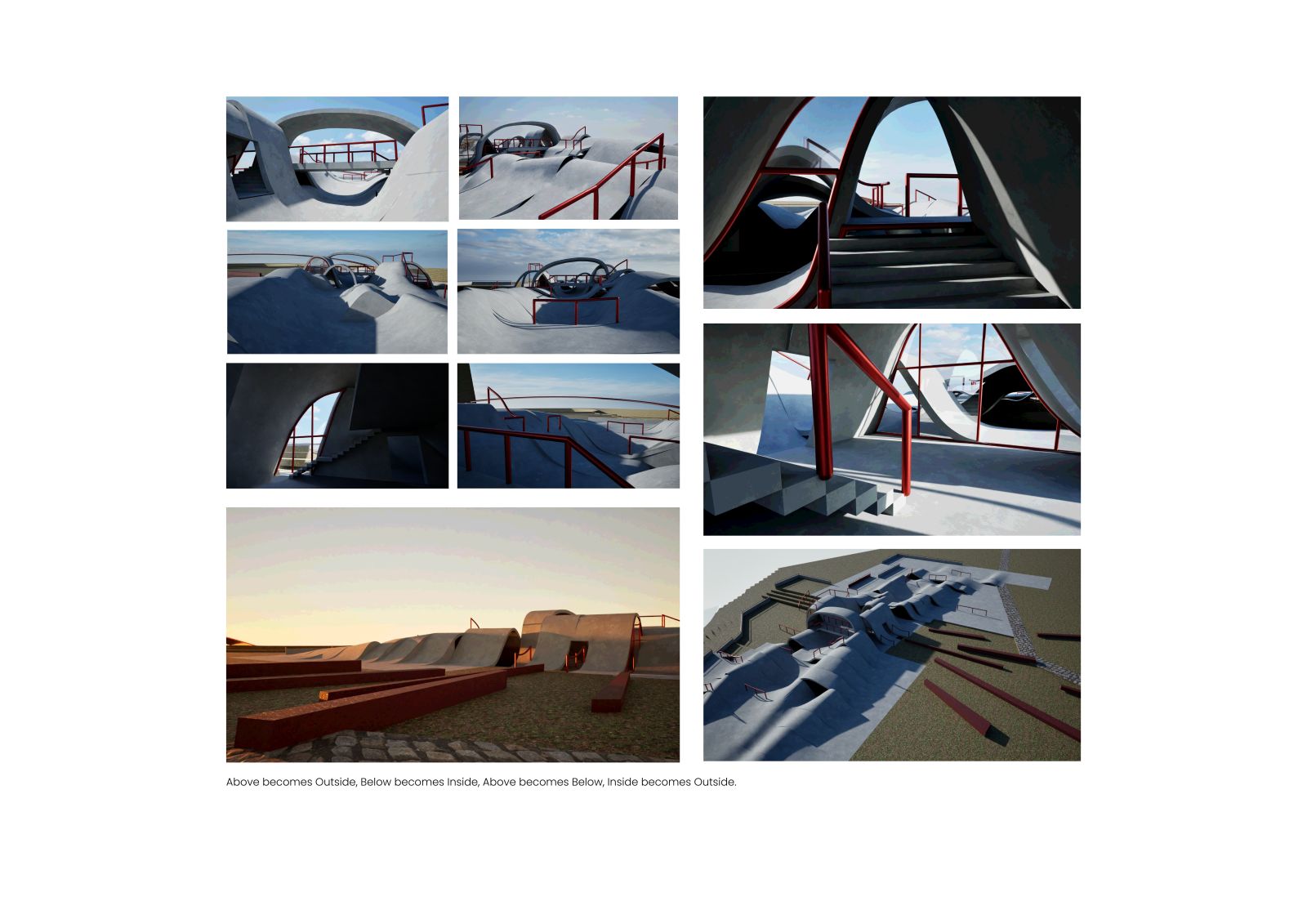
The project stems from an analytical reading of Proun 22D by El Lissitzky, a work rooted in Russian Constructivism and geometric abstraction. The painting’s forces—piercing directionality, pivot, datum, juxtaposition, and angularity—were extracted as spatial principles and translated into three-dimensional behaviour. A responsive study model was developed where each elevation revealed a shifting expression of these forces, suggesting a system being continuously struck, displaced, and reorganized, much like ripples or reverberations moving through matter. This insight initiated a series of material experiments. A simple act of applying force to paper generated folds and ruptures that echoed the earlier conceptual reading. Given the clayey soil conditions of Kamatibaug, this idea was extended using strip models informed by the Rayleigh wave formula, simulating how terrain might deform under dynamic impact. The resulting undulations—its peaks, troughs, curves, and voids—became the generative framework for architectural space-making. The project culminates in a skatepark integrated with a café and rental shop along the riverbank. The pre-existing contours of the site work in tandem with the constructed waveforms, reinforcing the narrative of a landscape disturbed by force. The manipulated ridges transform into skateable surfaces, while the carved-out voids beneath house intimate programs. These radially shifting amplitudes create layered experiential zones, enabling fluid interactions: a visitor seated in the café overlooking the Vishwamitri might simultaneously witness skaters performing tricks above, beside, or below them. The architecture thus becomes an active, vibrating terrain—one where movement, landscape, and built form continuously intersect.
View Additional Work