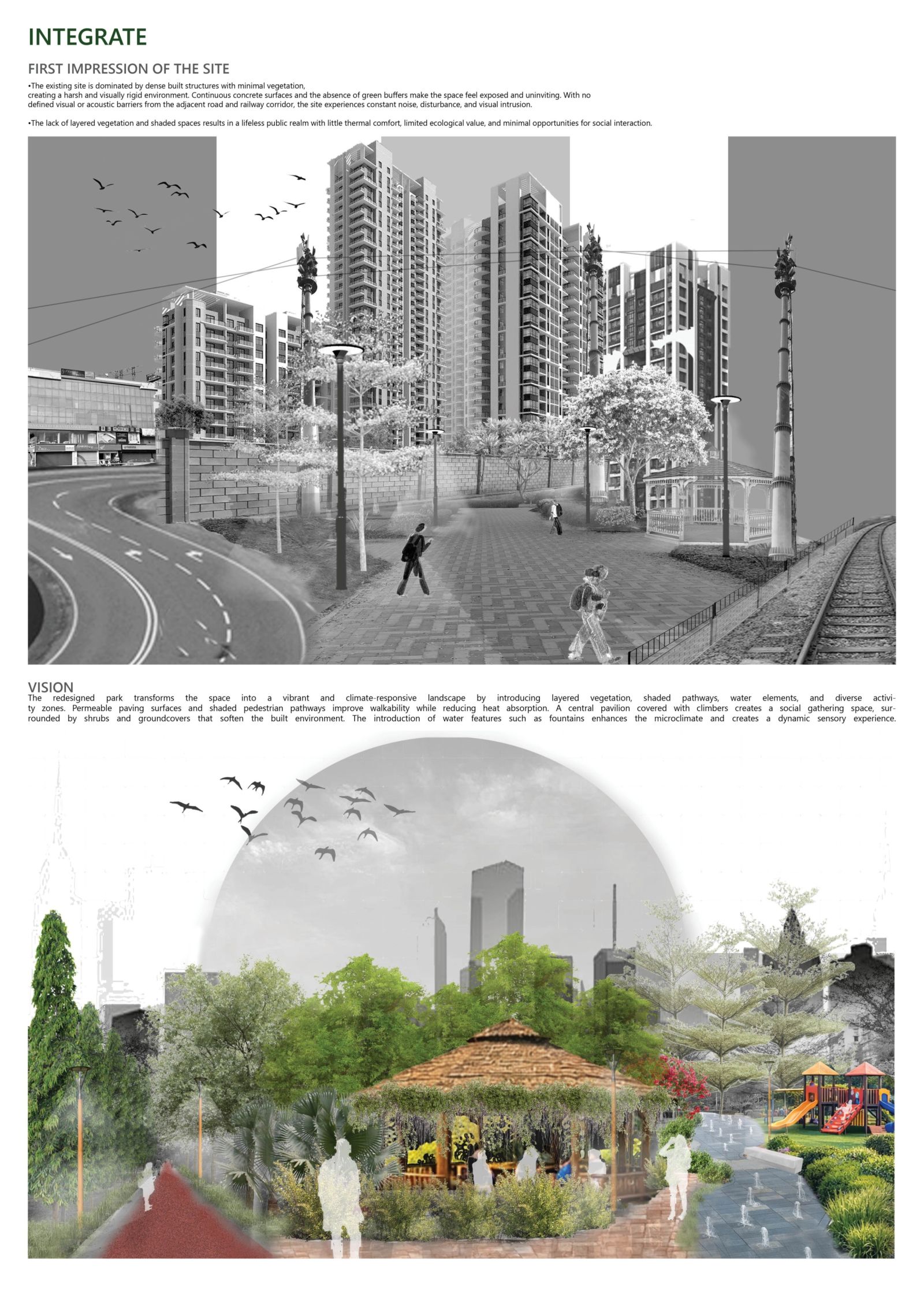
From Heat-Stressed Hardscape to Thermally Comfortable Public Realm — Cooling the Urban Void through Shade, Water, and Layered Landscape
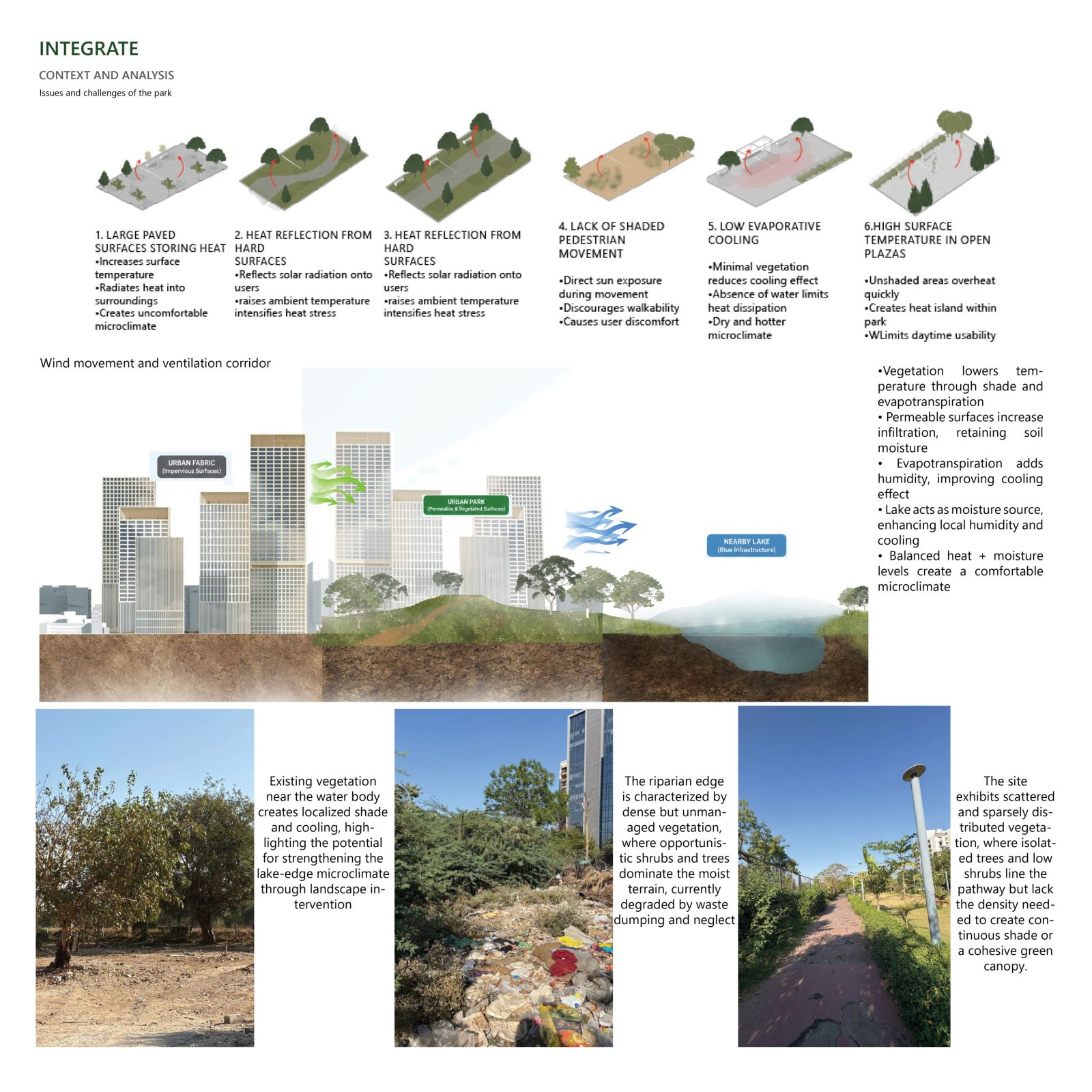
Thermal Imbalance in the Urban Fabric — Identifying Heat Stress Drivers and Opportunities for Microclimate Cooling
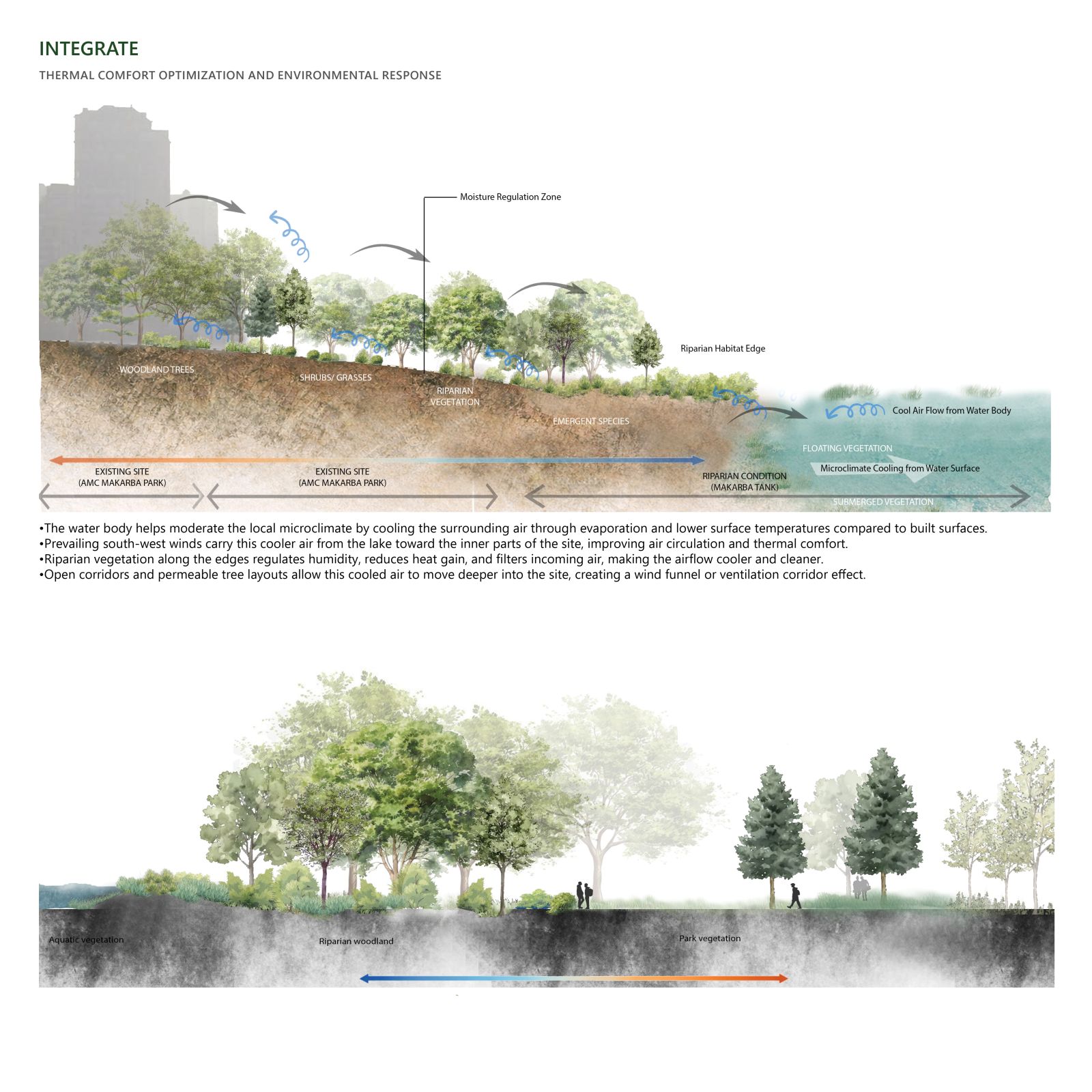
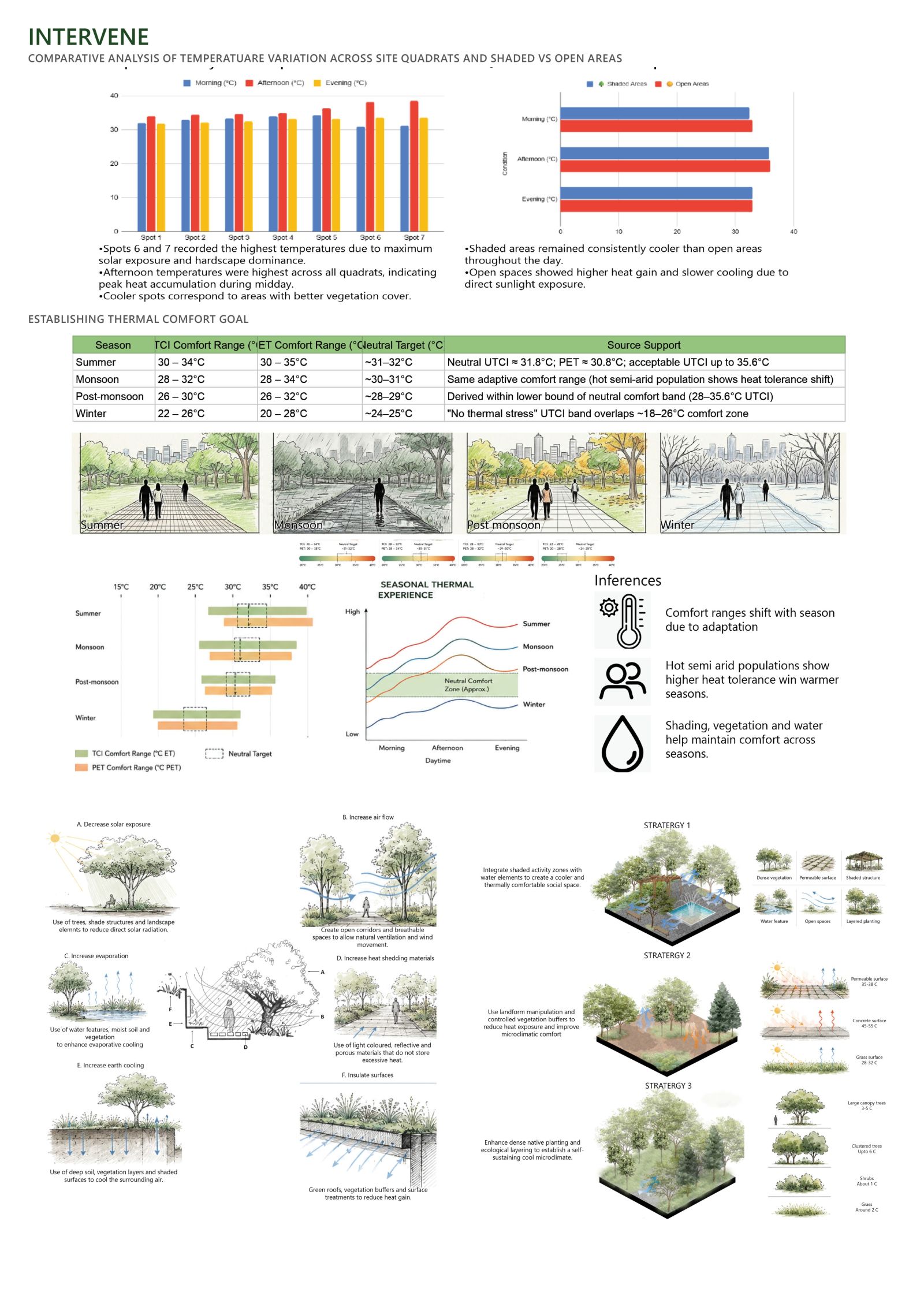
Harnessing Water, Wind, and Vegetation — A Layered Strategy for Site-Wide Thermal Comfort Optimization
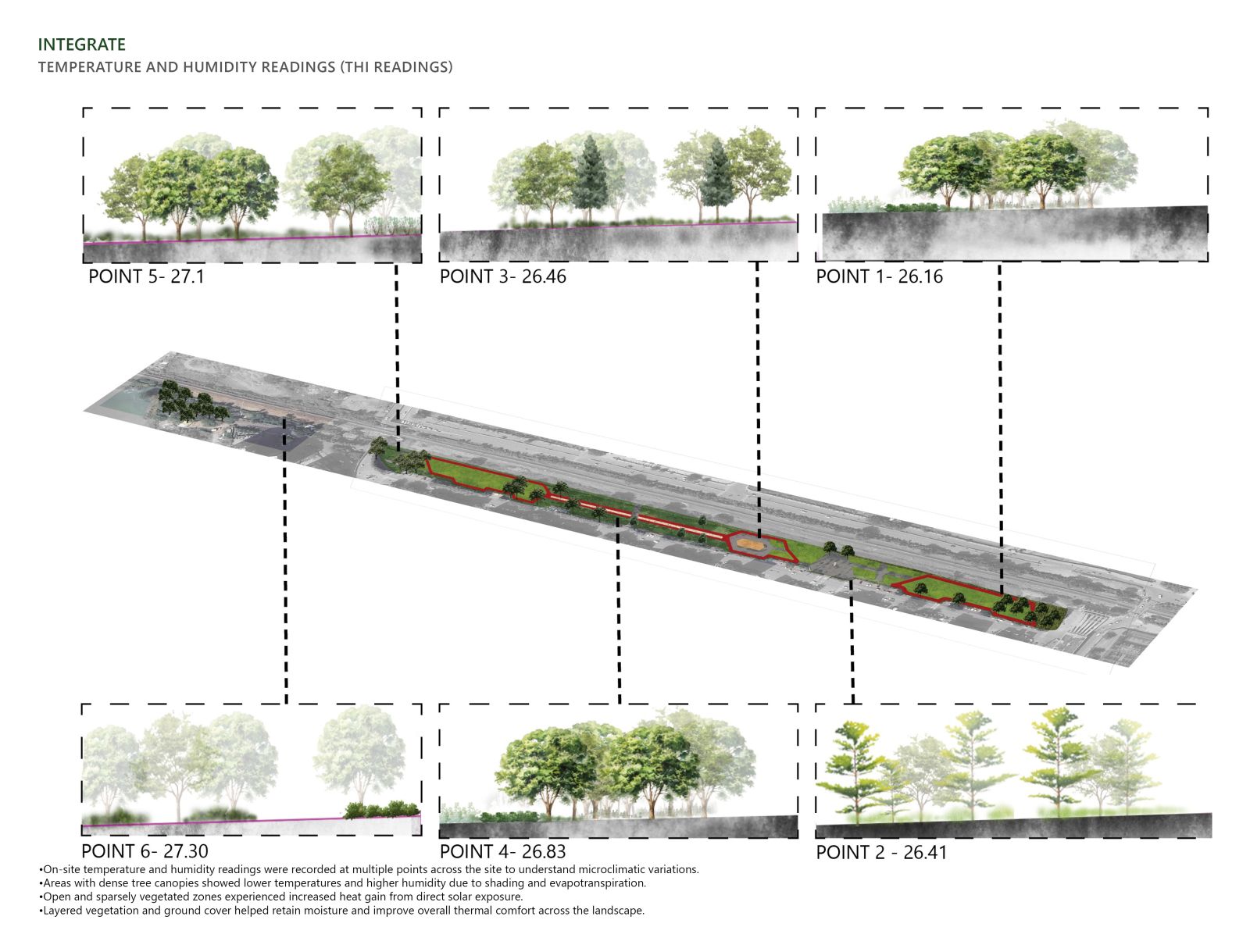
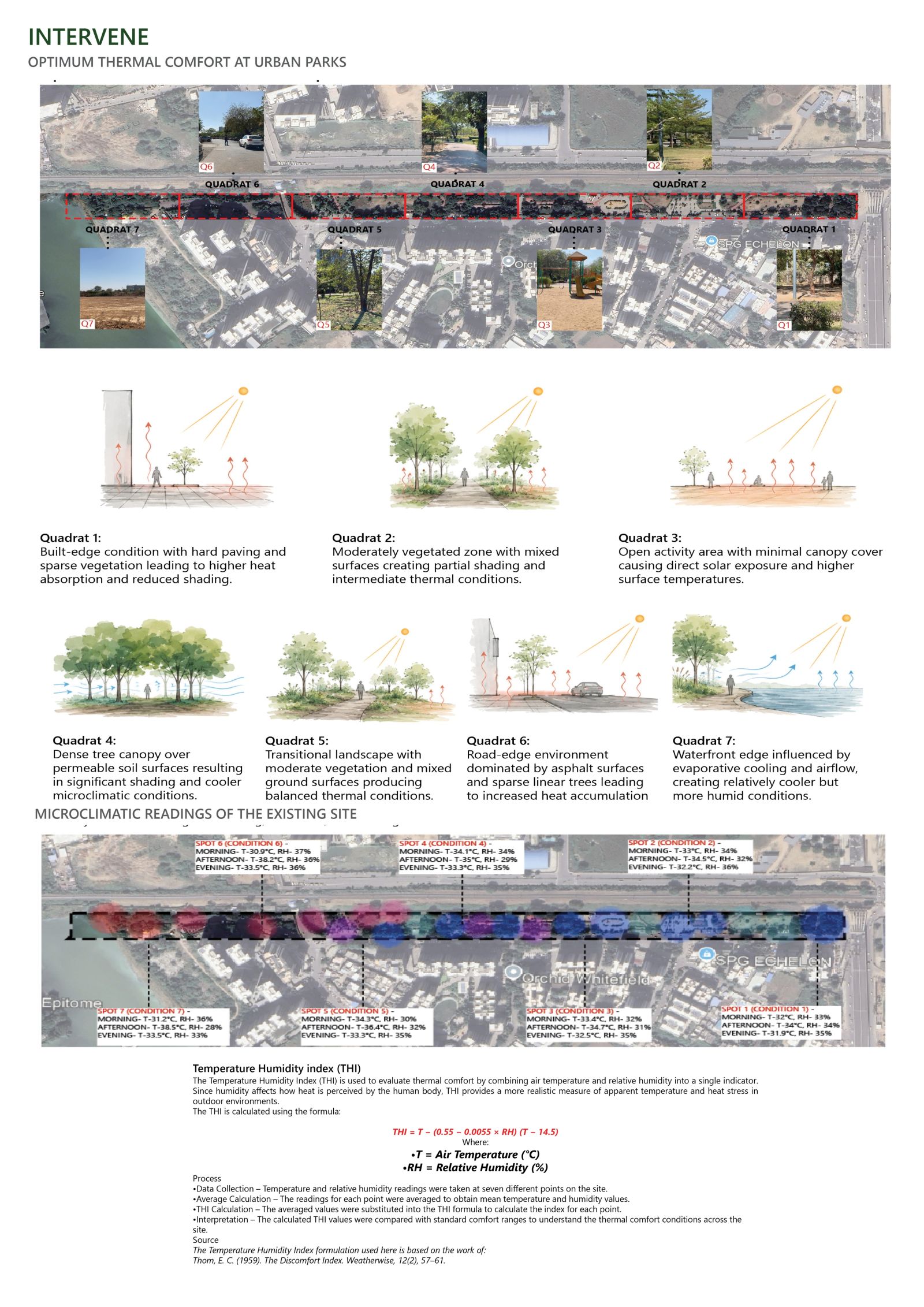
Mapping Microclimate Variation — THI-Based Analysis of Thermal Comfort Across Landscape Conditions
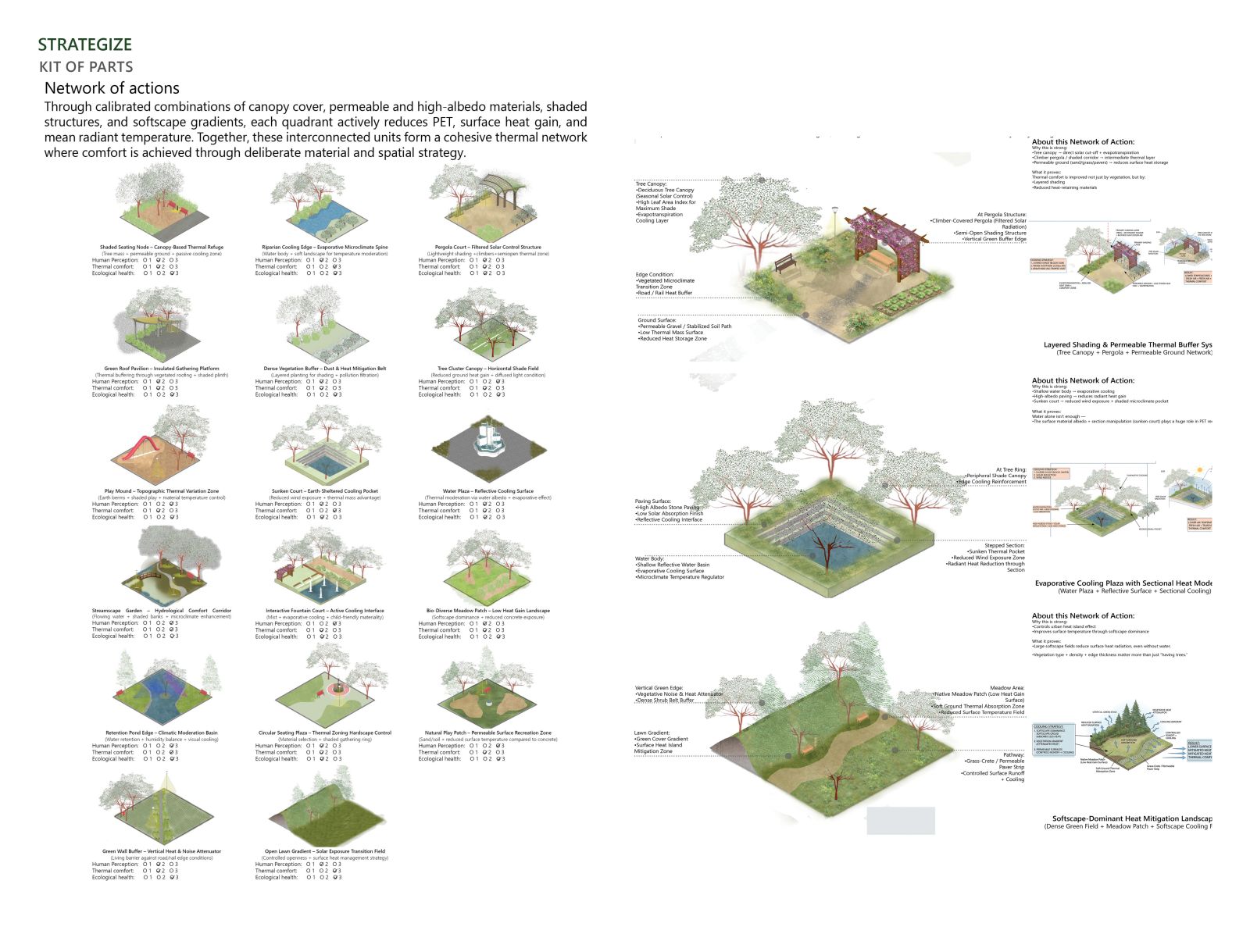
An interconnected landscape system that enhances thermal comfort through shade, water, vegetation, and climate-responsive spatial design.
Microclimatic analysis identifying thermal comfort variations across urban park zones through vegetation, surface material, shade, and waterfront influence.
Comparative thermal analysis establishing climate-responsive comfort strategies through shading, vegetation, airflow, and evaporative cooling interventions.
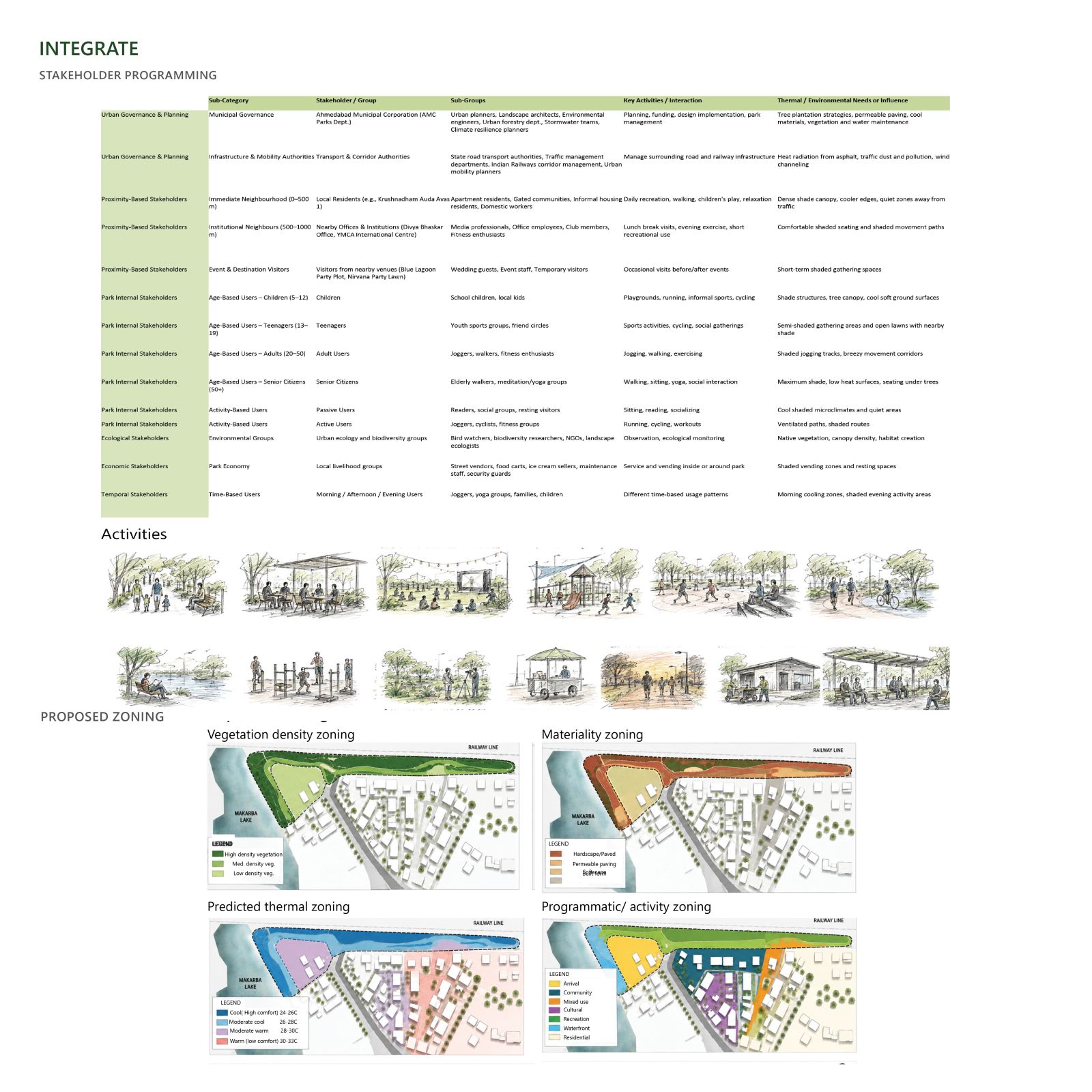
Integrated stakeholder-driven zoning framework aligning activities, vegetation, and material strategies to enhance thermal comfort and ecological performance.
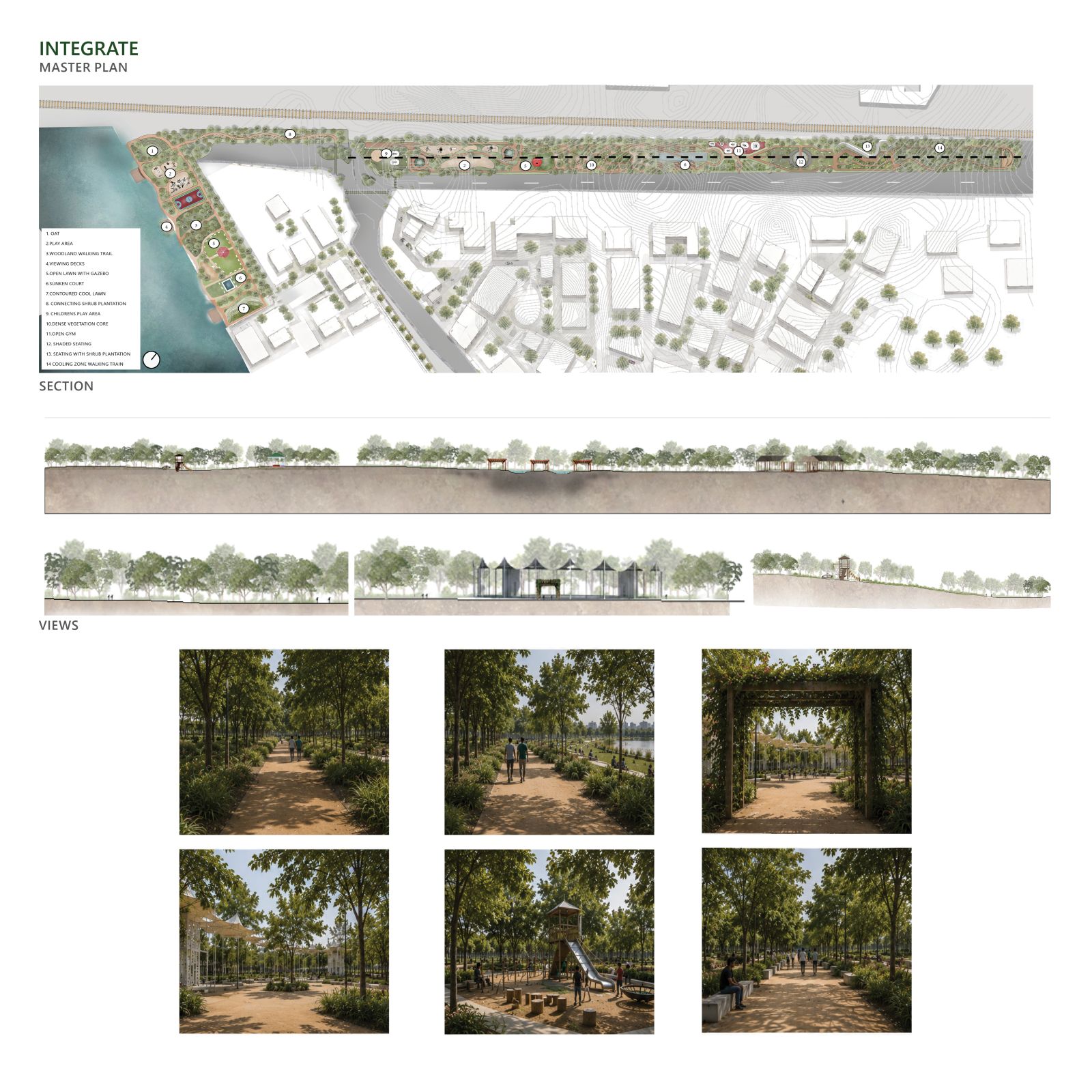
Climate-responsive master planning integrating shaded circulation, cooling landscapes, and ecological layering to create thermally comfortable public spaces.
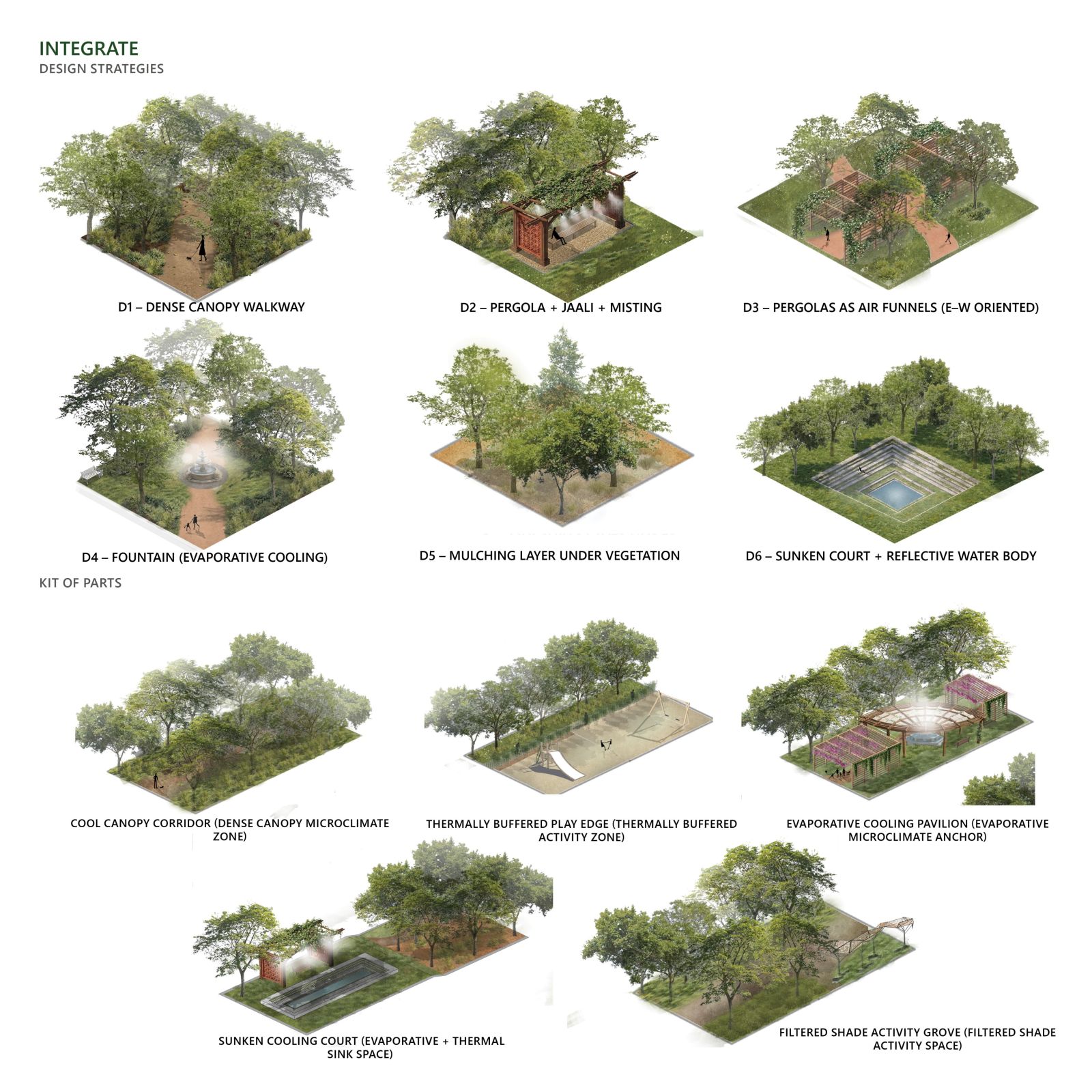
Design strategies and updated kit of parts for optimizing thermal comfort