Your browser is out-of-date!
For a richer surfing experience on our website, please update your browser. Update my browser now!
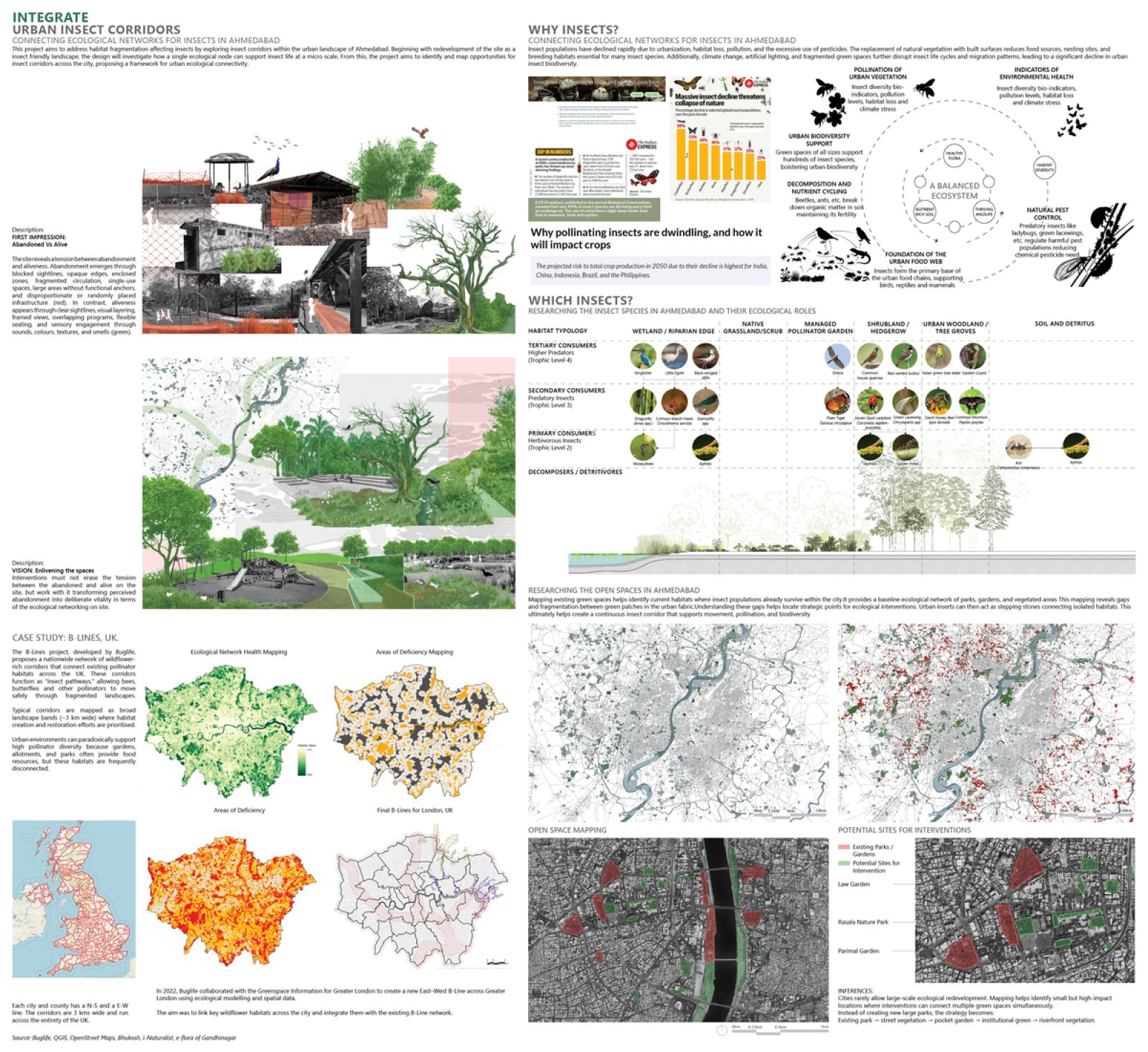
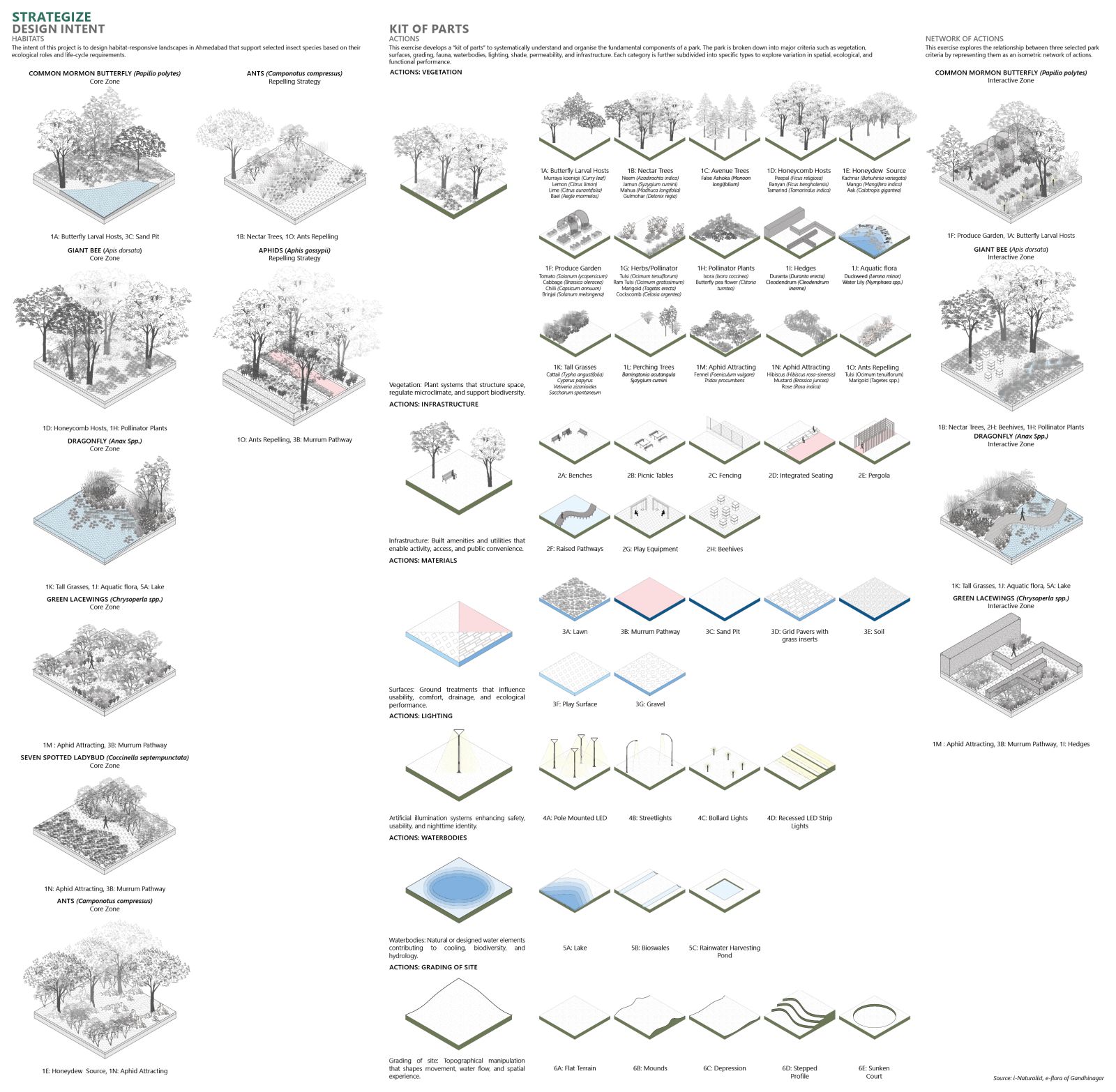
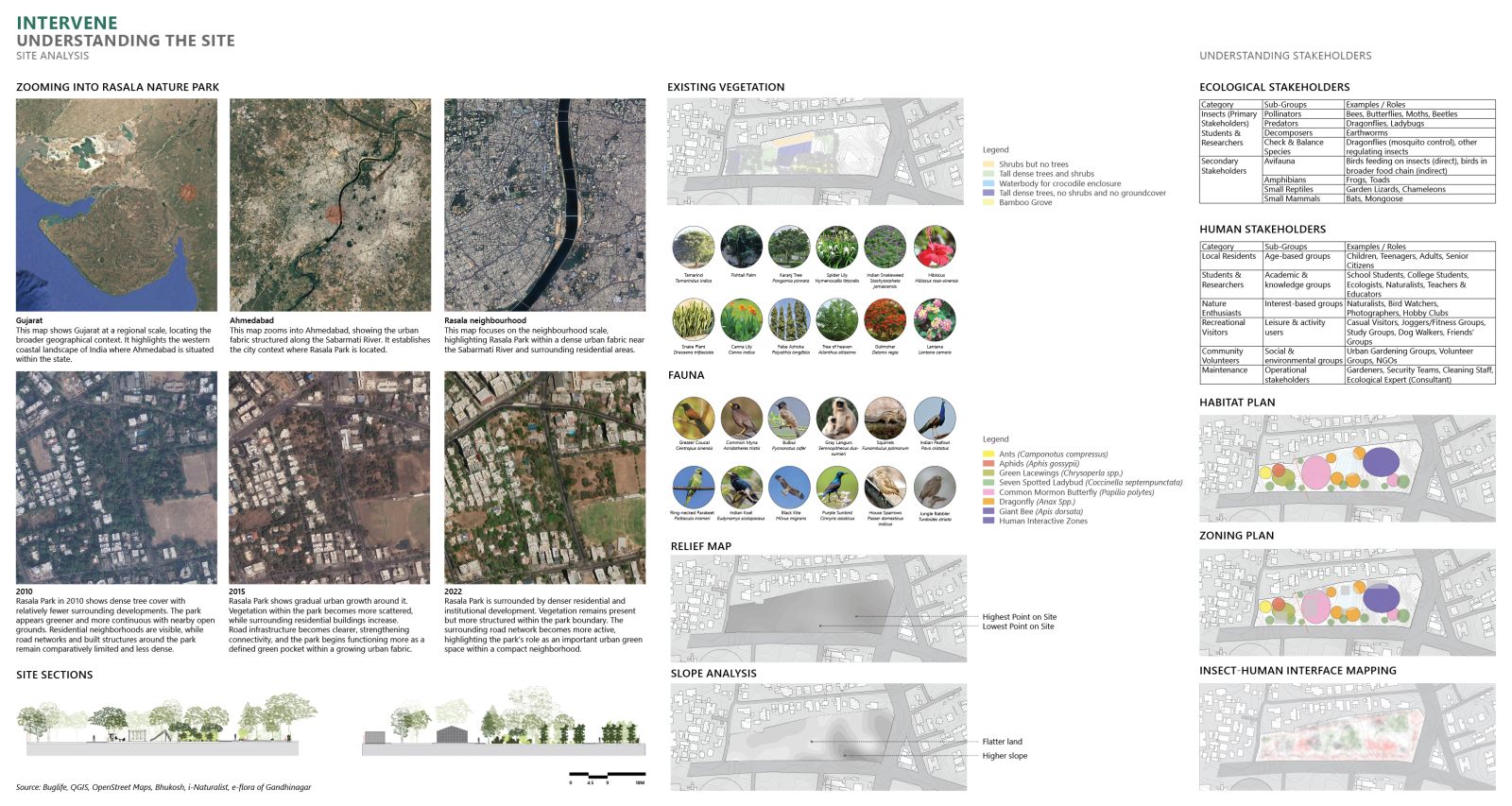
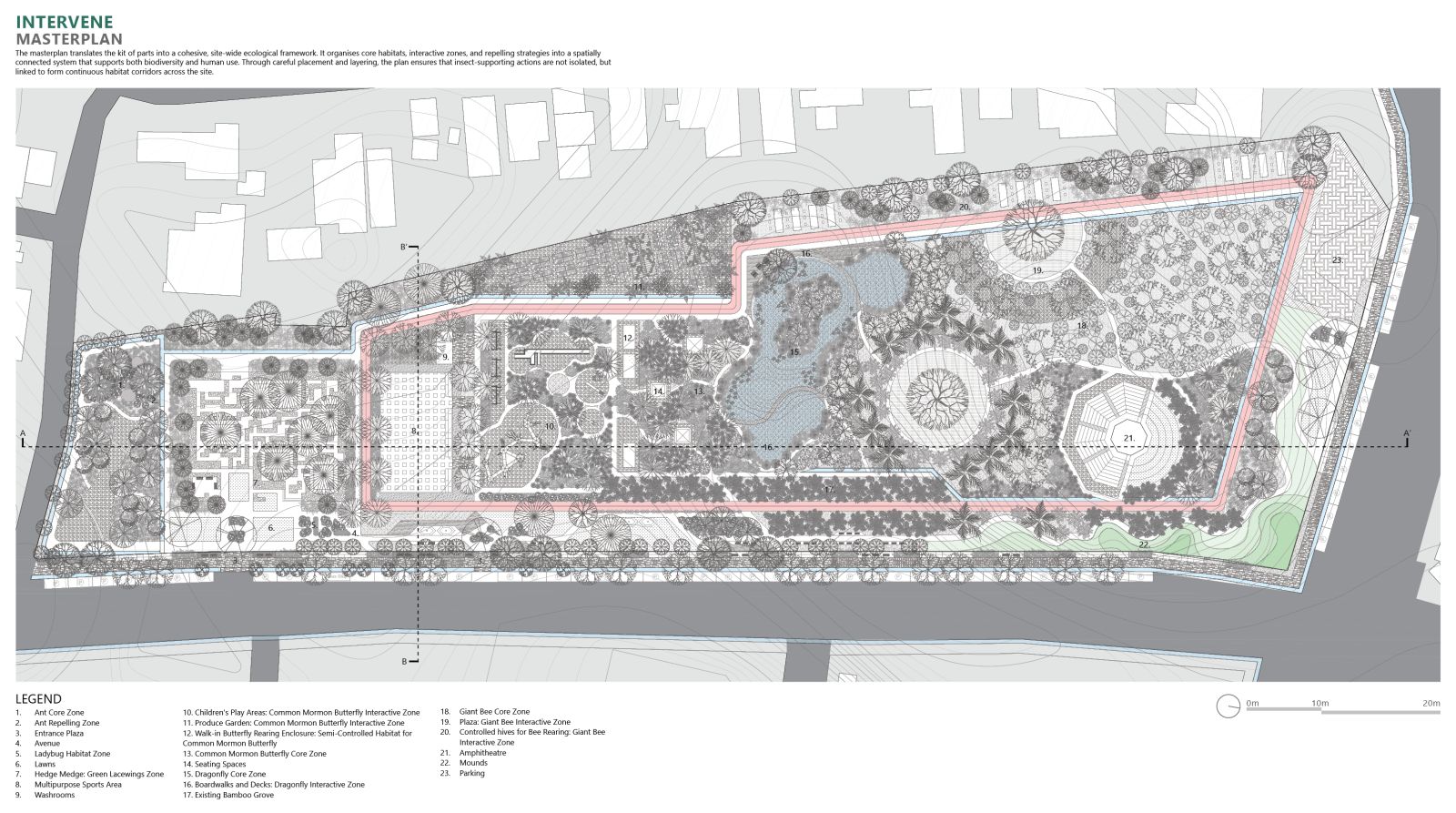
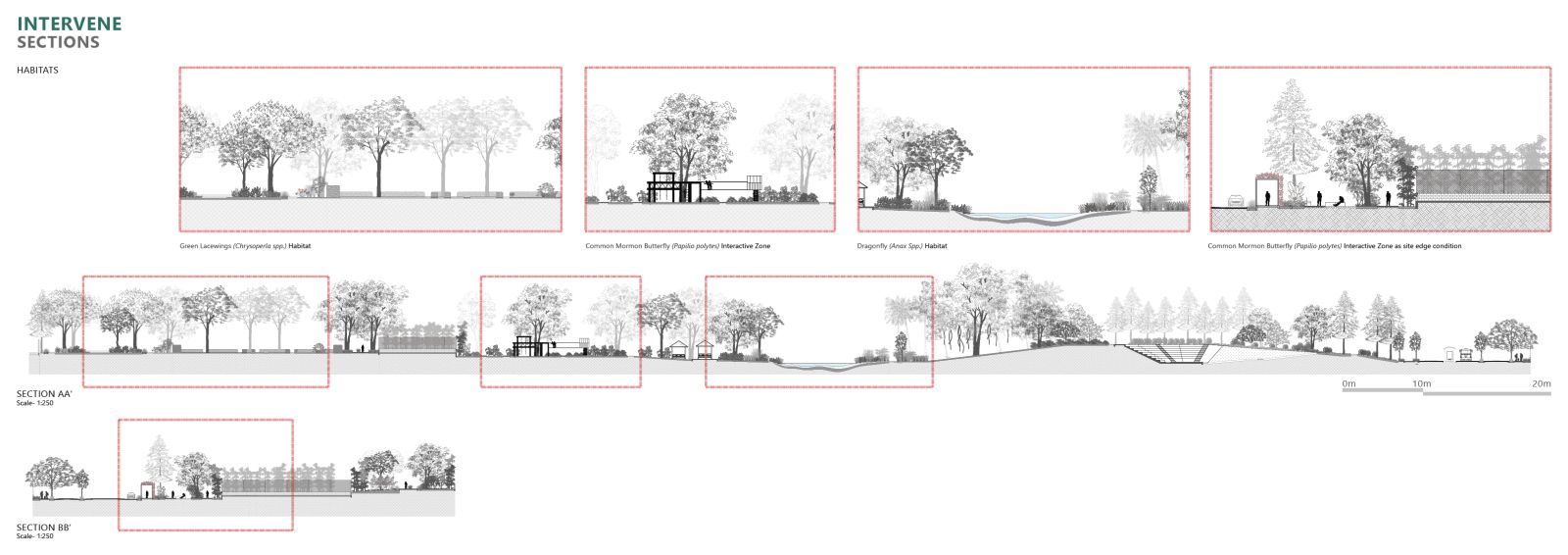
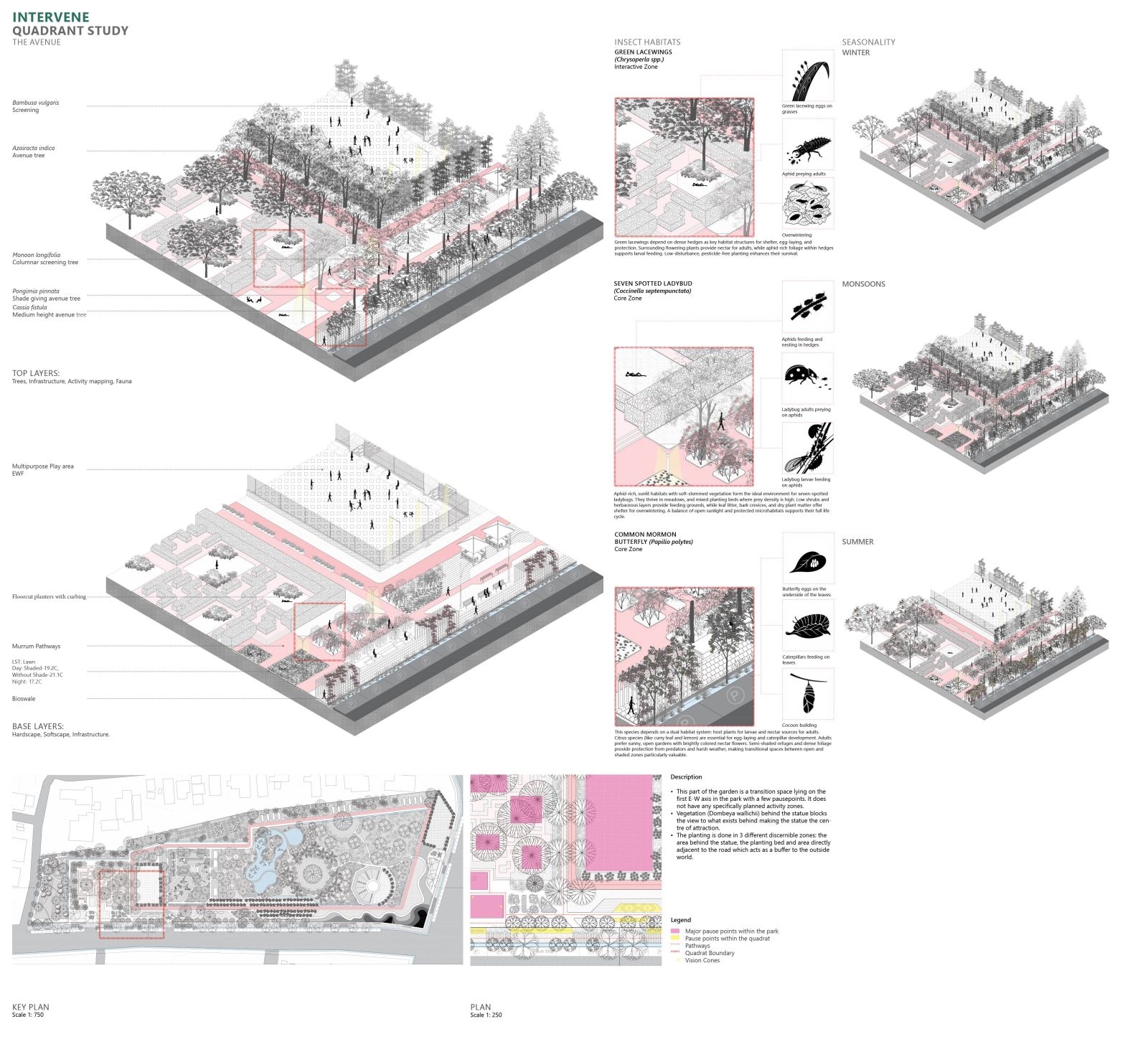
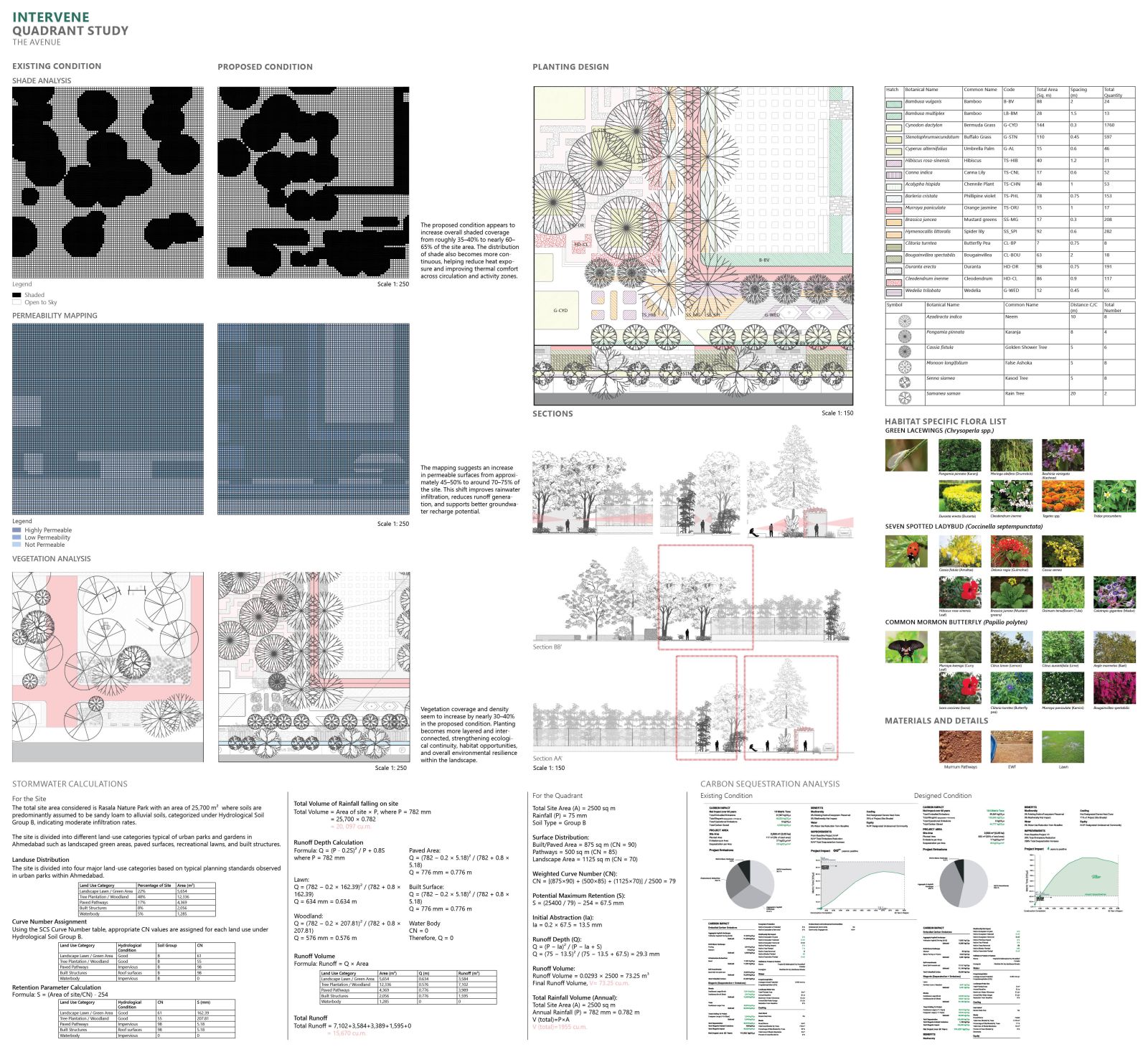
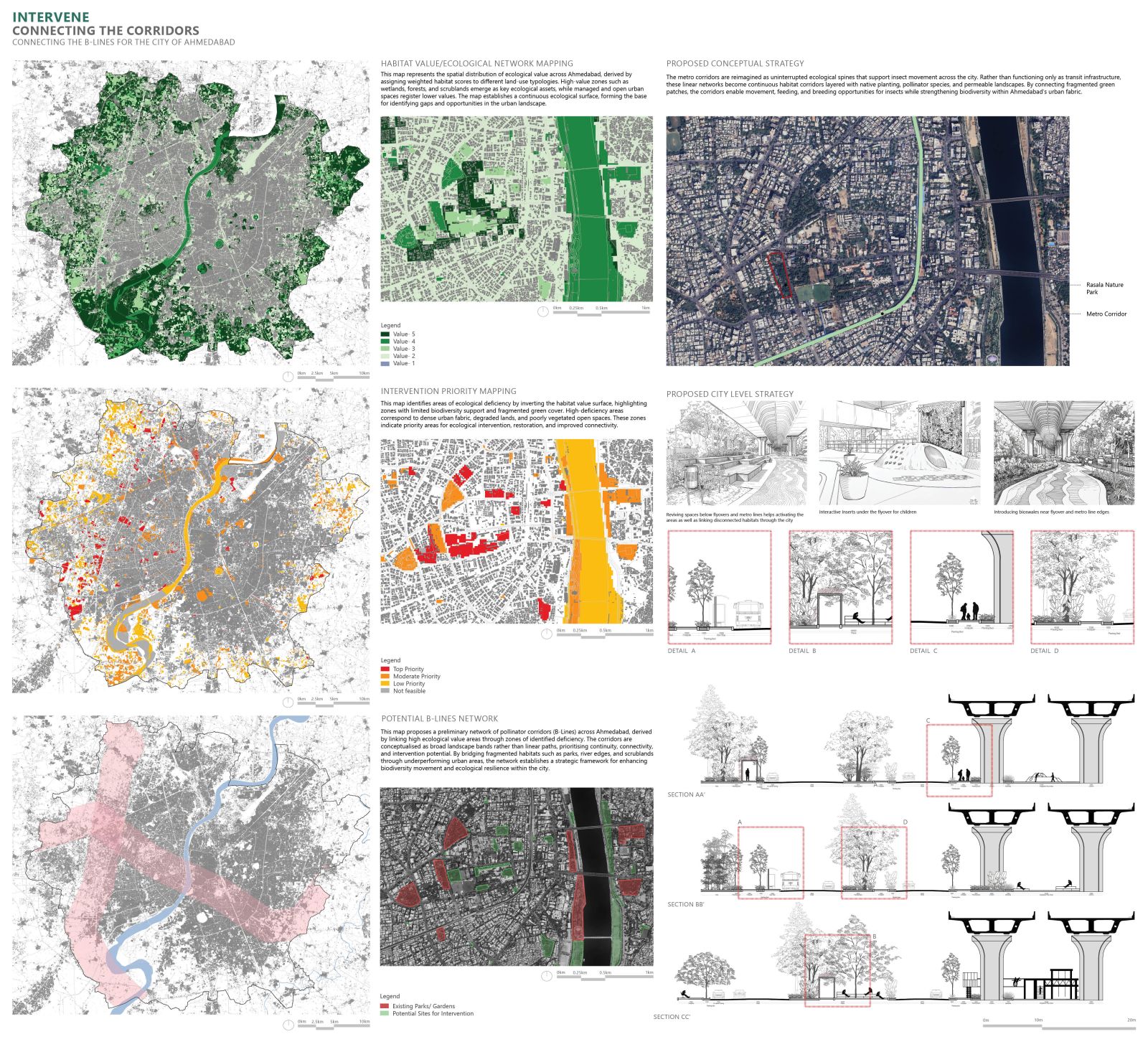
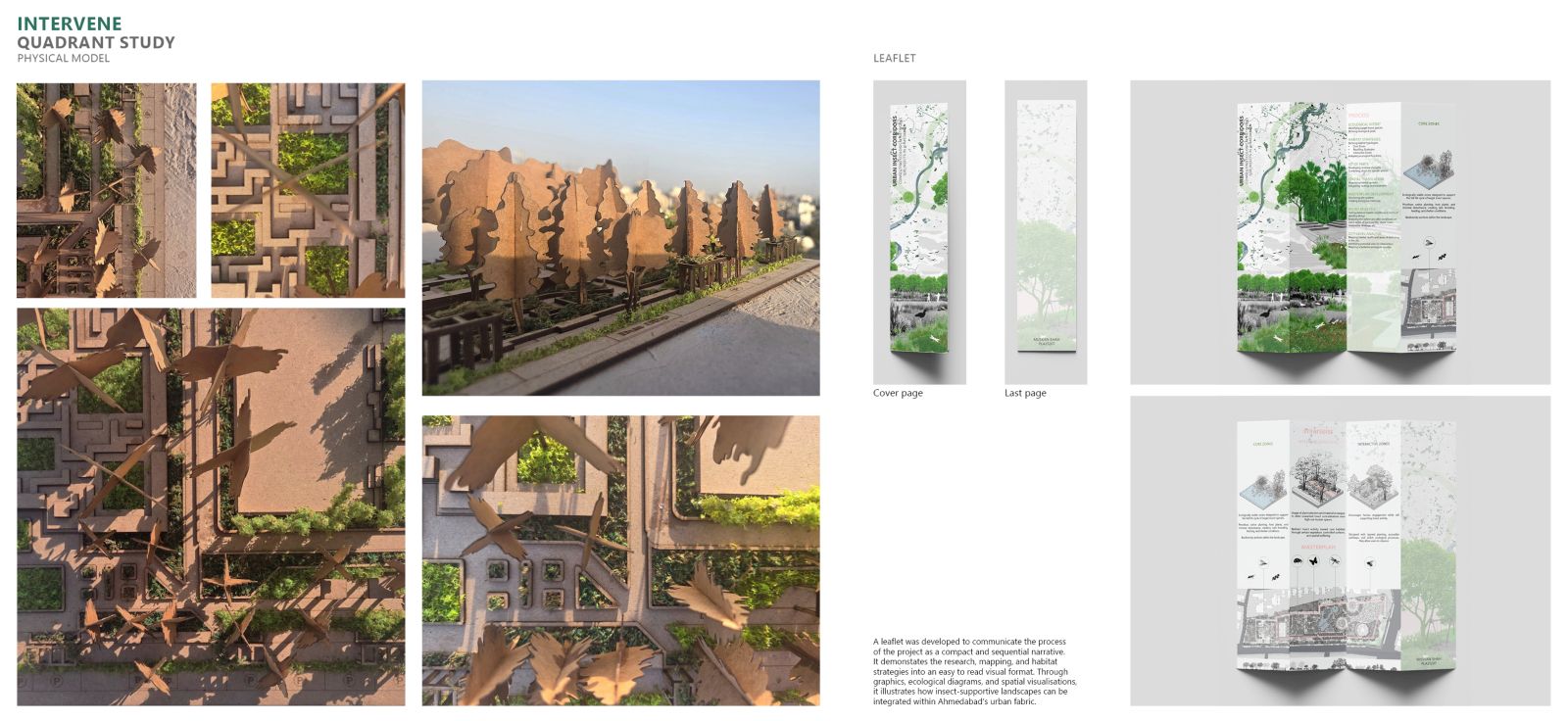
This study originates from a city-scale mapping of open spaces in Ahmedabad, including parks, maidans, shrublands, and wetlands, understood as a dispersed yet fragmented ecological network. In the context of rapid urbanisation, such fragmentation limits the capacity of these landscapes to support biodiversity, particularly insect populations that play a critical role in pollination, decomposition, and maintaining trophic balance. Despite their ecological importance, insect habitats remain largely unaddressed within conventional urban park design. Referencing the B-Lines (Biodiversity Lines) by Buglife (UK) model of insect corridors, the study reframes urban open spaces as components of a connected habitat system by mapping the green spaces across the city. A species-based approach is adopted, identifying key insect species in Ahmedabad through sources such as e-Flora of Gandhinagar and iNaturalist, with emphasis on those declining in urban conditions. Their ecological roles, life cycles, and plant dependencies are analysed to establish precise habitat requirements, which inform the design of targeted, species-specific habitat modules. Envisioned as replicable and adaptable, these modules extend beyond the park to propose a city-scale network of interconnected habitats. The study outlines a framework for integrating insect corridors within existing urban green infrastructure through a system of core habitats, stepping stones, and linear connectors. By developing a scalable kit-of-parts and aligning with broader planning strategies, the research positions urban open spaces as both ecological infrastructure and pedagogical landscapes, addressing biodiversity loss while redefining the role of parks in the contemporary city as active agents within a larger ecological network.
View Additional Work