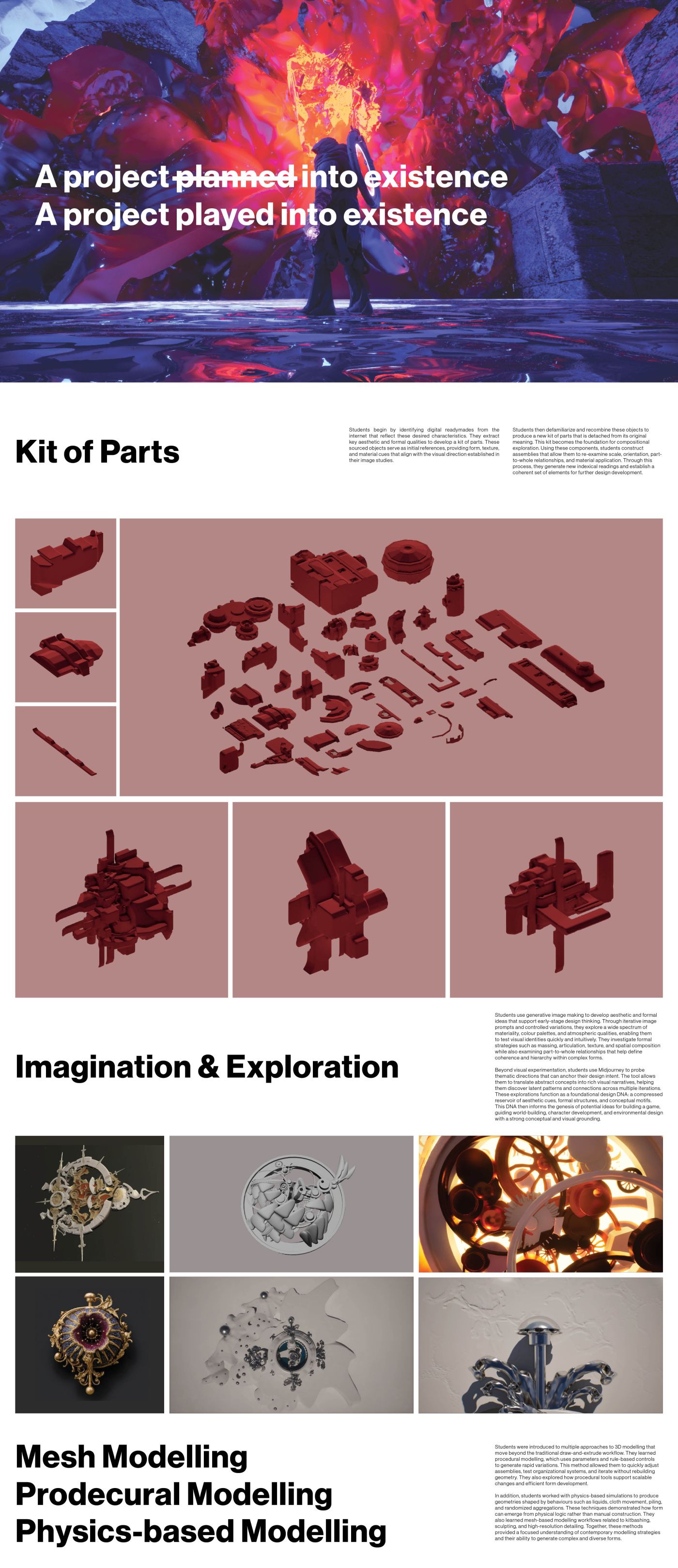
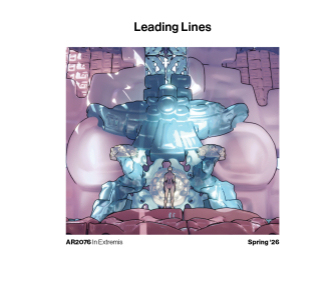
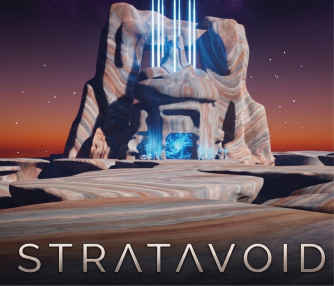
What if spatial conditions weren’t planned — but played into existence?
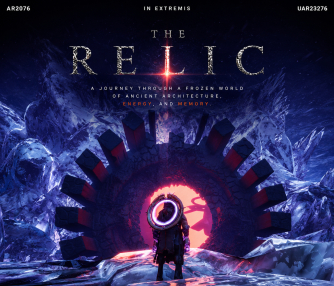
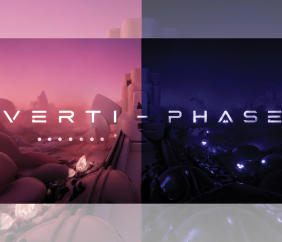
The studio challenges students to rethink architecture as an act of world-building—where spaces emerge from the interaction of design agents: forms, materials, light, and cameras. These become elements within a digital sandbox — an evolving terrain where layered moves create built forms, experiences and fictional environments that a character inhabits.
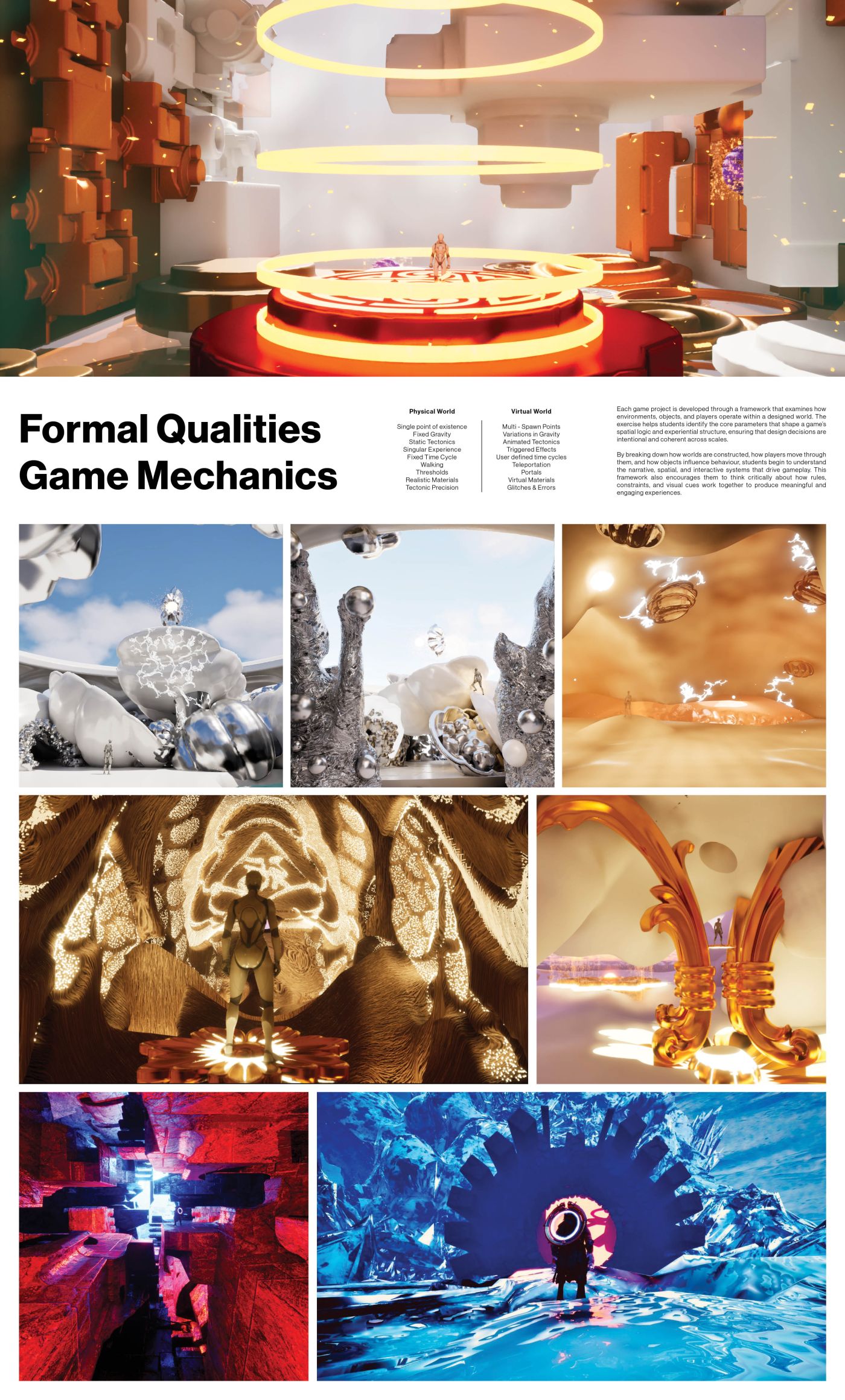
Students will leverage game engines to construct immersive virtualscapes. By stacking design agents and allowing their interactions to unfold, these virtualscapes will demonstrate networks of experience, movement, and interaction. Worlds grow step by step, not from fixed plans but through exchanges between design agents. The studio operates at the intersection of game design and architectural discourse.
The virtualscape will not just be a building but an immersive game world that maps micro-level agents to macro-scale environments while questioning the act of inhabitation. Students will design in extremis, where playful interactions become a building block forming a living condition. This studio invites students to shape virtual gamified environments through digital tools and imagination.
Studio Unit
Visual studies and formal morphologies lay the foundation for the conceptual underpinnings of the game project.
A forensic reading of qualities derived from the visual studies informs the architectural organization, interaction strategies, and material applications.
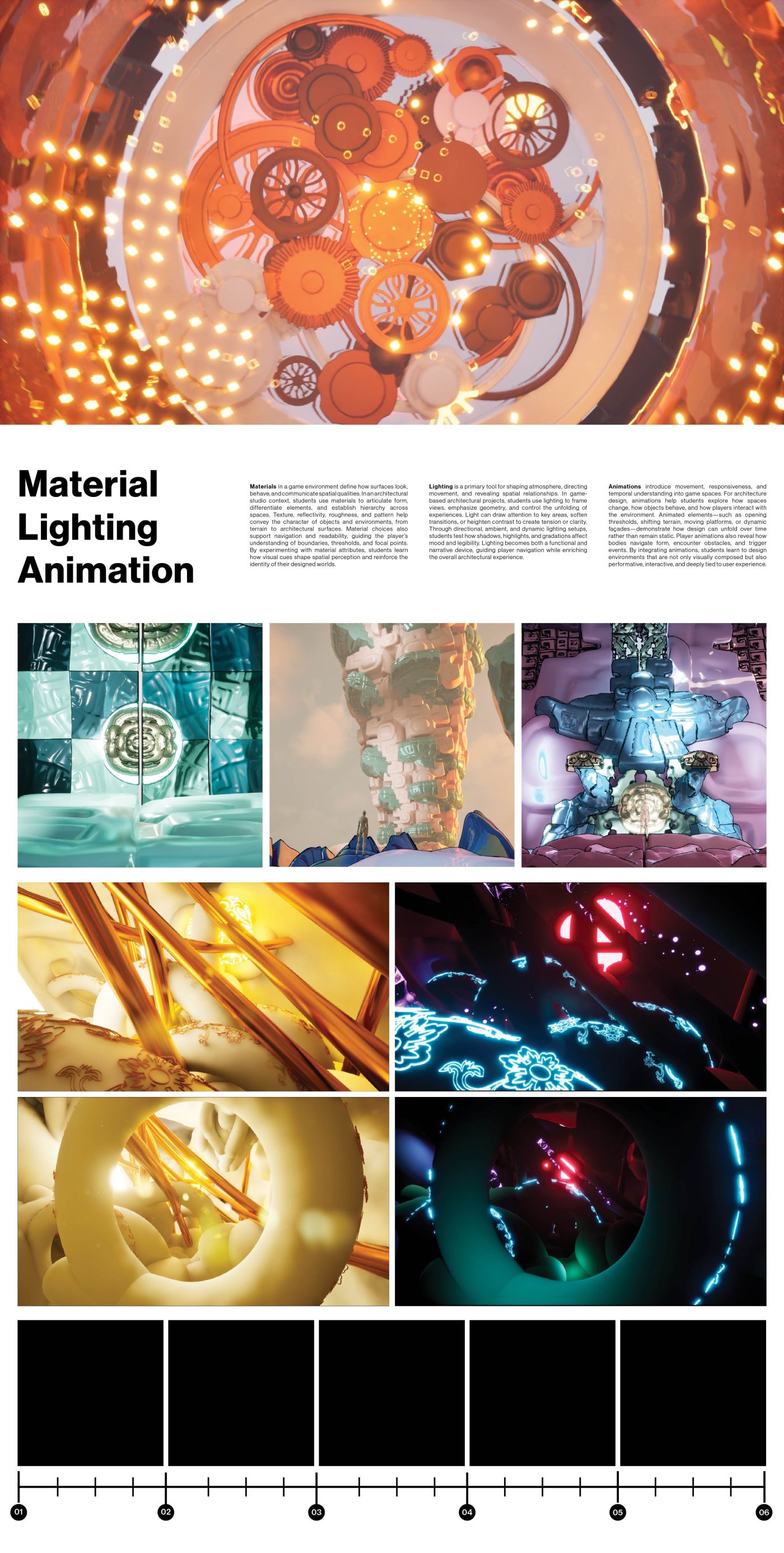
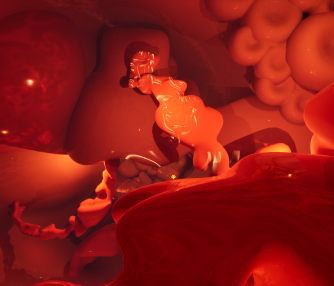
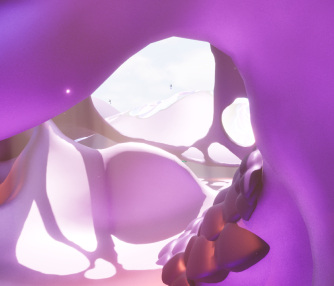
Projects emphasize conveying the world through inventive lighting, materiality, and animated elements that shape atmosphere and spatial experience.
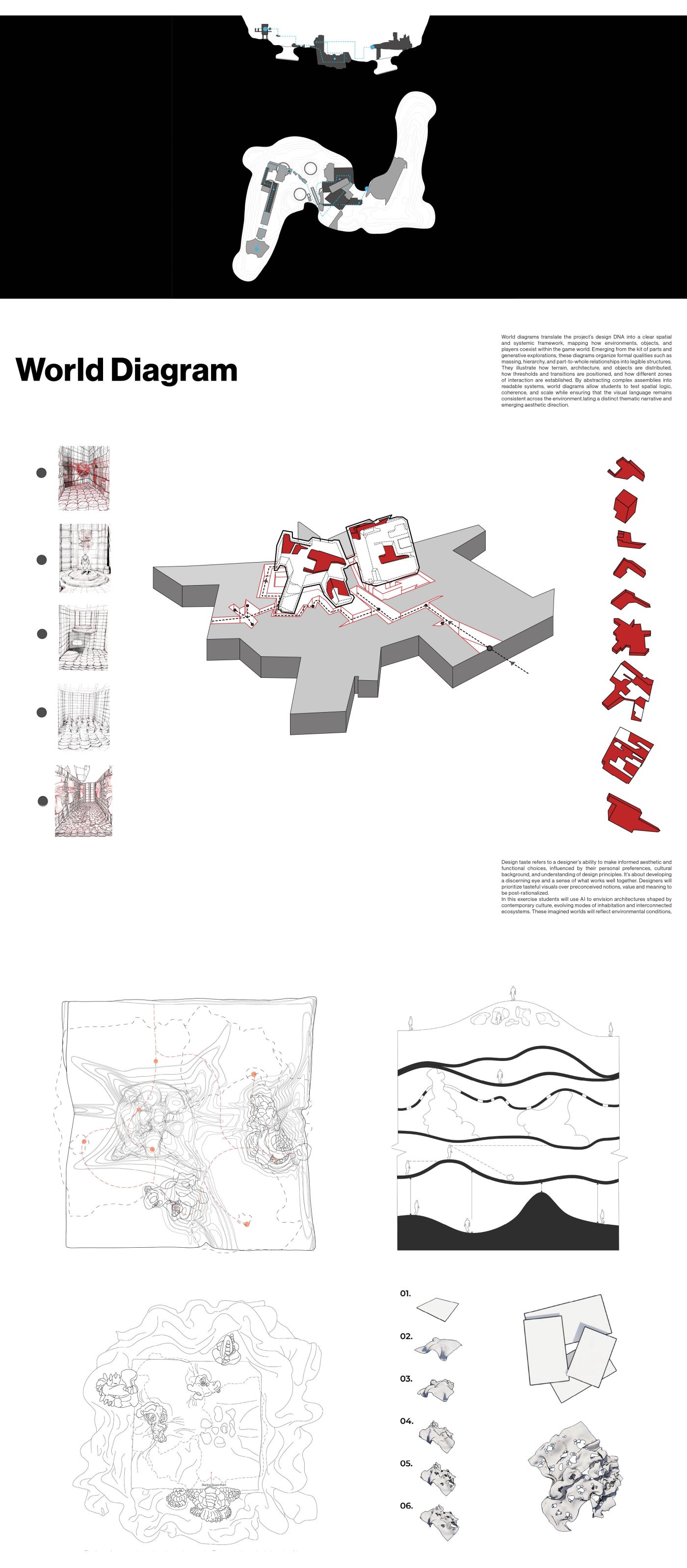
Projects emphasize drawing as a critical medium for mapping the world; constructing layered representations of spatial, material and territorial relationships across scales.
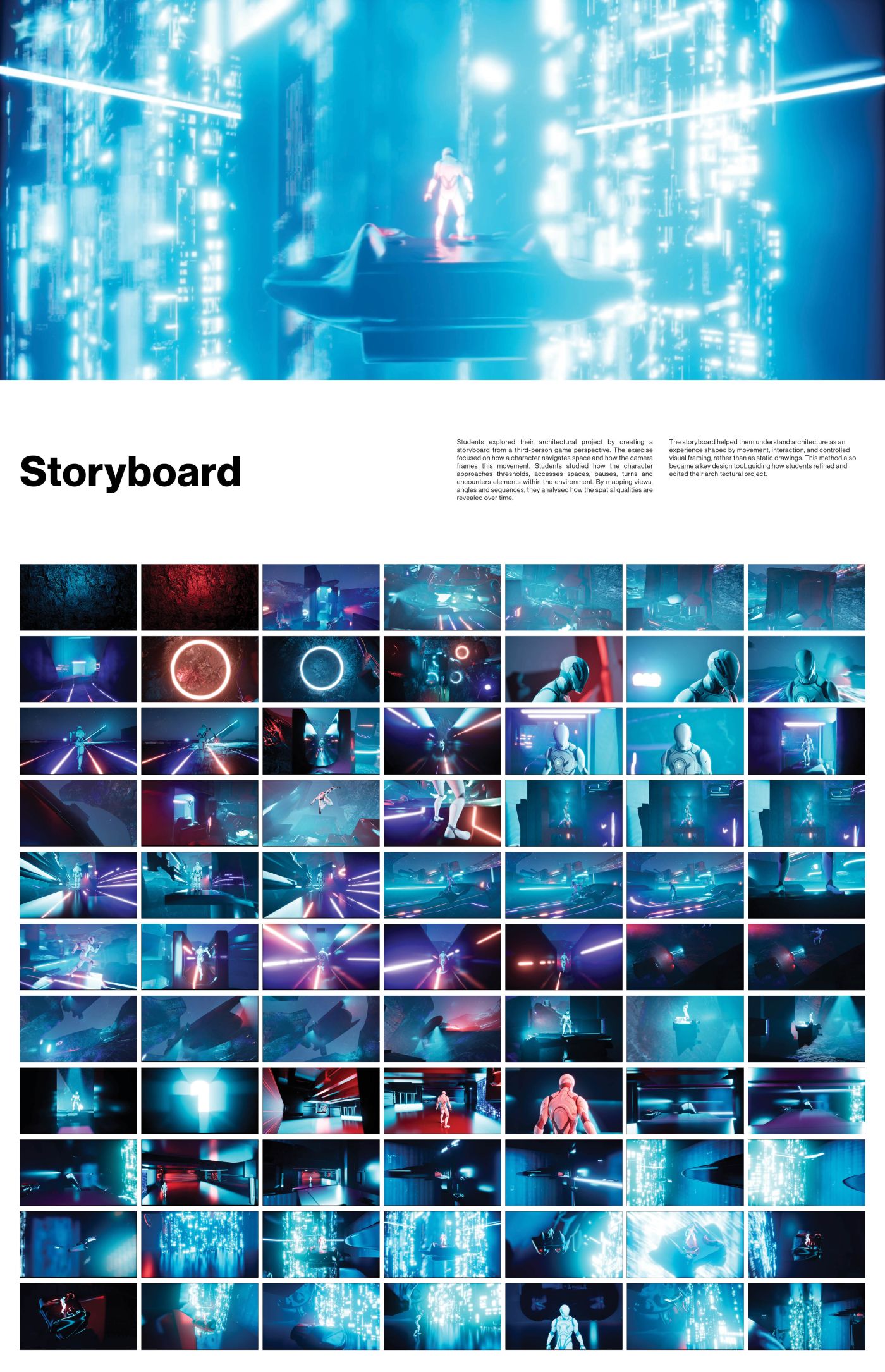
The design development of the project is influenced by the sequential unfolding of character’s and consequently the camera’s perception of architectural space.