Your browser is out-of-date!
For a richer surfing experience on our website, please update your browser. Update my browser now!
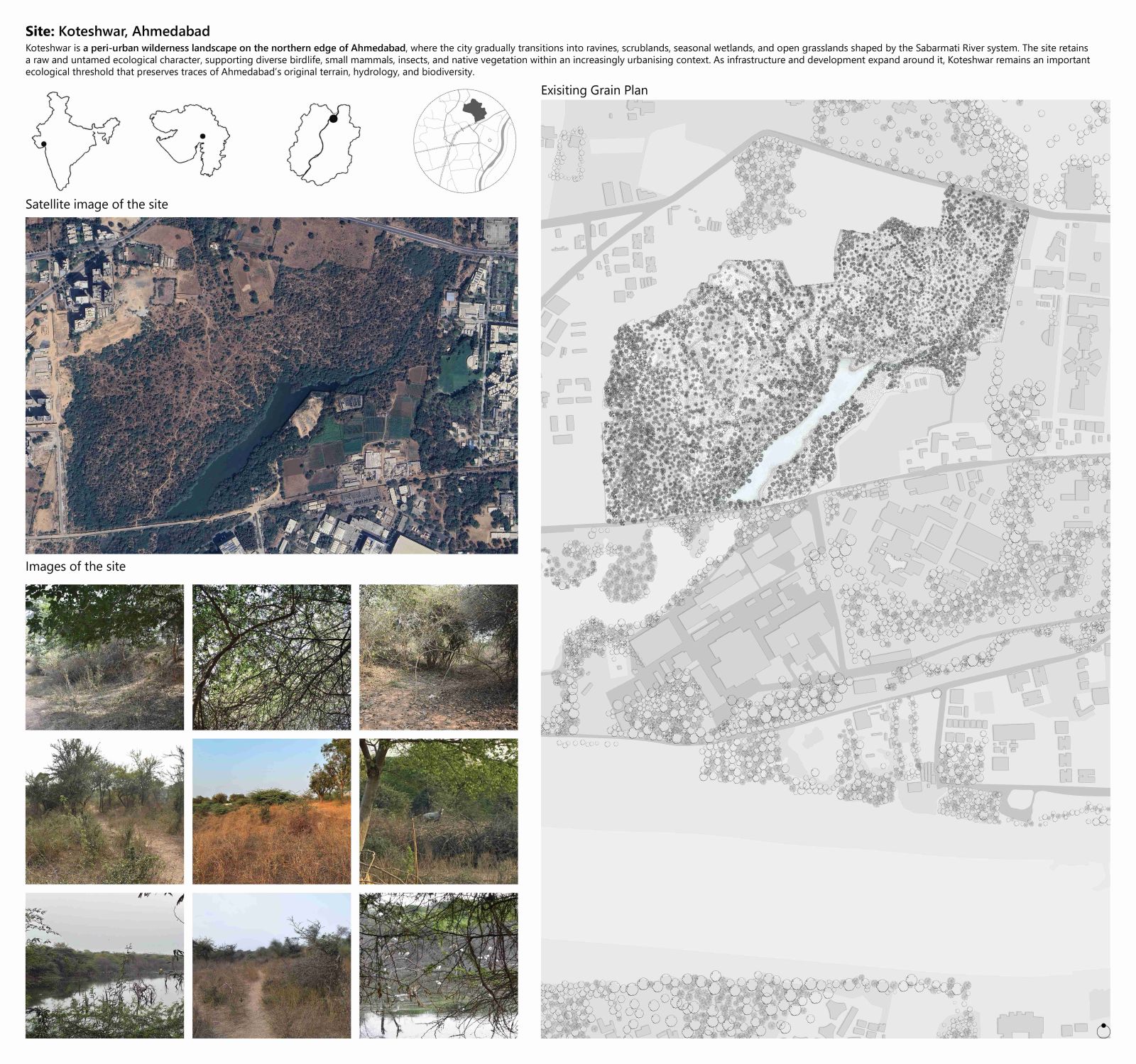
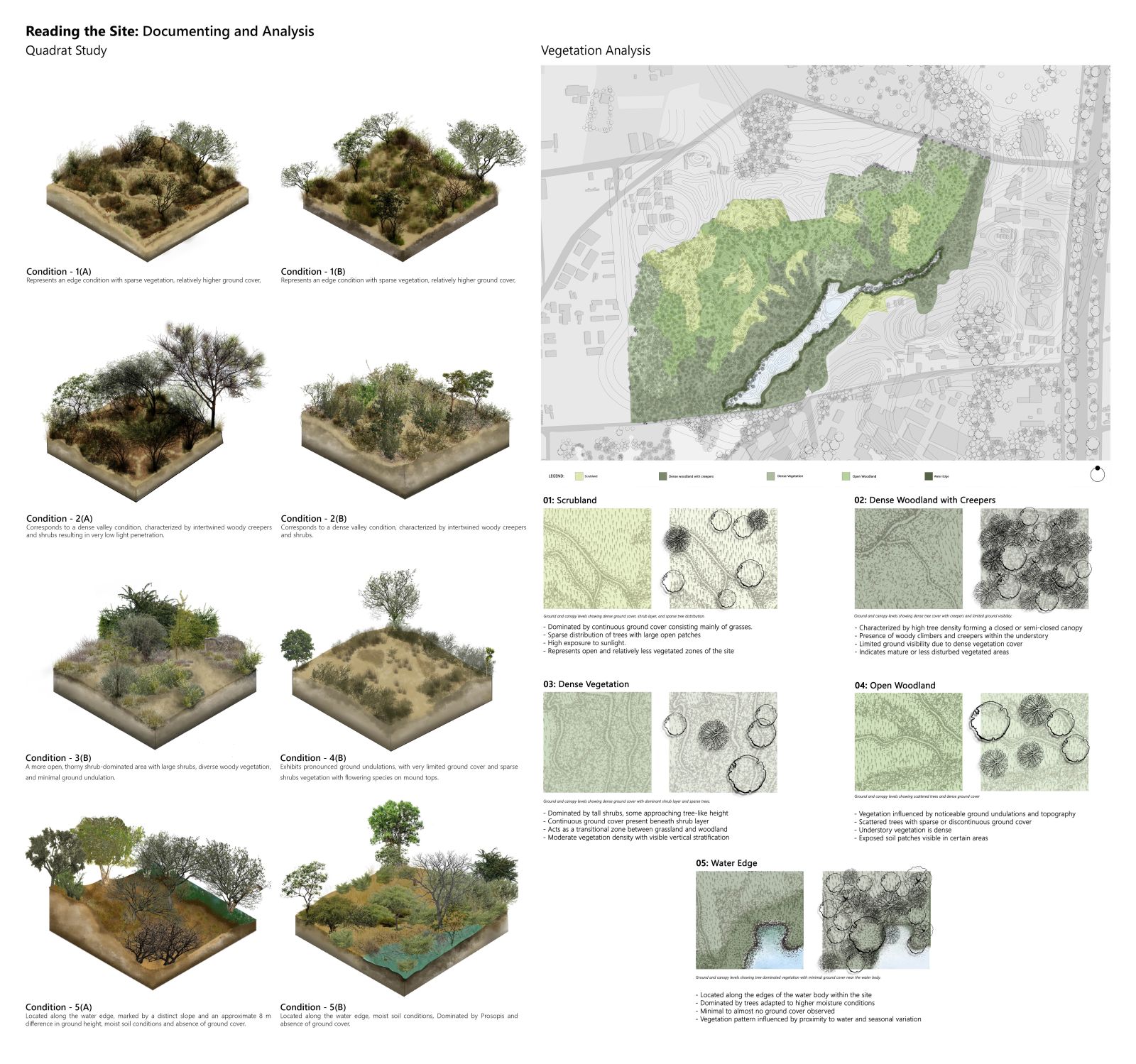
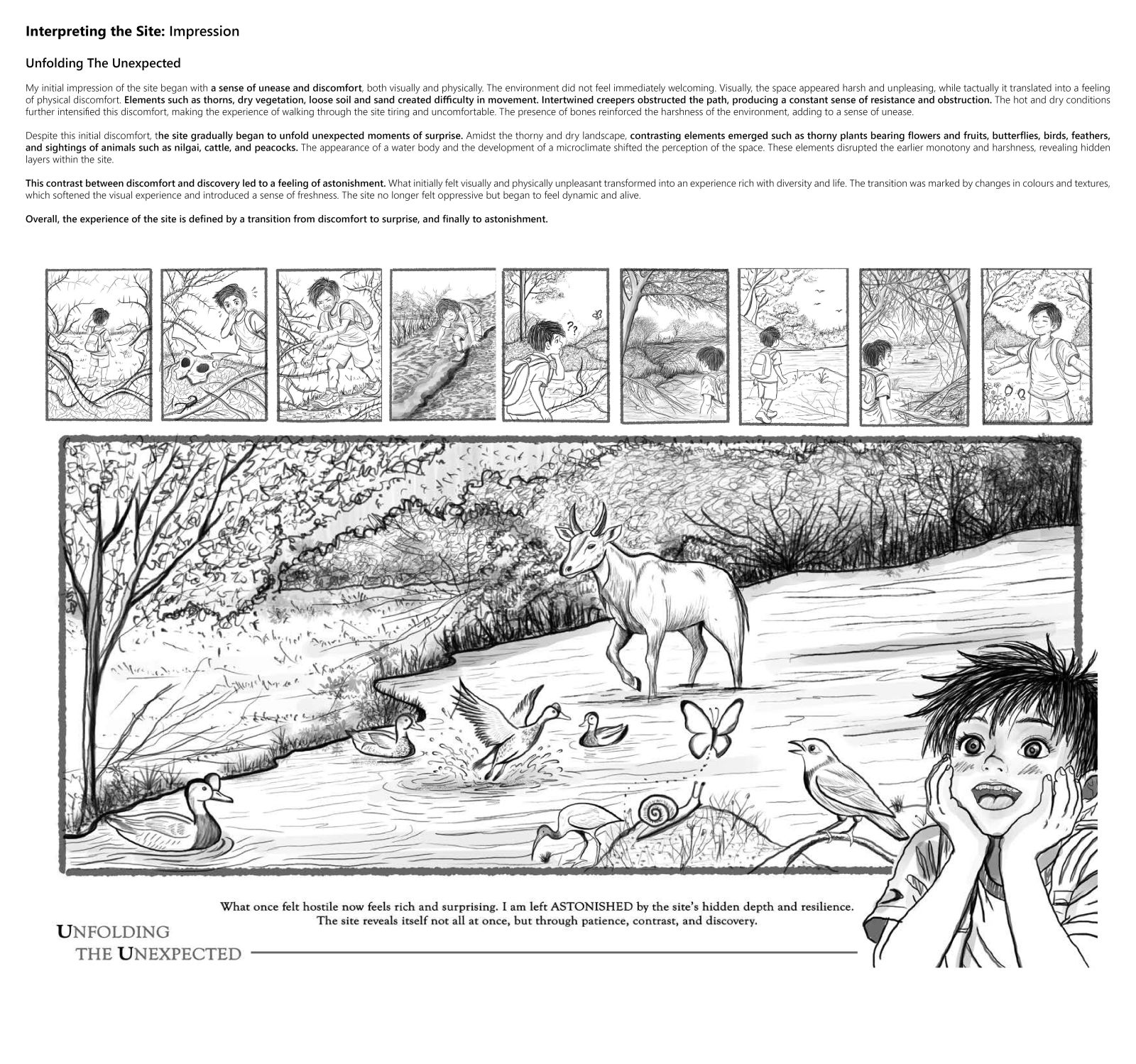
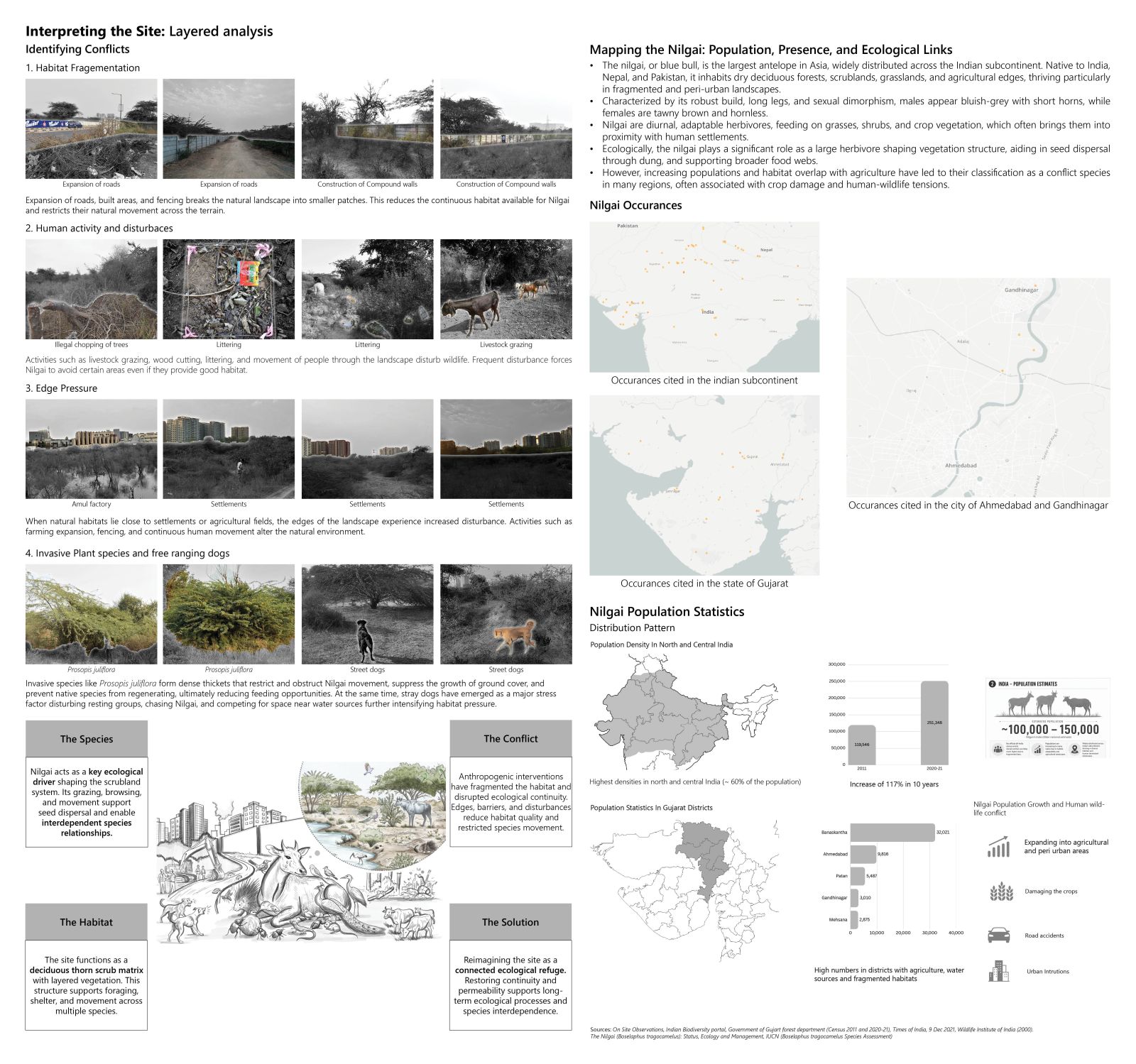
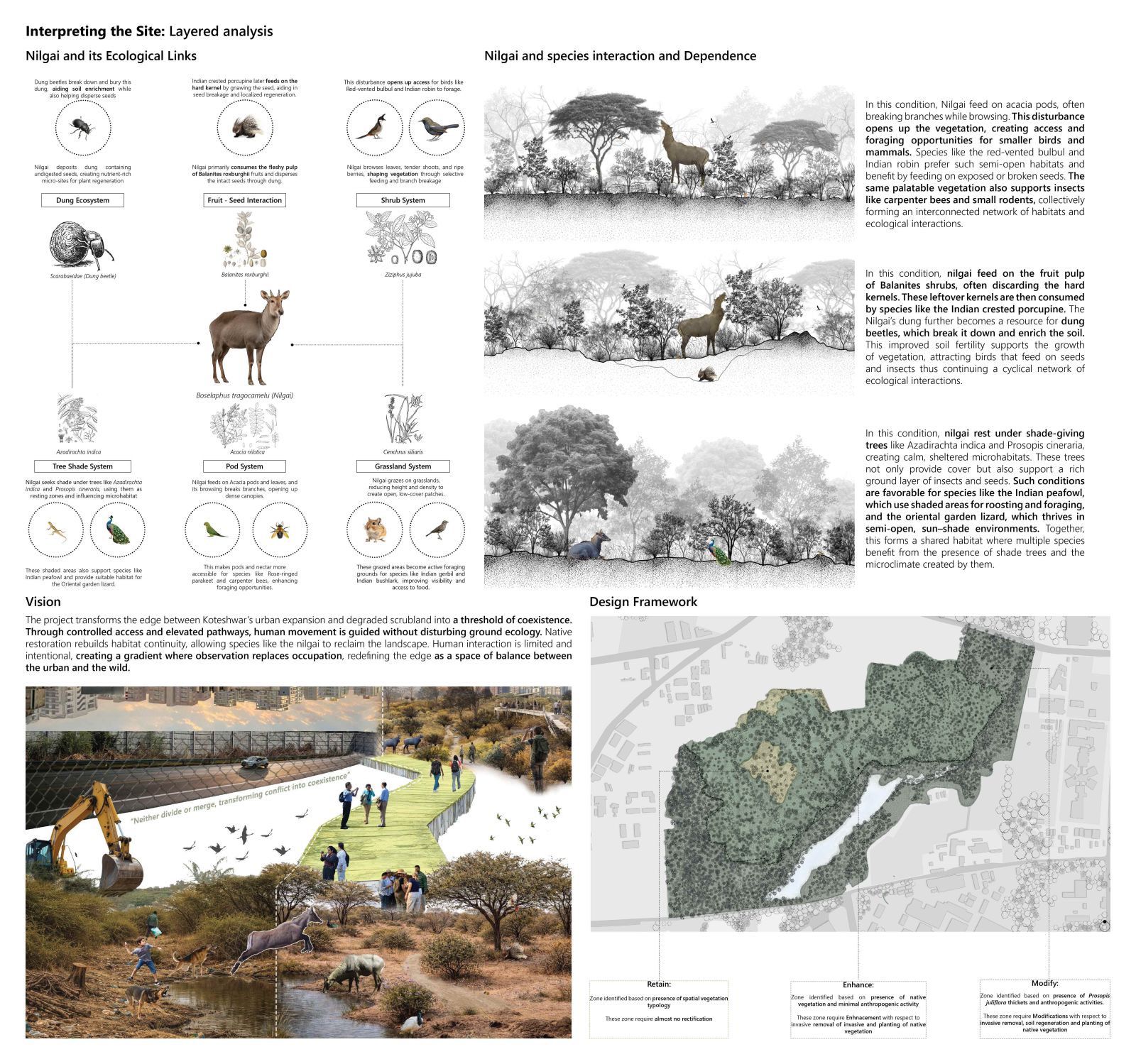
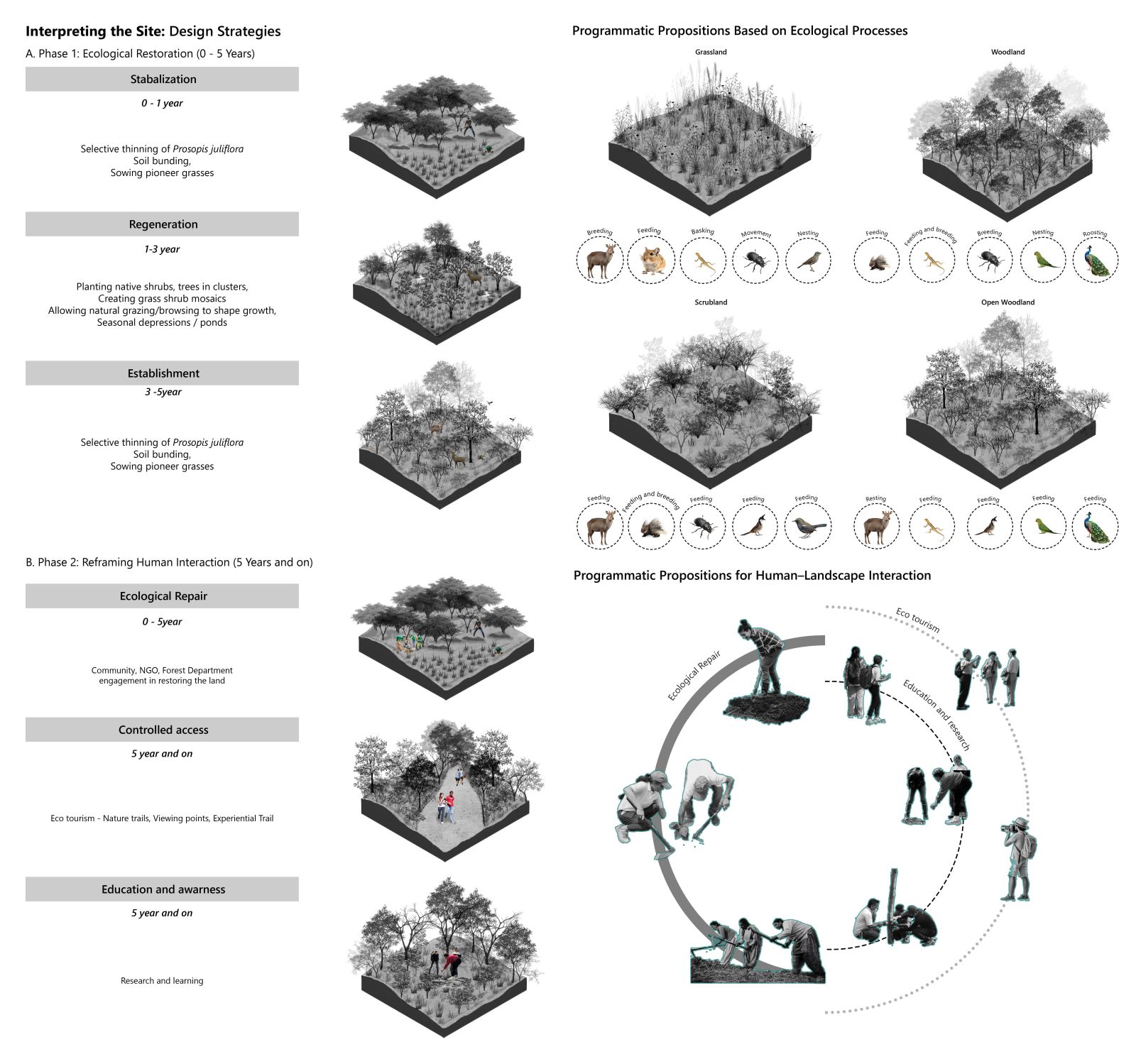
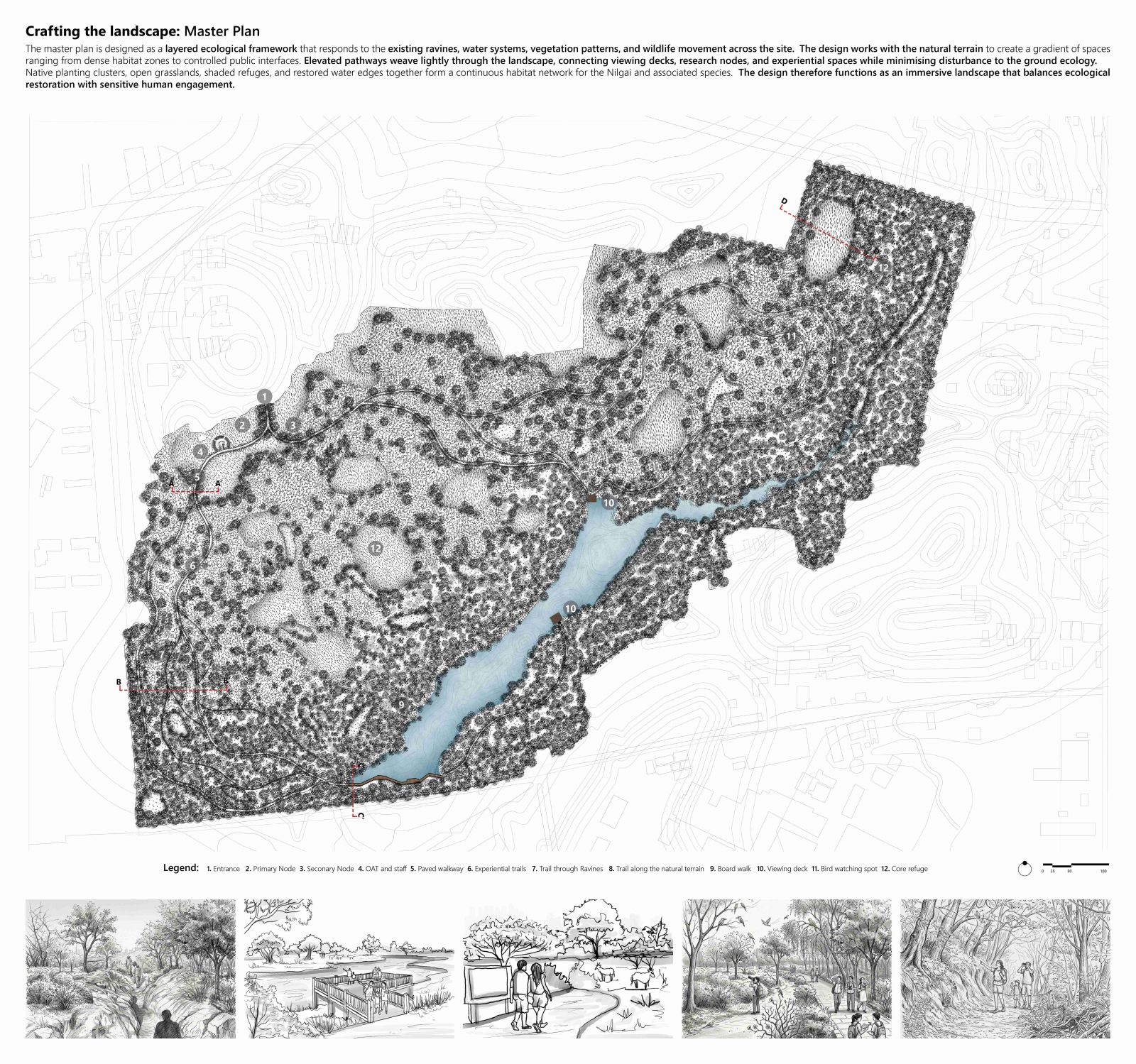
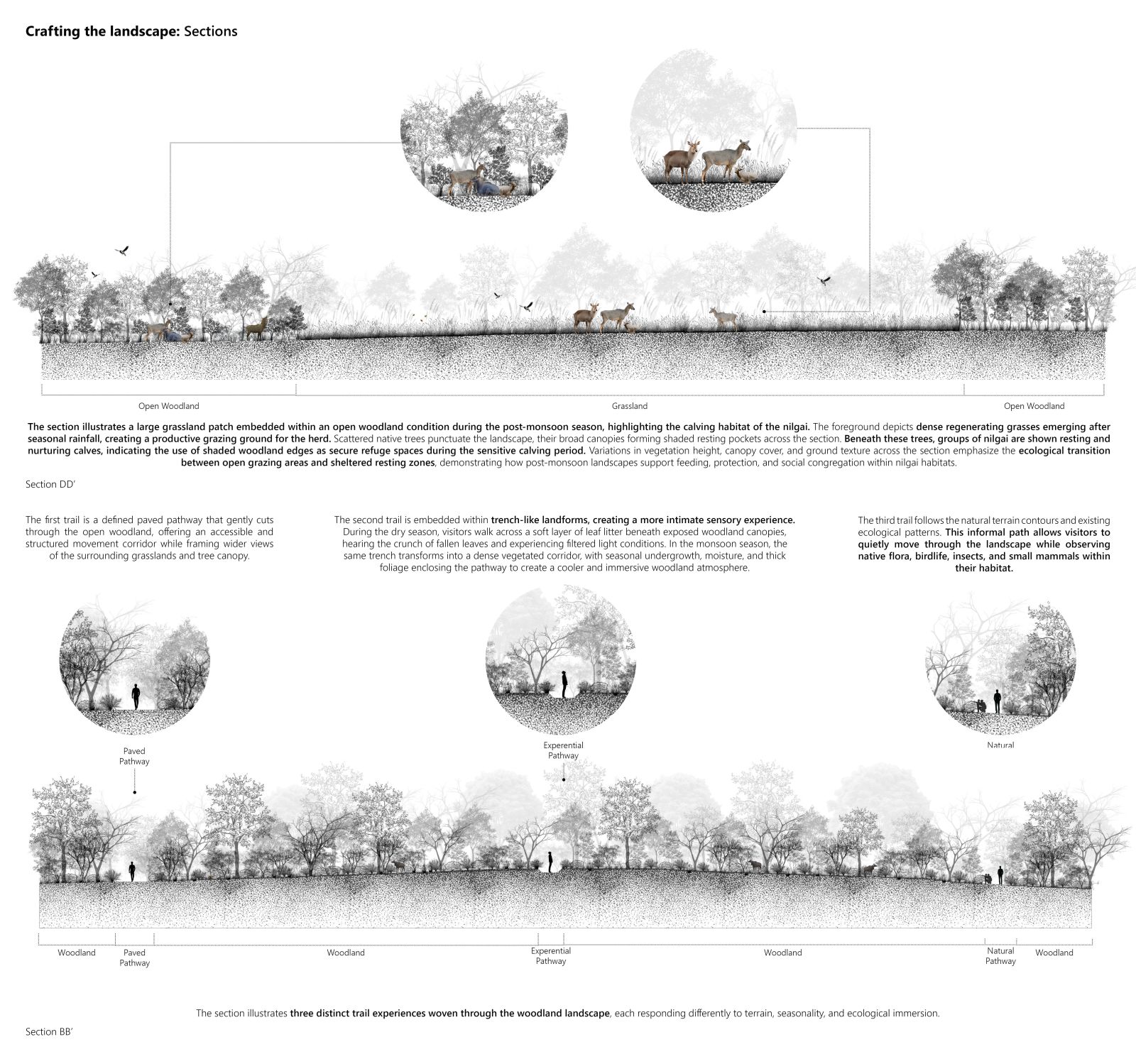
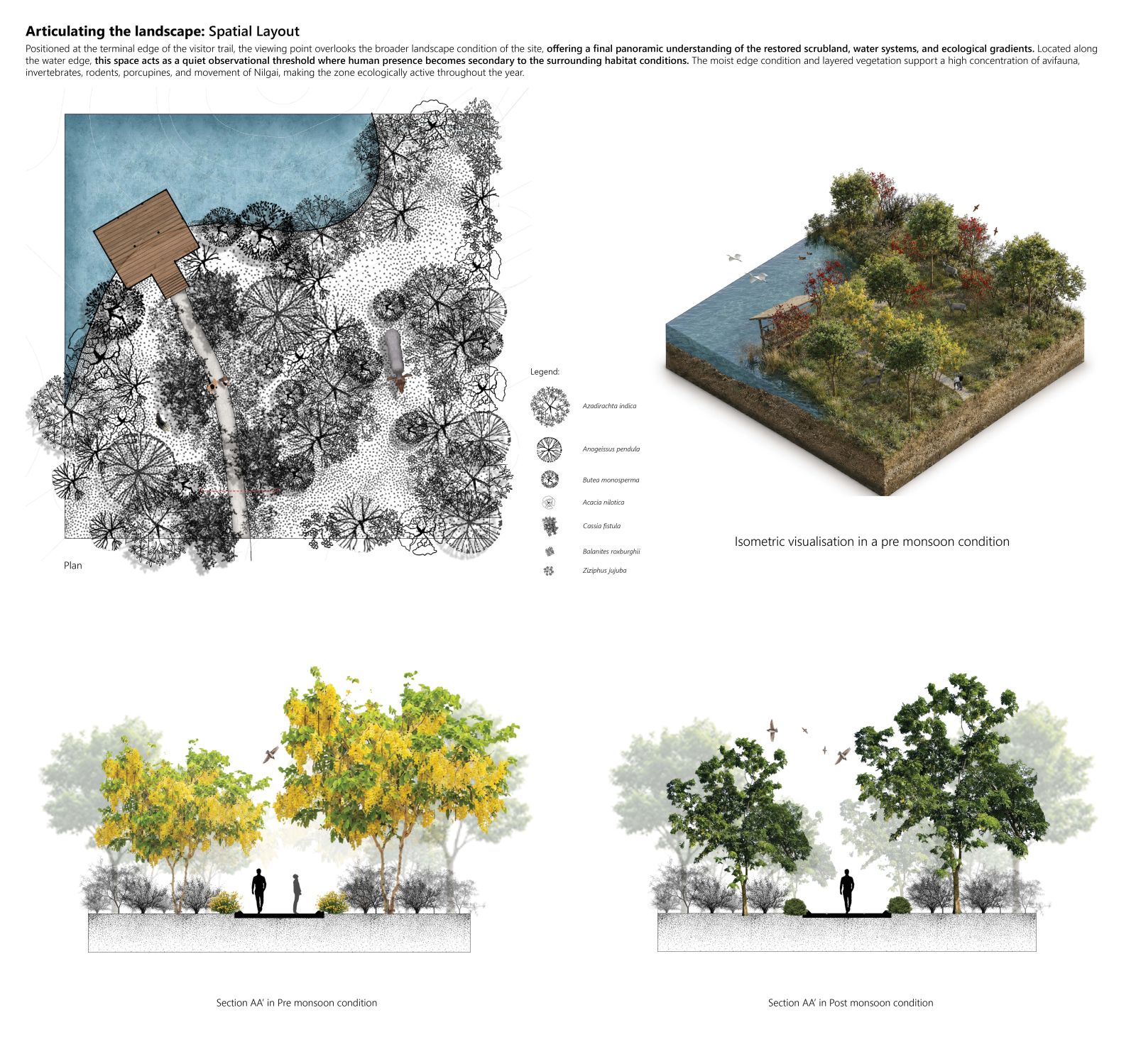
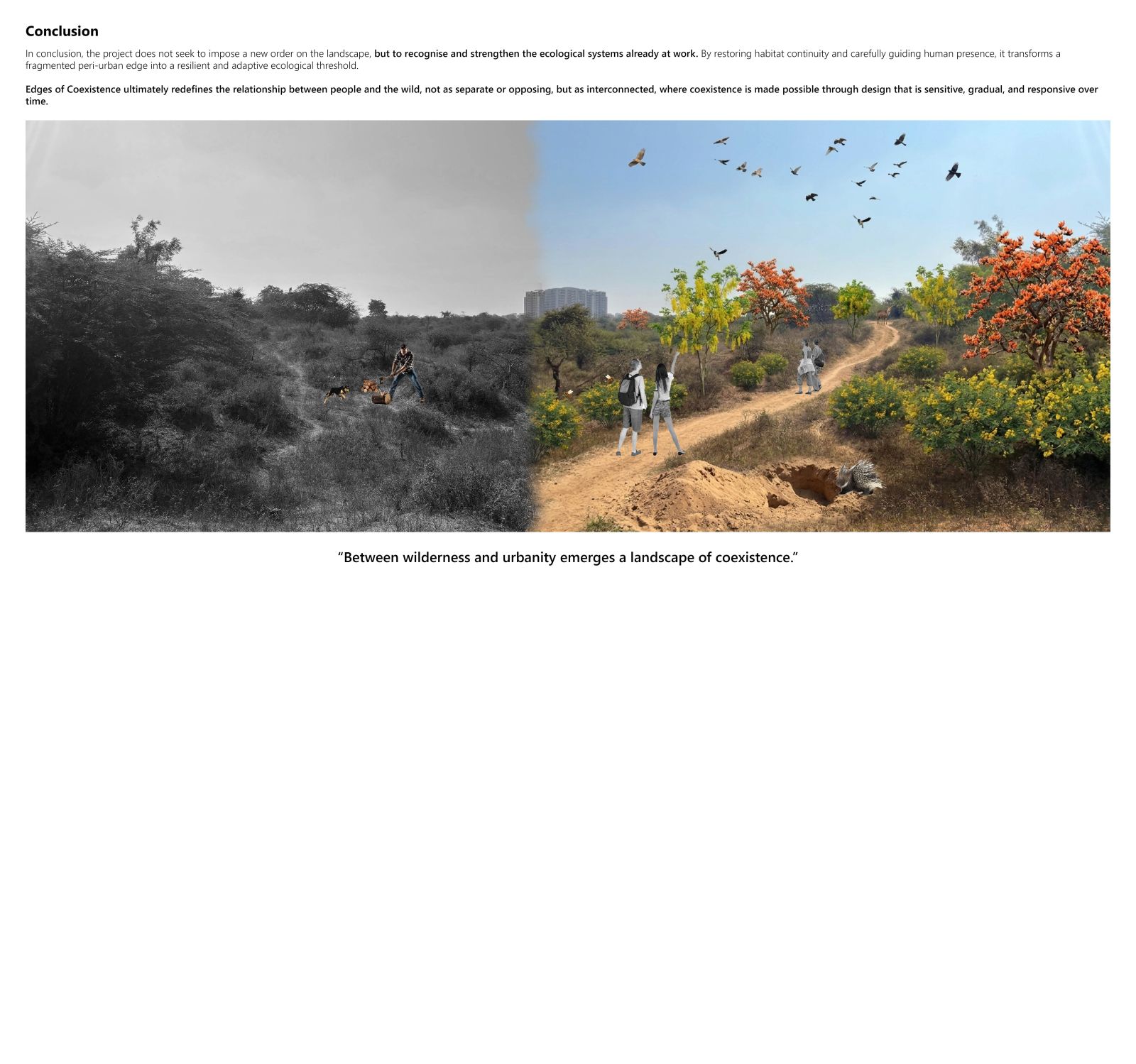
The edges of coexistence project proposes the transformation of Koteshwar, Ahmedabad, into a landscape of coexistence, where ecological restoration and human engagement are sensitively balanced. Currently, the site exists as a fragmented peri-urban scrubland, impacted by urban expansion, habitat degradation, and increasing human–wildlife conflict, particularly involving nilgai and associated species. The need for intervention arises from the loss of ecological continuity and the absence of meaningful frameworks for humans to understand and engage with these landscapes. The project envisions restoring the site as a functioning ecological system, supporting nilgai alongside interdependent species such as porcupines, invertebrates, rodents, insects, and avifauna. This is achieved through strategies of native habitat regeneration, water system integration, and the creation of micro-ecological niches that strengthen biodiversity. Spatially, the design establishes a gradient from protected core habitats to buffer zones and controlled human interfaces, allowing opportunities for observation and awareness. Human presence is redefined through guided movement, elevated pathways, and designated points of pause and experience, enabling interaction without intrusion. Over time, the landscape evolves through phased restoration, responding to seasonal cycles and ecological processes. Ultimately, the project positions itself not as a separation of humans and nature, but as a design of the threshold of coexistence, fostering a sensitive and adaptive relationship between the two.
View Additional Work