Your browser is out-of-date!
For a richer surfing experience on our website, please update your browser. Update my browser now!
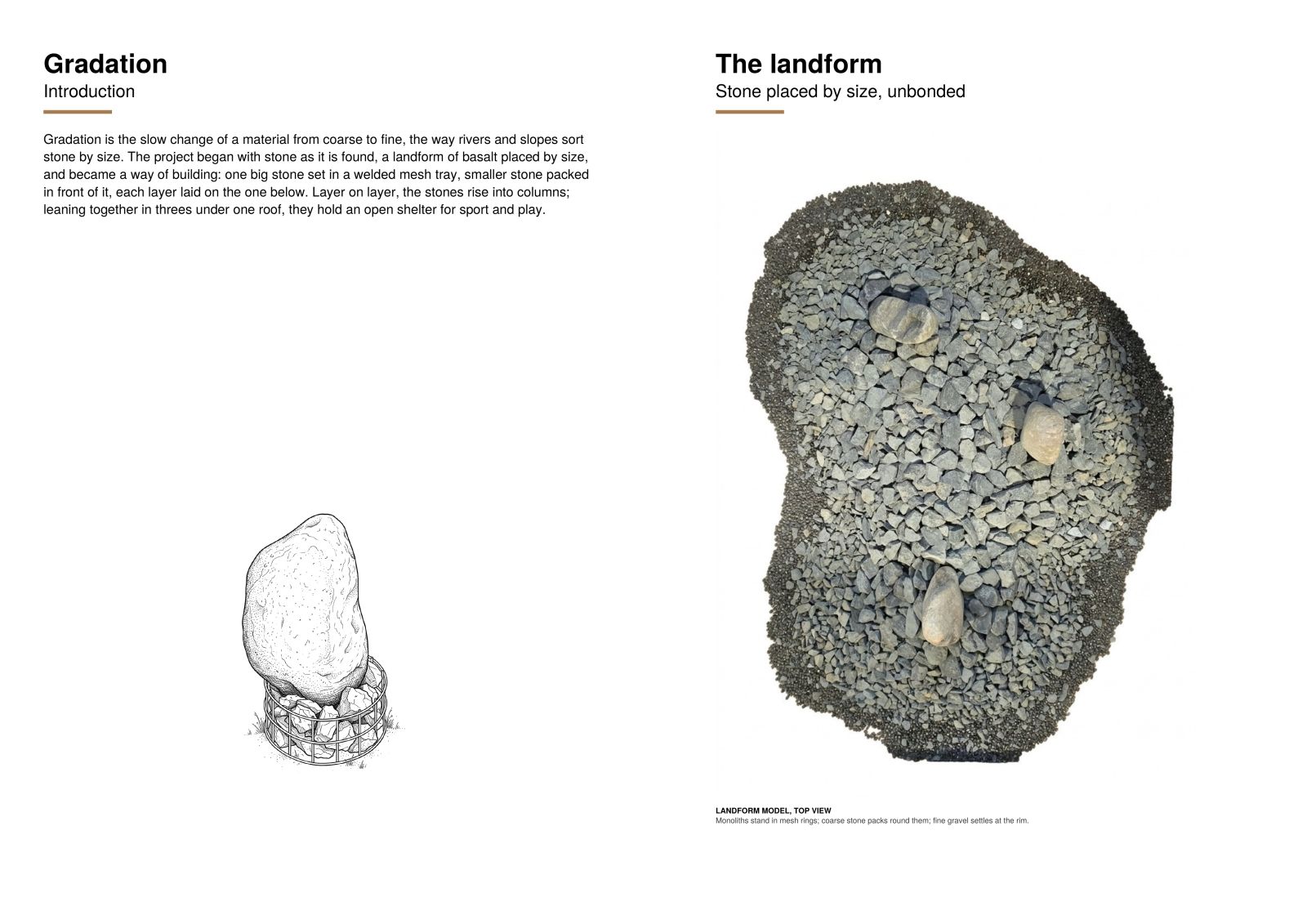
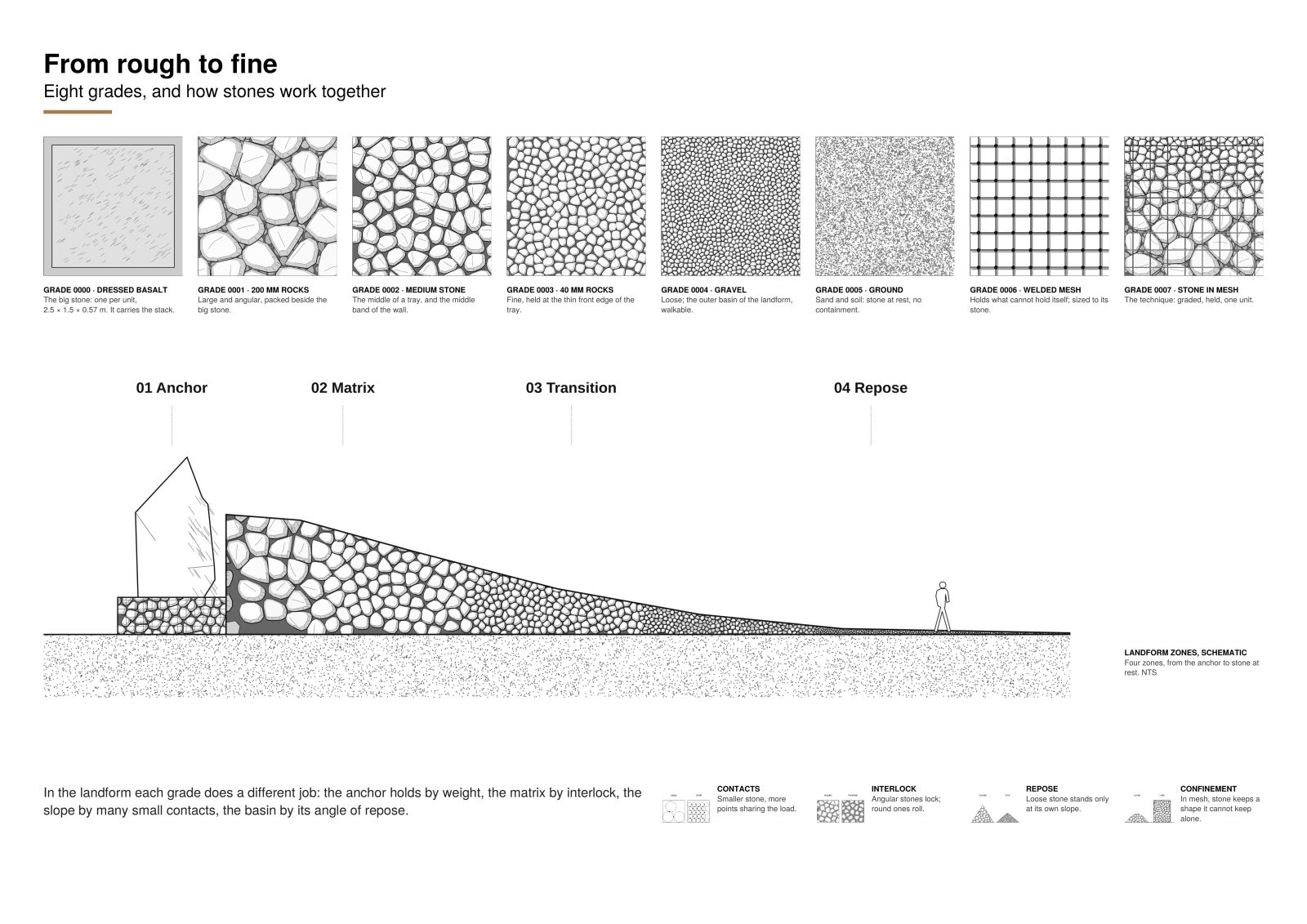
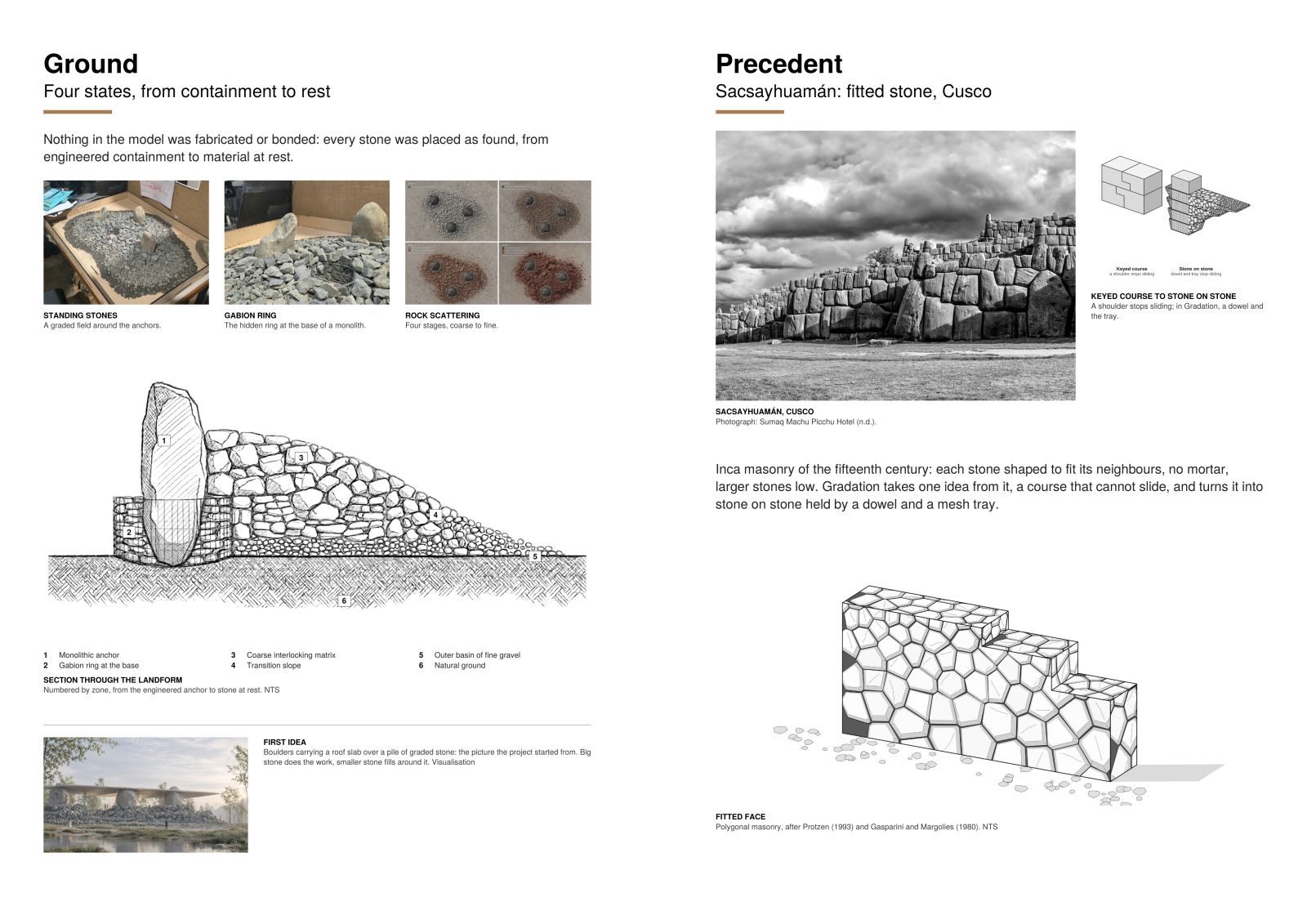
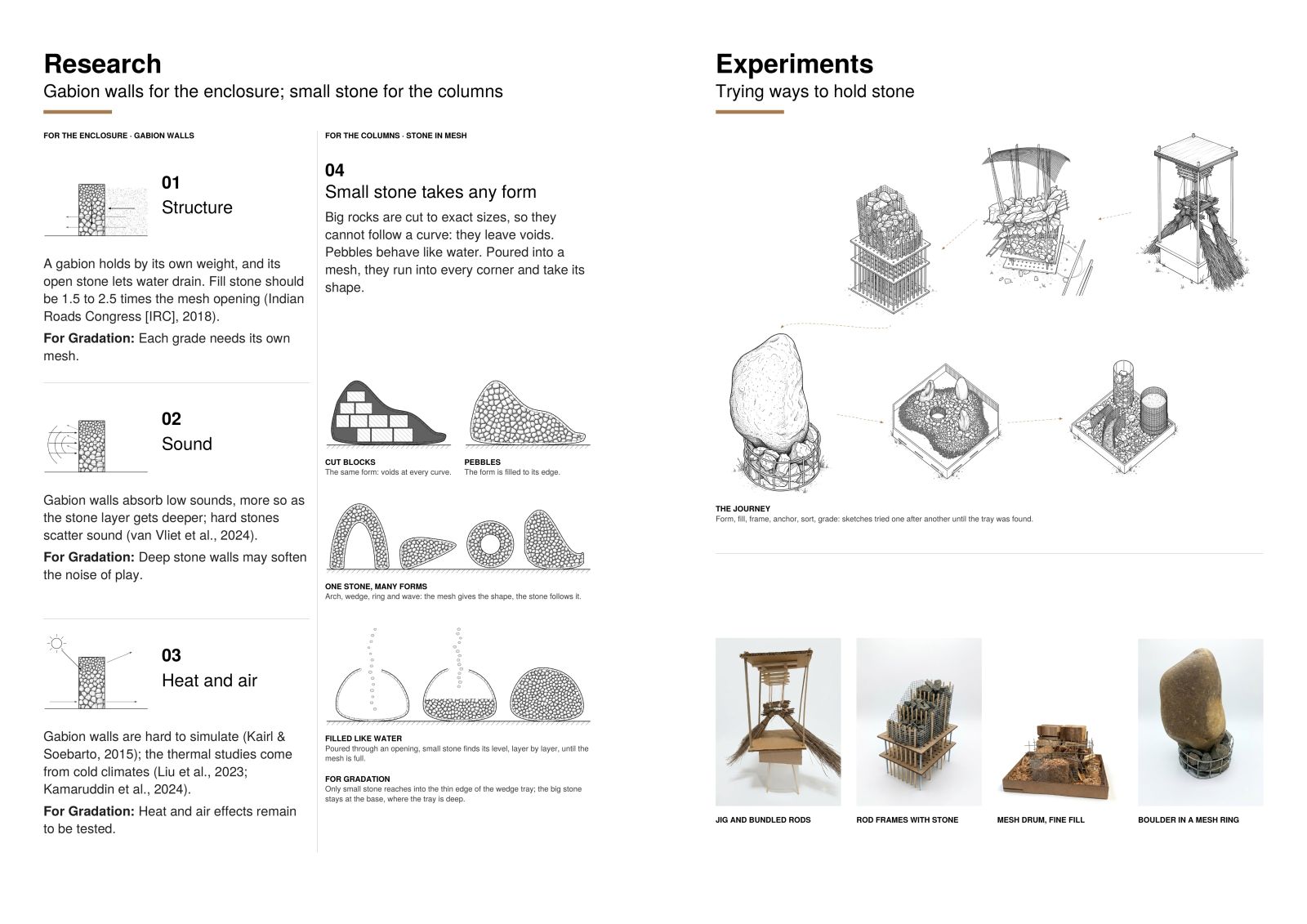
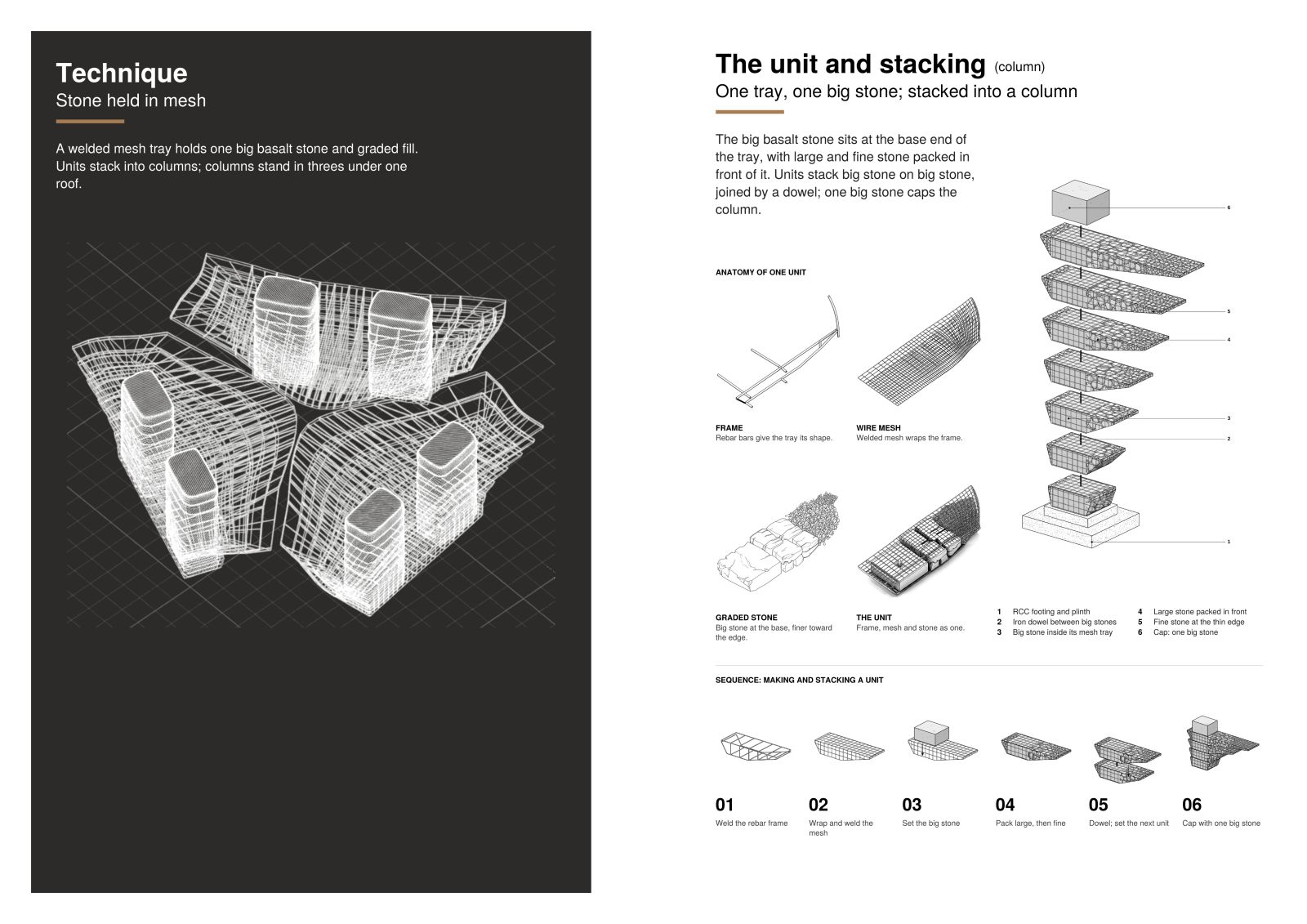
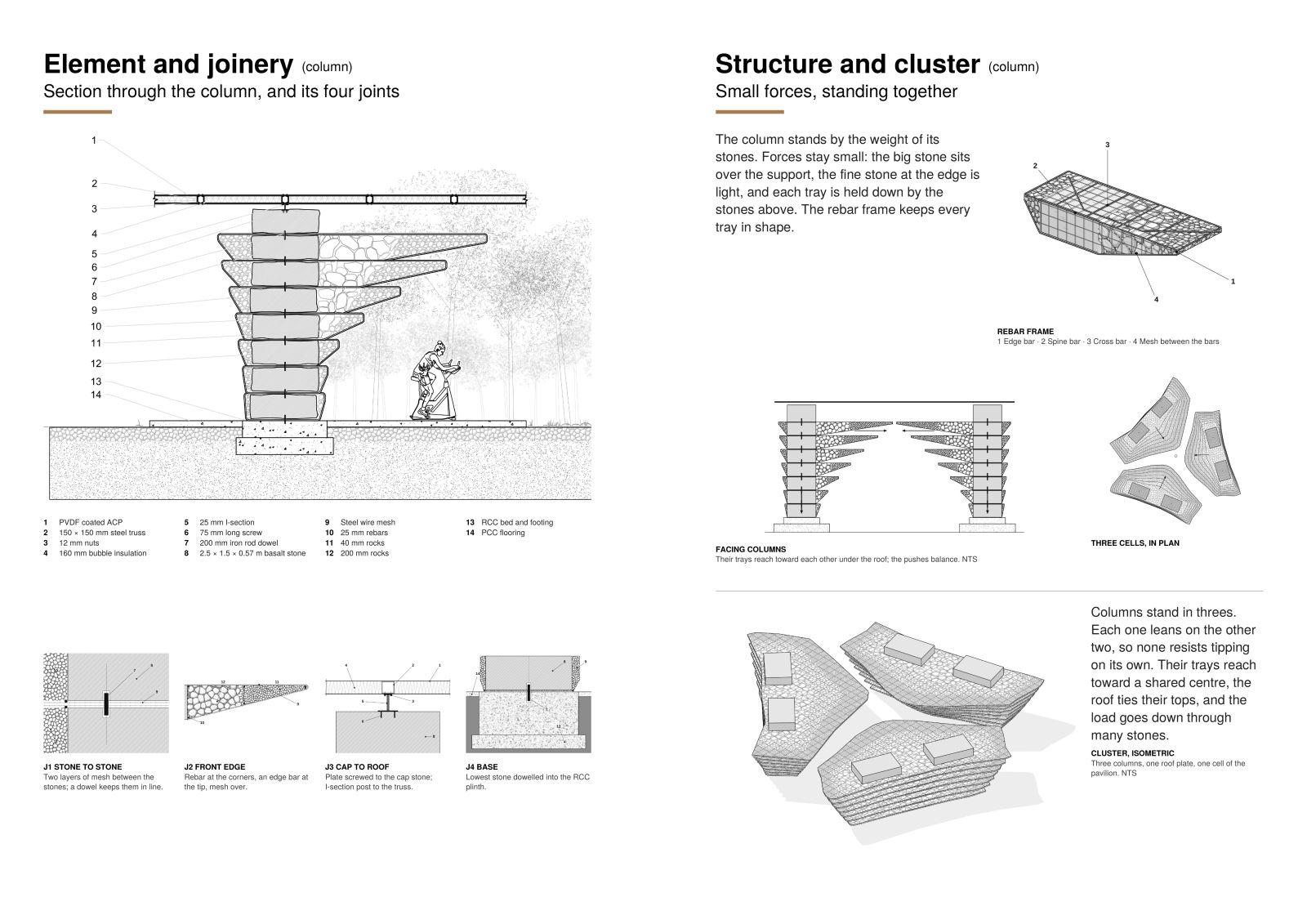
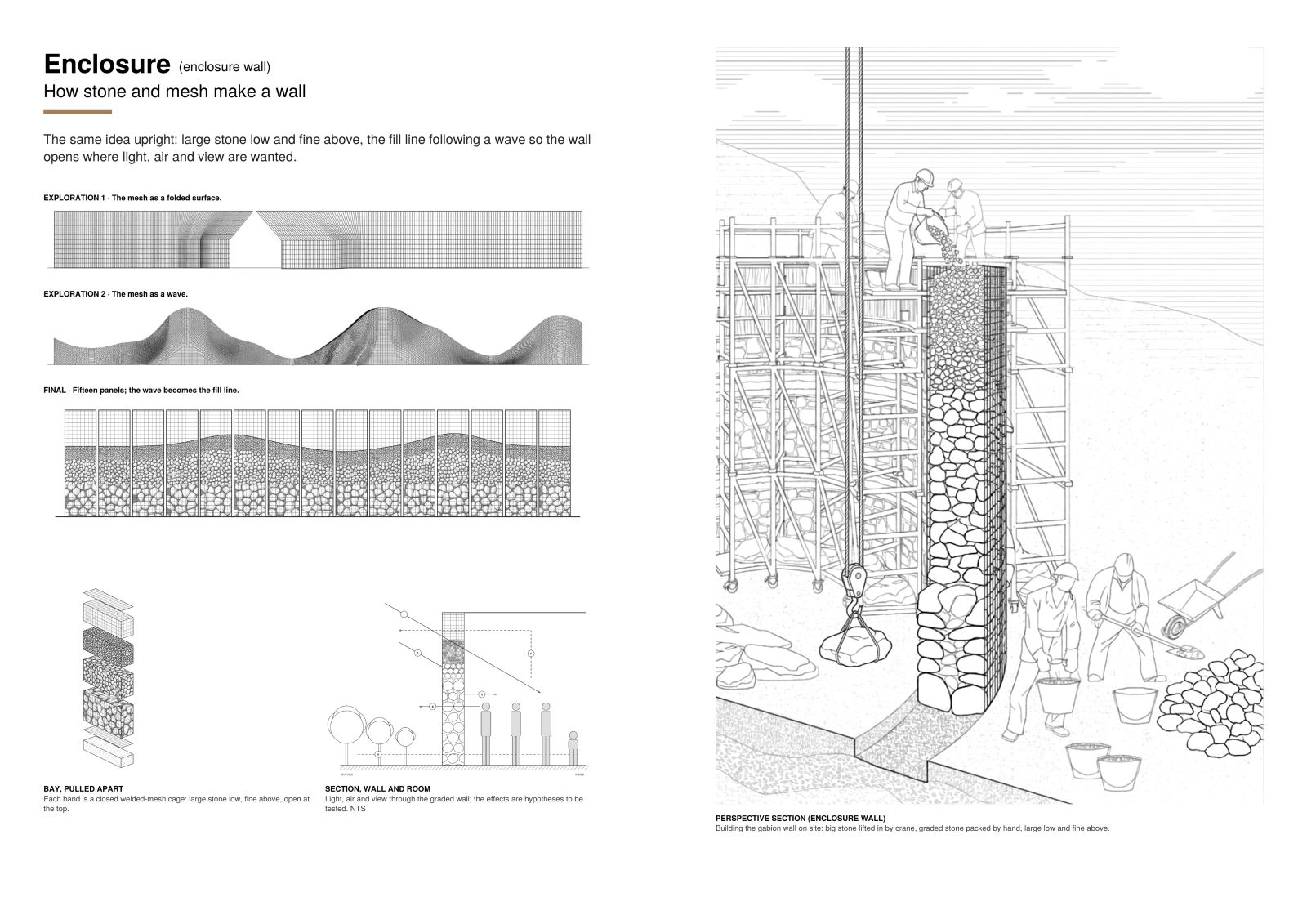
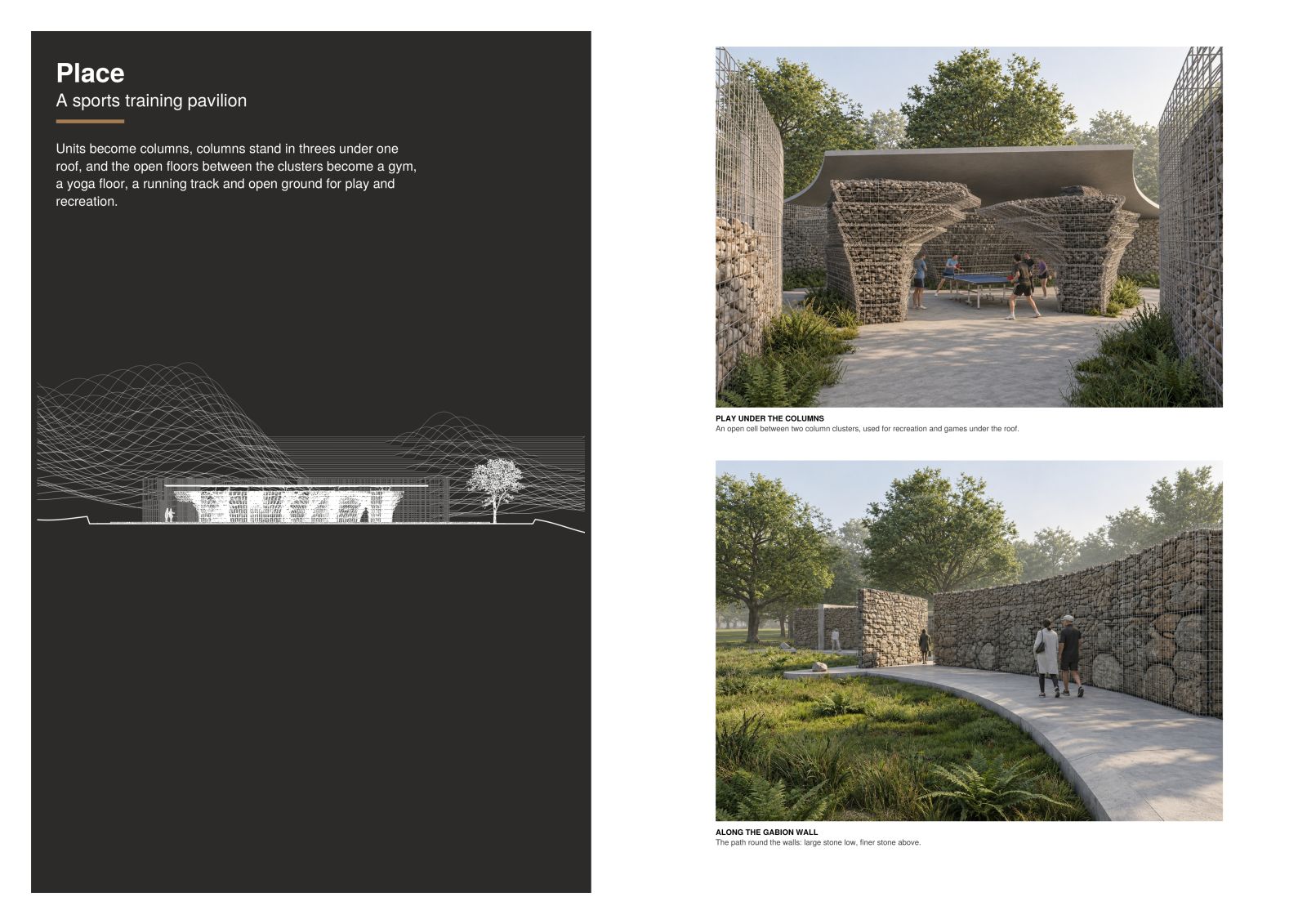
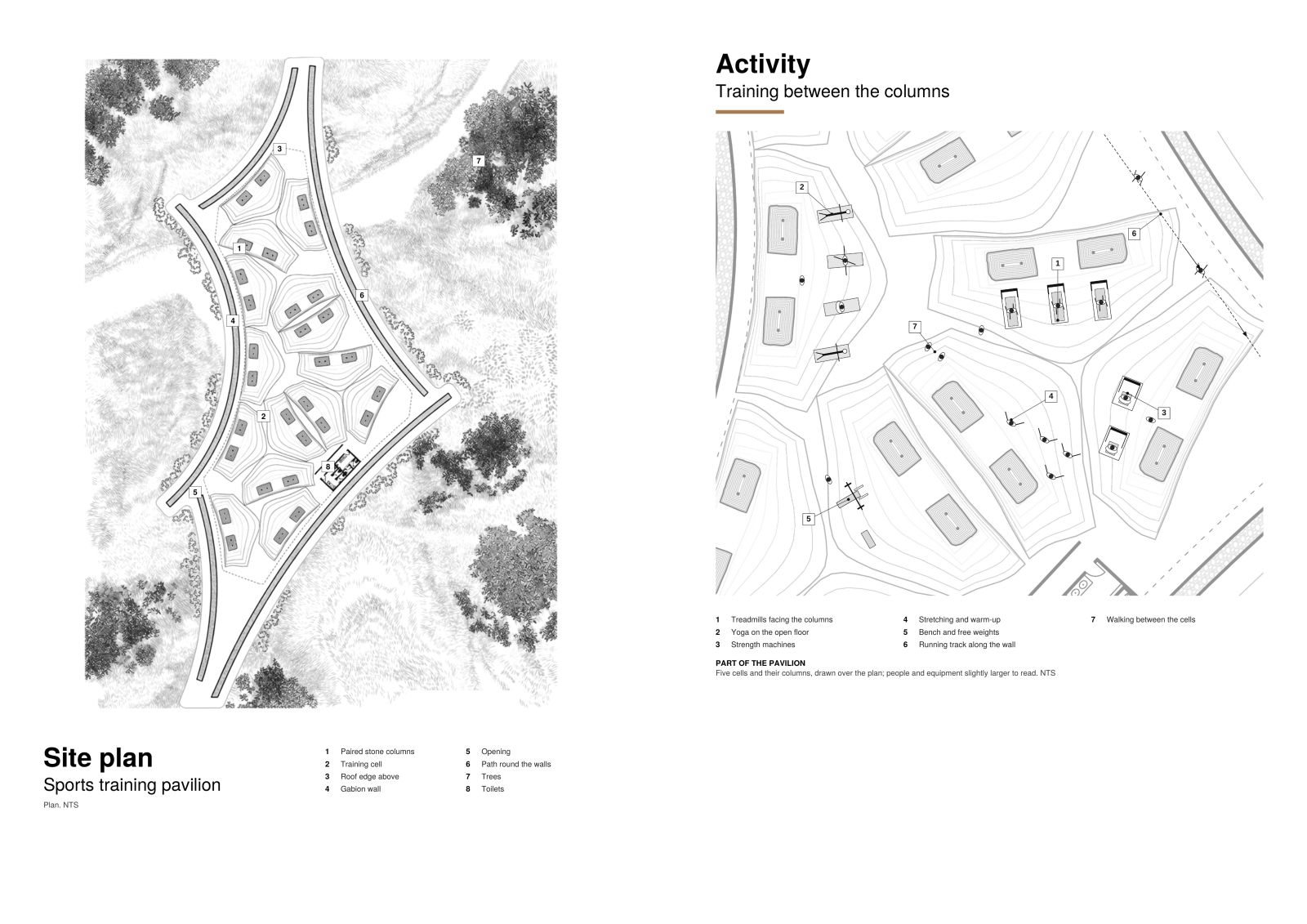
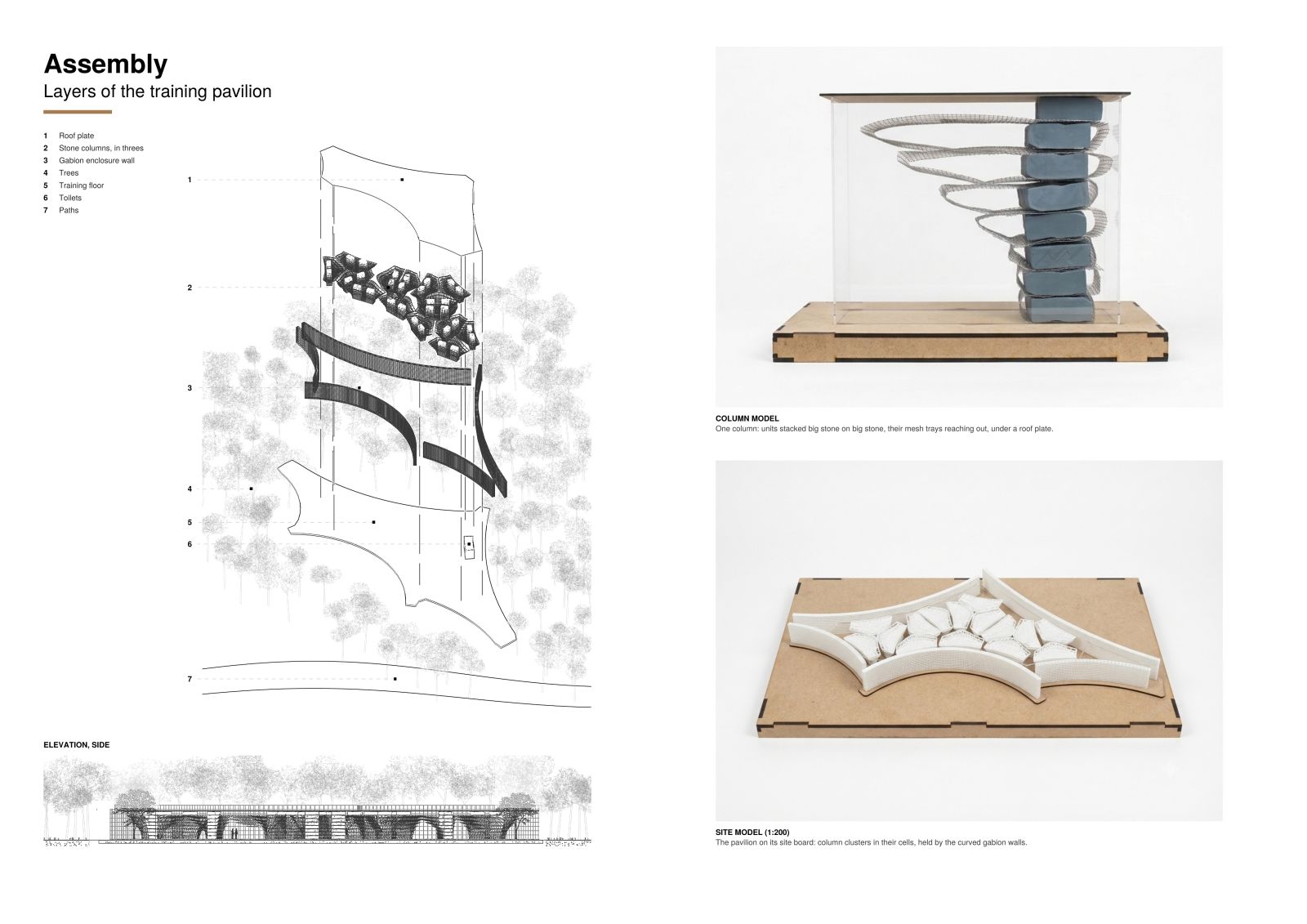
Gradation is the slow change of a material from coarse to fine, the way rivers and slopes sort stone by size. This project asks whether that natural order can become a way of building: stone not cut, bonded or cast, but placed by size, each grade given the work it does best. The study begins with stone as it is found. A landform model of basalt, placed by size and left unbonded, shows four ways stone holds. The largest boulders stand as anchors by their own weight, coarse stone locks together by interlock, the slope rests on many small contacts, and fine gravel settles at its angle of repose. Research into gabions adds a second lesson: big rocks, cut to exact sizes, leave voids at every curve, while small stone behaves like water and fills any form a mesh gives it. The Inca walls of Sacsayhuamán supply a third: a course of fitted stone that cannot slide. From these comes the technique. A welded mesh tray on a rebar frame holds one dressed basalt stone at its deep end, with 200 mm and 40 mm rock packed toward a thin front edge. Frame, mesh and graded stone become a single unit. Units stack big stone on big stone, joined by iron dowels and capped by one final stone, and rise into columns whose trays reach outward. Standing alone a column could tip; leaning together in threes under a light steel roof, each is held by the other two, and the load passes down through many stones. The technique is tested as a sports training pavilion. Open cells between the column clusters hold a gym, a yoga floor and space for games, with a running track along curved gabion walls built by hand and graded like the landform: large stone low, fine above. Light, air and view pass through the finer stone.