Your browser is out-of-date!
For a richer surfing experience on our website, please update your browser. Update my browser now!
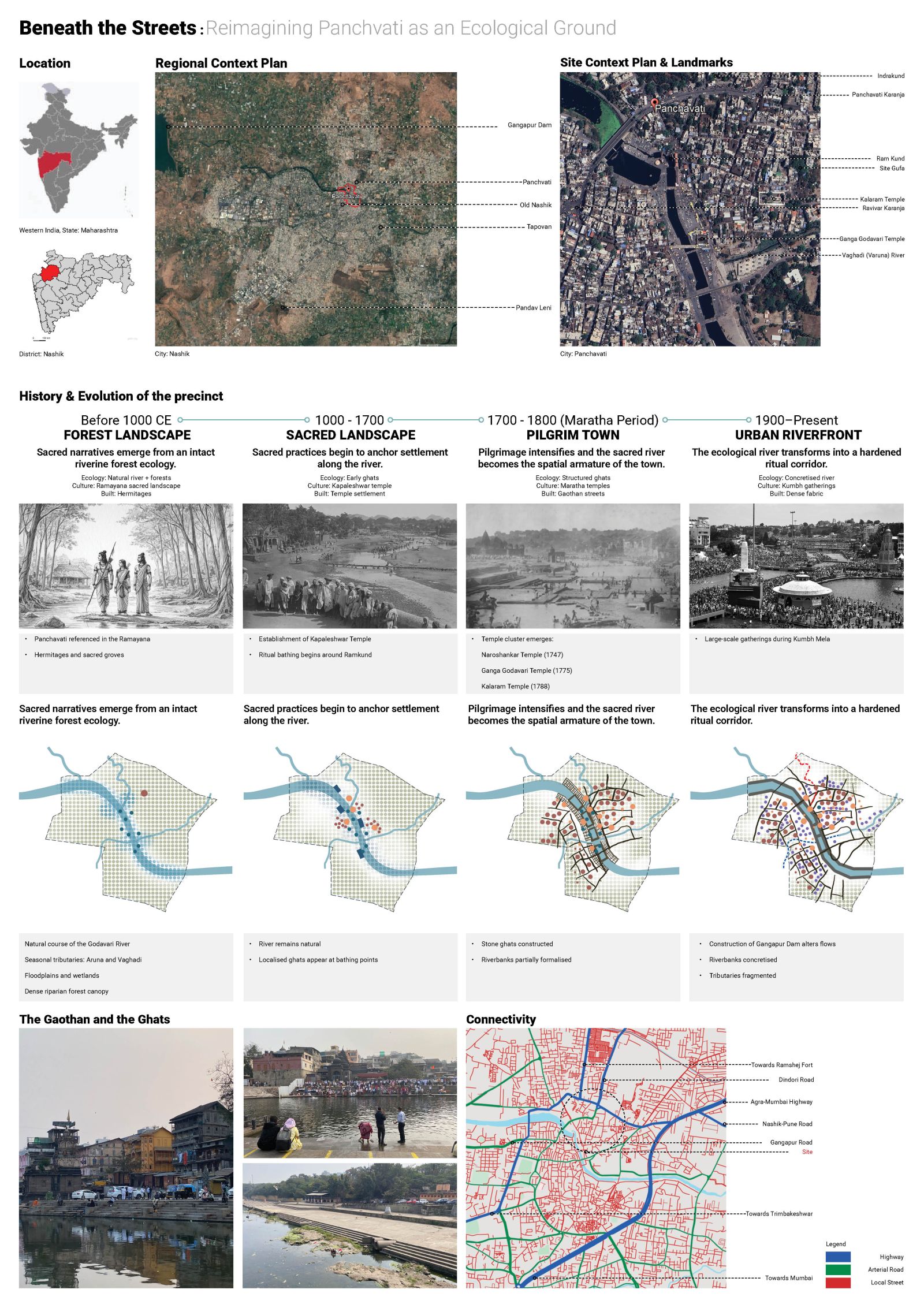
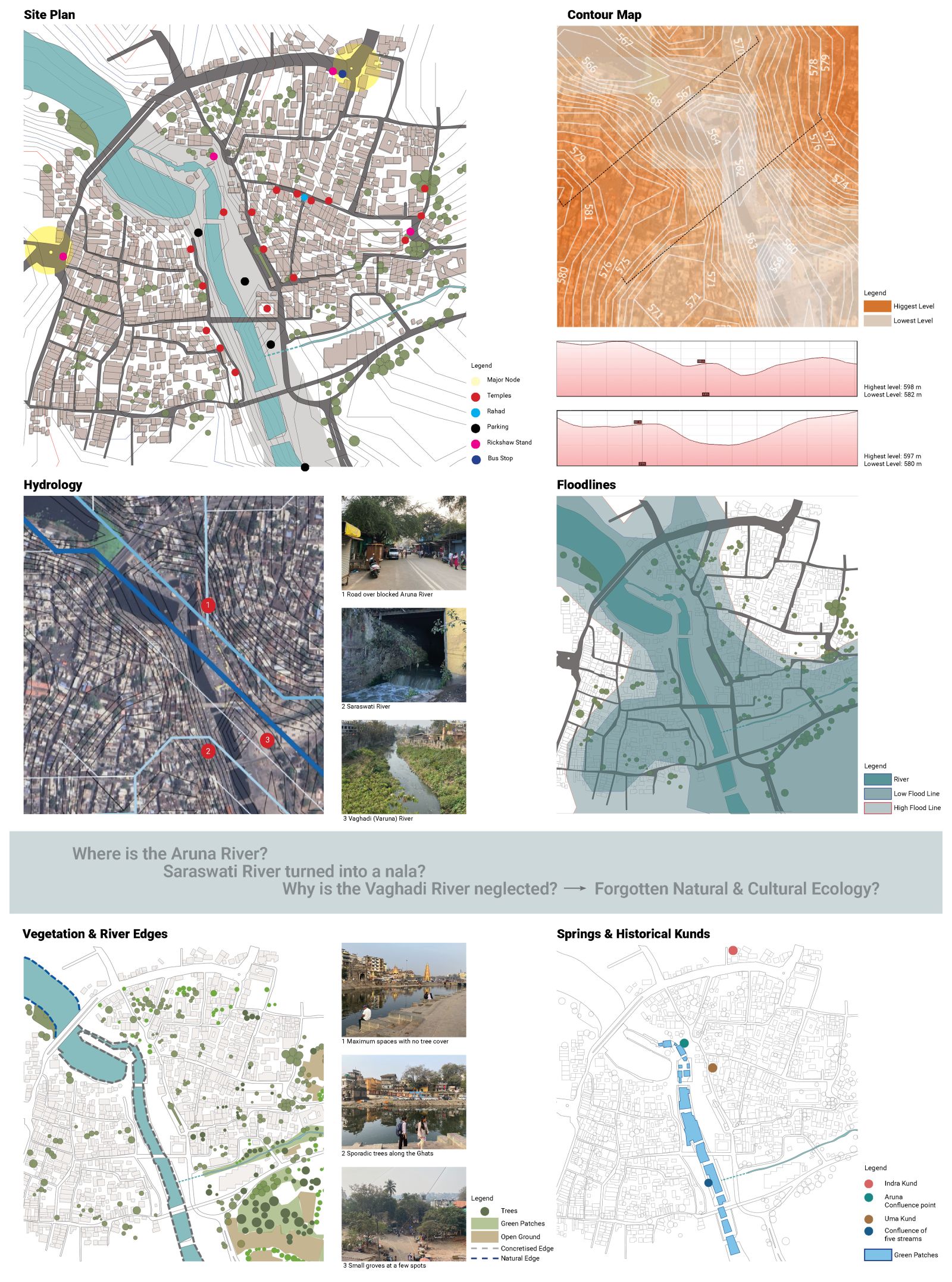
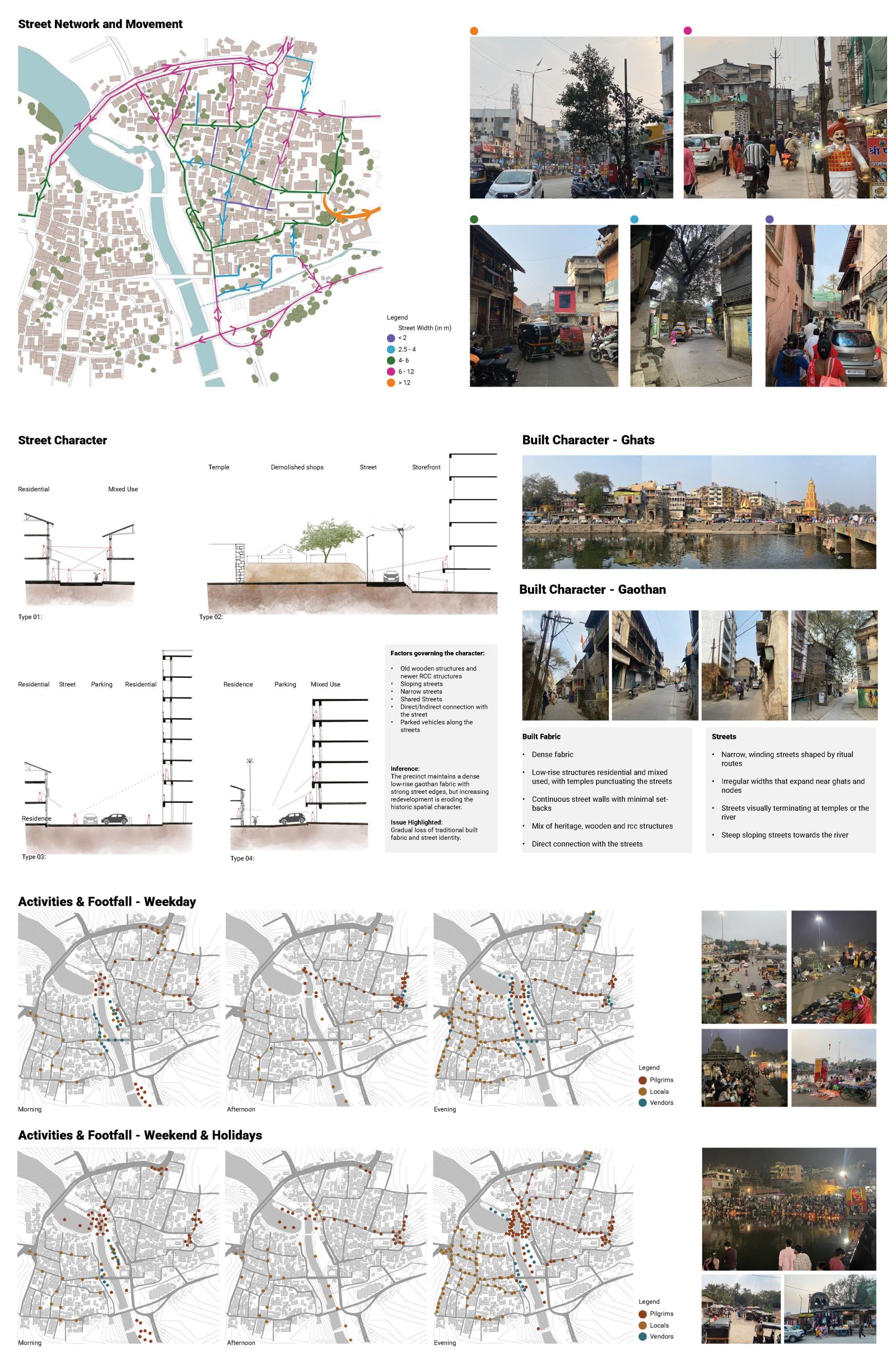
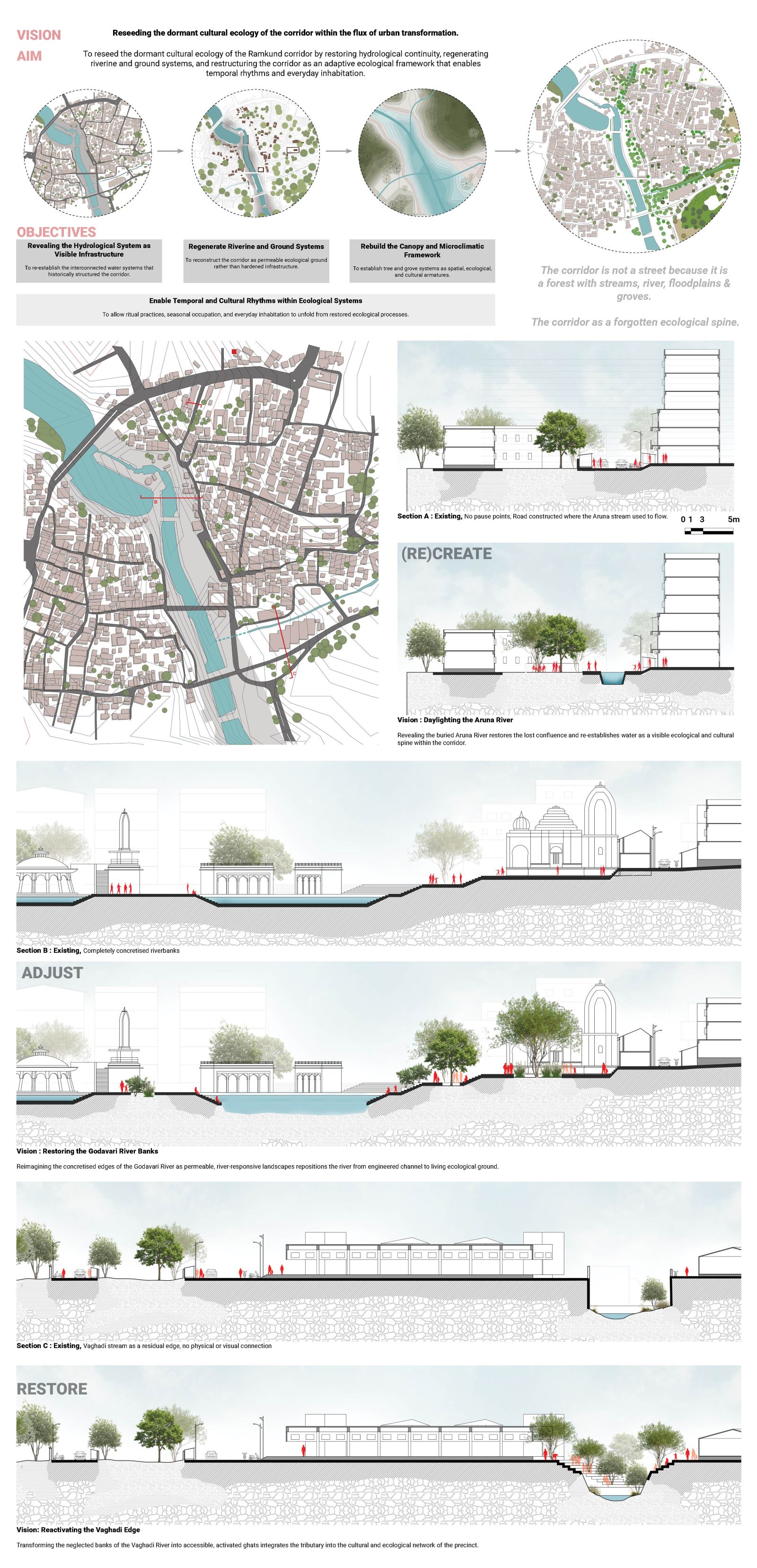
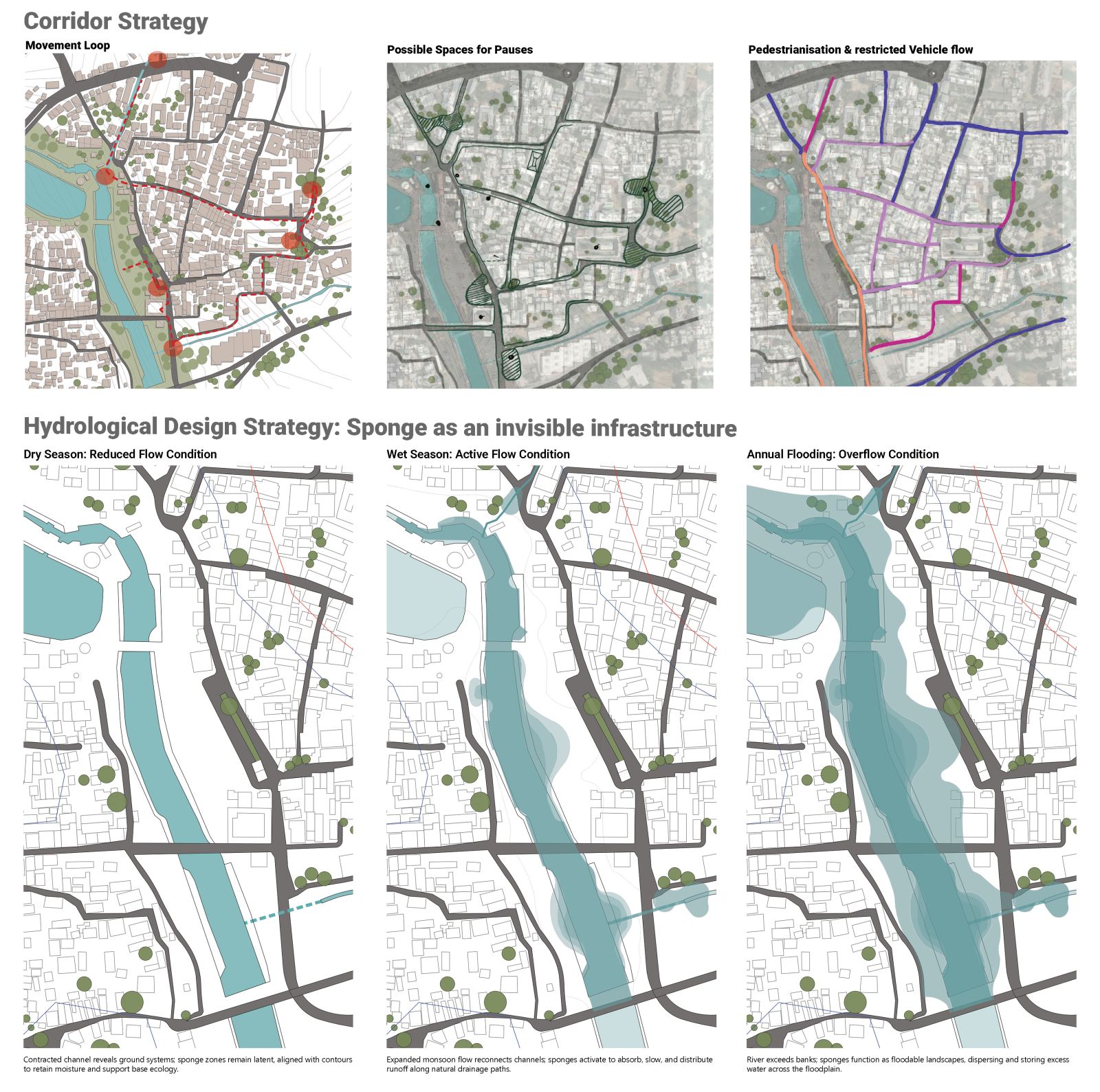
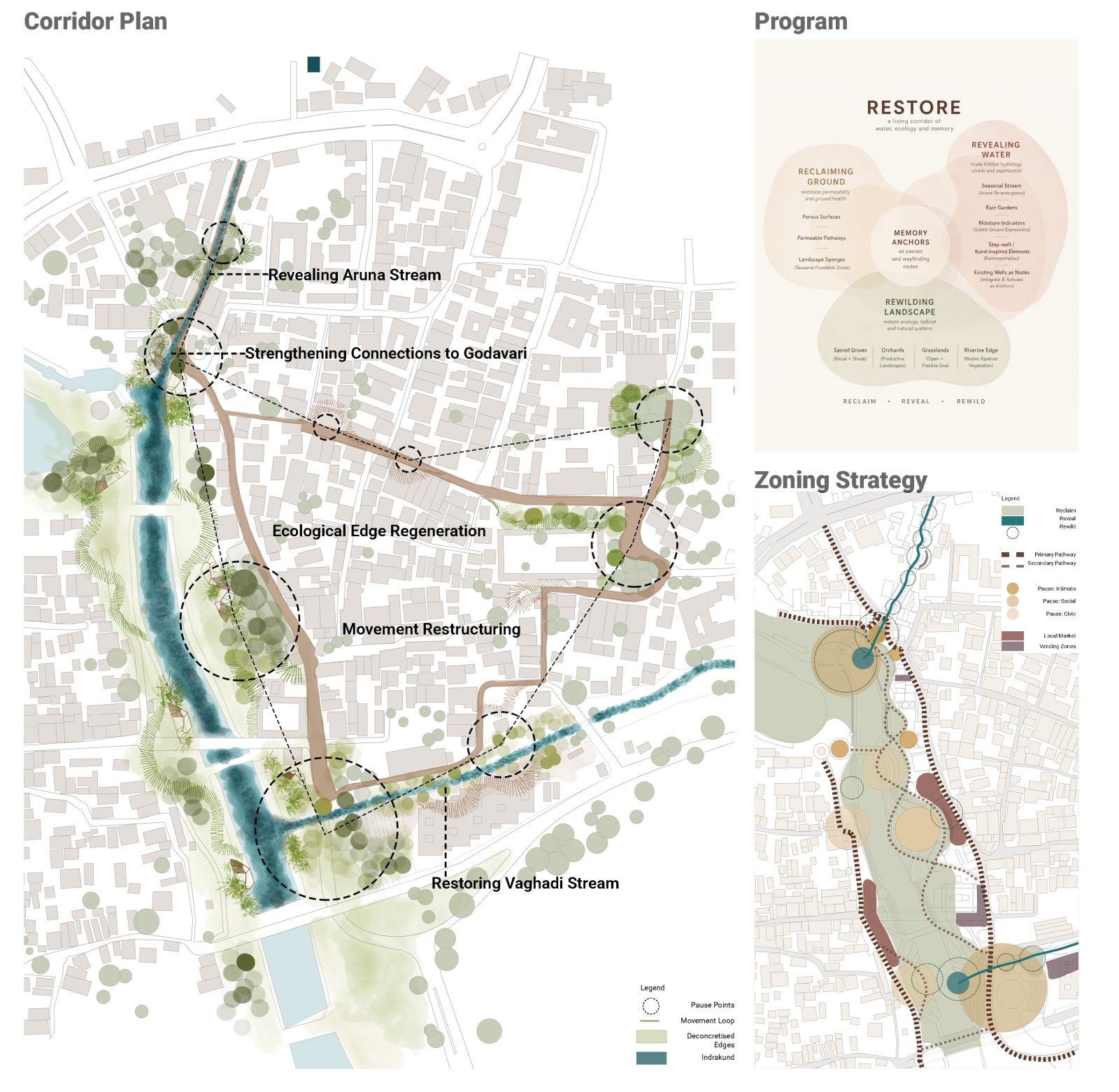
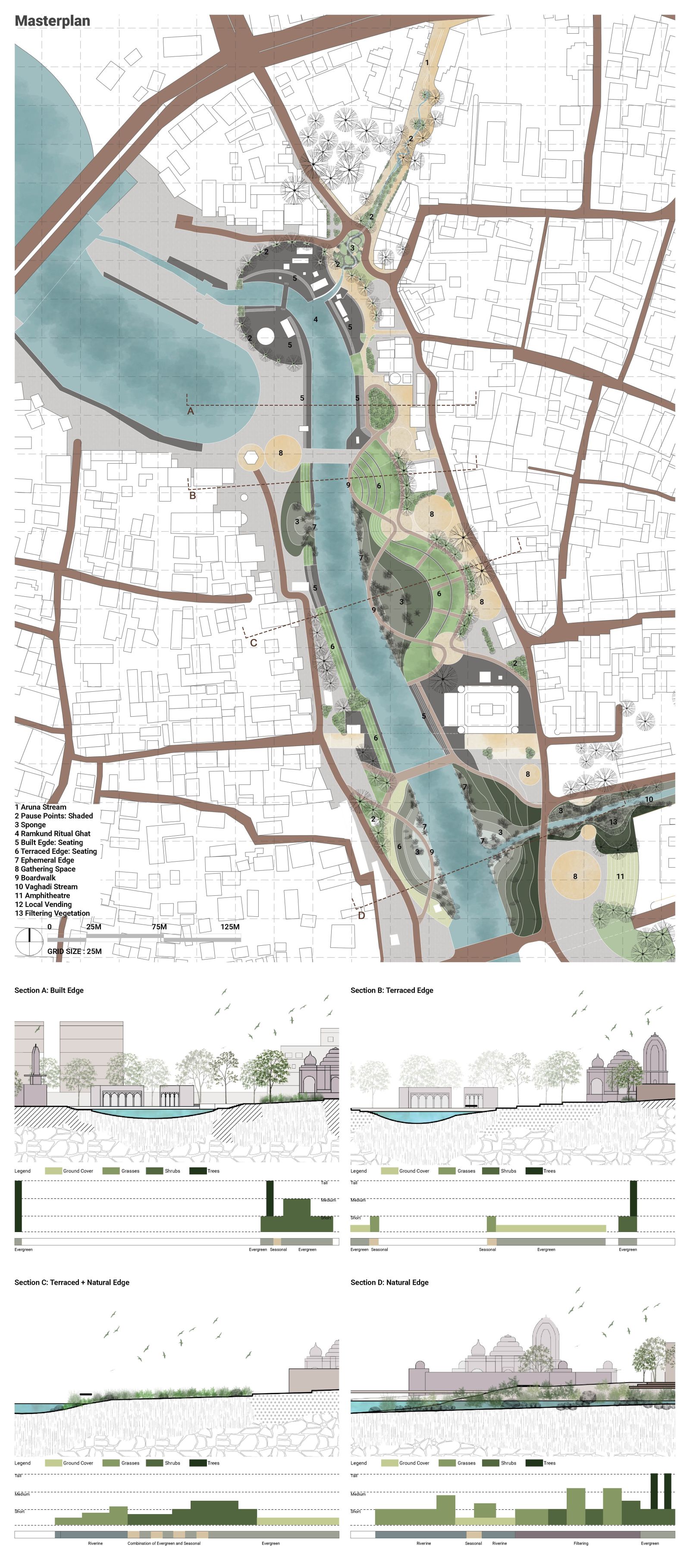
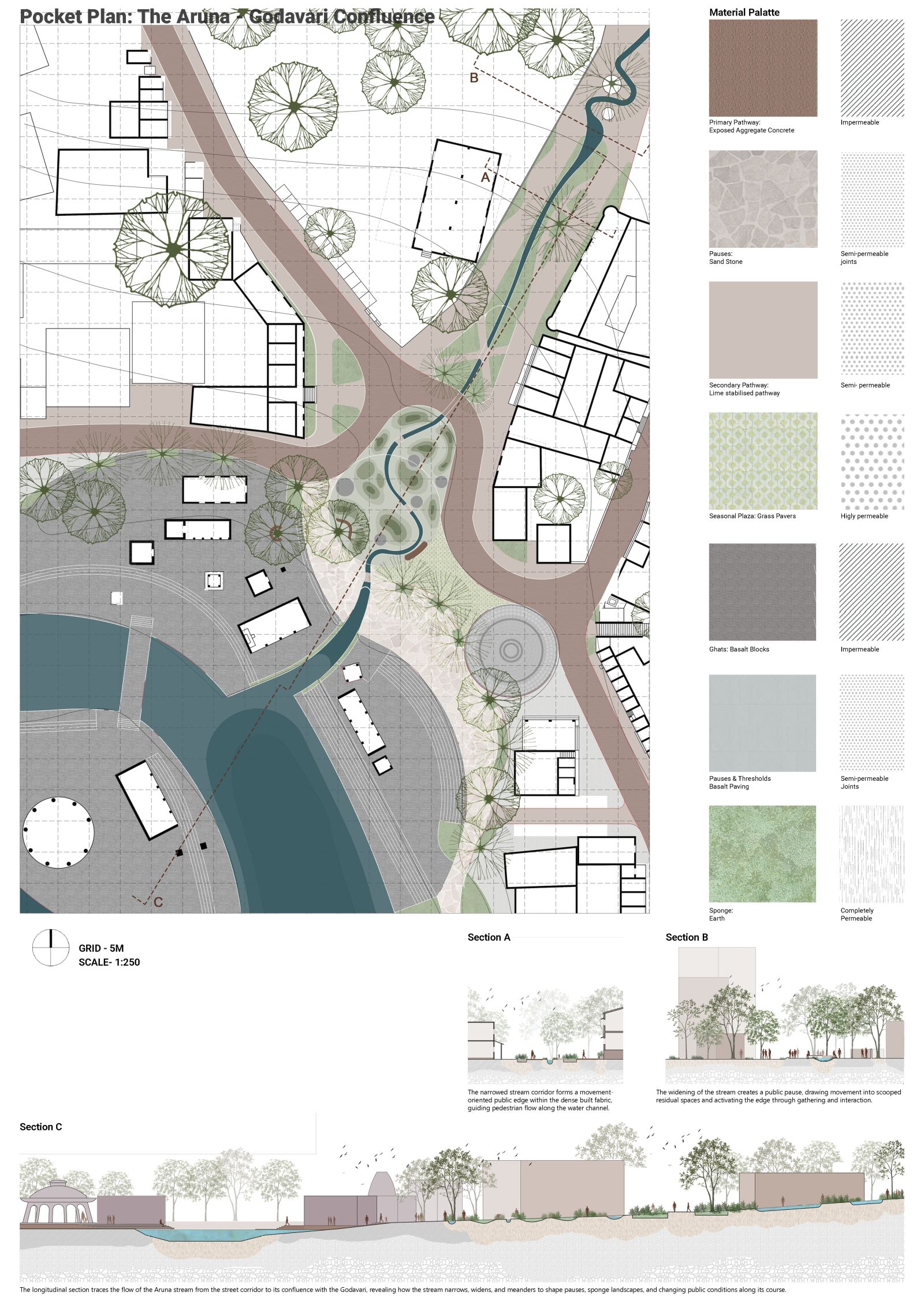
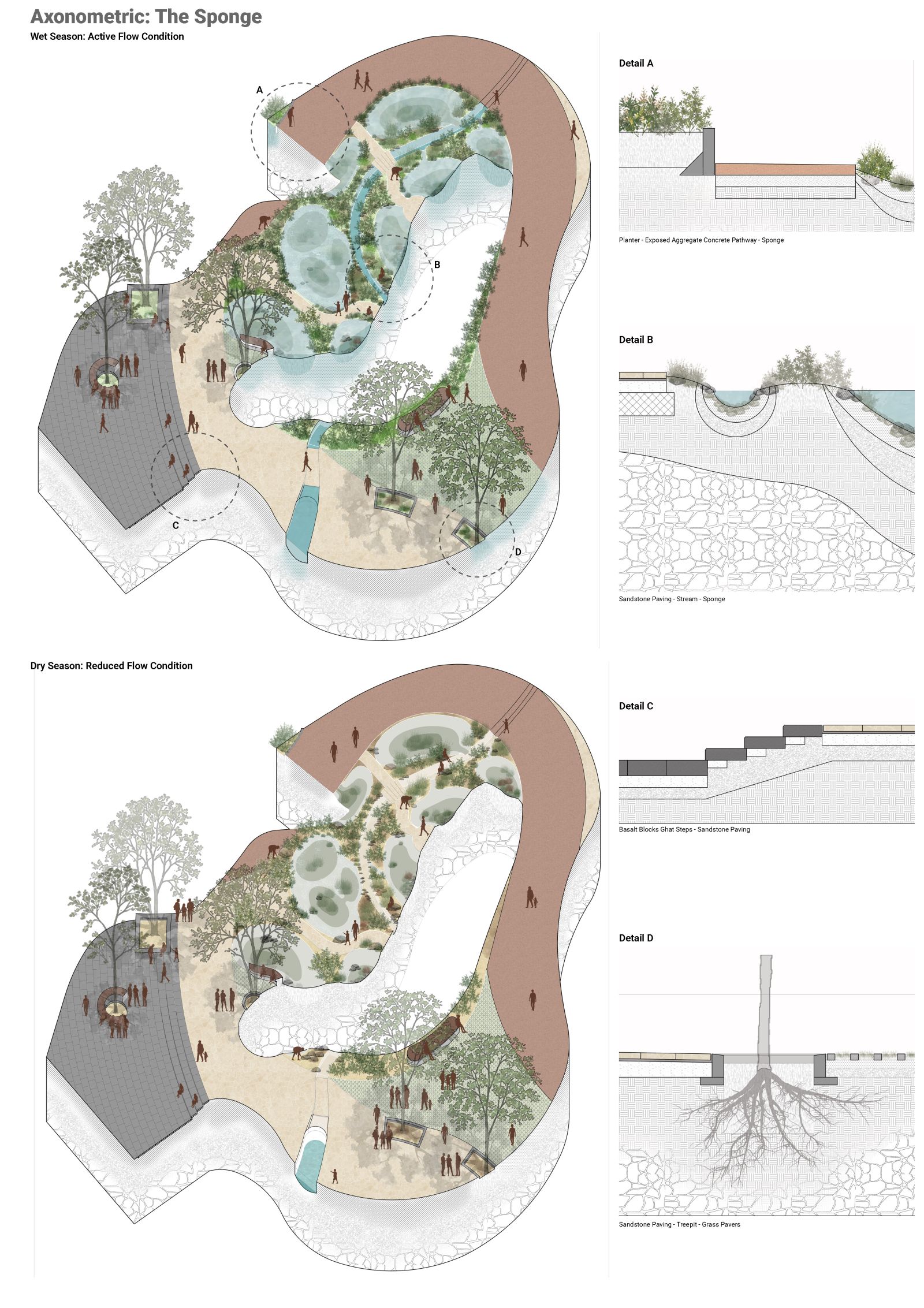
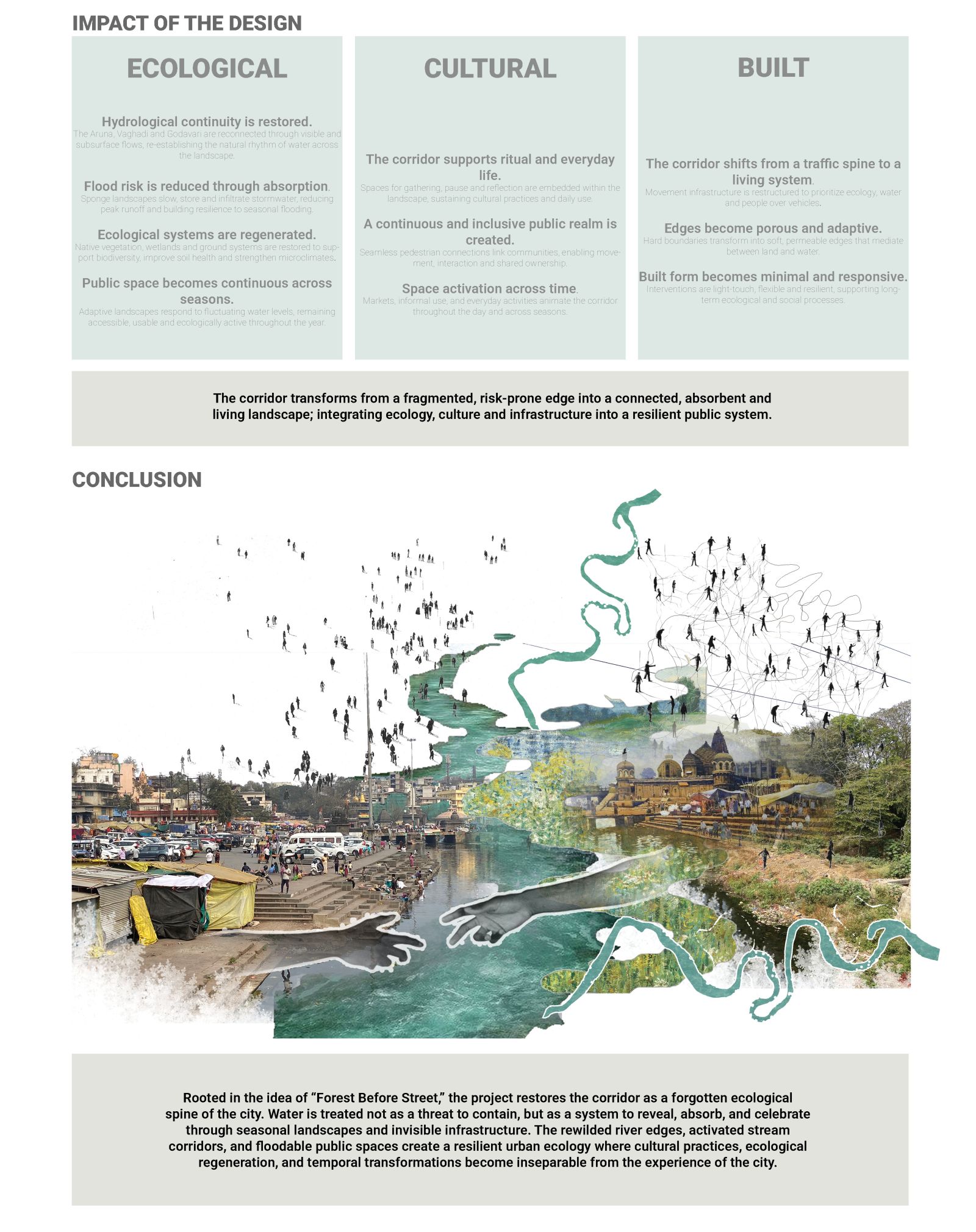
The Panchavati corridor is re-established as a forested ecological spine shaped by streams, river channels, floodplains, and groves rather than as a conventional street. The project restores the hydrological relationship between the Godavari, the buried Aruna, and the Vaghadi, revealing how these systems historically structured the cultural and ecological landscape of Panchavati. Through the regeneration of permeable ground, riverine ecologies, and canopy systems, the corridor shifts from a hardened circulation edge to an adaptive landscape framework. Existing ecological structures are uncovered and strengthened rather than replaced with new interventions. Seasonal floods, fluctuating water levels, and shaded groves become active agents in shaping movement, congregation, ritual, and everyday inhabitation. The corridor emerges as a living ecological field where water, soil, and vegetation continuously structure urban life, re-positioning Ramkund as a landscape where ecological systems and cultural practices co-evolve across time.
View Additional Work