Your browser is out-of-date!
For a richer surfing experience on our website, please update your browser. Update my browser now!
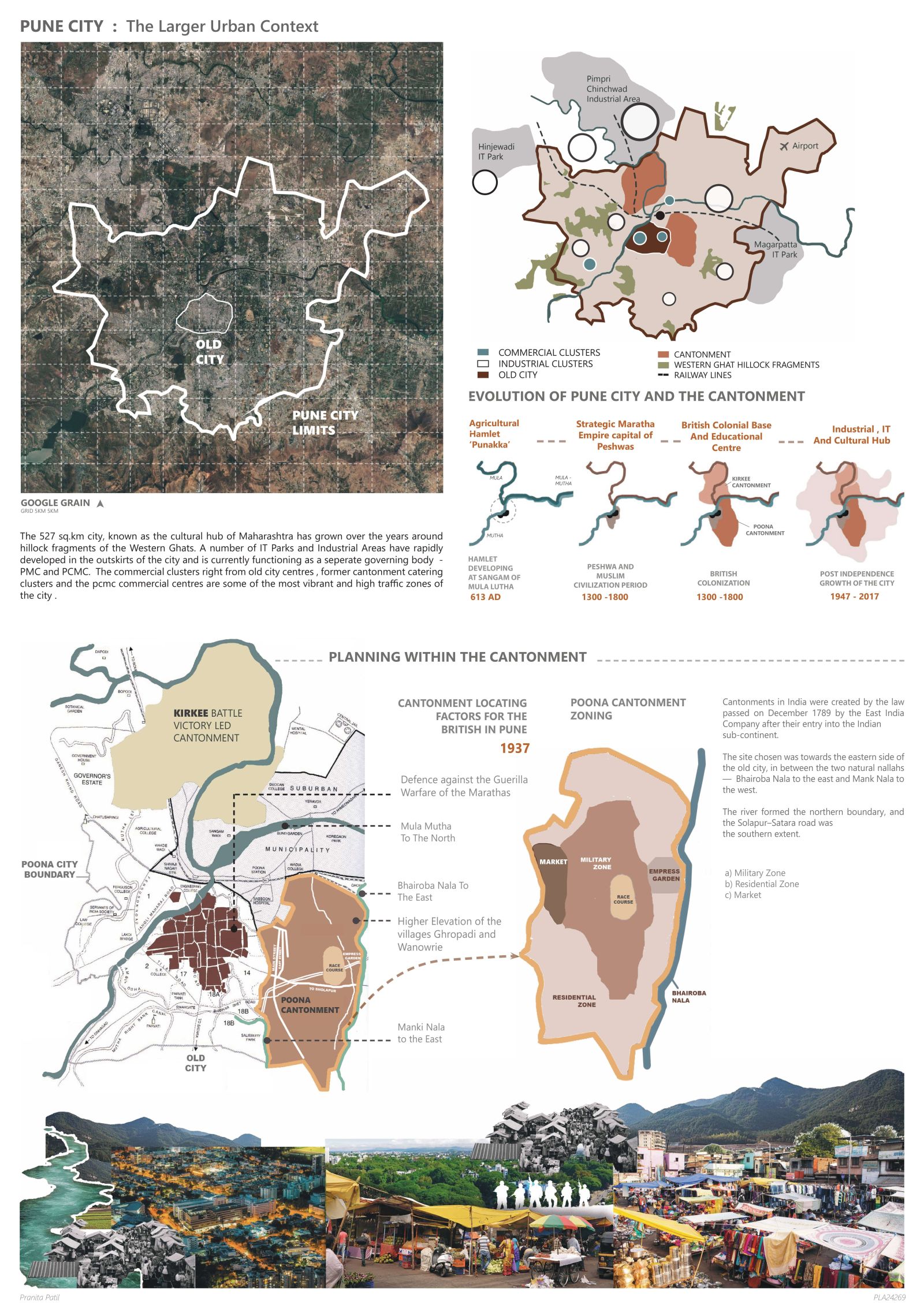
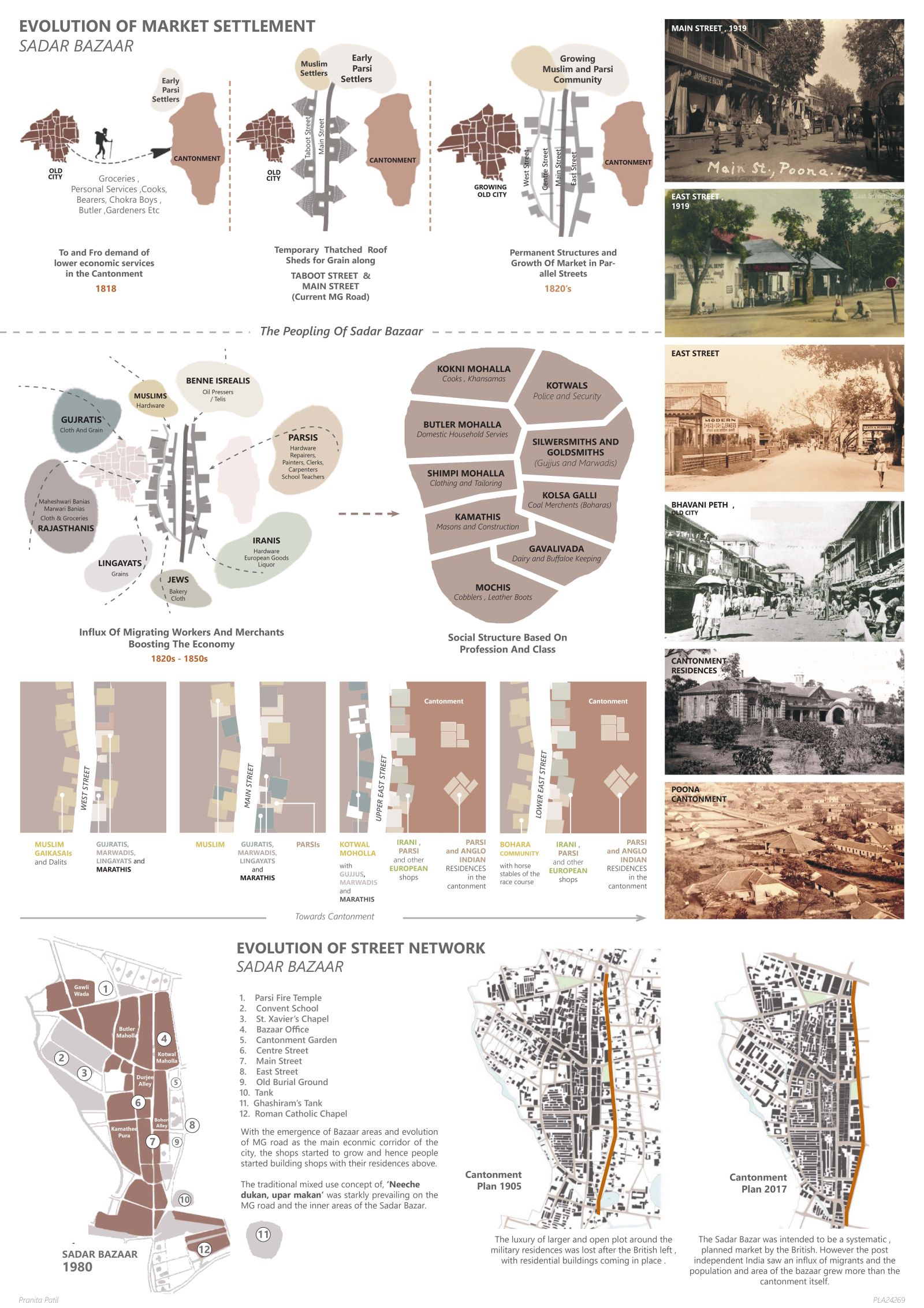
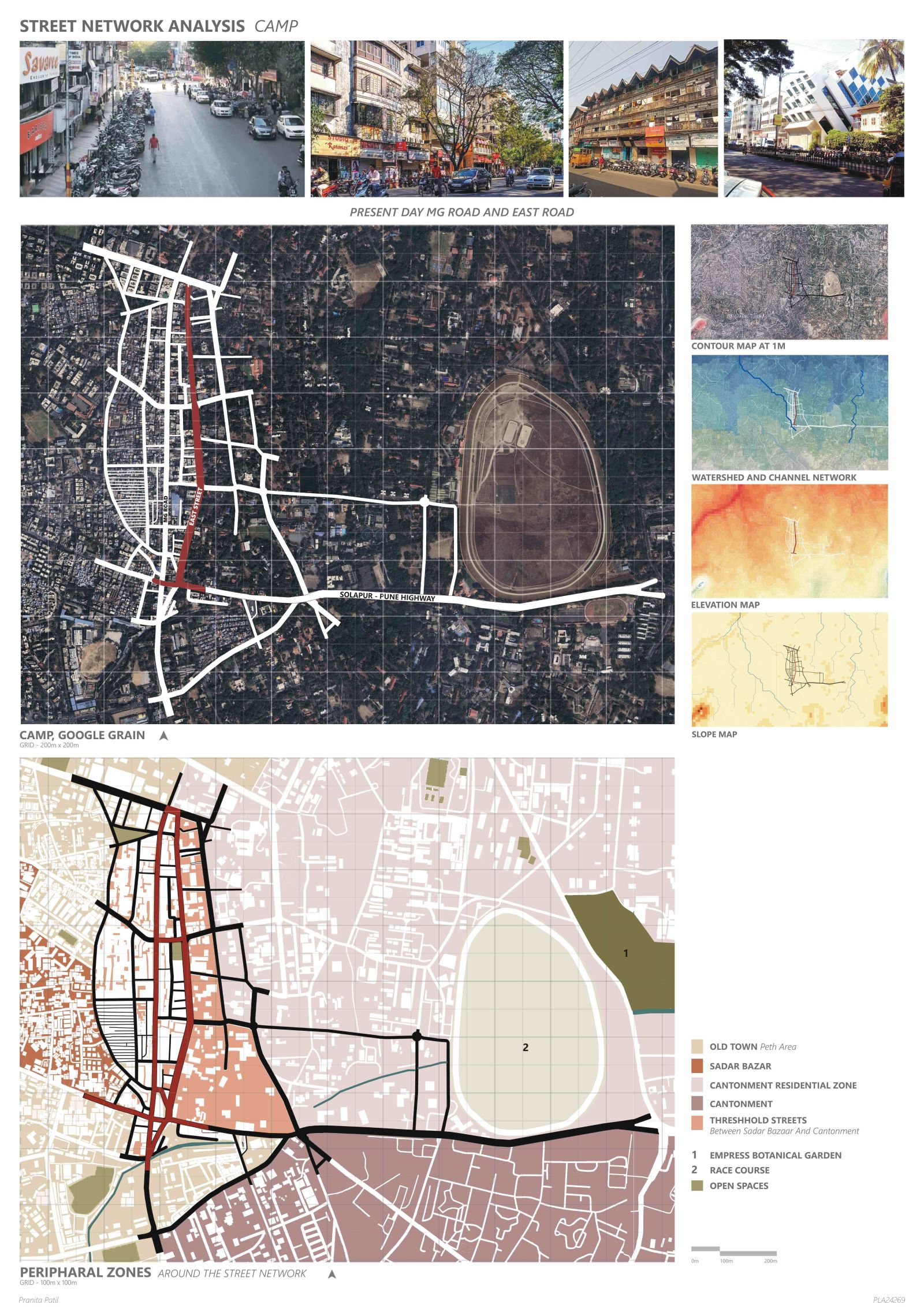
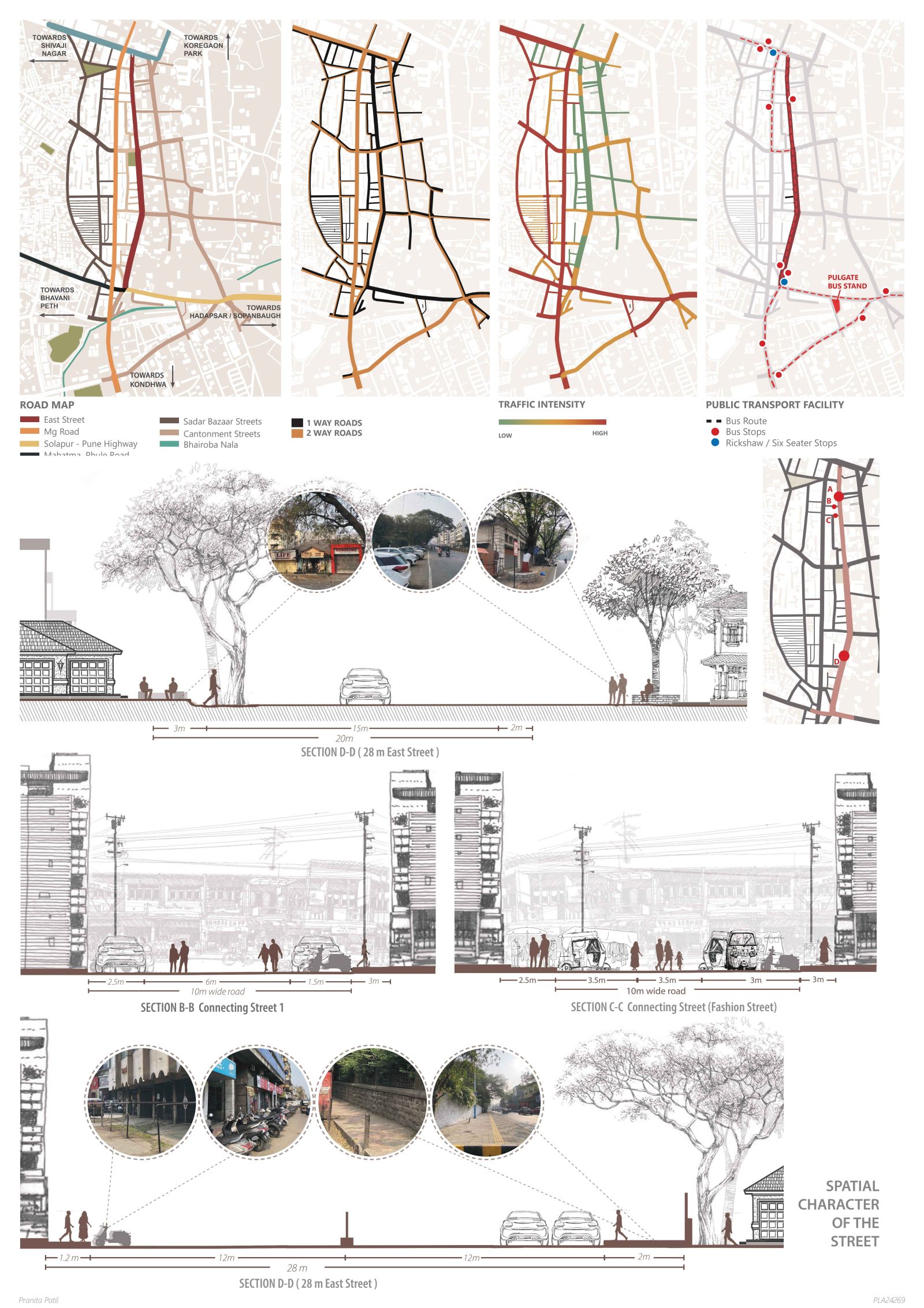
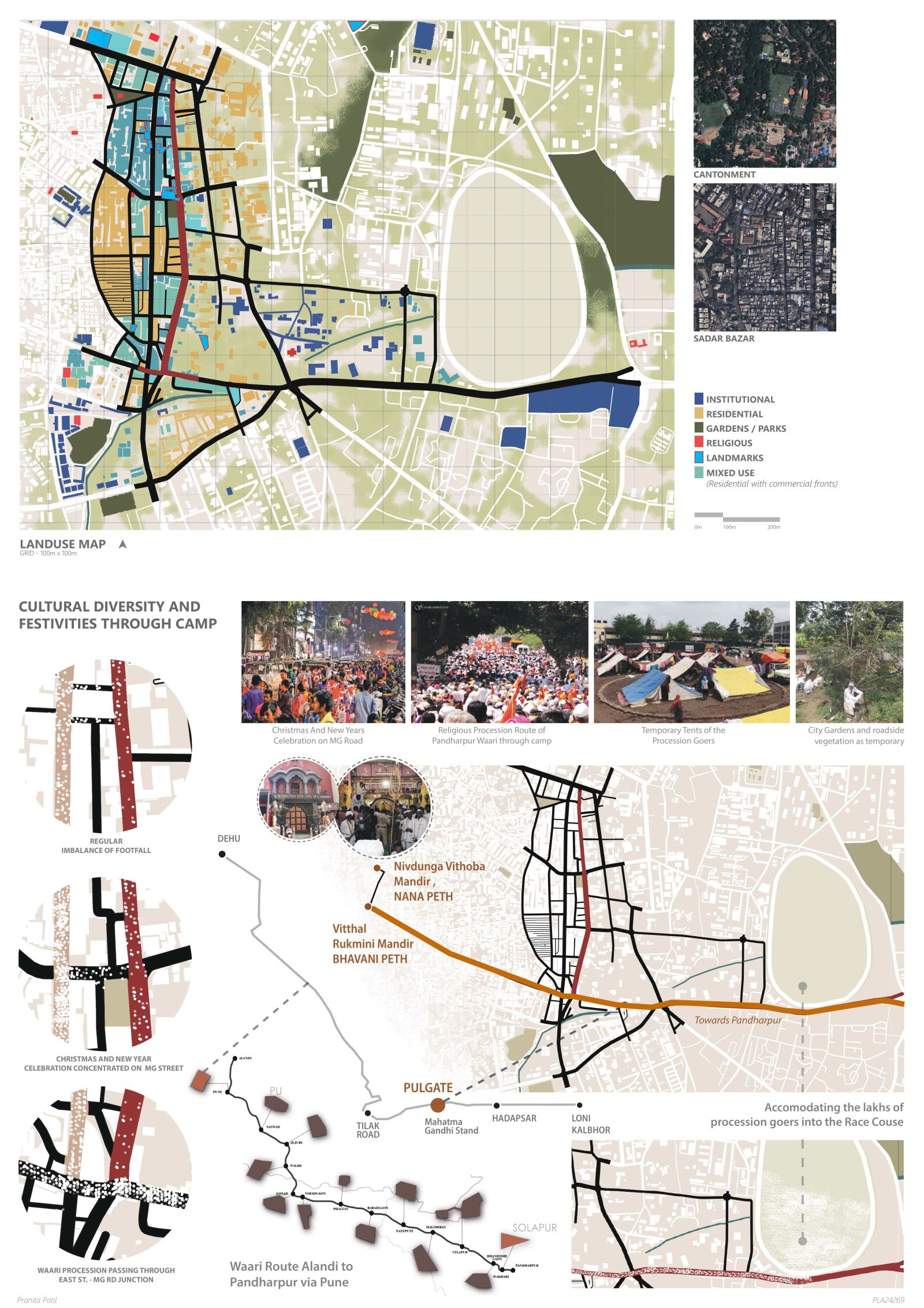
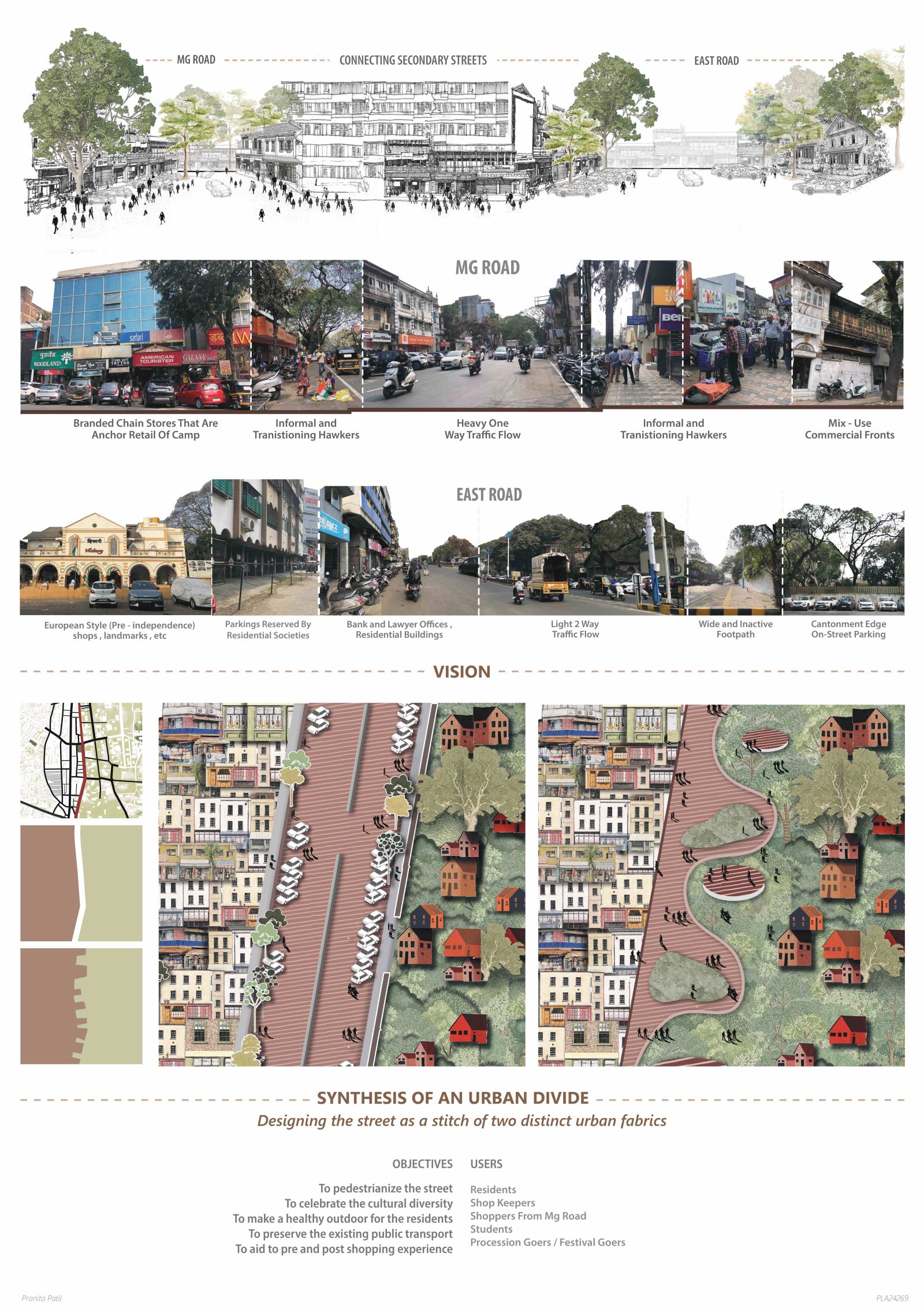
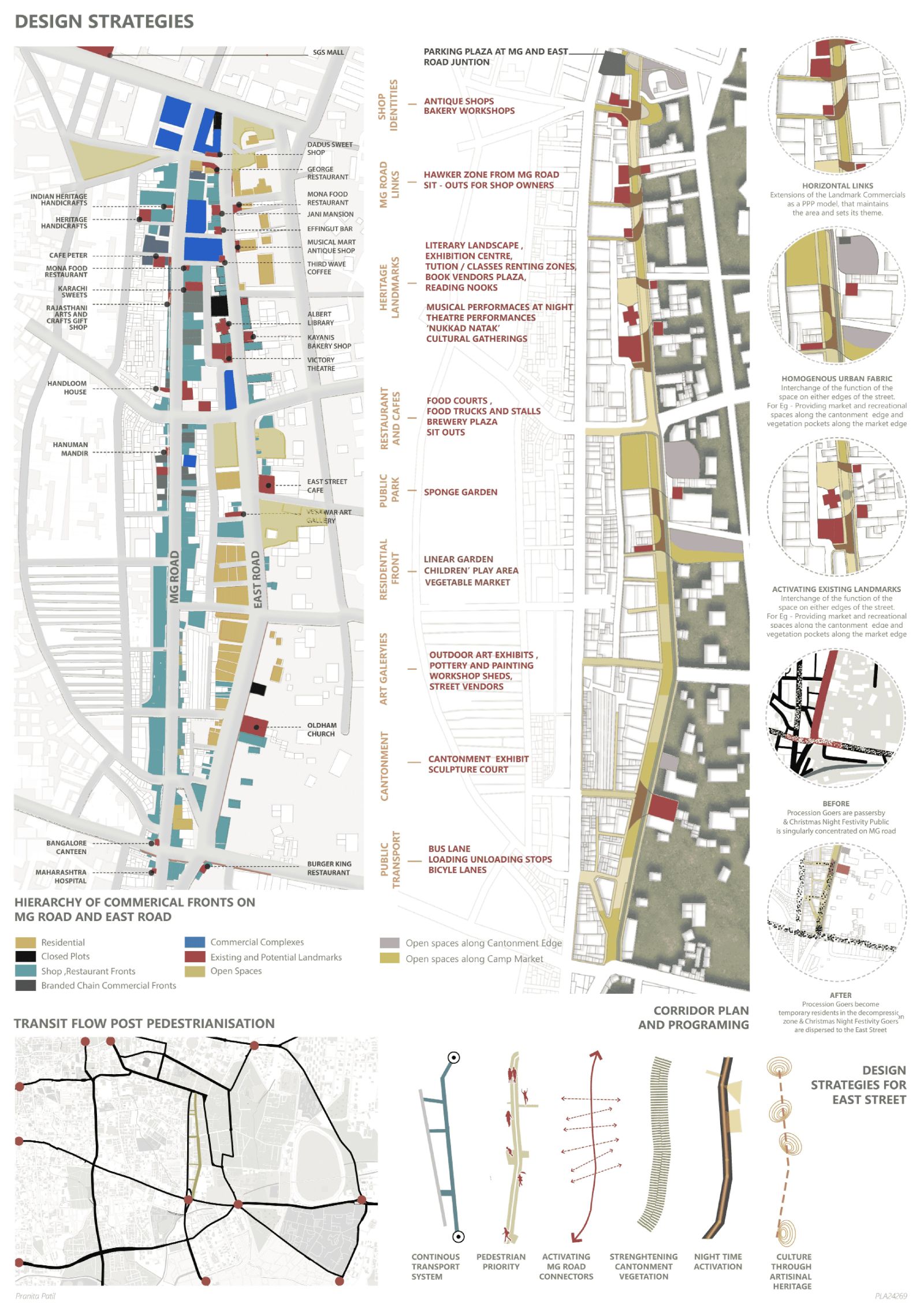
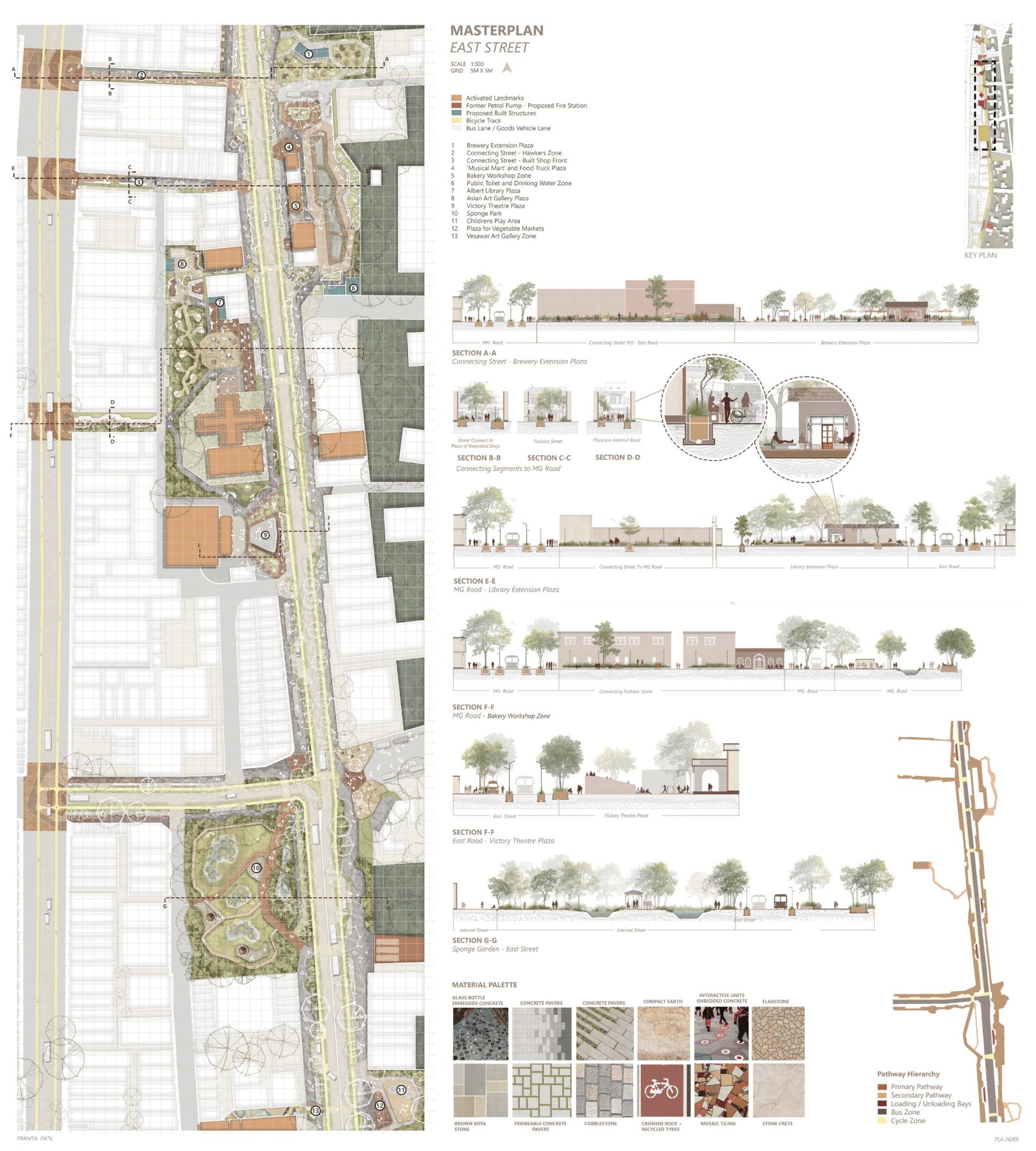
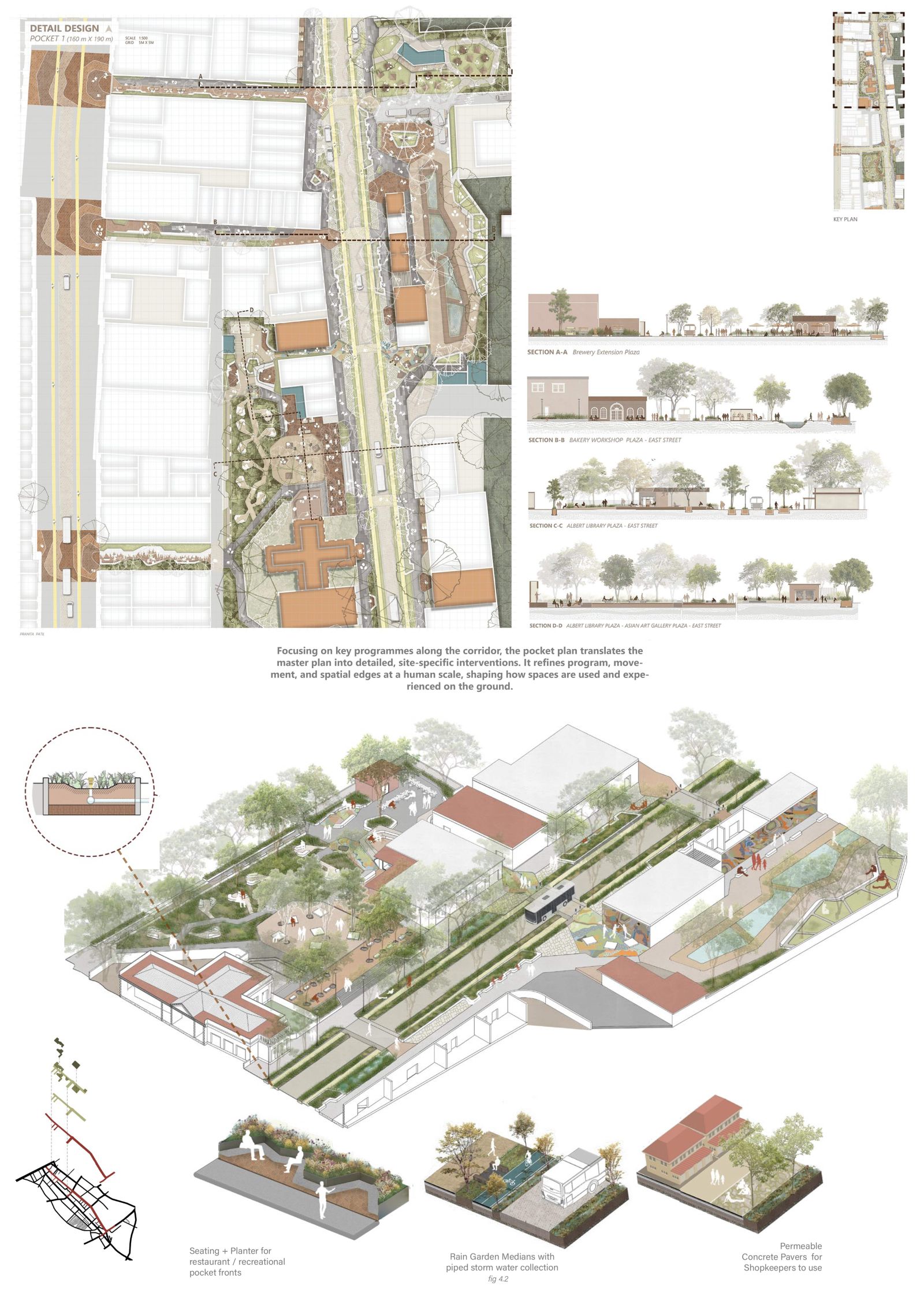
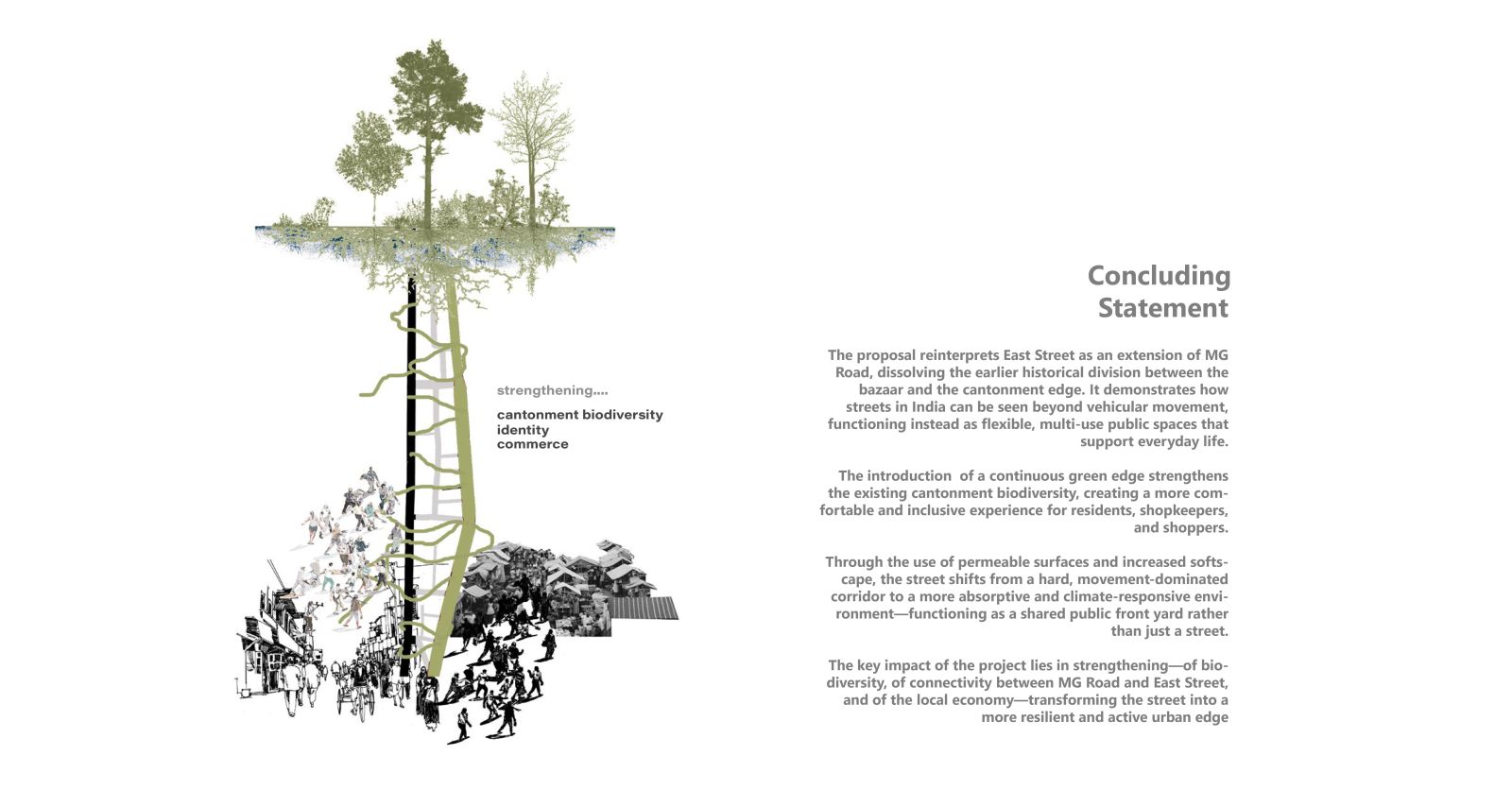
Pune city has two Cantonments as a legacy of colonial planning, forming a distinct part of this fabric with some of the oldest streets and markets. These streets remain largely vehicular, lacking identity or public life, and a clear disparity exists between the well-defined internal character of the cantonment and its edges. East Street, located at the threshold between the green cantonment and the dense markets of Sadar Bazaar - current Camp Area, reflects this condition. This project rethinks East Street as a connecting layer between these two contrasting areas. The intent is to support the pre and post shopping experience by engaging them in recreational and cultural activities and strengthening the ecological character of the cantonment edge. The street is imagined as a medium that stitches these two fabrics together. This is achieved by identifying existing and potential landmarks and extending their activities into the street. East Street is thus reimagined as an active public space with its own identity—the street no longer lies at a threshold but becomes a thriving commercial market and recreational public realm.
View Additional Work