Your browser is out-of-date!
For a richer surfing experience on our website, please update your browser. Update my browser now!
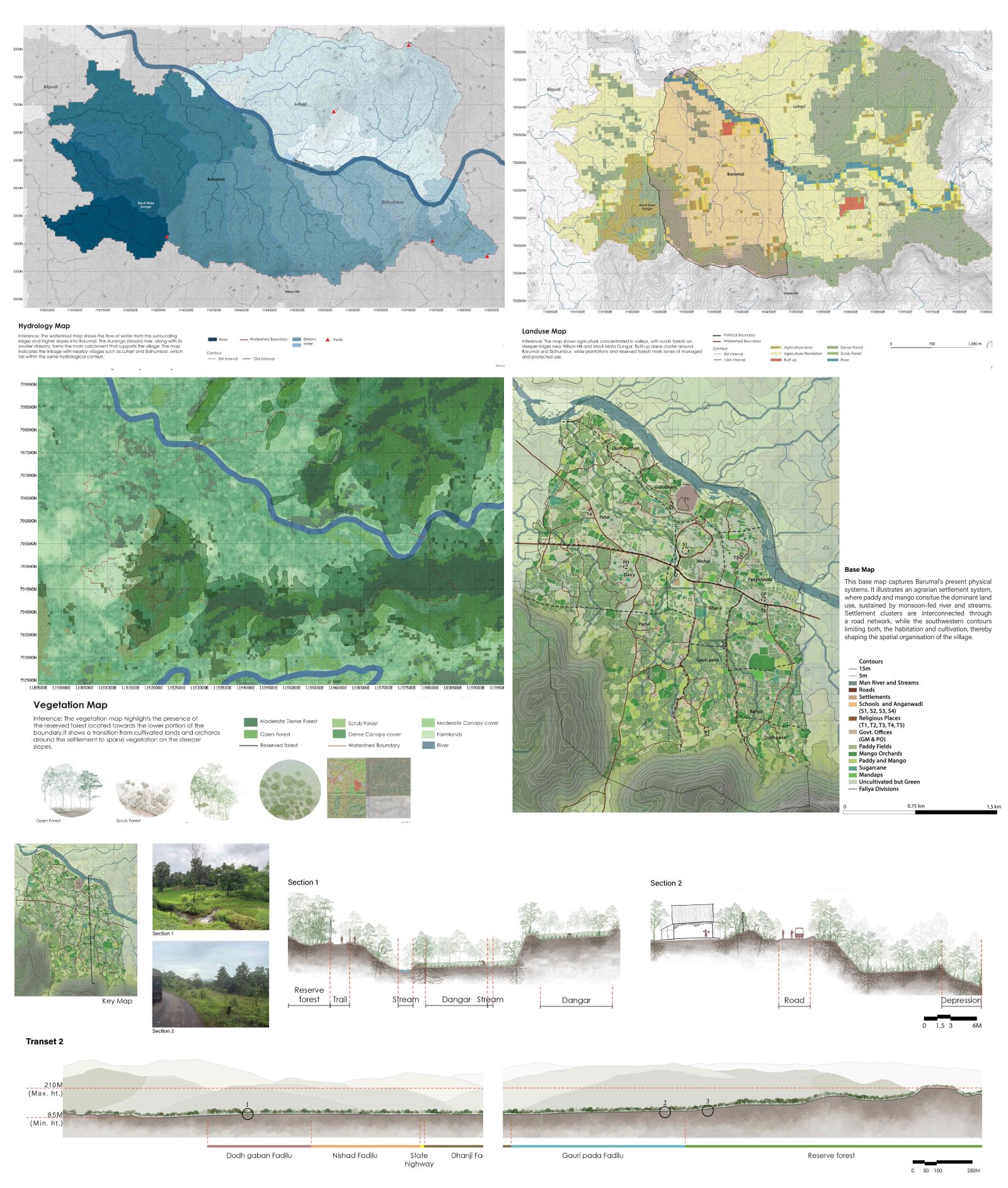
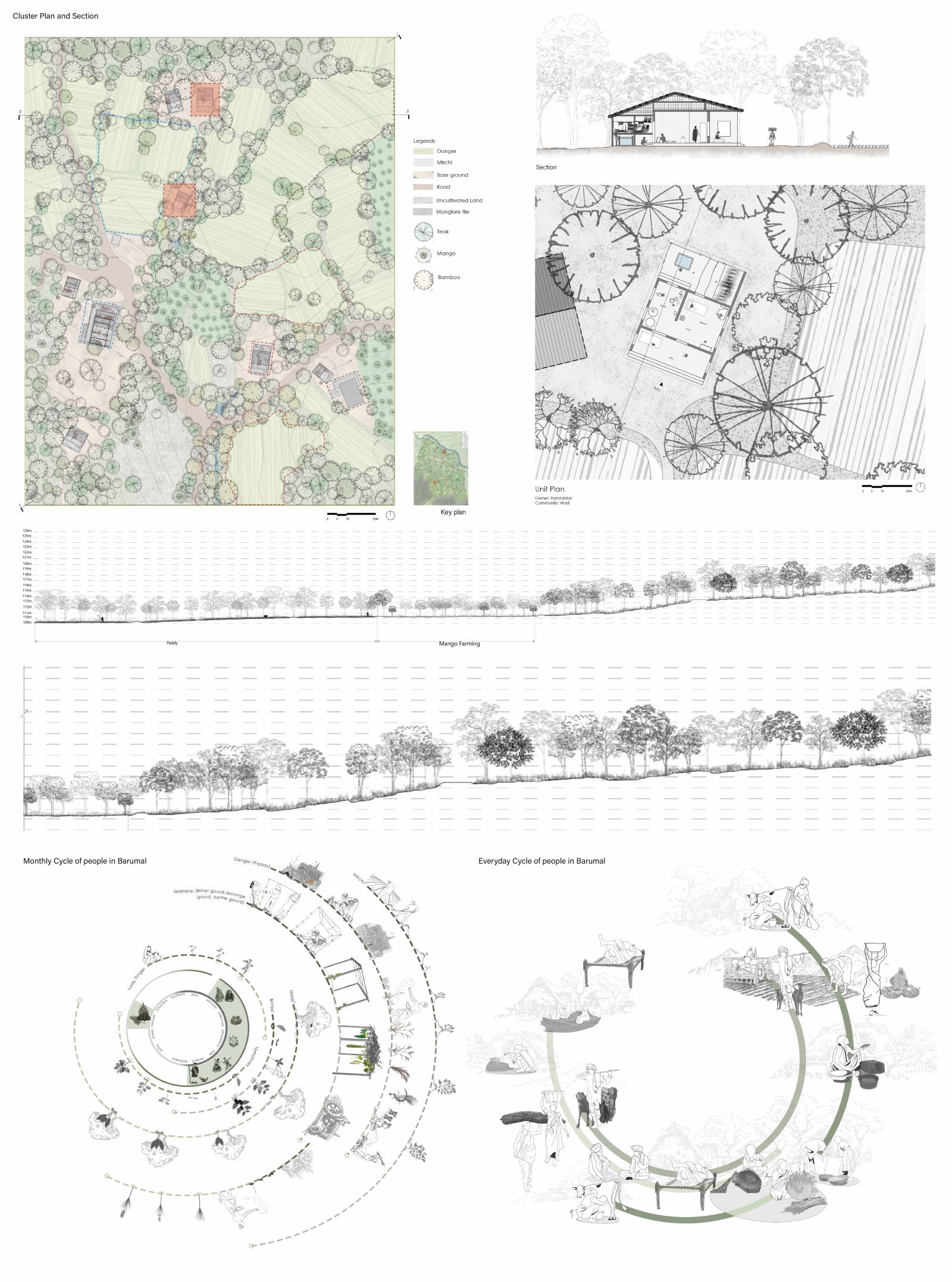
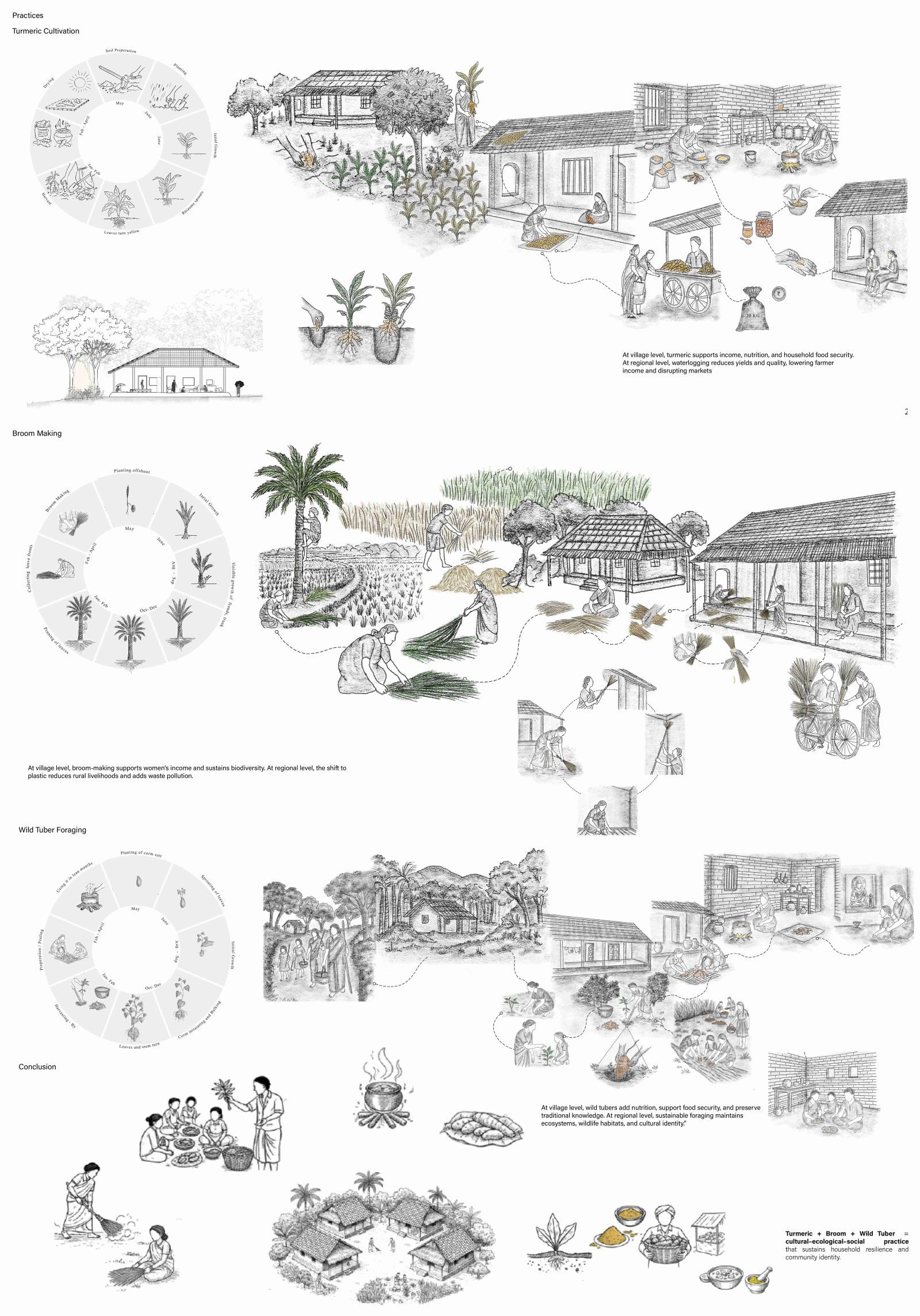
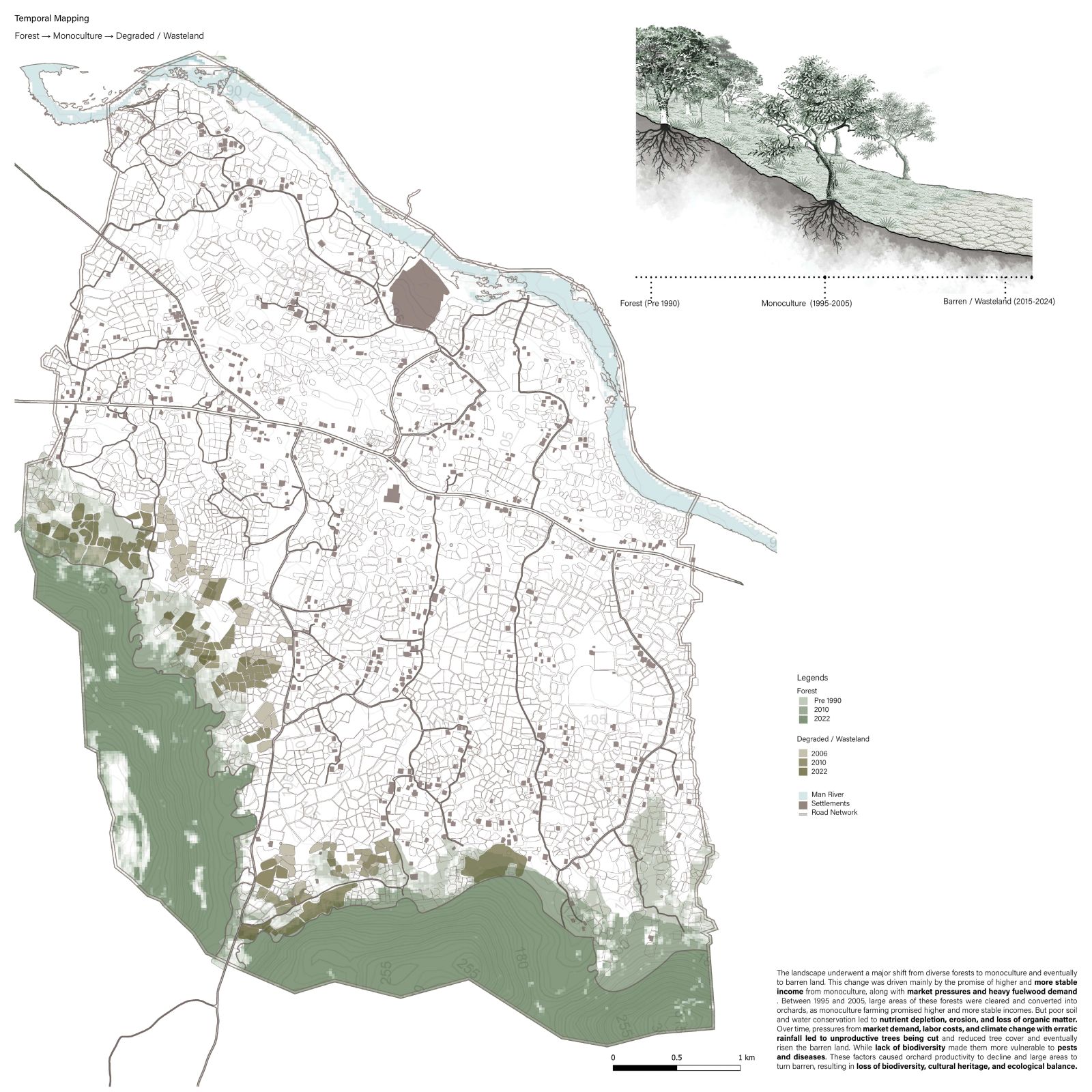
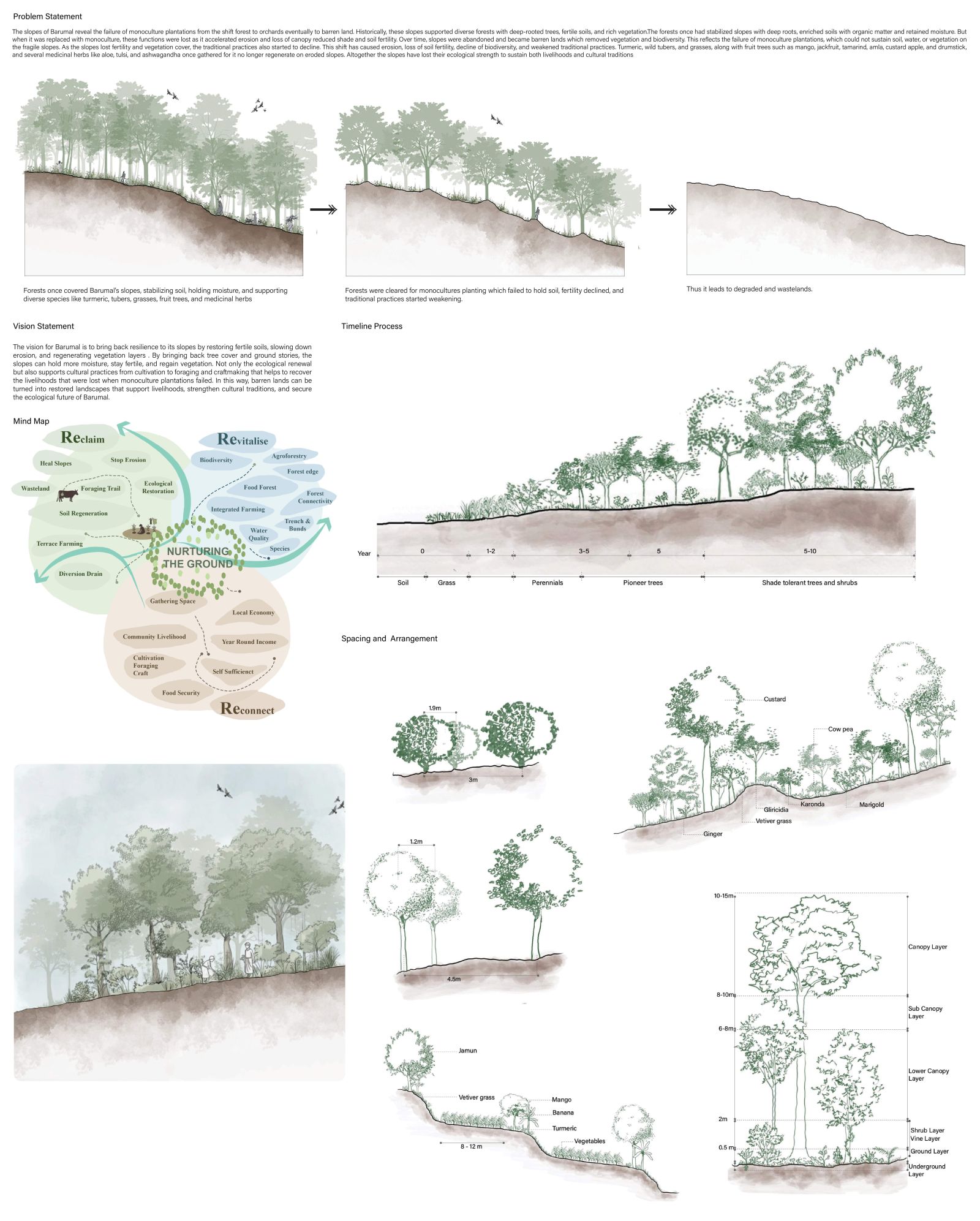
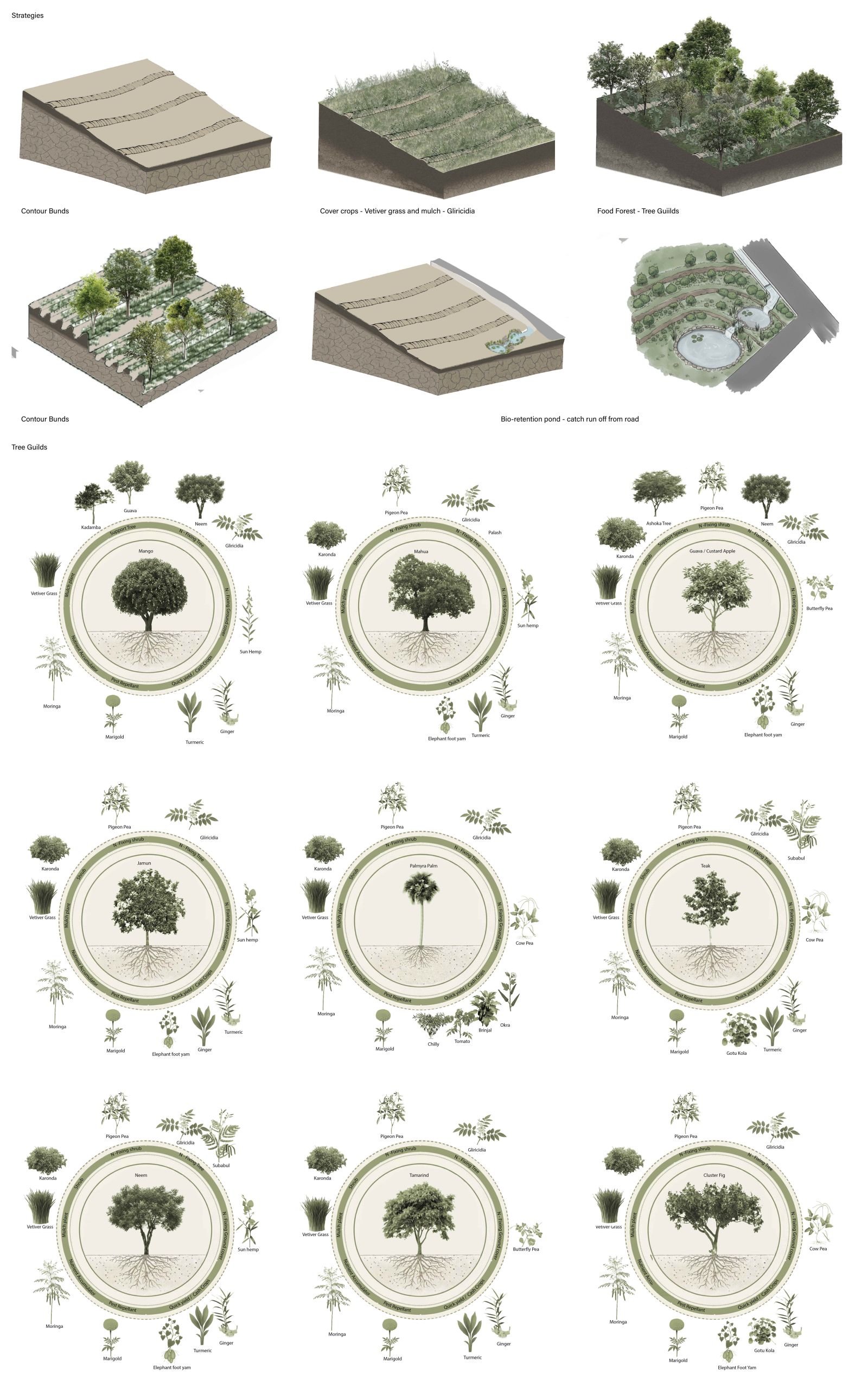
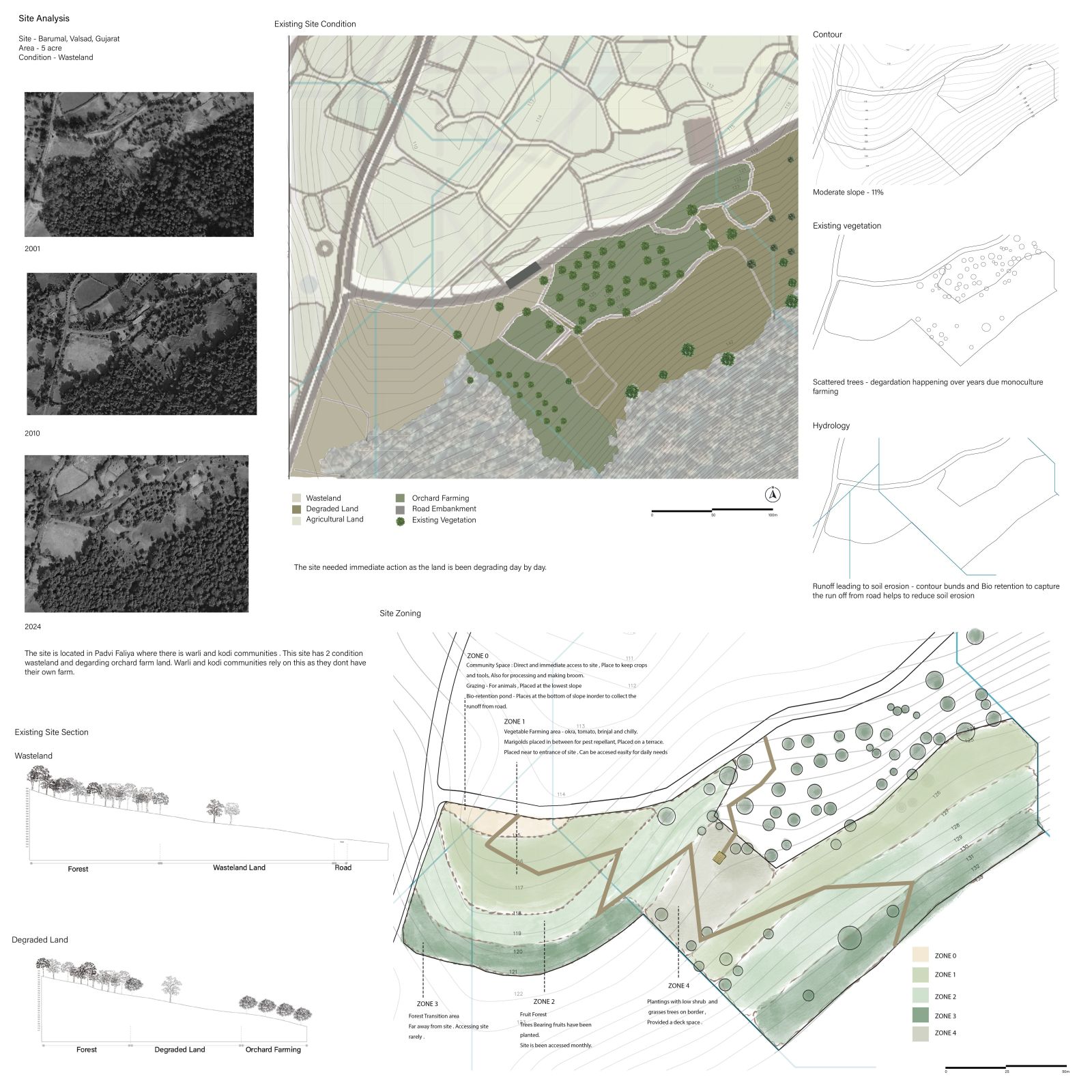
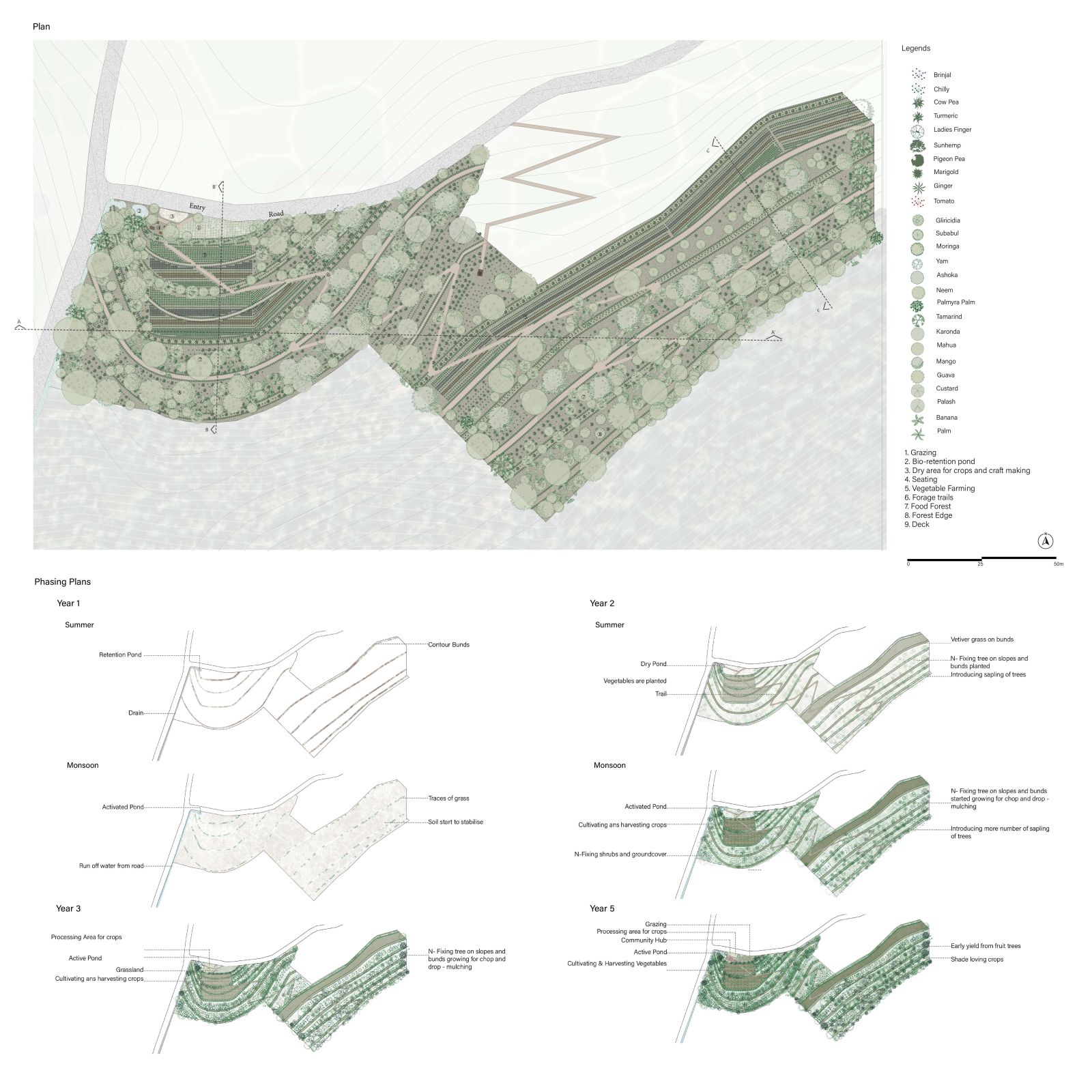
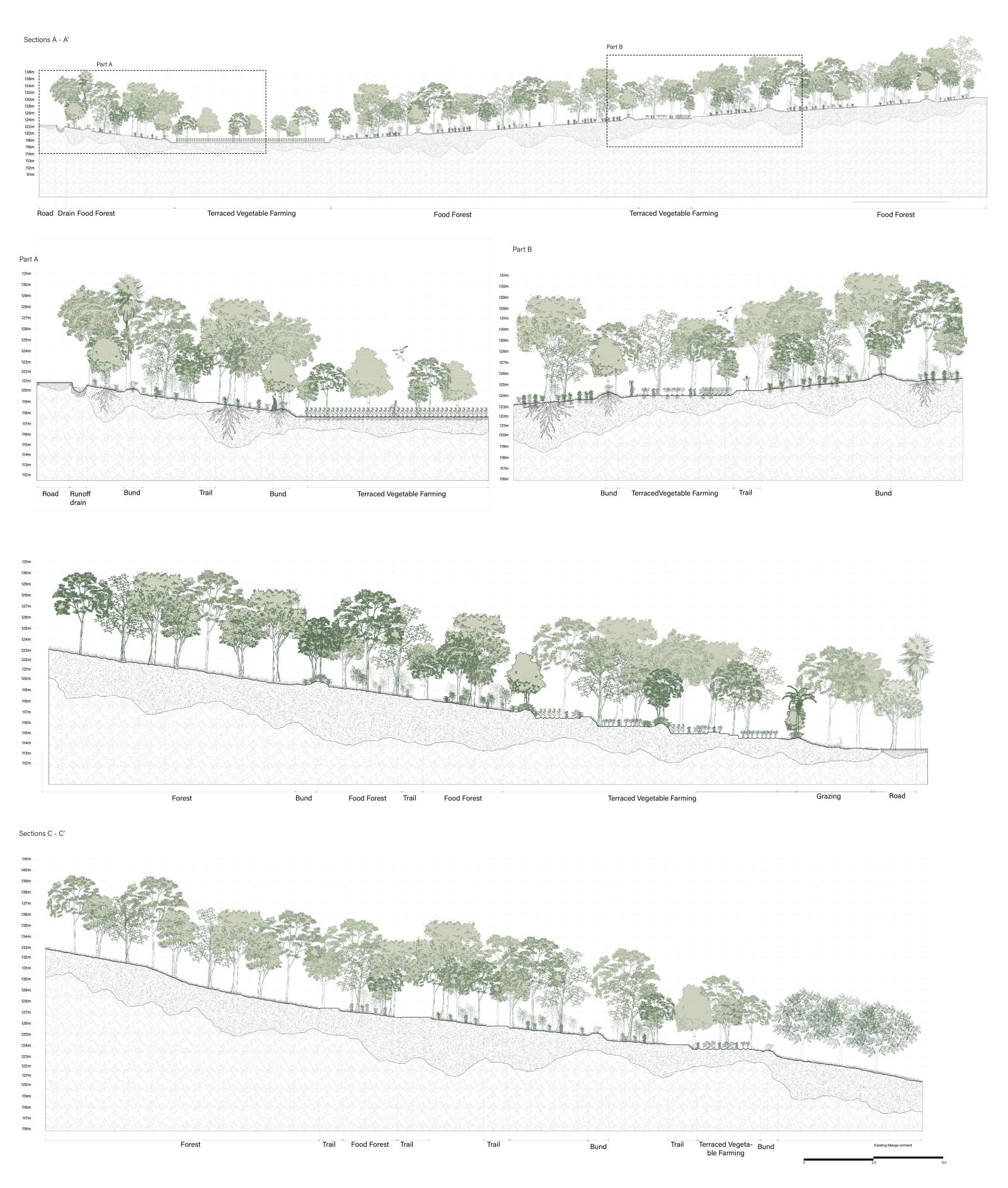
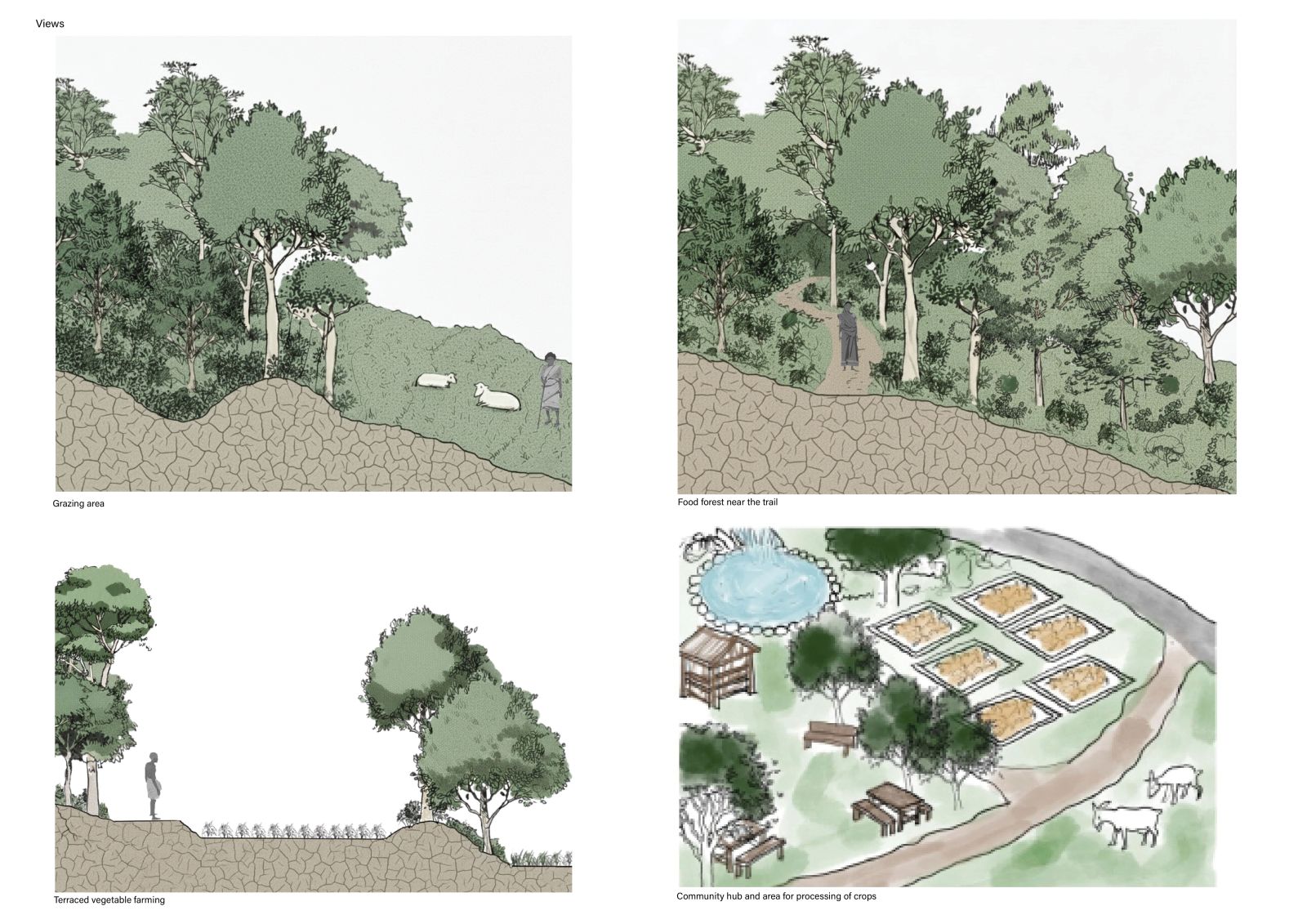
Nurturing the Ground is a landscape regeneration project that responds to the ecological and social decline caused by shifting land-use patterns in a rural hillside settlement. The project originates from the study of local livelihood practices—wild tuber foraging, broom making, and turmeric calcination—which reveal the community’s deep knowledge of soil, vegetation, and self-sufficient resource use. Over time, however, the landscape has transitioned from diverse poly-cropping systems to fragmented, degraded land marked by erosion, reduced biodiversity, and weakened community practices. Situated on a steep slope currently classified as wasteland, the site demands interventions centered on soil stabilization and water management. The design vision transforms the area into a resilient, biodiverse agro-ecological landscape using a three-part approach: Reclaim, Revitalise, and Reconnect. The proposal introduces terracing for slope stabilization, reforestation for foraging, integrated farming for soil regeneration, and a community gathering space that supports local craft and small-scale processing. By embedding traditional practices within a renewed productive terrain, Nurturing the Ground restores ecological health, strengthens local livelihoods, and re-establishes the community’s connection to the land—forming a long-term, climate-resilient rural model.
View Additional Work