Your browser is out-of-date!
For a richer surfing experience on our website, please update your browser. Update my browser now!
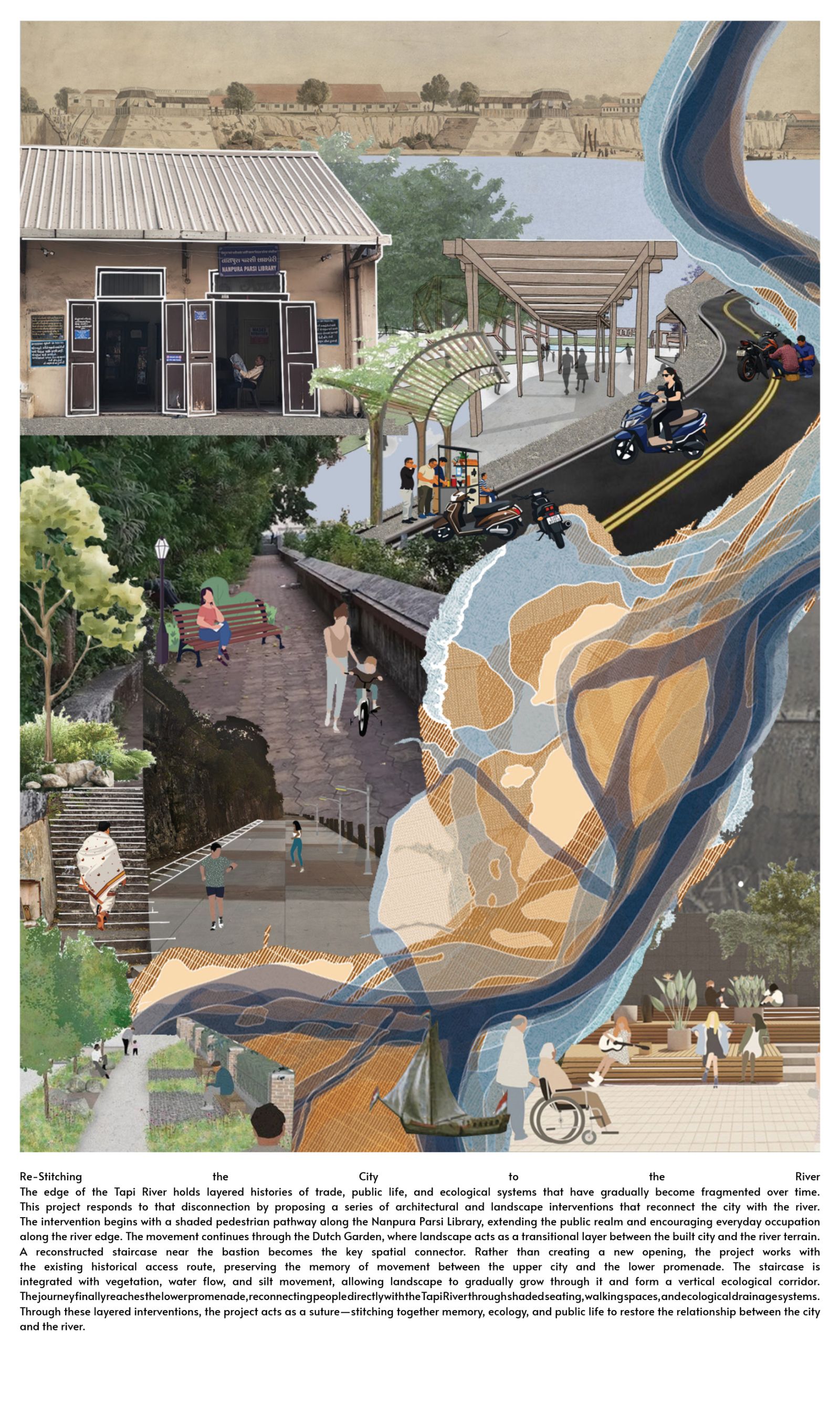
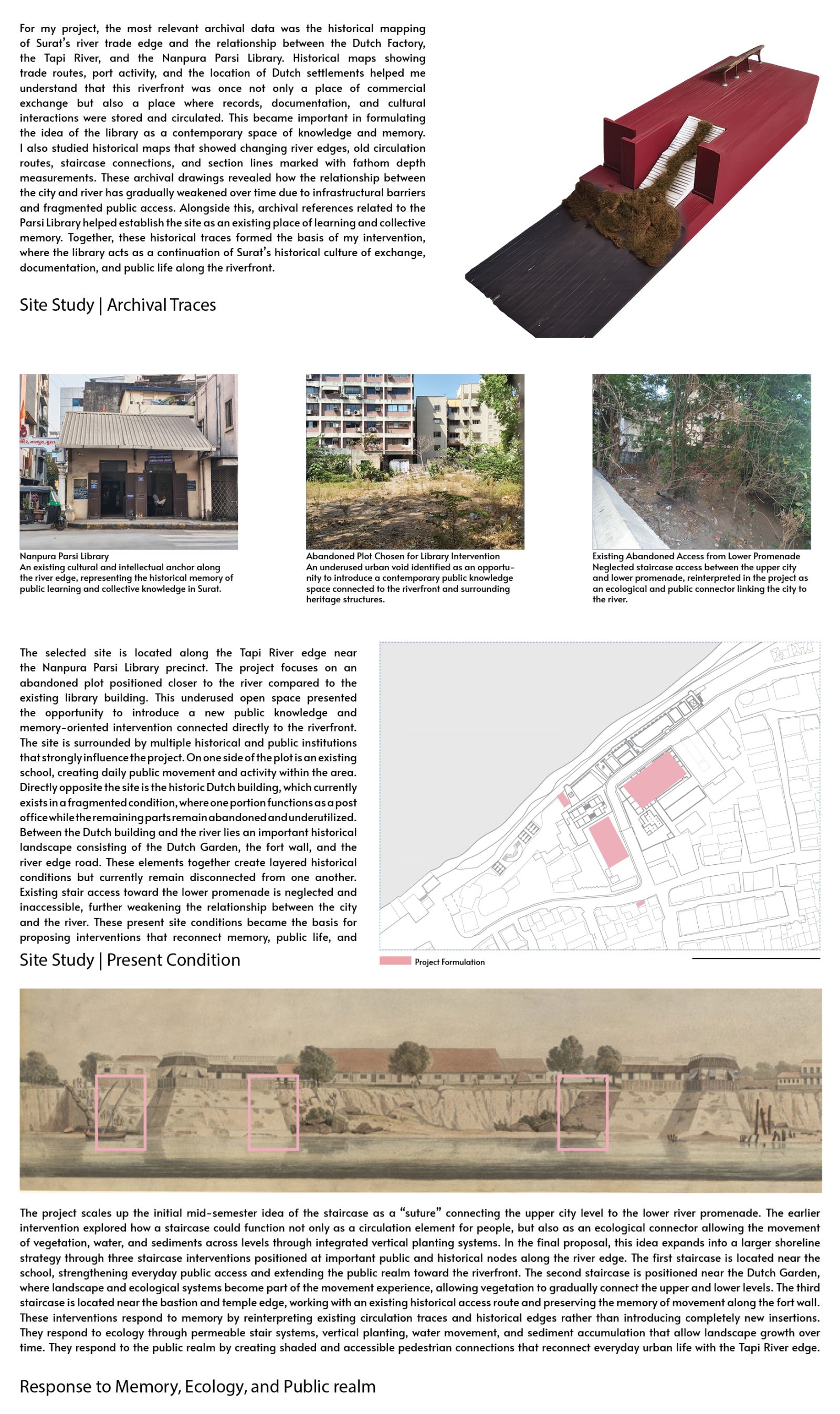
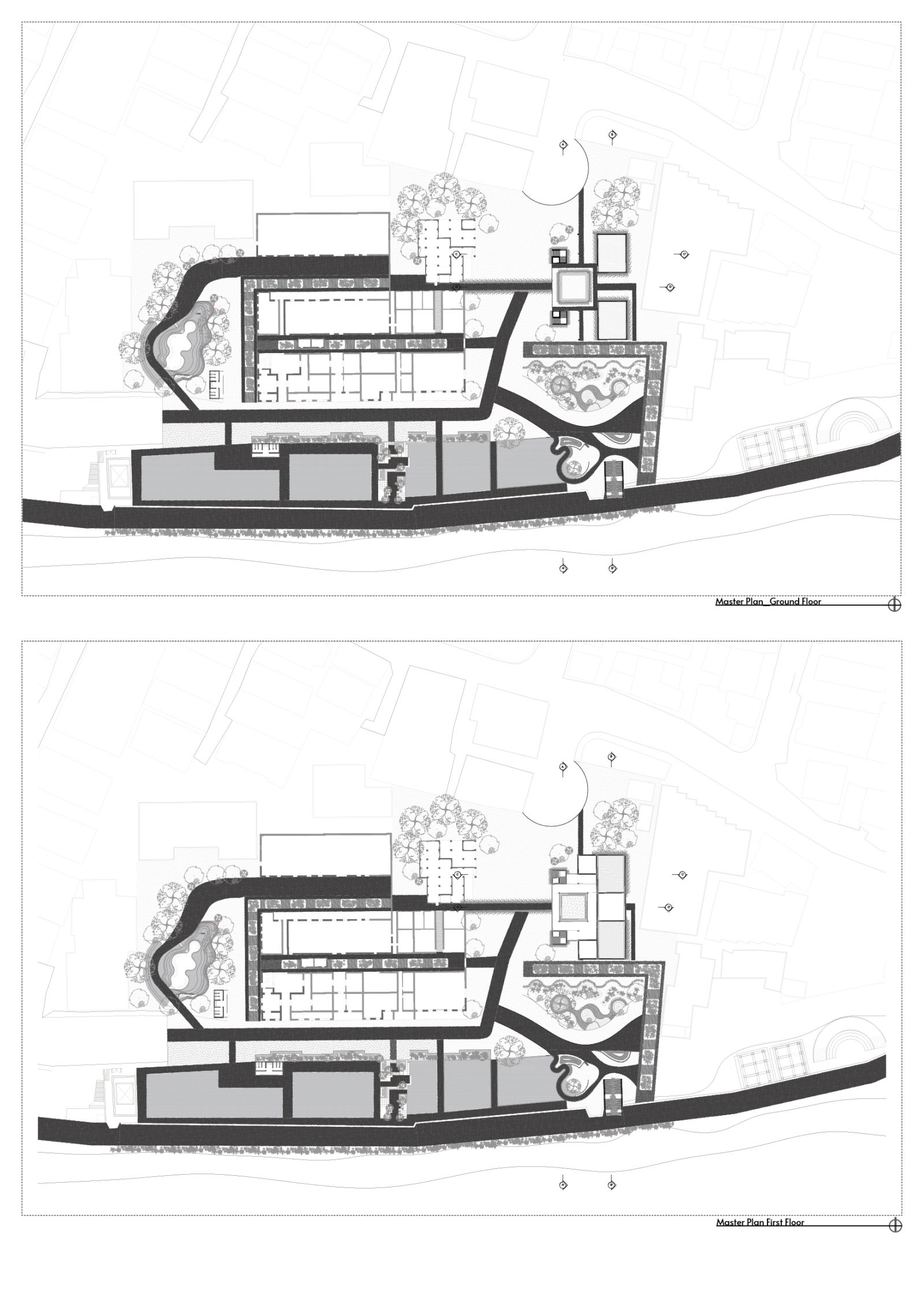
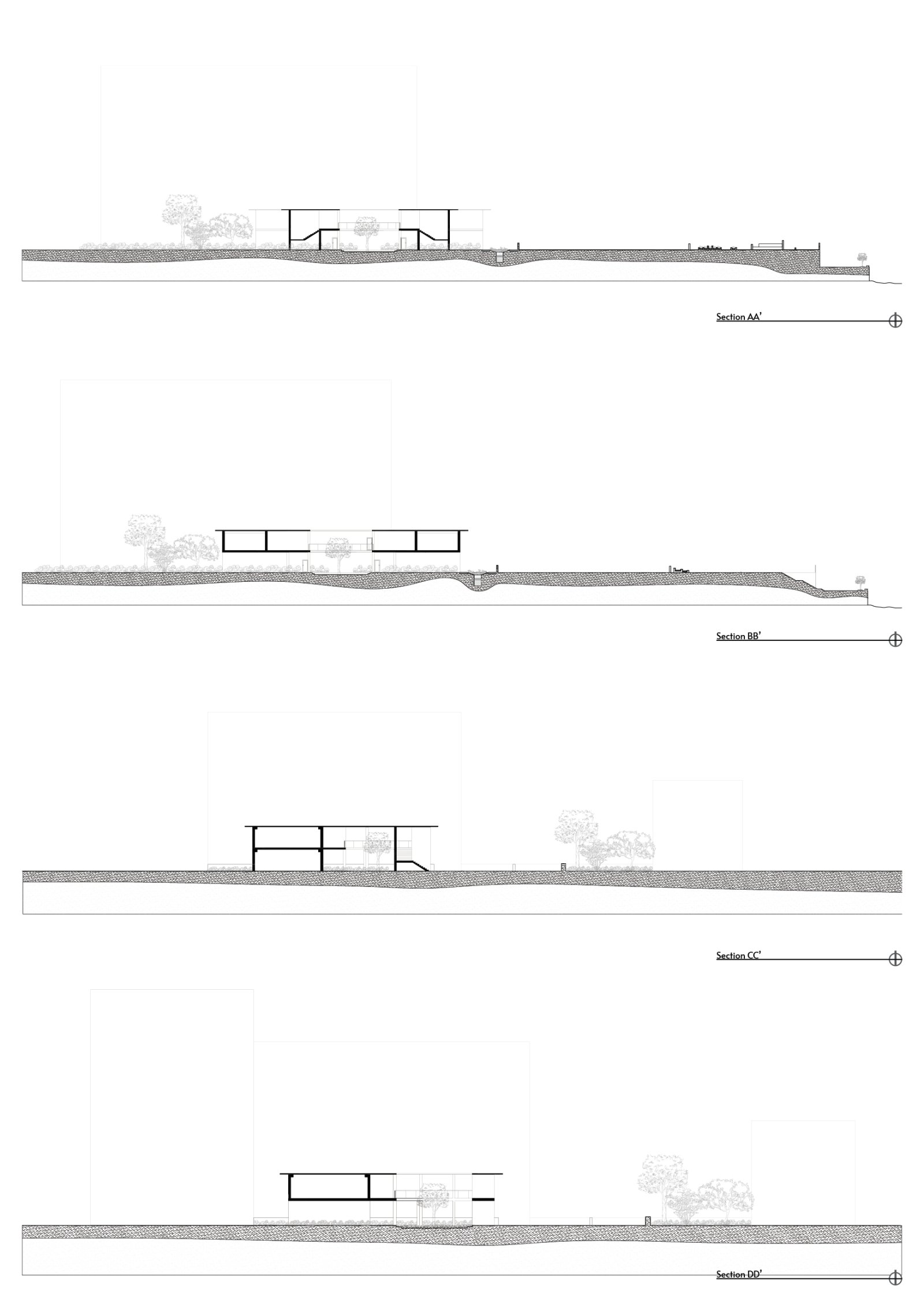
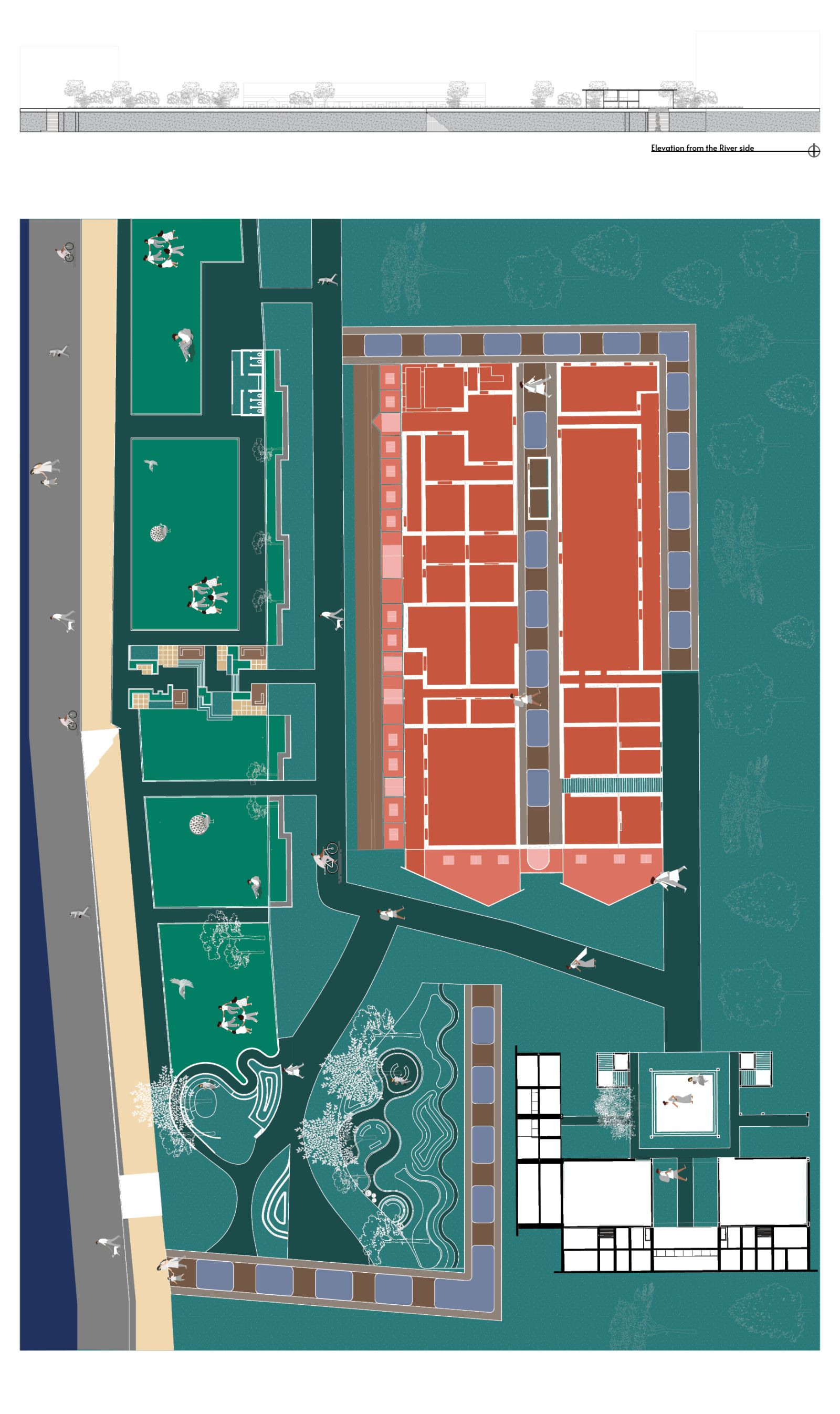
The edge of the Tapi River holds layered histories of trade, public life, and ecological systems that have gradually become fragmented over time. This project responds to that disconnection by proposing a series of architectural and landscape interventions that reconnect the city with the river. The intervention begins with a shaded pedestrian pathway along the Nanpura Parsi Library, extending the public realm and encouraging everyday occupation along the river edge. The movement continues through the Dutch Garden, where landscape acts as a transitional layer between the built city and the river terrain. A reconstructed staircase near the bastion becomes the key spatial connector. Rather than creating a new opening, the project works with the existing historical access route, preserving the memory of movement between the upper city and the lower promenade. The staircase is integrated with vegetation, water flow, and silt movement, allowing landscape to gradually grow through it and form a vertical ecological corridor. The journey finally reaches the lower promenade, reconnecting people directly with the Tapi River through shaded seating, walking spaces, and ecological drainage systems. Through these layered interventions, the project acts as a suture—stitching together memory, ecology, and public life to restore the relationship between the city and the river.