Rishika

AT4012

Architecture Beyond Form

Through readings on Tagore Hall and the National Institute of Design, architecture is understood not as a fixed object, but as an evolving system shaped by structure, climate, construction logic, and use. Moving between the monolithic presence of Tagore Hall and the adaptable systems of NID, the study reflects on how architectural language emerges through material, assembly, and performance over time. Together, the readings reinforce tectonics as a way of understanding relationships between material, structure, environment, and the evolving life of architecture, while revealing architecture as a continuous negotiation between permanence, adaptability, construction, and environmental response across changing social conditions.
Report Content

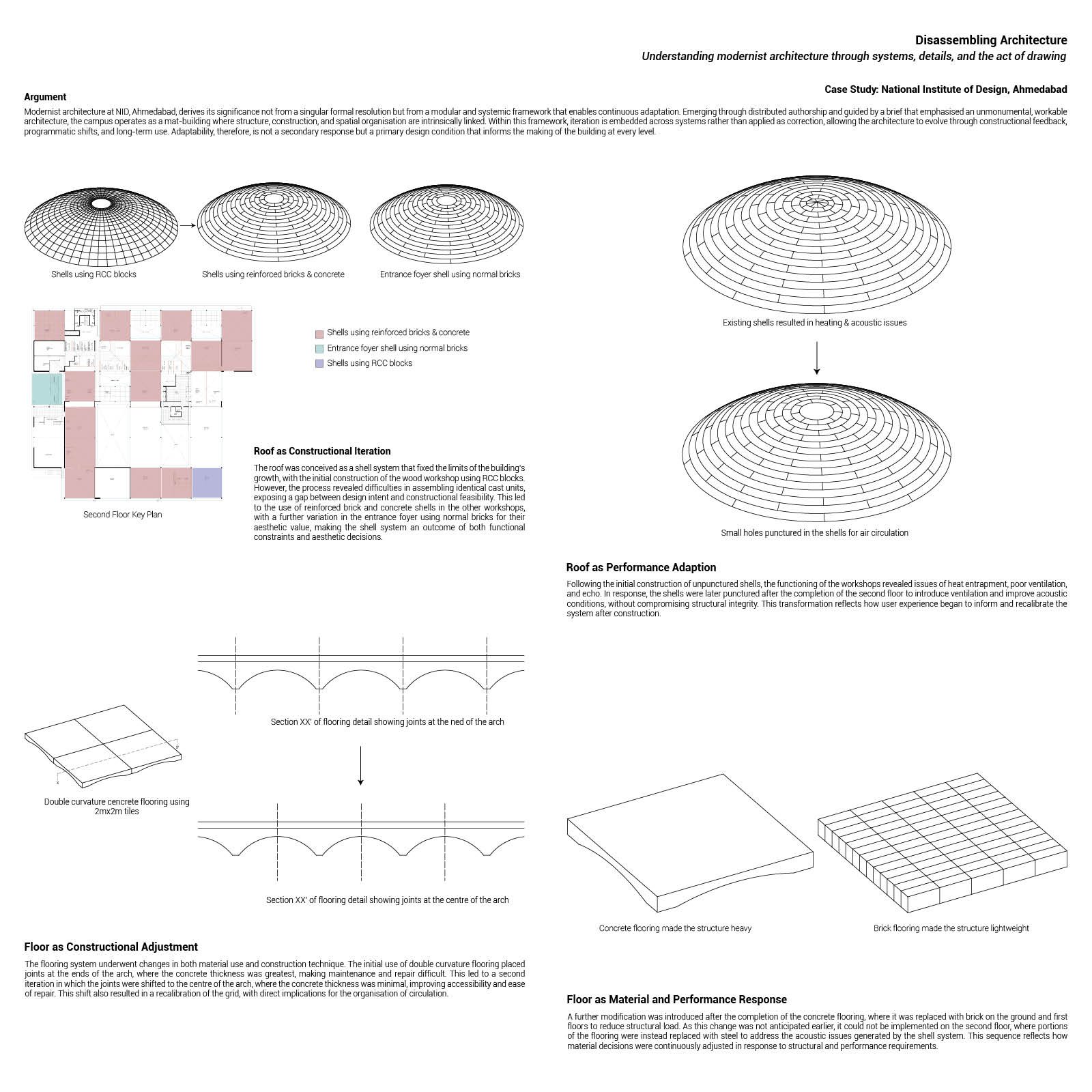
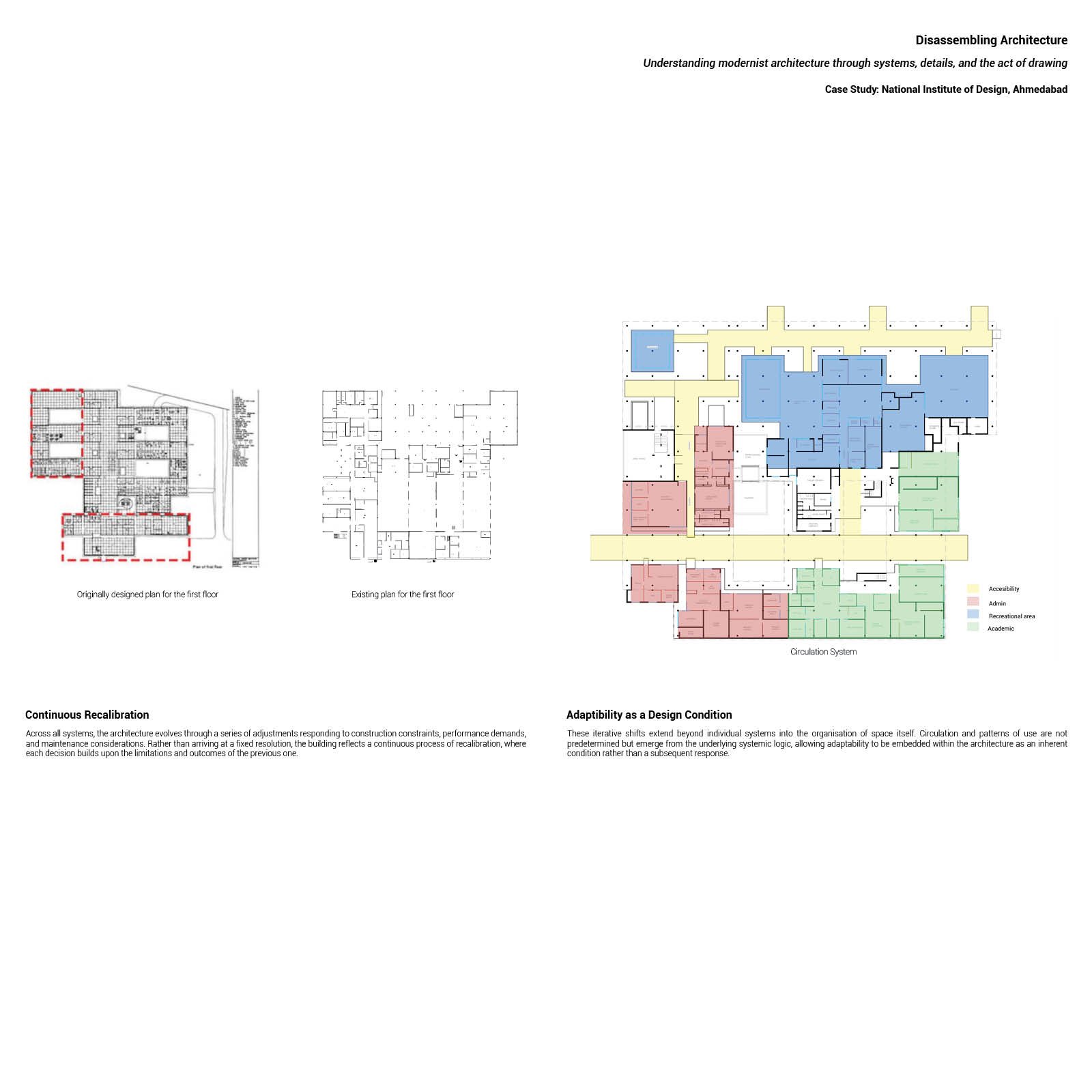
Architecture at NID evolves through continuous constructional and material adjustments, where systems are recalibrated through feedback from performance, maintenance, and use rather than resolved through a fixed formal outcome.

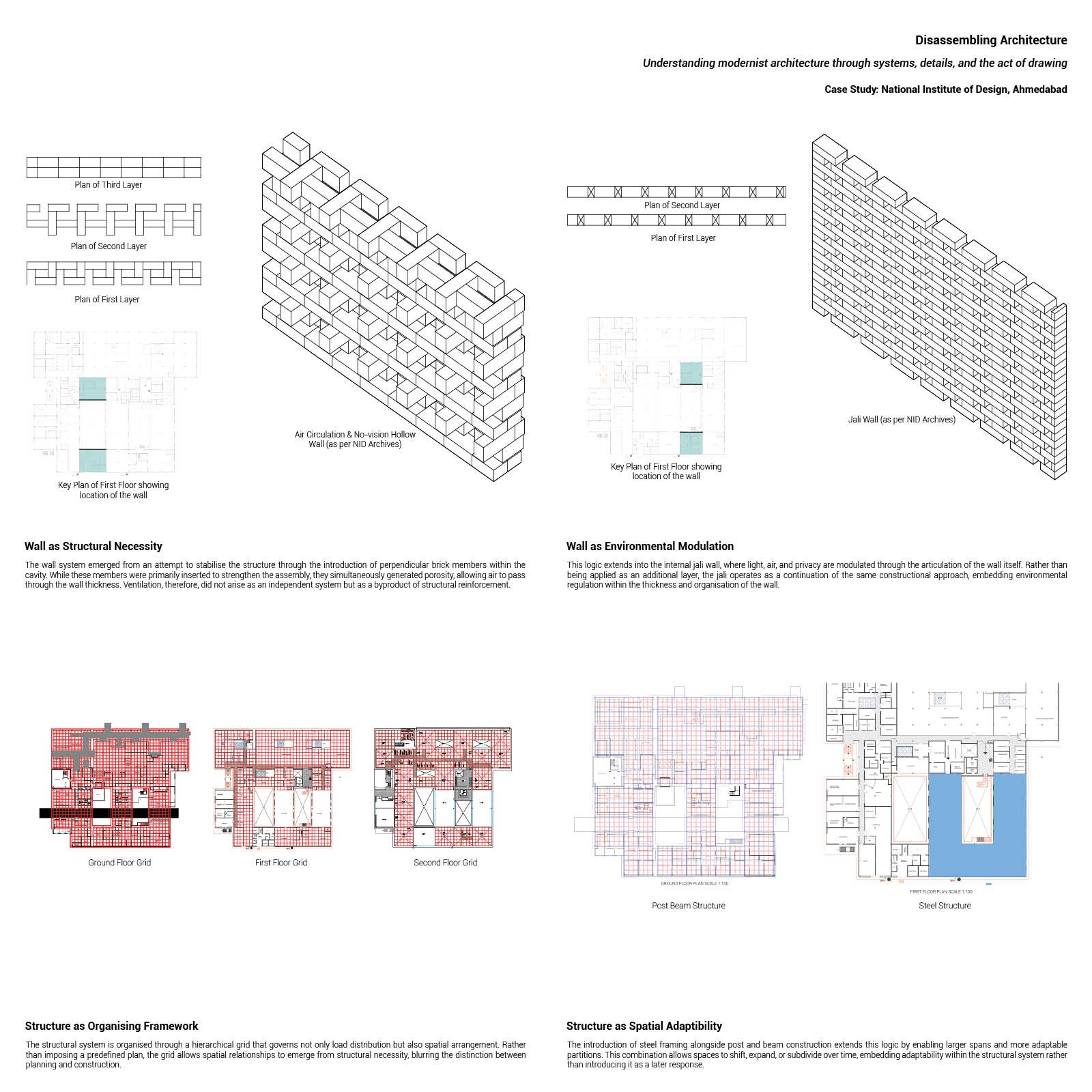
At NID, environmental performance emerges directly from structural and material logic, where walls and structural systems simultaneously organise space, regulate climate, and enable long-term adaptability.

Across all systems, NID operates through continuous recalibration, embedding adaptability within its structural, spatial, and environmental organisation as an inherent architectural condition.

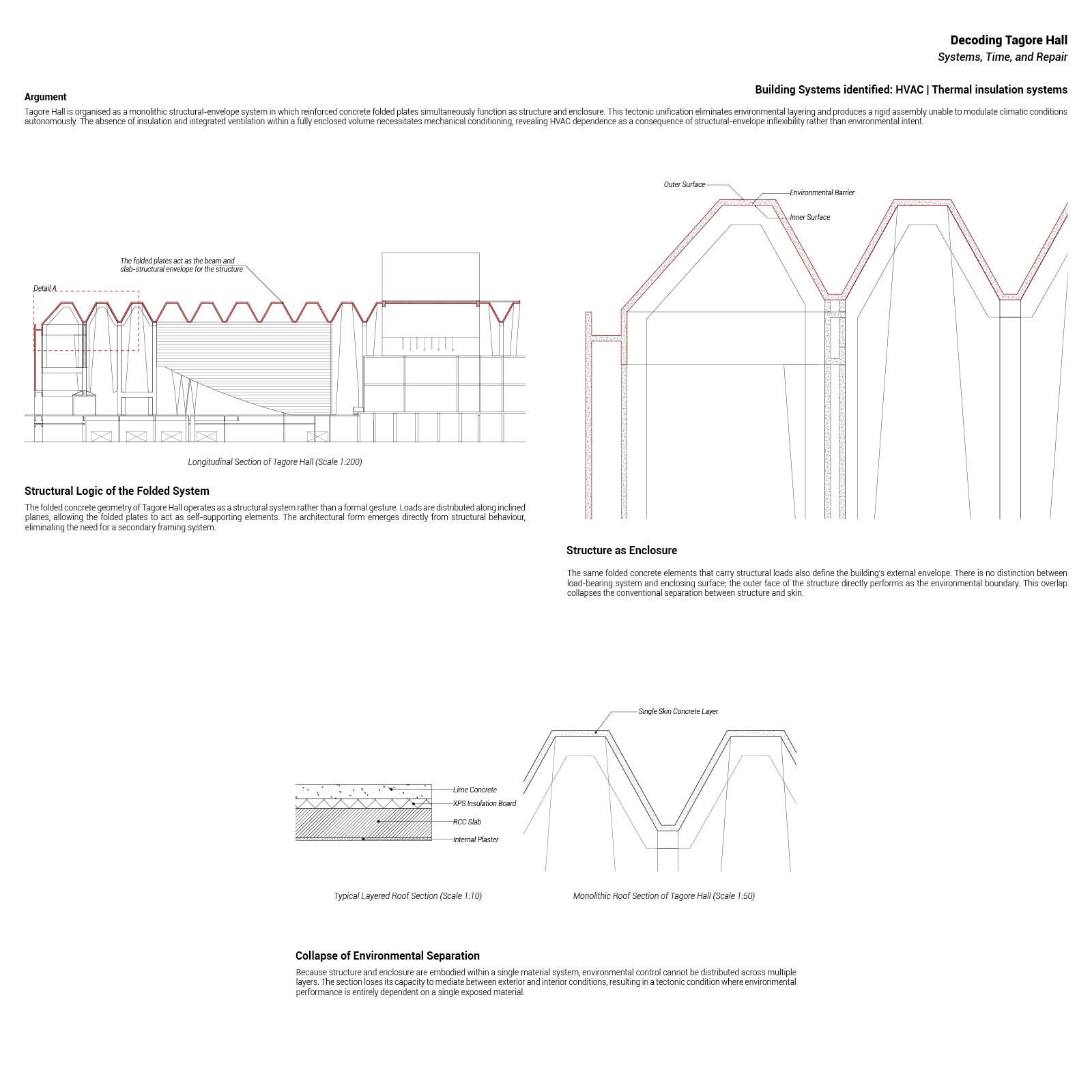
Tagore Hall operates as a monolithic structural-envelope system in which folded concrete surfaces simultaneously function as structure and enclosure, collapsing environmental mediation into a single exposed material assembly.

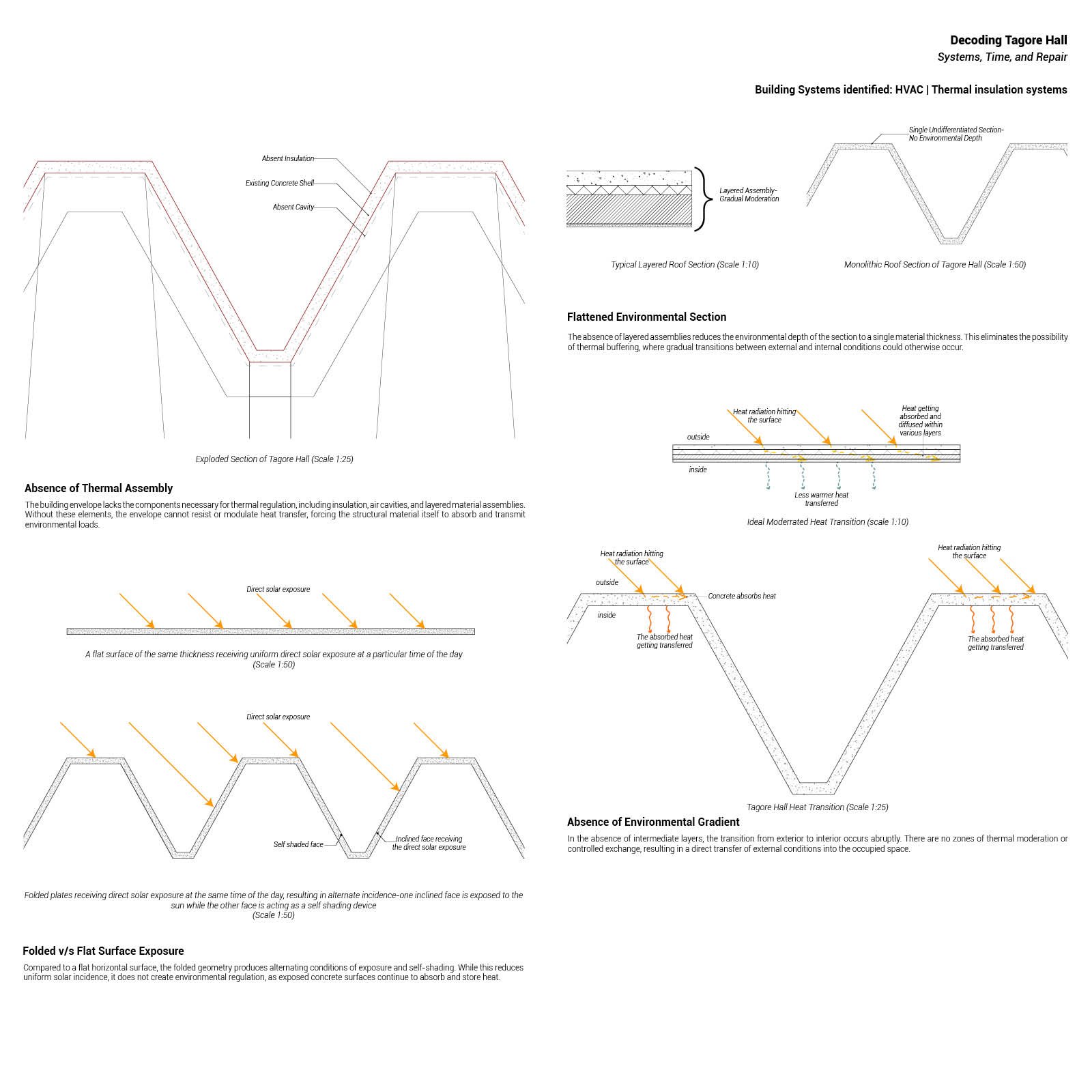
Although the folded geometry modifies solar exposure through alternating conditions of incidence and self-shading, the monolithic concrete envelope lacks thermal layering, environmental depth, and moderated heat transition.

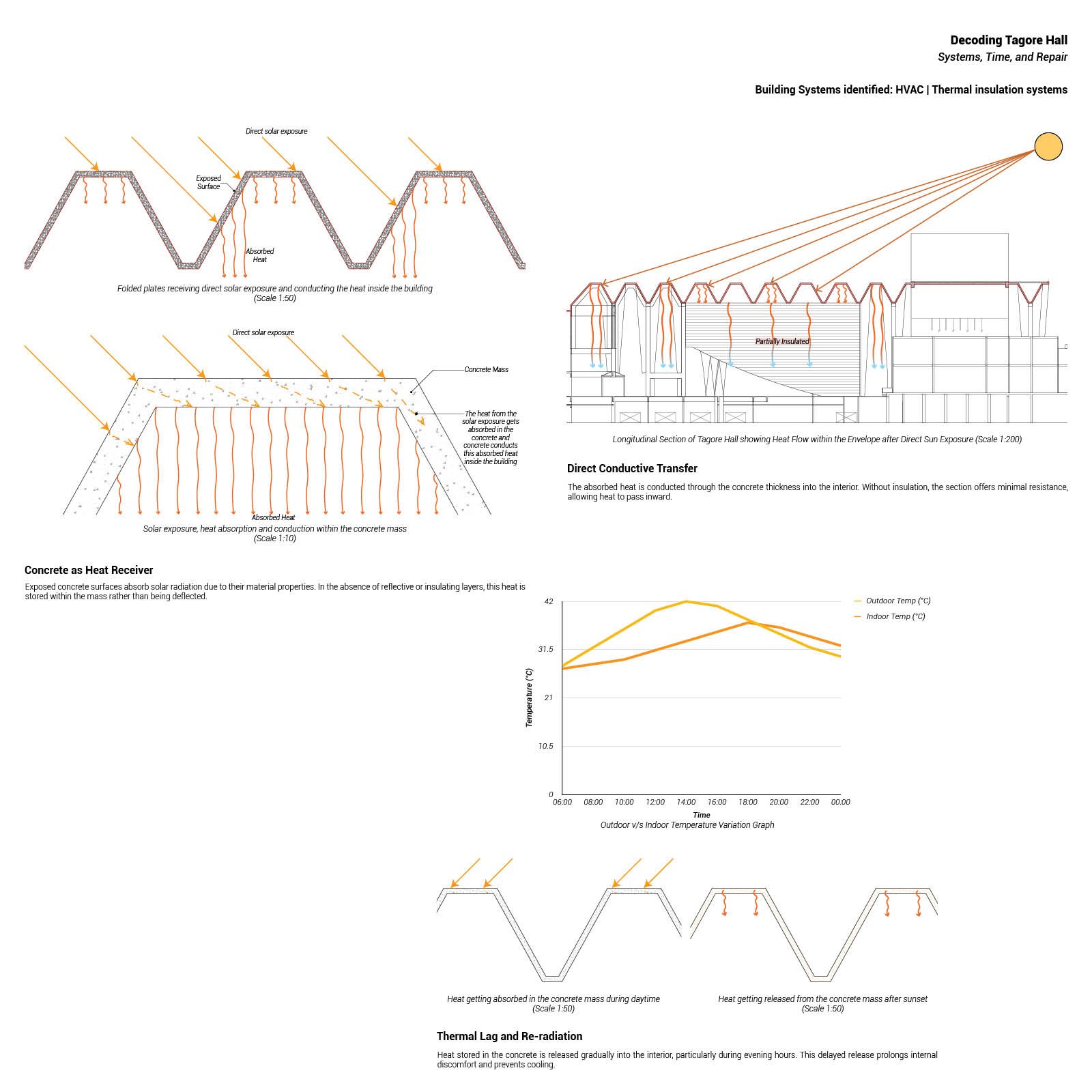
The exposed concrete envelope absorbs, stores, and conducts solar heat into the interior volume, where delayed thermal release and insufficient ventilation prolong internal heat retention.

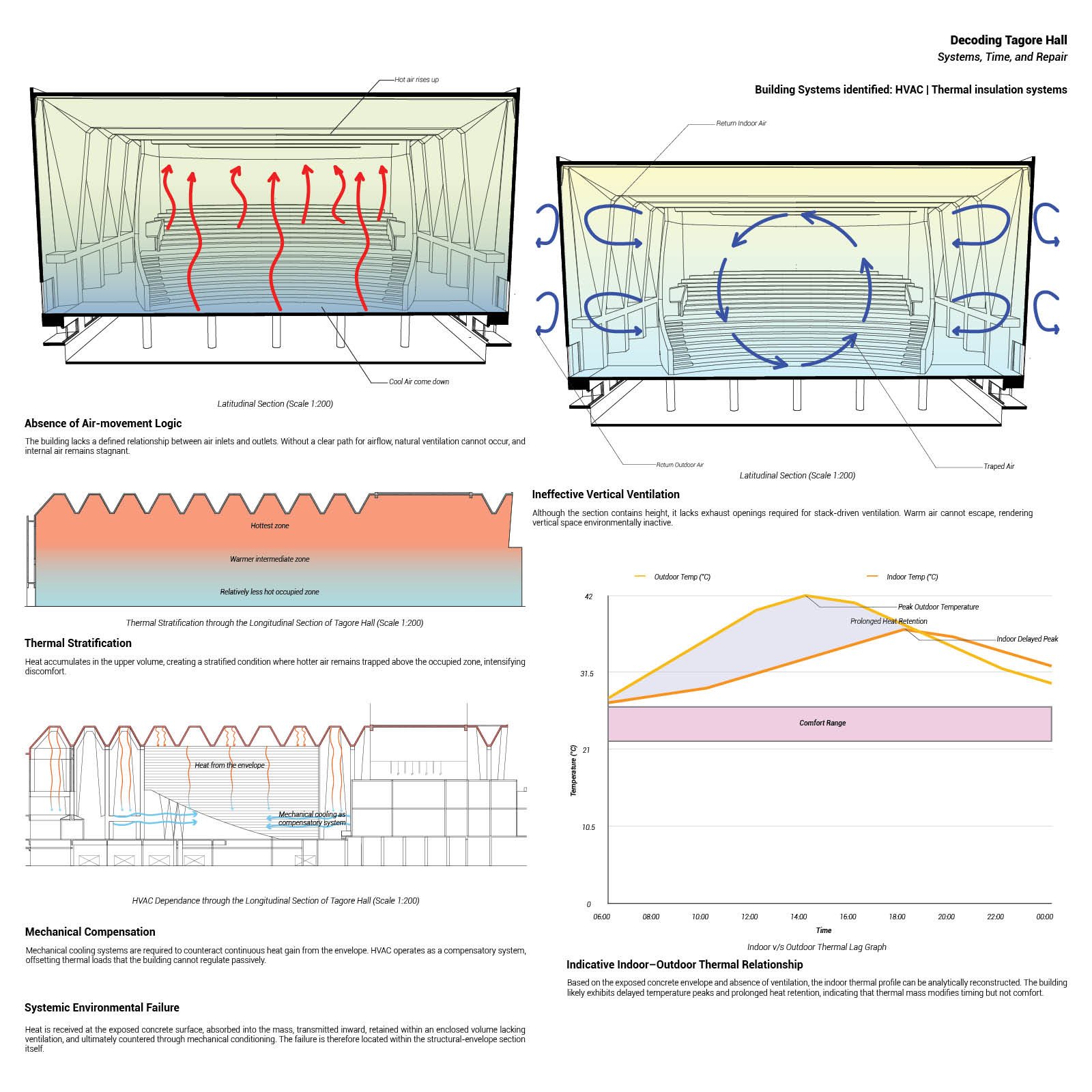
The absence of organised airflow and environmental buffering results in trapped heat, thermal stratification, and prolonged indoor discomfort, ultimately necessitating mechanical conditioning as a compensatory system.

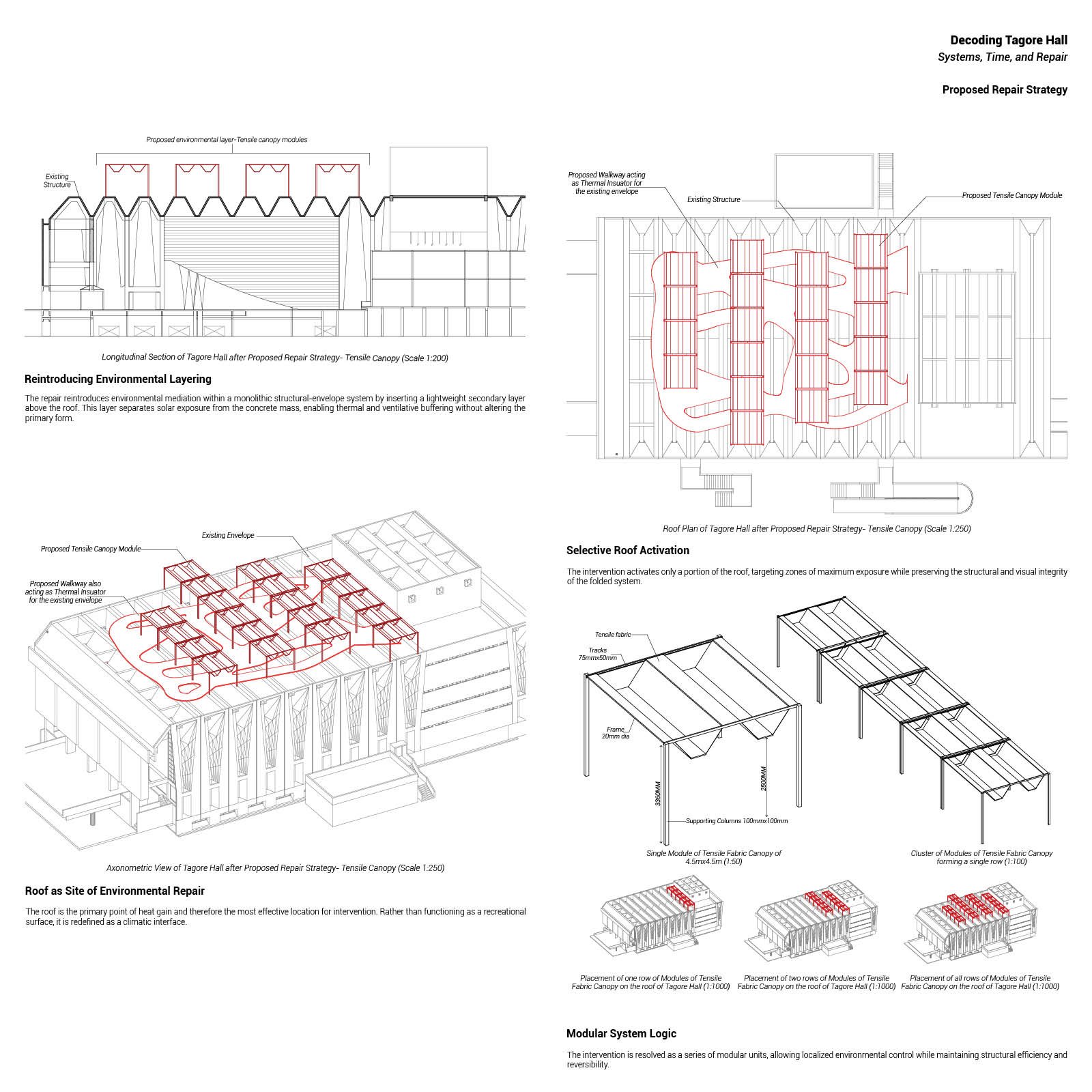
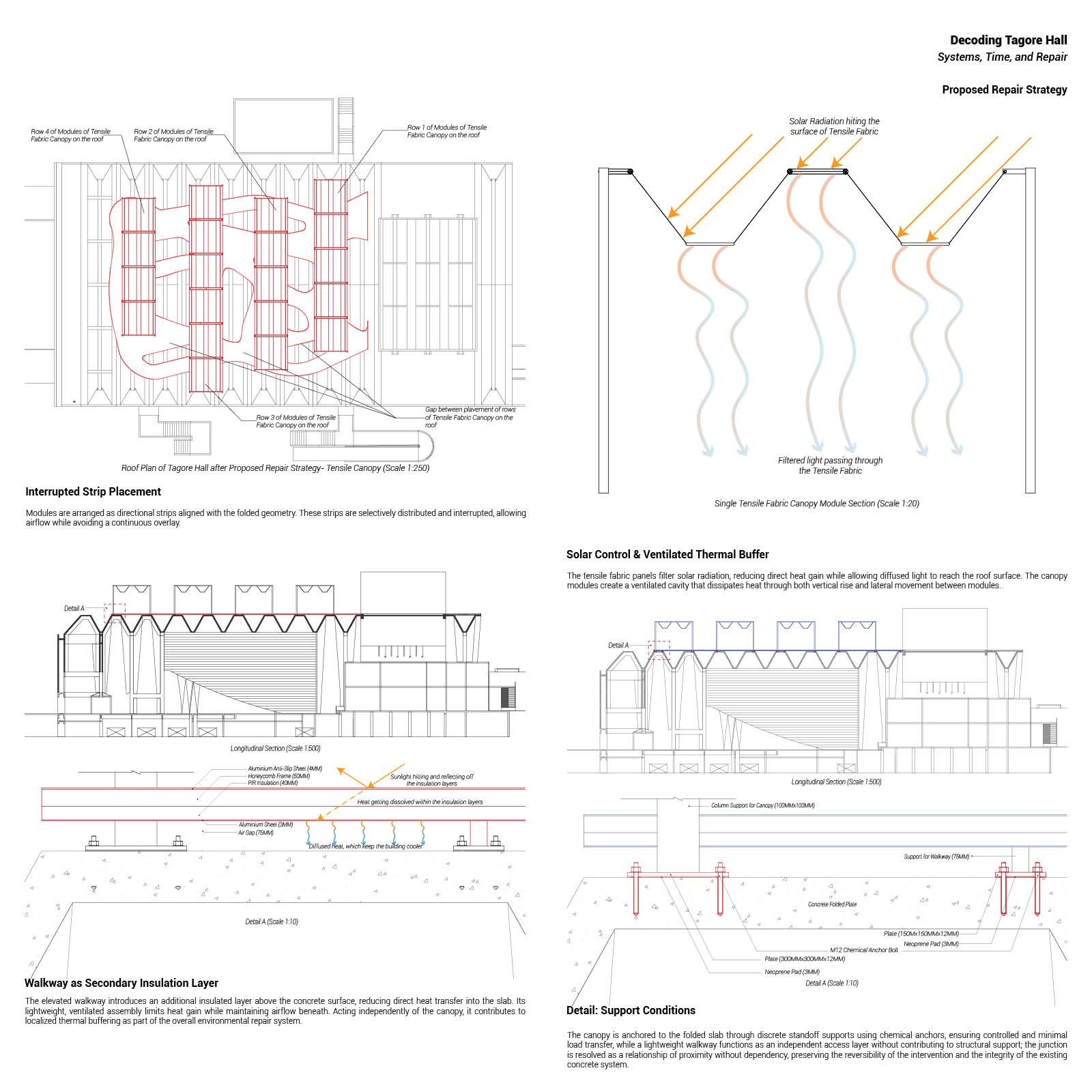
The repair strategy reintroduces environmental mediation through a lightweight modular canopy system that selectively activates the roof while preserving the integrity of the existing folded concrete structure.

Through interrupted strip placement, ventilated thermal buffering, and lightweight insulated assemblies, the intervention creates a reversible environmental layer that reduces heat transfer while remaining structurally independent from the existing envelope.