Your browser is out-of-date!
For a richer surfing experience on our website, please update your browser. Update my browser now!
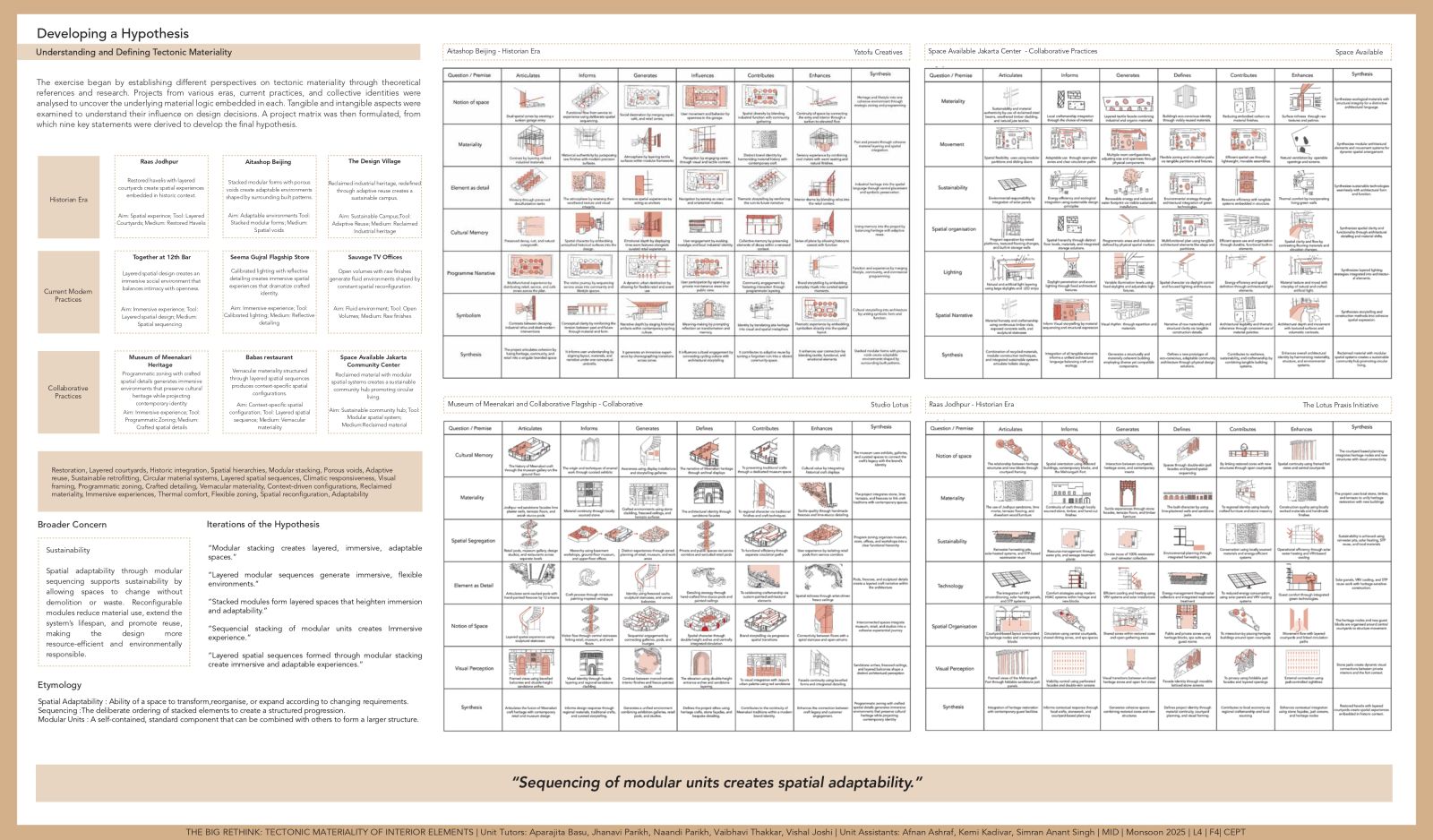
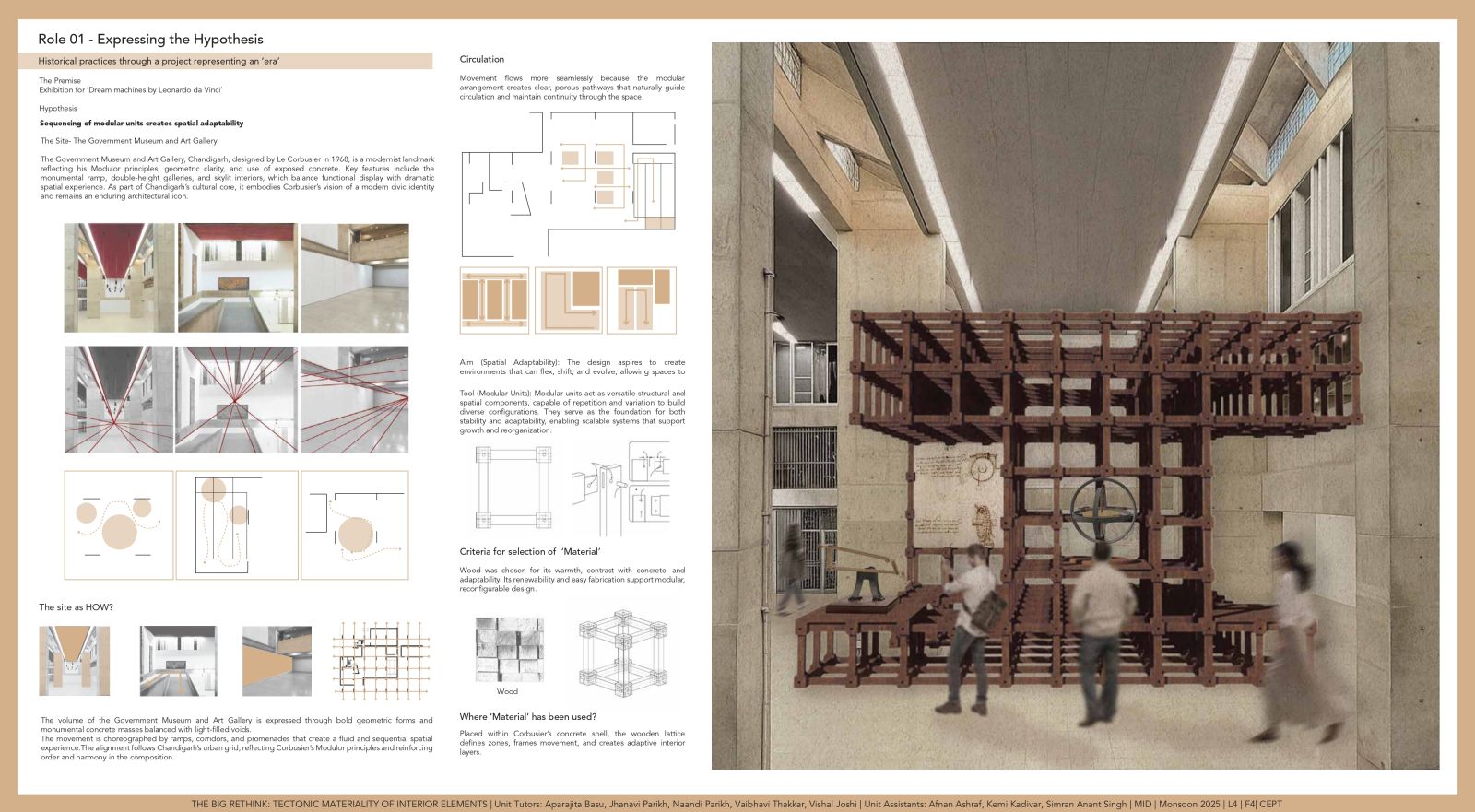
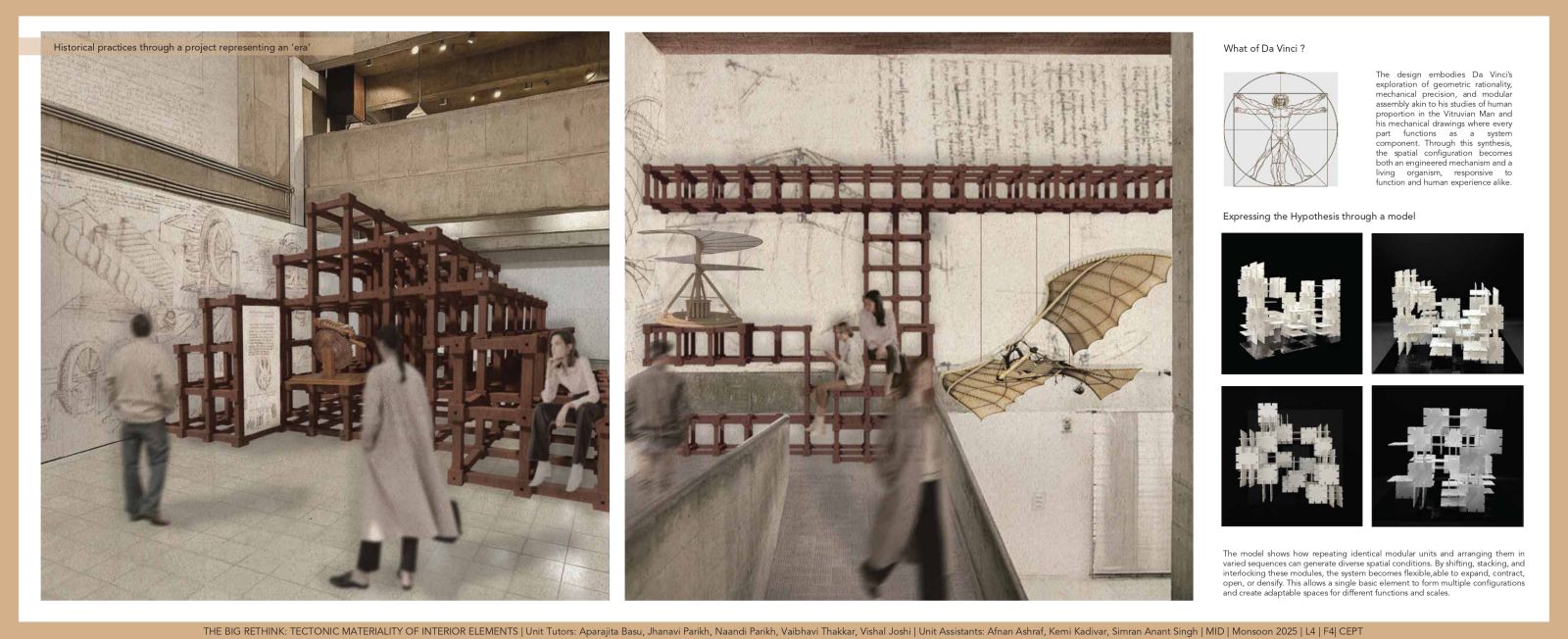
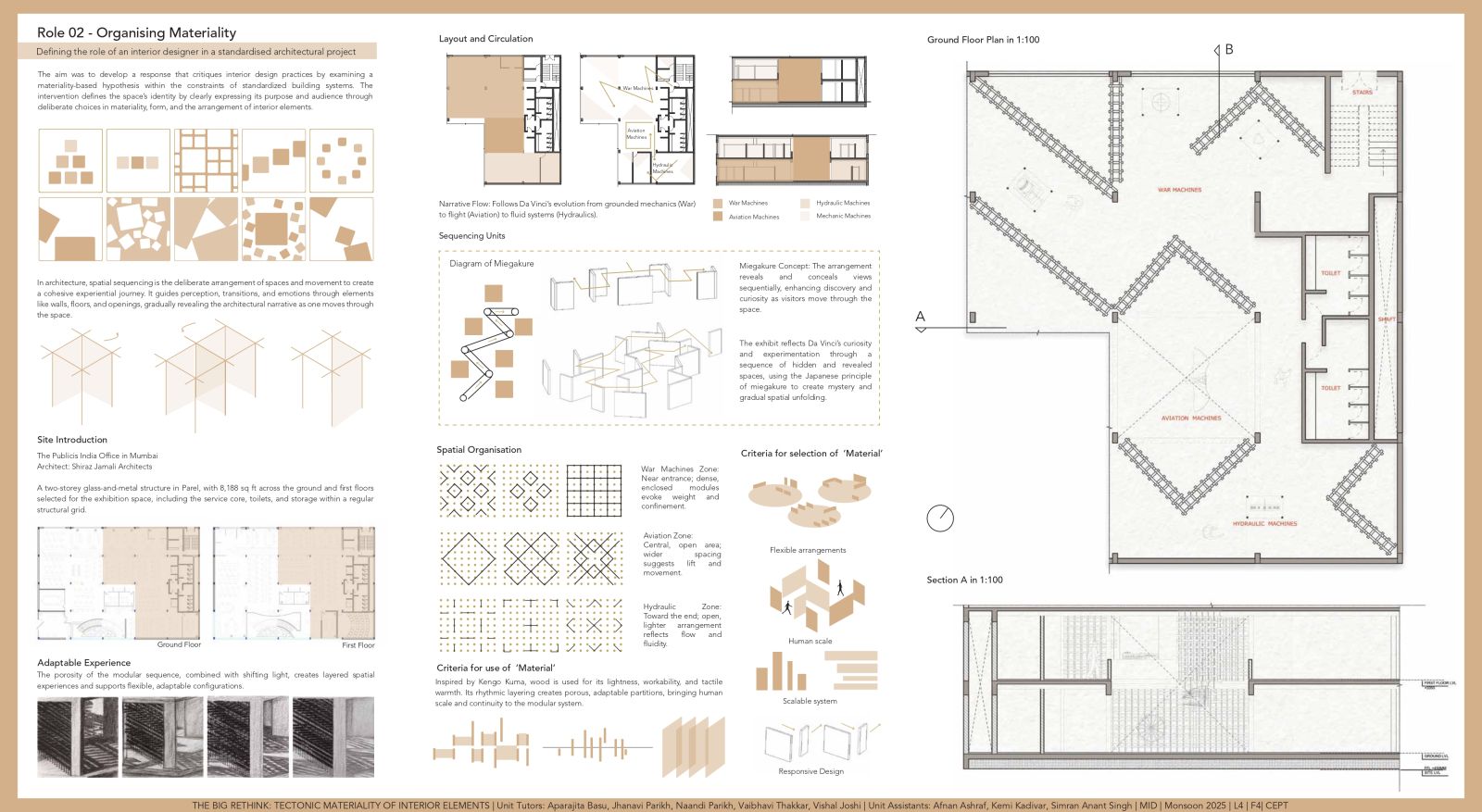
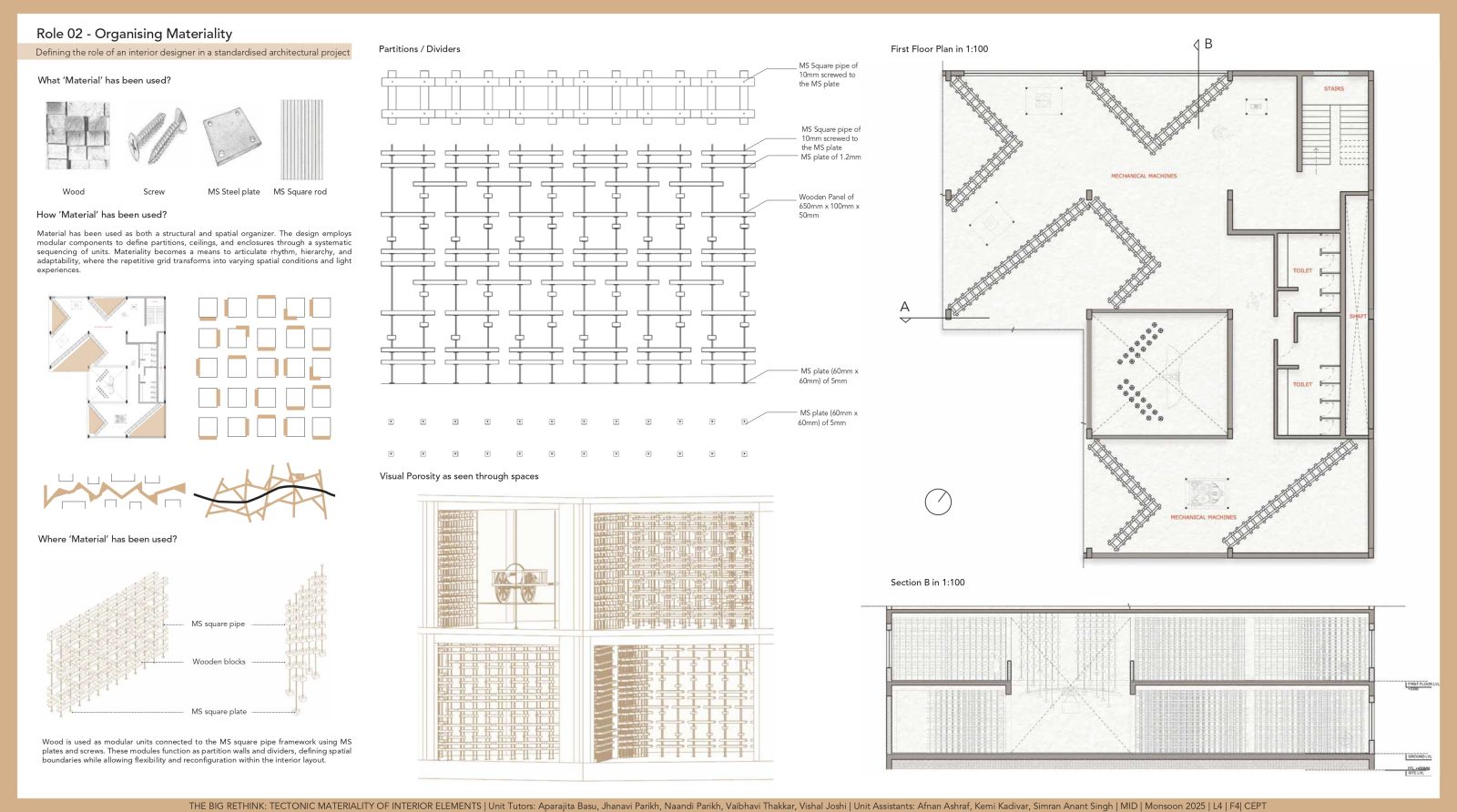
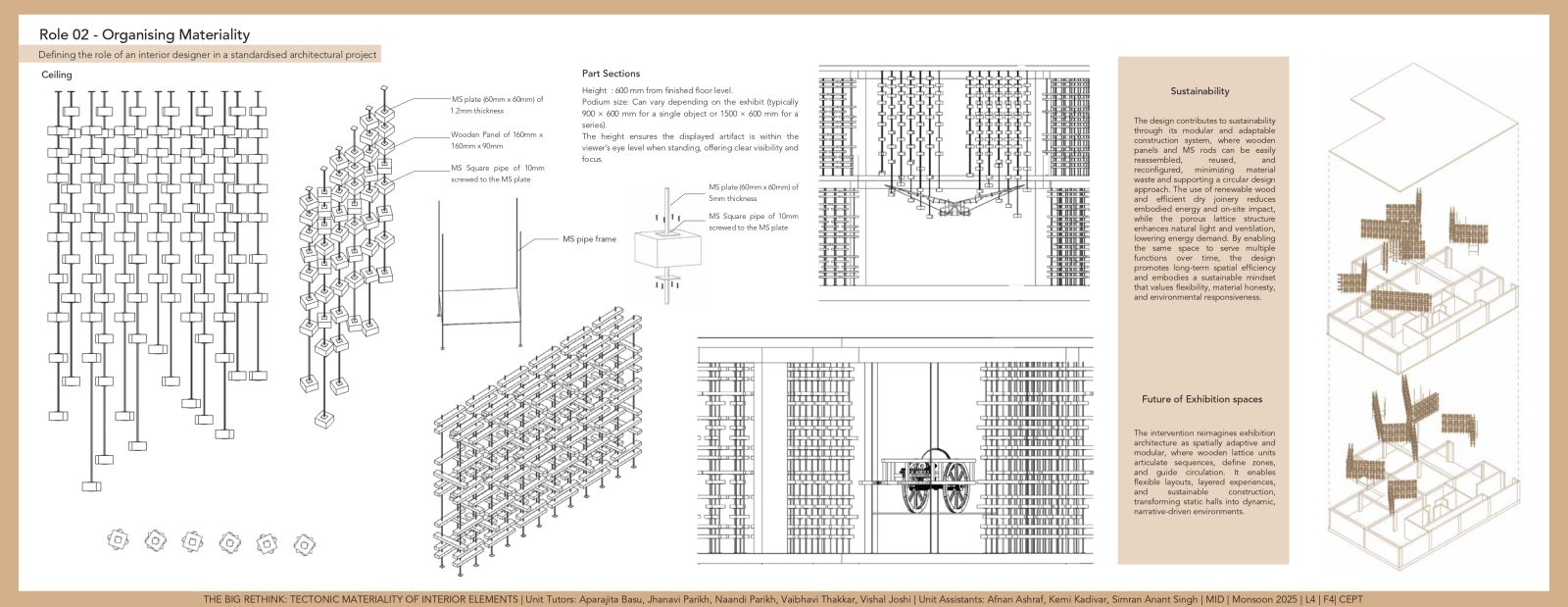
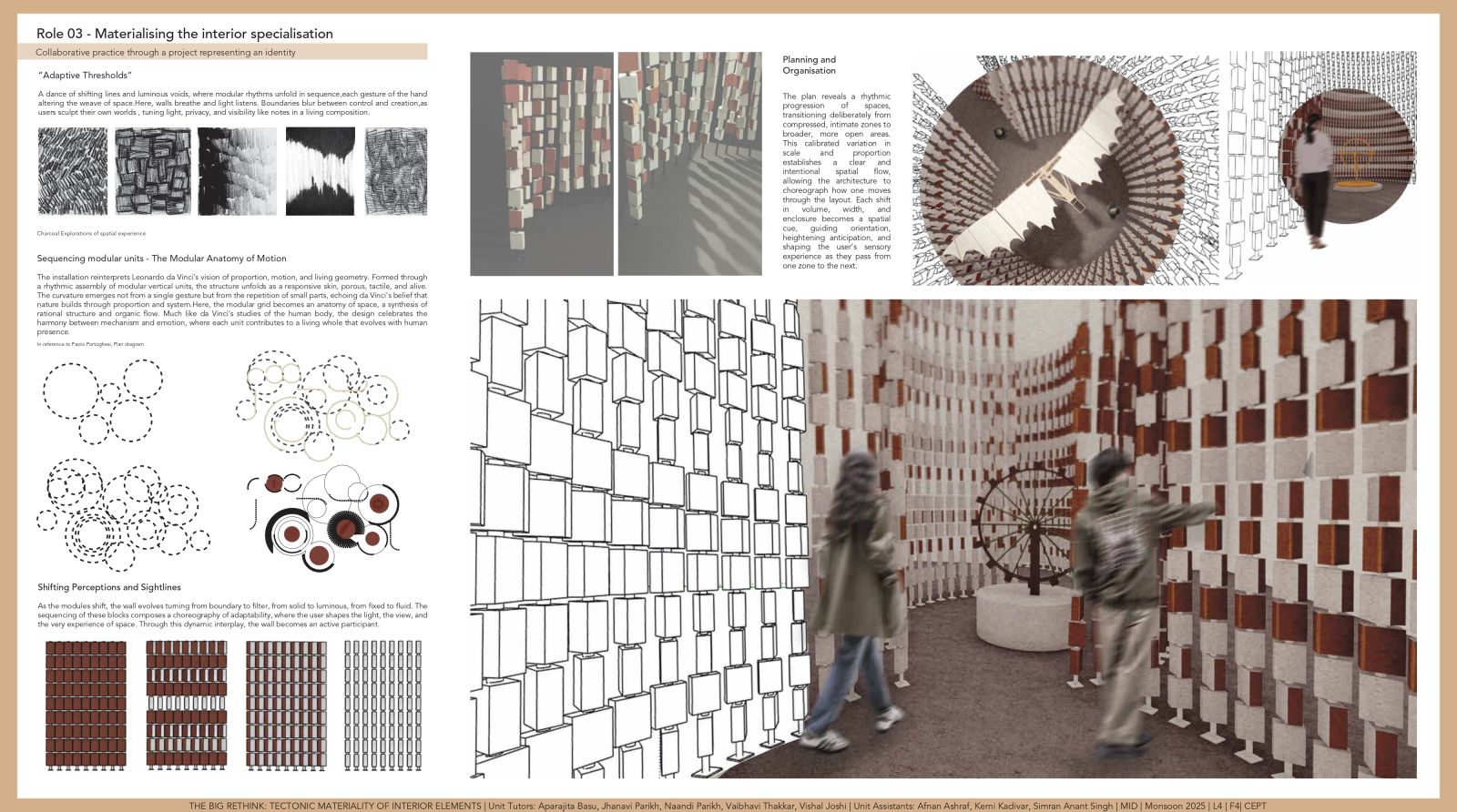
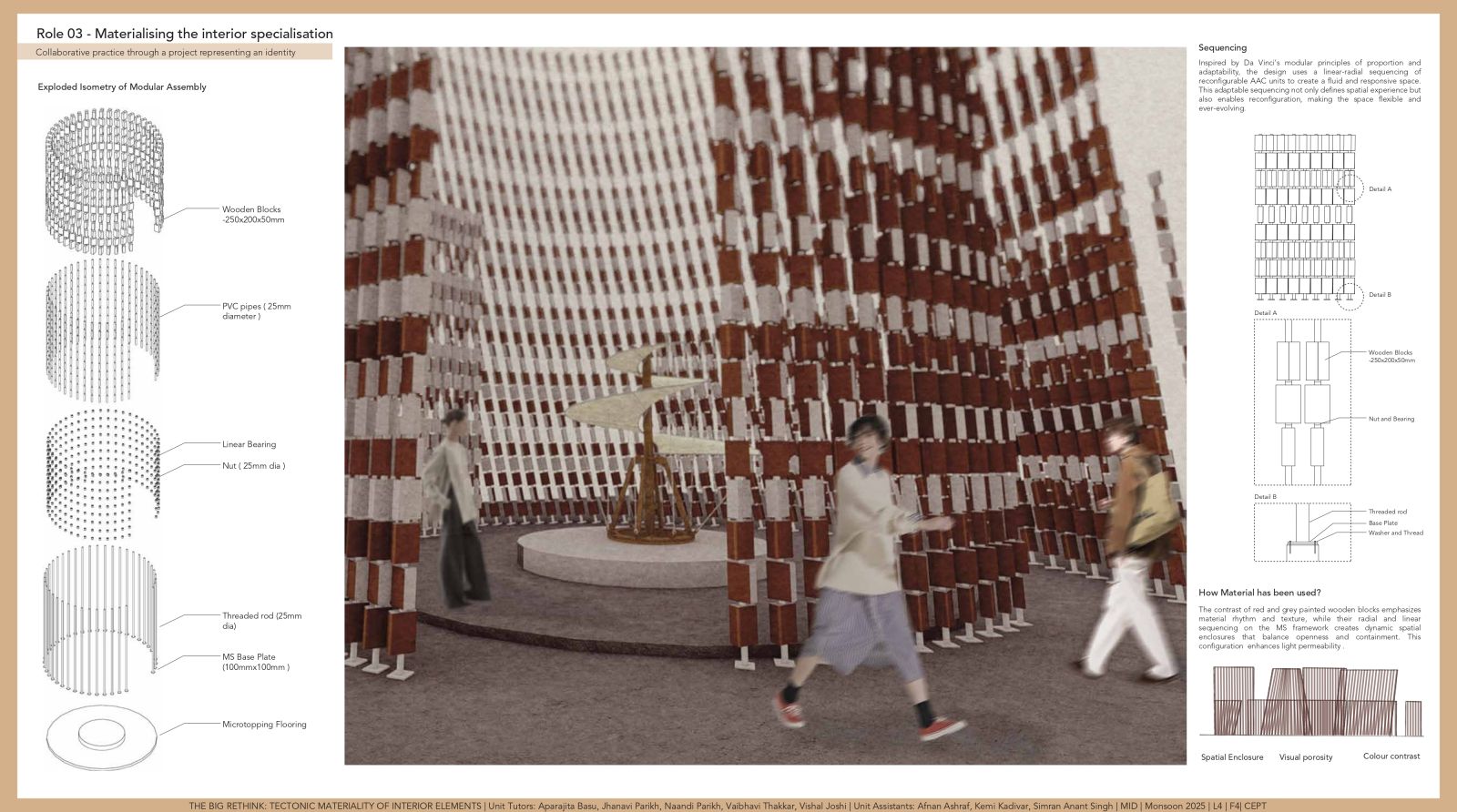
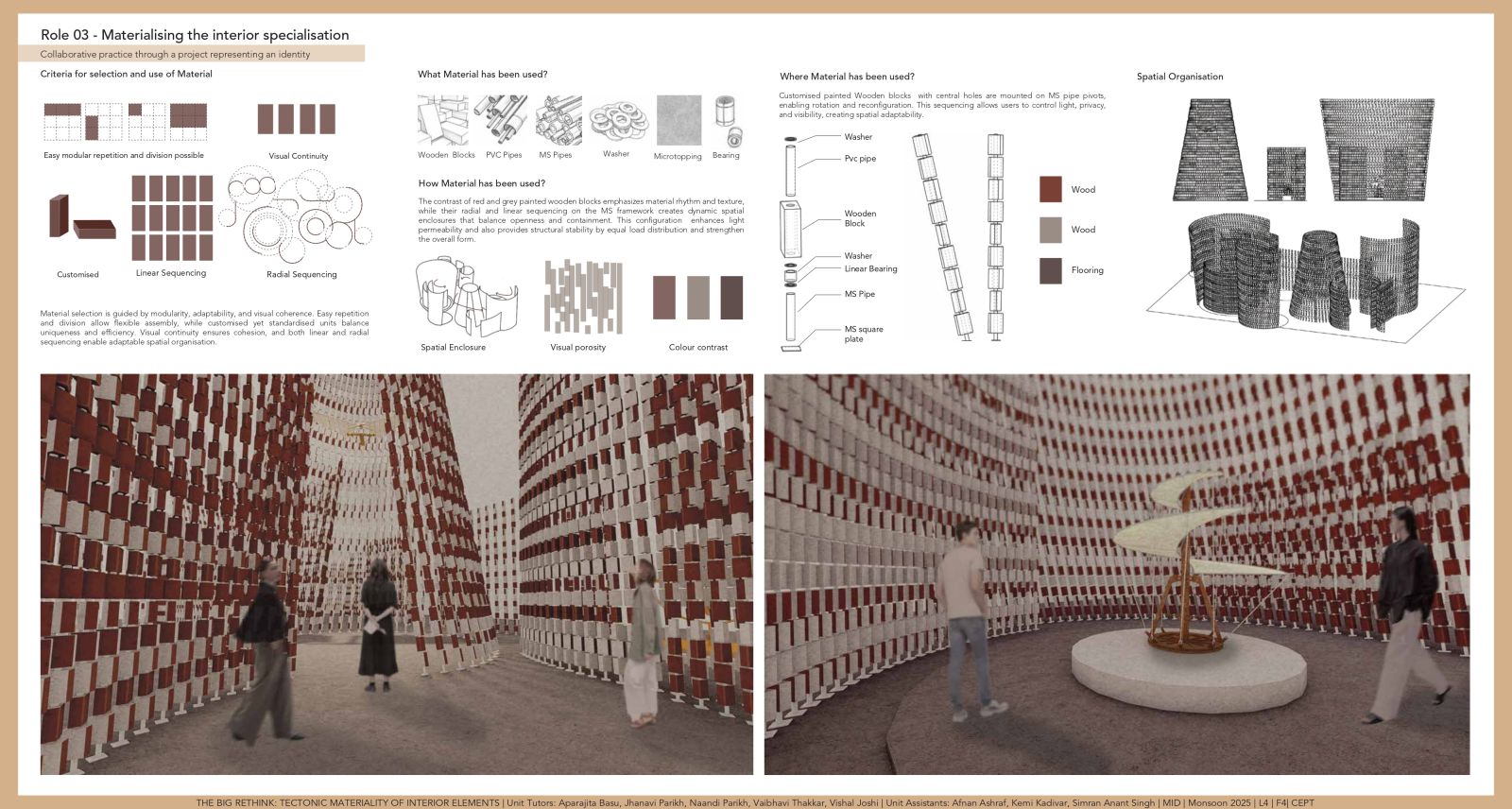
This project investigates adaptability in interior design through modular strategies that challenge static spatial conventions. By sequencing reconfigurable units, the design enables spaces to evolve with changing functions, contexts, and user needs. Three pathways drive this exploration: functional adaptability through wooden lattice modules that support multiple spatial programs; contextual adaptability where shifting porosity and light patterns reshape perception; and user-driven adaptability that invites occupants to actively rotate and reposition modules, altering sightlines and creating personal pathways. Together, these approaches demonstrate that adaptability extends beyond technical flexibility, becoming a sensory and experiential quality that enriches spatial engagement.
View Additional Work