Your browser is out-of-date!
For a richer surfing experience on our website, please update your browser. Update my browser now!
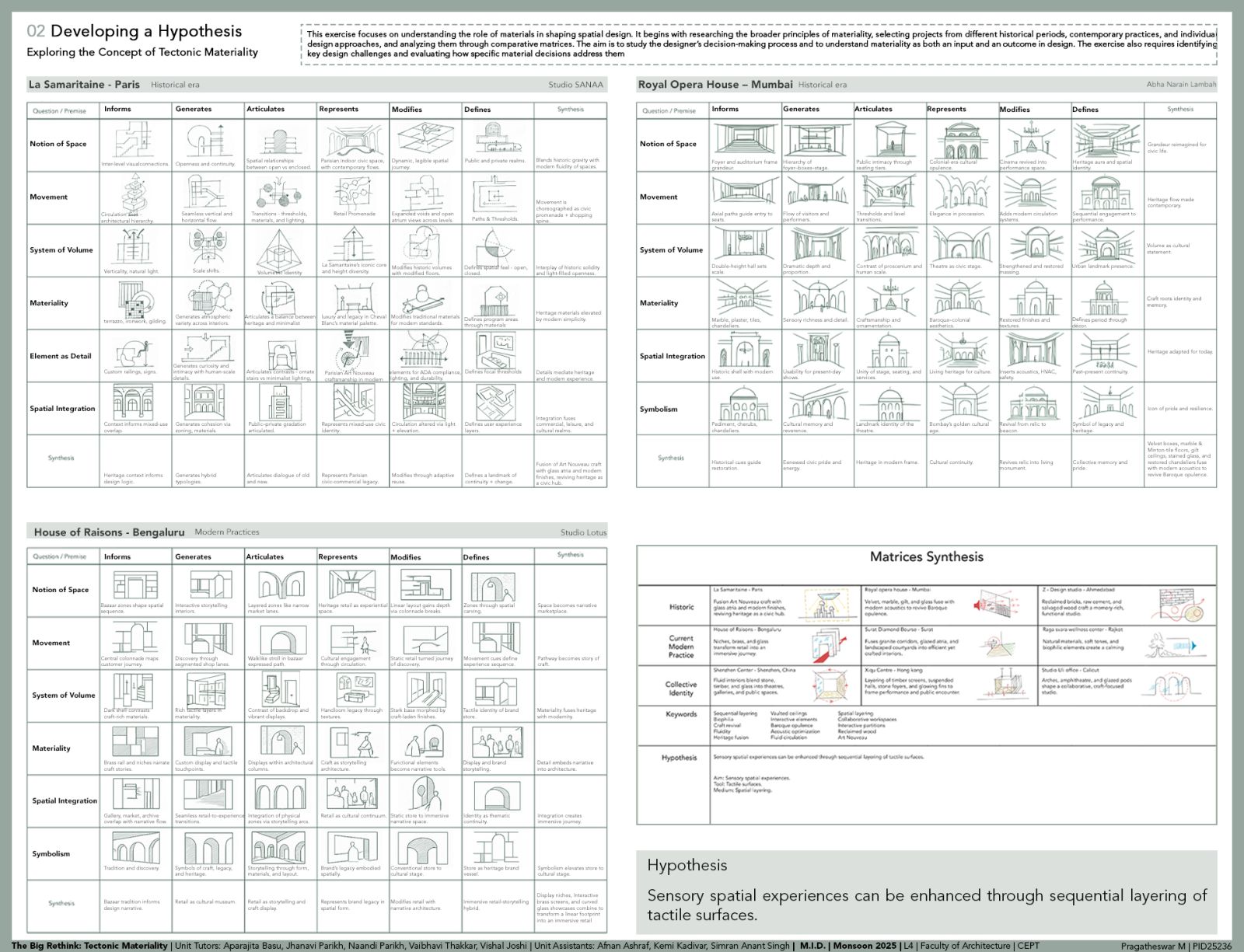
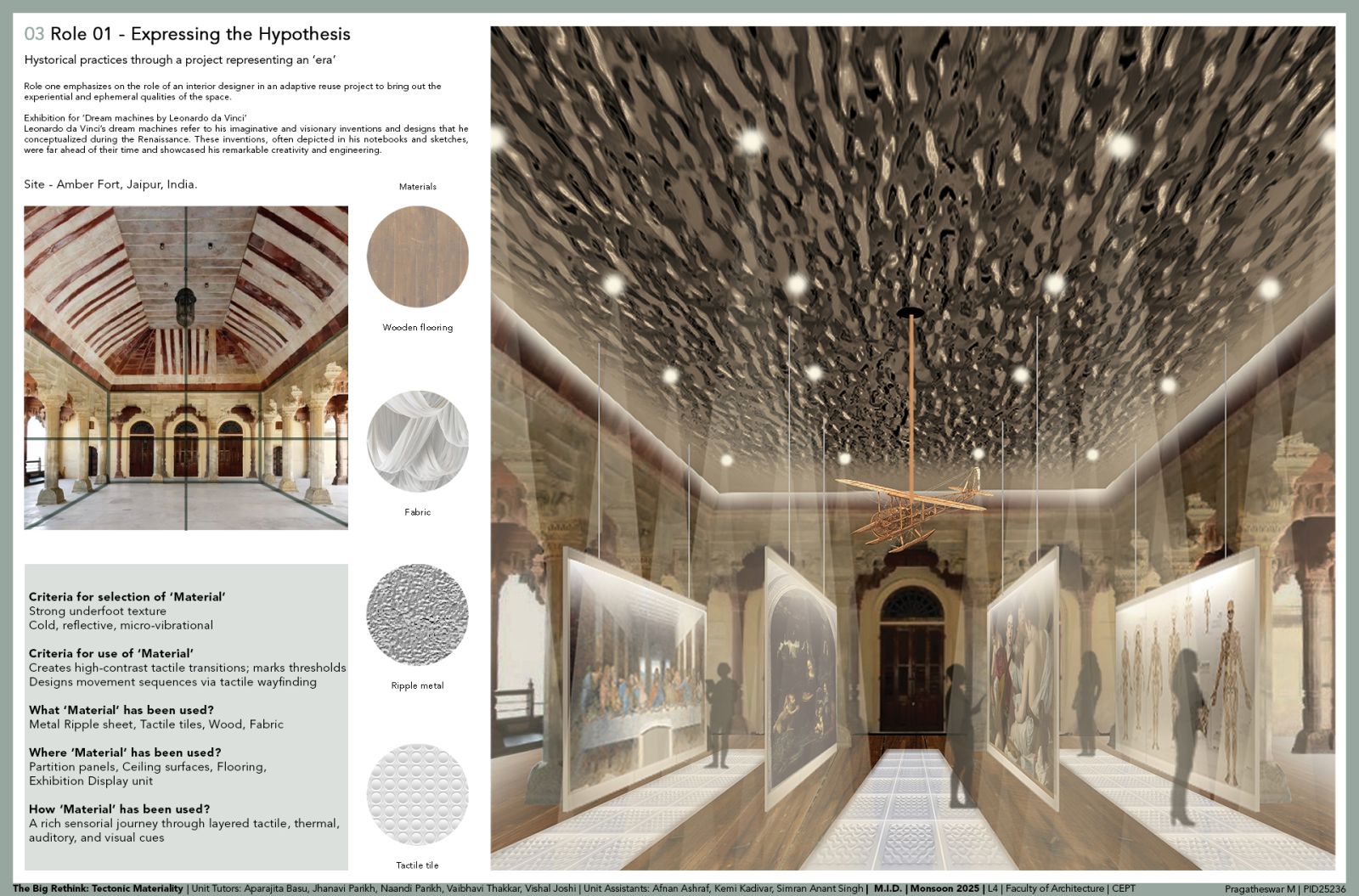
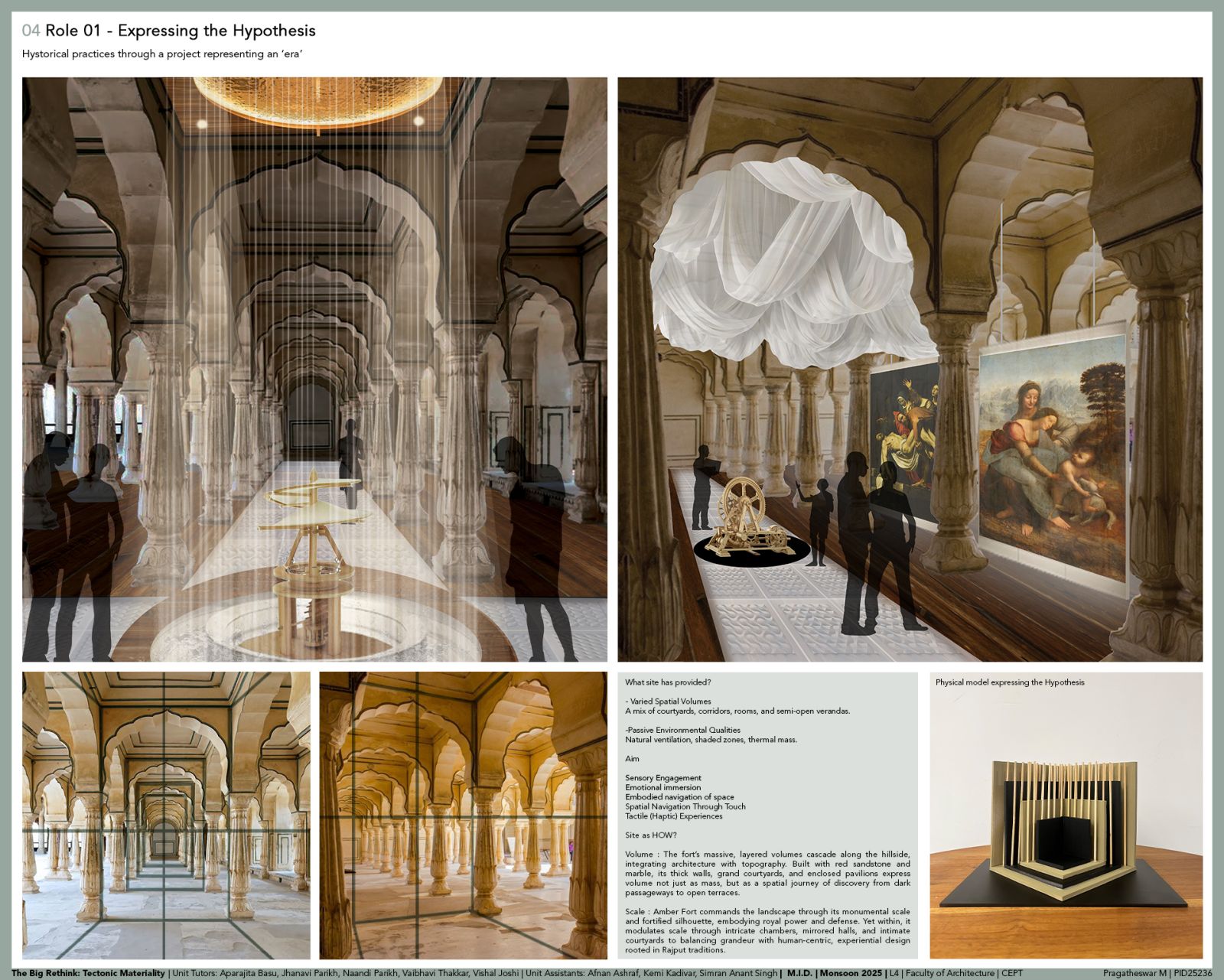
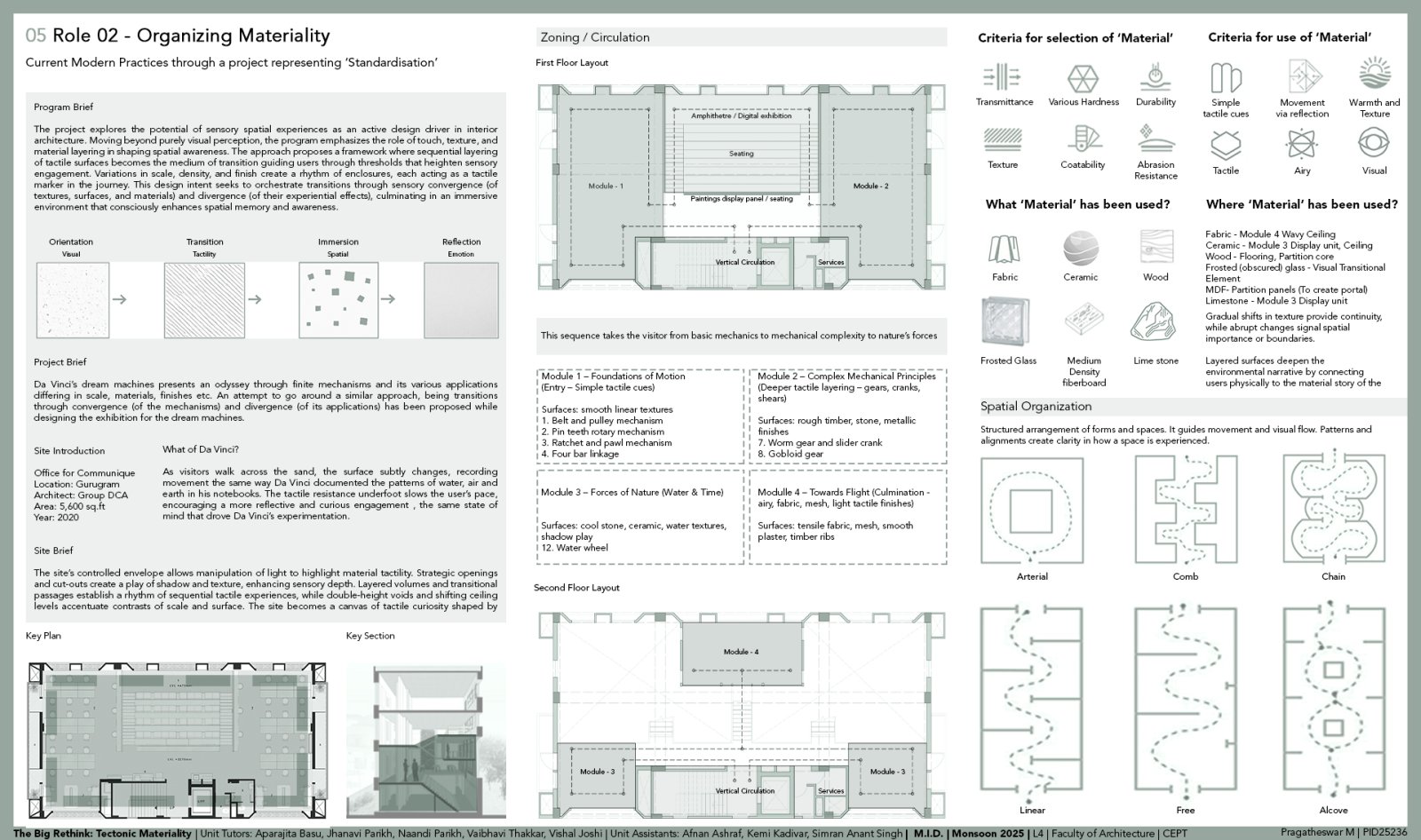
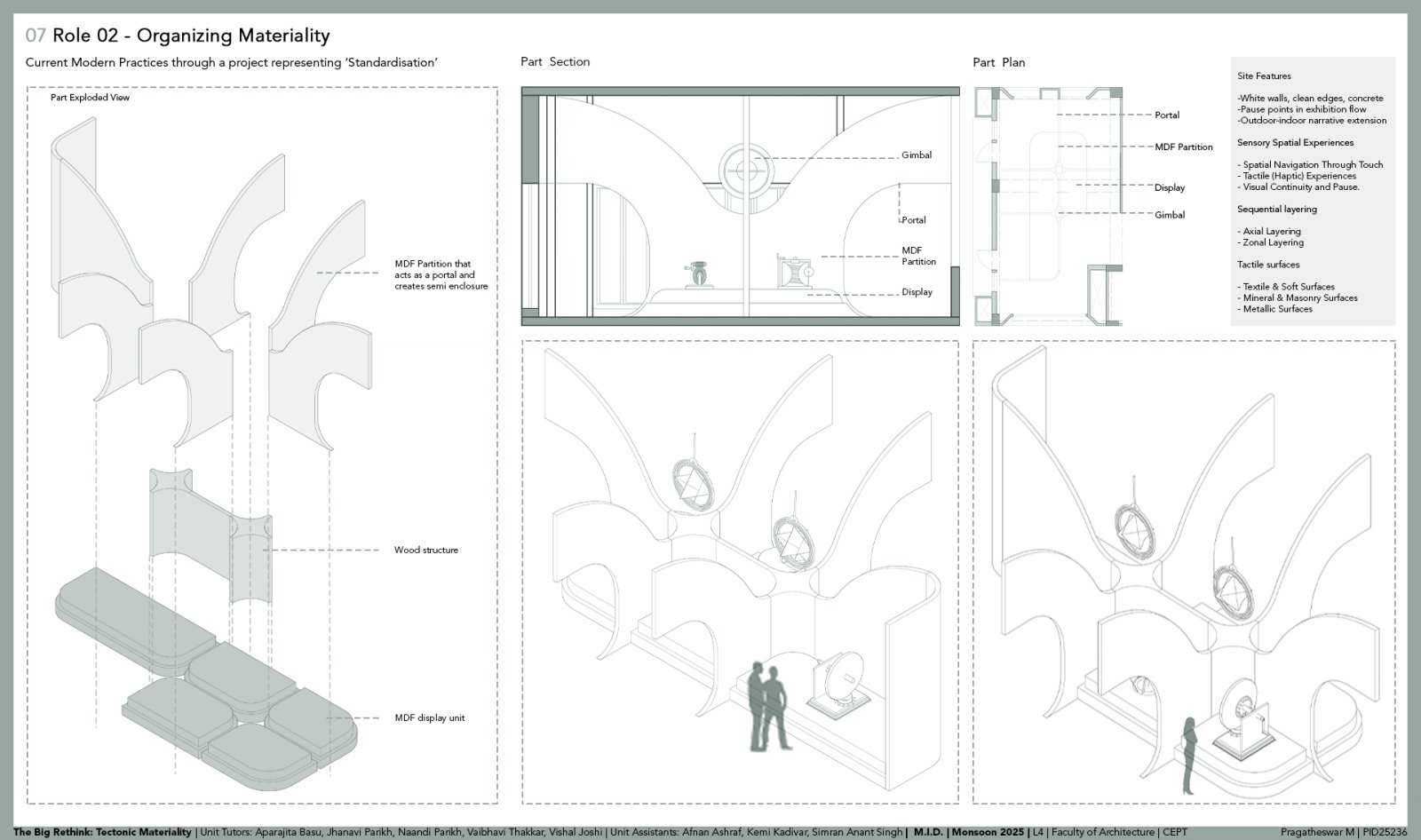
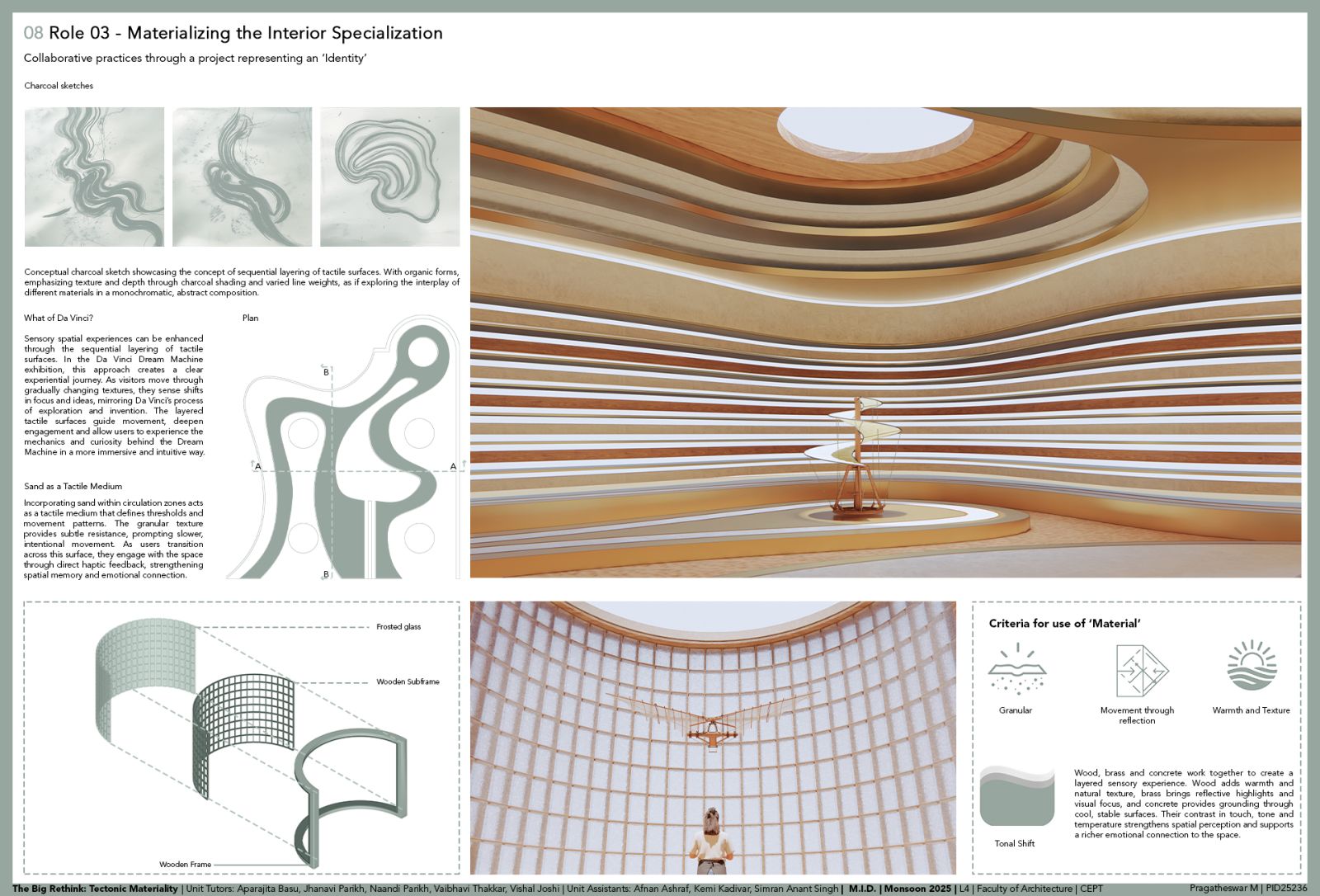
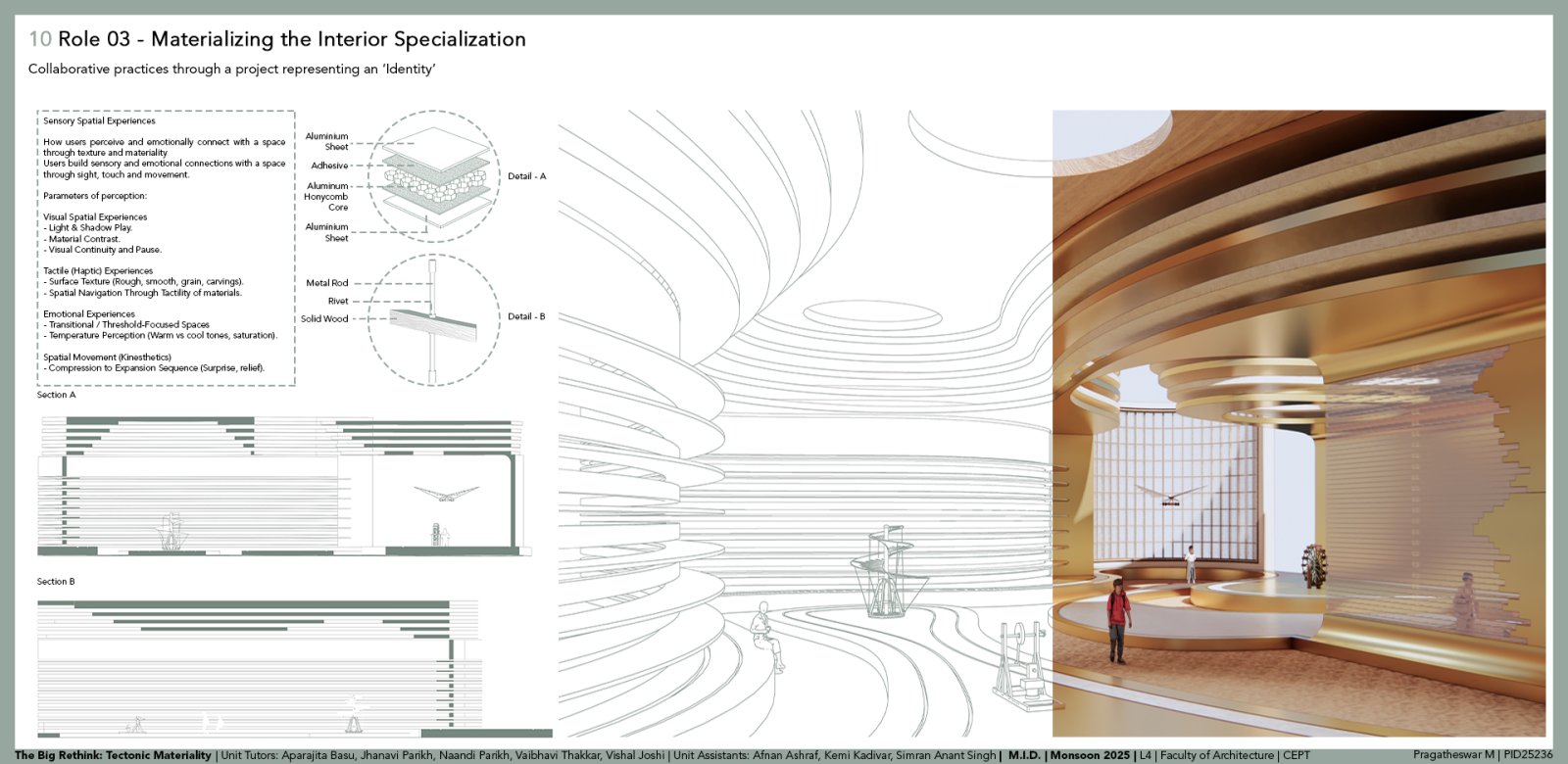
Grounded in the study of perceptual variation, this project investigates how layered surface compositions can heighten sensory engagement and transform the interpretation of interior space. Informed by Da Vinci’s mechanical inventions, defined by interlocking systems, calibrated movement, and geometric clarity, the design unfolds as an exhibition environment shaped through sequential tactile and visual stimuli. Tessellated geometries function as spatial mechanisms that direct circulation, shape viewpoints, and produce fluid, shifting perceptual moments. Across multiple design scenarios such as reworking an existing structure, intervening within standardized environments, and speculating beyond contextual boundaries, the project examines how geometric modulation and layered material strategies construct spatial identity. Space becomes an active, re-readable condition that is continually reshaped through the evolving interaction between form, materiality, and the sensing body.
View Additional Work