Your browser is out-of-date!
For a richer surfing experience on our website, please update your browser. Update my browser now!
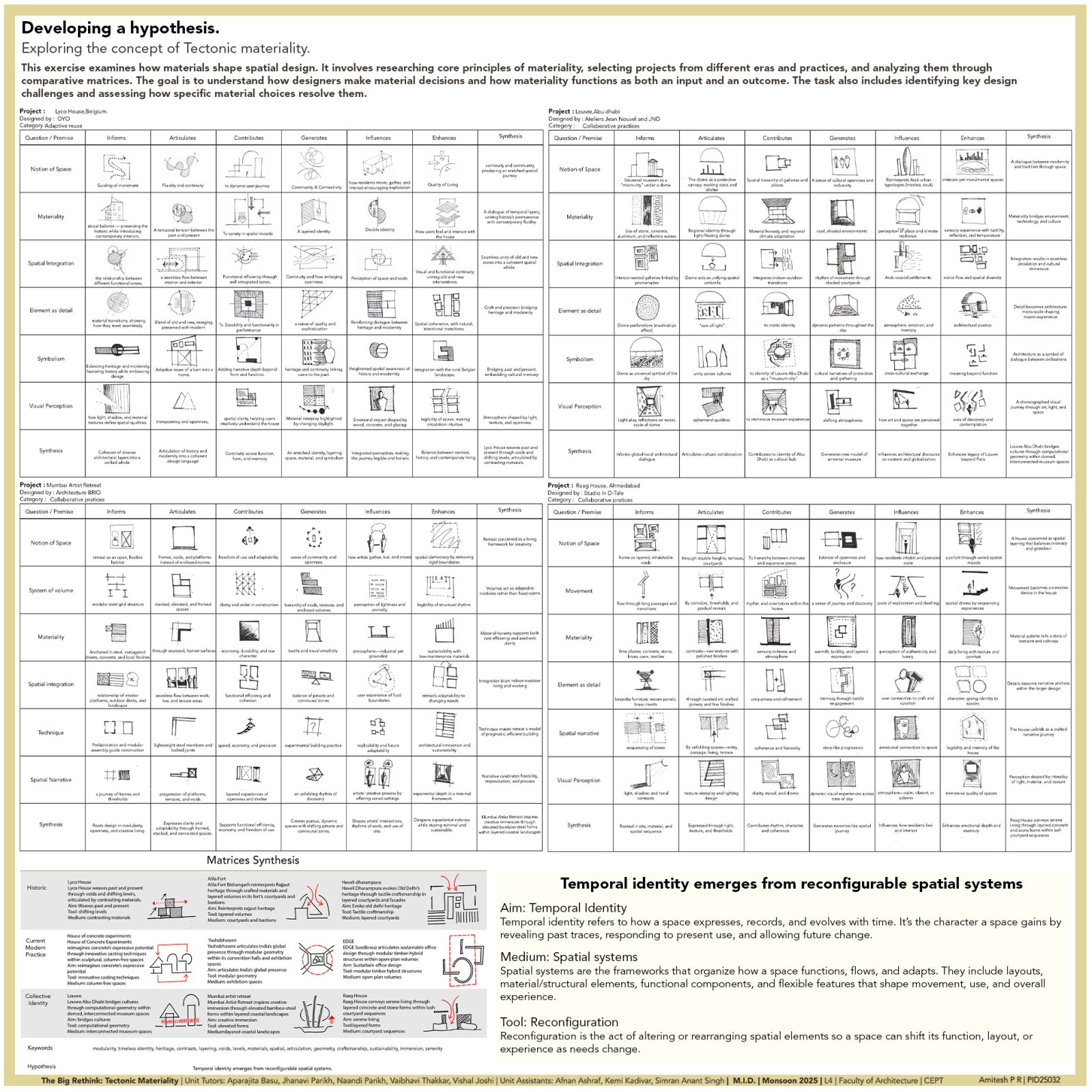
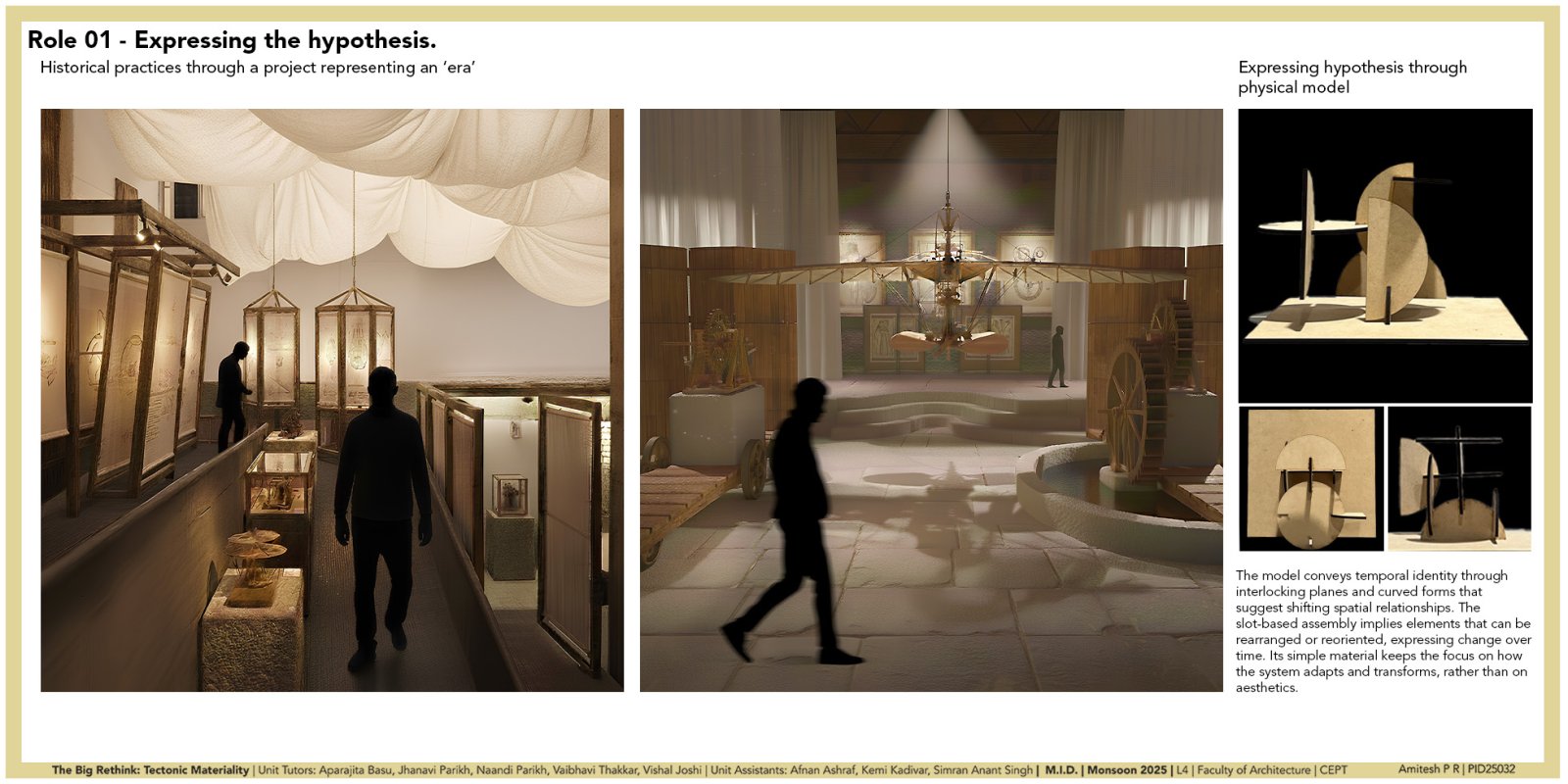
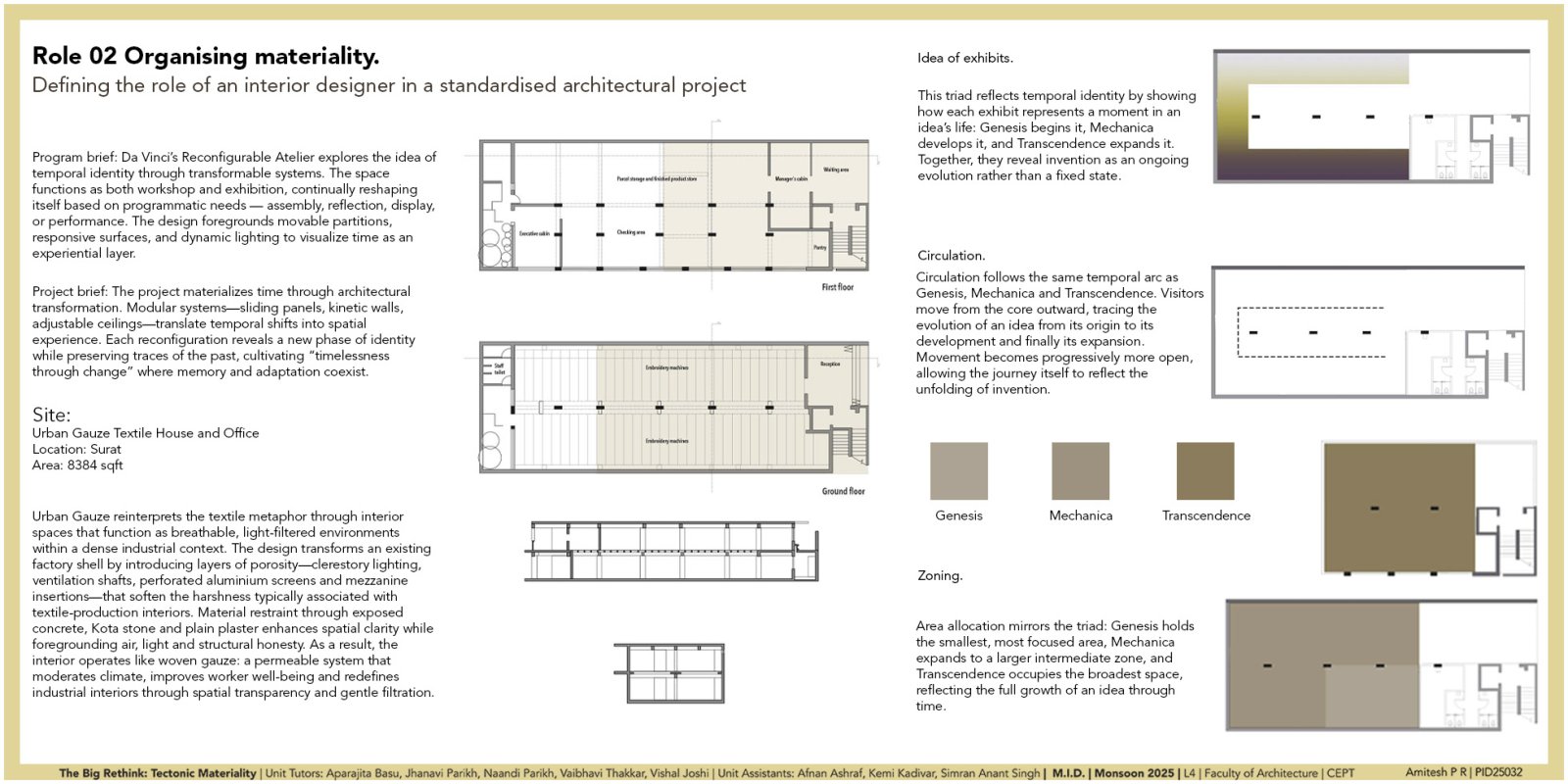
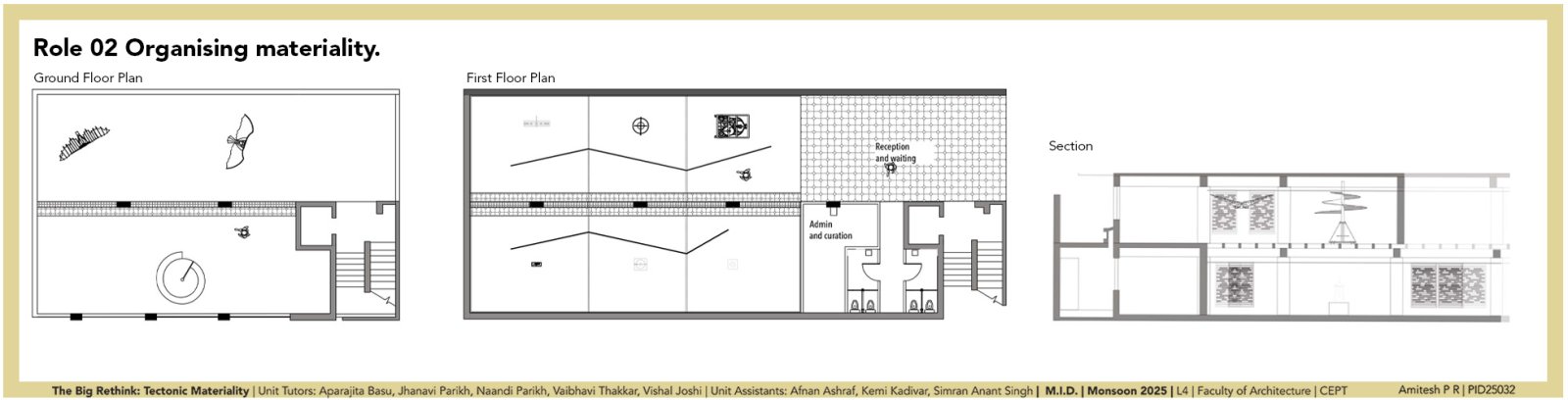
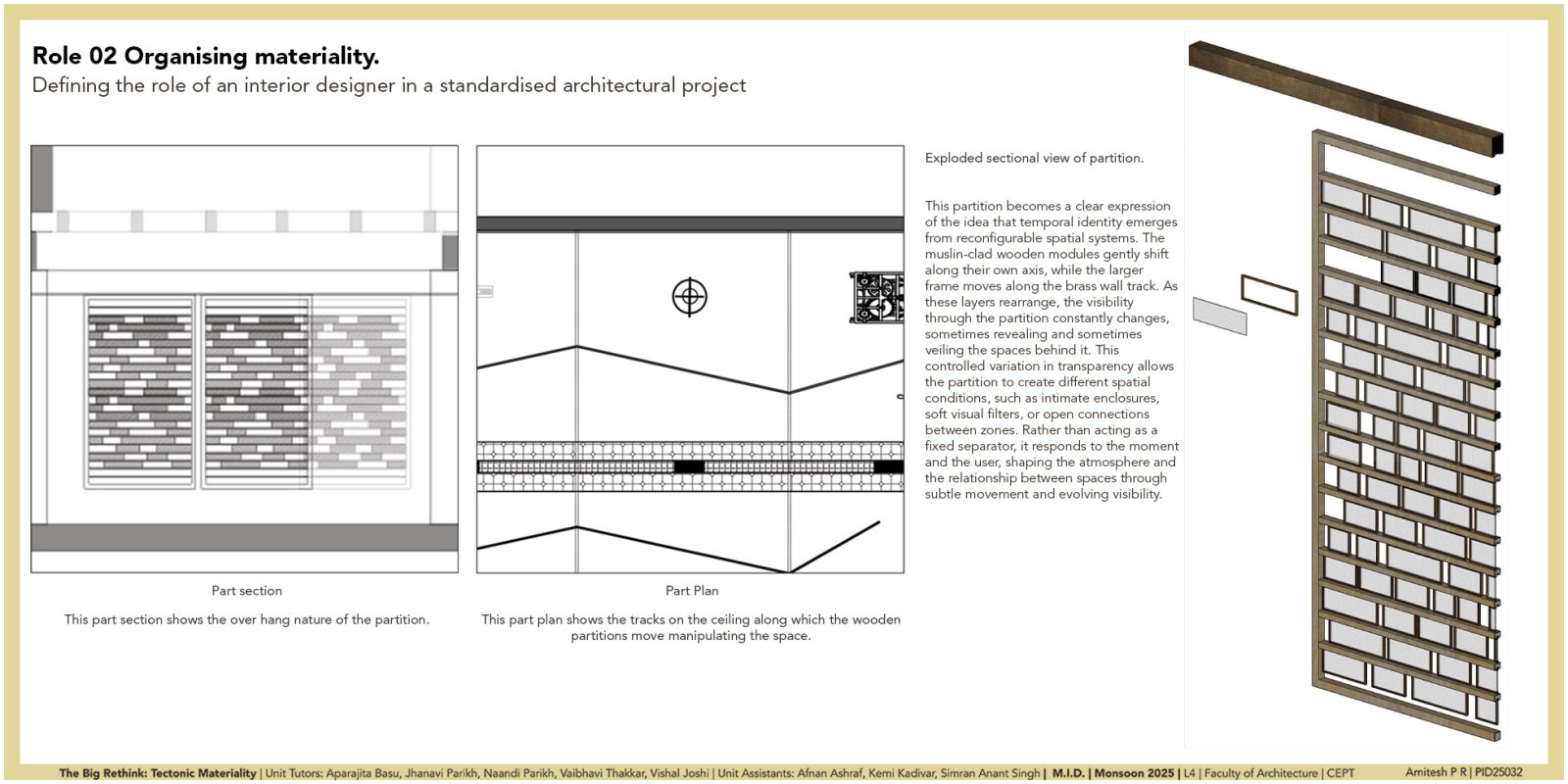
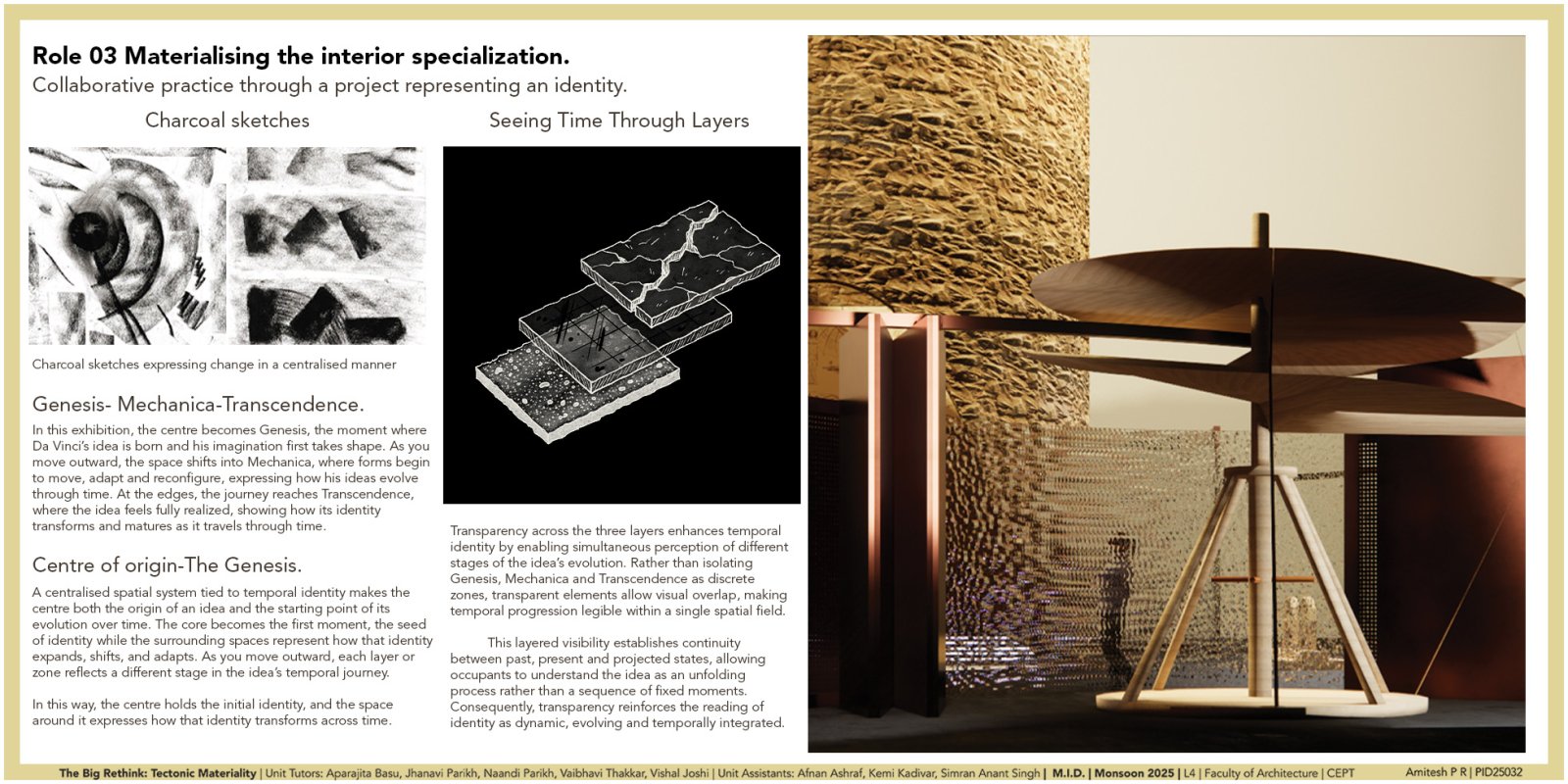
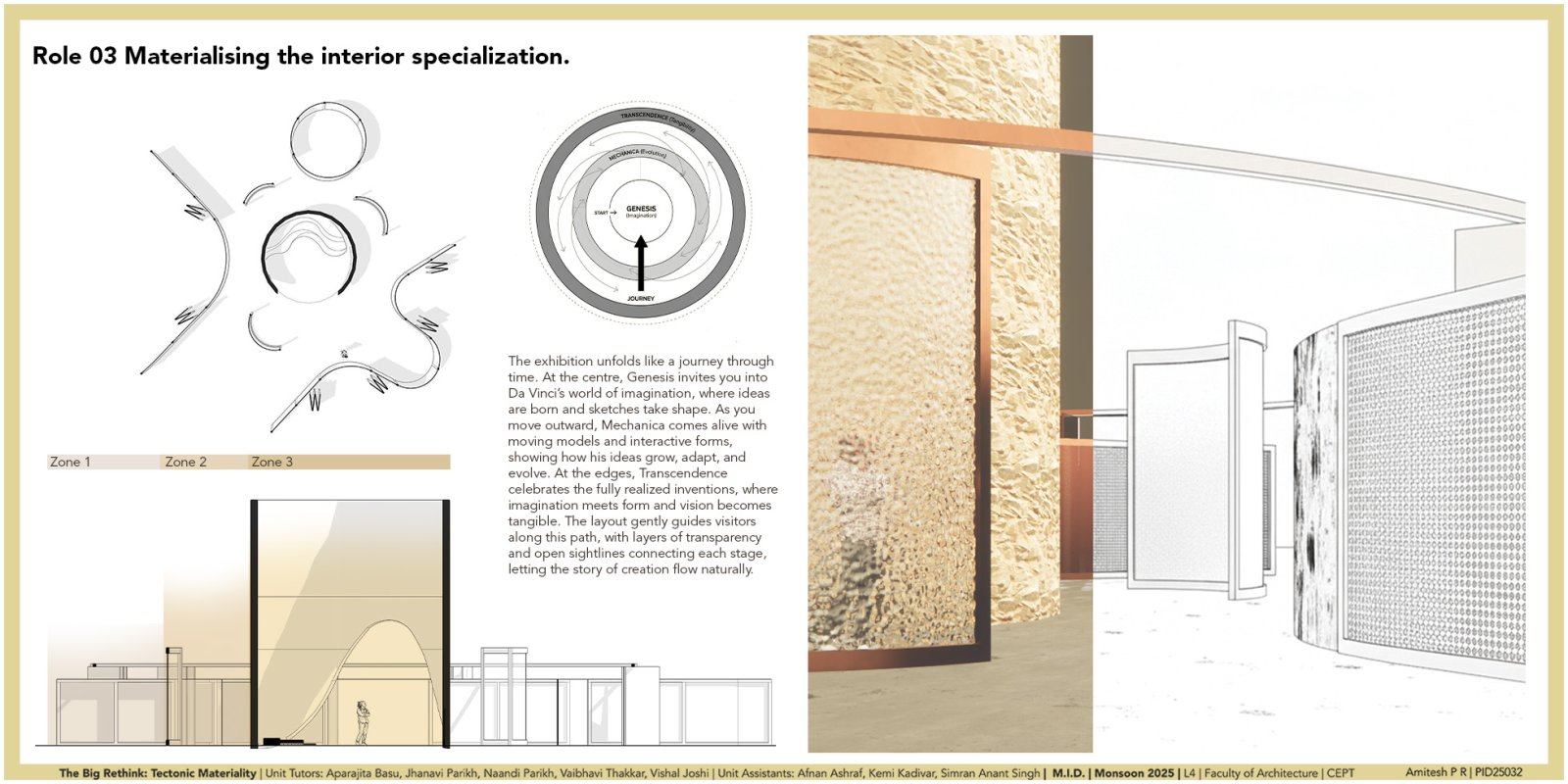
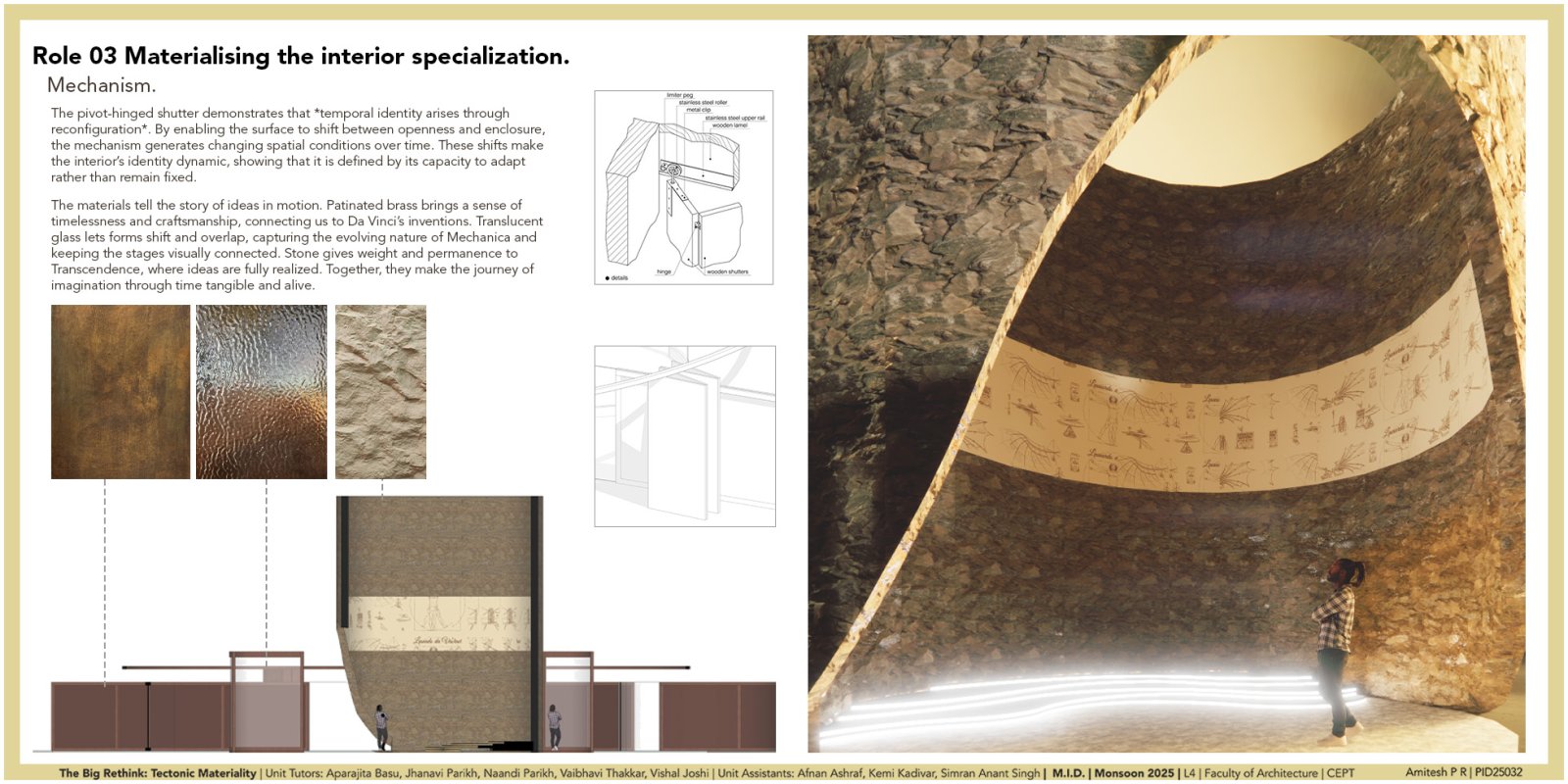
Exploring the interplay between space and time, this investigation examines how interior environments can express and transform identity through spatial systems that adapt and evolve. The focus lies on designing an exhibition for Da Vinci's Dream Machines, treating the interior not as a static backdrop but as a dynamic framework responsive to shifting behaviours, curatorial intentions, and temporal conditions. The study centres on how partitions, surfaces, thresholds, furniture, light, and circulation can be reconfigured to support diverse modes of display, interpretation, and visitor engagement. It aims to establish an interior with temporal identity, a spatial character that unfolds through movement, variation, and continuous transformation as visitors engage with the evolving narratives of Da Vinci's inventive imagination. Through precedent analysis, user pattern mapping, and iterative testing of adaptive configurations, the work develops a critical understanding of time as an operative design parameter. The outcome demonstrates how reconfigurable spatial systems can generate an exhibition environment that remains coherent, resilient, and experientially rich across changing moments of inhabitation.
View Additional Work