Your browser is out-of-date!
For a richer surfing experience on our website, please update your browser. Update my browser now!
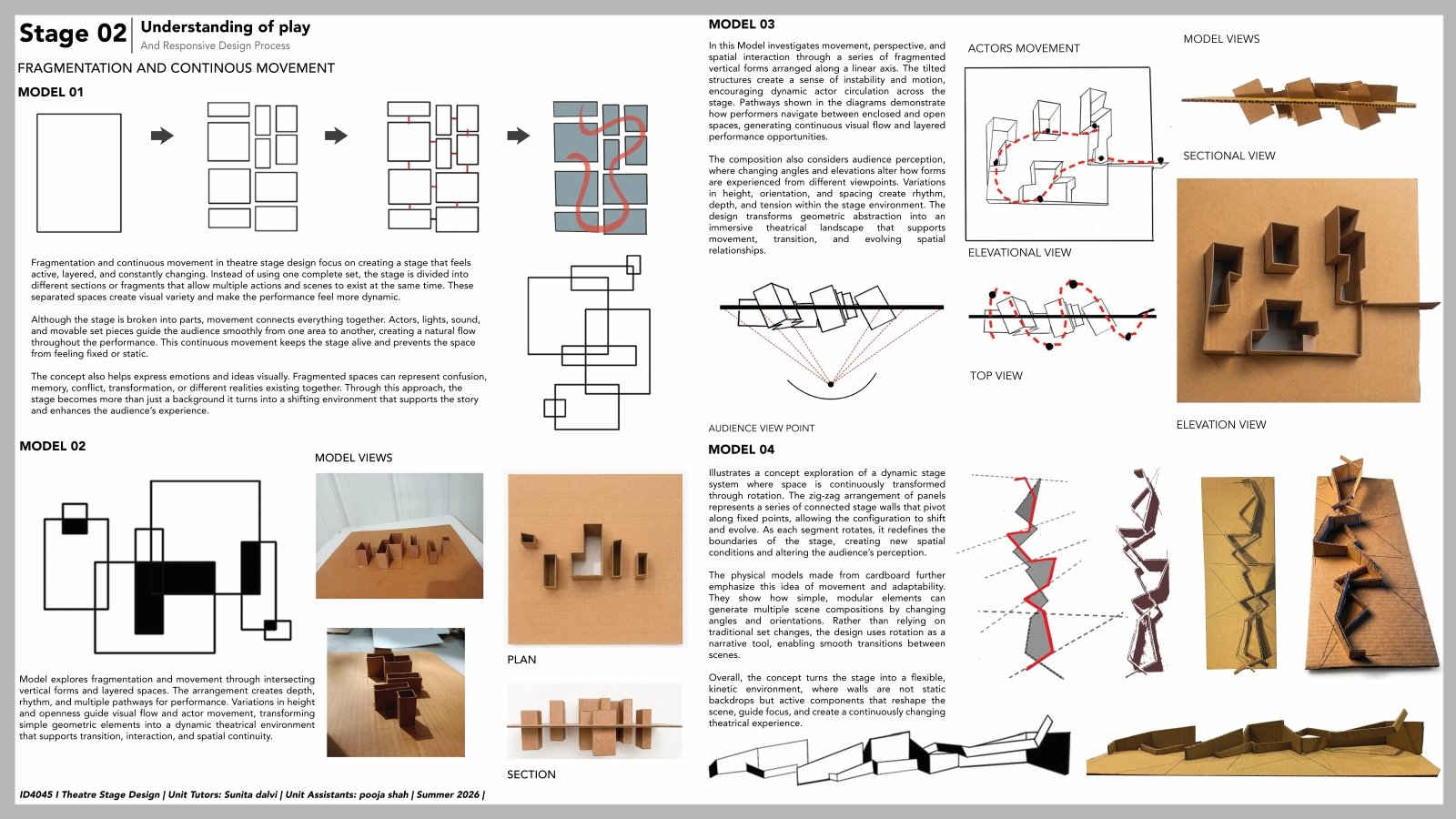
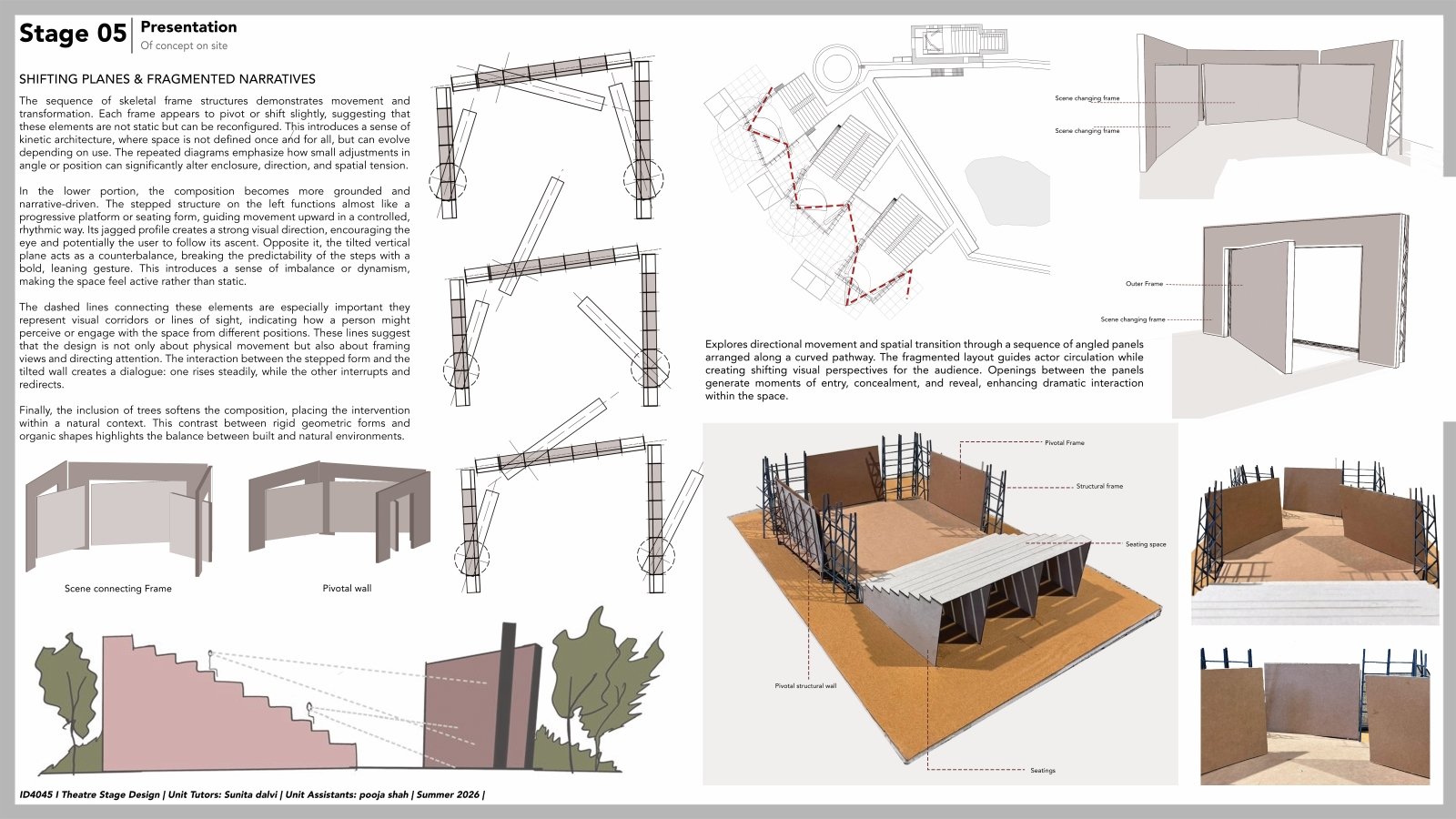
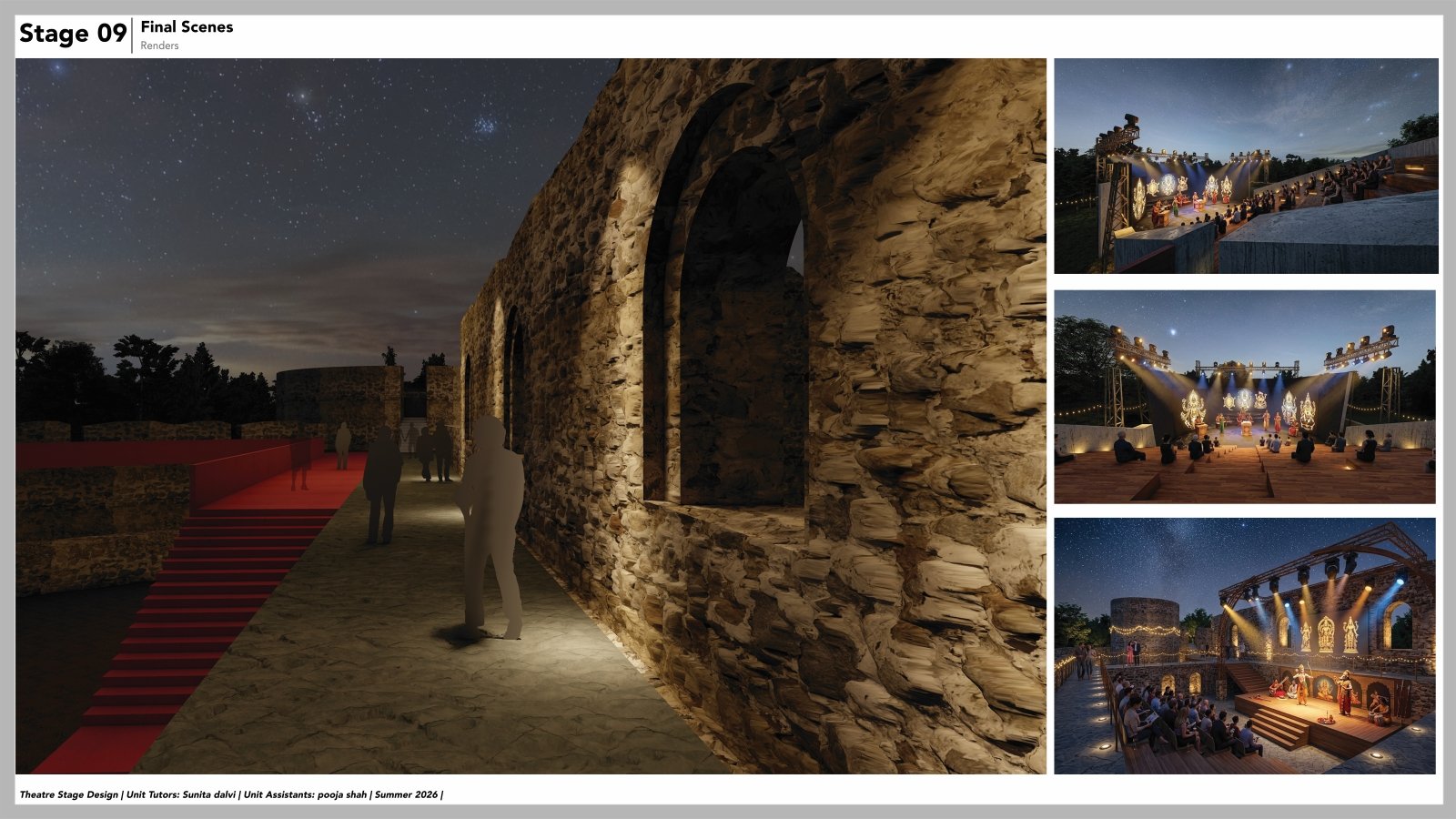
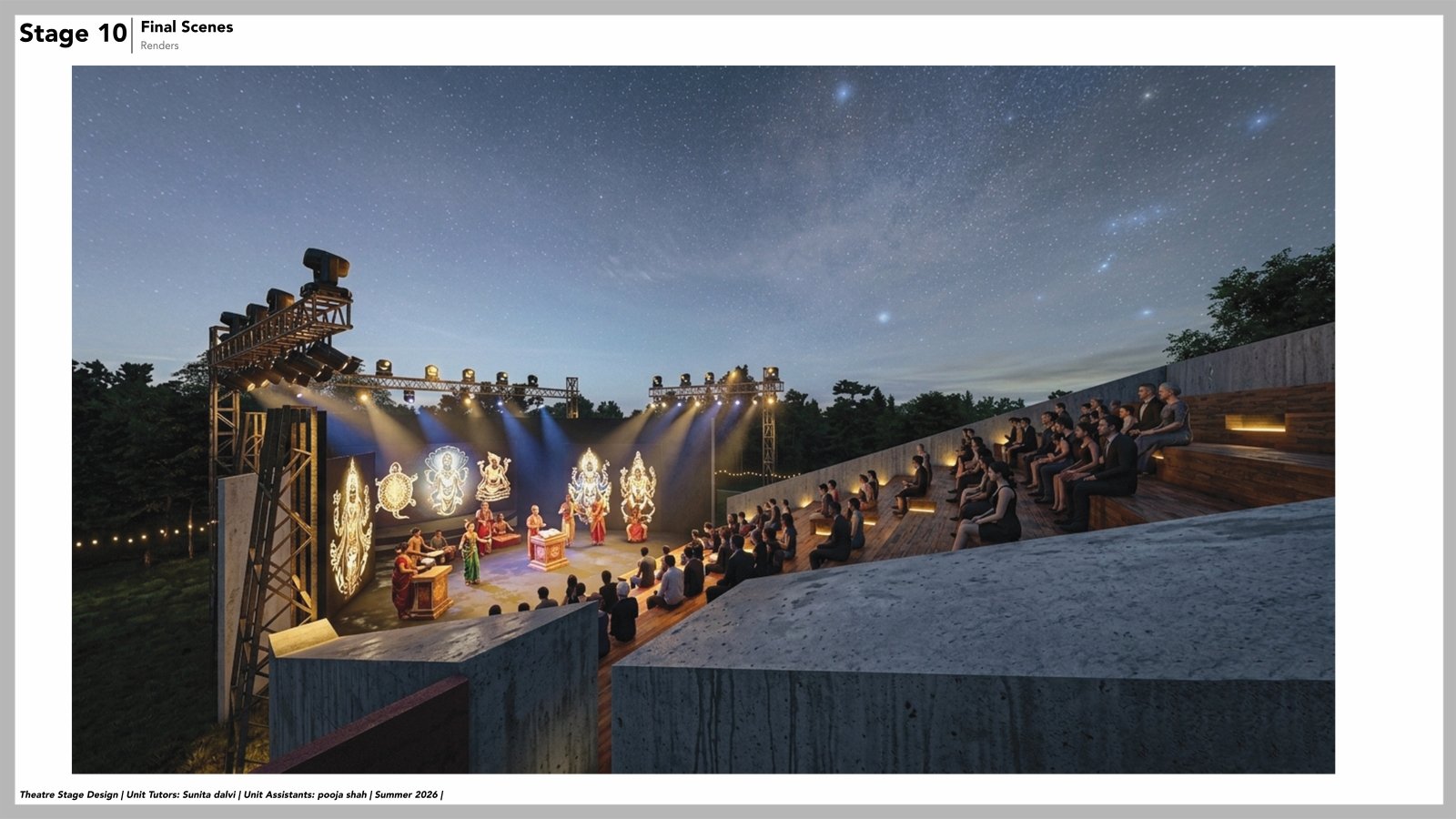
Fragmentation breaks the stage into separate visual elements instead of one realistic setting. Designers use platforms, screens, levels, and symbolic objects to create multiple spaces and meanings. This technique reflects psychological tension, memory, and modern social complexity. Continuous movement focuses on fluid transitions and dynamic stage action. Moving platforms, revolving stages, lighting changes, and mobile scenery allow scenes to shift smoothly without stopping the performance. Together, fragmentation and continuous movement create an active theatrical experience, making the stage more expressive, visually engaging, and emotionally powerful for the audience.
View Additional Work