Yash Motwaney

AR2072

THIRD SPACE.

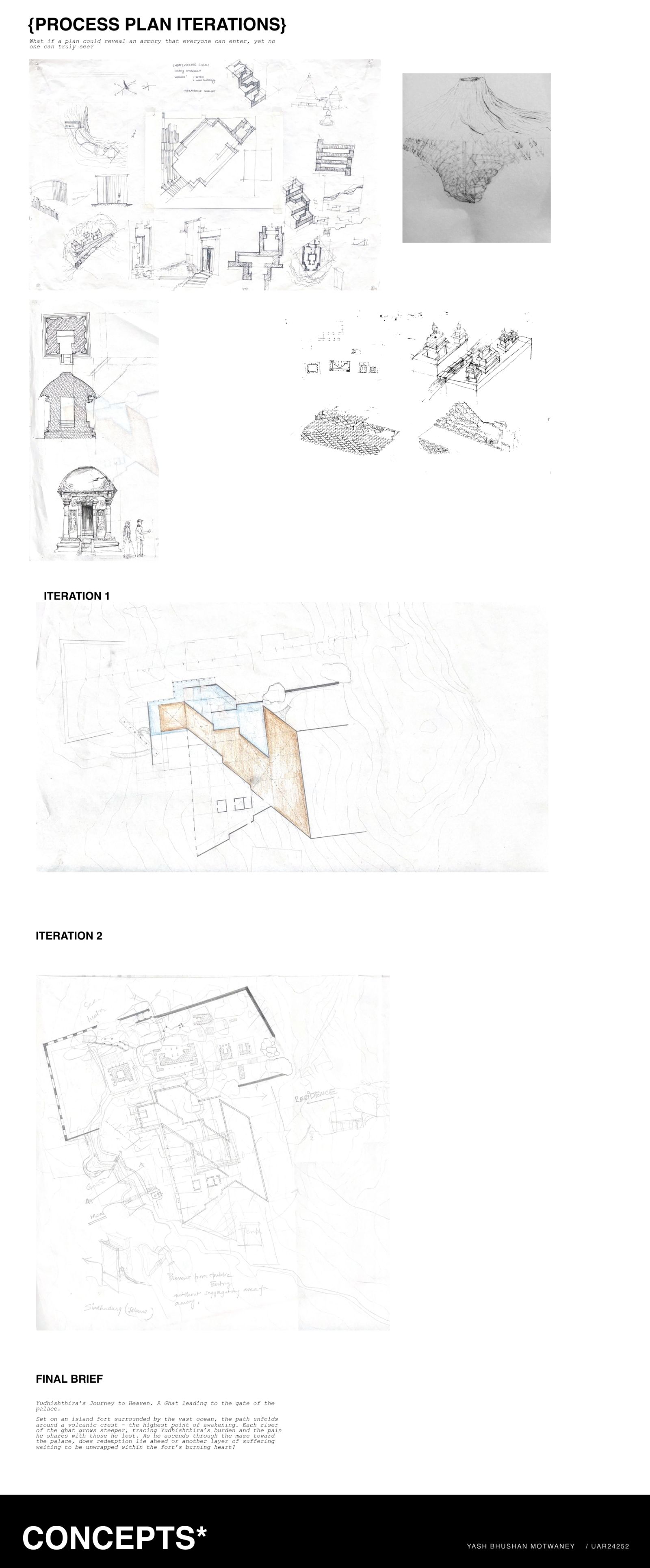
Yudhishthira’s Journey to Heaven. A Ghat leading to the gate of the palace. Set on an island fort surrounded by the vast ocean, the path unfolds around a volcanic crest - the highest point of awakening. Each riser of the ghat grows steeper, tracing Yudhishthira’s burden and the pain he shares with those he lost. As he ascends through the maze toward the palace, does redemption lie ahead or another layer of suffering waiting to be unwrapped within the fort’s burning heart?

View Additional Work
Report Content

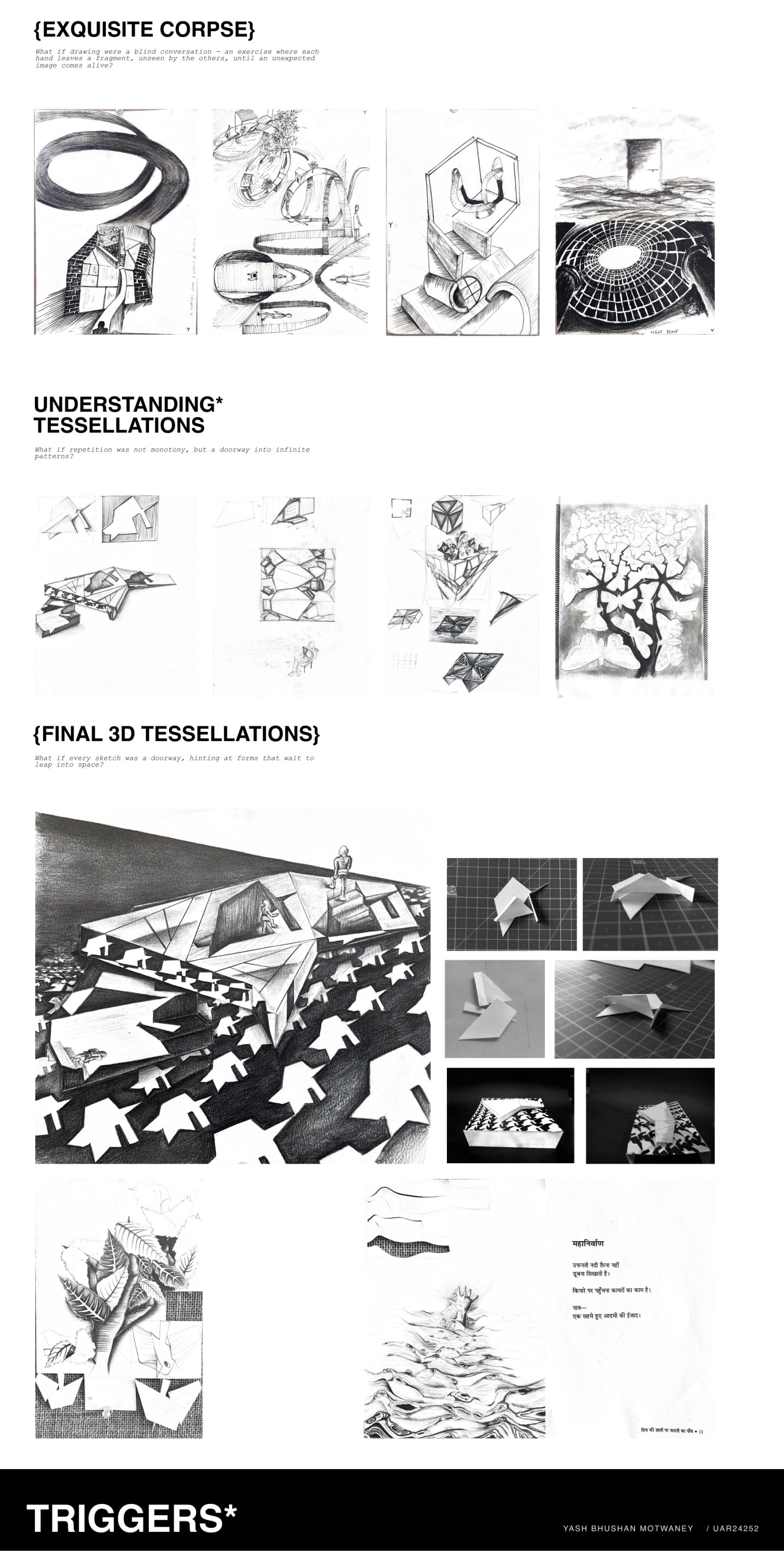
We explored tessellations to understand how repeating geometric units can generate rhythm, continuity, and spatial illusion. By manipulating shifts, rotations, and interlocking forms, we learned how patterns can guide movement, distort perception, and create layered readings of space. This exercise sharpened our sensitivity to order, complexity, and visual coherence.

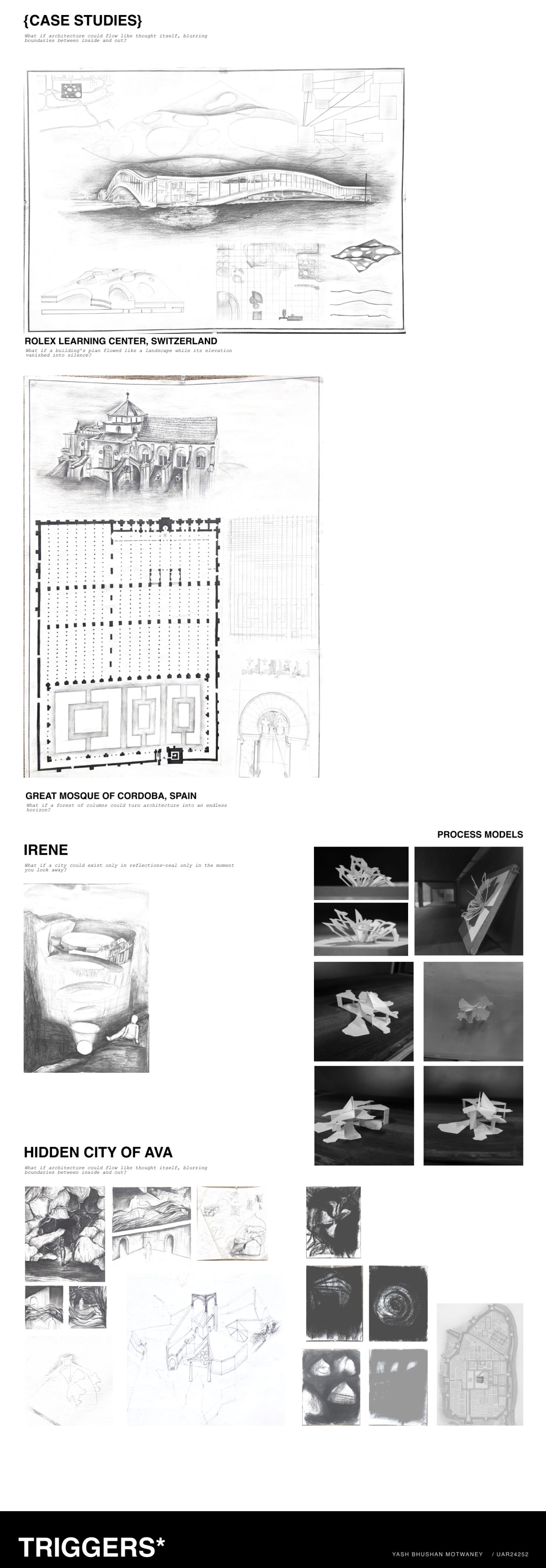
We began the studio with small exercises like Hidden City and Invisible Cities. For Invisible Cities -Calvino’s book - each of us was given a city, and we tried to bring our own interpretation of it into a drawing - visualisation.

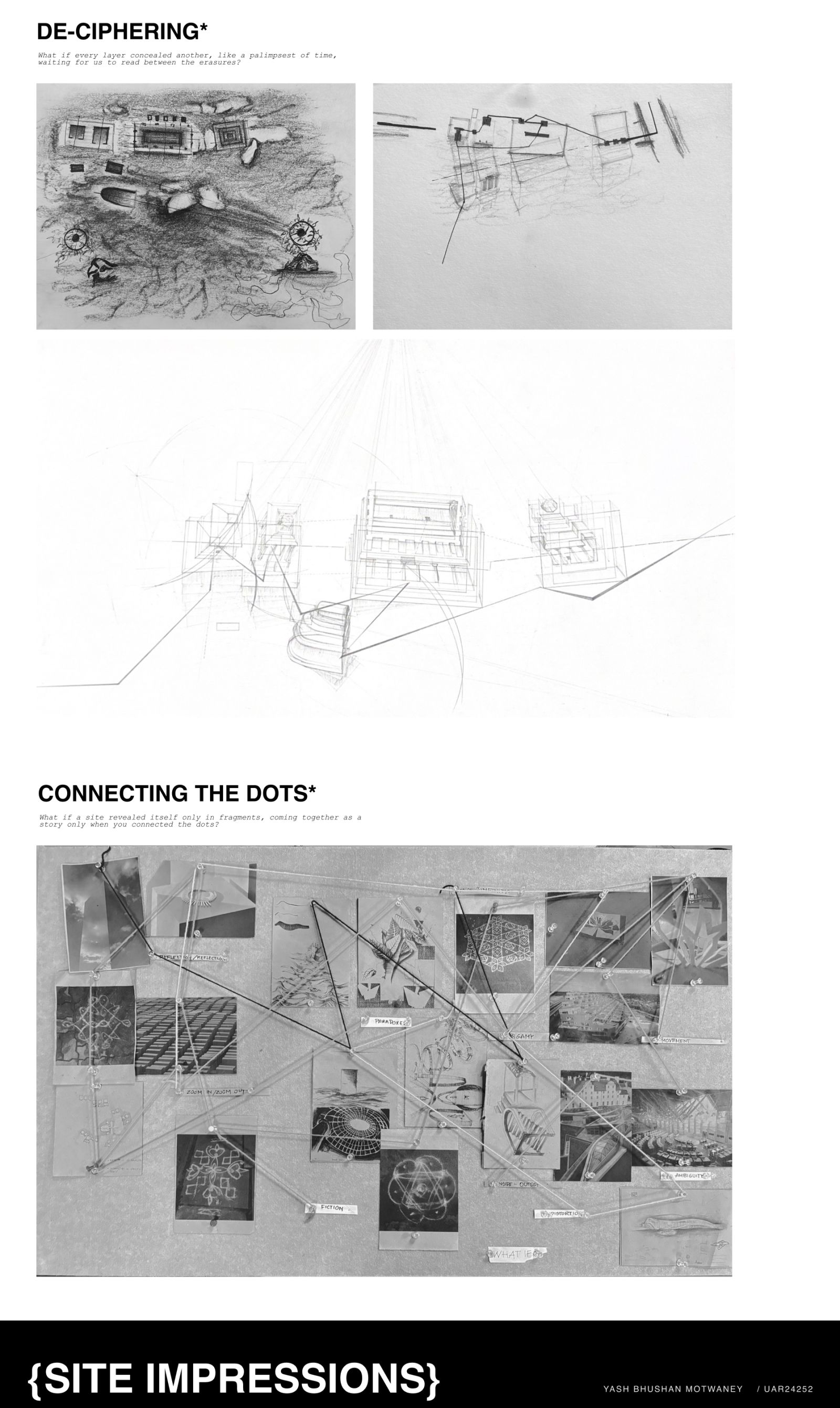
Connecting the Dots and Deciphering maps how my understanding of Mahabalipuram slowly unfolded - through scattered impressions, repeated motifs, and quiet contradictions. By piecing together textures, alignments, and spatial cues, the exercise became less about documenting the site and more about uncovering its hidden logic, reading meanings embedded in fragments, and letting insight emerge through association.

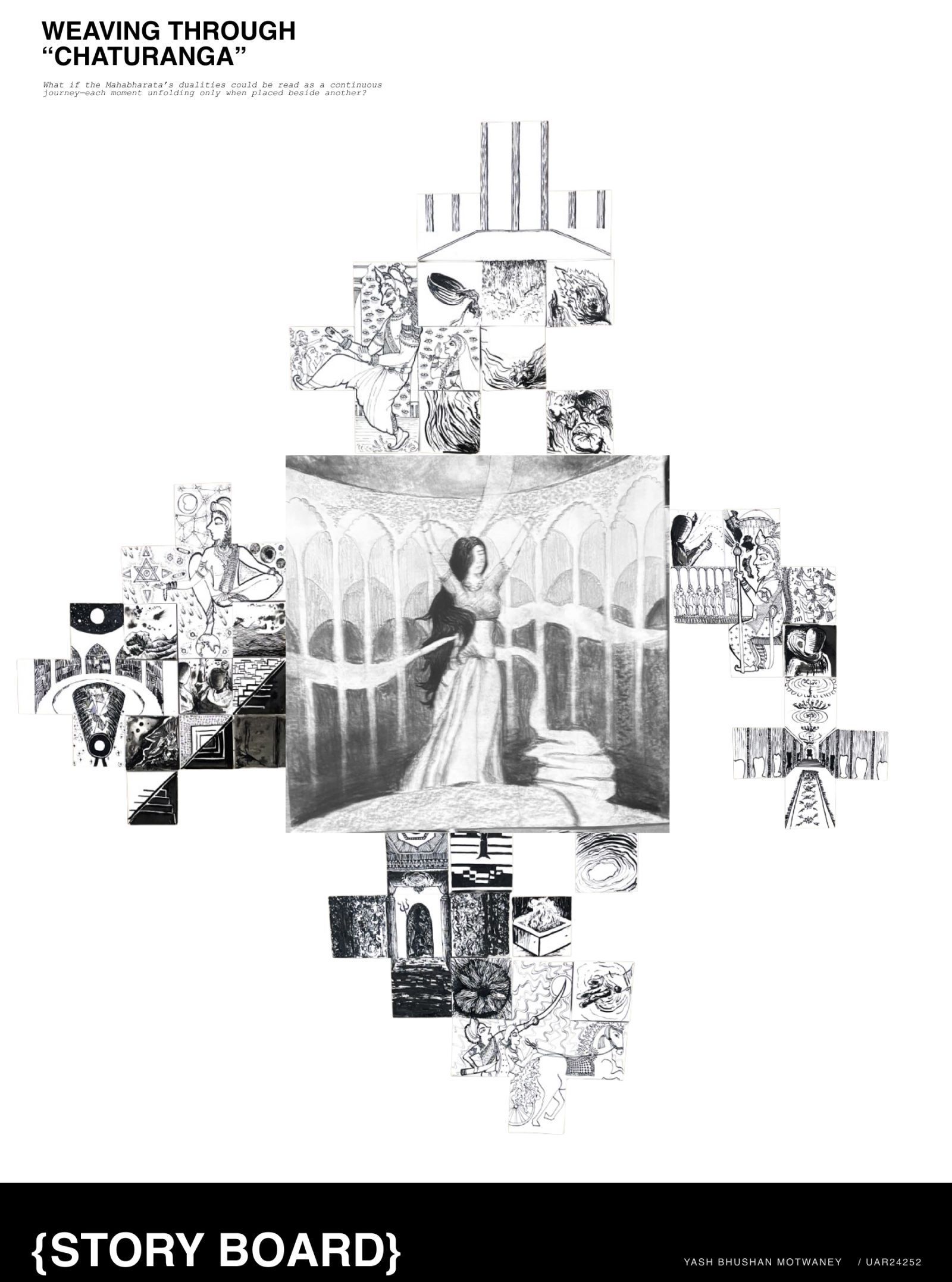
The storyboard follows the path my studio mate and I traced through the Mahabharata, weaving together moments that hold two truths at once - duty and doubt, victory and loss, courage and vulnerability. By pairing these dualities through selected incidents, the storyboard becomes a lens to read tension, contradiction, and the emotional undercurrents that shape the epic’s narrative world.

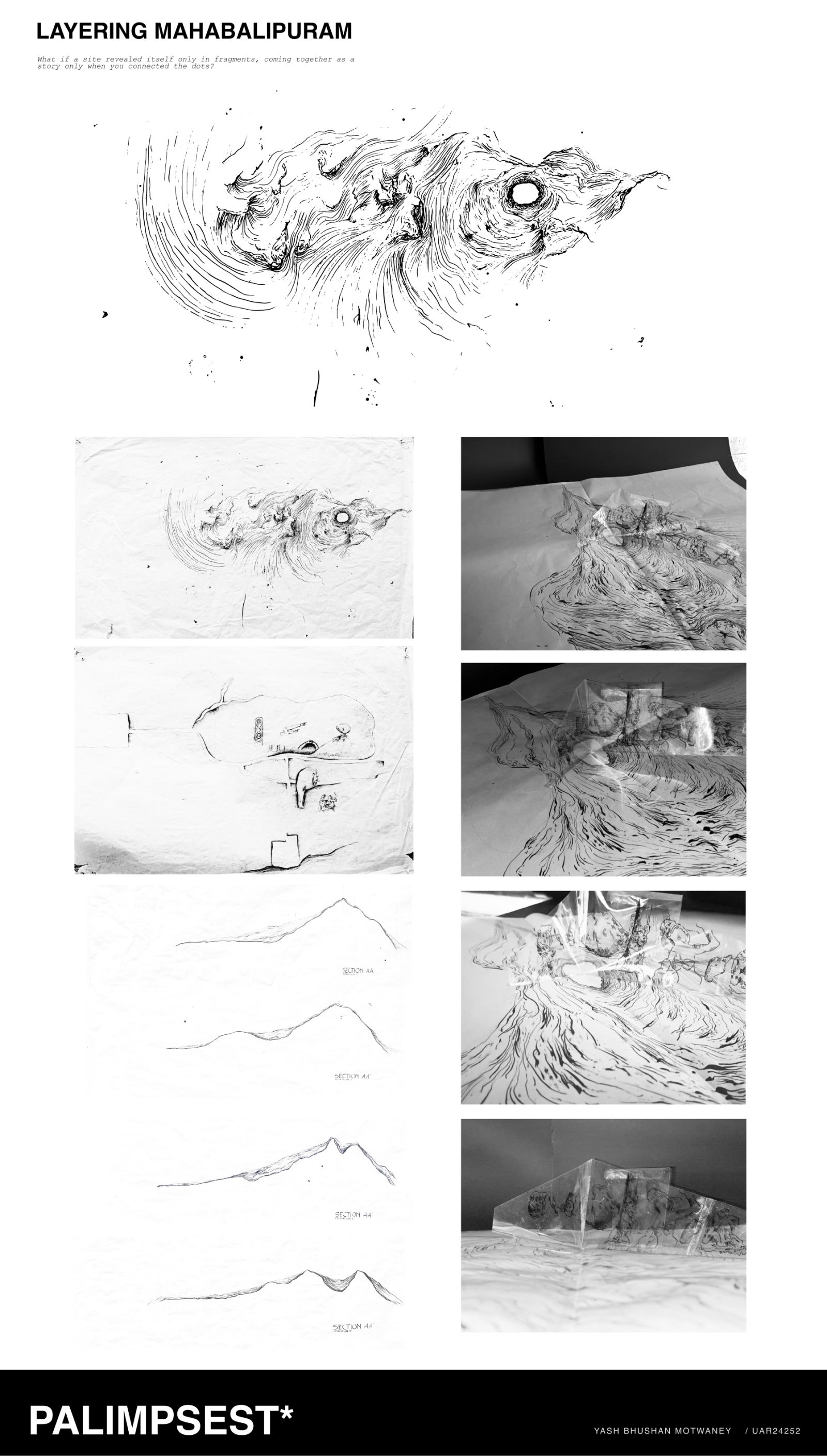
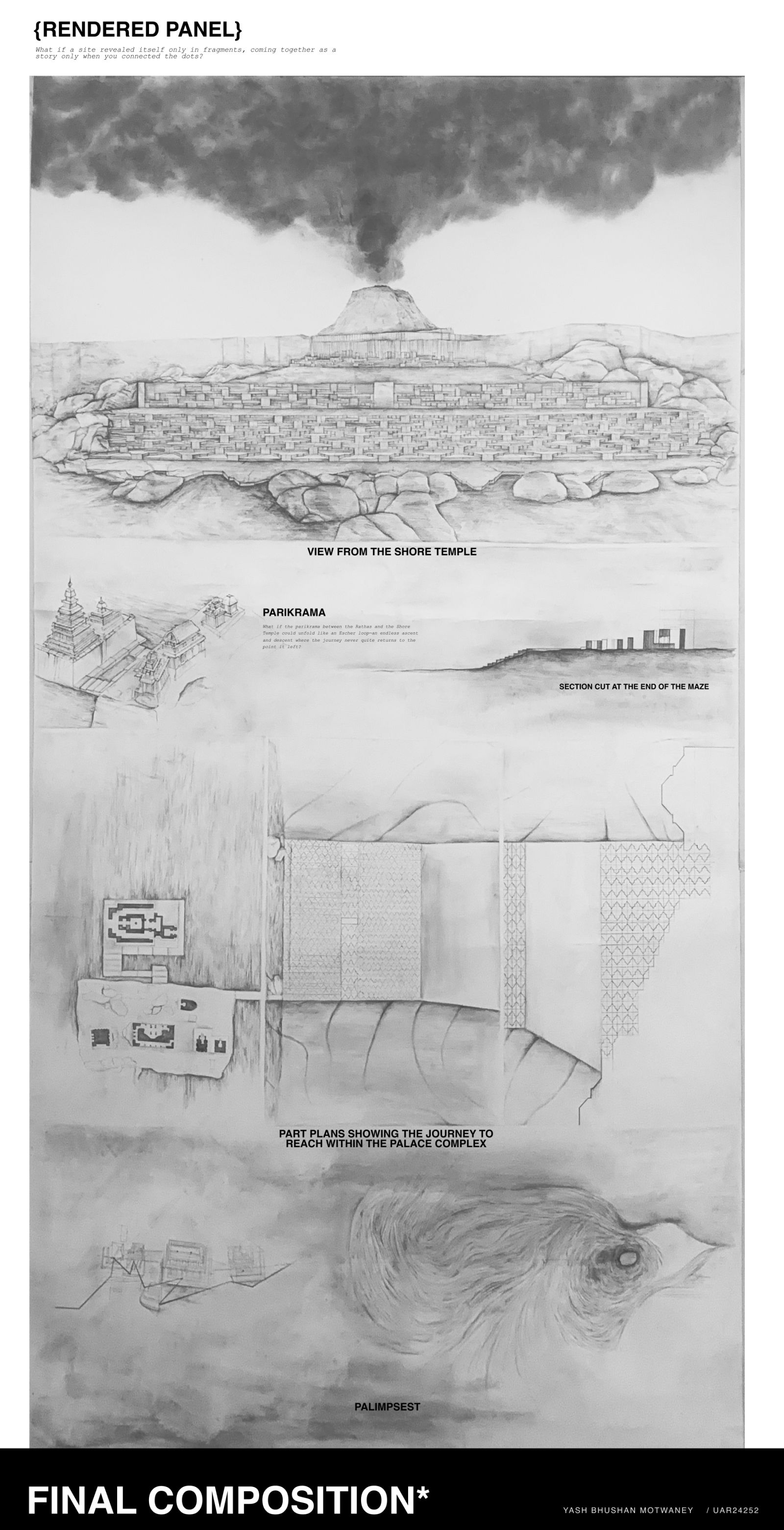
A palimpsest captures the idea of layers - past traces that never fully disappear, even when overwritten. In this exercise, each mark, erasure, and redraw revealed how memory, site, and narrative stack over one another. The final composition becomes a layered reading of thought, time, and shifting interpretation.

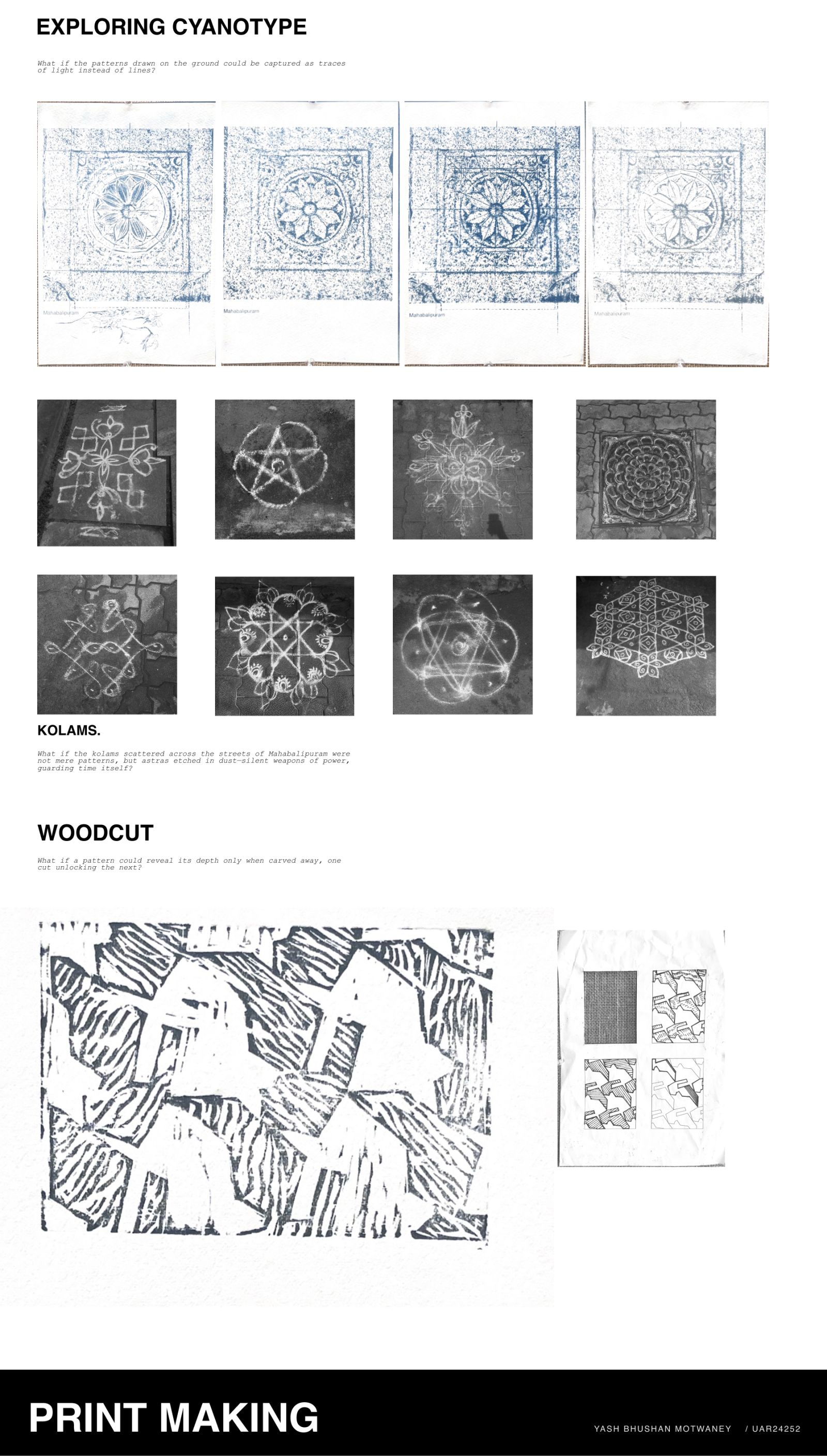
Exploring Cyanotype and Woodcut

The concept sketches and plans trace how the idea first took shape—through quick marks, shifting geometries, and iterative readings of space. These drawings map the transition from intuition to structure, capturing how form, movement, and illusion gradually aligned into an architectural direction.

The final panel brings together illusion, narrative, and site. What began as scattered impressions now forms a coherent spatial idea