Your browser is out-of-date!
For a richer surfing experience on our website, please update your browser. Update my browser now!
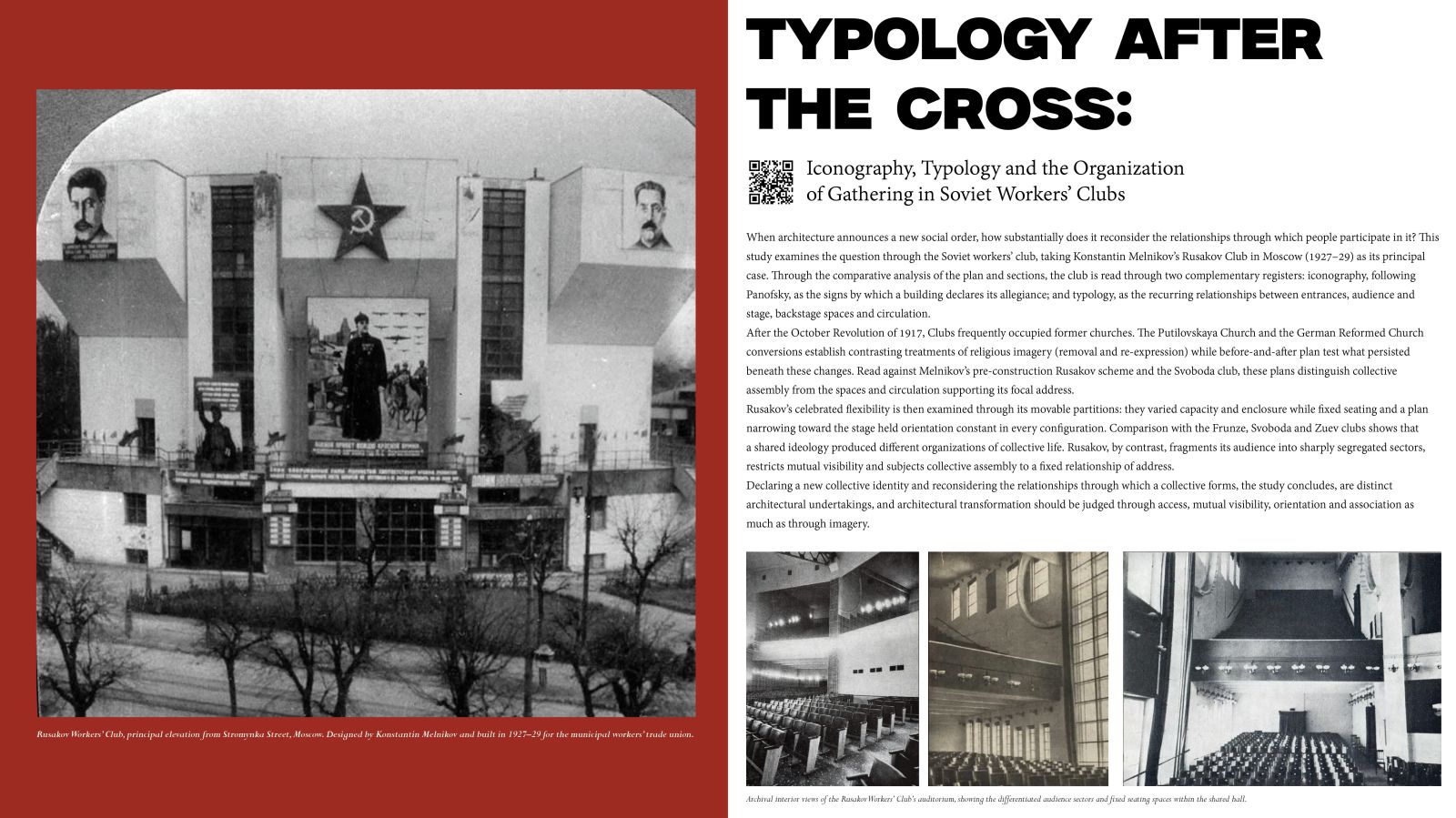
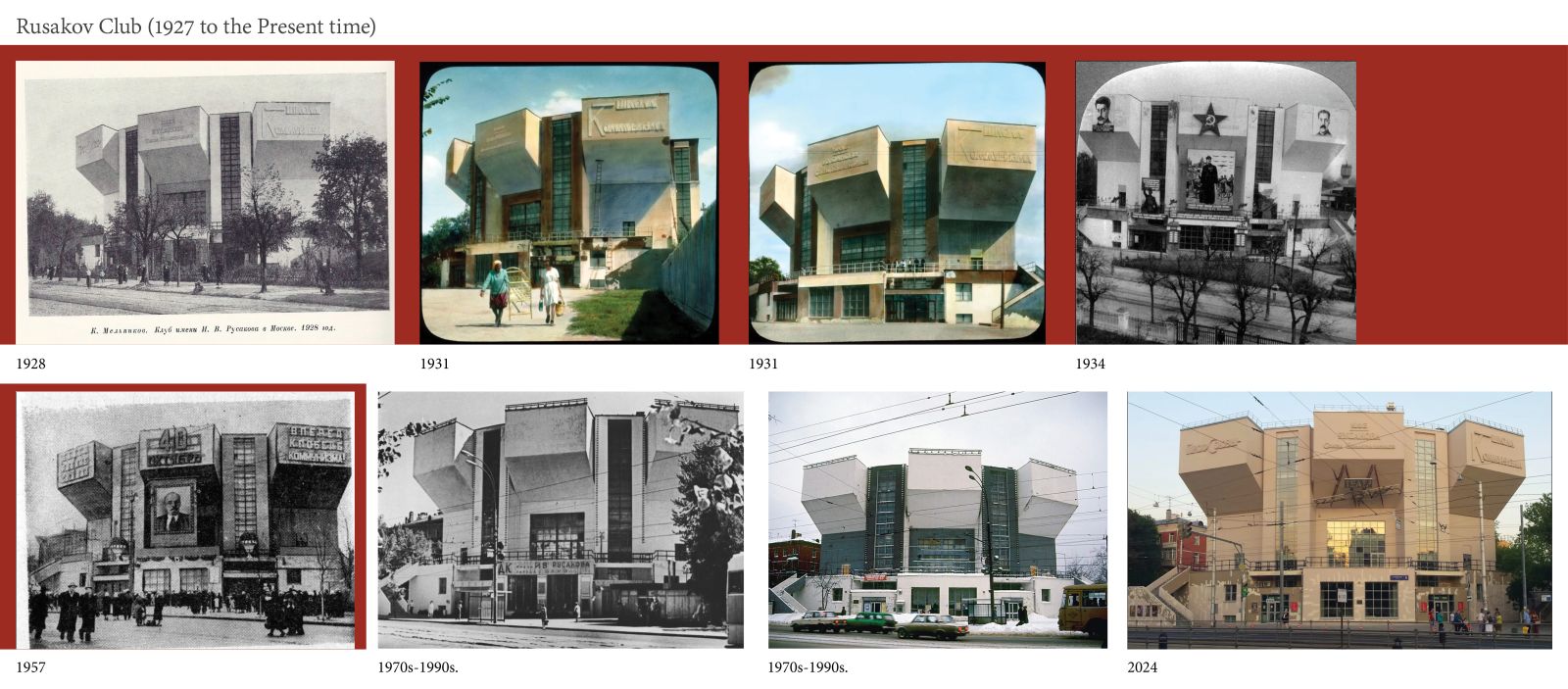
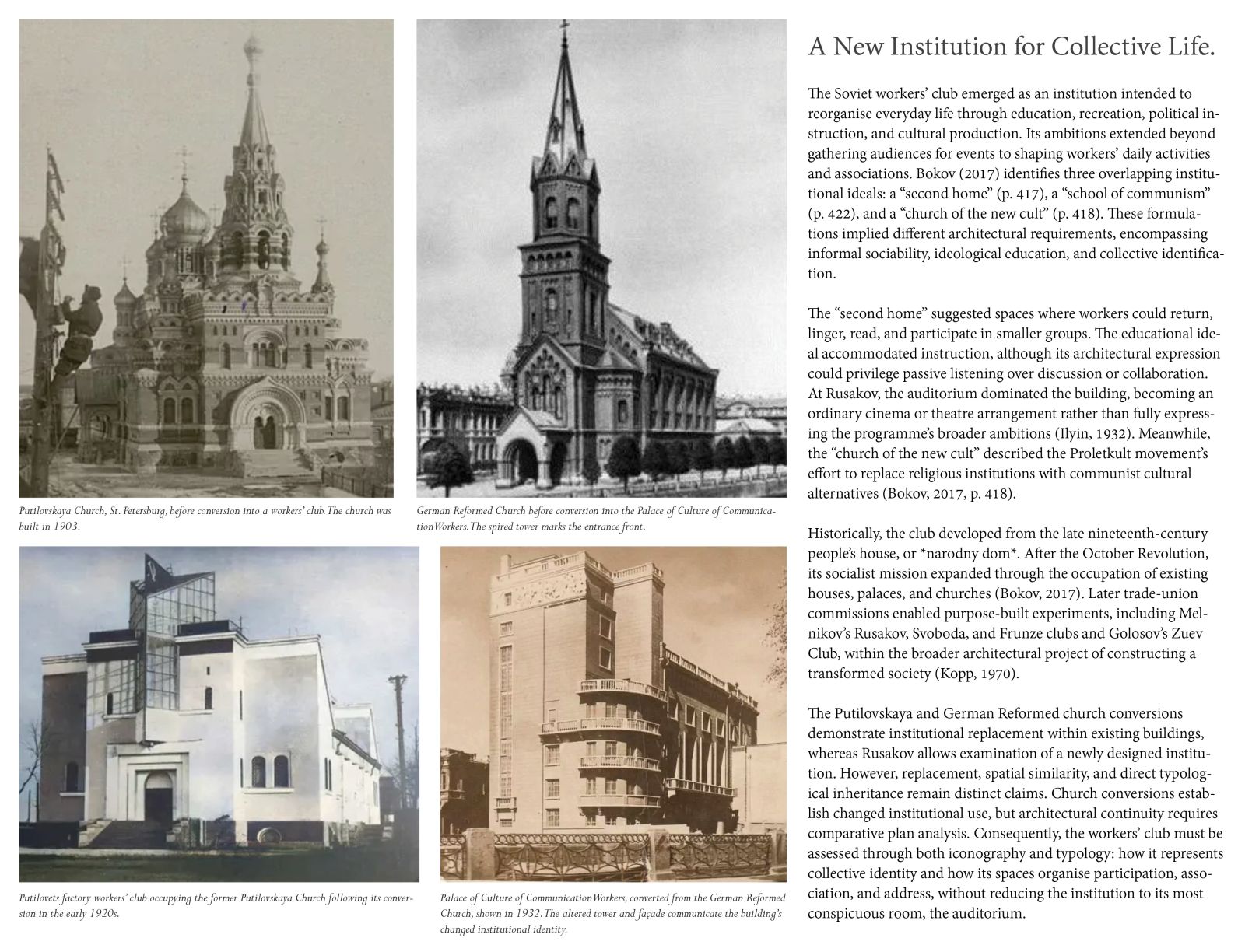
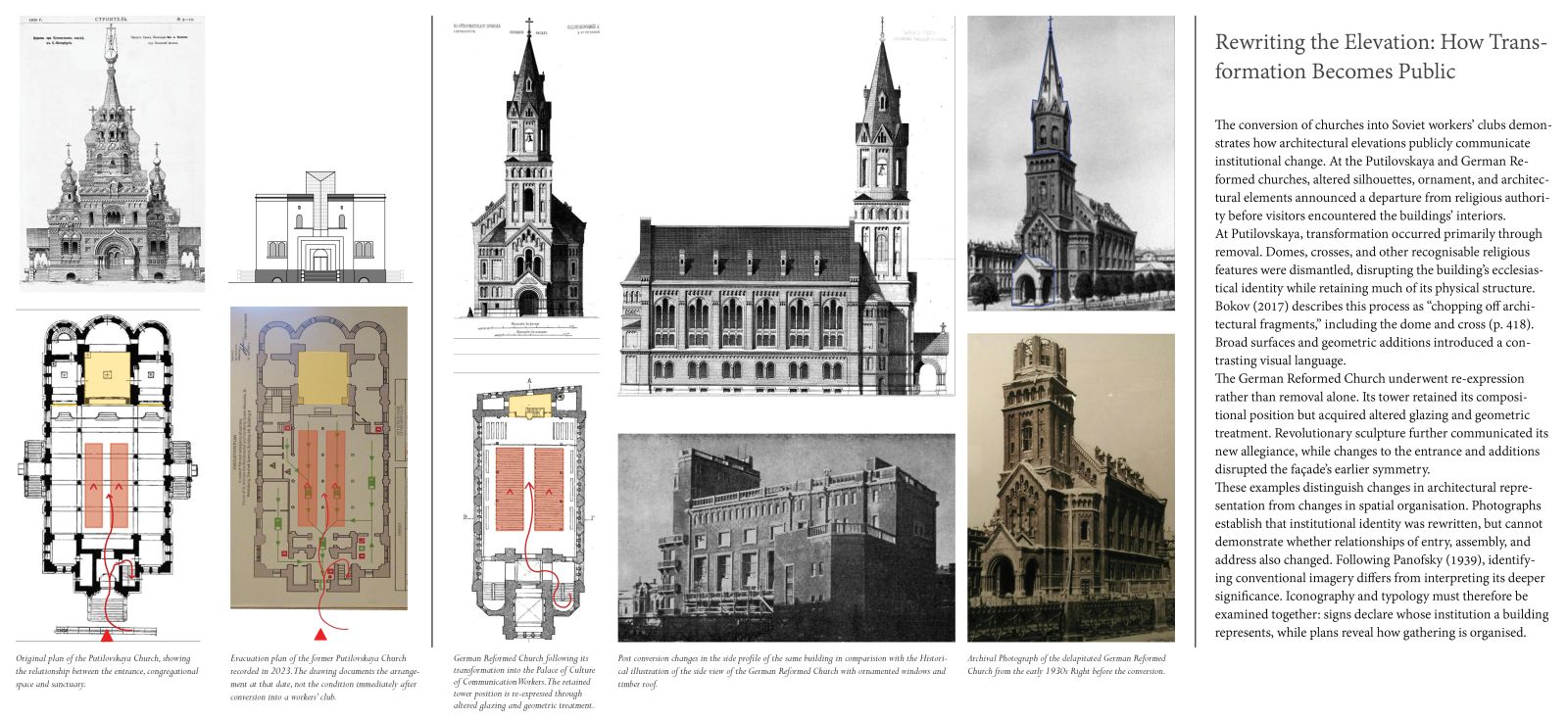
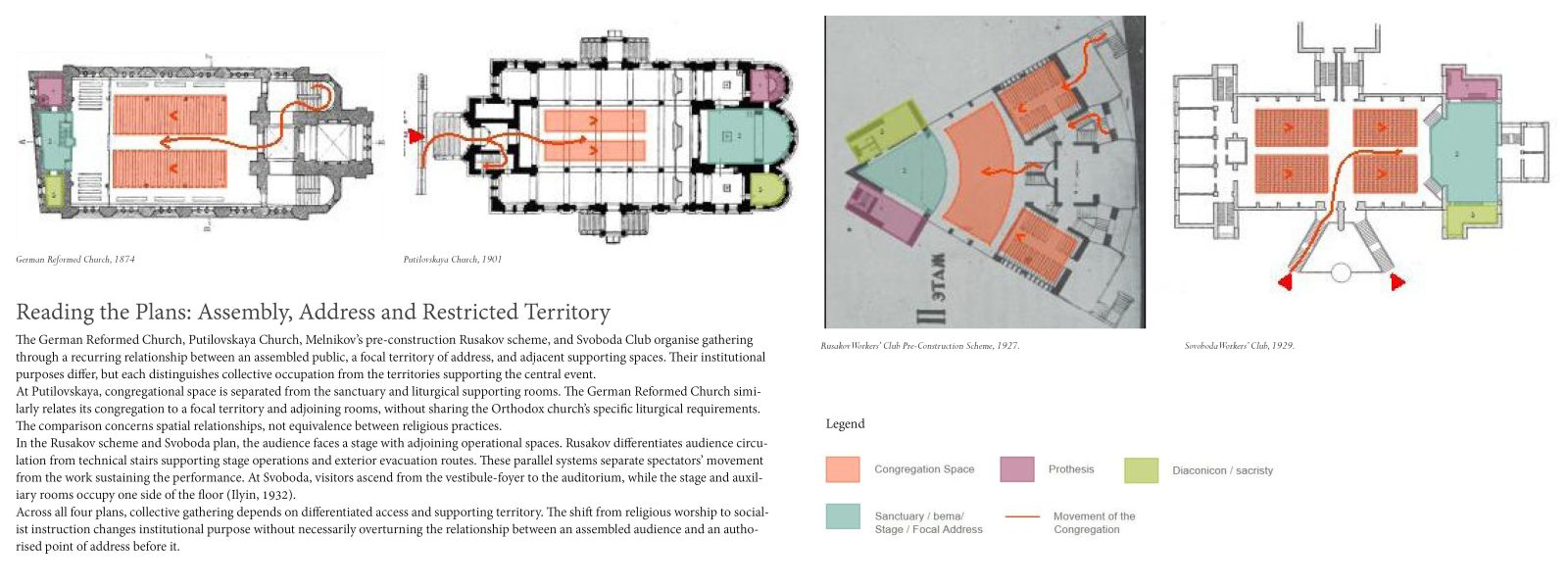
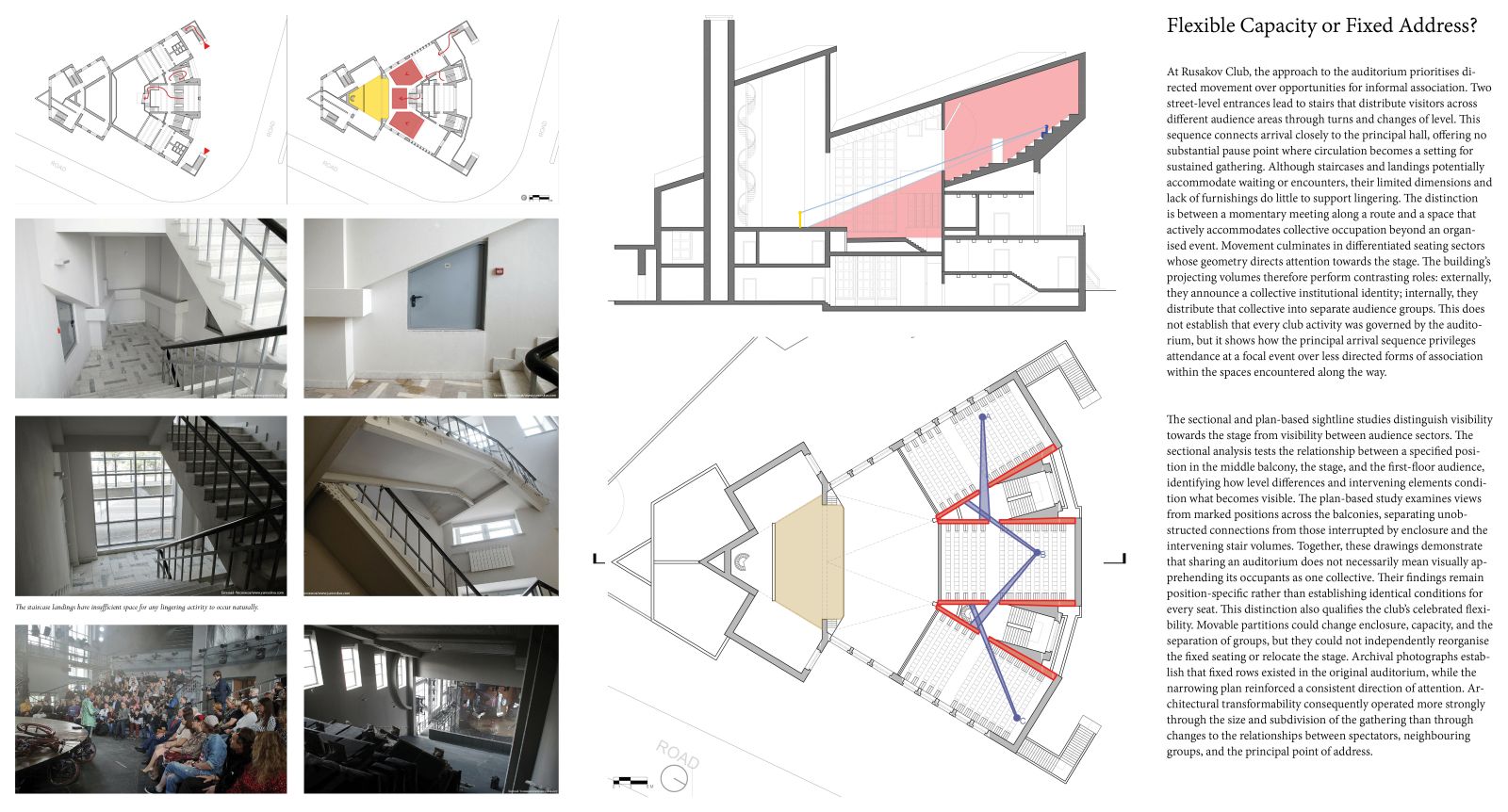
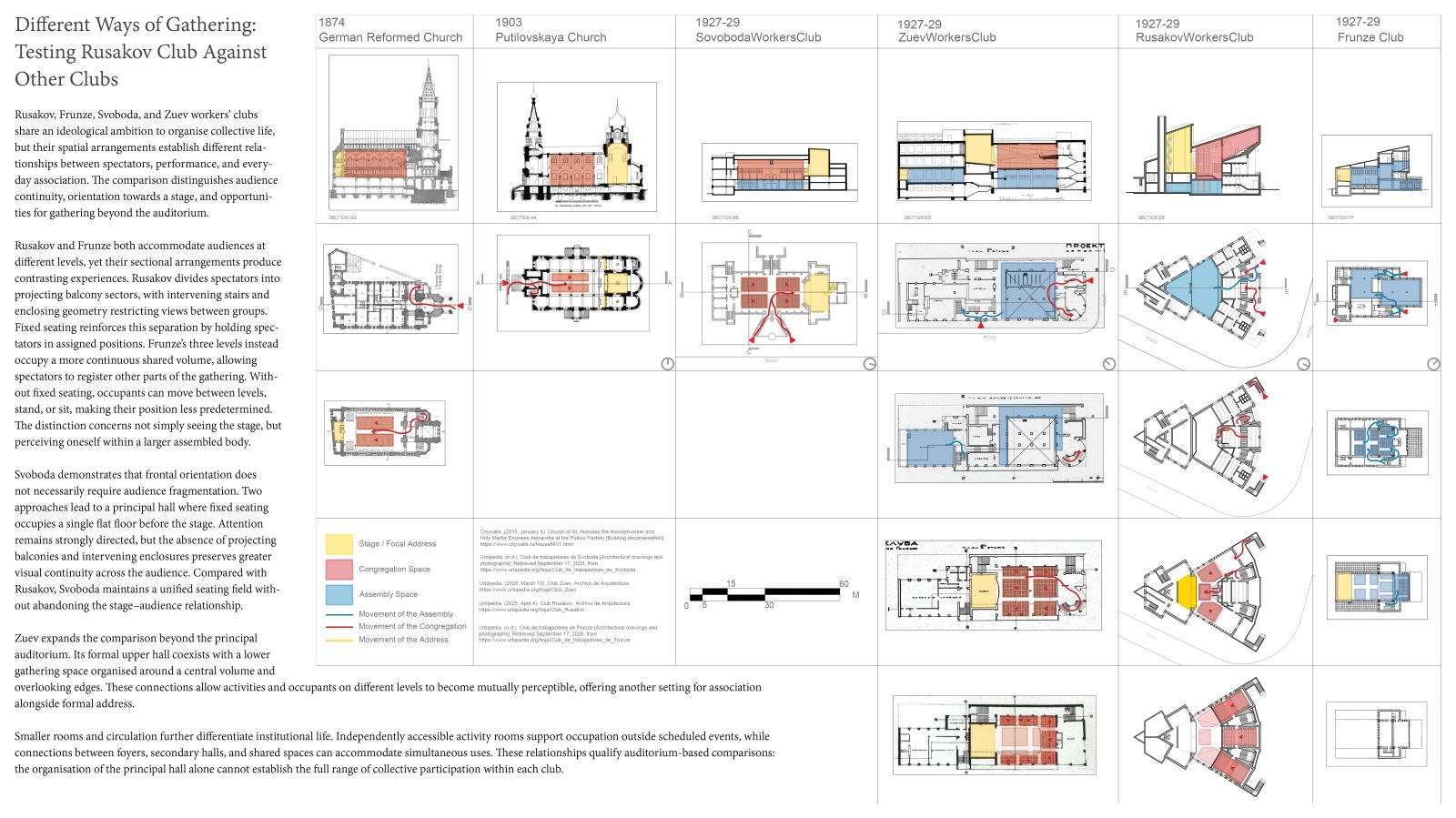
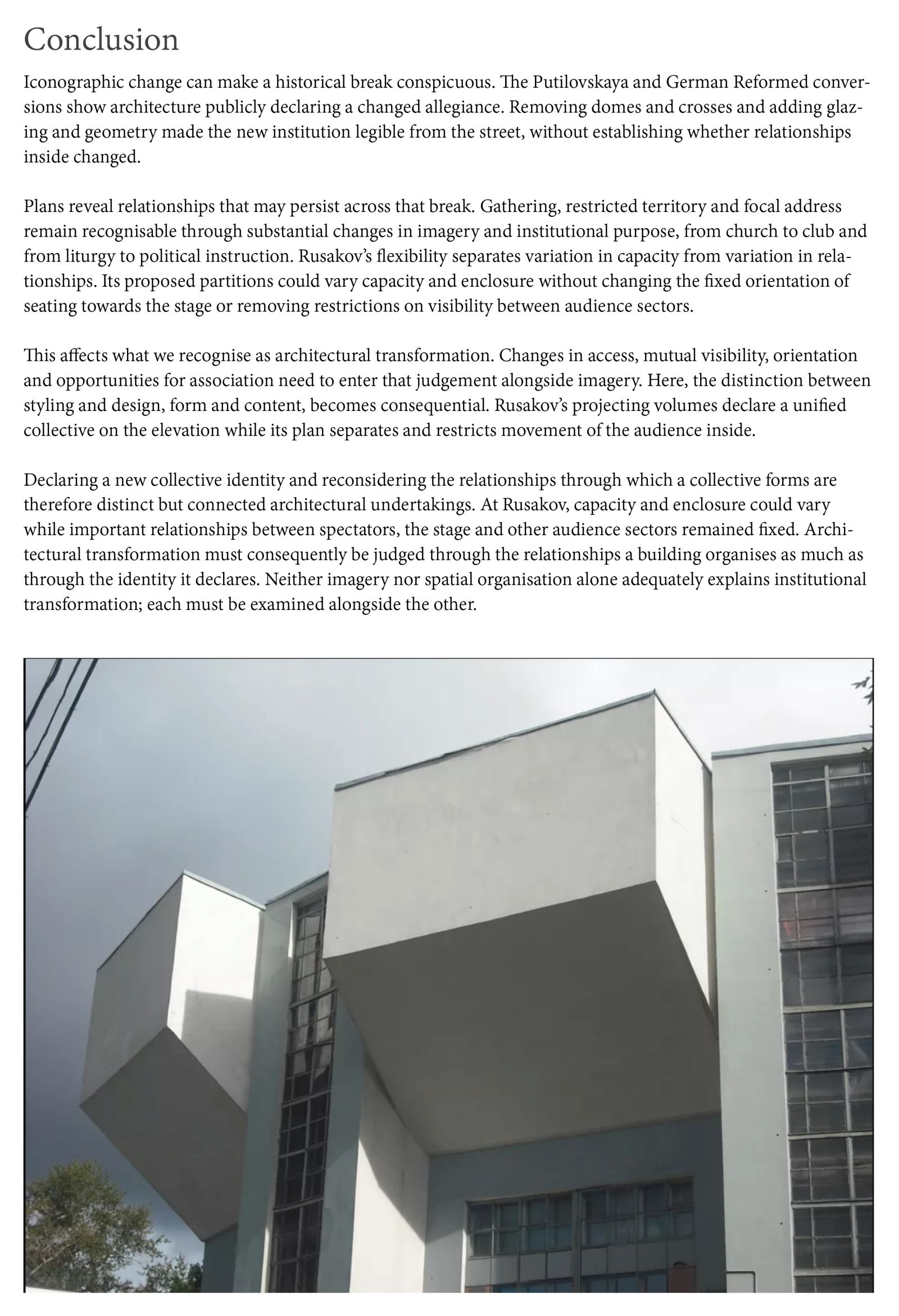
When architecture announces a new social order, does it transform the relationships through which people participate? Examining Konstantin Melnikov’s Rusakov Club in Moscow, this study compares plans and sections of converted churches and Soviet workers’ clubs to distinguish iconographic change from typological transformation. Rusakov’s movable partitions varied capacity without altering orientation toward the stage. Compared with Frunze, Svoboda and Zuev, Rusakov fragments its audience, restricts mutual visibility and locks assembly into a fixed relationship of address. Architectural transformation must therefore be judged through access, mutual visibility, orientation and association, not imagery alone.
View Additional Work