Your browser is out-of-date!
For a richer surfing experience on our website, please update your browser. Update my browser now!
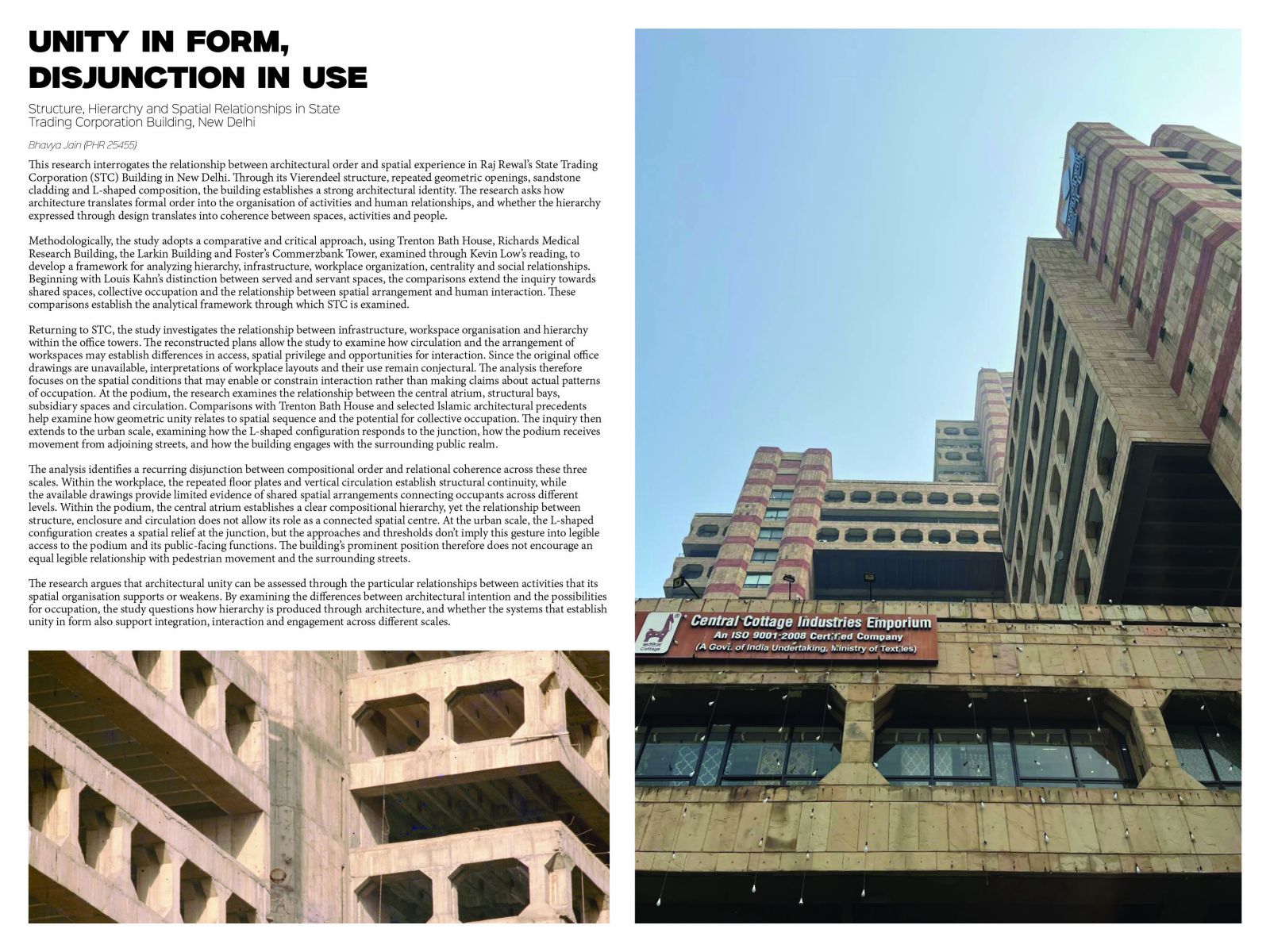
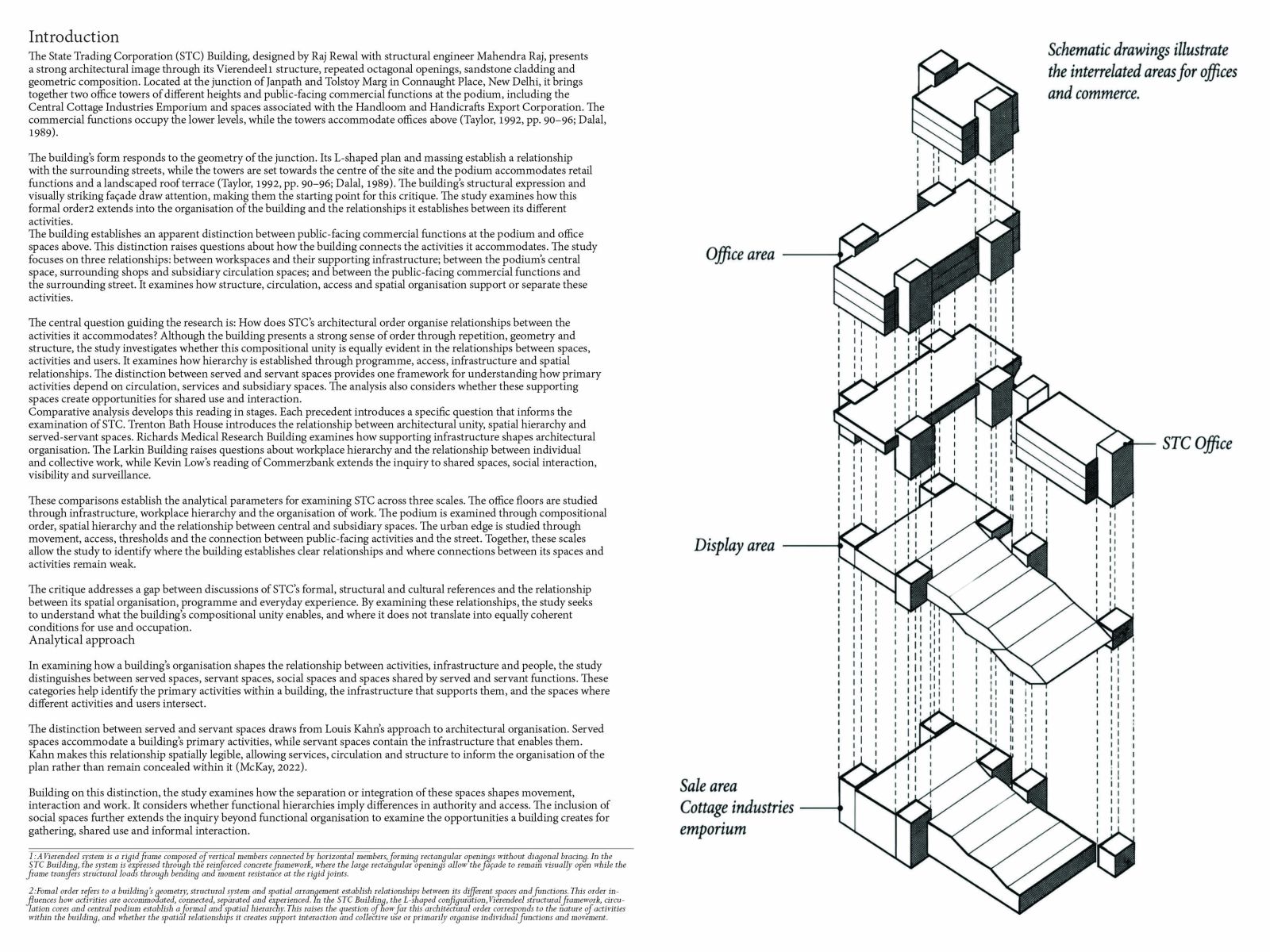
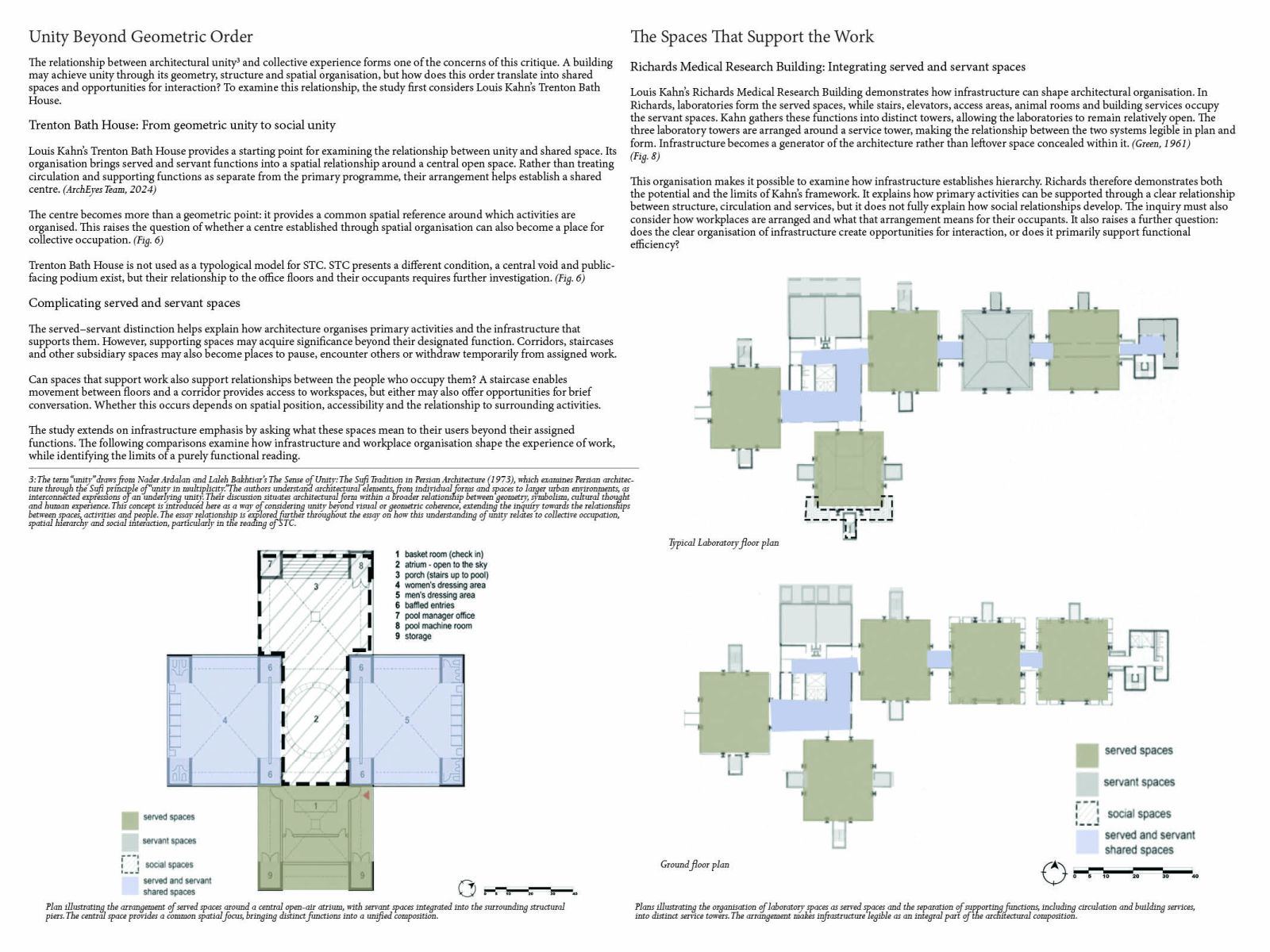
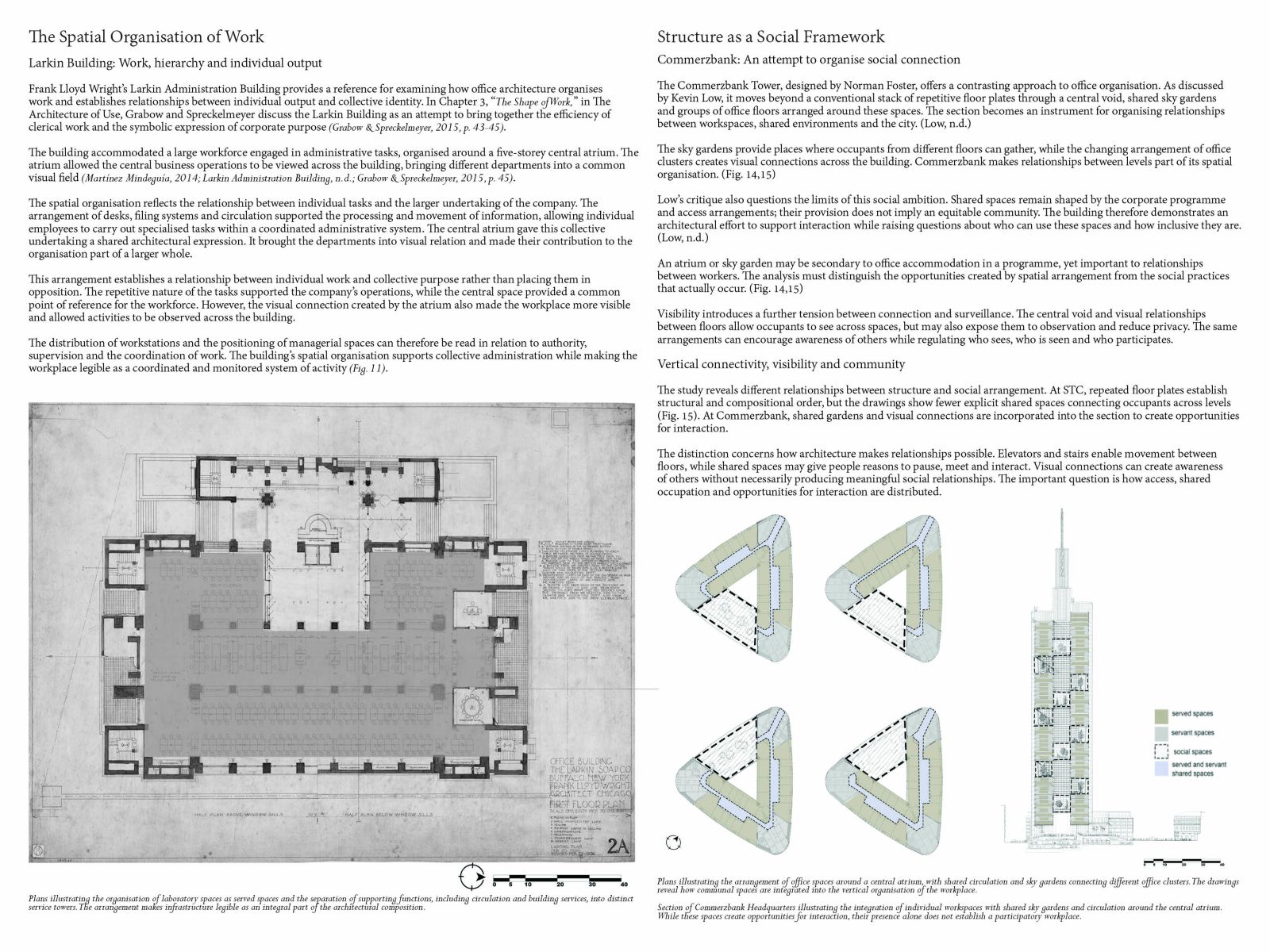
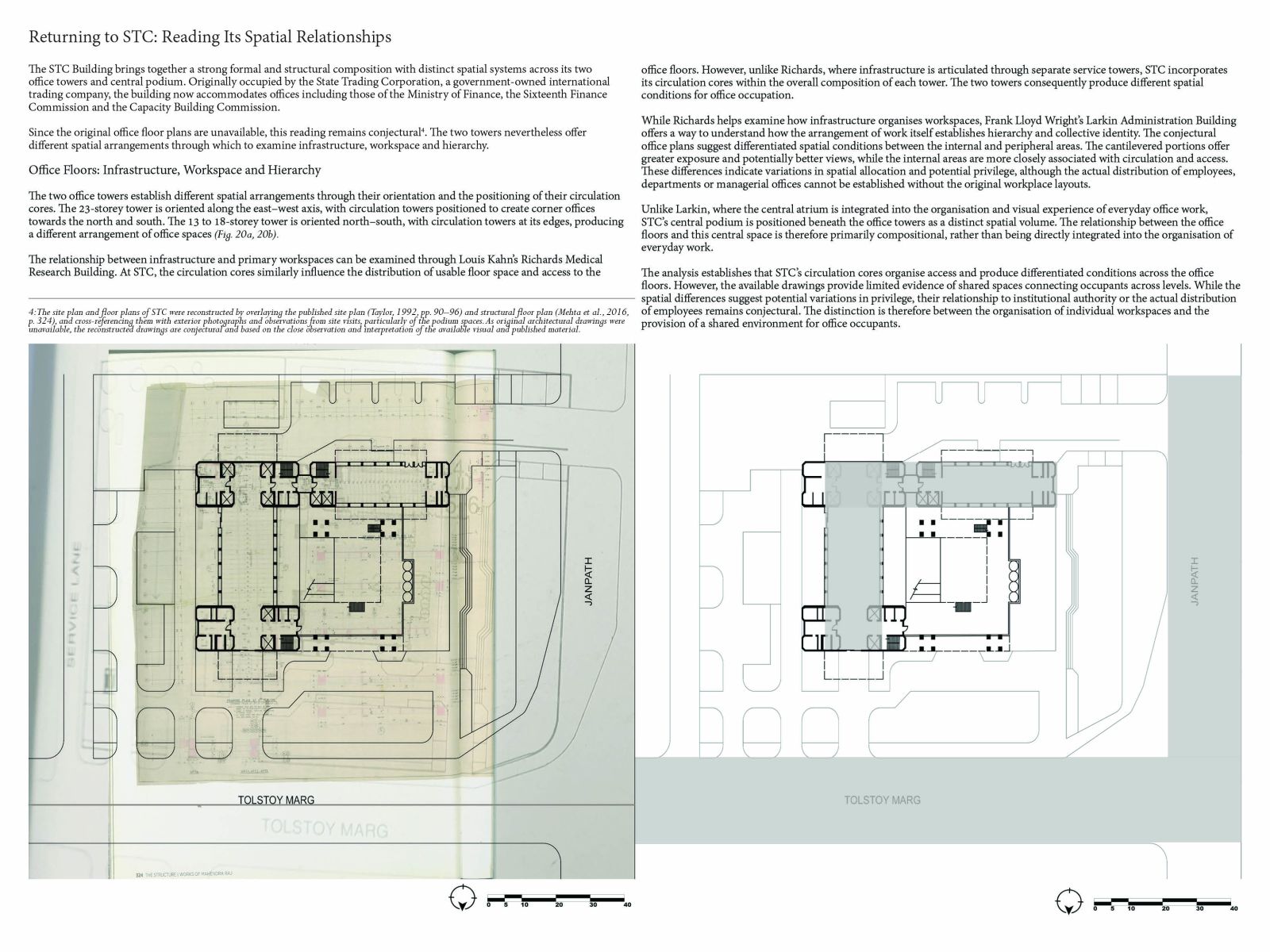
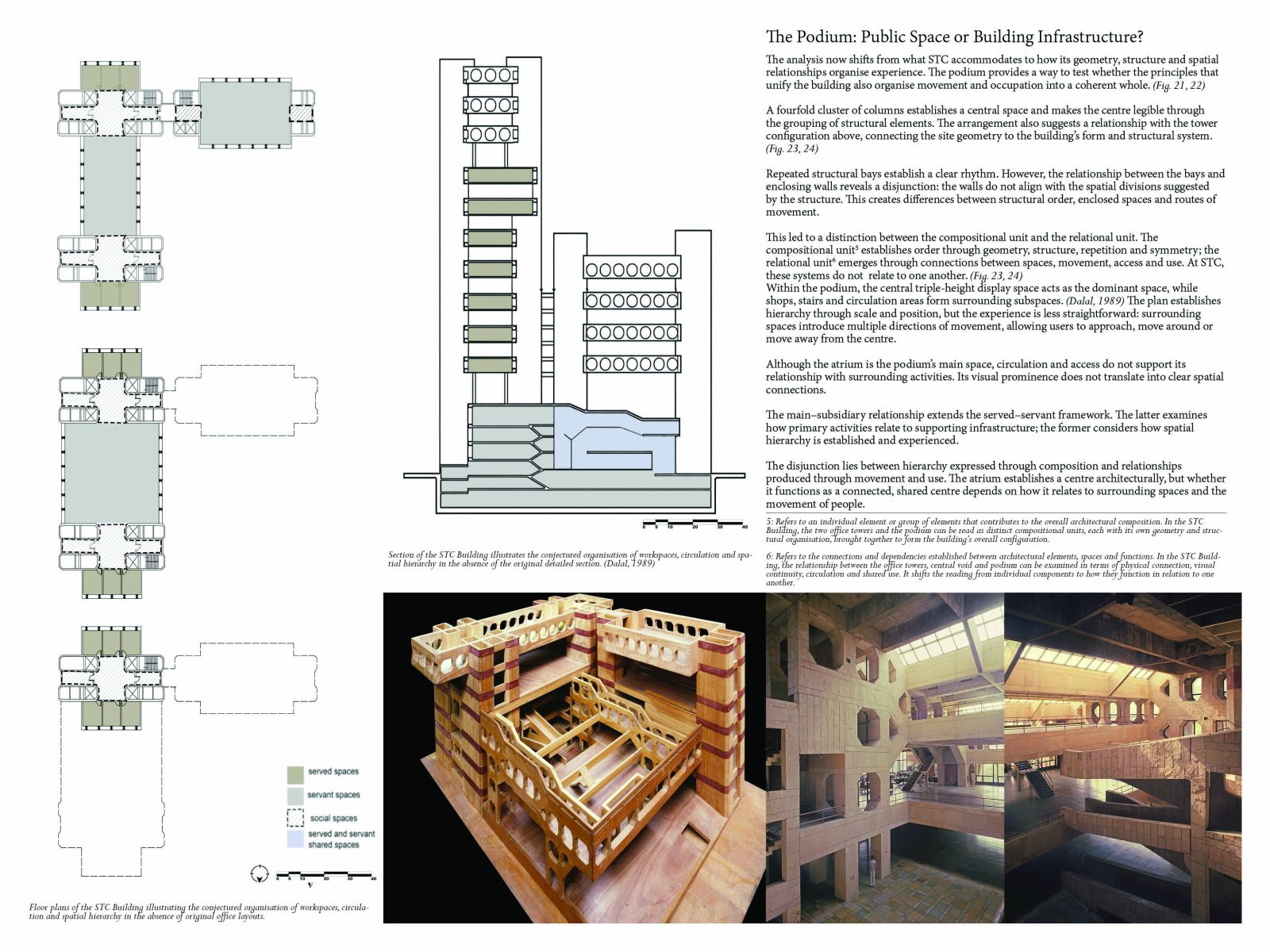
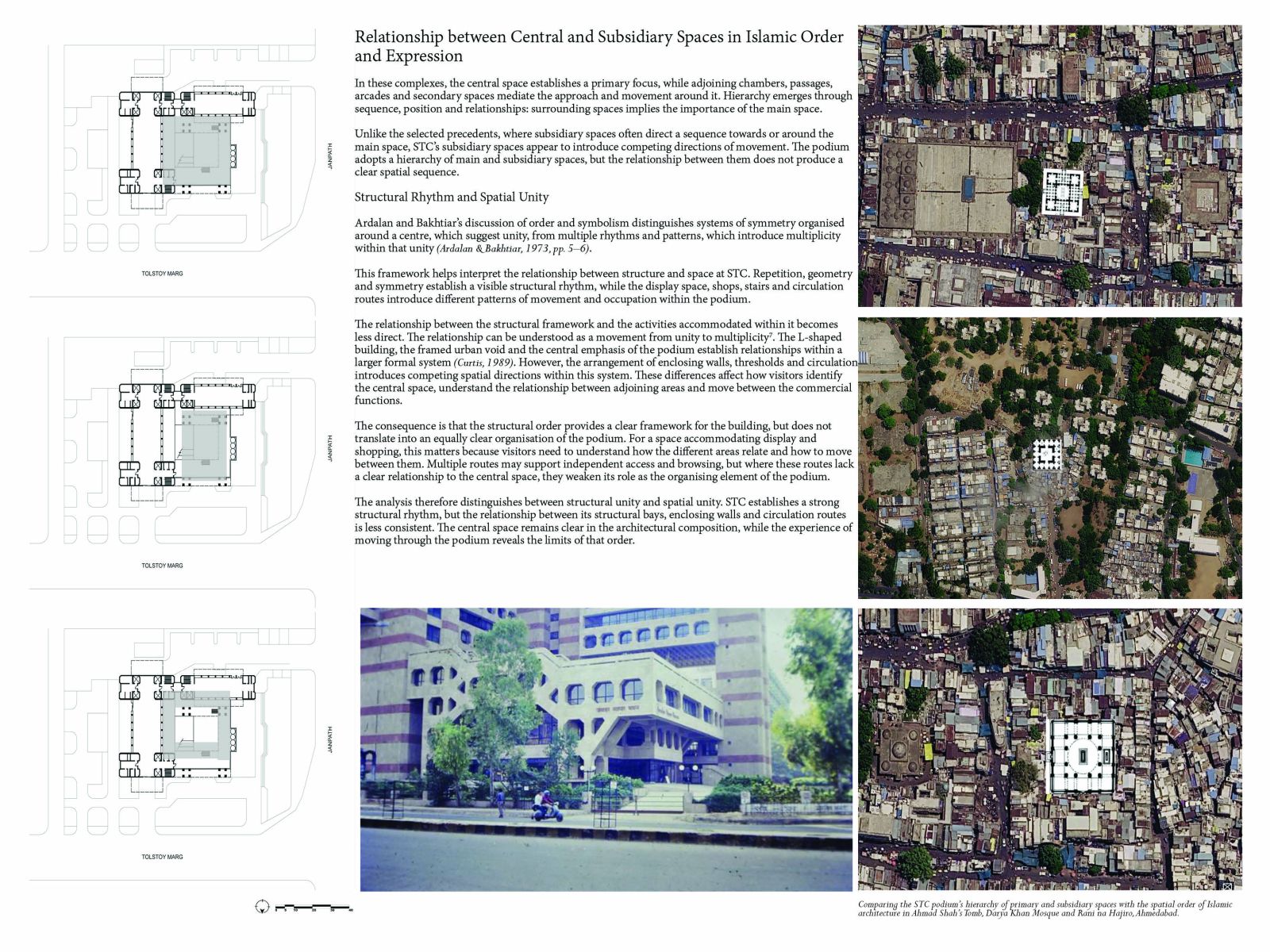
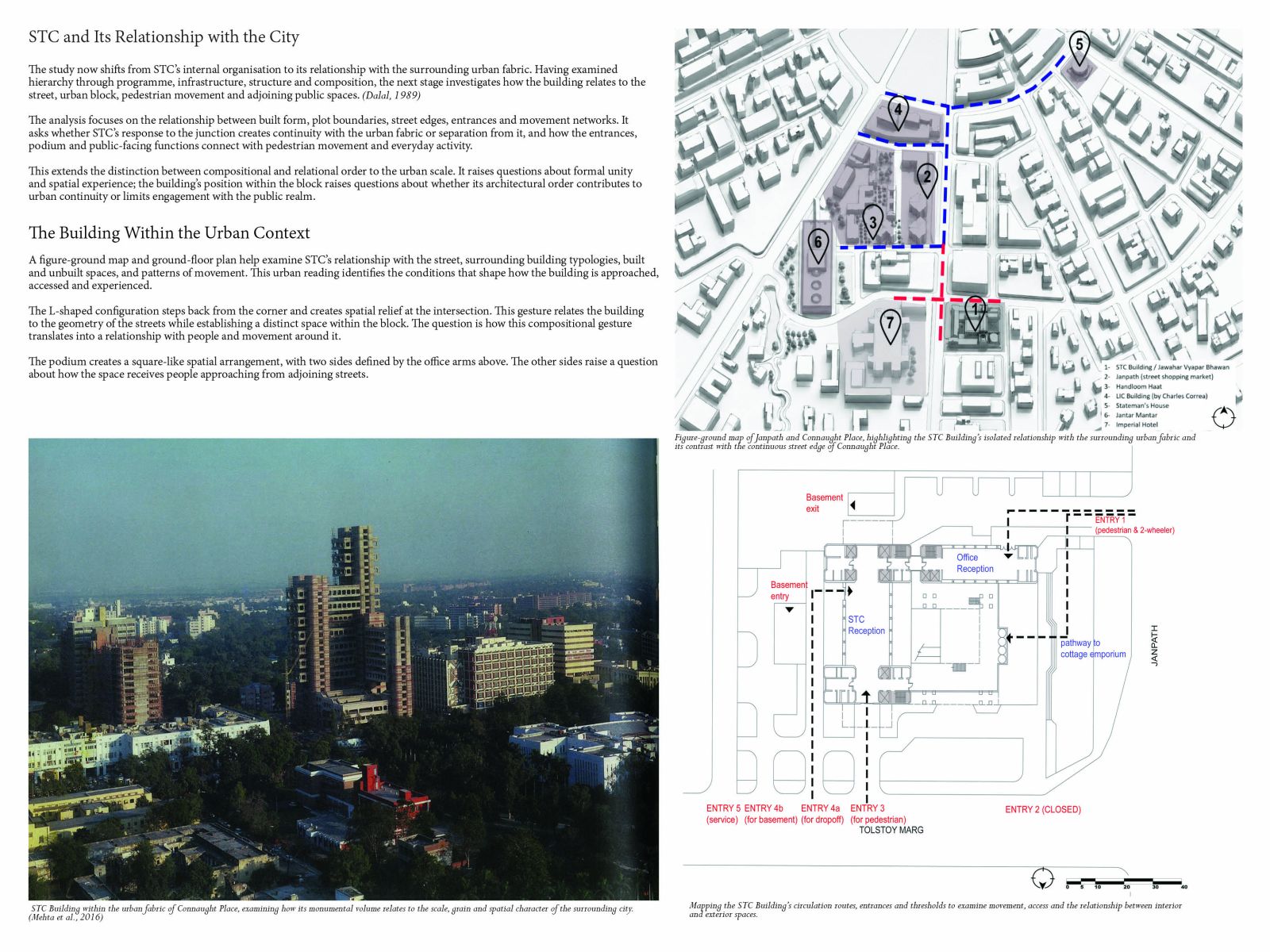
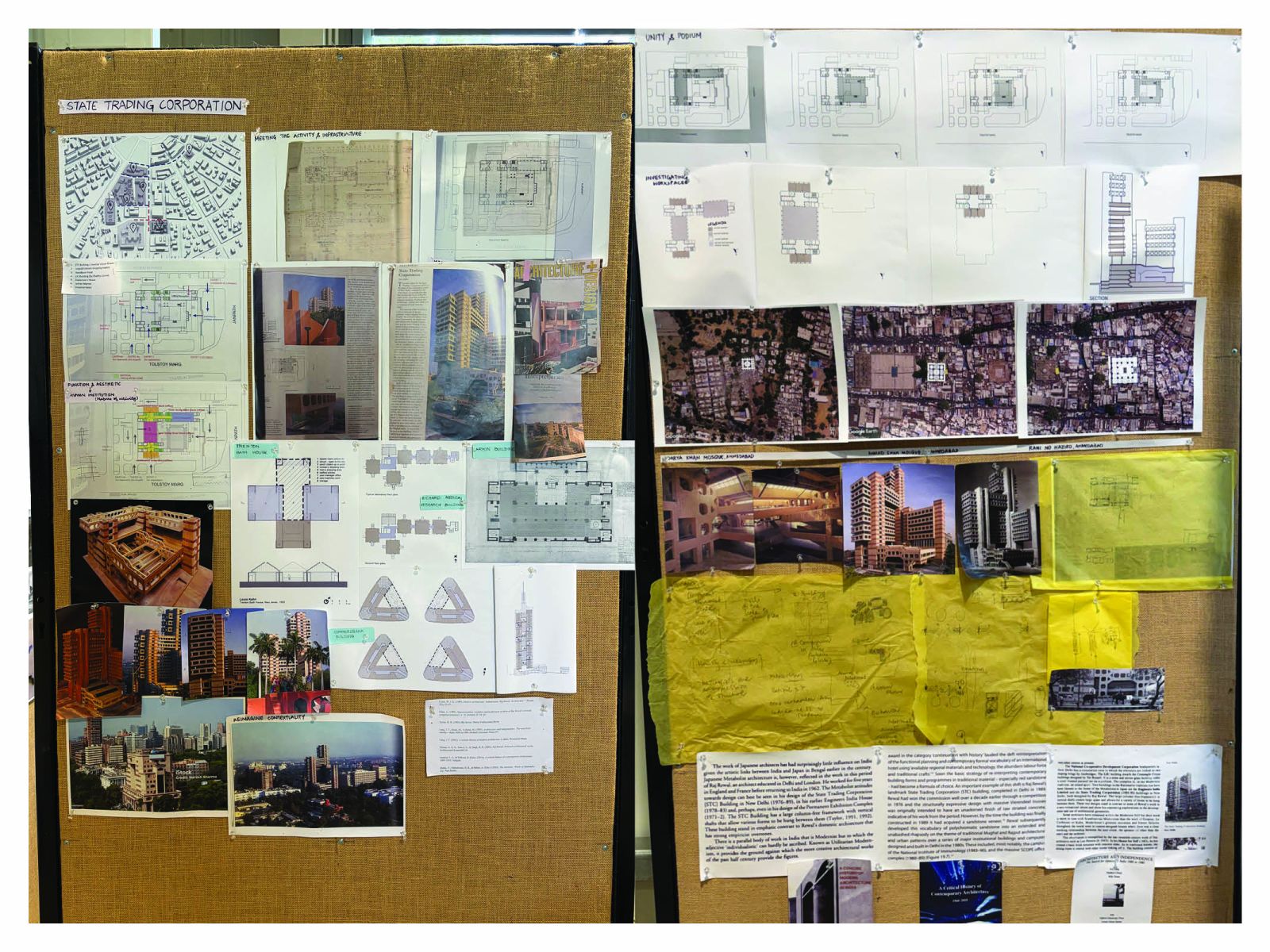
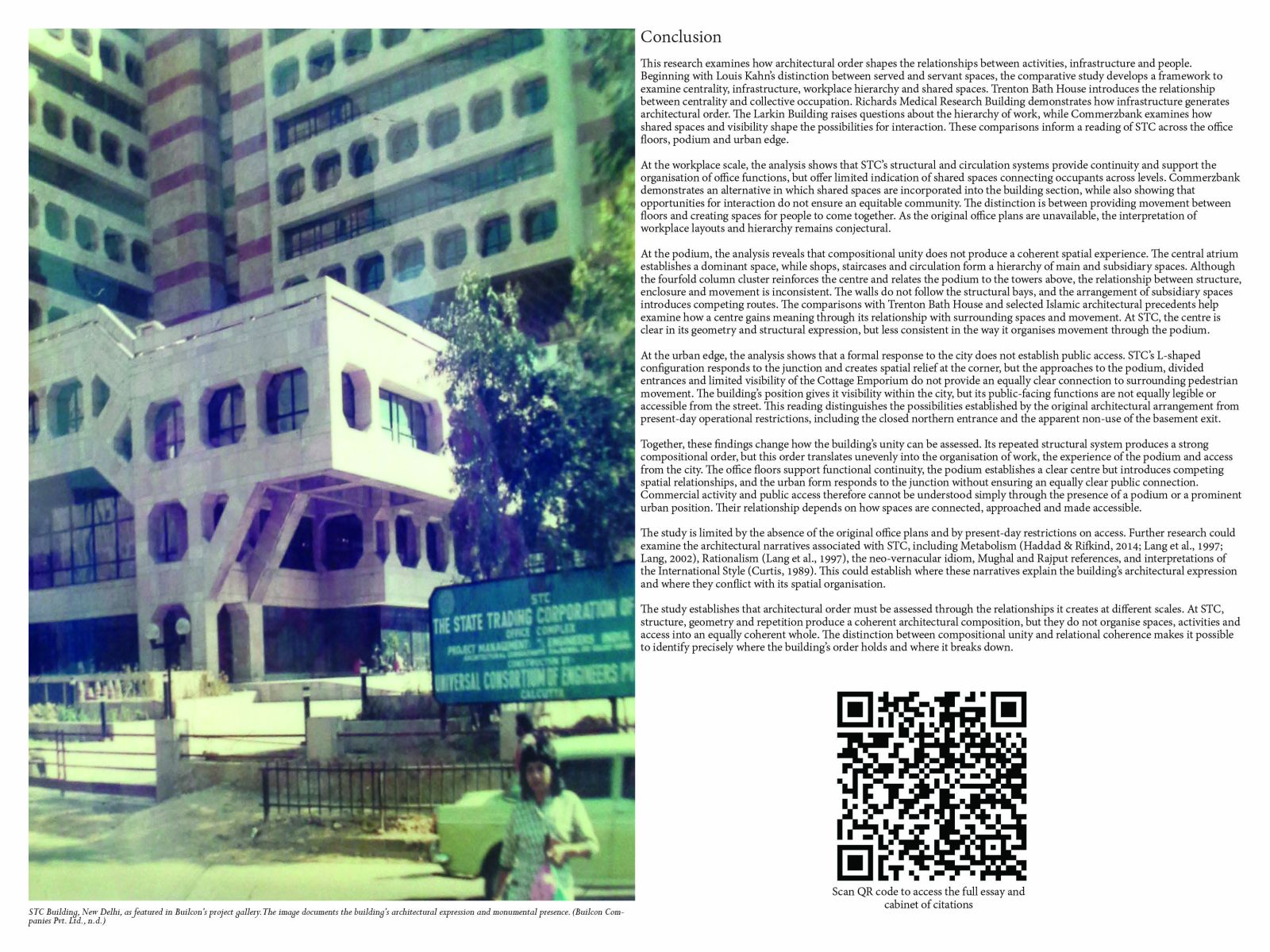
How does architectural order shape the organization of spaces, activities and human relationships? This study reads Raj Rewal’s State Trading Corporation Building through comparative analysis, using Kahn’s served–servant framework and precedents in workplace organization and shared space, tested across office floors, podium and urban edge. It finds that STC’s strong structural and geometric unity is not consistently matched by relational coherence: shared spaces, circulation and access do not consistently follow its form. The significance lies in distinguishing compositional from relational order, showing that architectural unity and experiential coherence are not the same, and that order matters in how it enables interaction.
View Additional Work