Your browser is out-of-date!
For a richer surfing experience on our website, please update your browser. Update my browser now!
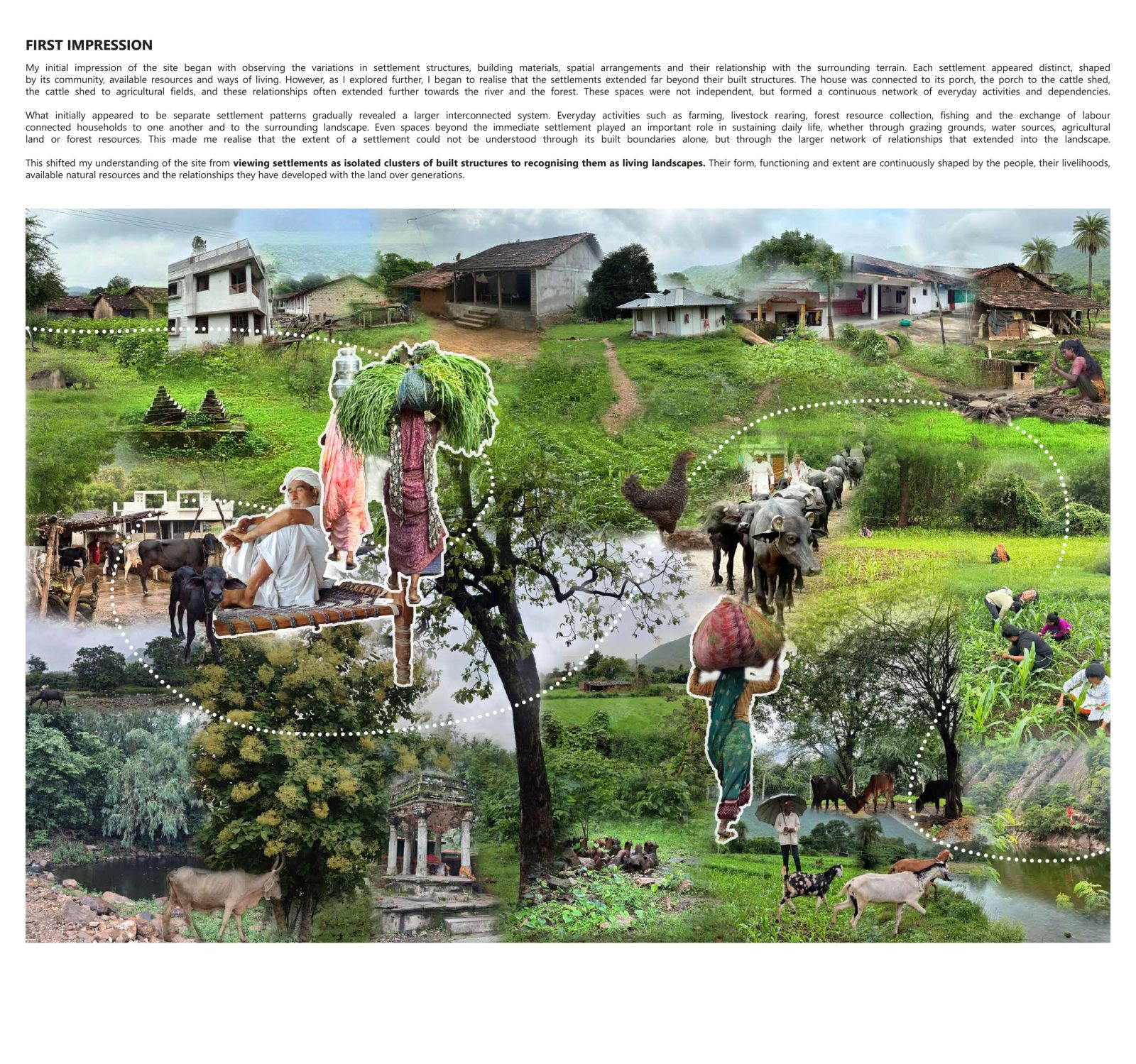
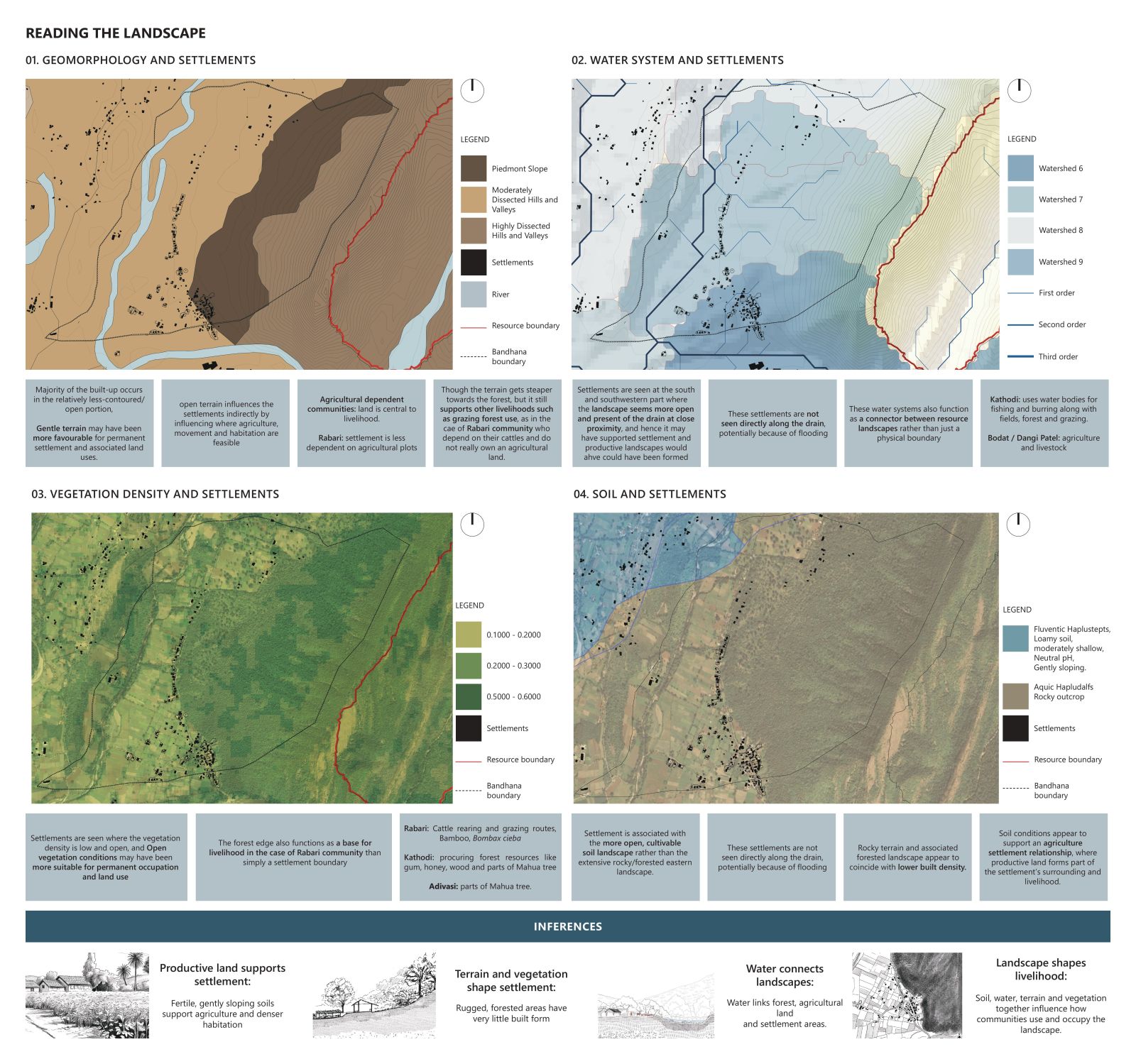
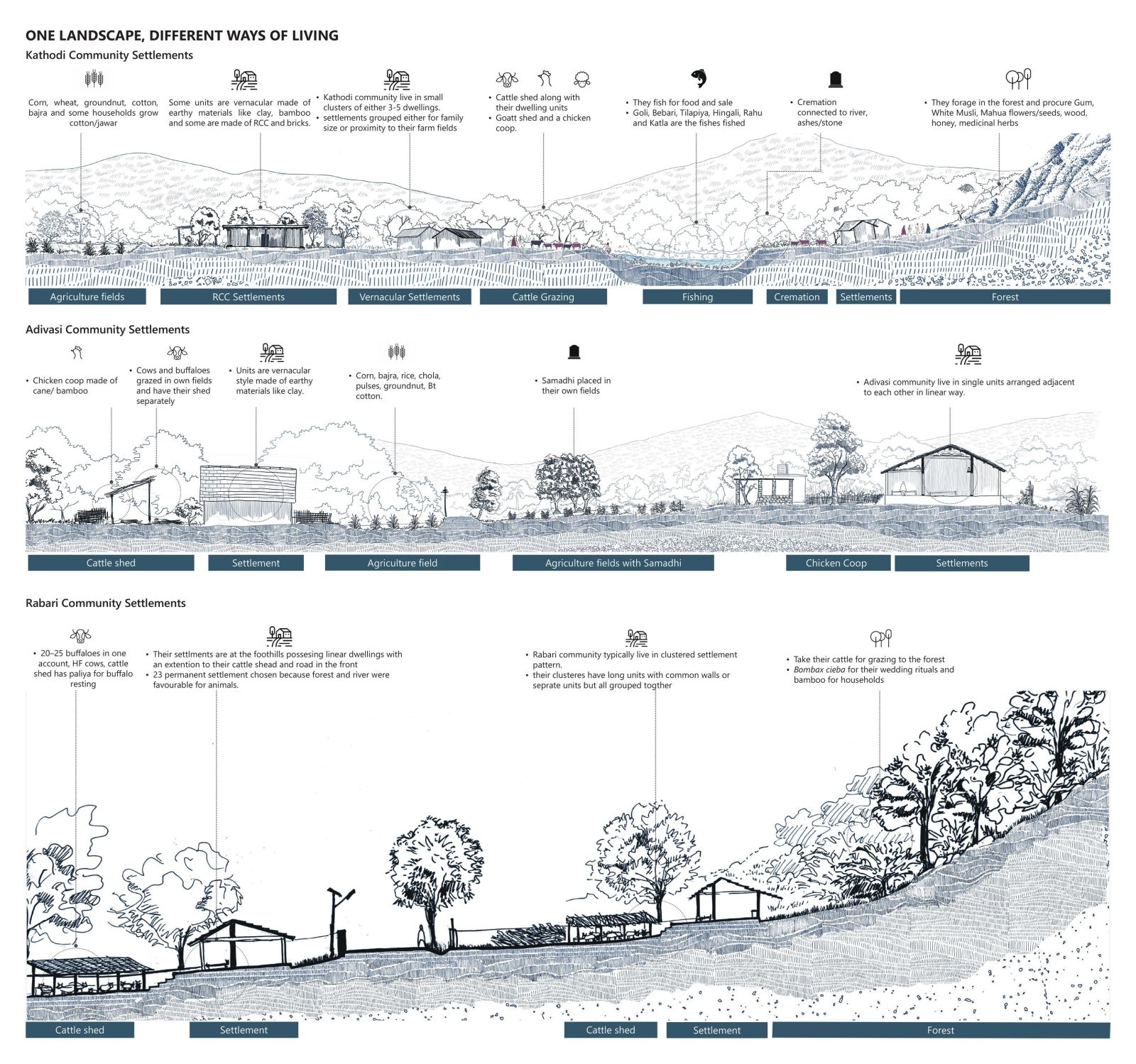
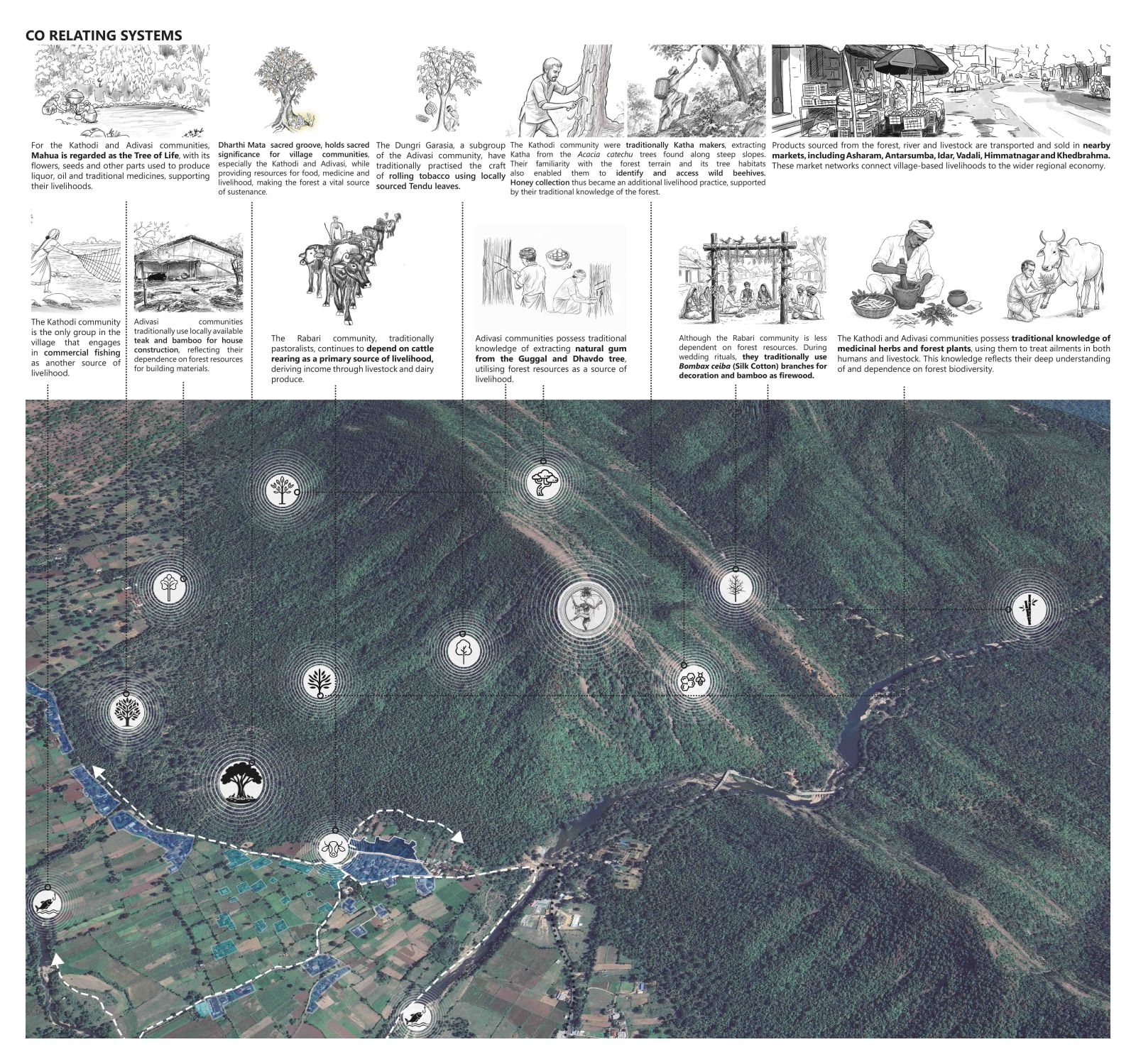
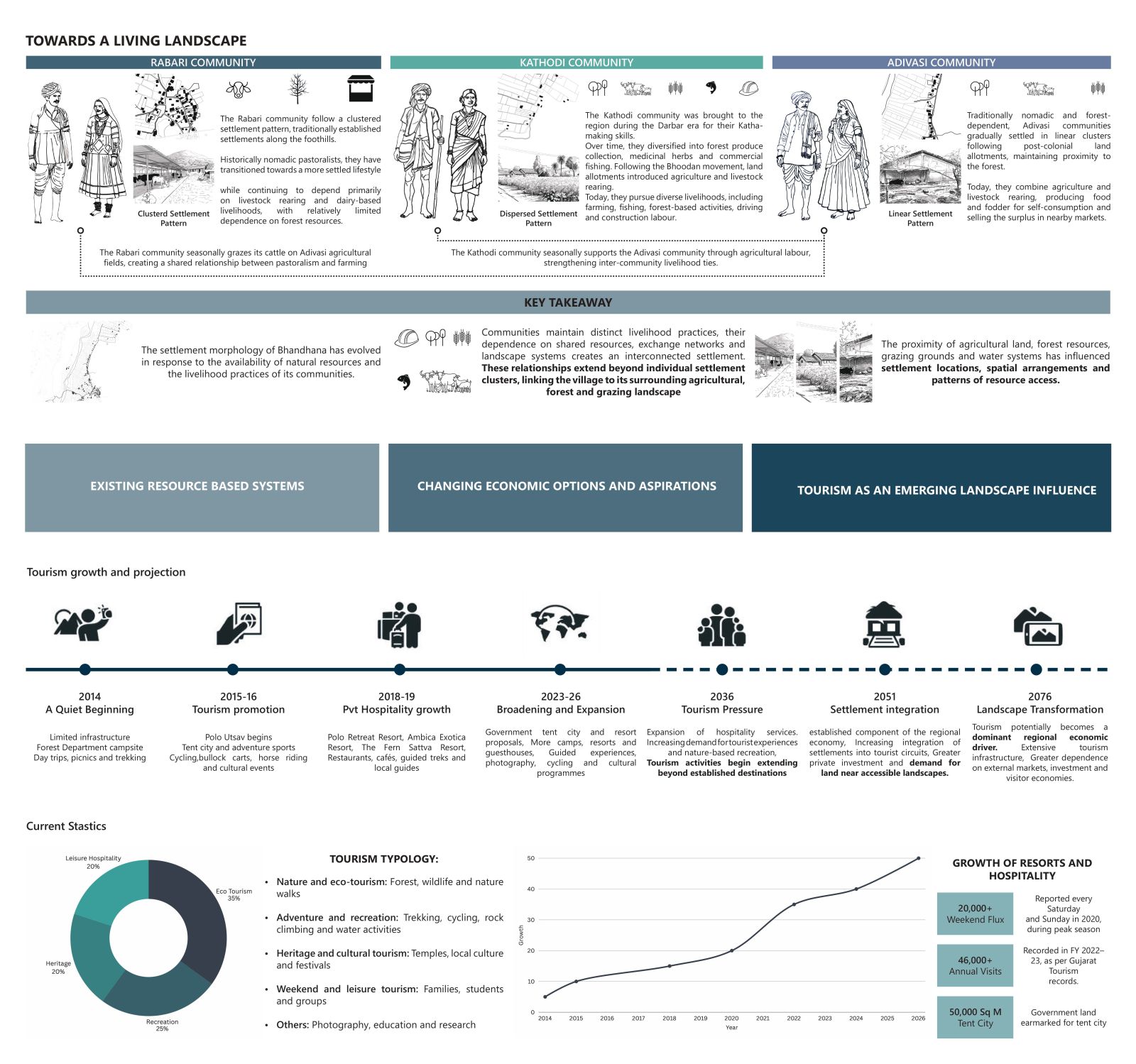
Understanding settlement patterns revealed that a settlement is not a confined setting but is shaped by various factors and their relationships with the landscape, people and livelihood. These settlements sometimes extend to a porch, cattle shed, an agricultural field, and sometimes even to the river and the forest. Communities are not isolated from one another, but are connected through everyday exchanges of labour, resources, goods, knowledge and services. These relationships extend across households, settlements and surrounding landscapes, creating networks of mutual dependence. Therefore, settlement morphology can be understood not only through its built forms, roads and physical boundaries, but also through the everyday movements, exchanges and relationships that sustain the settlement and connect it to its wider landscape.
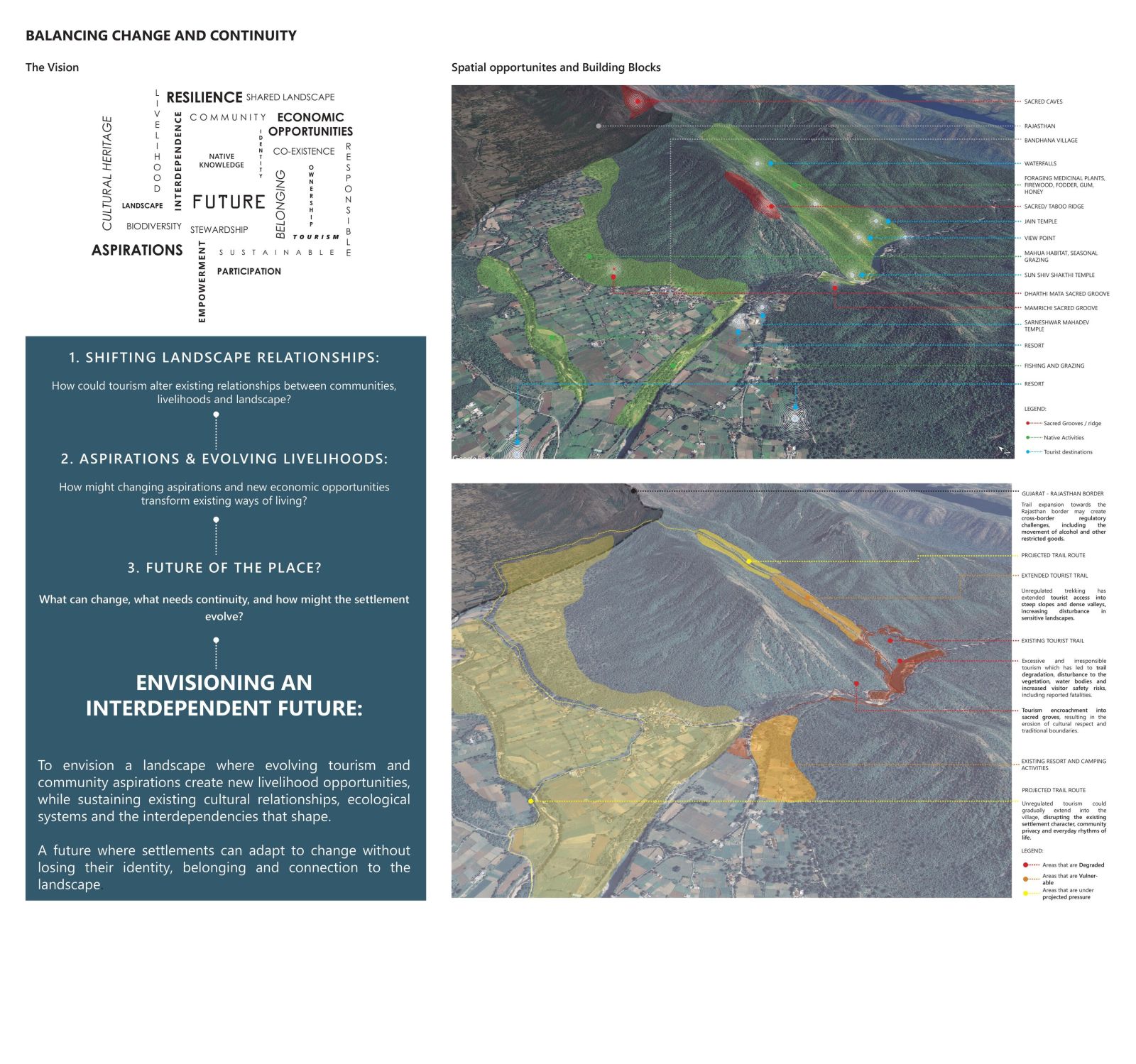
As these relationships evolve, so does the landscape that supports them. Practices closely connected to the forest, agriculture, crops and livestock are gradually changing as communities respond to new aspirations, infrastructure, tourism and economic opportunities.
Tourism, once primarily a day-trip activity, has gained greater significance over the years and expanded to include heritage, cultural, recreational and ecologically sensitive experiences, bringing new opportunities while gradually reshaping the existing landscape and its relationships.
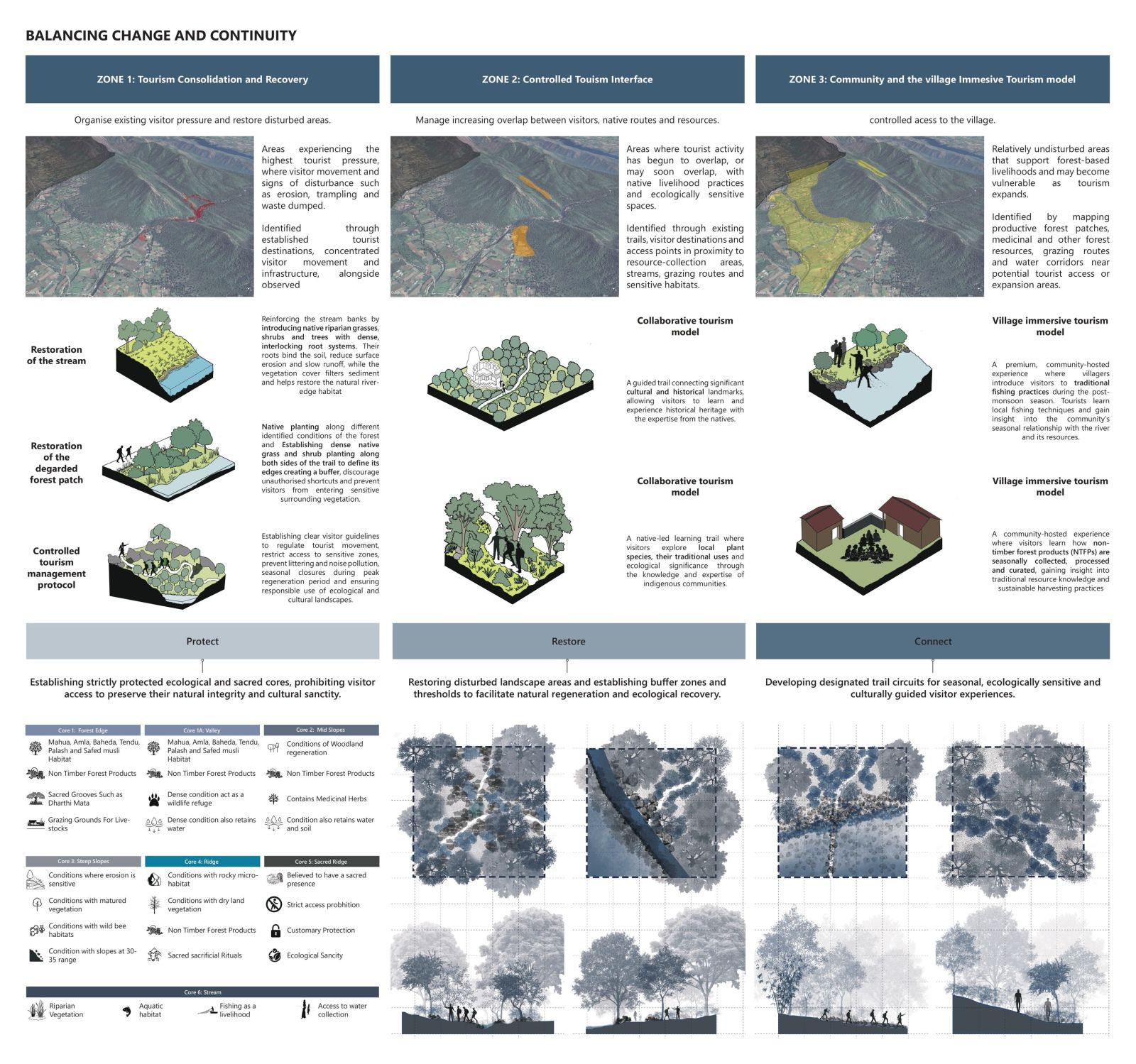
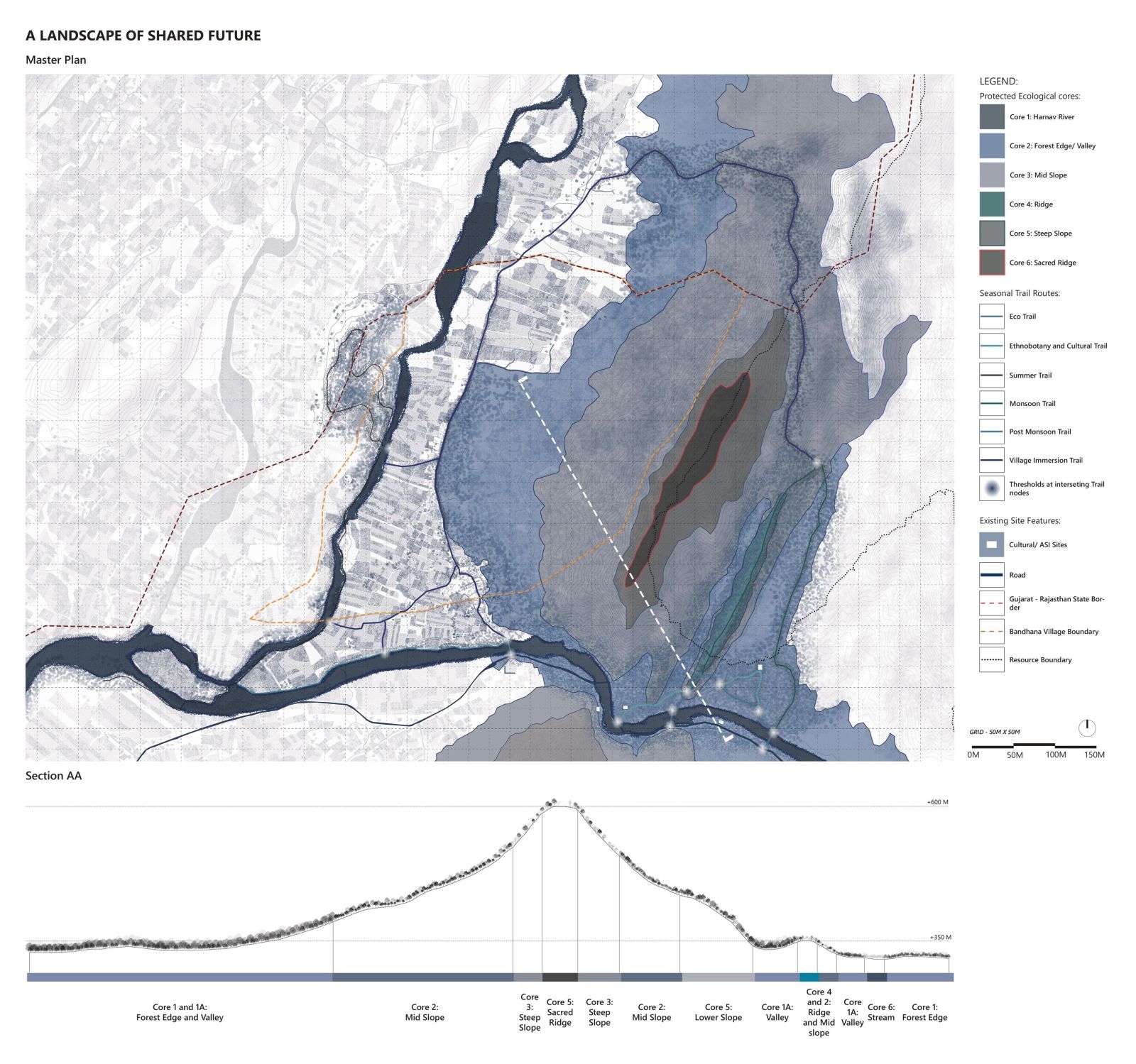
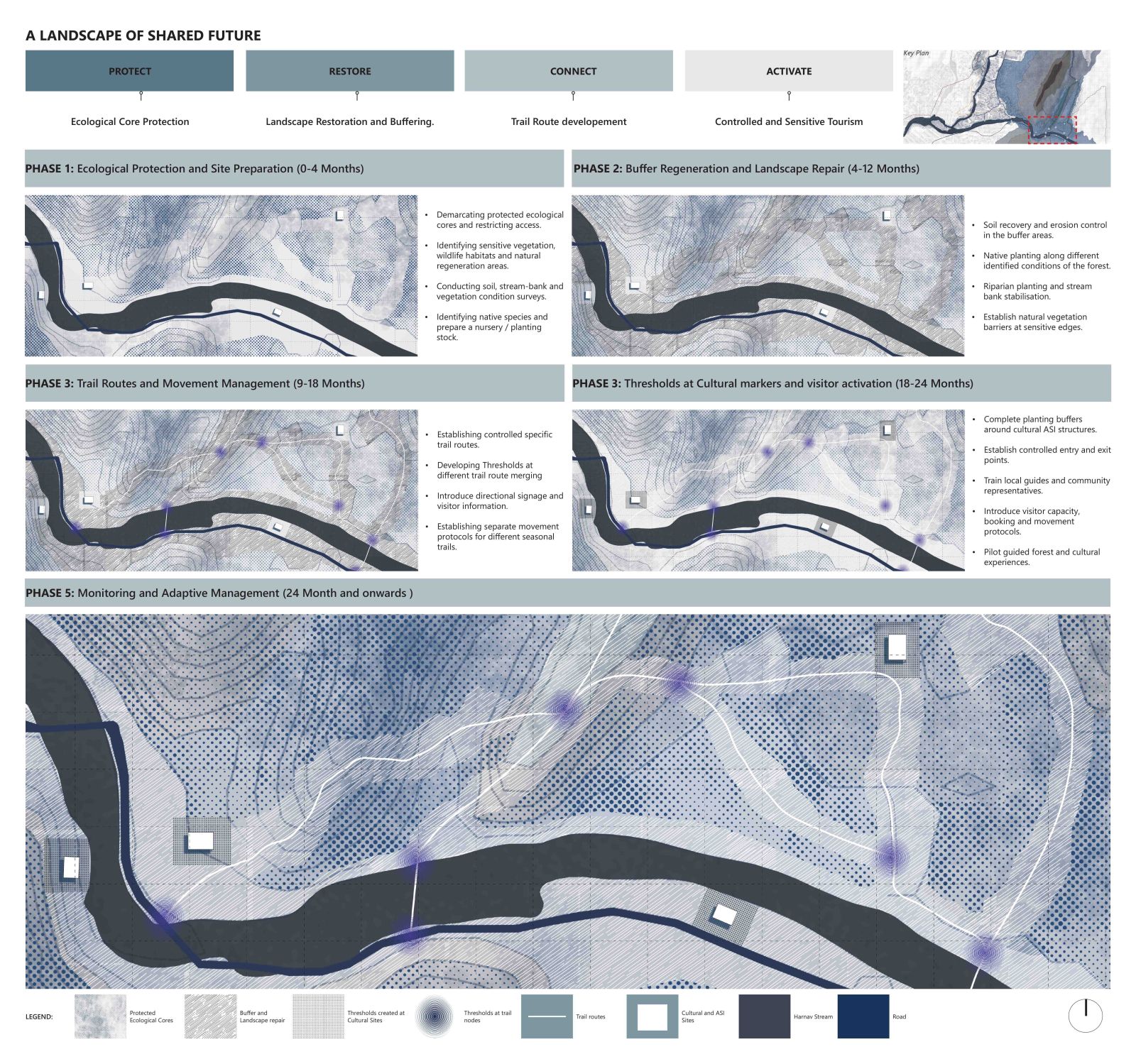
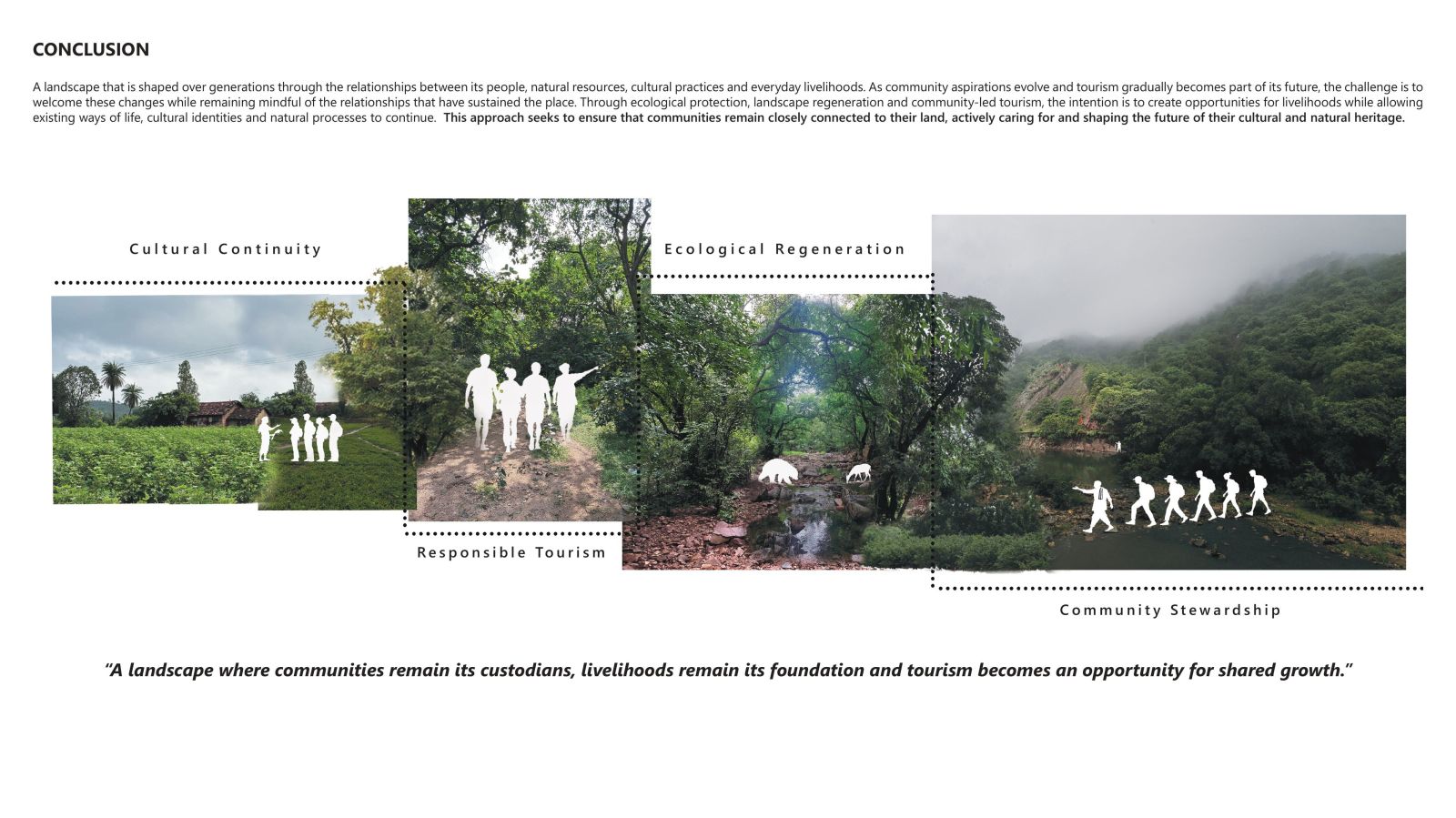
The changing aspirations of communities and the growing presence of tourism can therefore be seen not only as forces of change, but also as opportunities to preserve, strengthen and enhance the existing landscape. Programmes built upon agricultural practices, pastoral routes, forest knowledge, local materials, medicinal plants, village commons, cultural landscapes and existing movement networks. Tourism can therefore become a means of supporting these systems rather than replacing them, ensuring that new aspirations and tourism contribute to the landscape without weakening community ownership, cultural continuity or the sense of belonging.