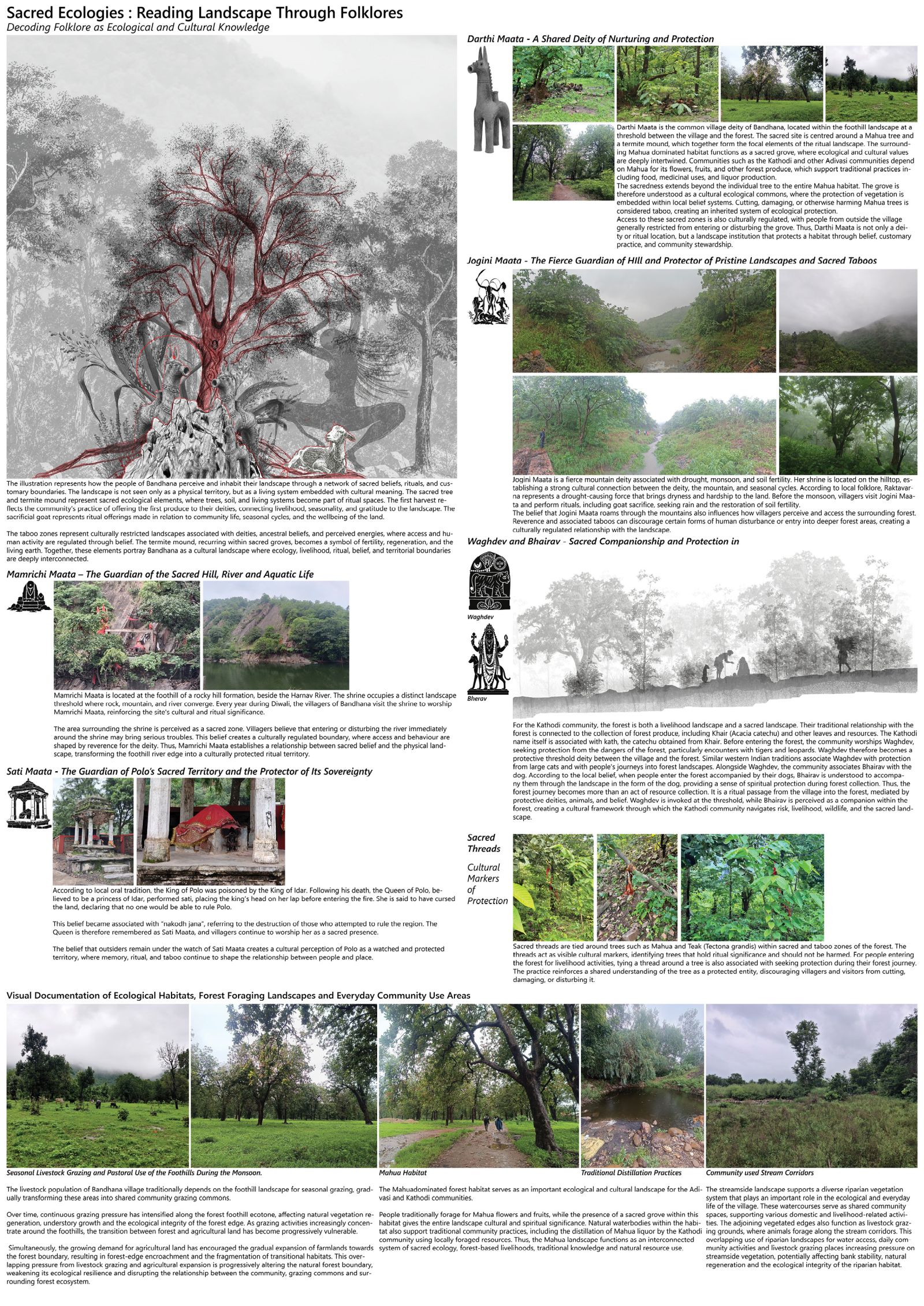
Reading the Landscape through Ecological and Cultural Knowledge, this study interprets local folklores, sacred beliefs and customary practices as repositories of ecological and cultural knowledge embedded within the landscape of Bandhana. It examines how deities, rituals, sacred trees, water sources and taboo zones are interconnected with natural systems and community practices. By tracing these relationships, the study reveals how traditional beliefs influence the perception, use and protection of forests, streams and other landscape elements. Folklore is therefore understood not merely as intangible cultural heritage, but as a lens for identifying indigenous conservation practices, ecological relationships and opportunities for landscape regeneration.
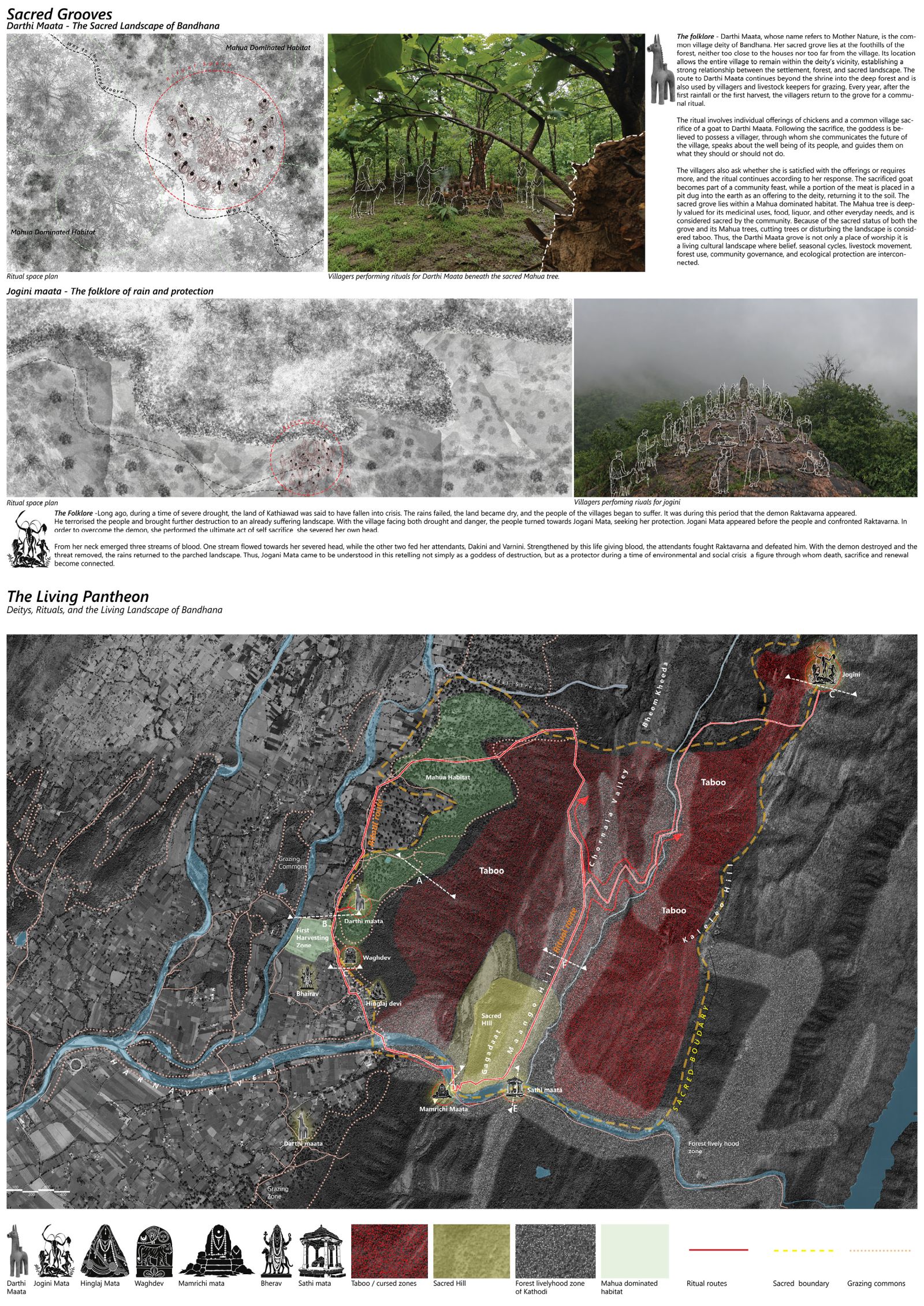
This study decodes the pantheon of local deities and folklores of Bandhana, examining their individual roles, relationships and collective influence on the cultural landscape. Through a pantheon map, it illustrates how deities, sacred sites, rituals, natural elements and community practices are interconnected, revealing the network of beliefs that governs people's relationship with the forest, water, vegetation and land. It explores how these sacred associations shape customary practices, establish ecological boundaries and influence the protection and use of natural resources, uncovering the cultural and ecological knowledge embedded within Bandhana's living landscape.
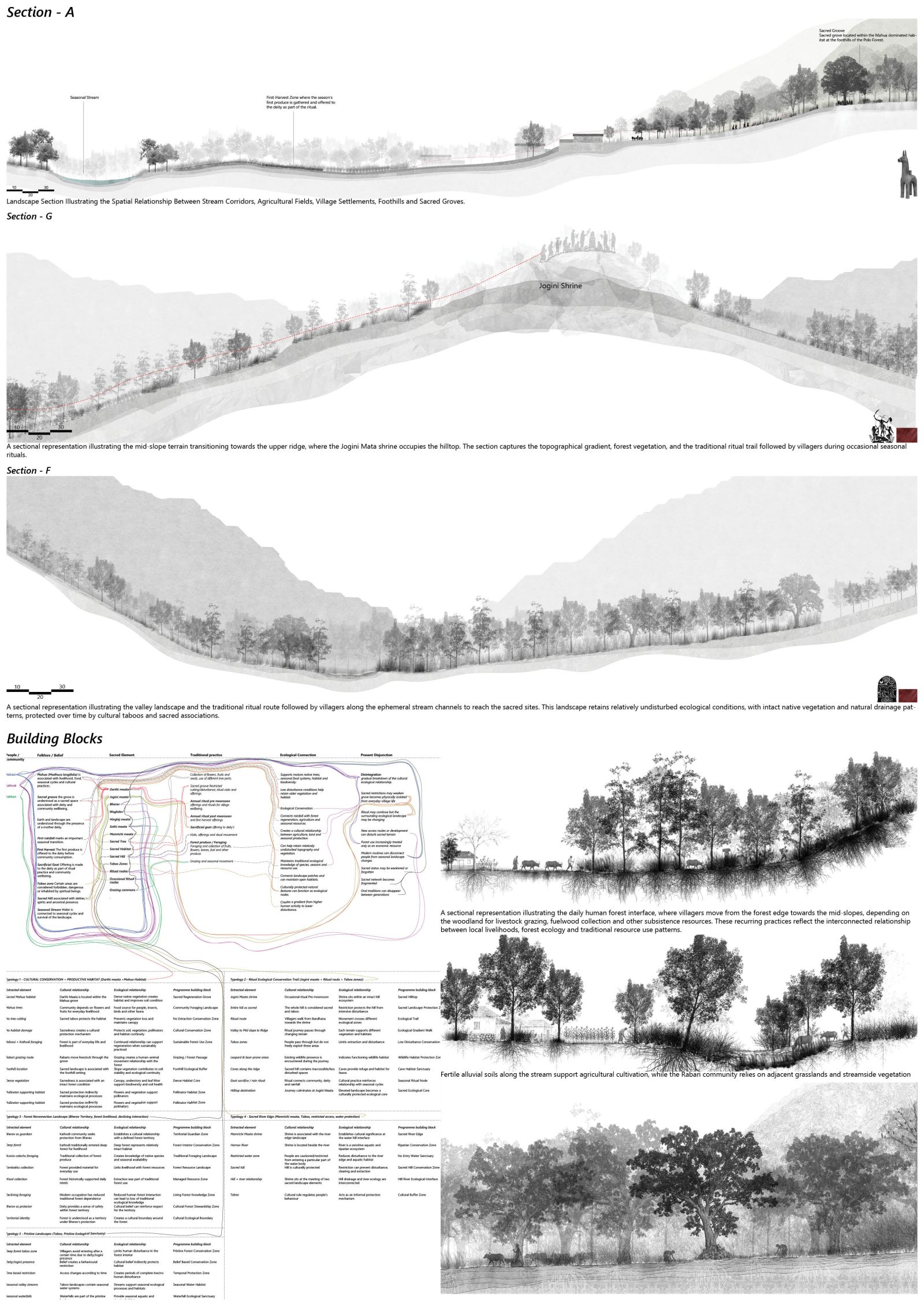
the growing disconnections between Bandhana's traditional belief systems, community practices and the ecological landscapes they once helped protect. It examines how sacred groves, ritual pathways, water bodies and culturally protected habitats are becoming disconnected from their surrounding forest systems due to agricultural encroachment, grazing pressure and changing land use practices. These disjunctions reveal a gap between the cultural significance attributed to nature and its present ecological condition, highlighting opportunities to reconnect sacred beliefs with landscape conservation and community led ecological regeneration.
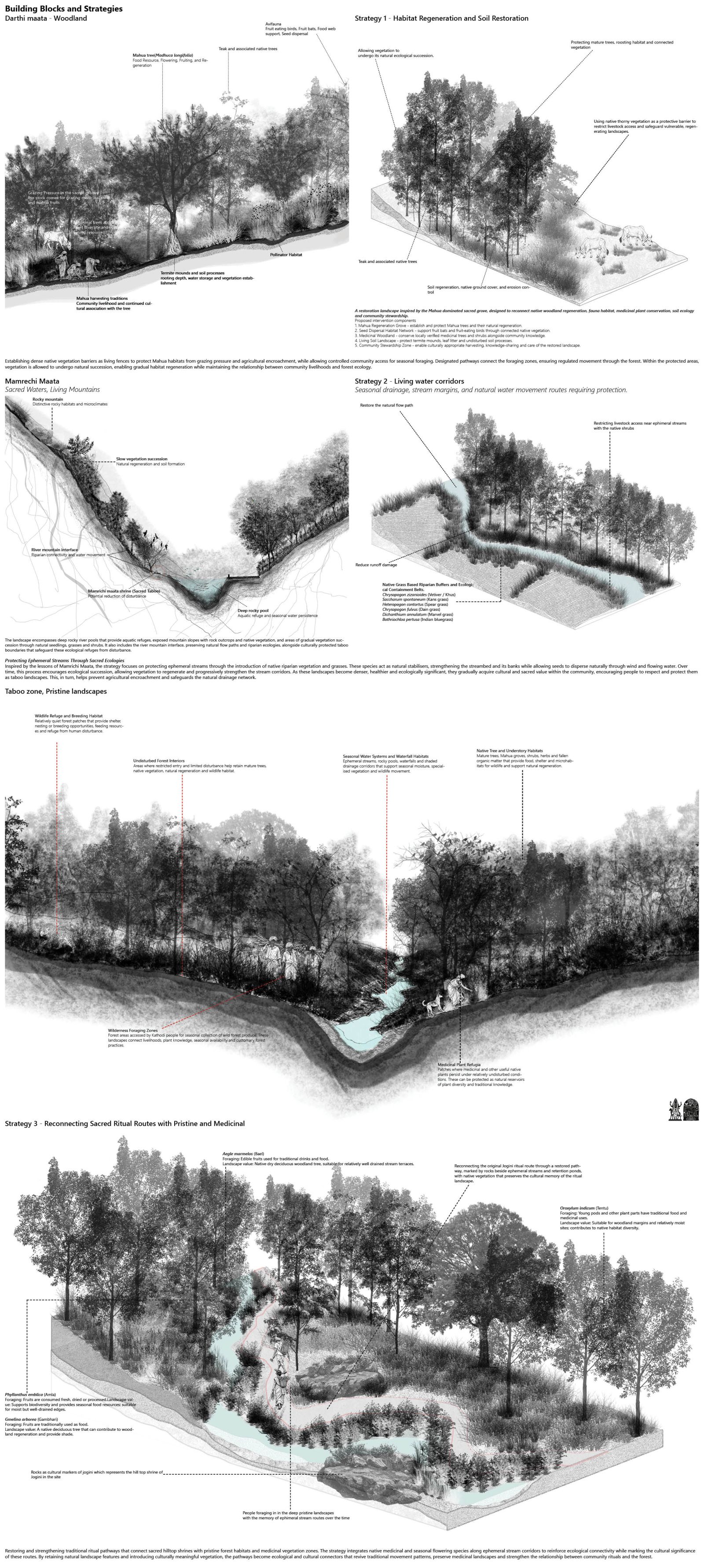
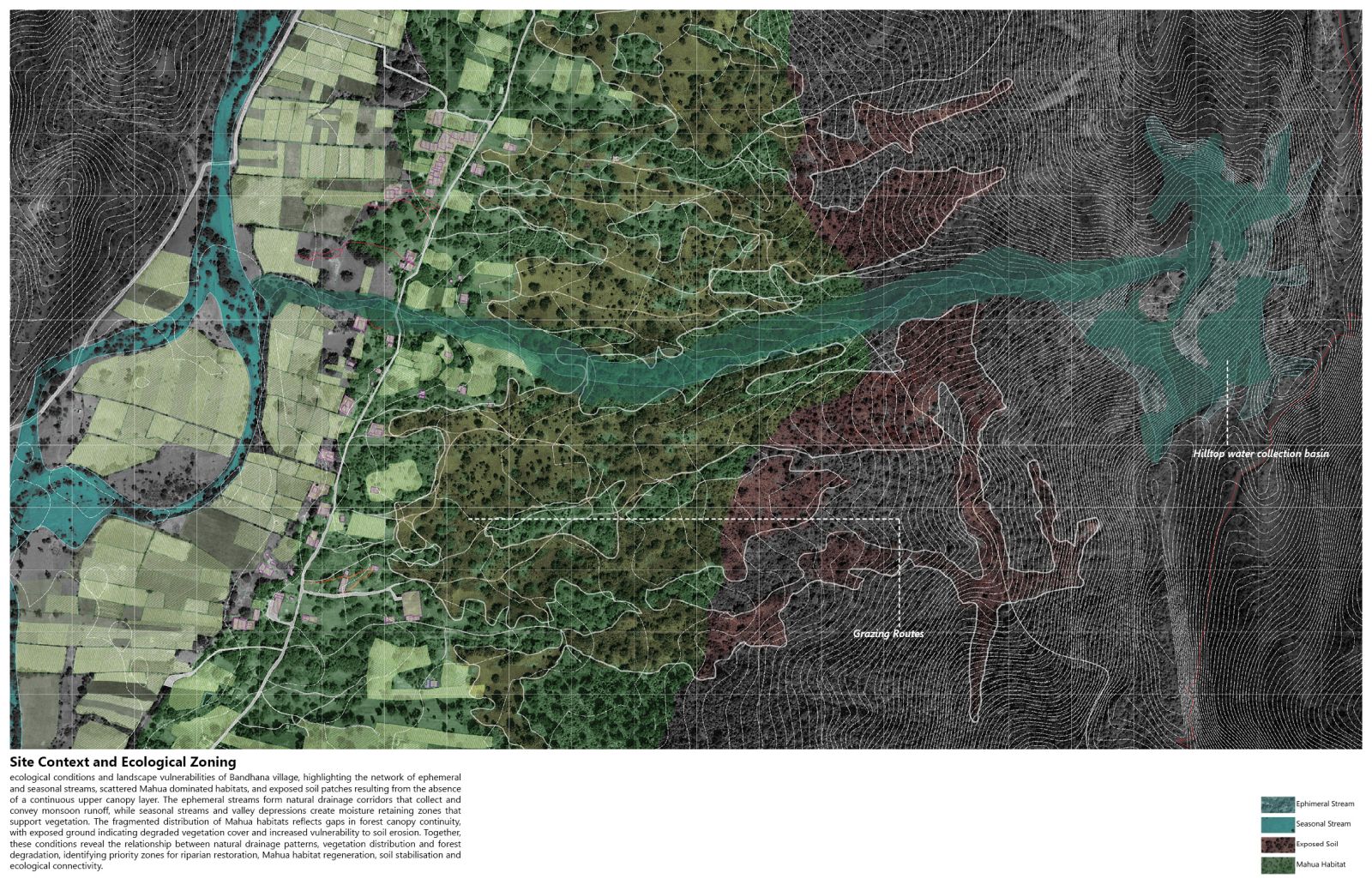
Translating Folklore into Ecological and Spatial Components, this study extracts tangible landscape elements embedded within Bandhana's folklores, sacred beliefs and customary practices. It identifies significant ecological and cultural components such as Mahua habitats, sacred trees, termite mounds, ephemeral streams, perennial water sources, ritual pathways, forest clearings and taboo zones. By interpreting these elements as spatial expressions of indigenous knowledge, the study establishes a relationship between cultural narratives and physical landscape systems. These extracted elements become the foundation for identifying vulnerable ecological areas, understanding existing conservation practices and developing landscape interventions that reconnect cultural significance with ecological restoration.
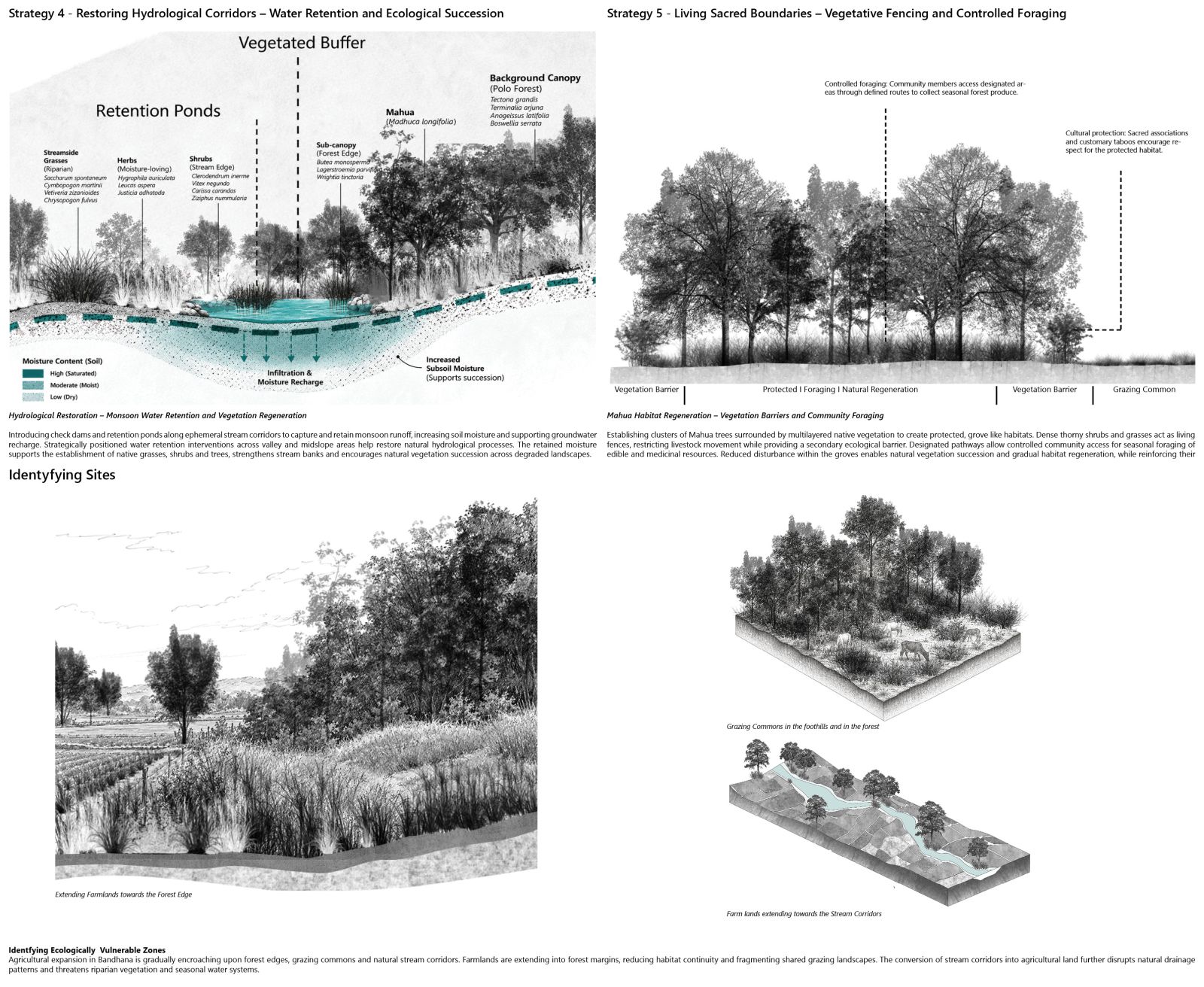
Hydrological Retention and Controlled Grazing
Introducing check dams and retention ponds along ephemeral stream corridors to capture monsoon runoff, enhance soil moisture and support groundwater recharge. Simultaneously, establishing vegetative barriers using native thorny shrubs and grasses regulates livestock movement and protects vulnerable Mahua habitats. Together, these interventions restore hydrological processes, reduce grazing pressure and create favourable conditions for native vegetation regeneration and natural ecological succession.
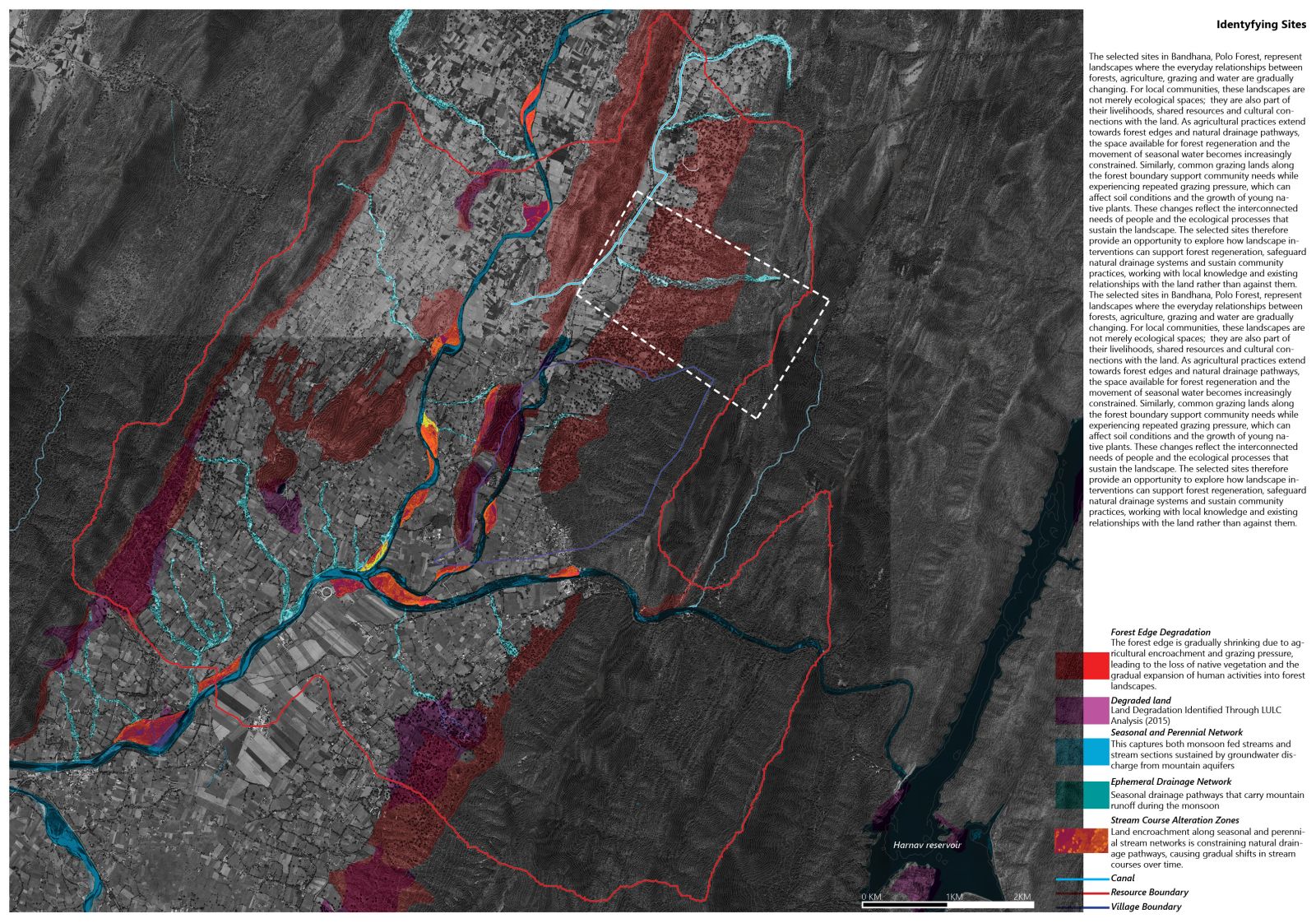
Mapping Ecological Vulnerability and Landscape Intersections
Identifying intervention sites through the spatial analysis of ecological vulnerabilities, hydrological networks, forest edges and existing land use patterns. Areas experiencing agricultural encroachment, grazing pressure, degraded drainage corridors and fragmented Mahua habitats are prioritised based on their ecological sensitivity and potential for landscape restoration.
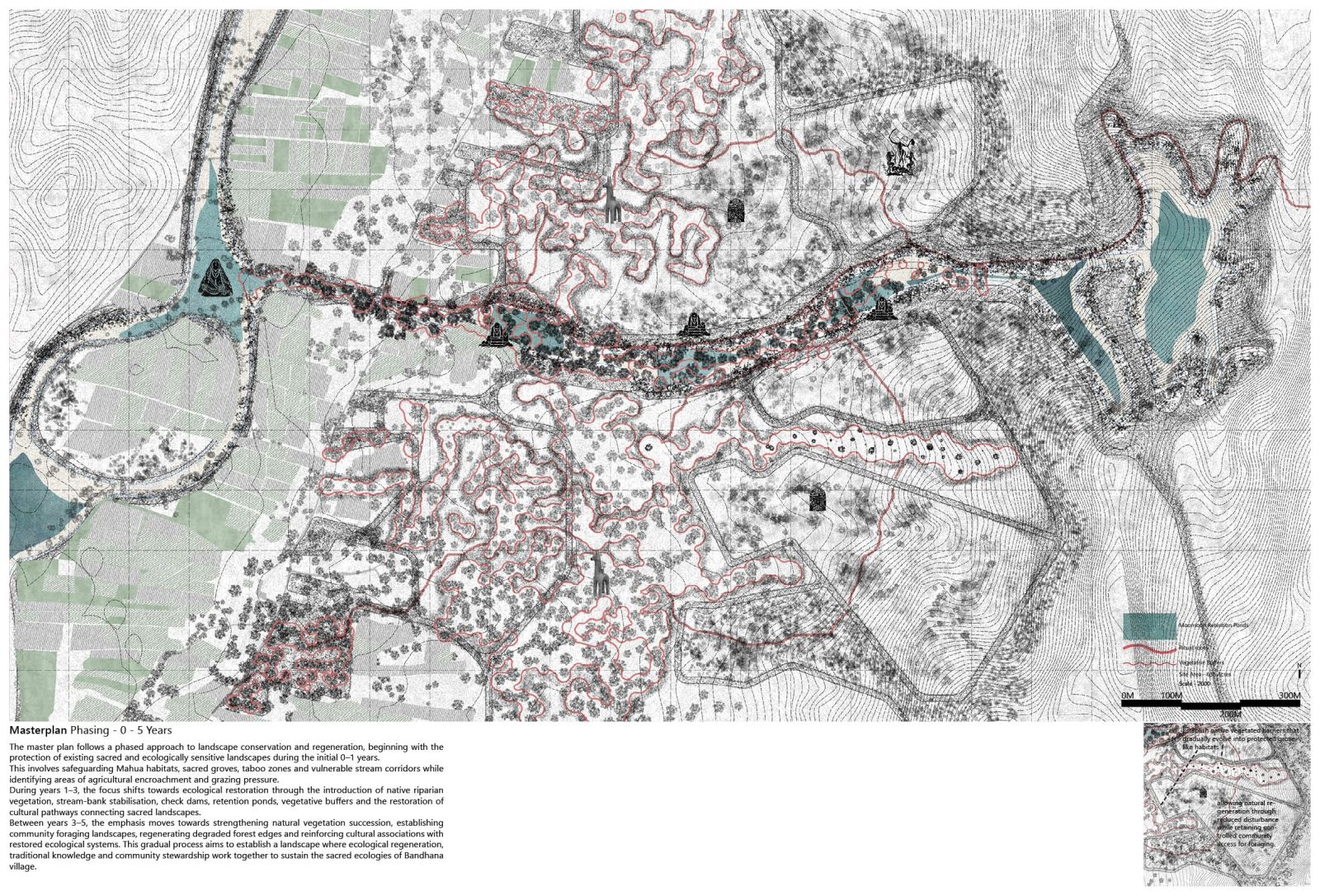
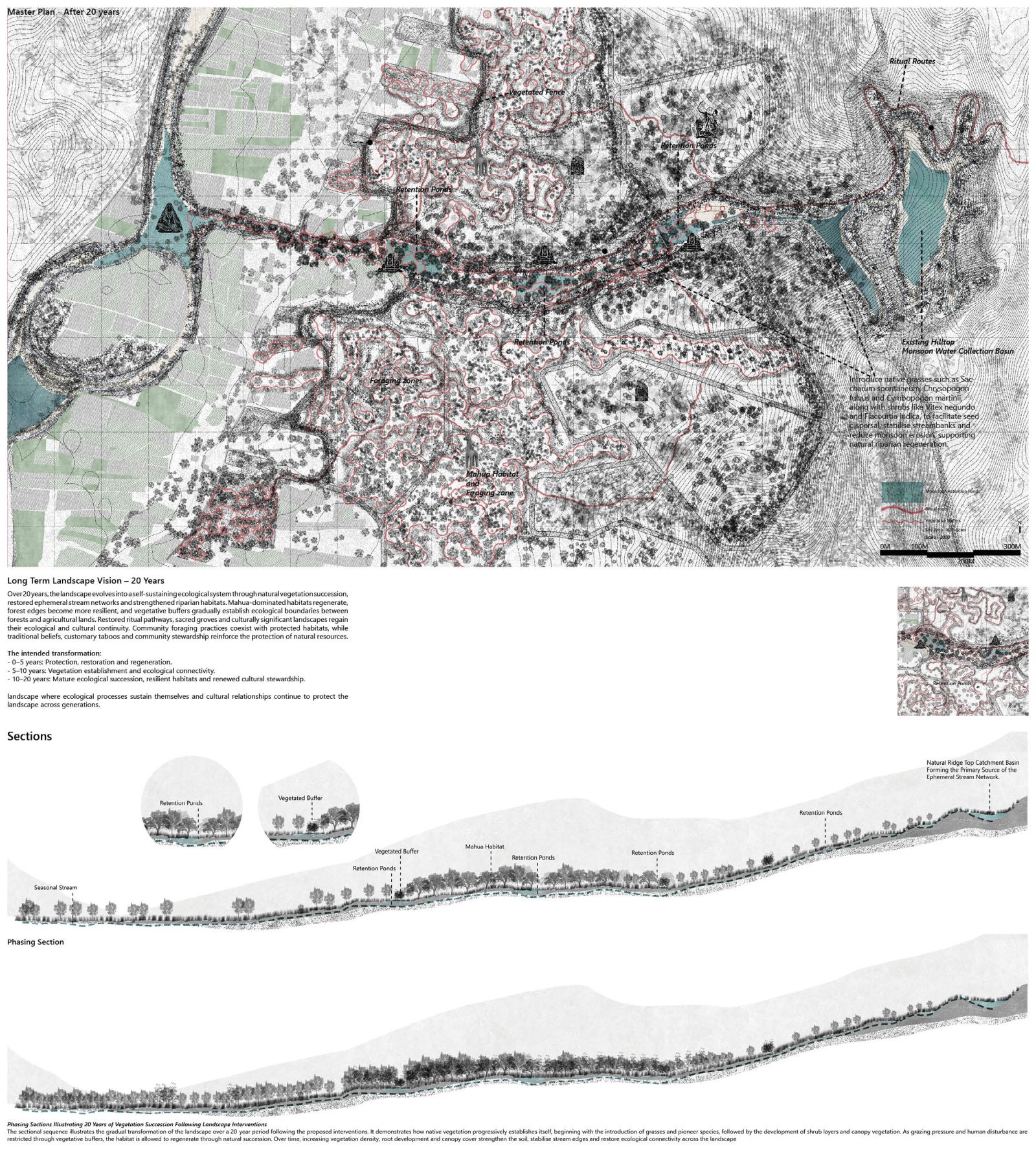
Landscape Masterplan integrating Cultural Landscapes and Ecological Restoration Translating the identified cultural and ecological disjunctions into a comprehensive landscape masterplan that integrates hydrological restoration, Mahua habitat regeneration, controlled grazing, vegetative buffering and sacred route restoration. The masterplan brings together folklore derived landscape elements and site specific ecological interventions to reconnect community practices with natural systems, strengthen landscape resilience and establish a framework for long term ecological regeneration and cultural stewardship in Bandhana.
A 20 - year phased landscape strategy that allows ecological restoration and cultural relationships to evolve together. Through gradual vegetation succession, hydrological restoration, protected Mahua habitats and restored ritual pathways, the landscape progressively regains its ecological and cultural significance. As communities interact with these regenerating spaces through foraging, rituals and customary practices, new associations of sacredness emerge. Over time, these practices encourage collective stewardship, reinforce protection of sacred landscape elements and become an evolving body of folklore and indigenous knowledge transferred across generations.