Your browser is out-of-date!
For a richer surfing experience on our website, please update your browser. Update my browser now!
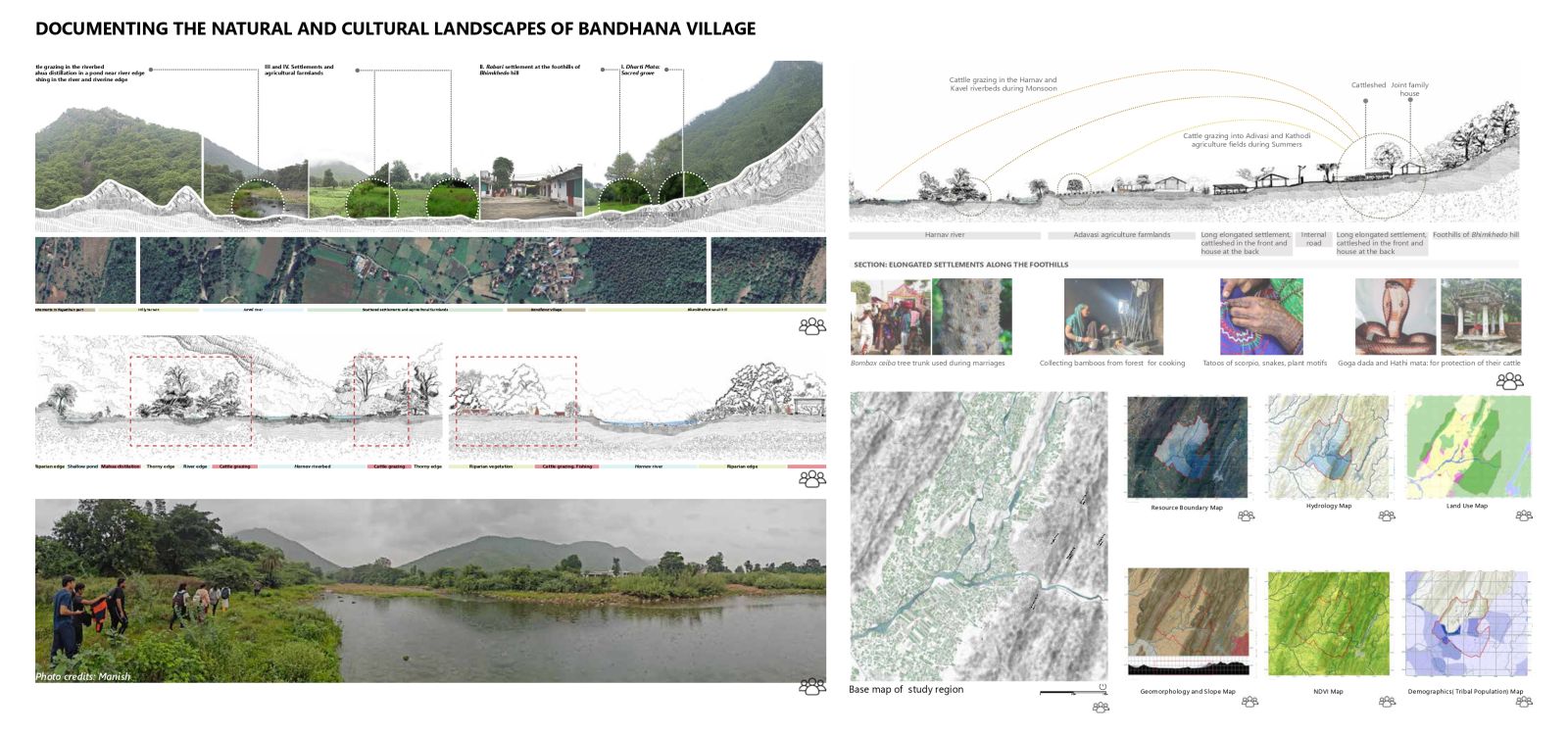
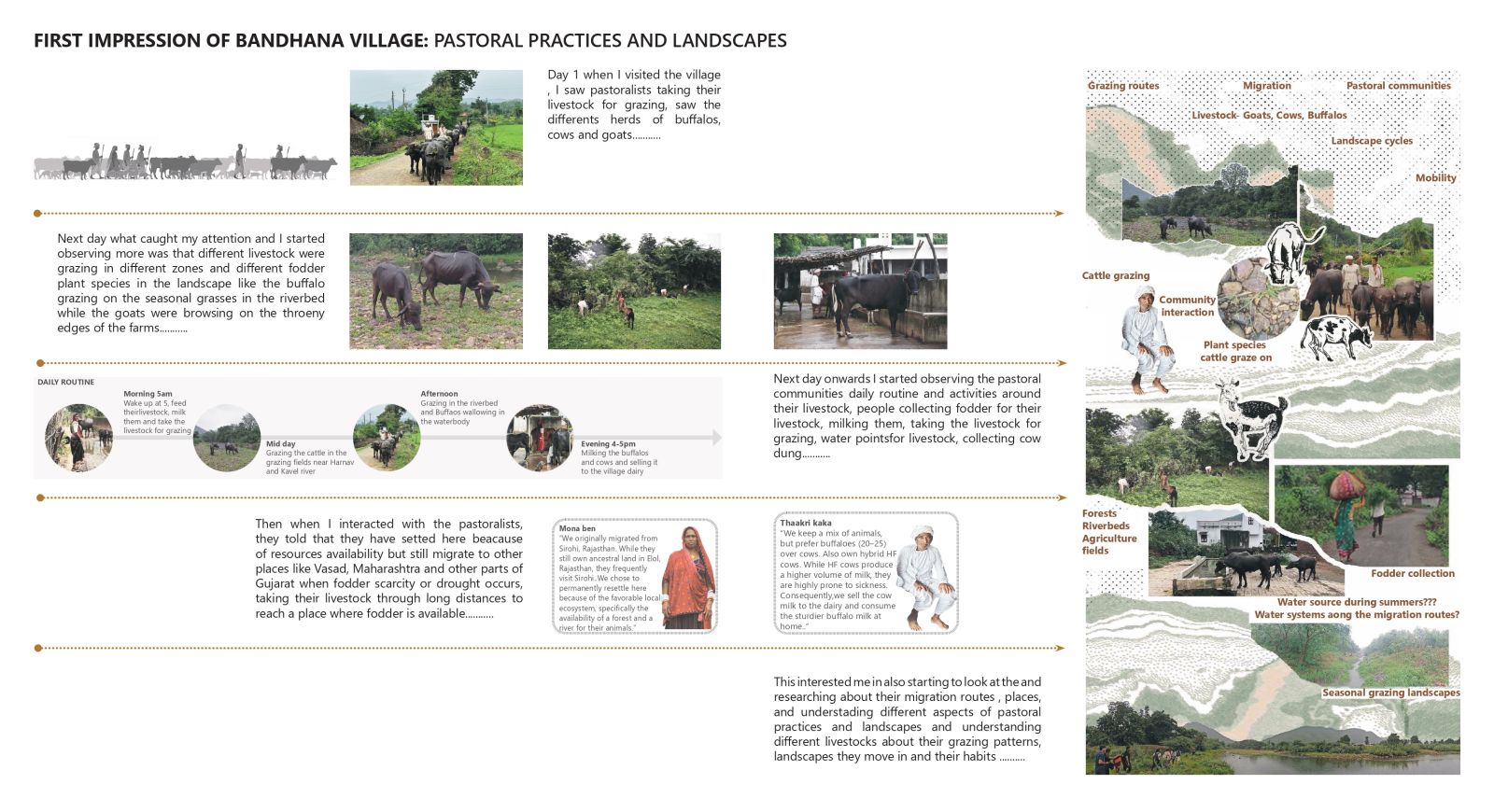
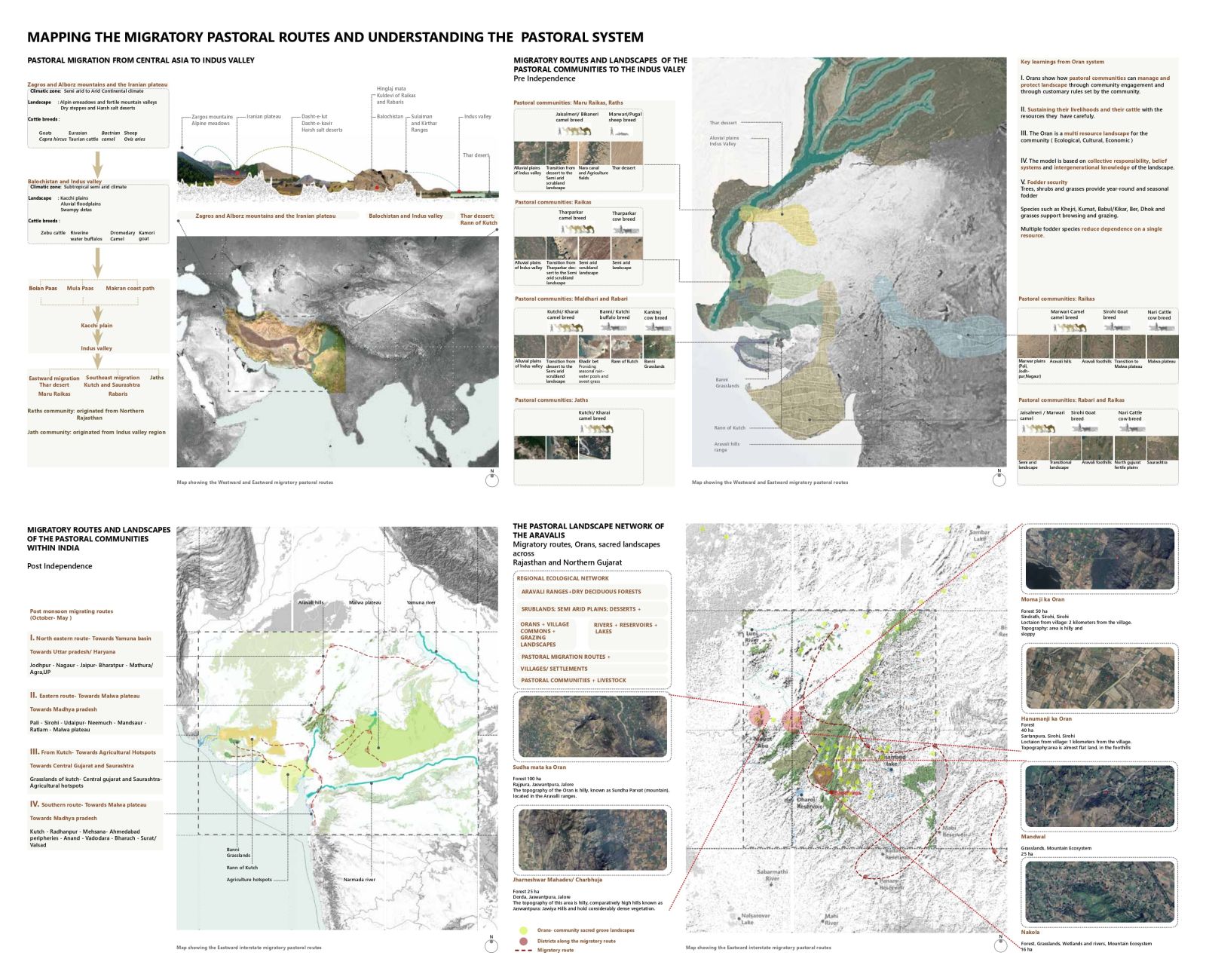
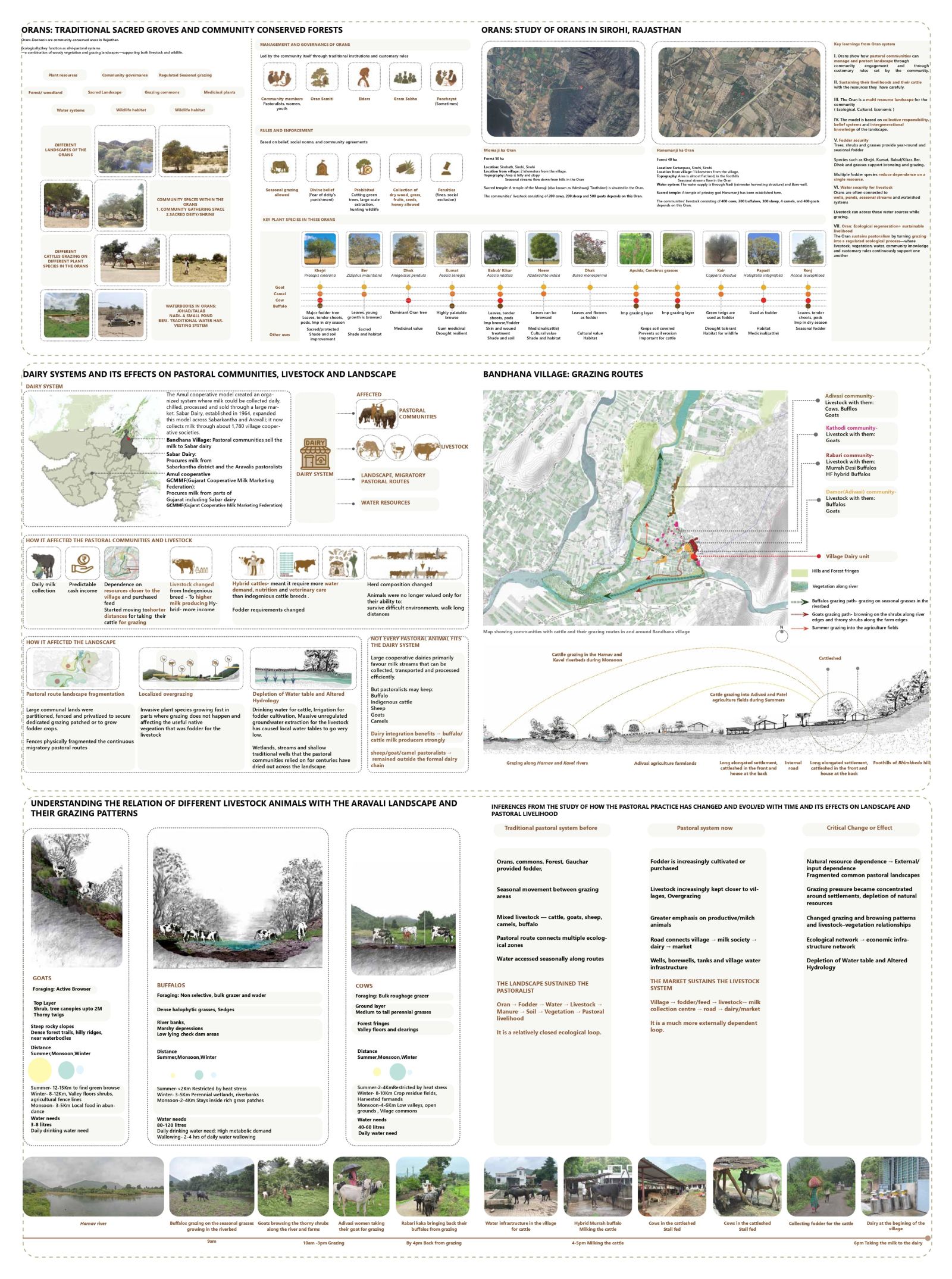
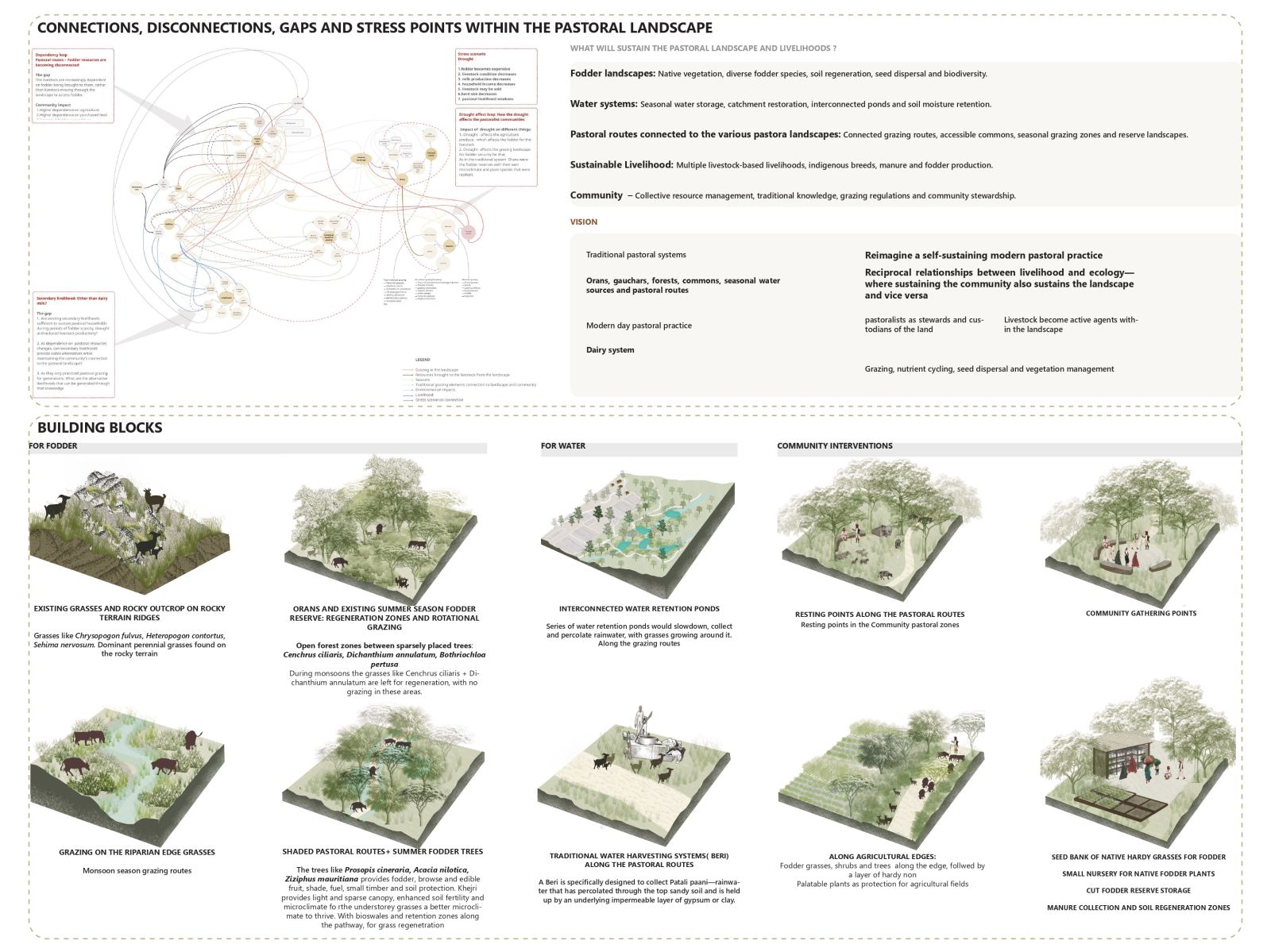
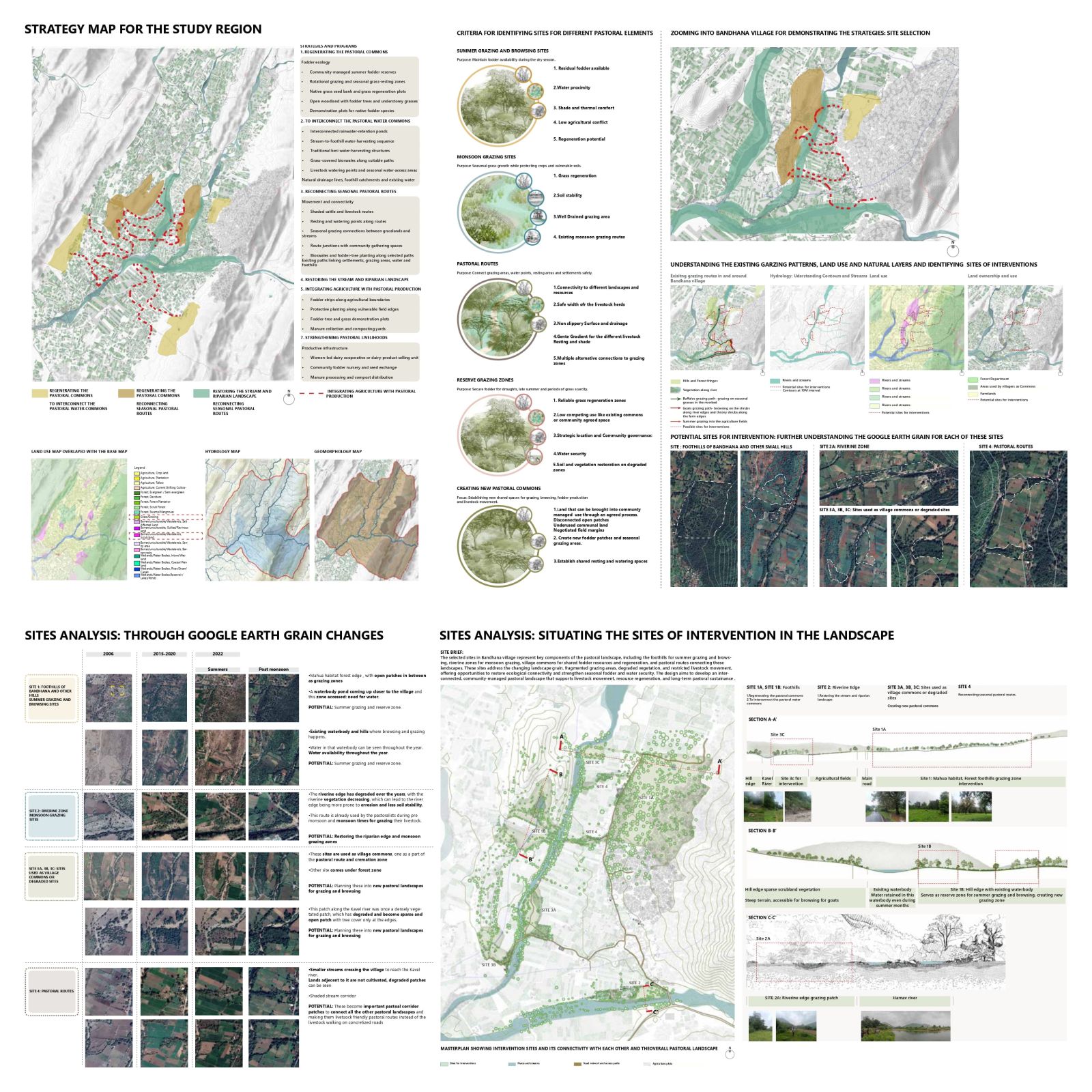
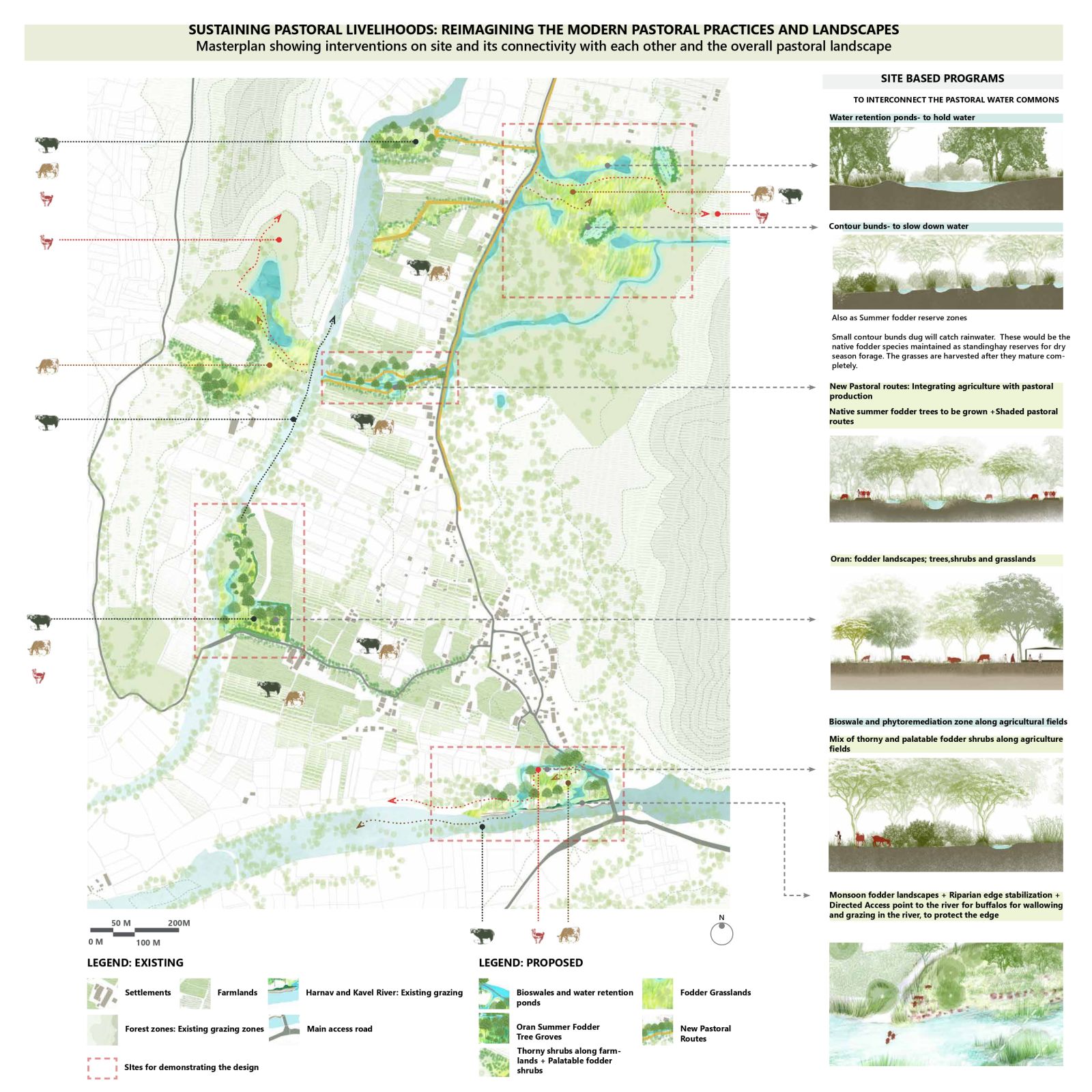
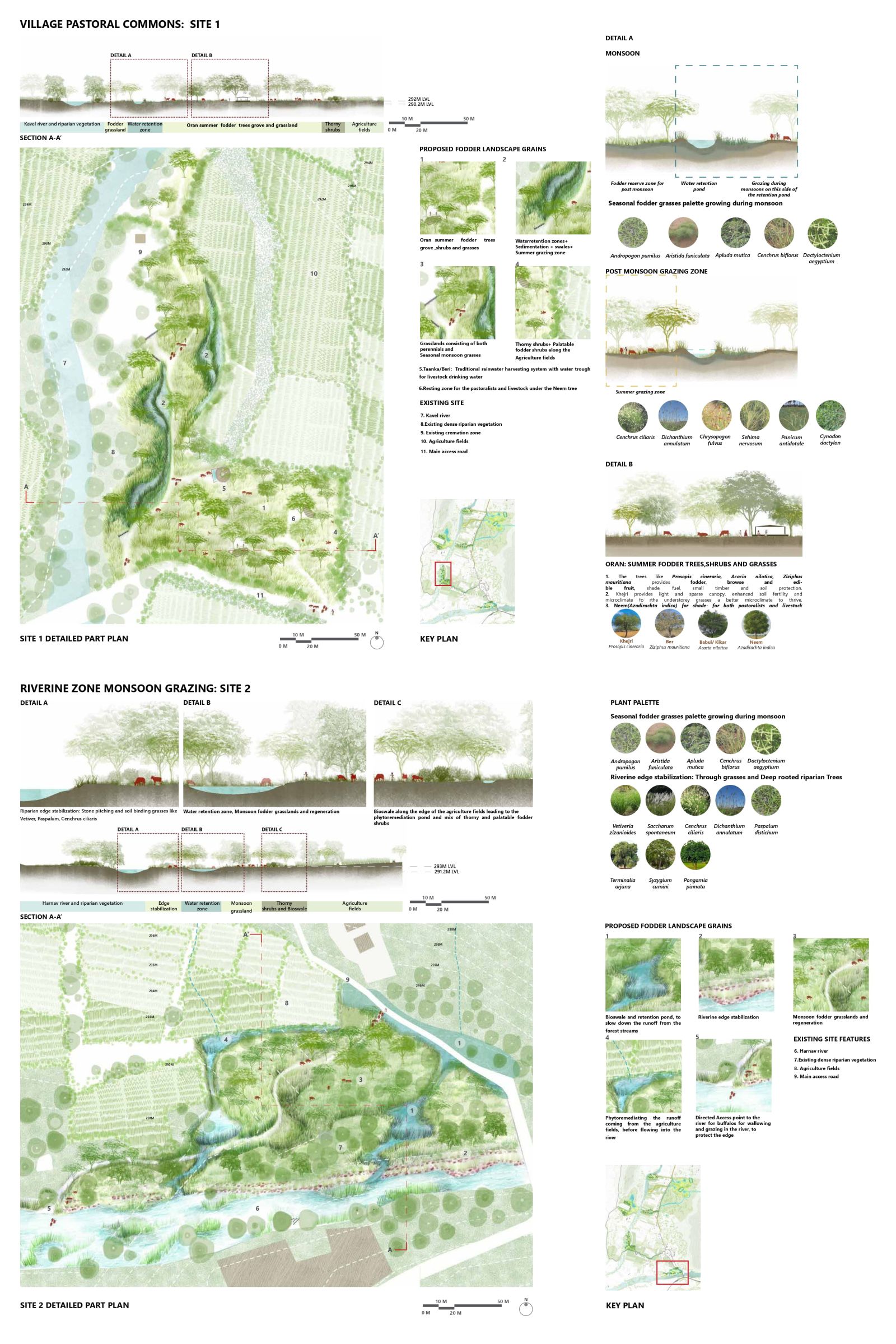
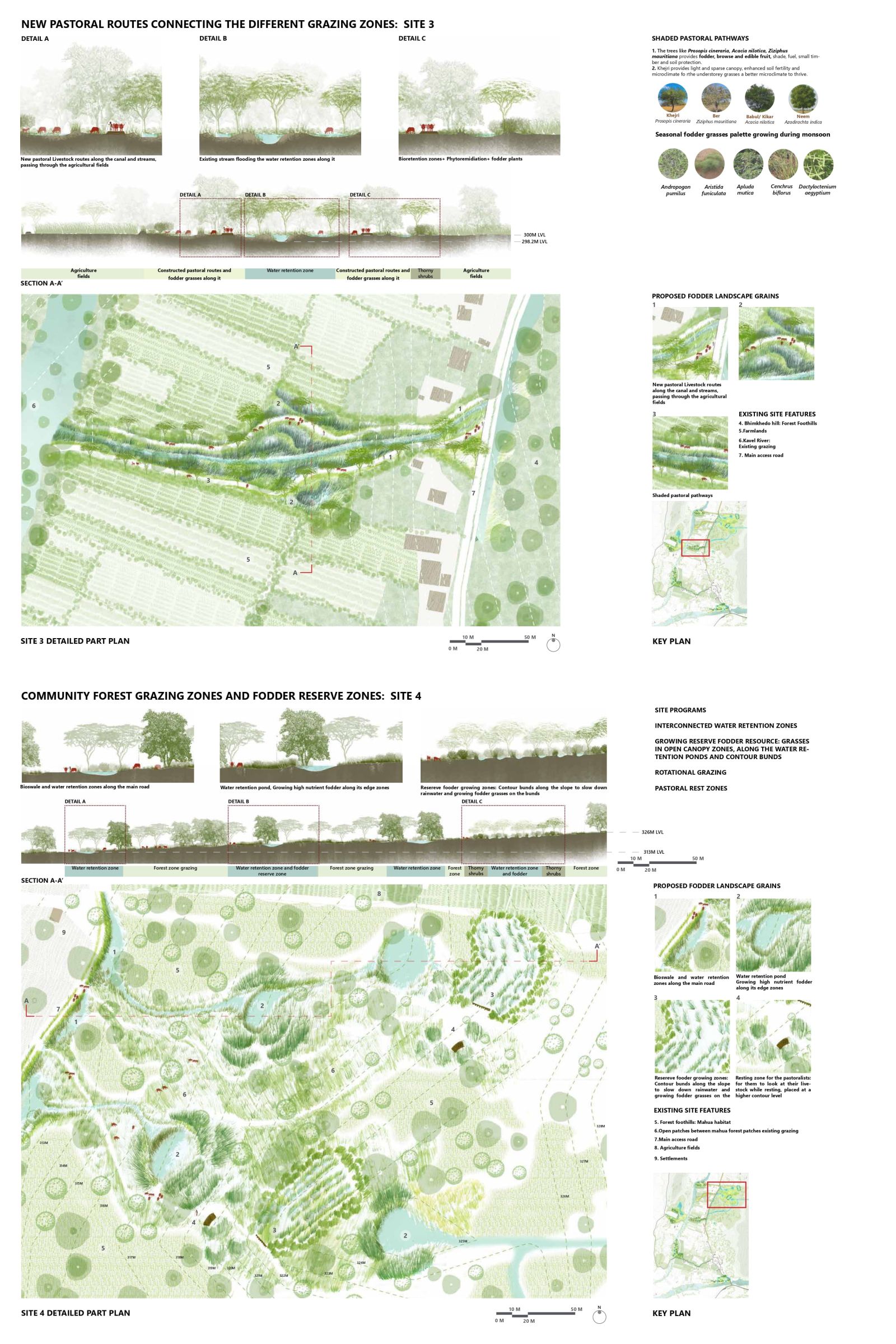
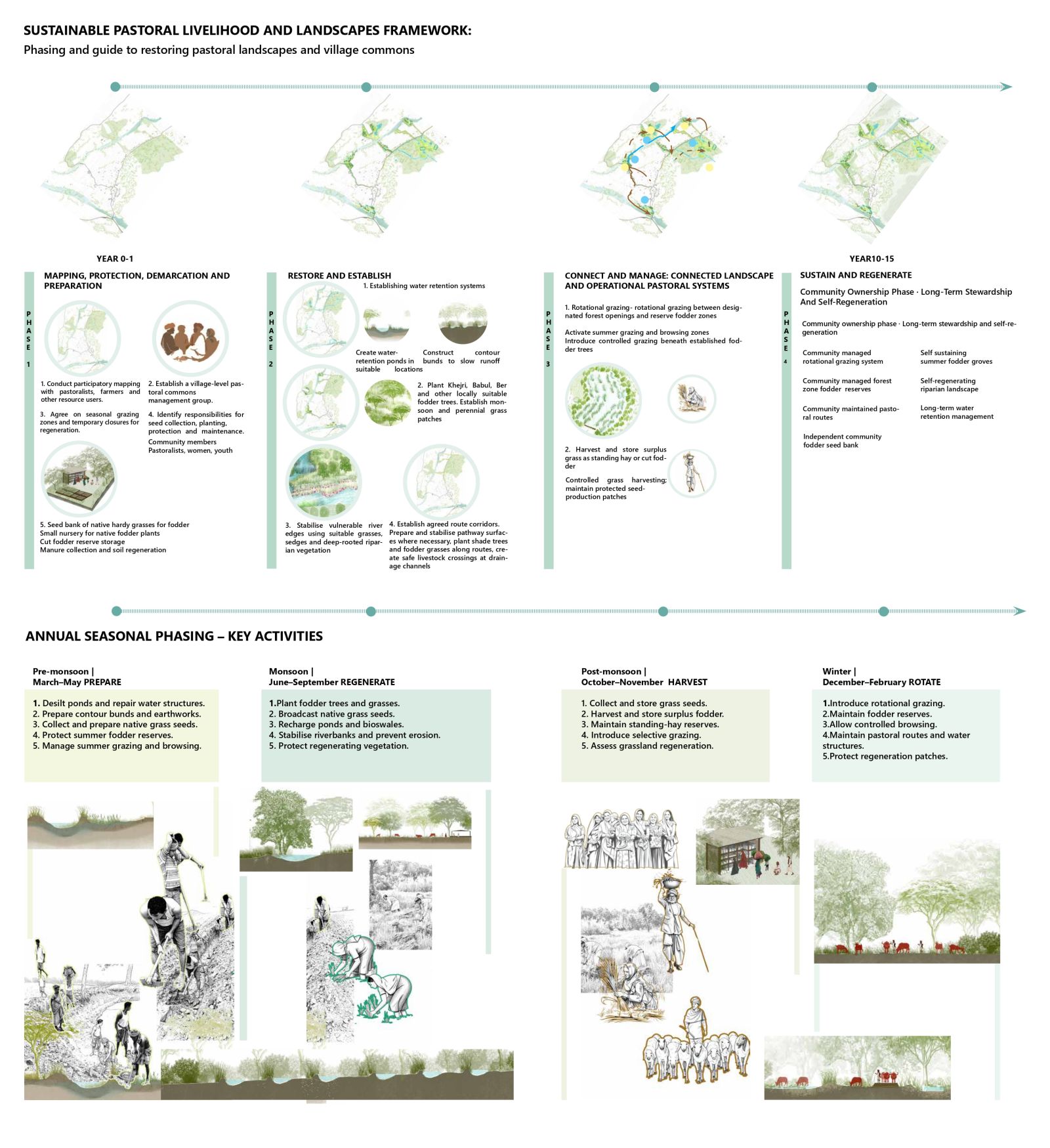
The research starts with understanding the different aspects of pastoral landscapes through the relationship between pastoral communities, livestock and ecological resources. It traces traditional pastoral migration routes across Iranian plateau, Baluchistan, Indus valley, to India, the Aravali, Rajasthan and Gujarat, where Orans( traditional sacred pastoral landscapes), gauchars, forests, commons and seasonal water systems formed an interconnected network supporting diverse livestock and enabling seasonal mobility. The study of Orans reveals how community governance, customary rules, fodder diversity and ecological knowledge sustained both livelihoods and biodiversity. In today’s time, the emergence of organized dairy systems has shifted pastoralism towards village-centered production, increasing dependence on high-milk-producing livestock, cultivated or purchased fodder, wells, roads and milk markets, which come with their own benefits to the pastoral communities, while also affecting them, the livestock and their relation with the landscape. This has contributed to altered grazing patterns, fragmented routes, concentrated grazing pressure and changing livestock–vegetation relationships. The project therefore envisions a self-sustaining modern pastoral landscape where the community- their culture, economy and livelihood, livestock, pastoral routes and ecological systems function as one interconnected network with the landscape being shaped and maintained through everyday pastoral practices. Livestock become active agents within the landscape through grazing, nutrient cycling, seed dispersal and vegetation management while pastoralists act as stewards and custodians of the land. It asks how pastoral practices can evolve with changing livelihoods and aspirations of younger generations while retaining reciprocal relationships between livelihood and ecology—where sustaining the community also sustains the landscape and vice versa.
View Additional Work