TA: Riddhee Madan PatilUnmaking the Perennial River
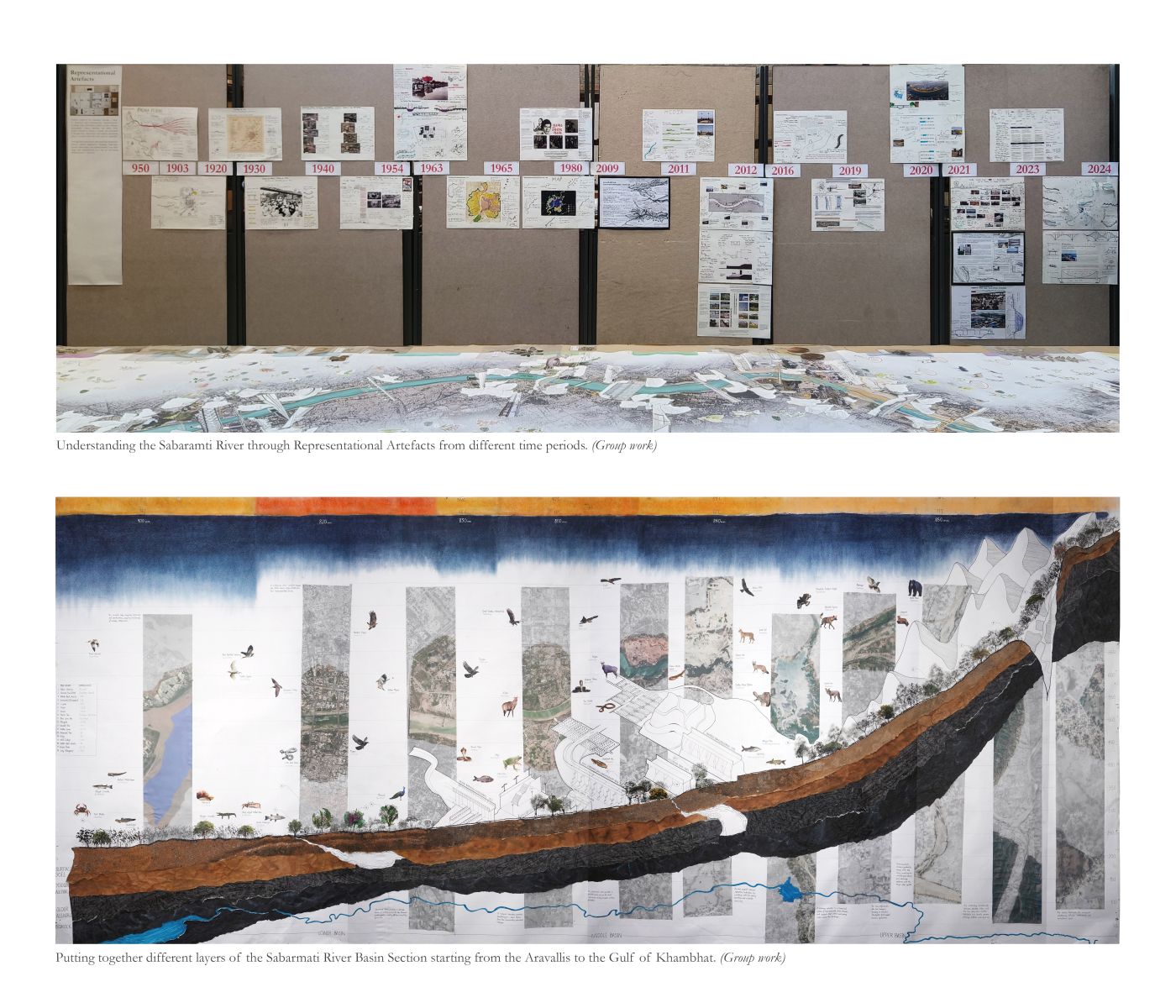
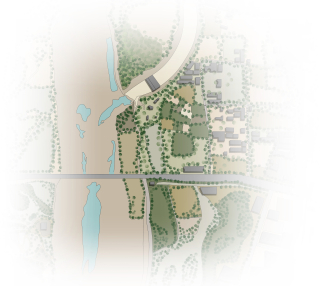
The Sabarmati in Ahmedabad today is a river of deliberate human intervention: docile and controlled; yet beyond the city, it remains a seasonal, dynamic landscape shaped by monsoon rhythms. This studio examines how such transformations are not merely material, but produced through representational practices with colonial histories, that render complex geographies legible and governable. Focusing on the Sabarmati, students will investigate how these practices have constructed the image of a perennial river, reshaping ecological and urban relationships. The studio begins with on-site explorations through walking, recording, and mapping, alongside archival research to build an ‘eco-biography’ of the river. Through collective drawing, it will critically examine the politics of representation, foregrounding the ‘gap’ between dynamic reality and its static image.
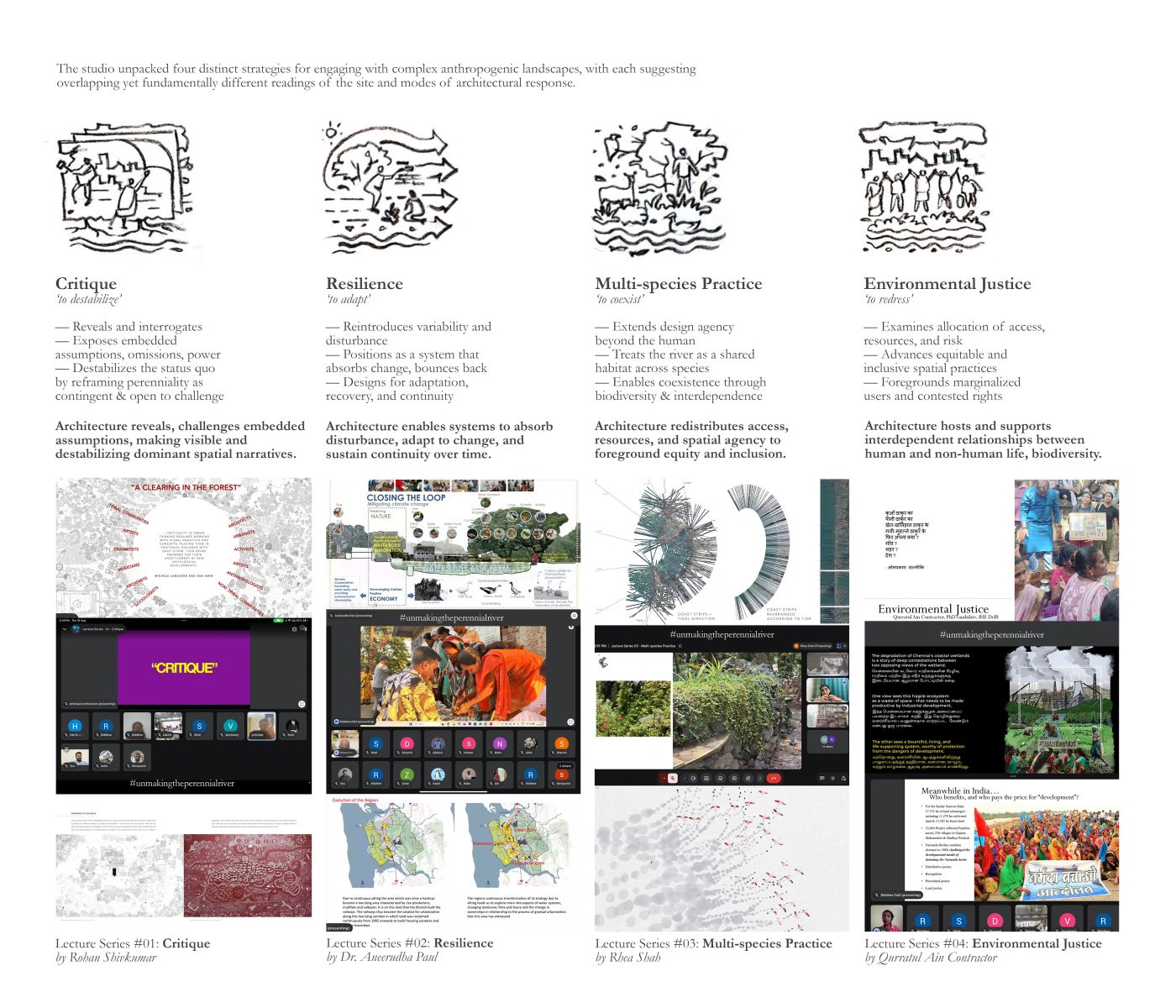
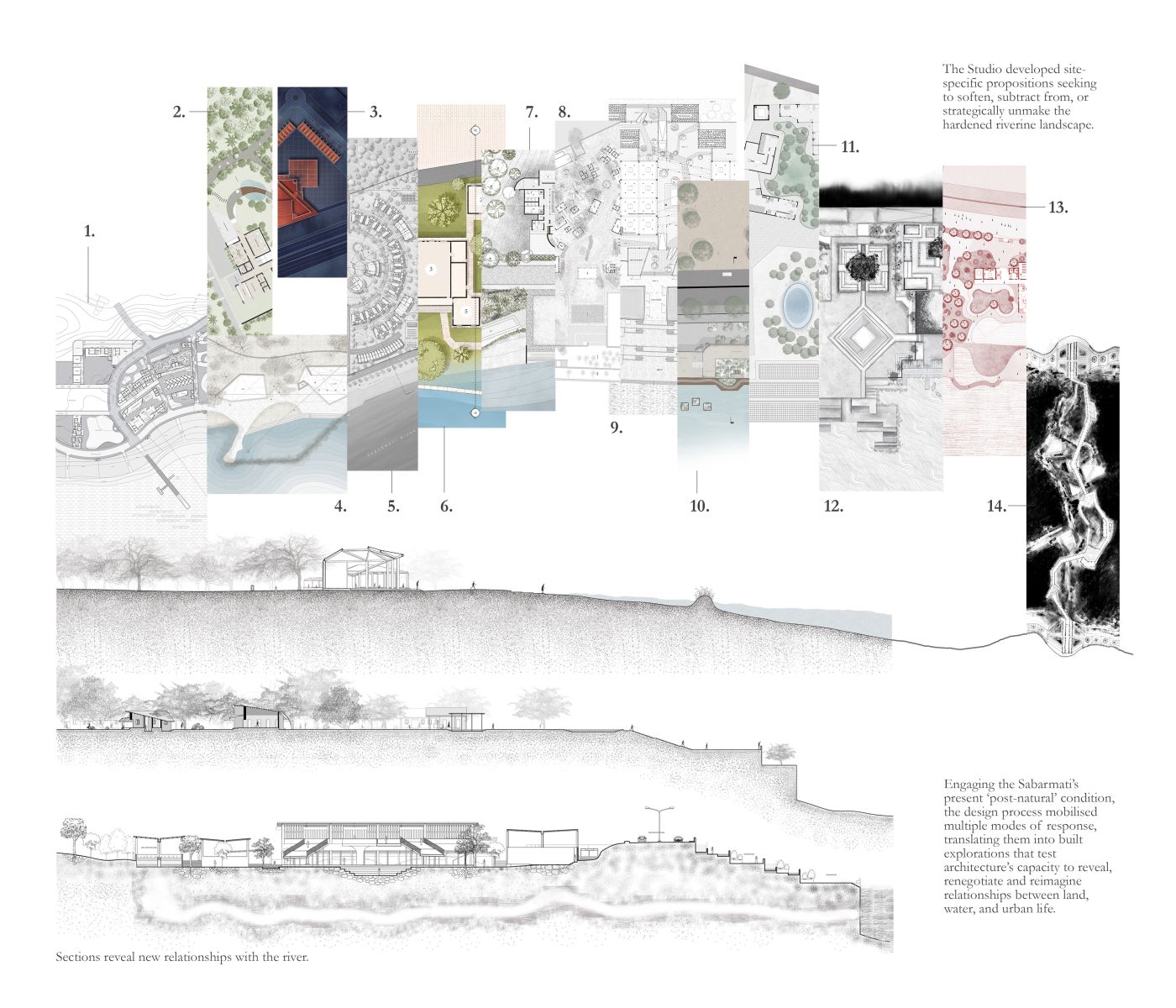
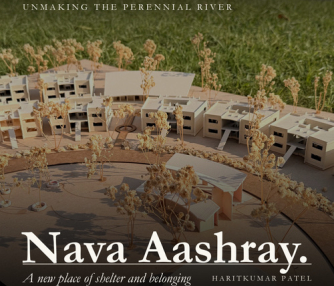
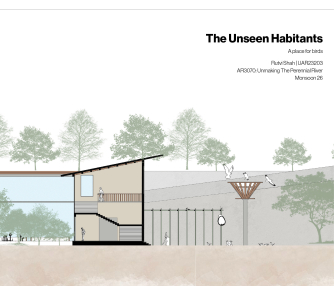
Building on this understanding, the studio will develop architectural propositions at key sites along the river’s edge. Through strategies of critique, adaptation, redress, and coexistence, students will explore how design can soften and reconfigure the hardened ‘post-natural’ riverine landscape, renegotiating and reimagining relationships between land, water, and urban life.
Studio Unit
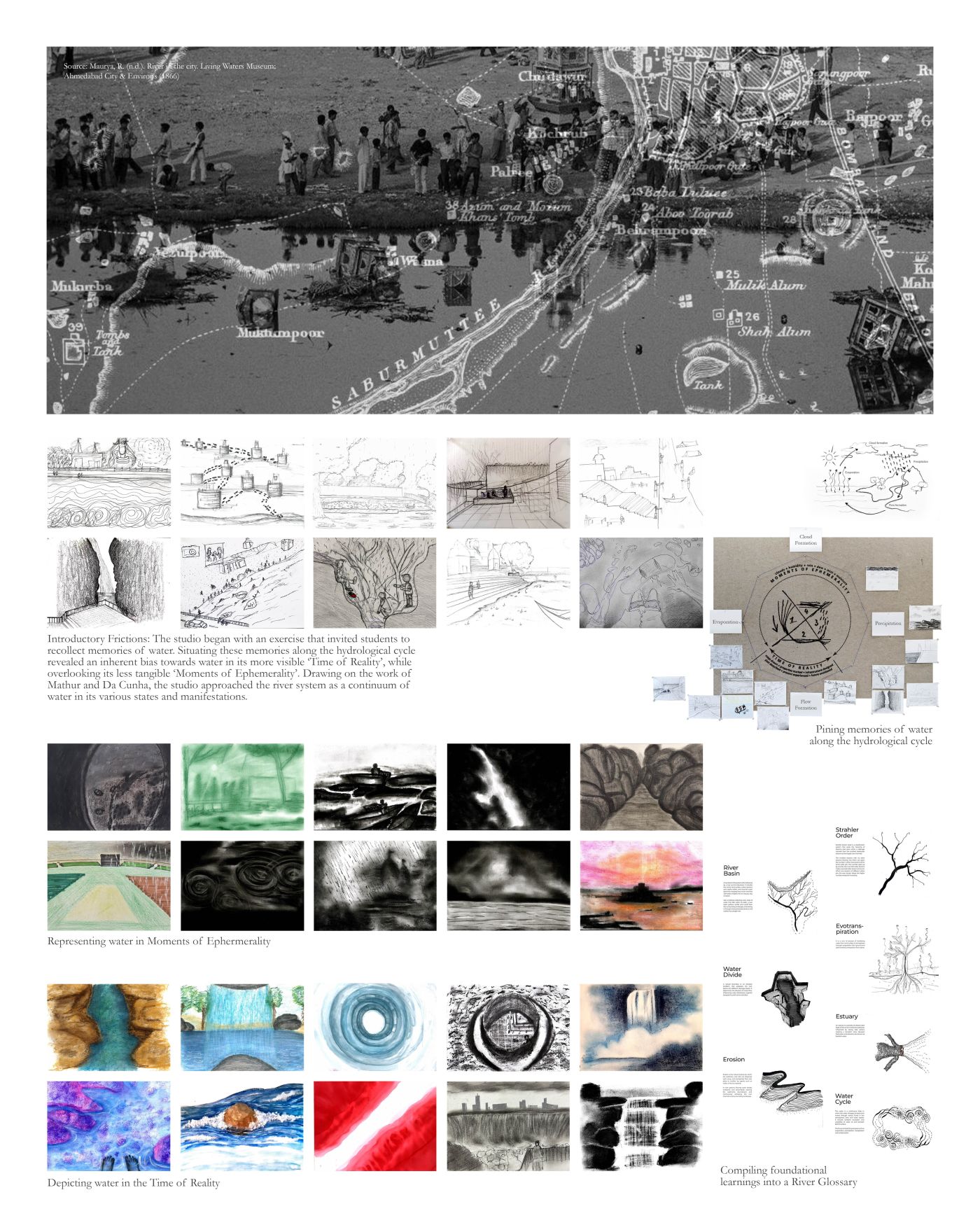
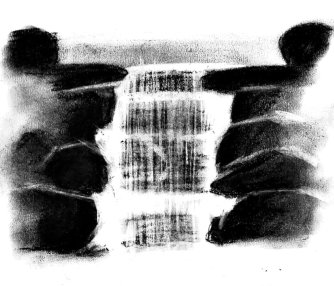
Introductory Frictions | Mapping memories of water onto the hydrological cycle, revealing a focus on its visible forms and overlooking its ephemeral states. Drawing on Mathur and Da Cunha, it explored rivers as a continuum of water in all its manifestations
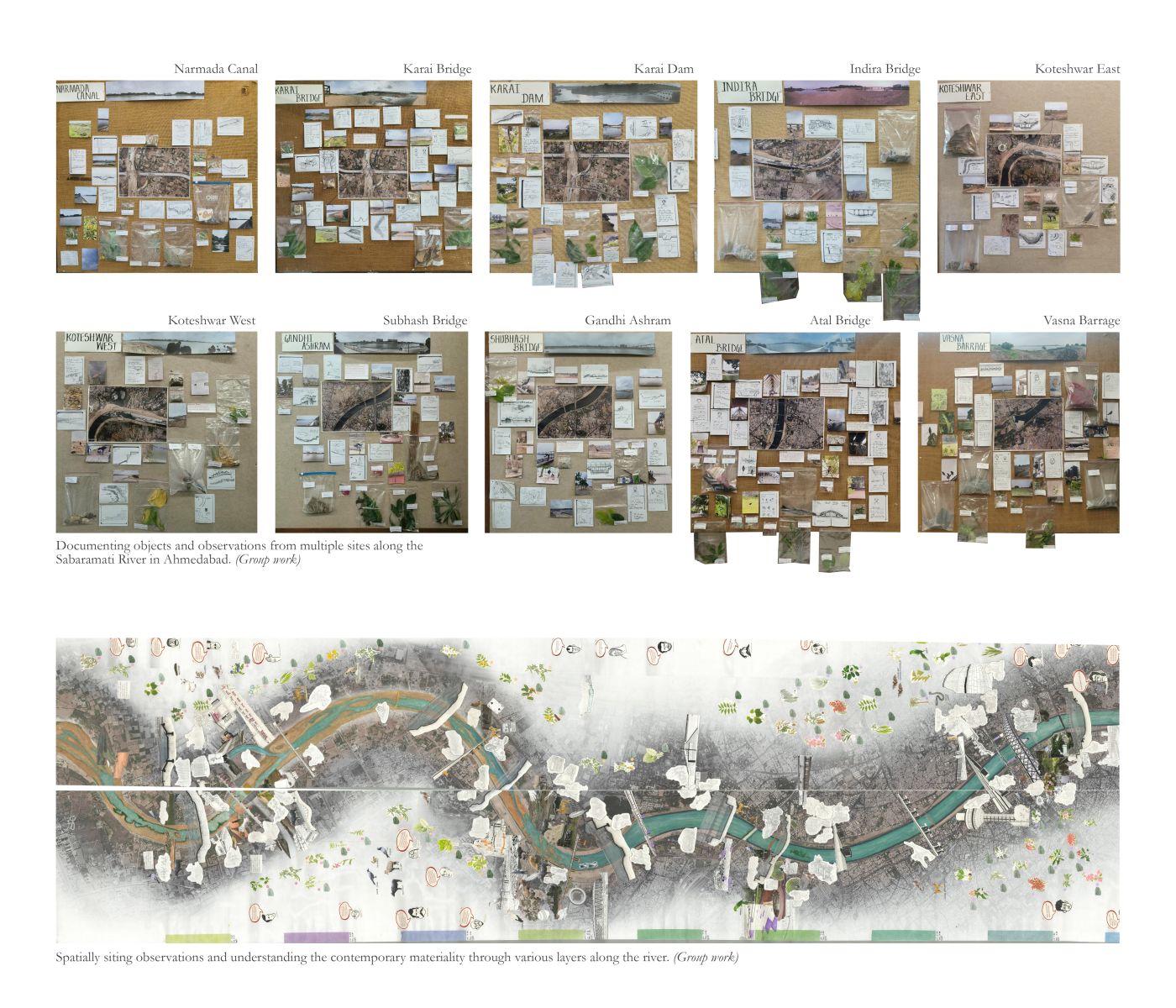
Sabarmati: An Eco-biography | Tracing historical and ecological changes by reading and recording the post-natural contemporary materiality of the Sabarmati through ten key conditions along its course
Of Strategies and a Manifesto | The four strategies offering distinct yet overlapping readings of the post-natural landscape of Sabarmati, shaping the project briefs