Varma Rashmi Rajendra Usha

HR4006

From Subjects to Citizens

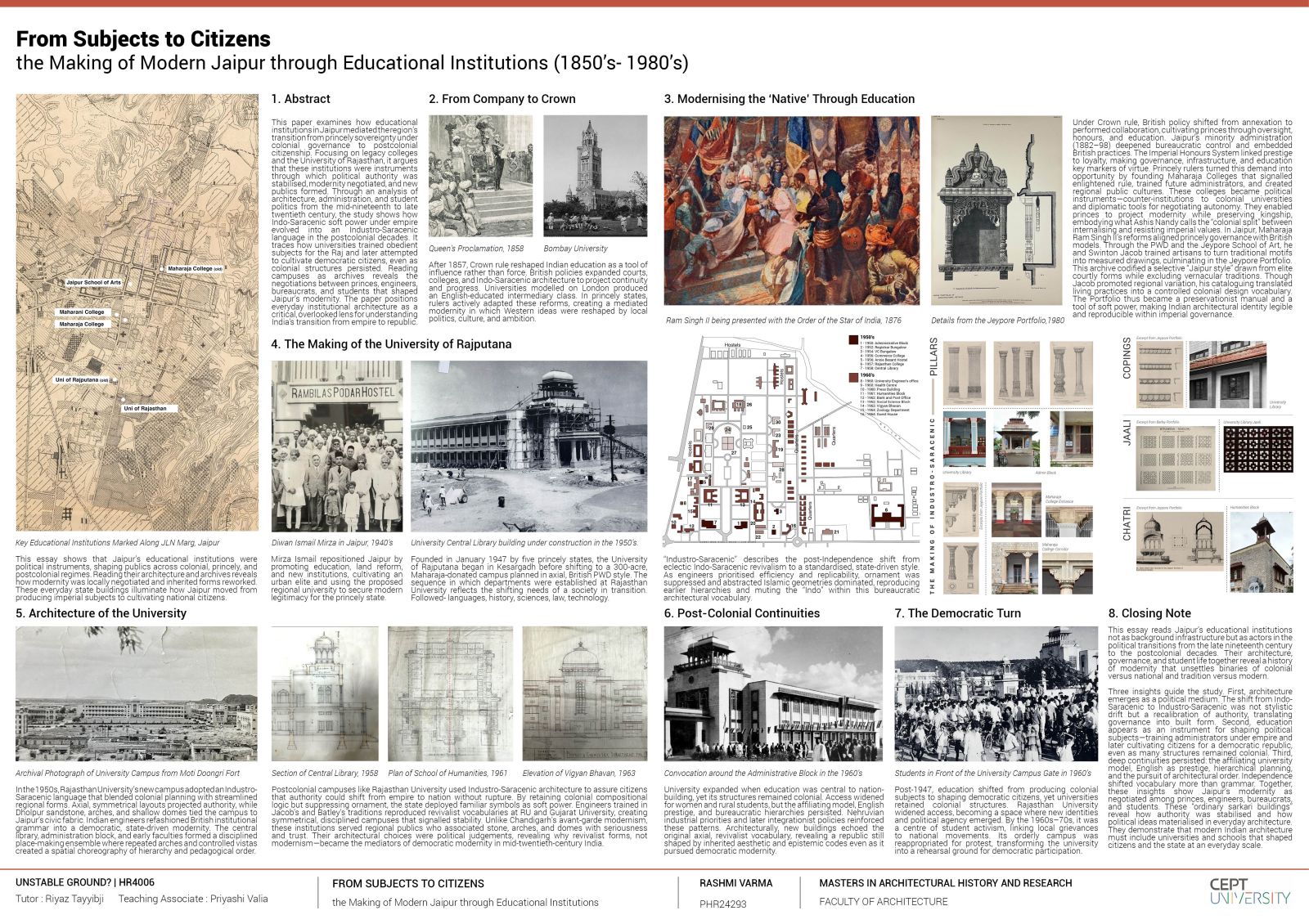
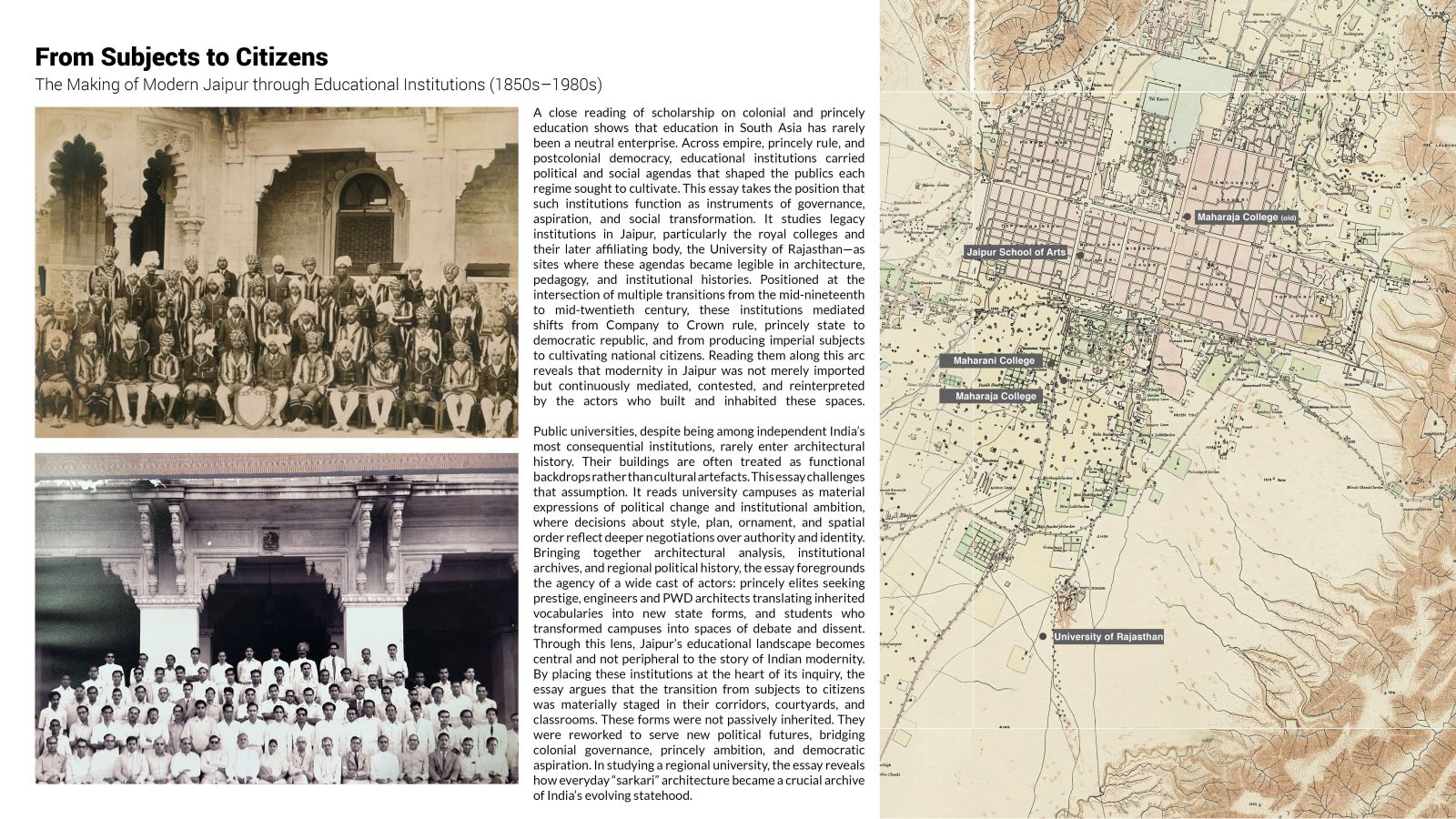
This paper examines how educational institutions in Jaipur mediated the region’s transition from princely sovereignty under colonial governance to postcolonial citizenship. Focusing on legacy colleges and the University of Rajasthan, it argues that these institutions were instruments through which political authority was stabilised, modernity negotiated, and new publics formed. Through an analysis of architecture, administration, and student politics from the mid-nineteenth to late twentieth century, the study shows how Indo-Saracenic soft power under empire evolved into an Industro-Saracenic language in the postcolonial decades. It traces how universities trained obedient subjects for the Raj and later attempted to cultivate democratic citizens, even as colonial structures persisted. Reading campuses as archives reveals the negotiations between princes, engineers, bureaucrats, and students that shaped Jaipur’s modernity. The paper positions everyday institutional architecture as a critical, overlooked lens for understanding India’s transition from empire to republic.

View Additional Work
Report Content

A conceptual overview showing how educational institutions in Jaipur became instruments of political transformation from the mid-nineteenth to late-twentieth century.

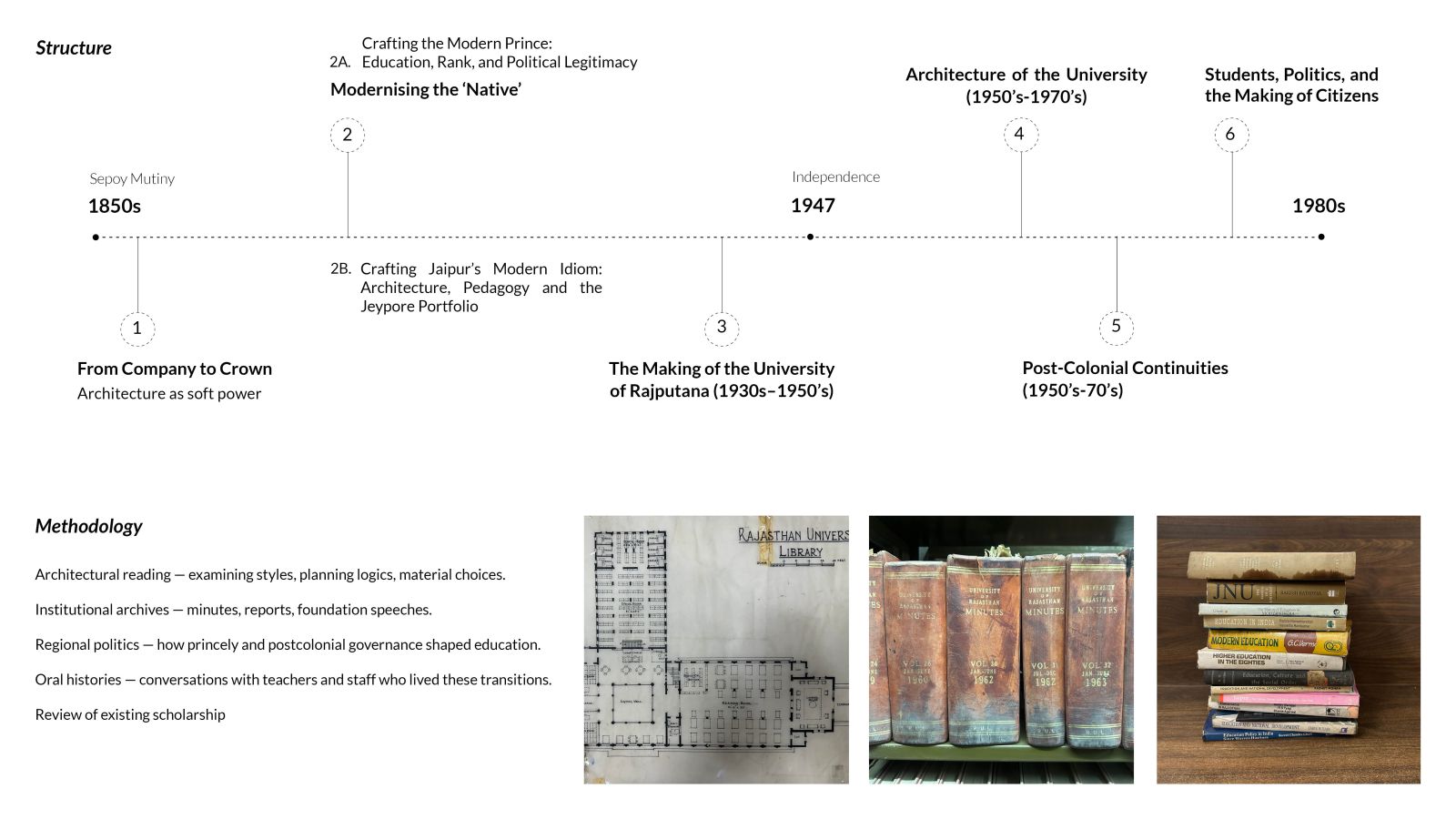
The essay’s organisational arc and research methods, tracing Jaipur’s educational history through archives, architectural analysis, and oral histories

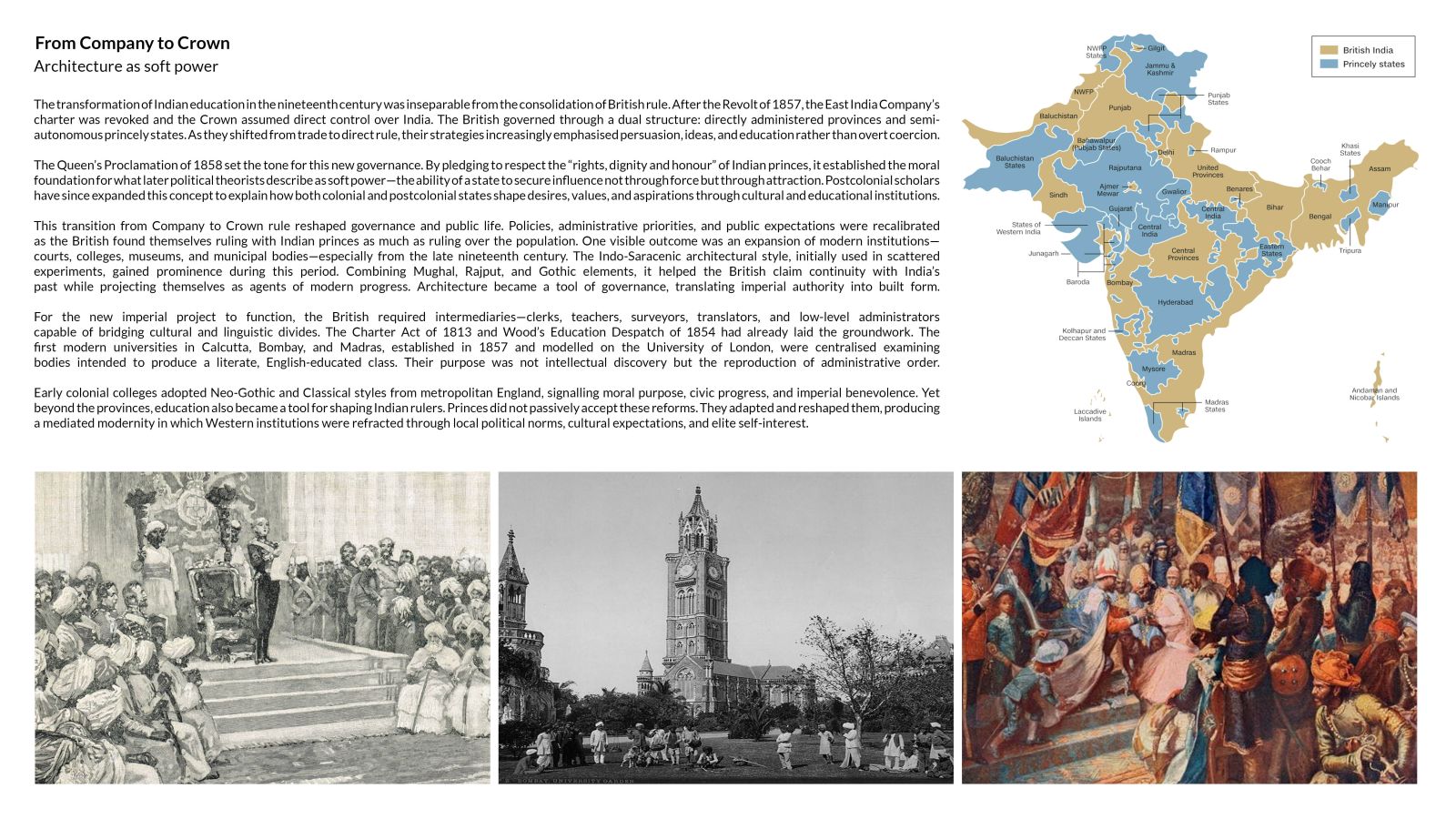
How colonial governance reshaped education, architecture, and soft power in princely India after 1857.

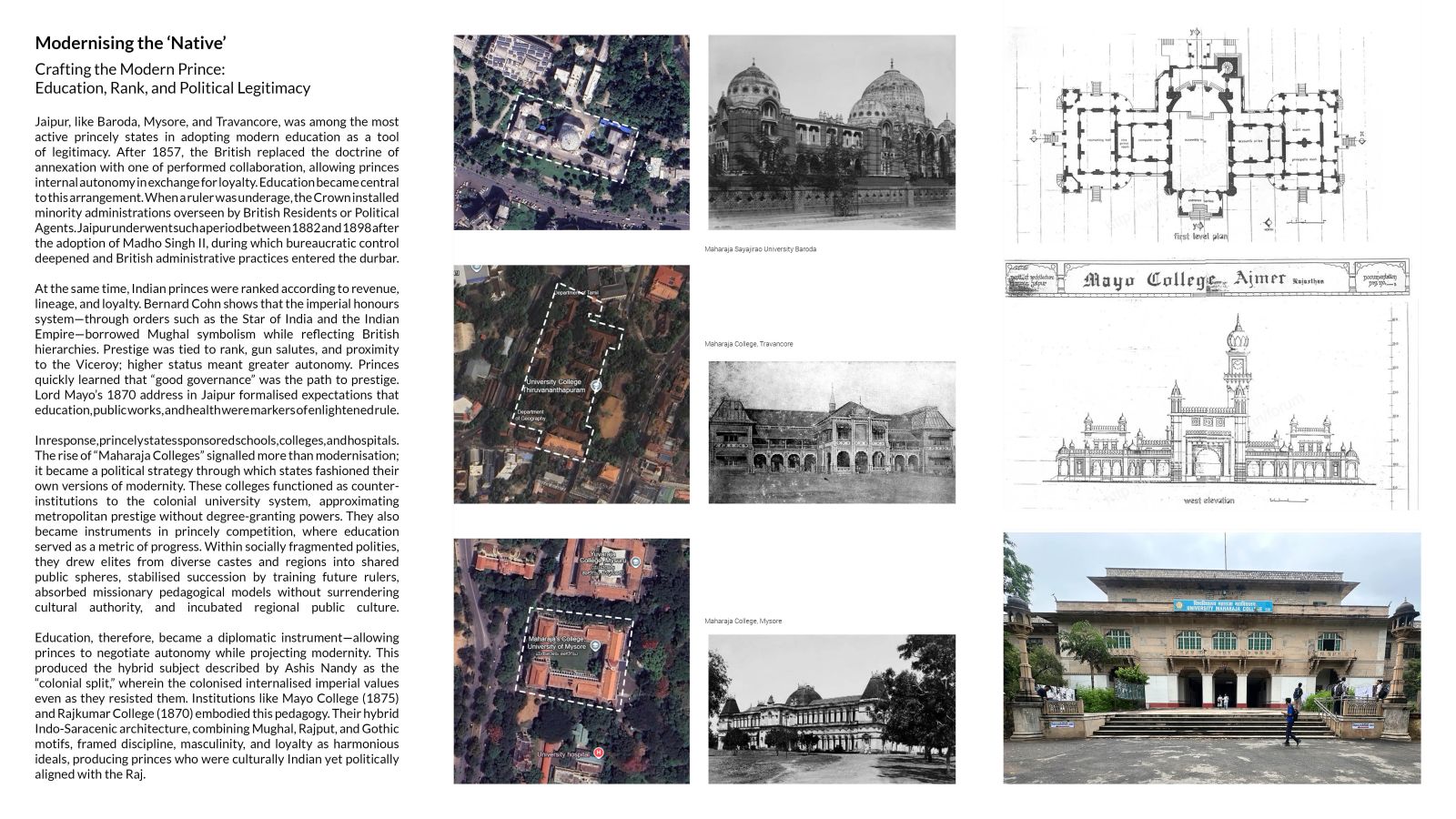
How princely states used education, rank, and architecture to craft the modern, loyal, administratively trained prince.

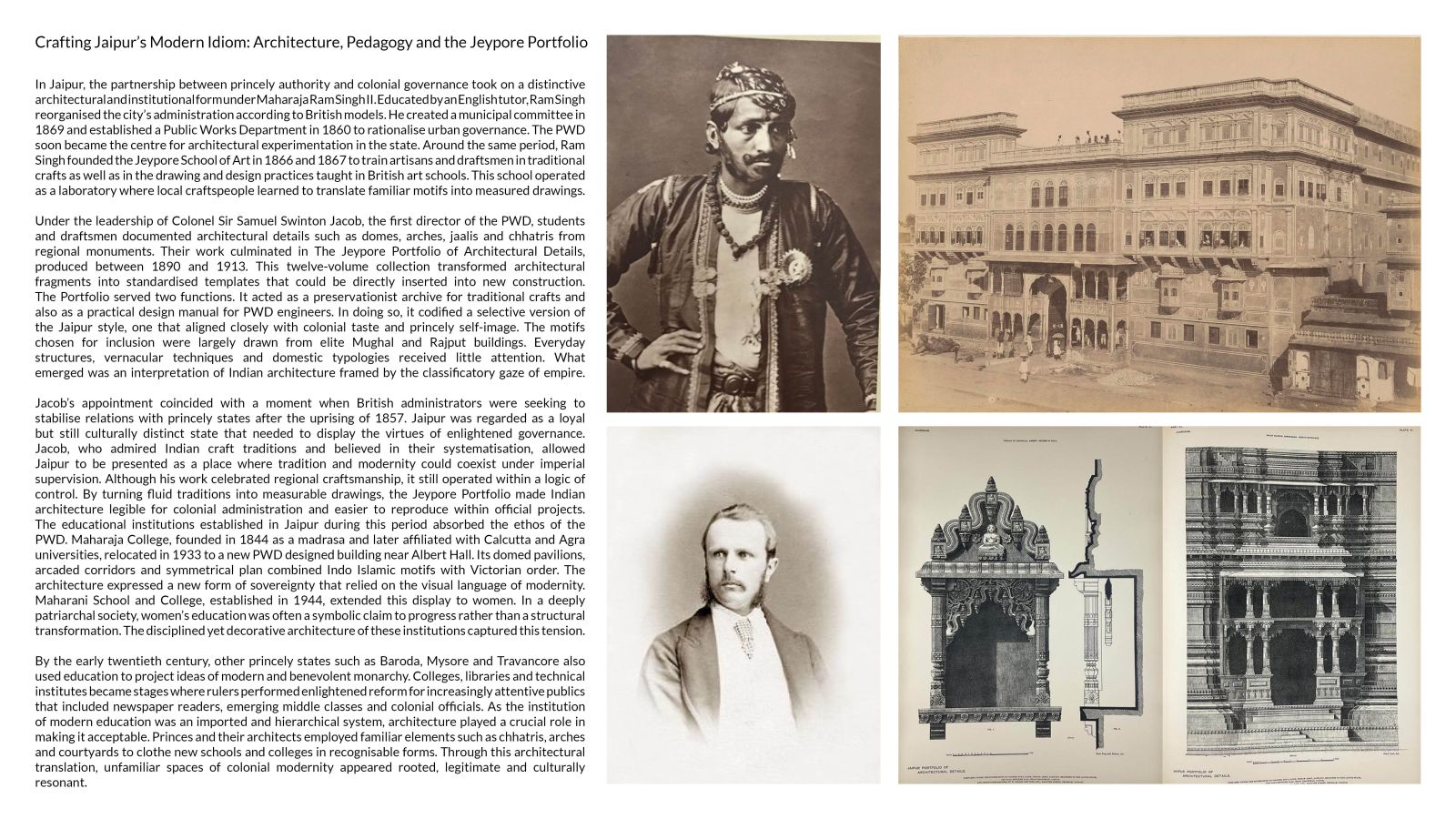
How Ram Singh II, the Jeypore School of Art, and Swinton Jacob produced a codified architectural language that mediated tradition and empire.

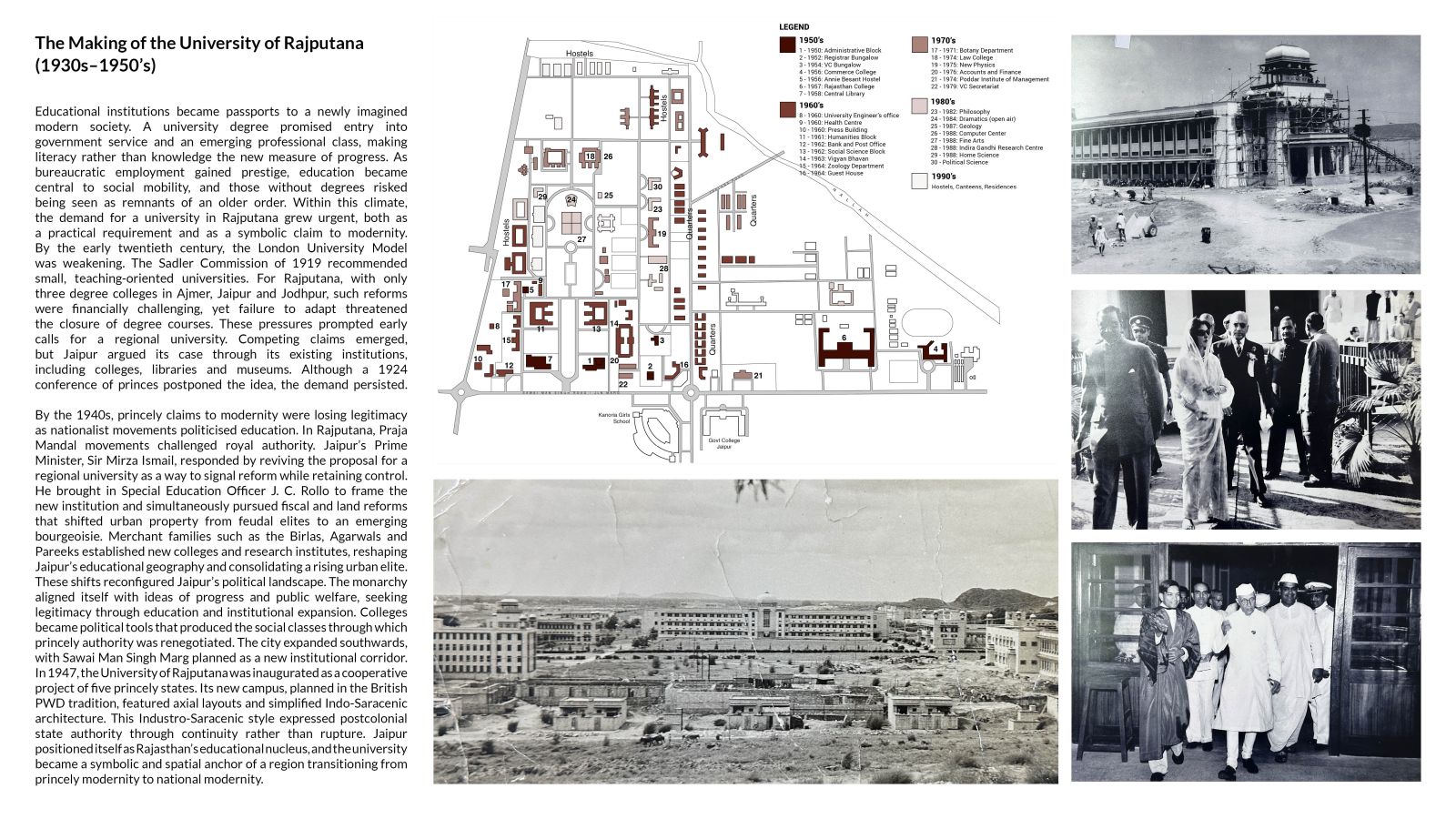
The political negotiations, social shifts, and institutional ambitions that led to the founding of Rajasthan’s first regional university.

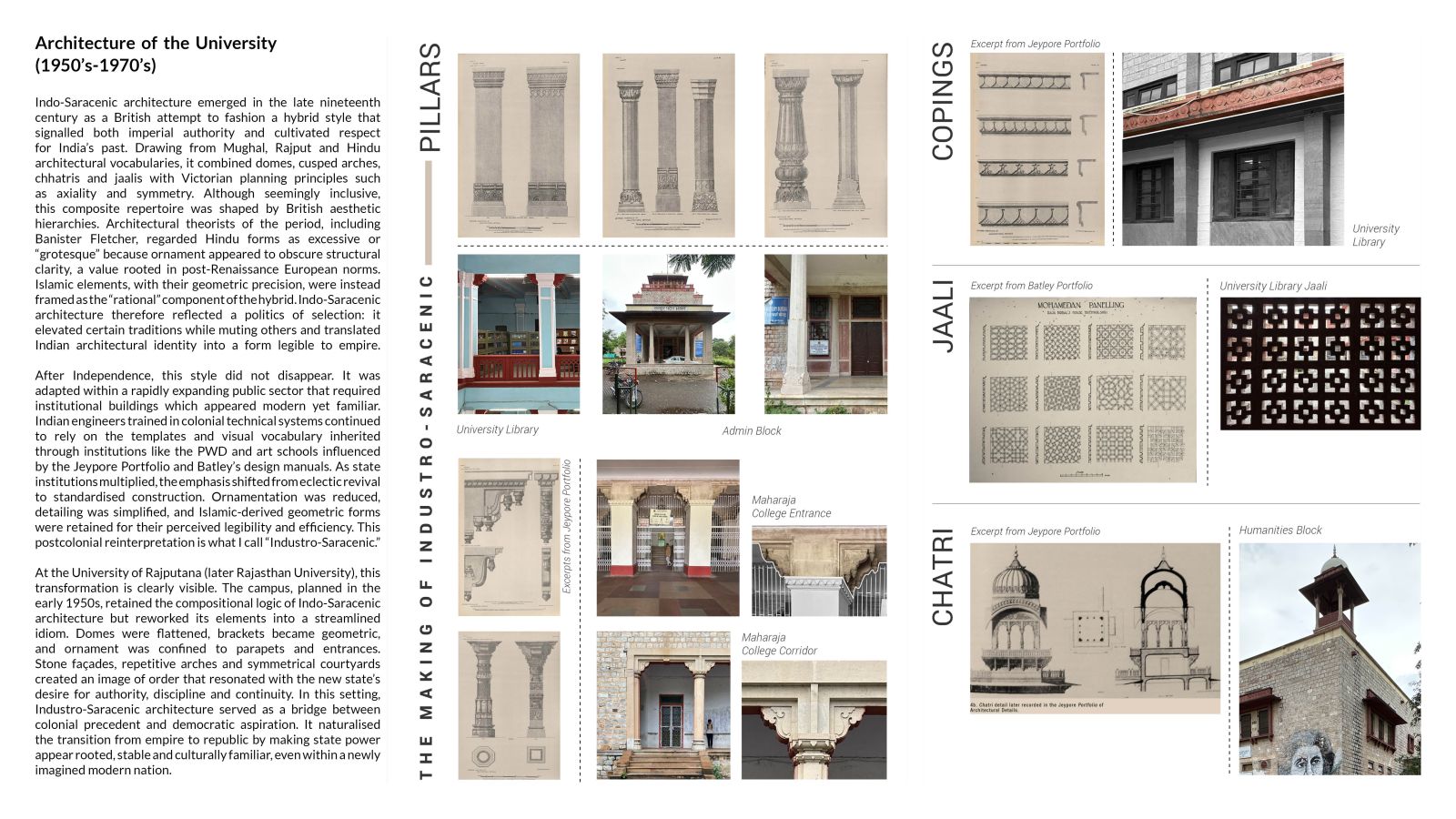
How Rajasthan University adopted a simplified Indo-Saracenic vocabulary (what this essay terms Industro-Saracenic) to express postcolonial state authority.

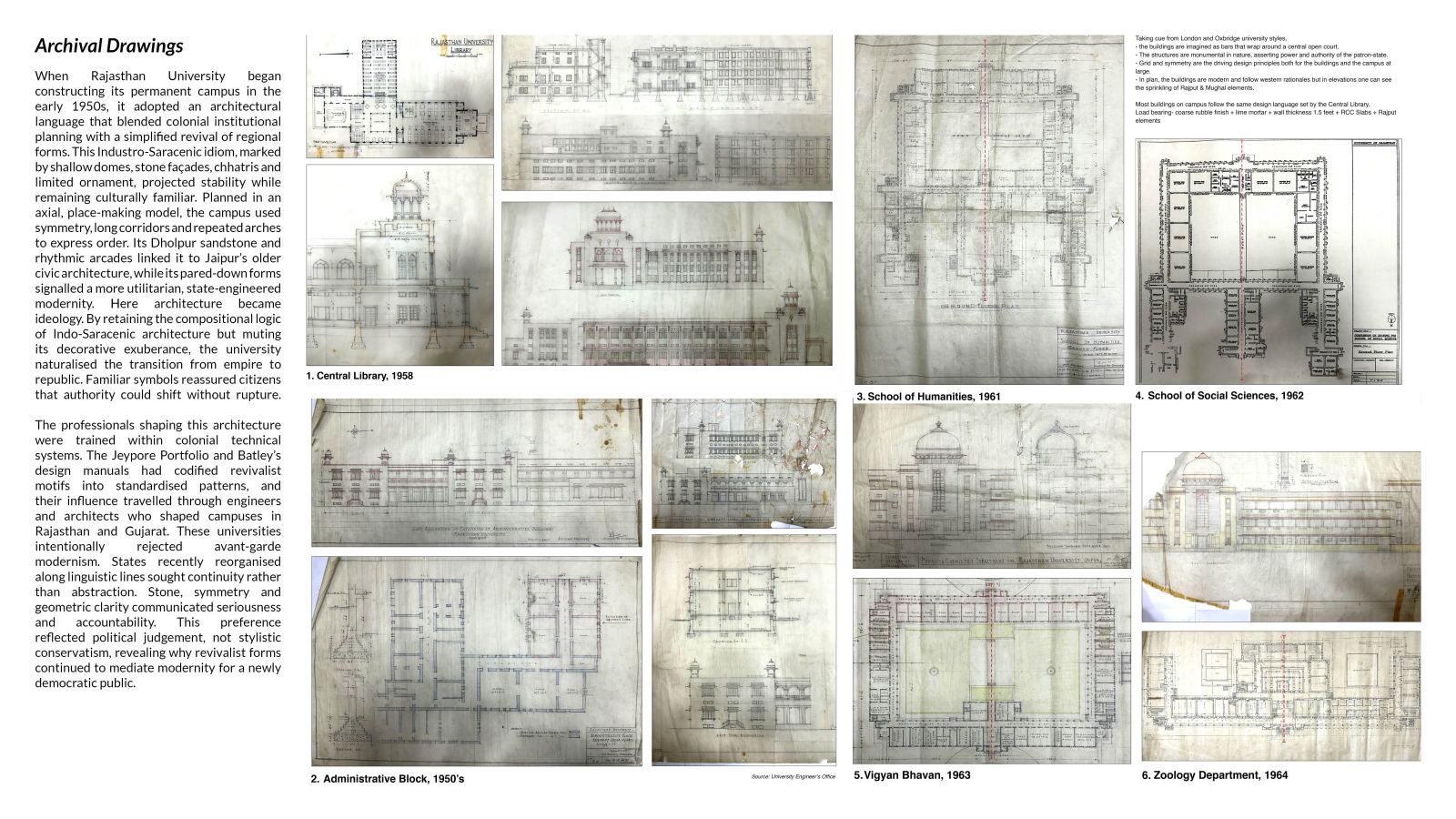
Original campus drawings revealing how symmetry, modularity, and adapted revivalist details shaped the university’s Industro-Saracenic form.

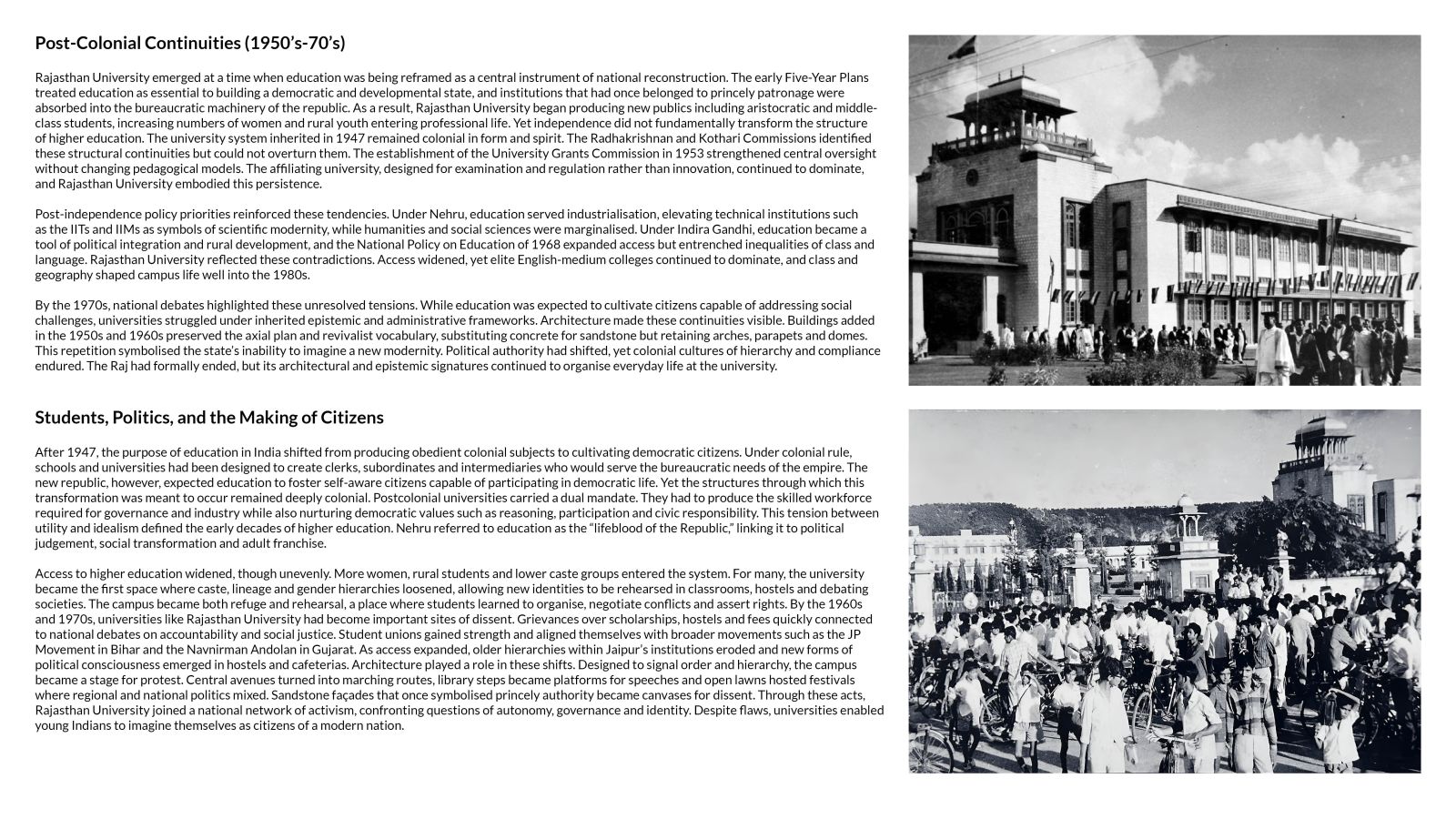
How Rajasthan University became a space where colonial institutional legacies persisted even as students transformed the campus into a theatre of democratic participation.

Project Panel