Your browser is out-of-date!
For a richer surfing experience on our website, please update your browser. Update my browser now!
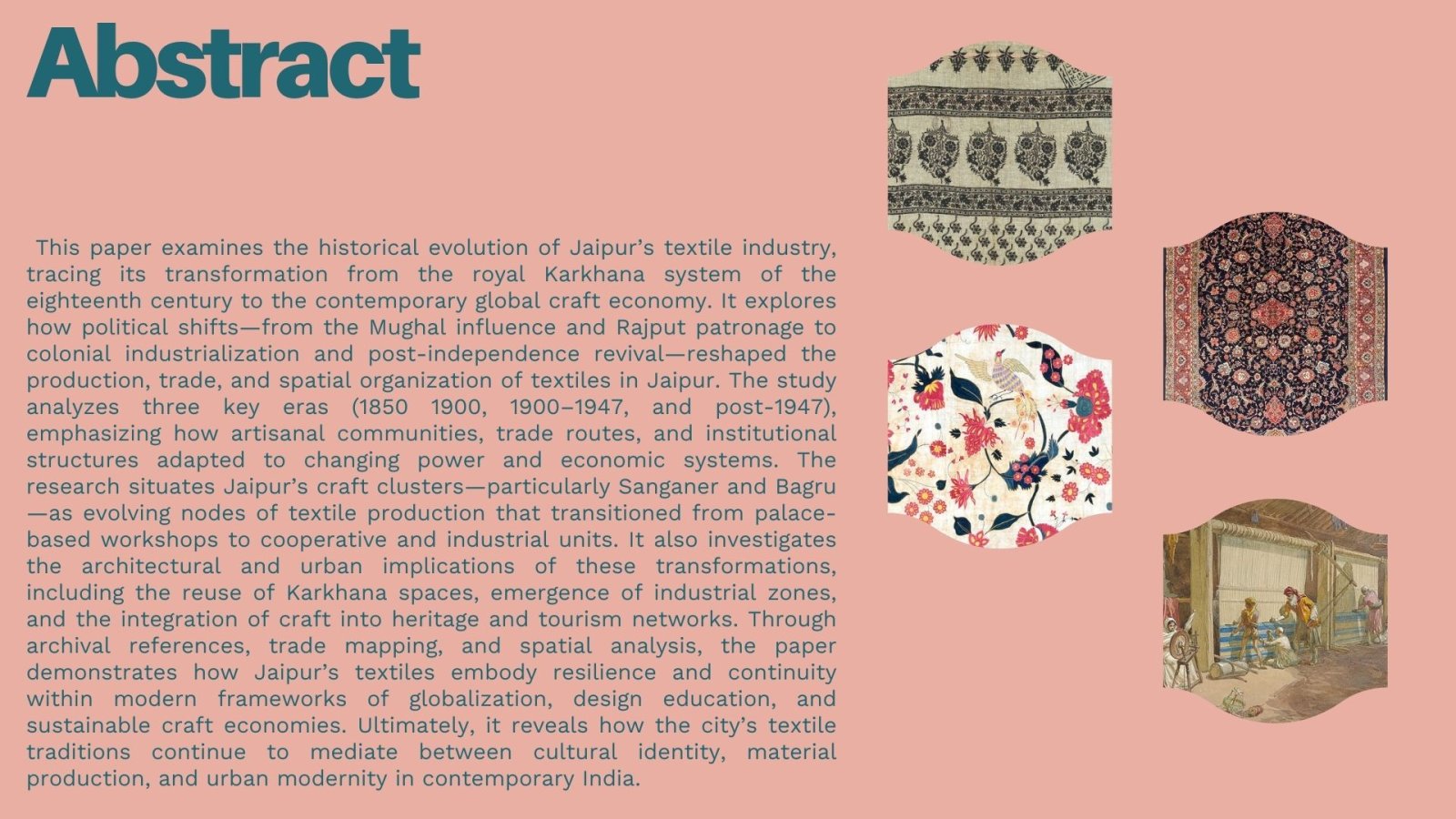
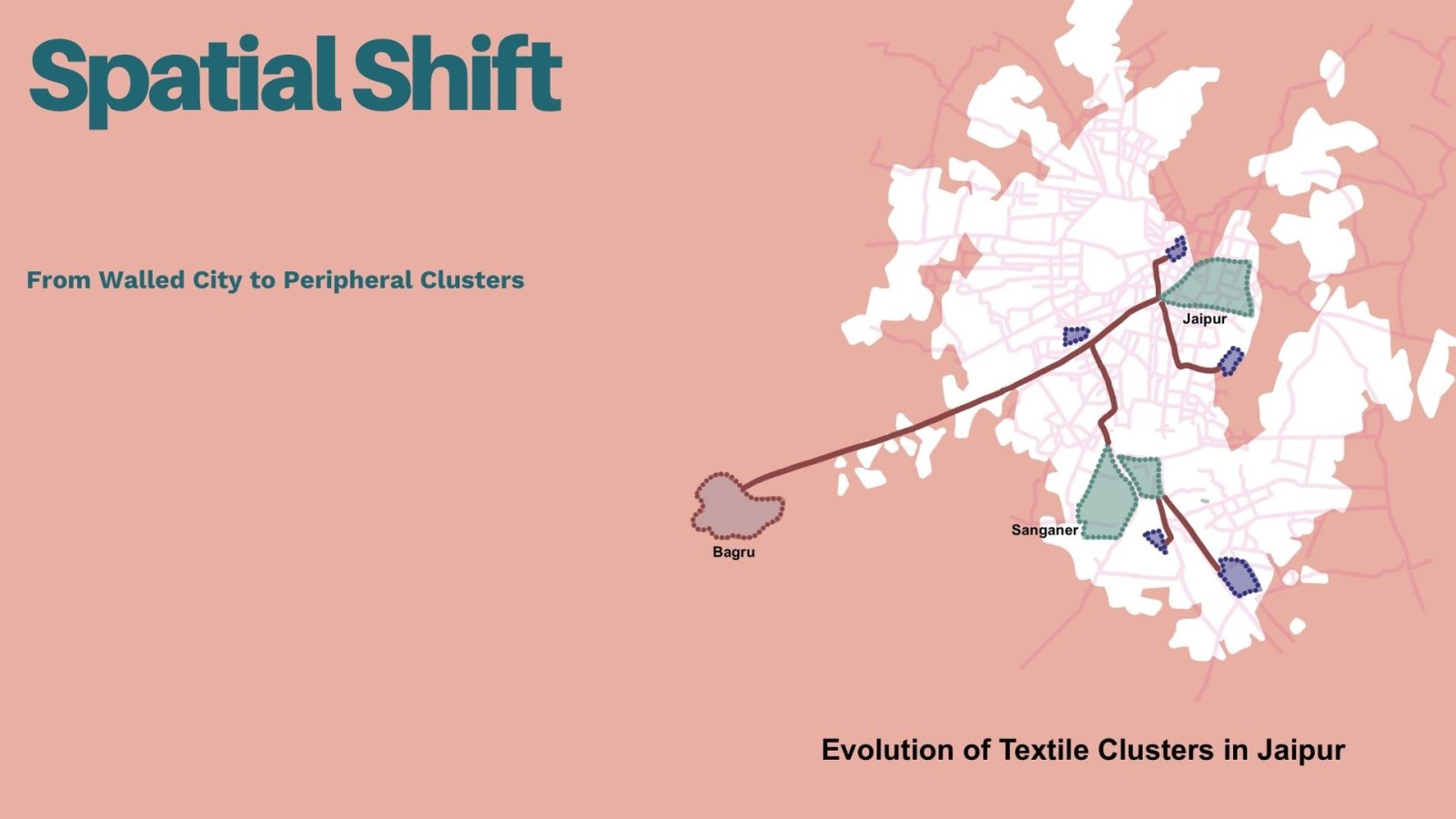
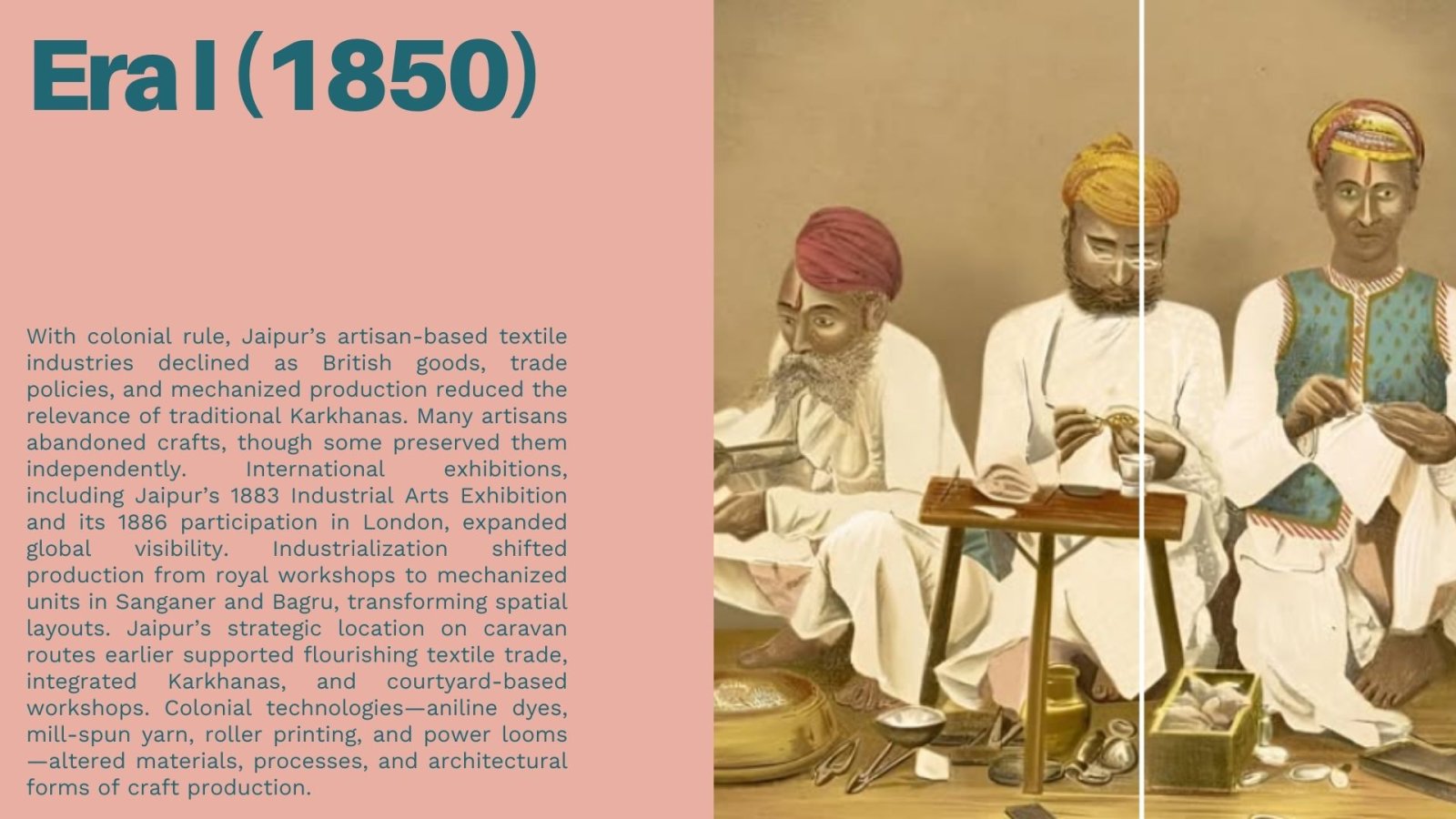
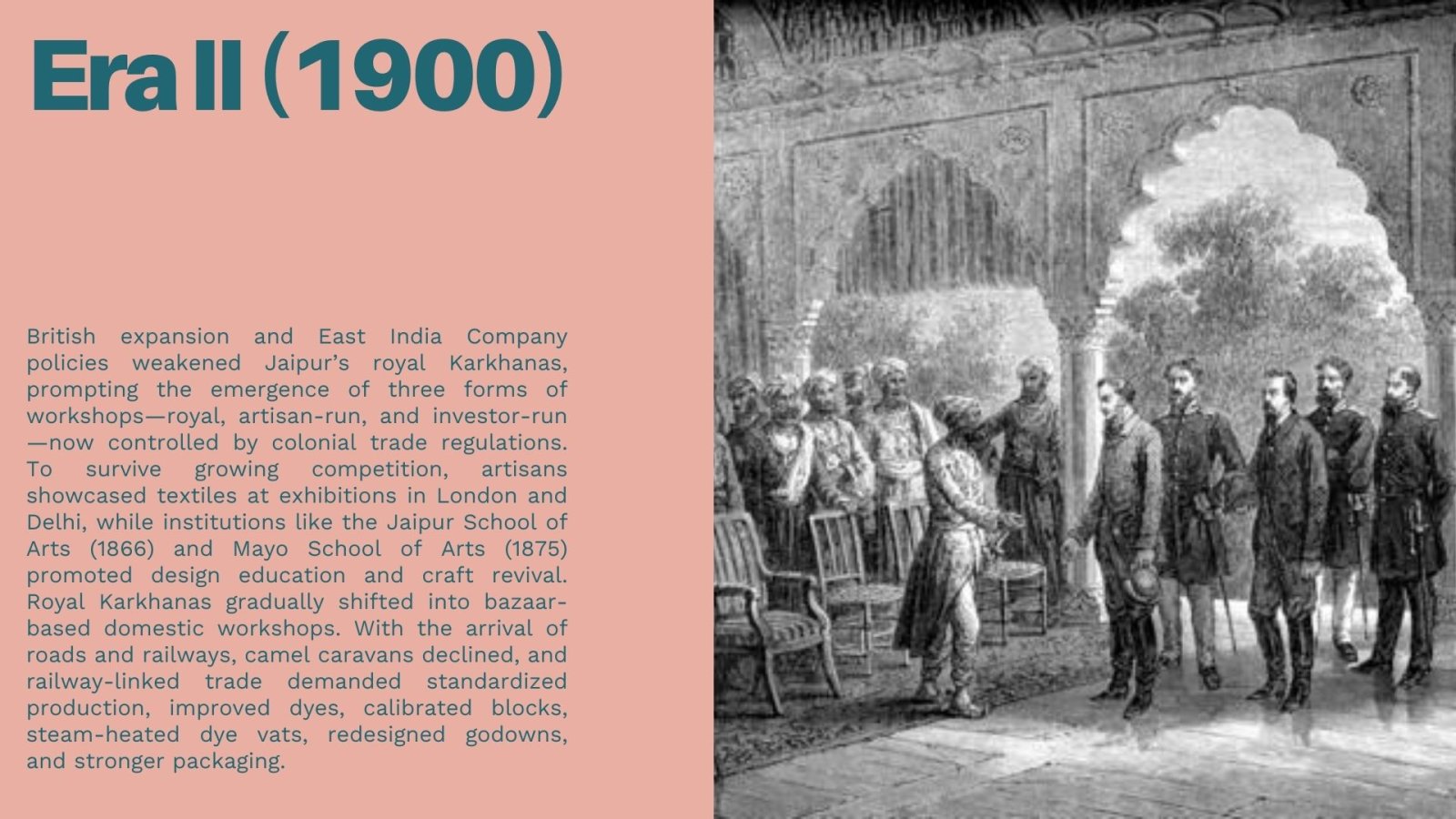
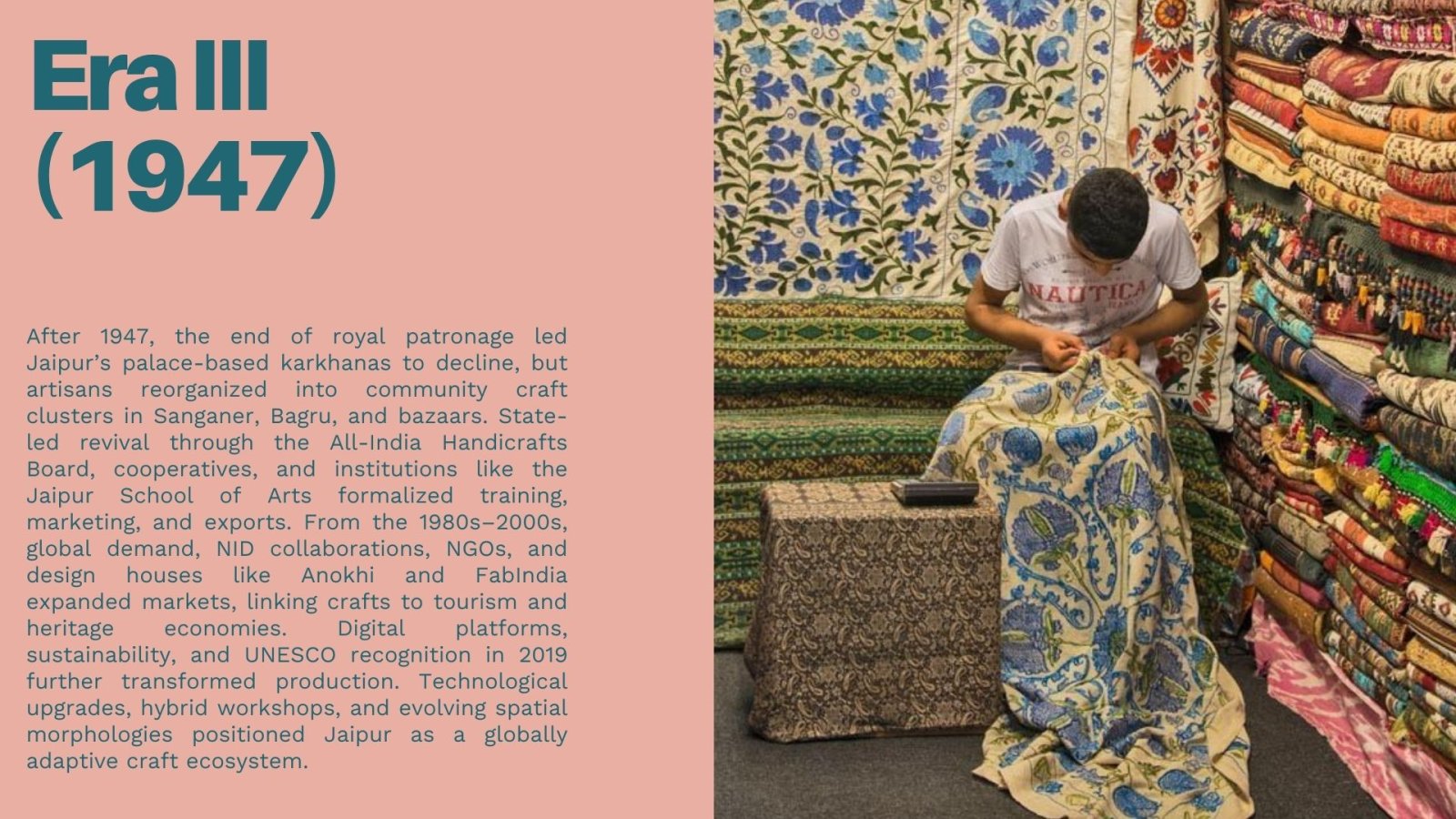
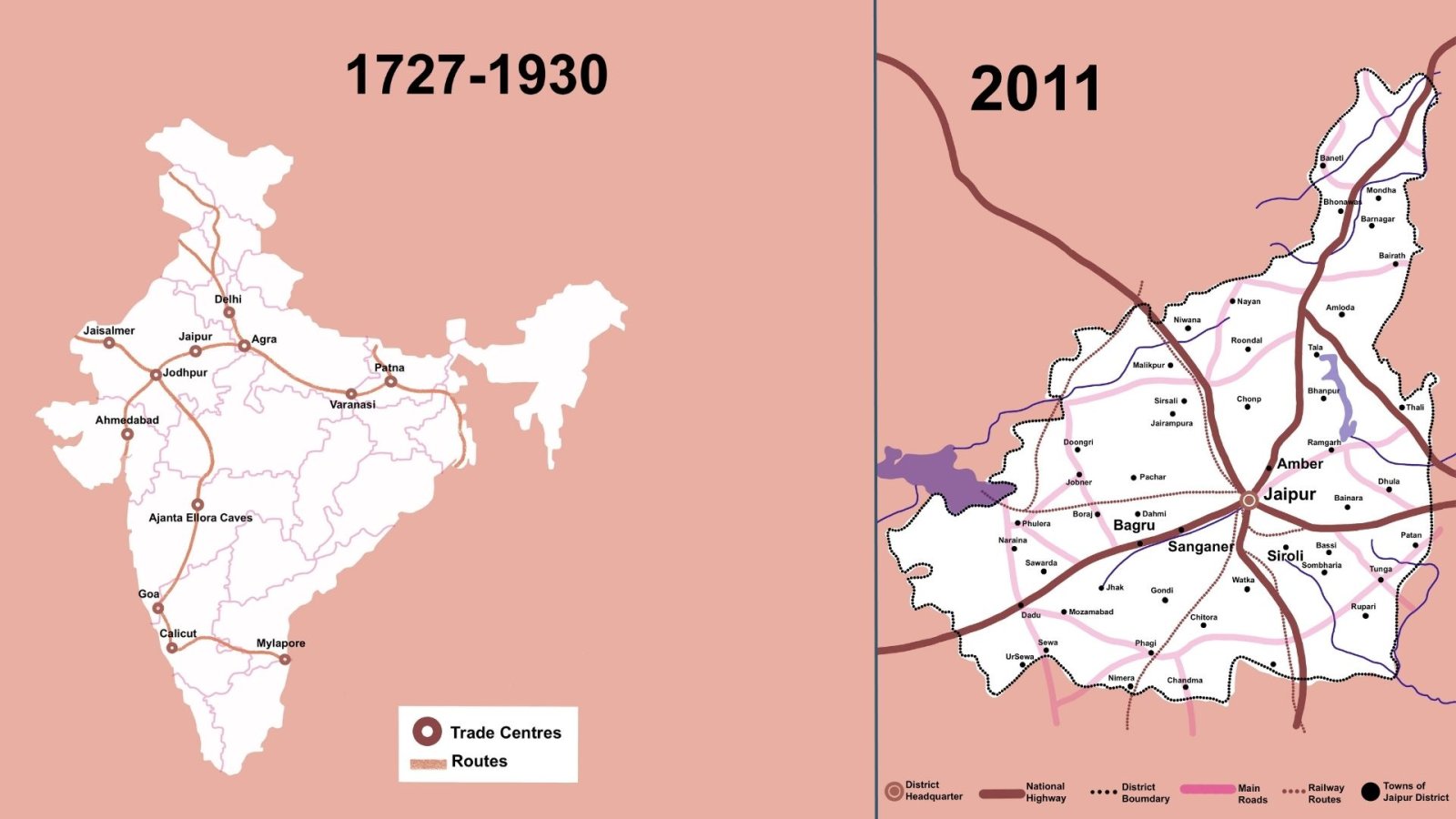
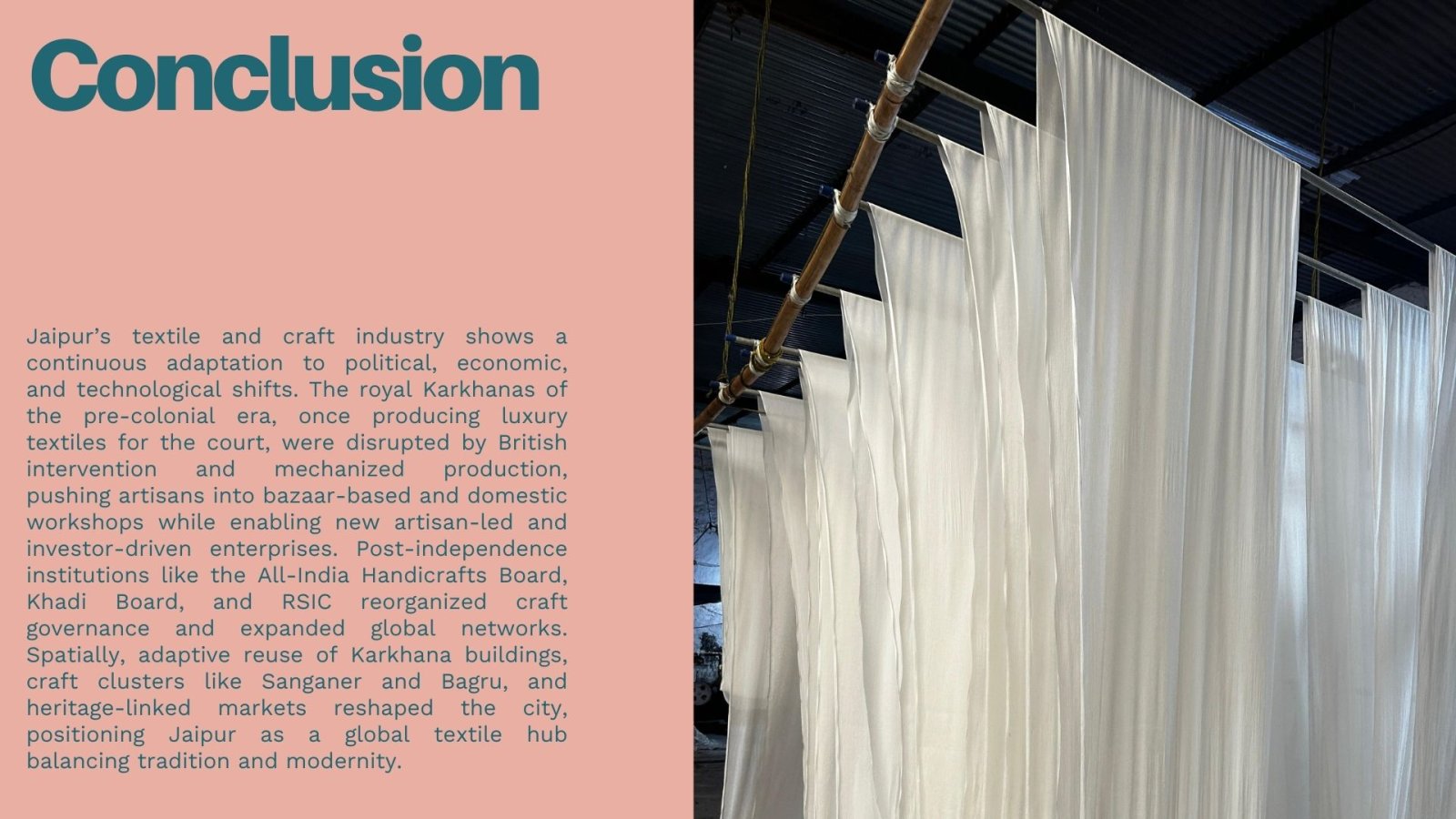
This paper examines the historical evolution of Jaipur’s textile industry, tracing its transformation from the royal Karkhana system of the eighteenth century to the contemporary global craft economy. It explores how political shifts—from the Mughal influence and Rajput patronage to colonial industrialization and post-independence revival—reshaped the production, trade, and spatial organization of textiles in Jaipur. The study analyzes three key eras (1850 1900, 1900–1947, and post-1947), emphasizing how artisanal communities, trade routes, and institutional structures adapted to changing power and economic systems. The research situates Jaipur’s craft clusters—particularly Sanganer and Bagru—as evolving nodes of textile production that transitioned from palace-based workshops to cooperative and industrial units. It also investigates the architectural and urban implications of these transformations, including the reuse of Karkhana spaces, emergence of industrial zones, and the integration of craft into heritage and tourism networks. Through archival references, trade mapping, and spatial analysis, the paper demonstrates how Jaipur’s textiles embody resilience and continuity within modern frameworks of globalization, design education, and sustainable craft economies. Ultimately, it reveals how the city’s textile traditions continue to mediate between cultural identity, material production, and urban modernity in contemporary India.
View Additional Work