Your browser is out-of-date!
For a richer surfing experience on our website, please update your browser. Update my browser now!
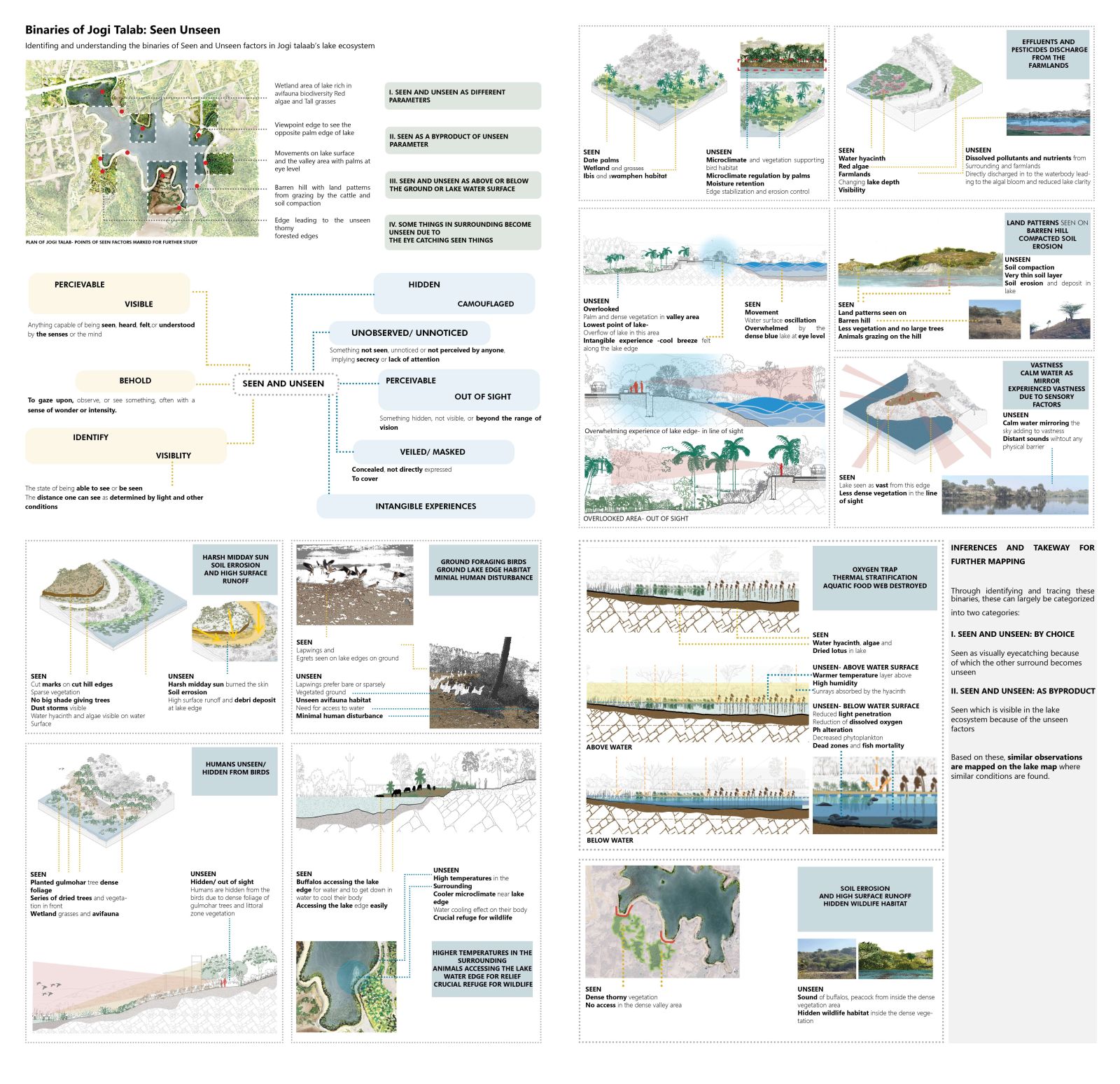
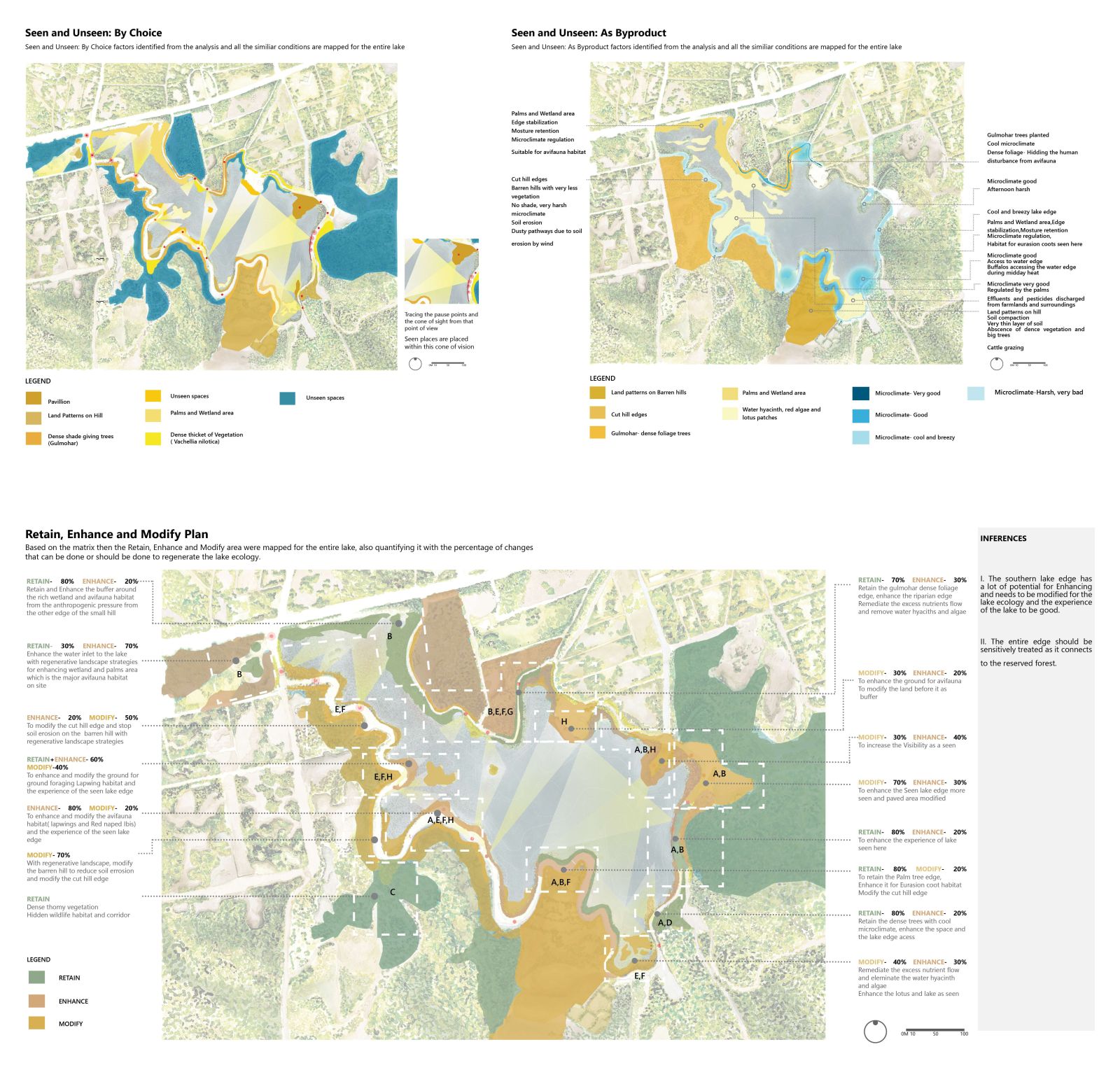
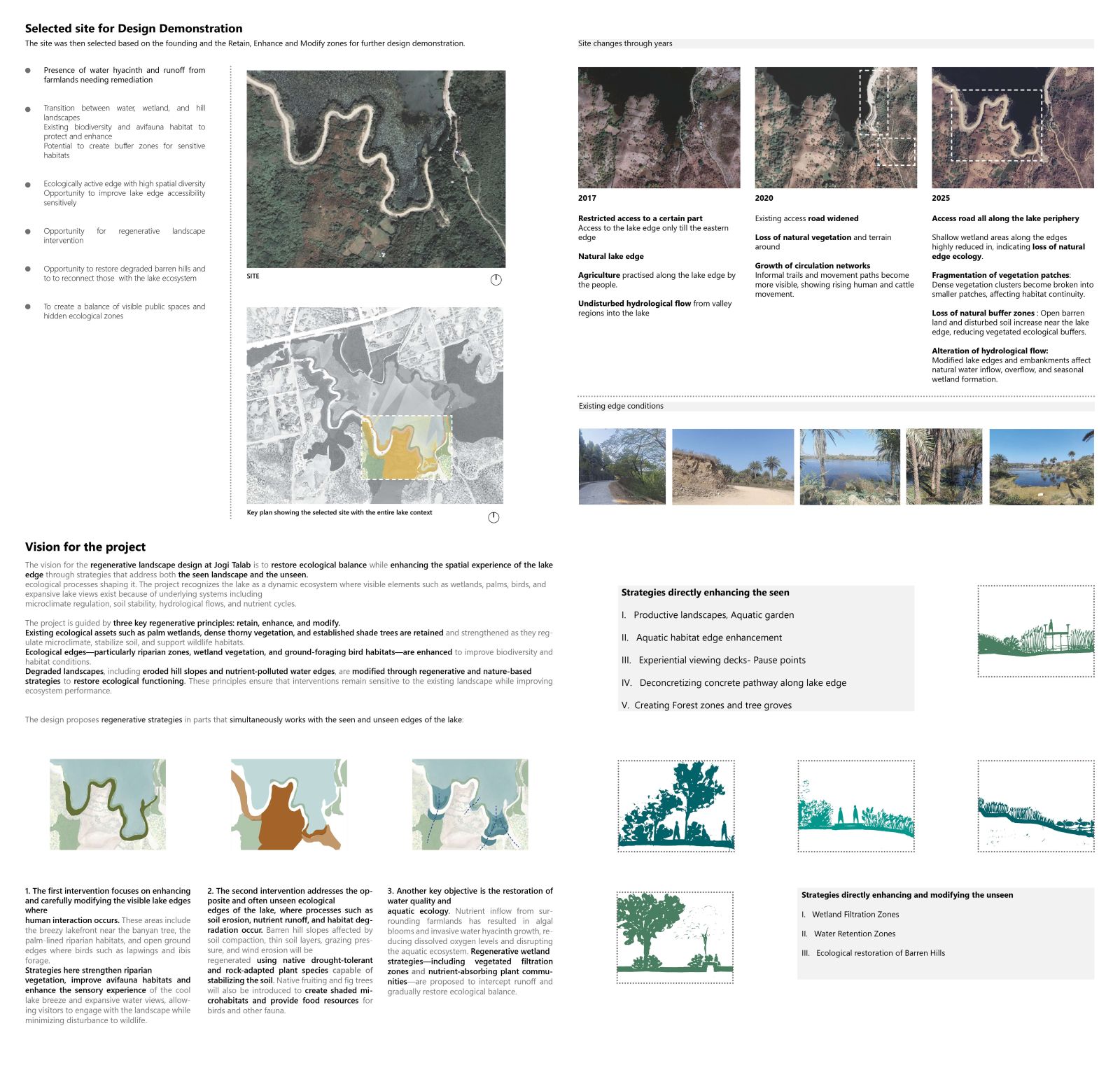
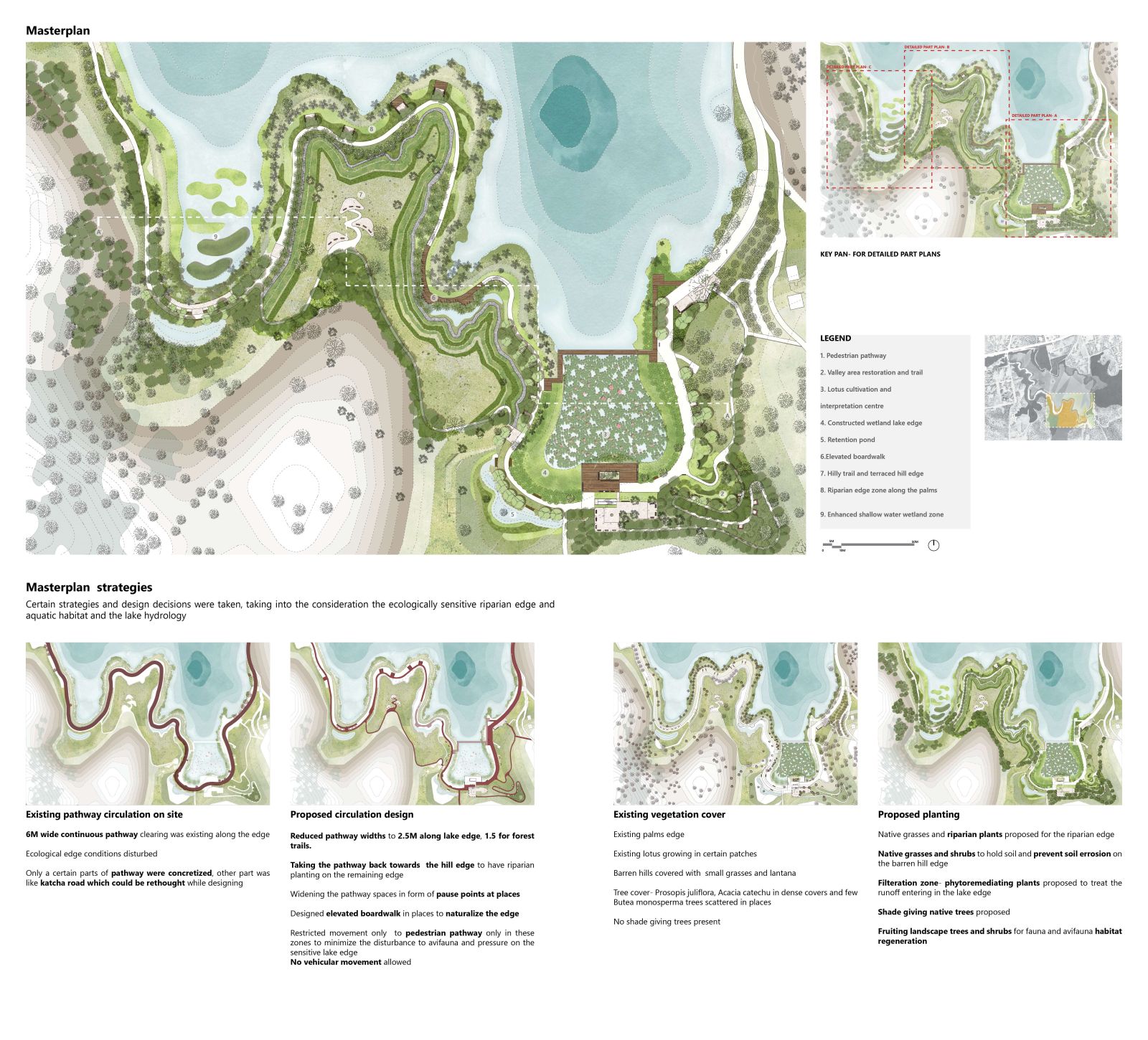
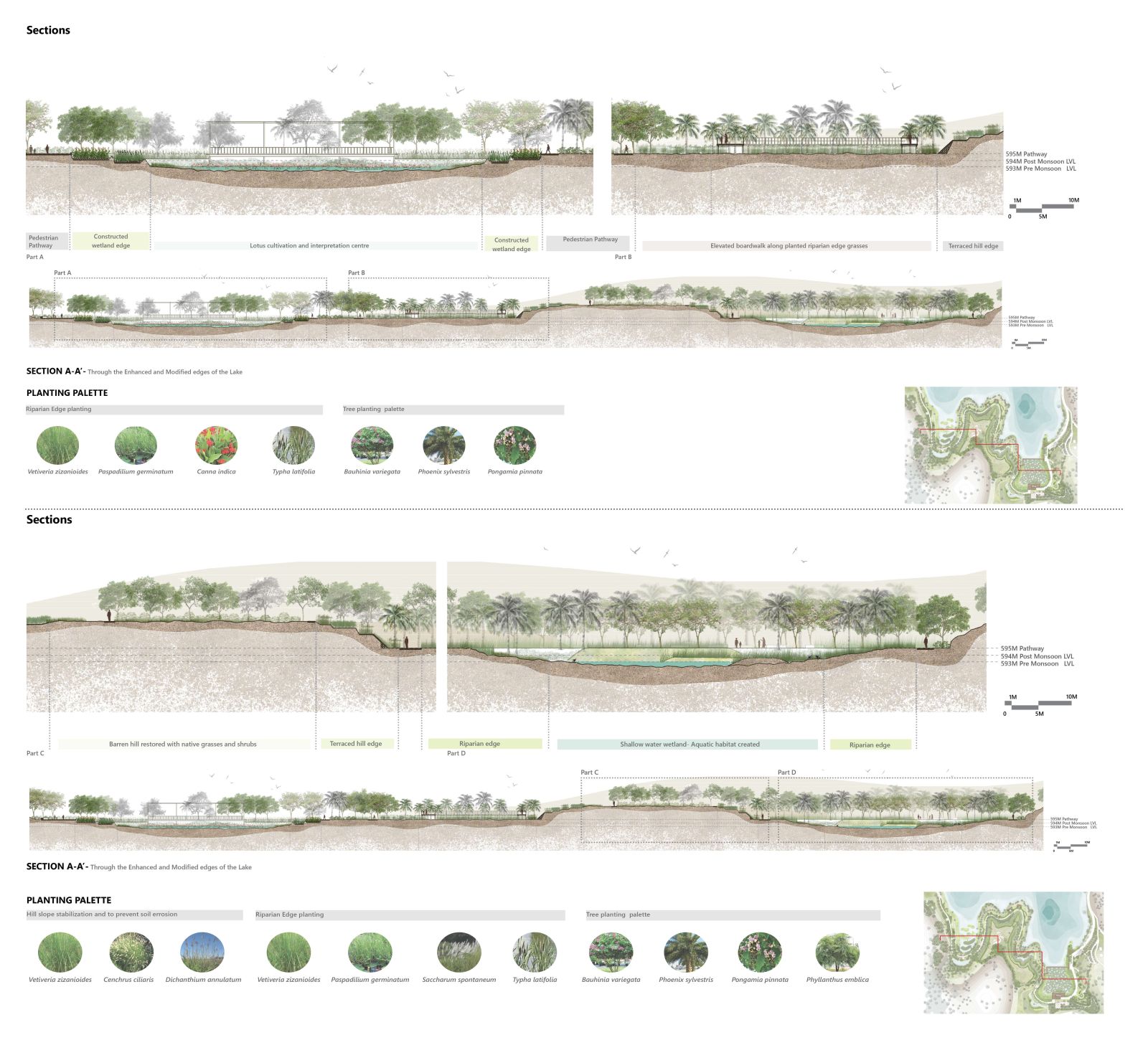
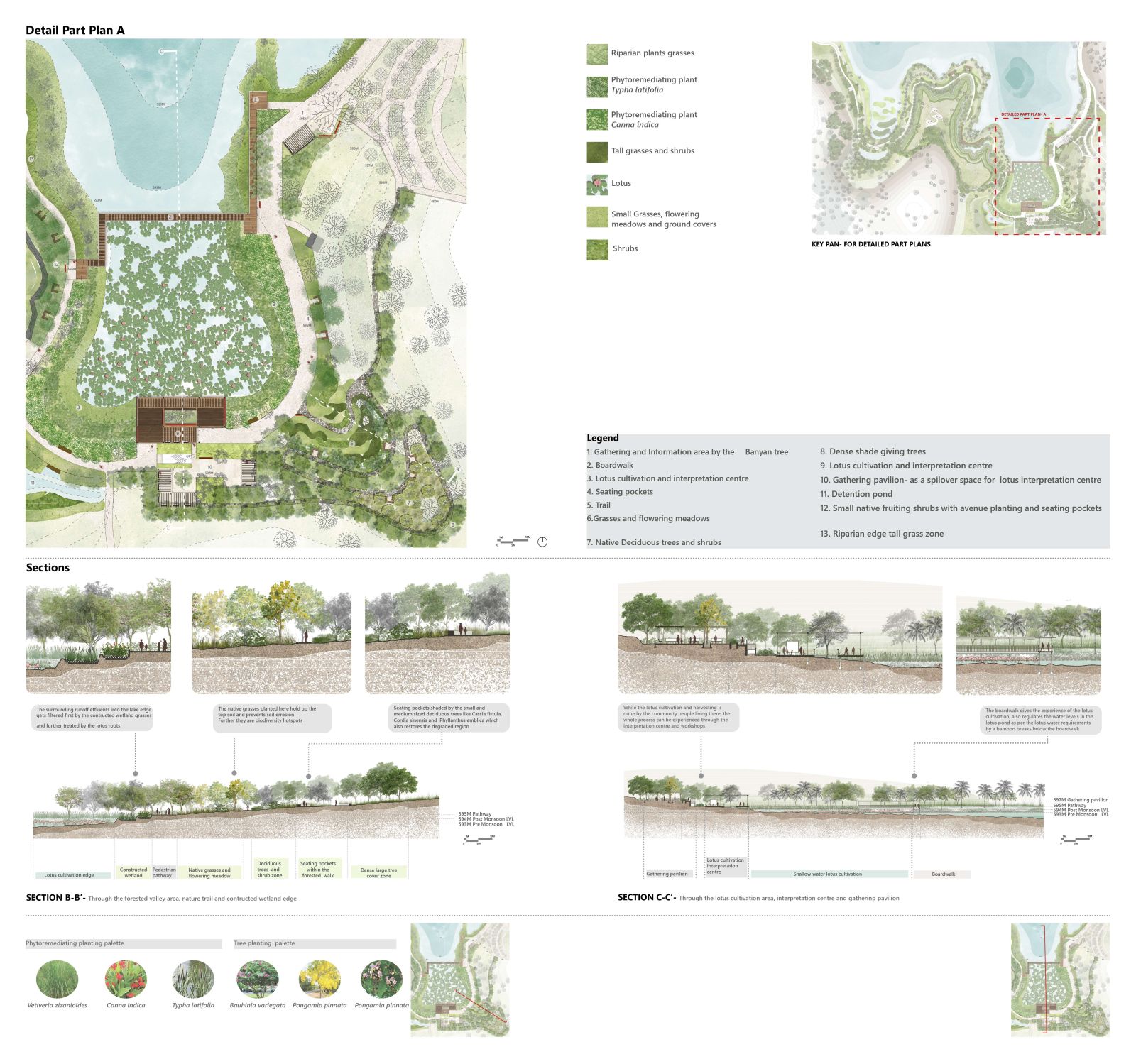
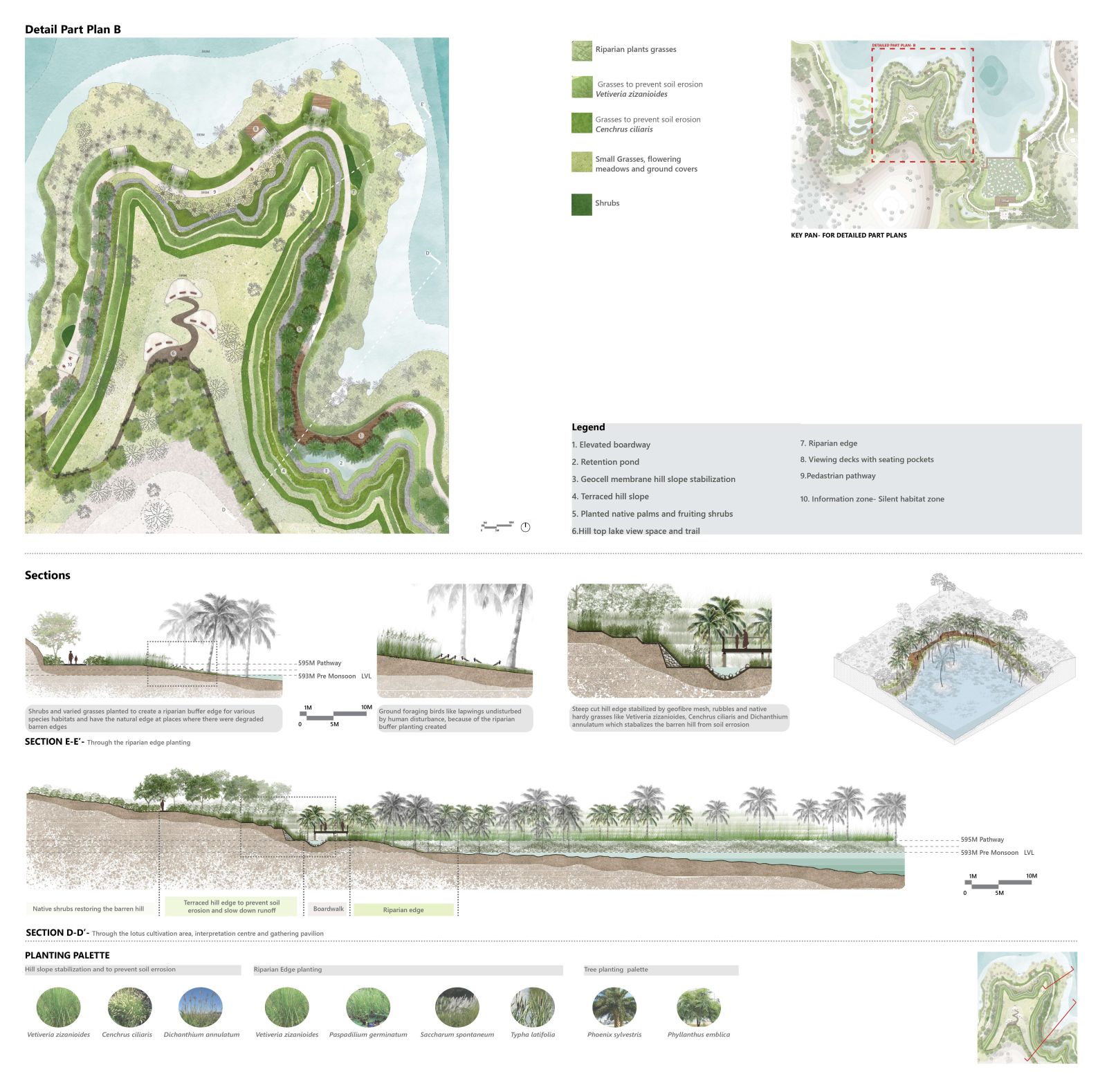
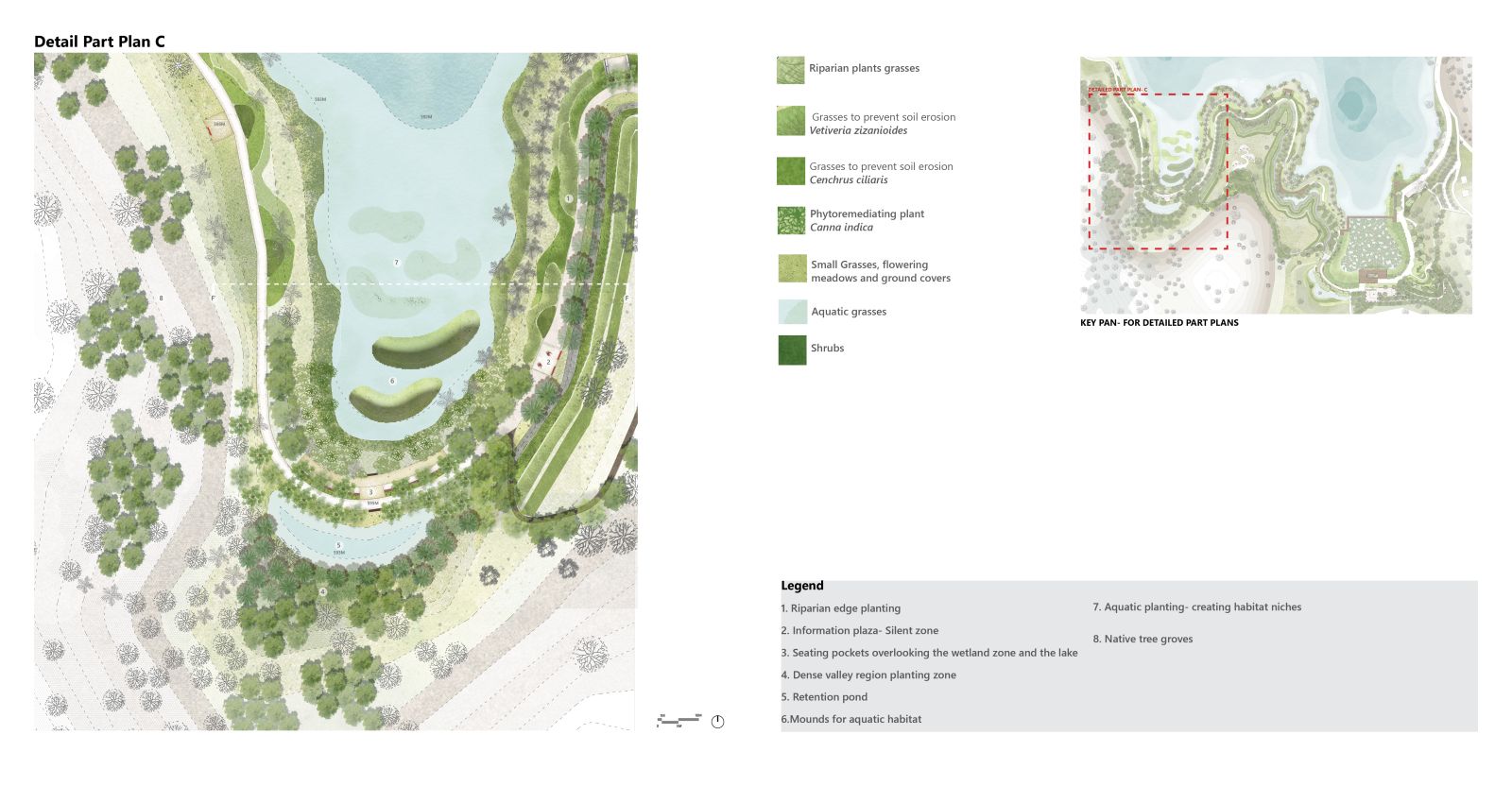
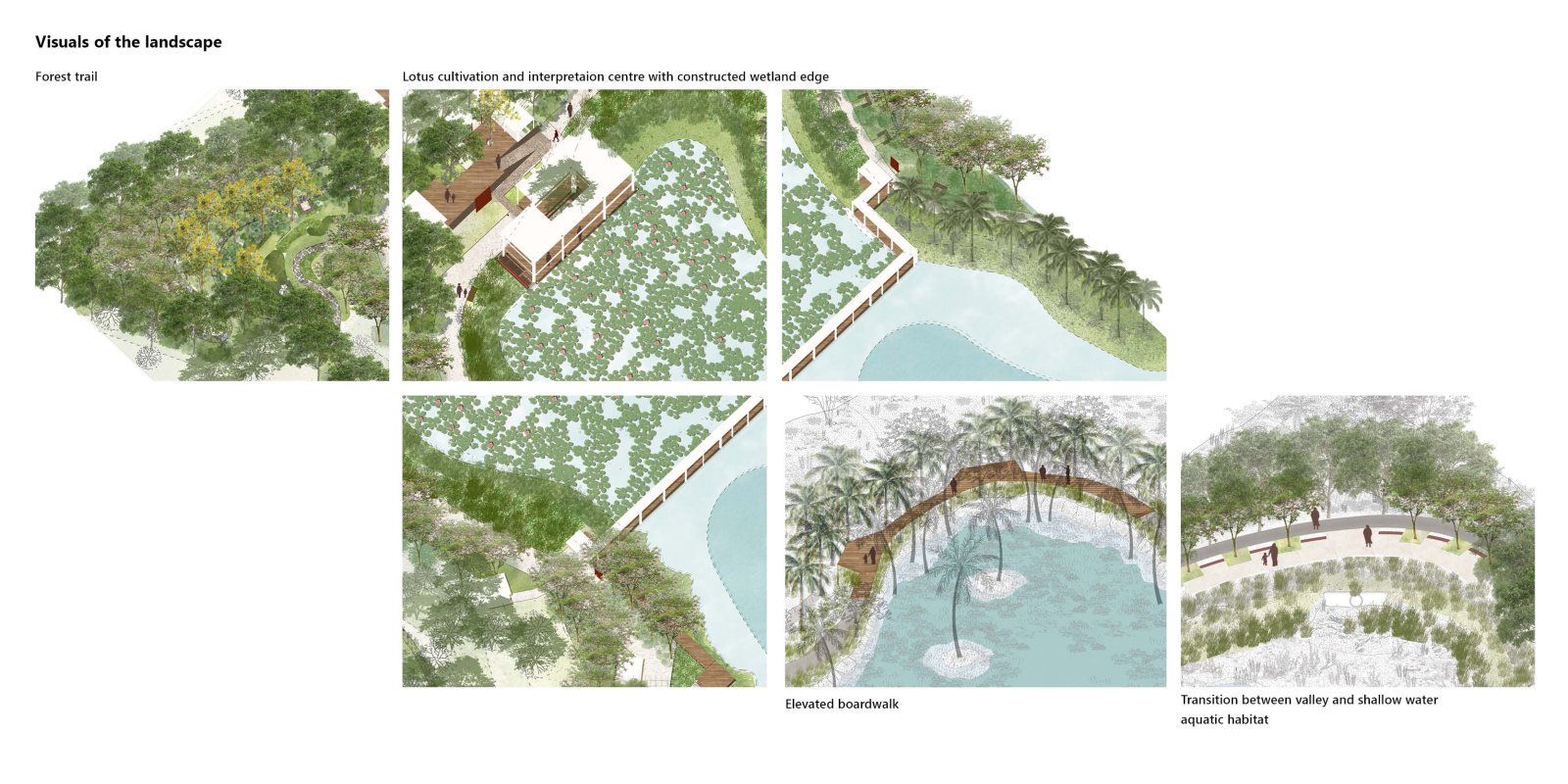
The vision for the regenerative landscape design at Jogi Talab is to restore ecological balance while enhancing the spatial experience of the lake edge through strategies that address both the seen landscape and the unseen ecological processes shaping it. The project recognizes the lake as a dynamic ecosystem where visible elements such as wetlands, palms, birds, and expansive lake views exist because of underlying systems including microclimate regulation, soil stability, hydrological flows, and nutrient cycles. The project is guided by three key regenerative principles: retain, enhance, and modify. Existing ecological assets such as palm wetlands, dense thorny vegetation, and established shade trees are retained and strengthened as they regulate microclimate, stabilize soil, and support wildlife habitats. Ecological edges—particularly riparian zones, wetland vegetation, and ground-foraging bird habitats—are enhanced to improve biodiversity and habitat conditions. Degraded landscapes, including eroded hill slopes and nutrient-polluted water edges, are modified through regenerative and nature-based strategies to restore ecological functioning. These principles ensure that interventions remain sensitive to the existing landscape while improving ecosystem performance. The design proposes regenerative strategies in parts that simultaneously works with the seen and unseen edges of the lake. The first intervention focuses on enhancing and carefully modifying the visible lake edges where human interaction occurs. These areas include the breezy lakefront near the banyan tree, the palm-lined riparian habitats, and open ground edges where birds such as lapwings and ibis forage. Strategies here strengthen riparian vegetation, improve avifauna habitats, and enhance the sensory experience of the cool lake breeze and expansive water views, allowing visitors to engage with the landscape while minimizing disturbance to wildlife. The second intervention addresses the opposite and often unseen ecological edges of the lake, where processes such as soil erosion, nutrient runoff, and habitat degradation occur. Barren hill slopes affected by soil compaction, thin soil layers, grazing pressure, and wind erosion will be regenerated using native drought-tolerant and rock-adapted plant species capable of stabilizing the soil. Native fruiting and fig trees will also be introduced to create shaded microhabitats and provide food resources for birds and other fauna. Another key objective is the restoration of water quality and aquatic ecology. Nutrient inflow from surrounding farmlands has resulted in algal blooms and invasive water hyacinth growth, reducing dissolved oxygen levels and disrupting the aquatic ecosystem. Regenerative wetland strategies—including vegetated filtration zones and nutrient-absorbing plant communities—are proposed to intercept runoff and gradually restore ecological balance. Through these interventions, the project aims to transform Jogi Talab into a resilient regenerative landscape where ecological restoration and human experience coexist. By stabilizing soils, restoring wetland habitats, improving water quality, and strengthening lake-edge microclimates, the design enhances biodiversity while allowing people to experience the calm, breezy, and reflective character of the lake.
View Additional Work