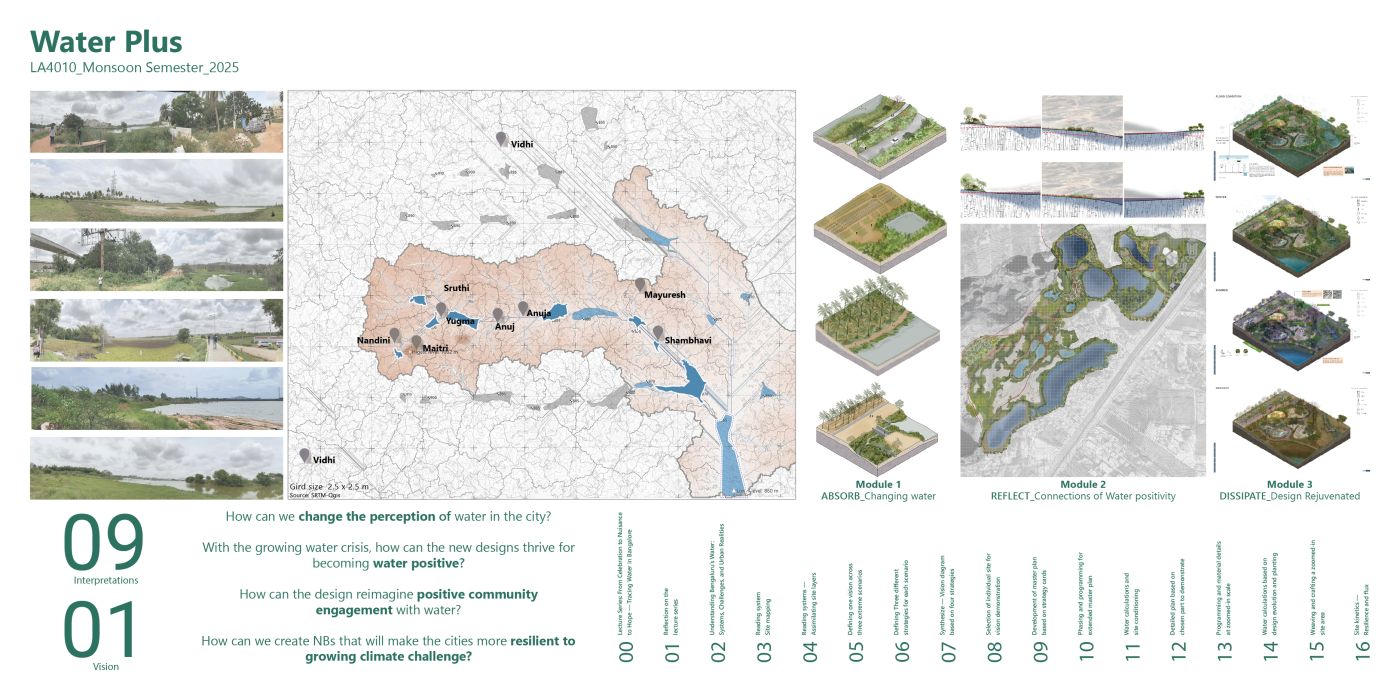
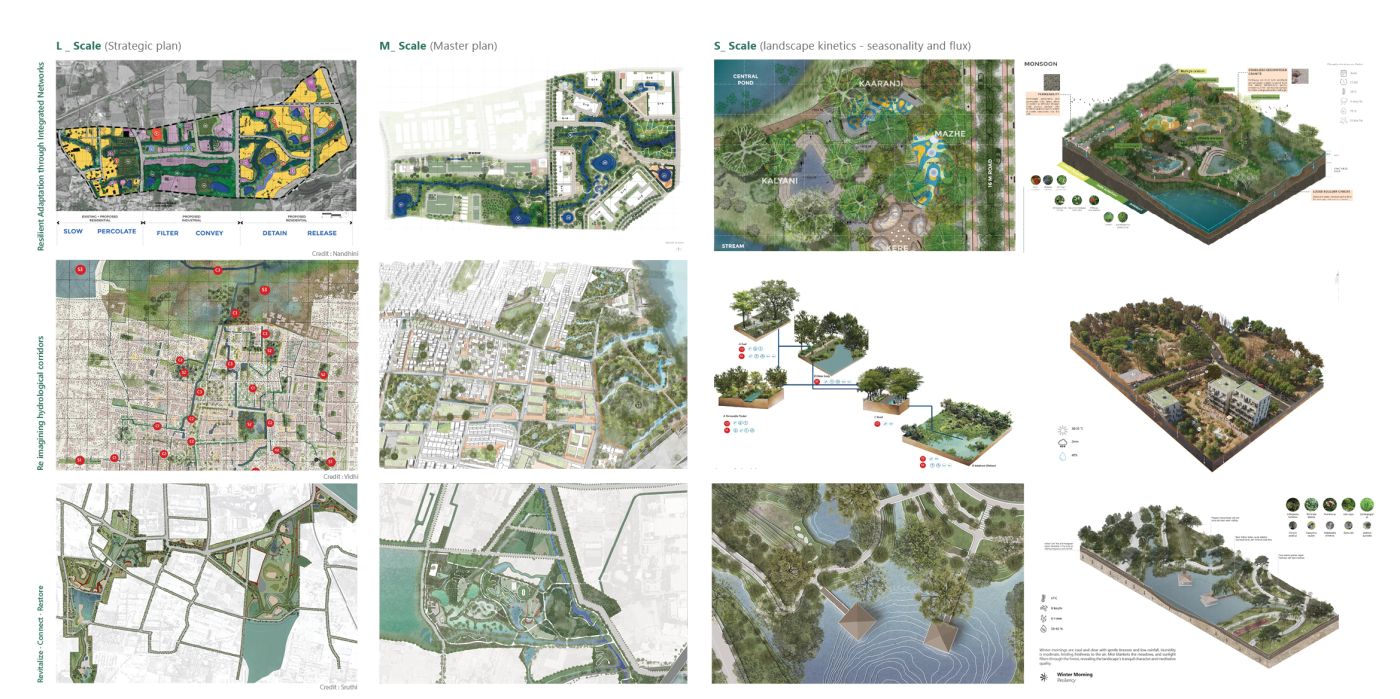
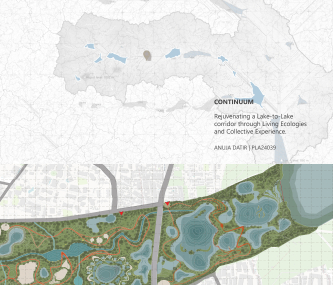
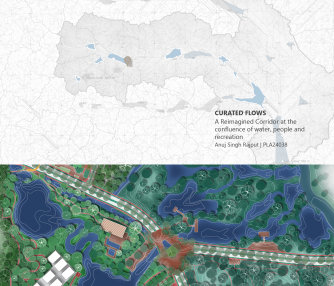
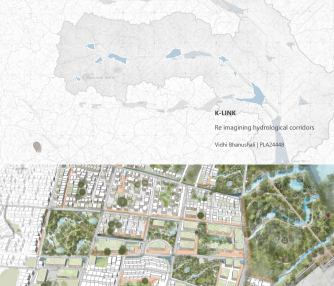
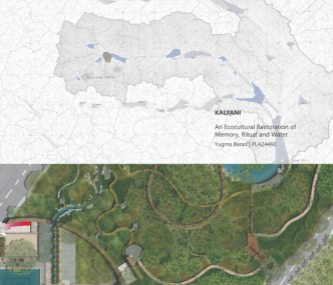
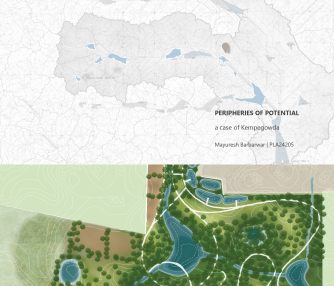
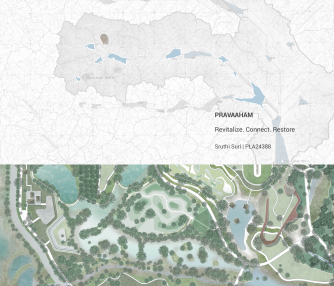
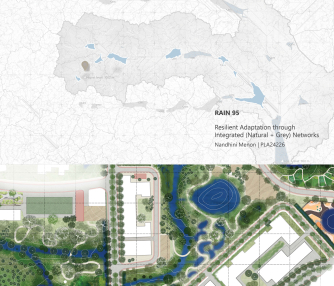
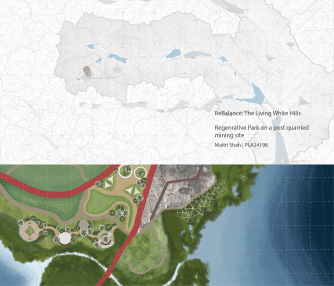
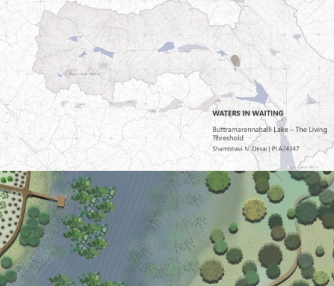
Constant dependence on groundwater, coupled with diminishing recharge capacity, makes urban water bodies vulnerable. Many of these unacknowledged, often temporal water bodies are affected by untreated sewage and garbage dumping. They go through the cycle of negligence, degradation, and diminish to become eyesore. With climate extremes and a dearth of open spaces, there has never been a more urgent need to protect the existing and restore these damaged ecosystems than now - both socially and environmentally. Hence, the studio explores Nature-based designs around these water-holding sites as catalysts to generate innovative social spaces. Keeping water positivity as a focus, the unit shall identify a site in the urban or peri-urban fringe, first to analyze and define a problem. Then it will weave in the water calculation models along with contextual parameters to establish a conceptual framework, that will reconnect these sites with people. The studio is structured in three modules – site vision, master plan development, and detailed site design, moving through the L, M, and S scales of intervention. Students will have to construct the multi-dimensional problem and then craft adaptive solutions around these disturbed water site/s that can be tested across time and adverse scenarios.
Studio Process (Weeks 1–16): The first three weeks were conducted as a joint collaboration with GSAPP, Columbia University.
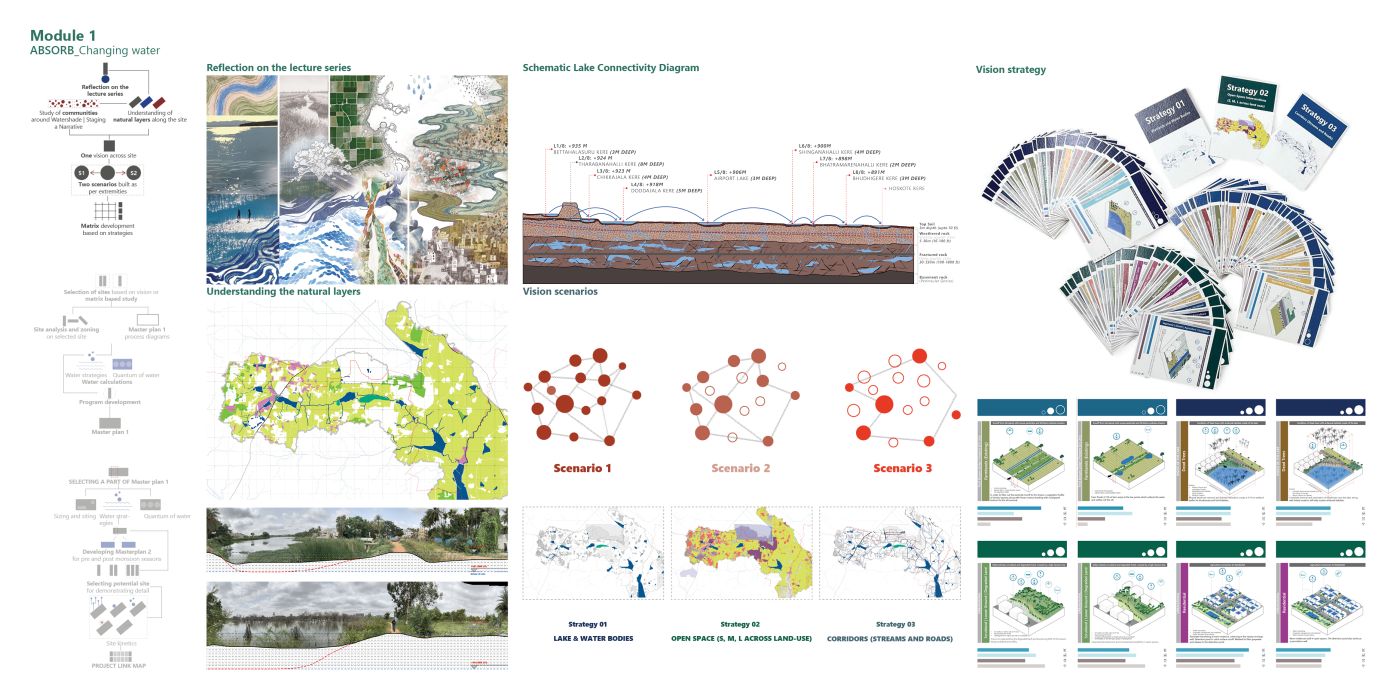
Module I: ABSORB (L scale) The first module builds understanding and recording the dynamics of the site and people. This leads to crafting a water positive vision along with detailed typologies of strategies across different scenarios
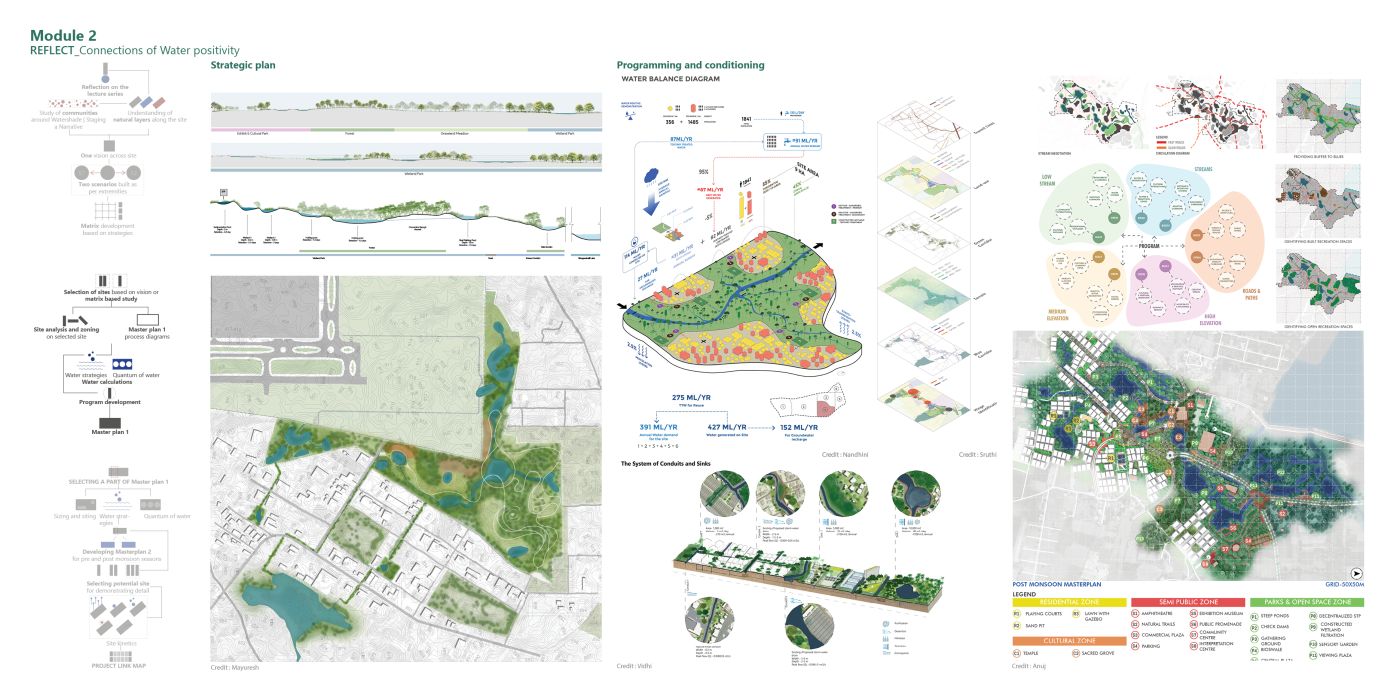
Module II: REFLECT (M scale) Moving along the framework set by the vision strategies, the second module focuses on water calculations, site programming, and design iterations to create a master plan
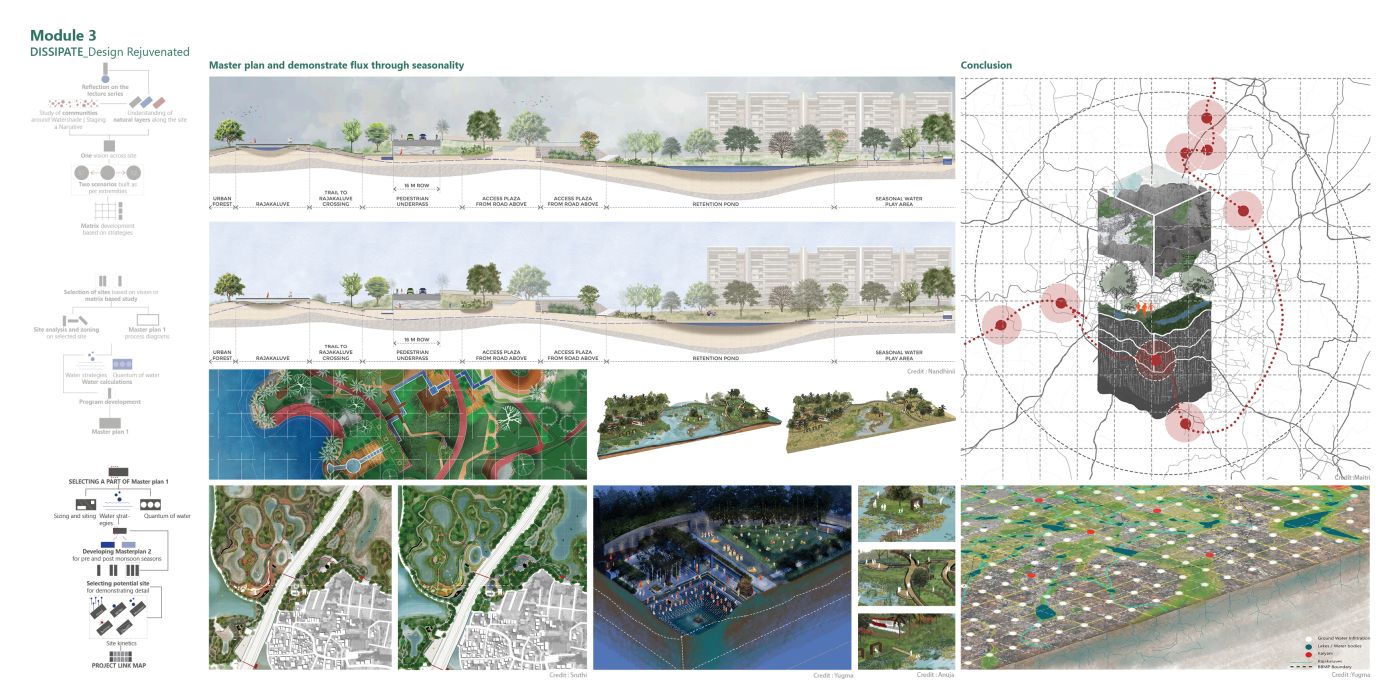
Module III: DISSIPATE (S scale). Taking a part of the master plan, a detailed design is developed to be tested for landscape resilience through seasonal and extreme fluxes
Design progress across modules - demonstrating resolution across scales