Dhwani Vadher

LA4010

A LIVING LEGACY

With Ahmedabad preparing for the Commonwealth Games 2030 and the possibility of hosting the Olympics 2036, the proposed 370-acre SVP site presents an opportunity to rethink the role of mega-event infrastructure in shaping the city's future. The project addresses the challenge of accommodating large-scale sporting events while ensuring that the landscape remains relevant and beneficial beyond their duration. The brief focuses on developing an integrated landscape framework that responds to existing ecological systems, including the Sabarmati River, Koteshwar Ravine and Motera Ash Pond, while addressing concerns of water degradation, ecological fragmentation and limited public access. It aims to establish a water-sensitive and ecologically connected landscape that supports event-related activities in the initial phase and evolves into a multifunctional public realm after the event. The transformation envisions spaces for recreation, sports, culture, community engagement and ecological regeneration, creating a lasting public asset for Ahmedabad.

Disclaimer: This is a student academic project based on data from AMC. It is not an official plan, project, or proposal.
View Additional Work

Report Content

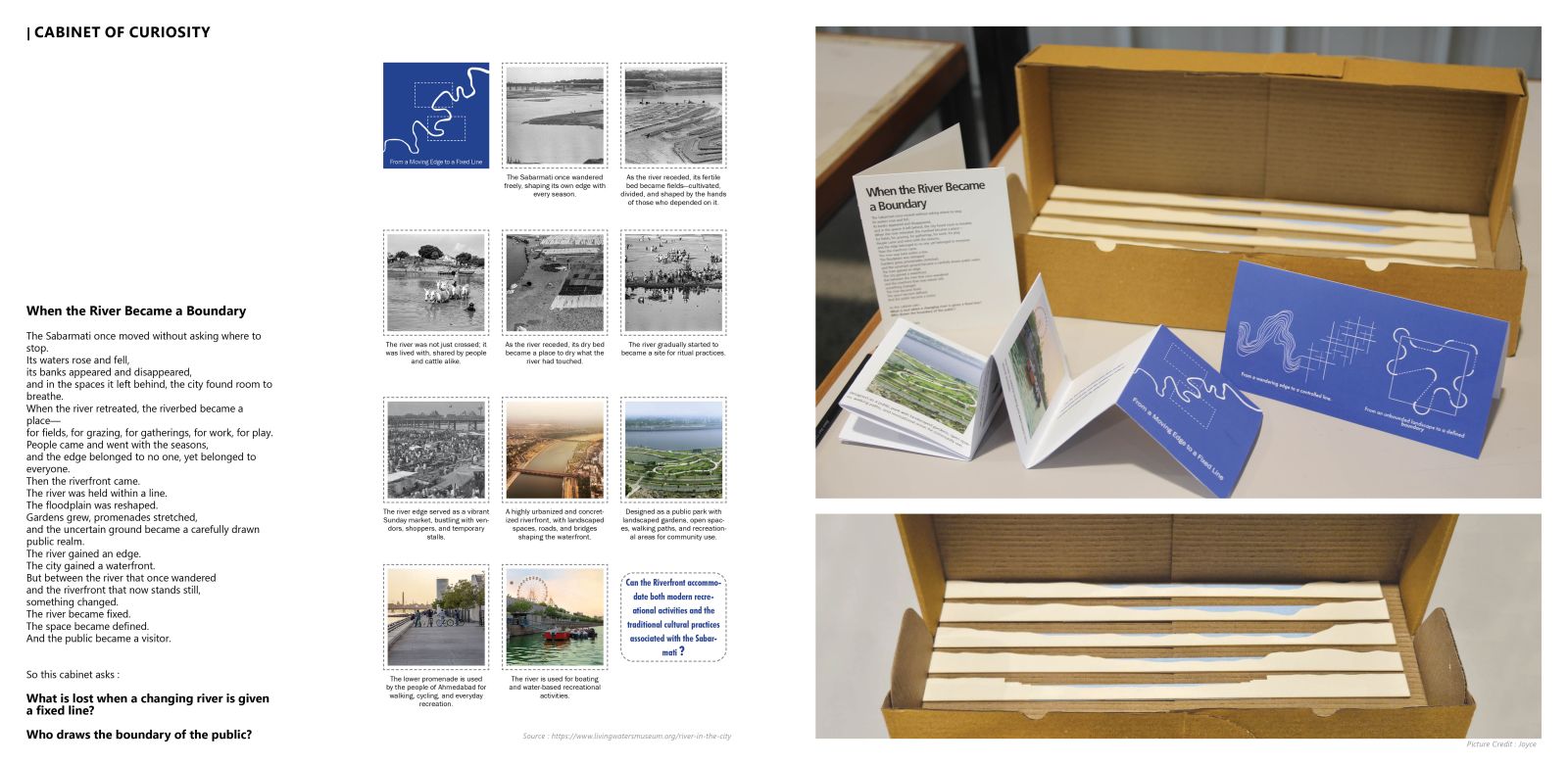
An exploration of the site's identity and its evolving relationship with the city. Establishing an initial perspective to question and reinterpret the landscape.

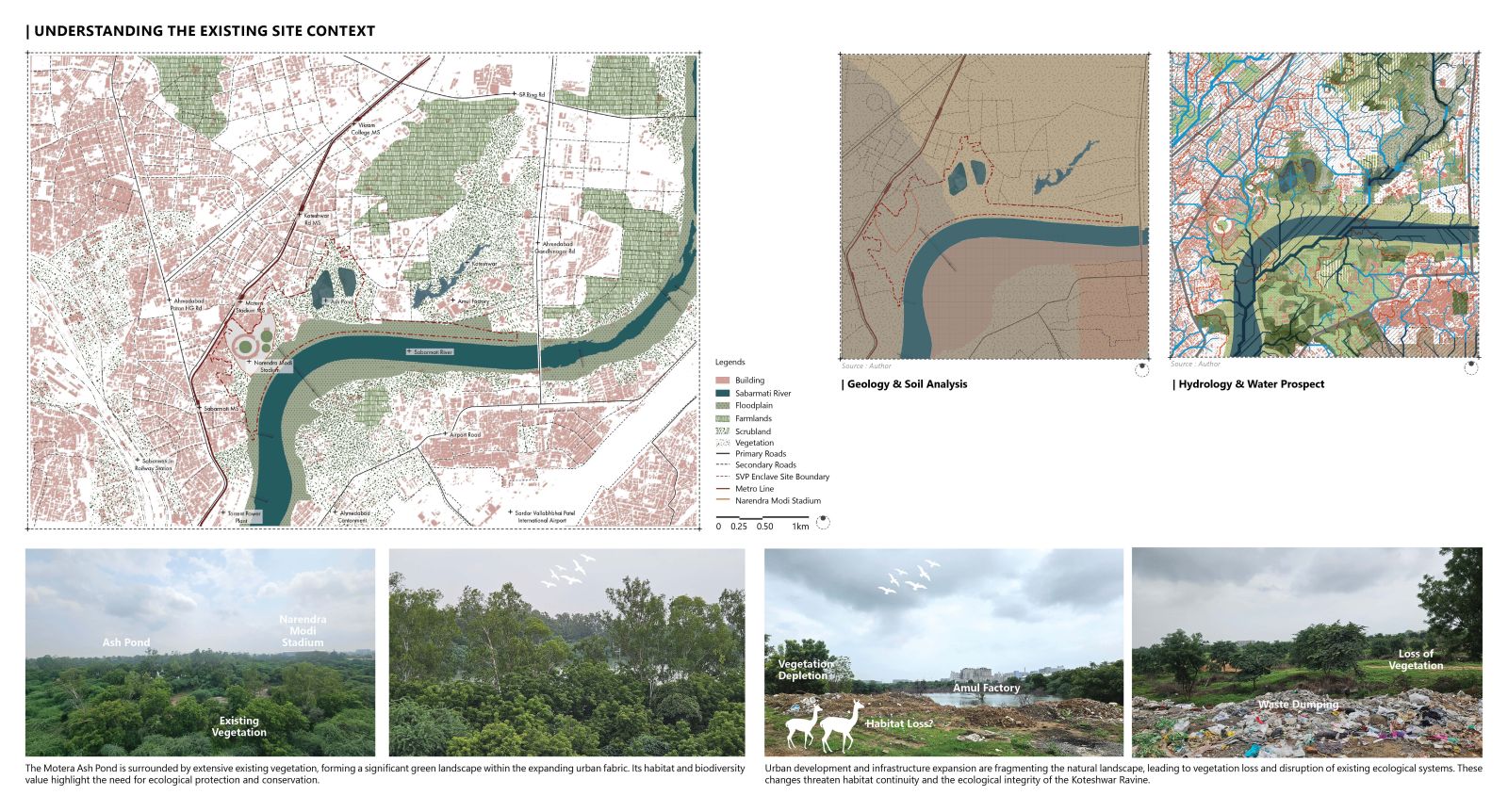
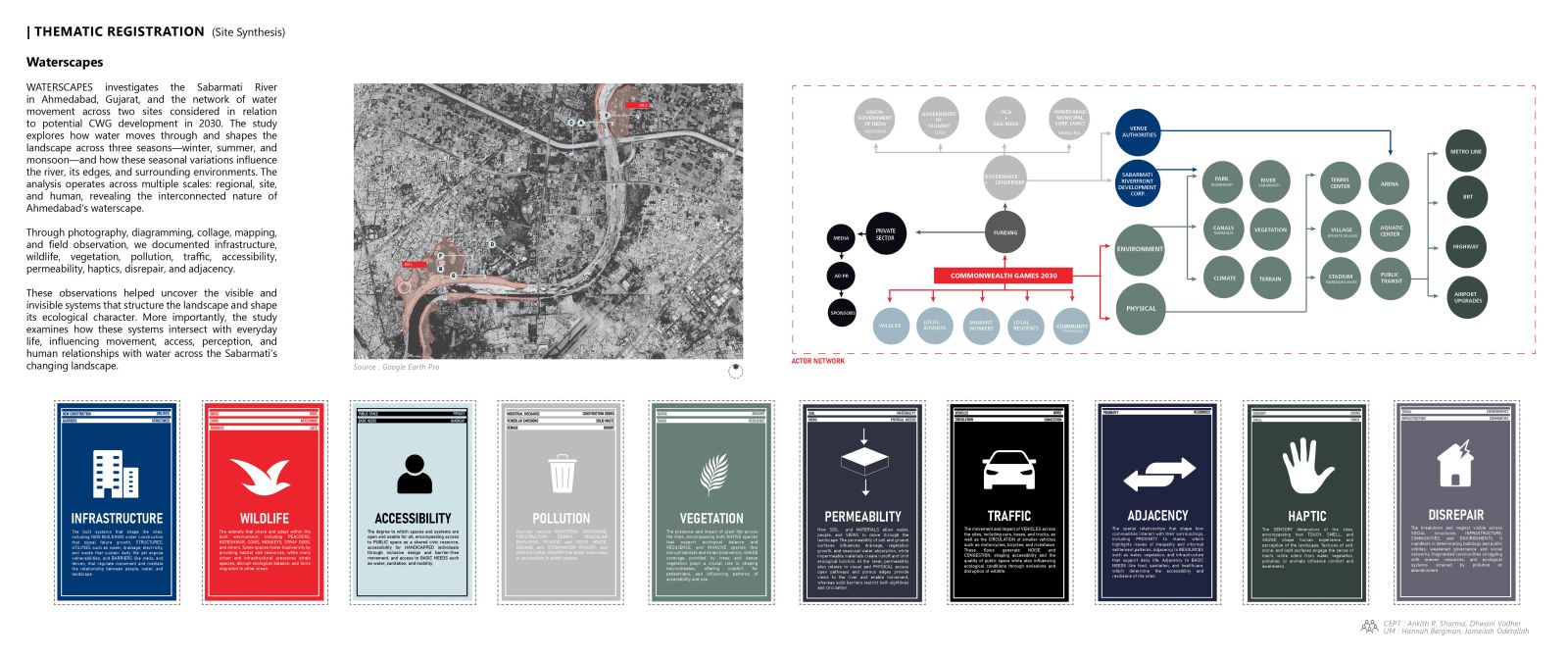
Developing an understanding of the site's interconnected systems and their influence on the larger landscape. Establishing a foundation for informed design decisions.

Understanding the site's position within its larger urban and ecological setting. Identifying the relationship between its existing landscape and future development.

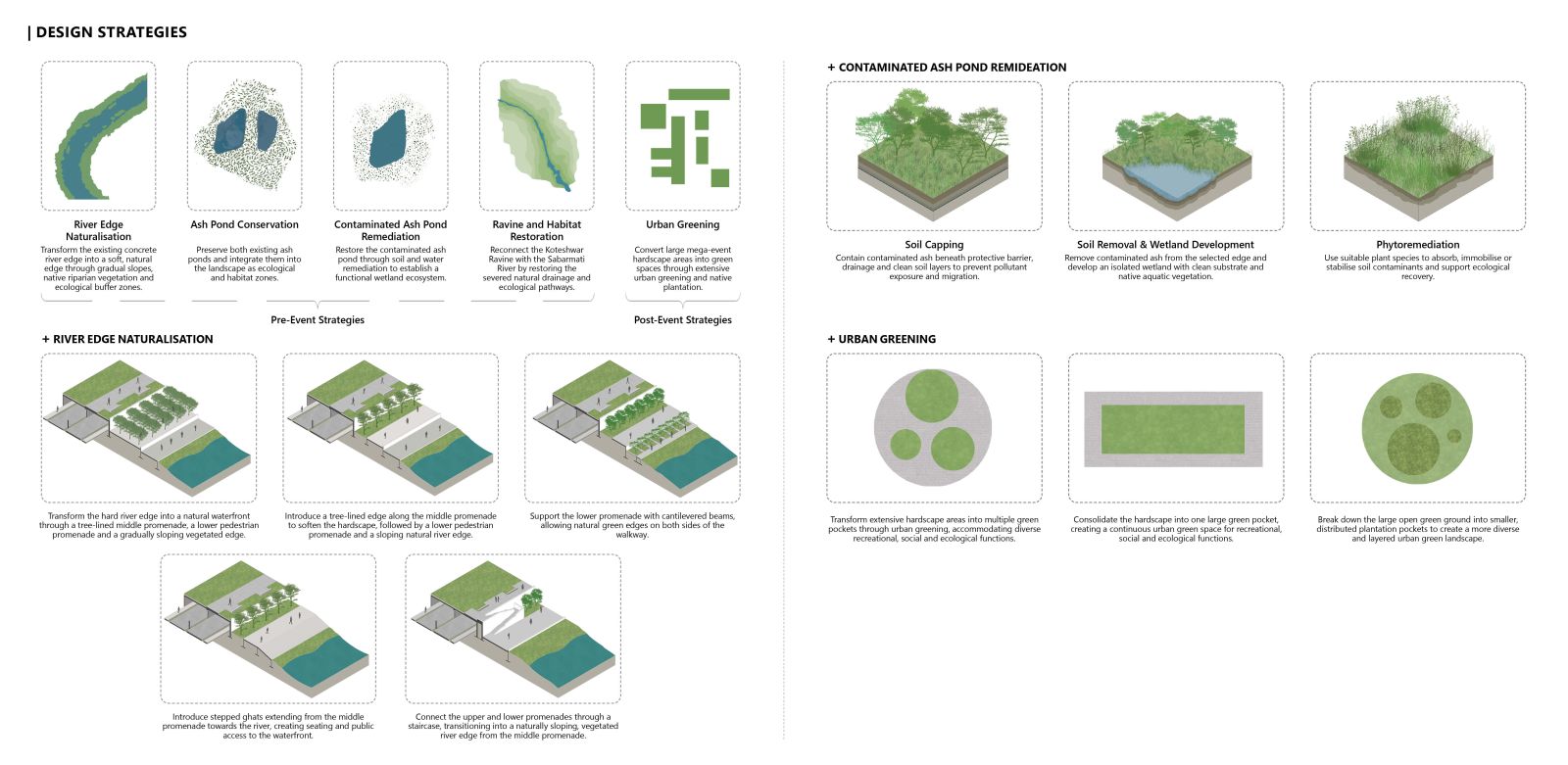
Establishing a landscape framework that responds to the demands of both event and post-event phases. Balancing immediate requirements with long-term urban and ecological aspirations.

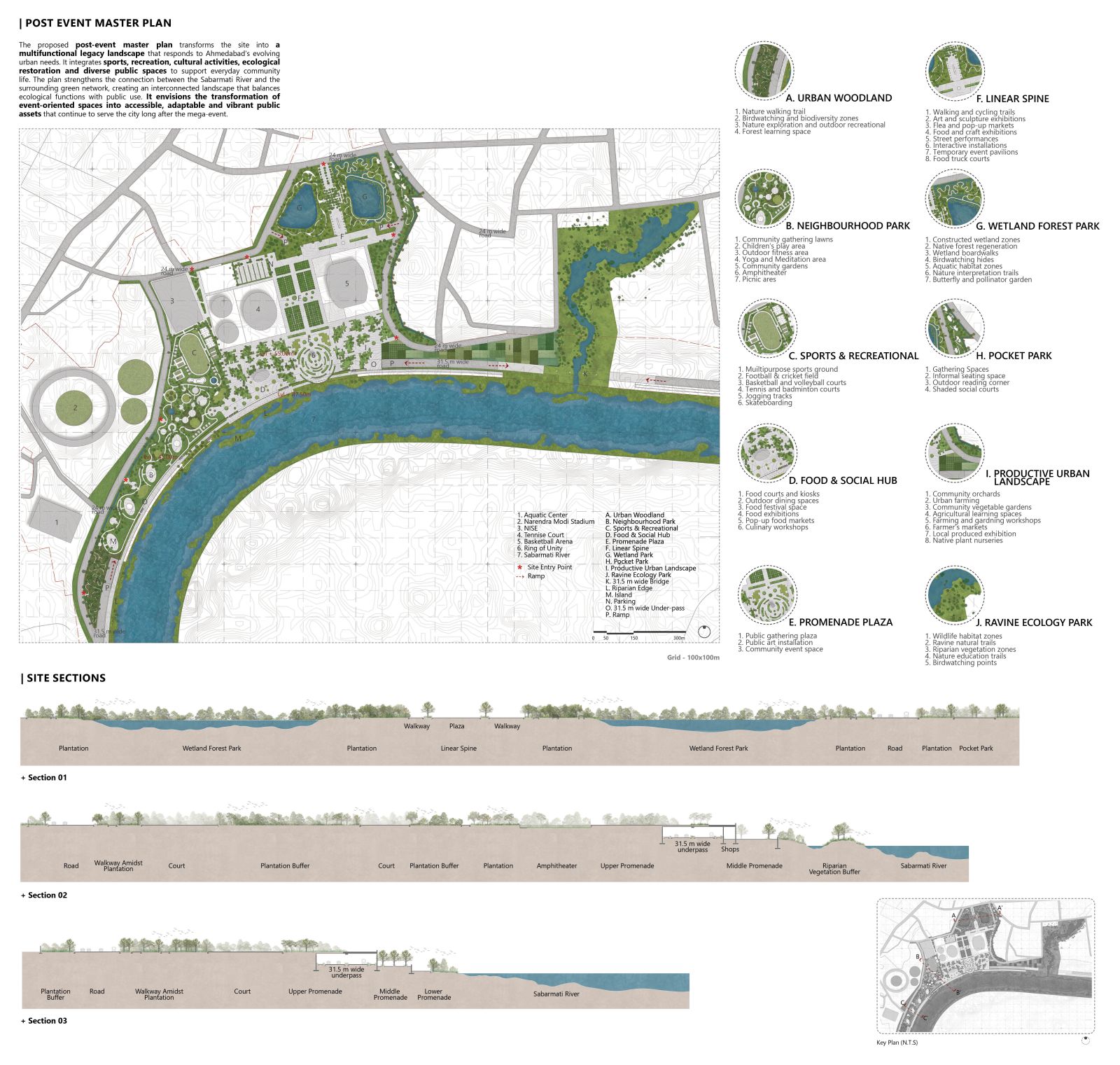
Envisioning the site's transformation into a lasting public landscape beyond the mega-event. Establishing a long-term spatial vision that integrates public life, ecology and urban needs.

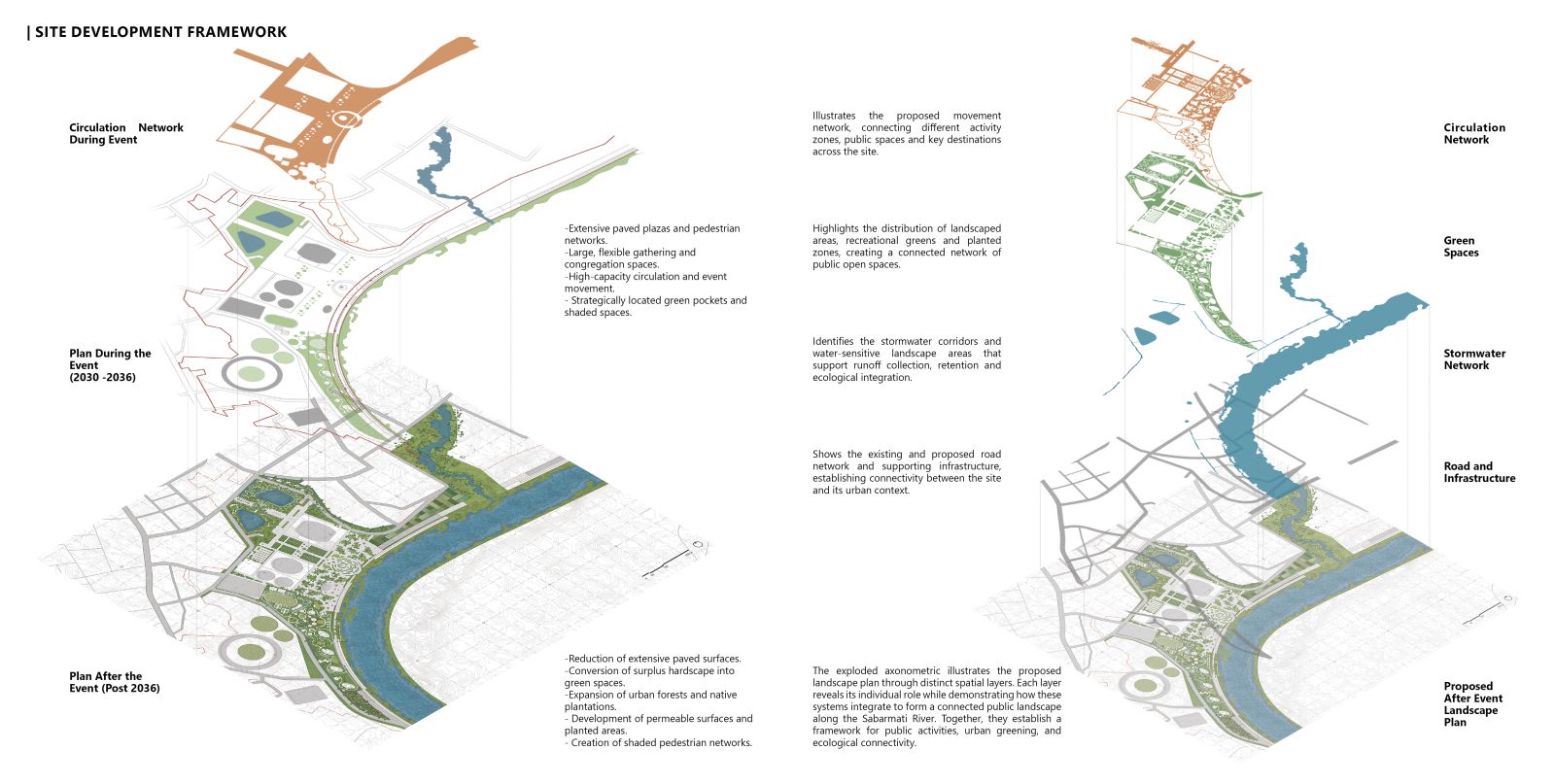
Reimagining the site's transition from a mega-event destination to an everyday urban landscape. Ensuring continuity between temporary event requirements and long-term public use.

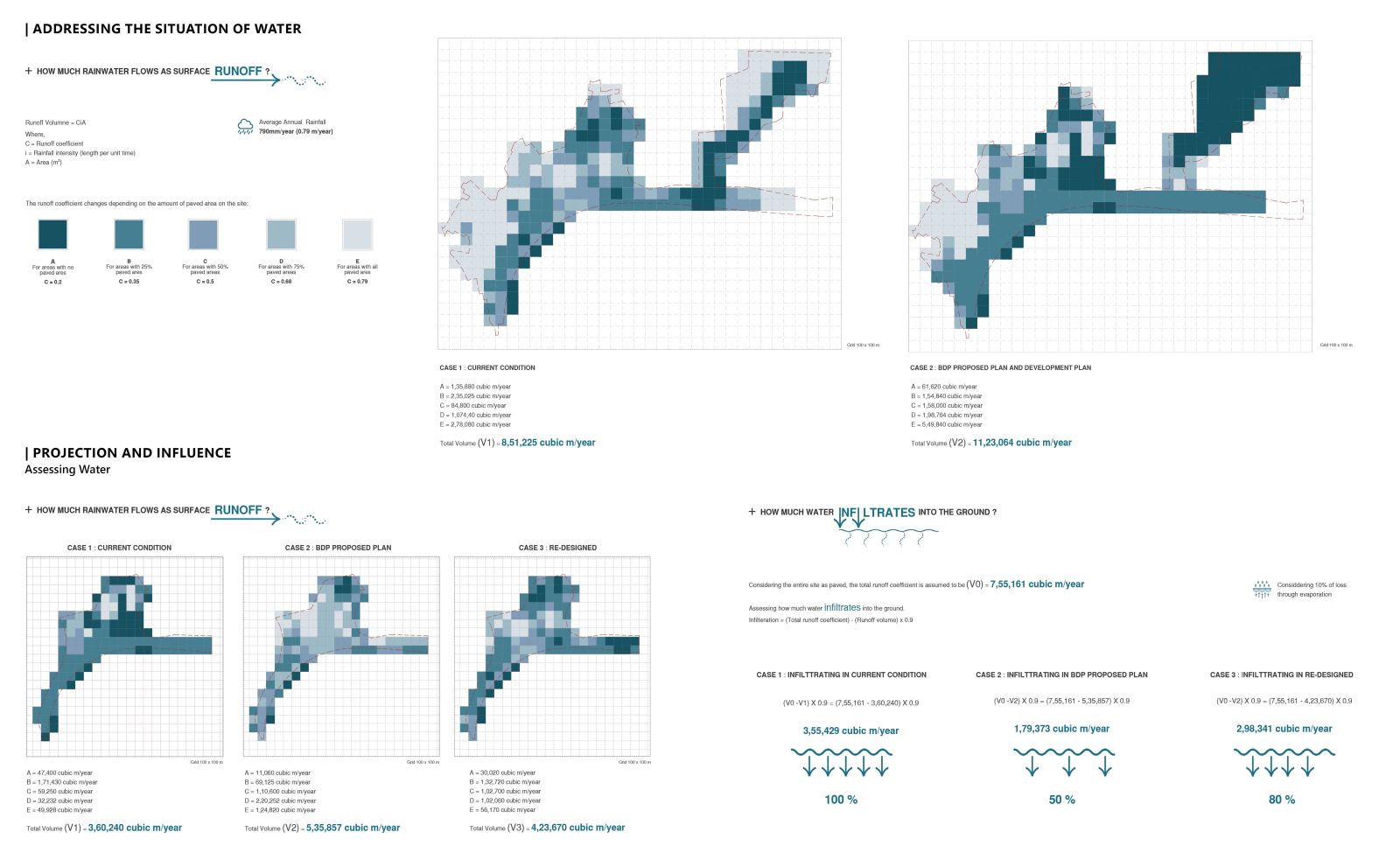
Reassessing the site's water performance across existing, proposed and post-event conditions. Establishing a more water-sensitive landscape approach for long-term resilience.

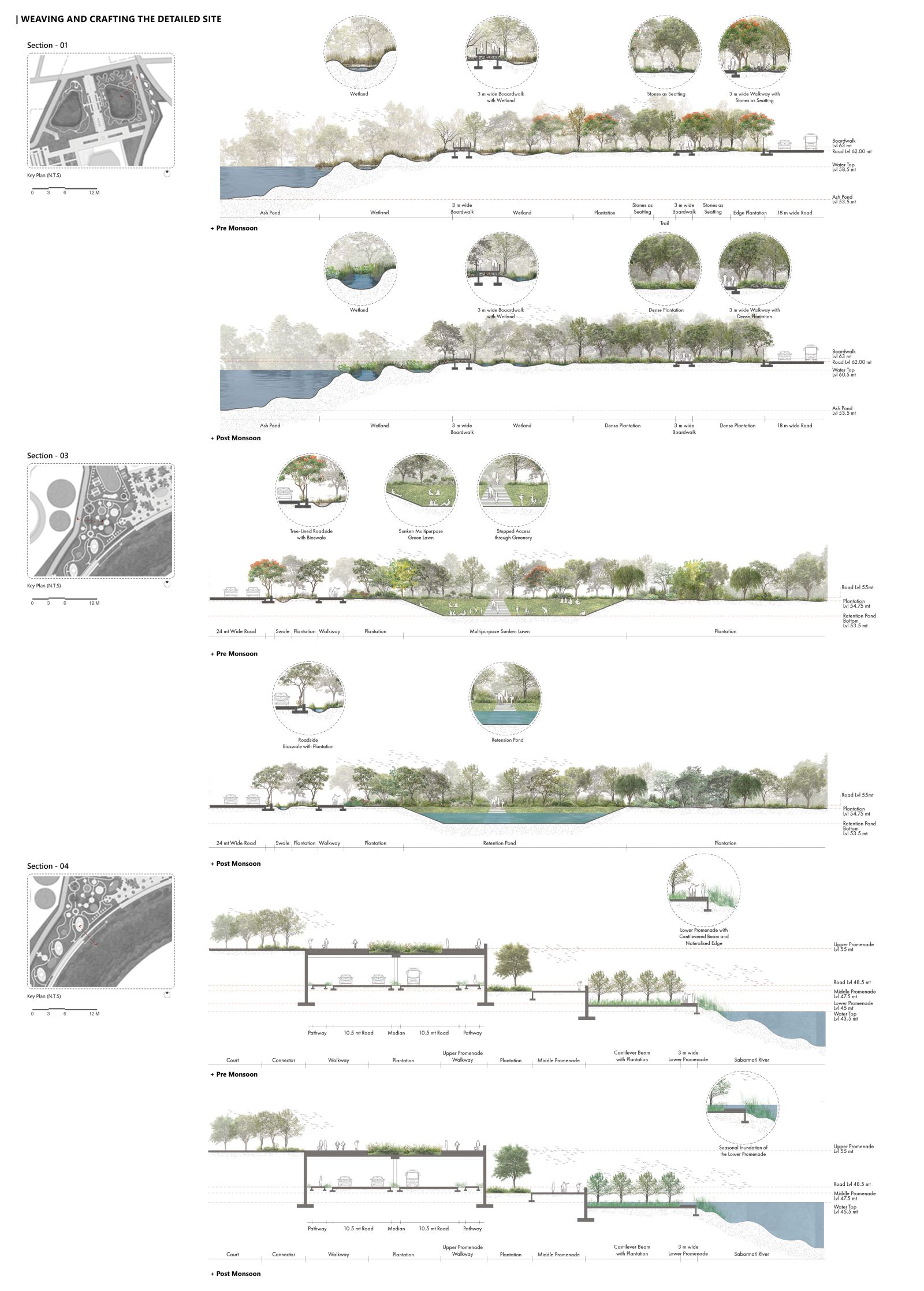
Developing the site's landscape character across pre-monsoon and post-monsoon conditions. Exploring how seasonal transitions influence spatial programs, landscape functions and patterns of public use.

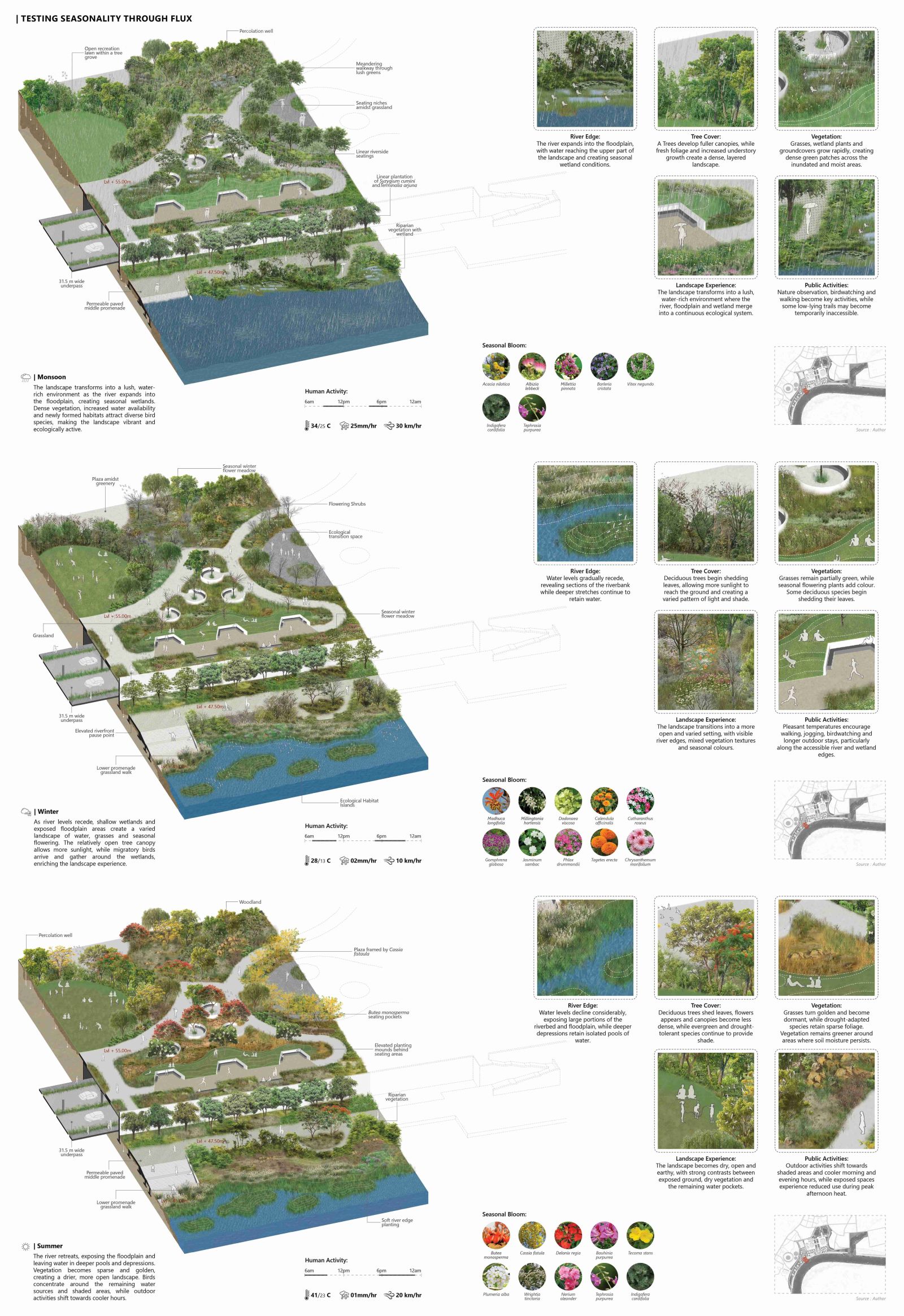
Exploring the landscape's seasonal transitions through changing water dynamics and ecological conditions. Understanding how these fluctuations influence the site's performance, character and spatial experience.

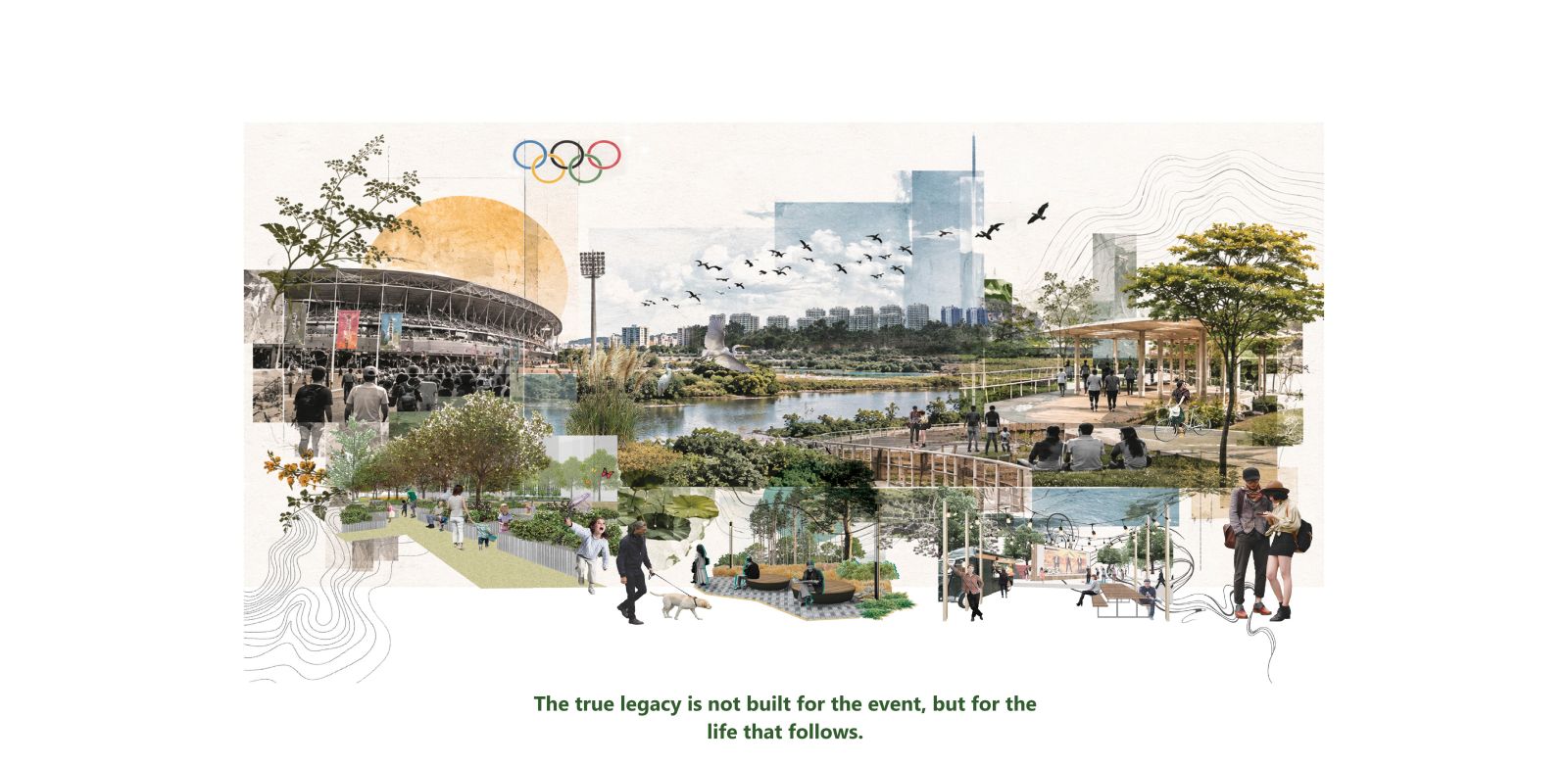
Reconsidering the idea of legacy beyond the completion of a mega-event, shifting the focus from temporary infrastructure to lasting urban value. Envisioning a landscape that continues to evolve with the city's changing ecological and social needs, where public life, water systems and natural processes remain interconnected. Ultimately, creating a living landscape that gives back to the city long after the event has passed.