Ishaa Nadar

LA4010

BEYOND THE EDGE

Situated along the Sabarmati River at Karai Police Academy, Gandhinagar, Beyond the Edge explores the relationship between institutional boundaries, landscape, and water. The existing landscape offers fragmented glimpses of the river through dense vegetation, built structures, and changing topography, creating a sense of curiosity that remains unfulfilled due to restricted physical access. The project proposes extending the landscape beyond the institutional edge, transforming the experience from enclosure to openness and from visual connection to physical engagement with water. Through elevated promenades, seasonal boardwalks, viewing decks, vegetated mounds, and accessible river edges, the design creates a gradual transition towards the river while maintaining institutional privacy. Responding to seasonal fluctuations in water levels and vegetation, the landscape becomes a dynamic public realm where accessibility, visibility, and interaction with water continuously evolve .Student academic work based on AMC data. This is not an official plan, project, or proposal

View Additional Work
Report Content

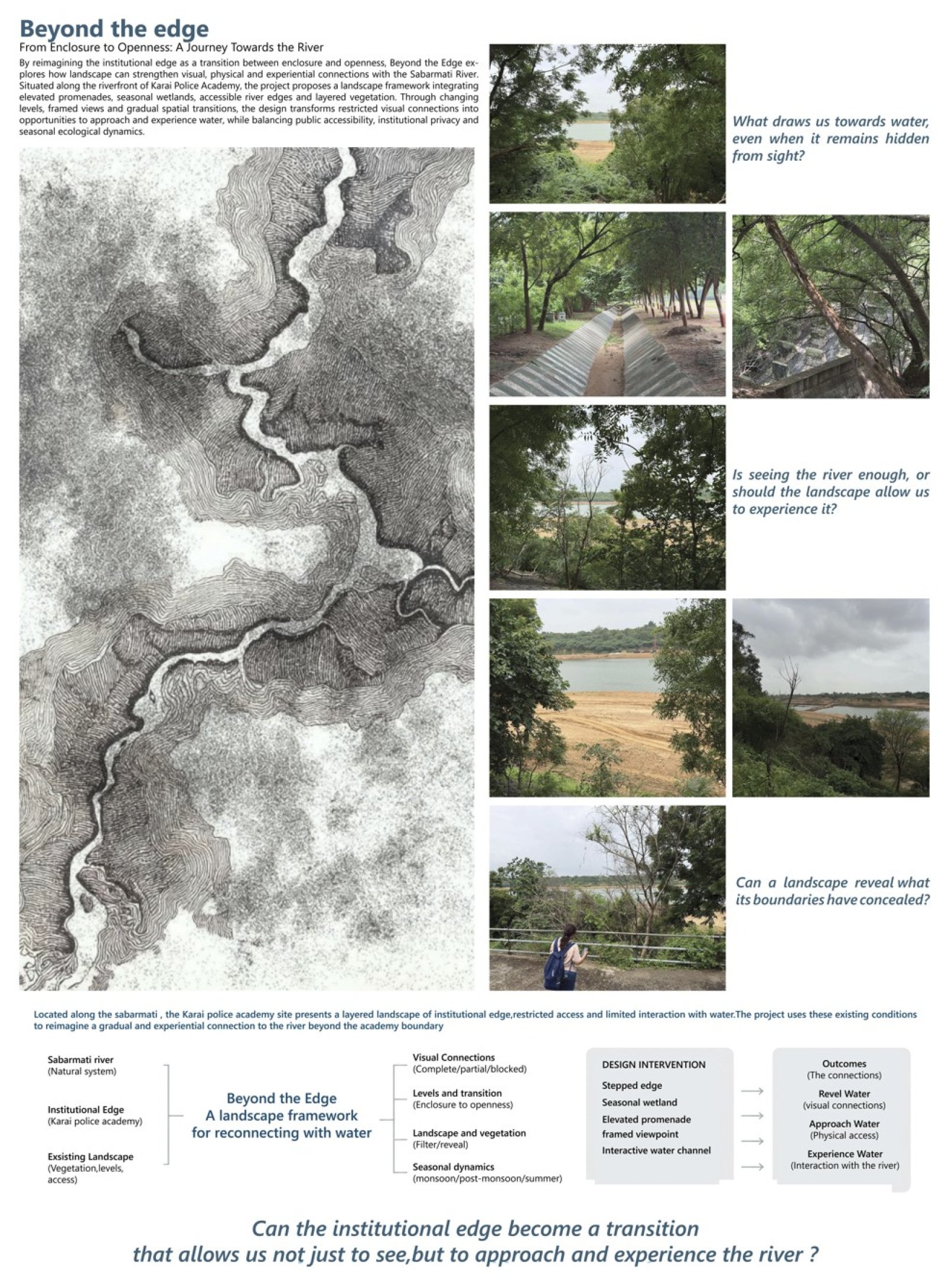
Writing The institutional landscape along the Sabarmati reveals fragmented views, restricted access, and curiosity towards water. Site photographs and experiential observations highlight opportunities to transform enclosure into a gradual connection with the river.

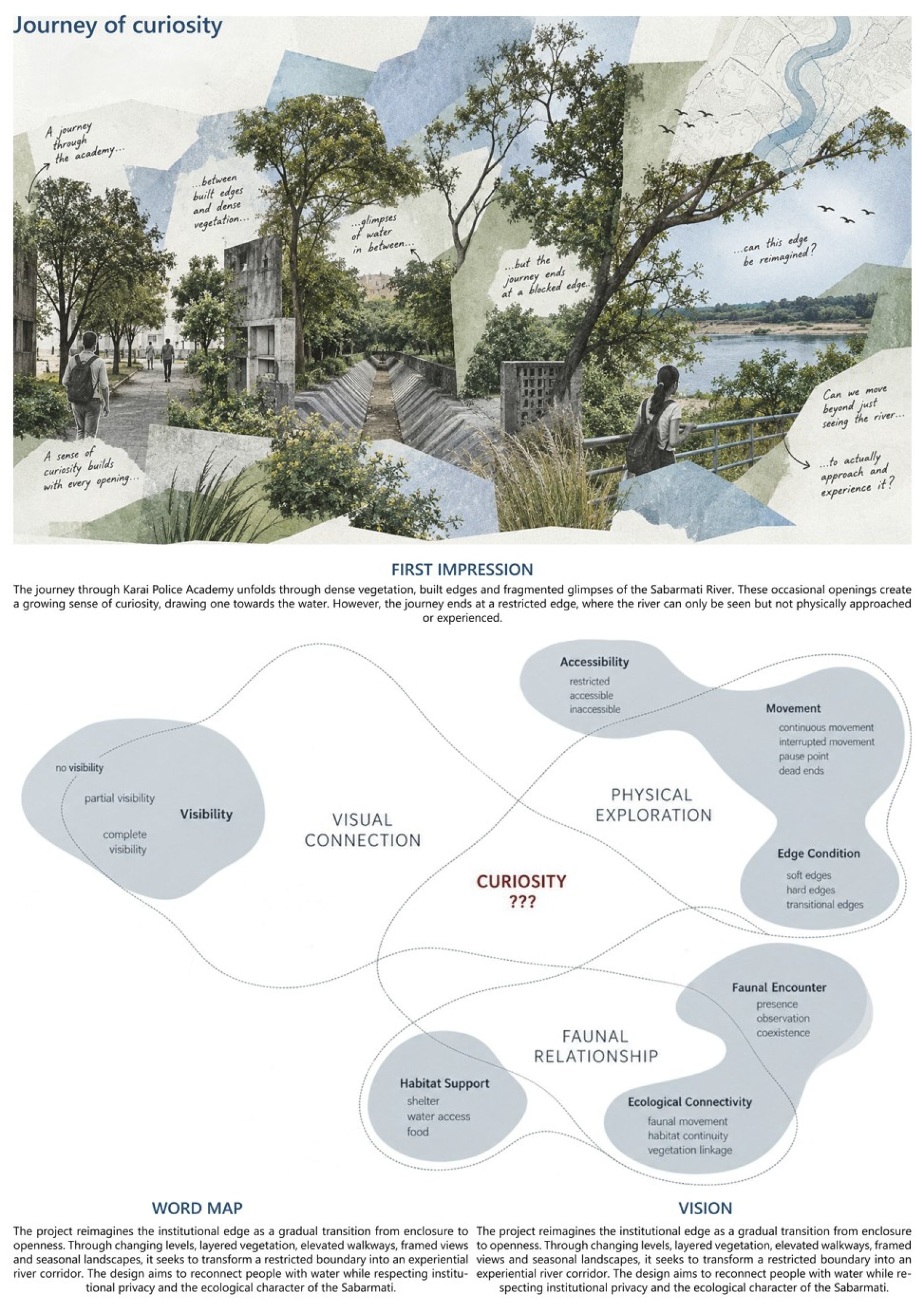
A journey through the institutional landscape reveals fragmented views, changing enclosures, and restricted access to water. First impressions and experiential mapping explore how curiosity develops through visual, physical, and ecological connections.

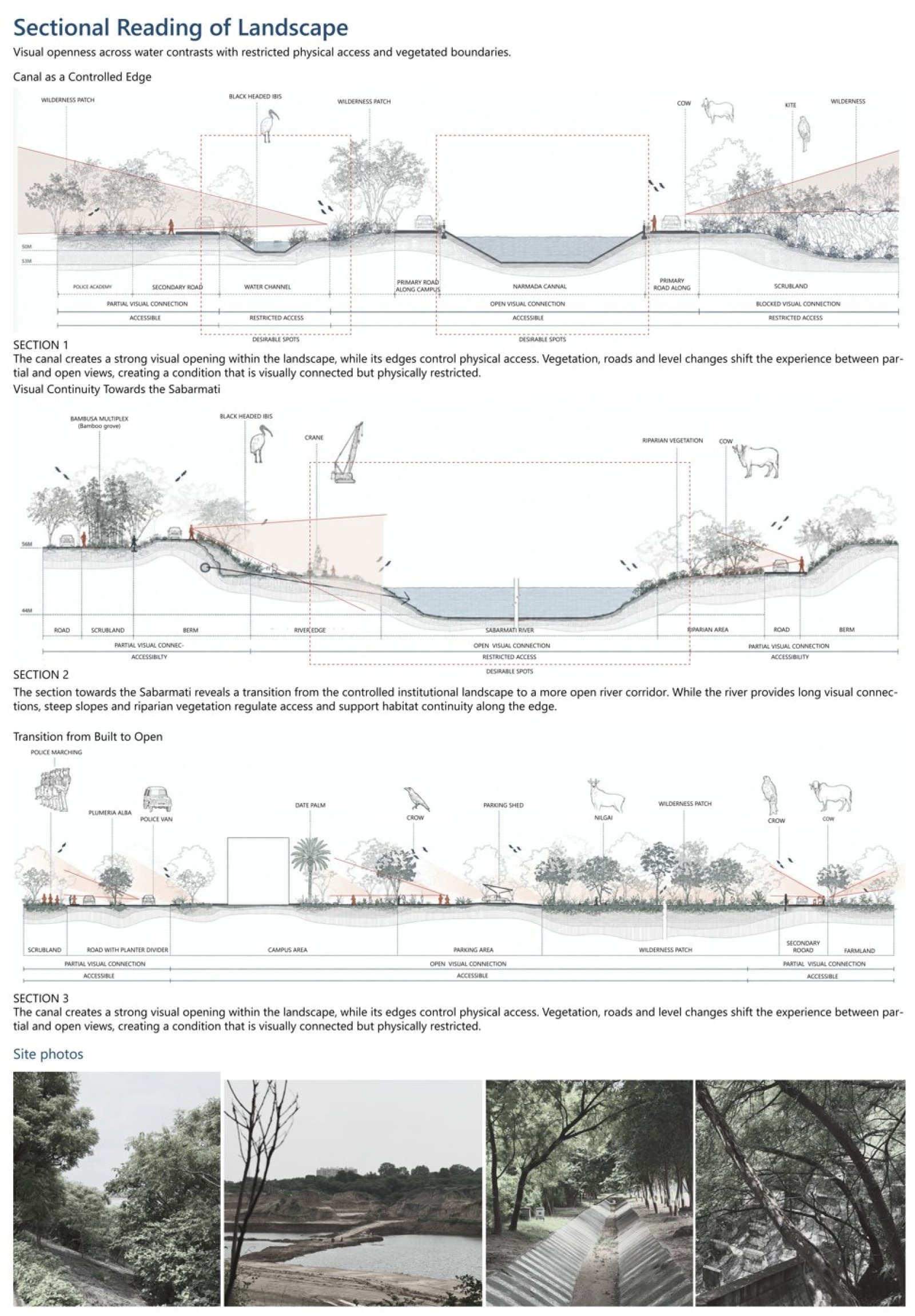
Sectional studies reveal how vegetation, topography, built edges, and water corridors shape visibility and movement, highlighting the contrast between visual openness and restricted physical access.

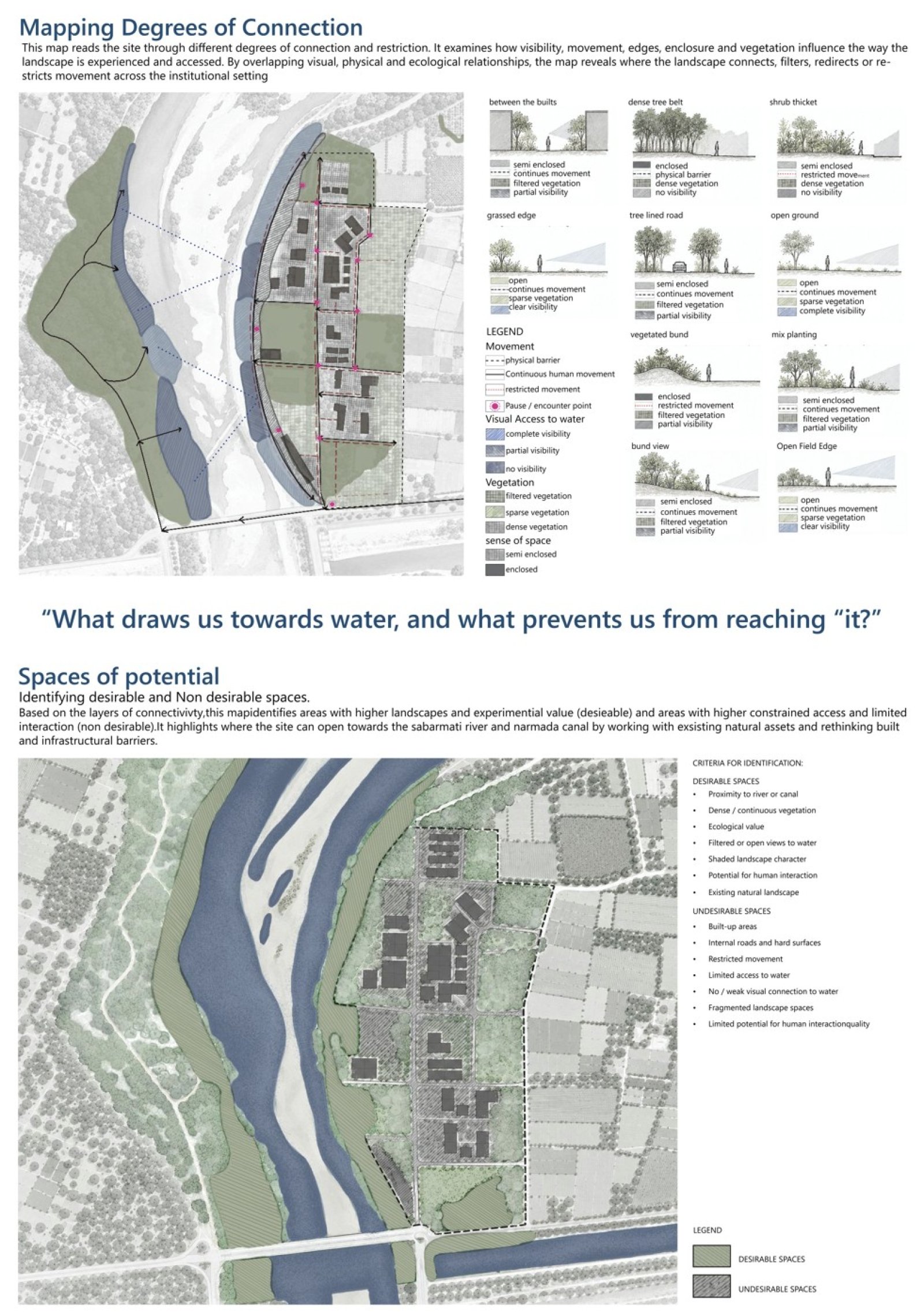
Layered mapping explores how visibility, movement, vegetation, and enclosure influence spatial experiences, identifying desirable landscapes and opportunities for stronger connections with water.

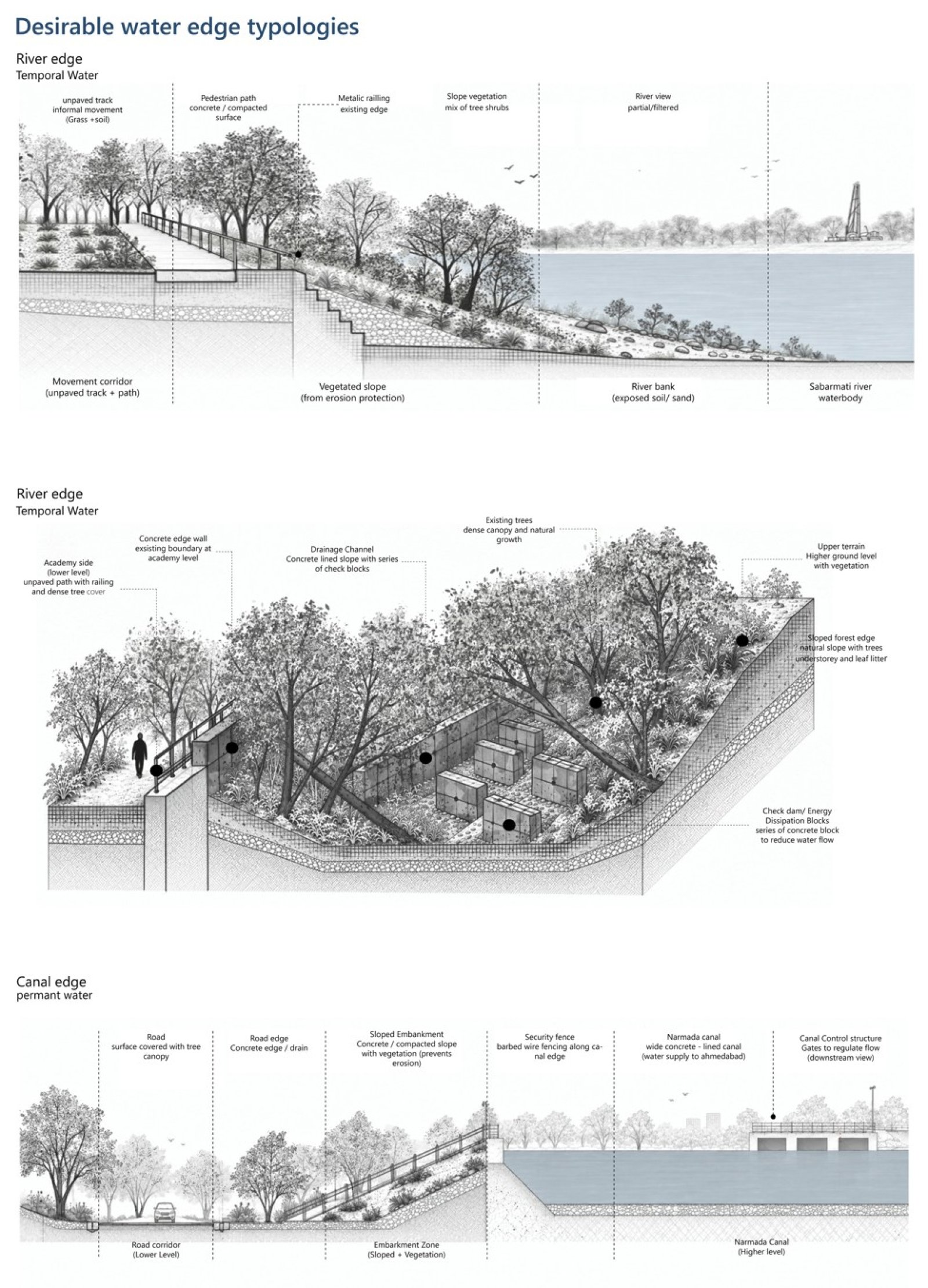
Sections of the river, canal, and drainage edges reveal varying topography, vegetation, and water conditions, highlighting their ecological character and potential for visual and physical engagement.

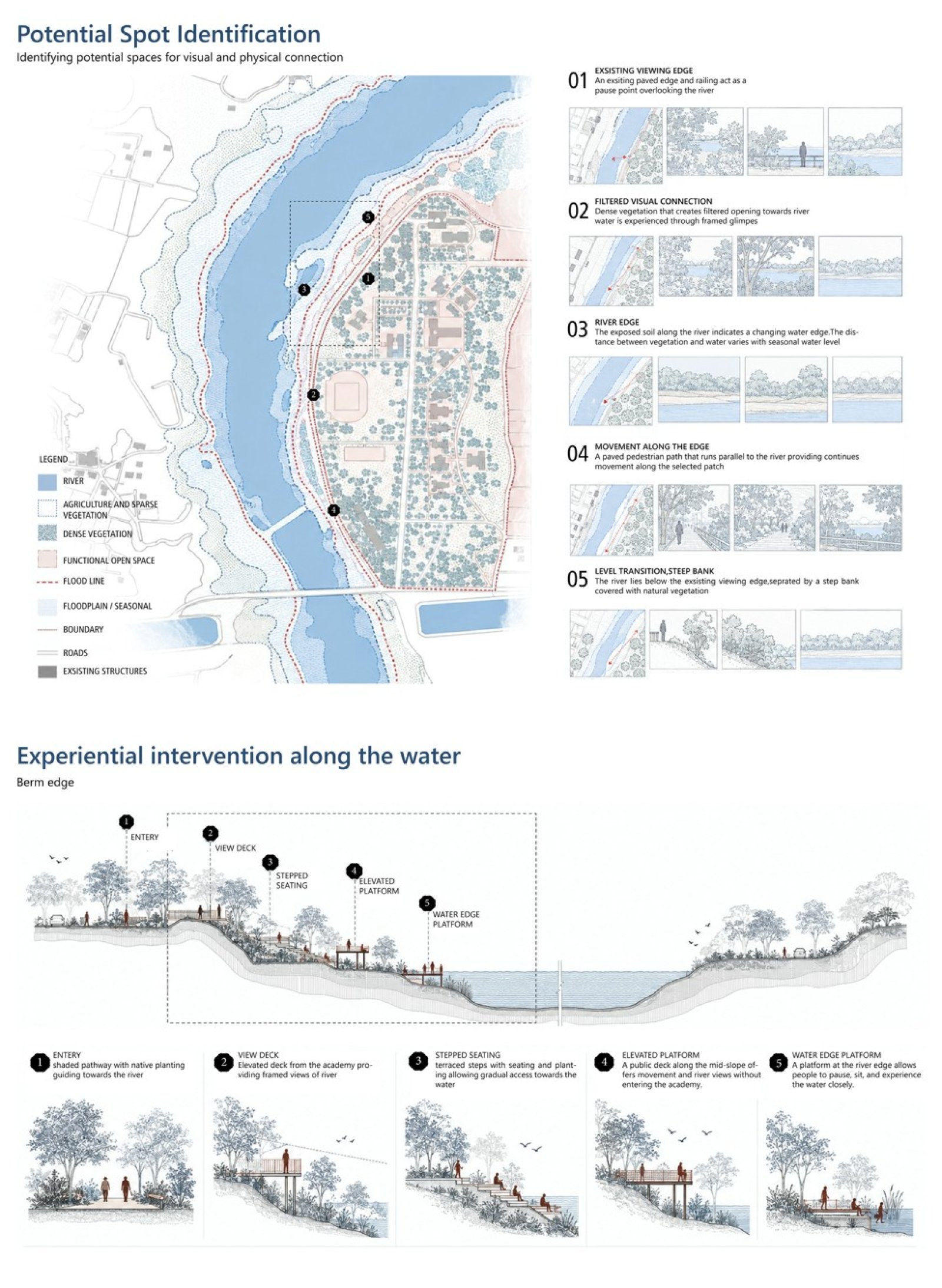
Potential spaces along the river are identified through existing views, vegetation, movement, and level transitions, establishing opportunities for experiential interventions that bring people closer to water.

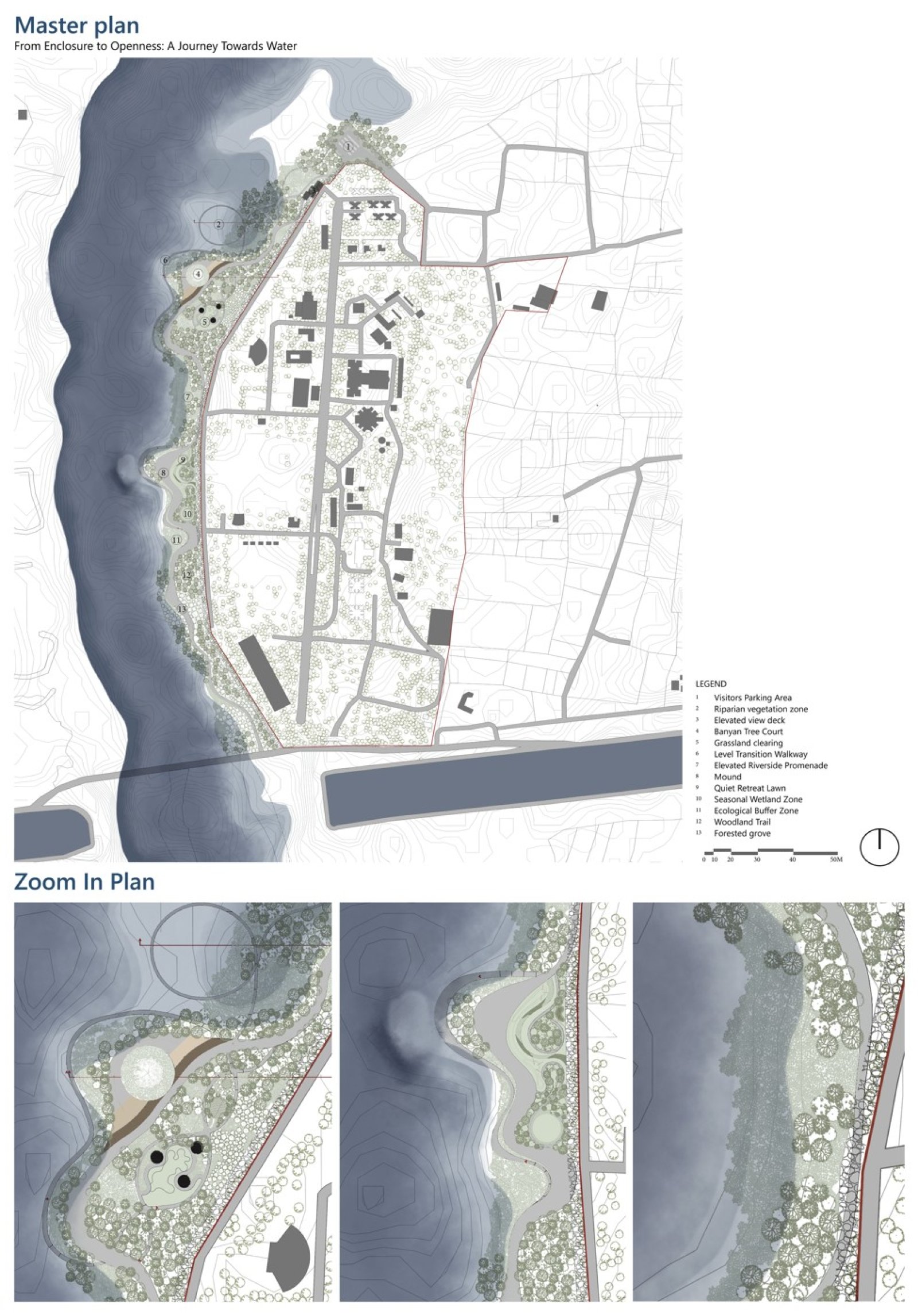
The master plan transforms the institutional edge into a connected river landscape through elevated promenades, seasonal pathways, vegetated mounds, and ecological buffers, creating a gradual transition from enclosure to openness.

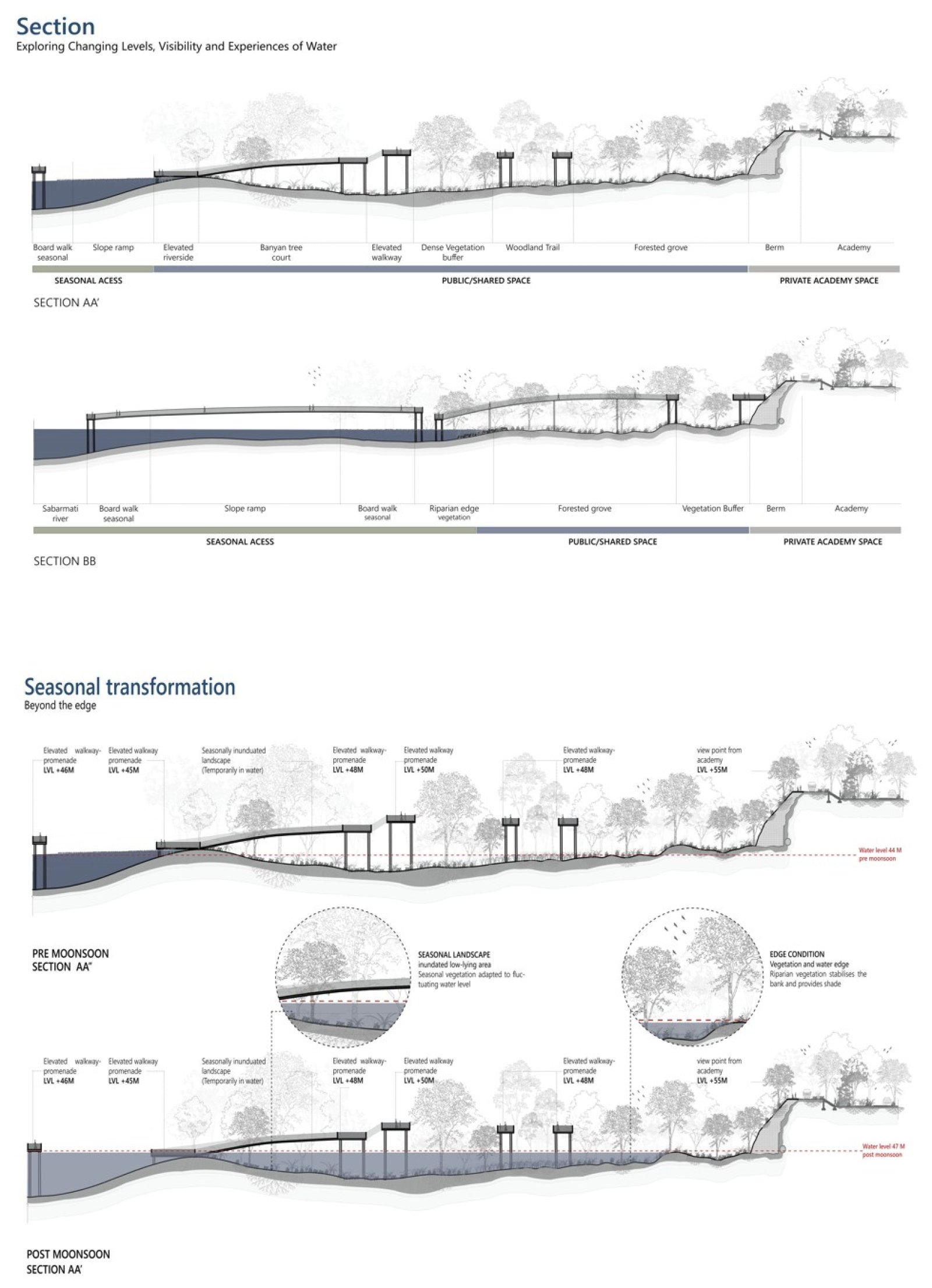
Design sections explore changing levels, public and private transitions, and seasonal water fluctuations, illustrating how elevated pathways and riparian landscapes maintain connections with the river.

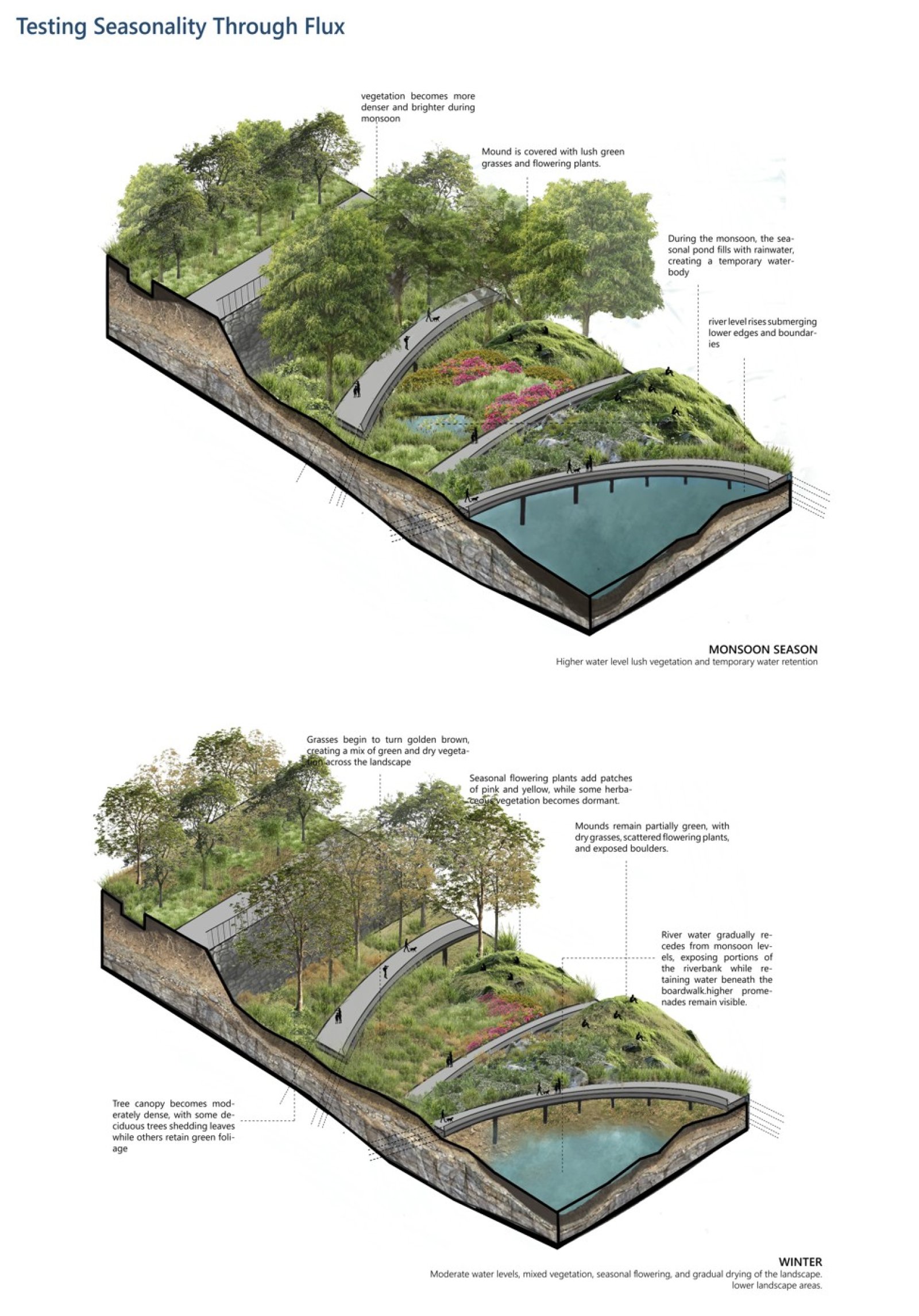
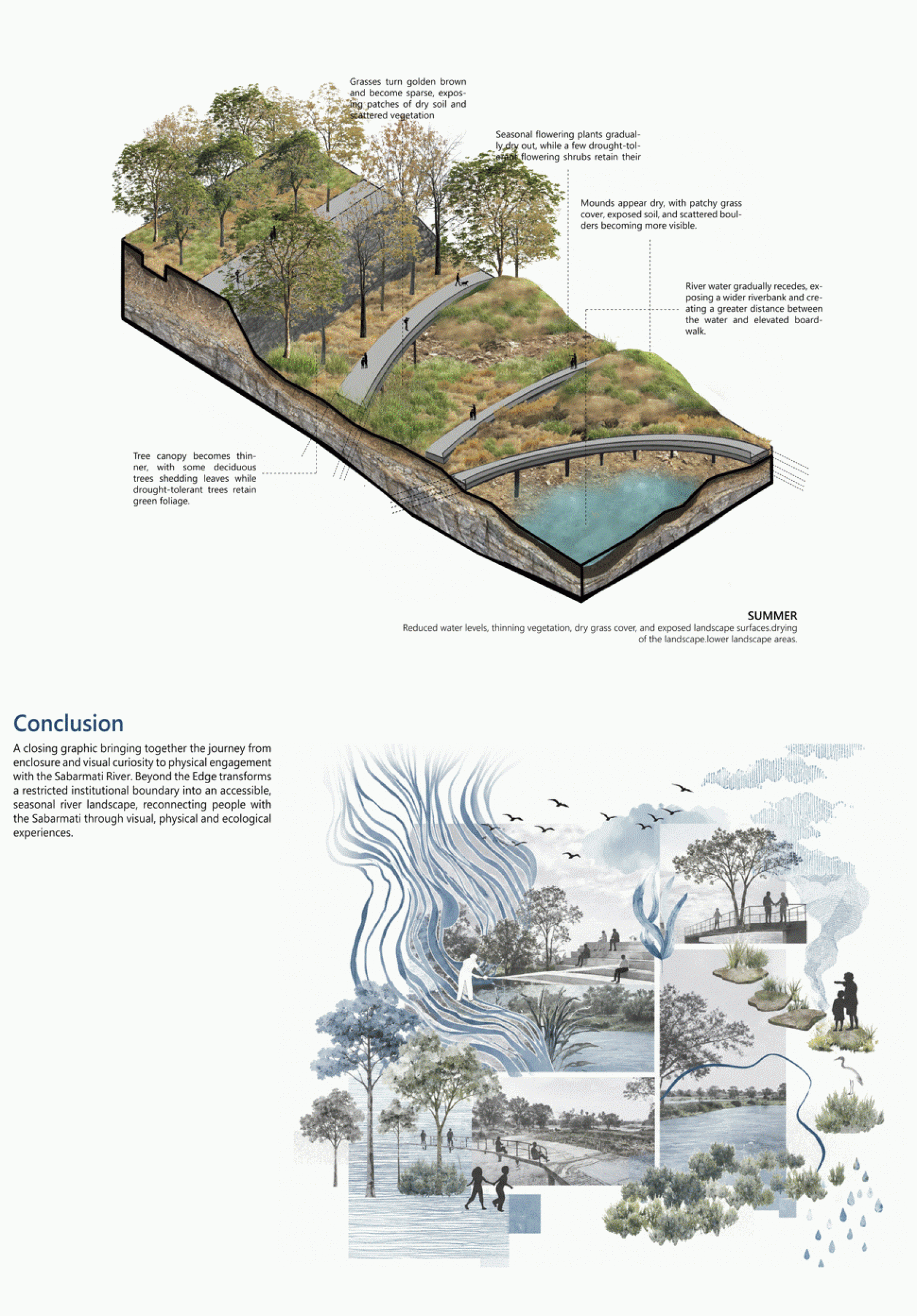
Seasonal studies illustrate how fluctuating water levels, vegetation density, and changing ground conditions transform the landscape, creating distinct experiences of visibility, accessibility, and interaction with water.

Beyond the Edge reimagines a restricted institutional boundary as an experiential river landscape, transforming visual curiosity into opportunities to approach, explore, and engage with the Sabarmati through changing levels and seasonal conditions.