Nishee Birenbhai Soni

LA4010

Connecting Habitats

The project explores the relationship between water, land, and wildlife within the Karai campus, in the context of the proposed Commonwealth Games development. Focusing on native species such as nilgai, wild boar, monitor lizards, mongoose, and anteaters, the project aims to reconnect ecological networks through water-sensitive landscape interventions. By restoring habitat patches, improving ground permeability, and strengthening ecological corridors, the design envisions a self-sustaining, animal-responsive landscape that supports biodiversity while enabling a sensitive coexistence between humans, wildlife, and water.
 Student academic work based on AMC data. This is not an official plan, project, or proposal .
View Additional Work

Report Content

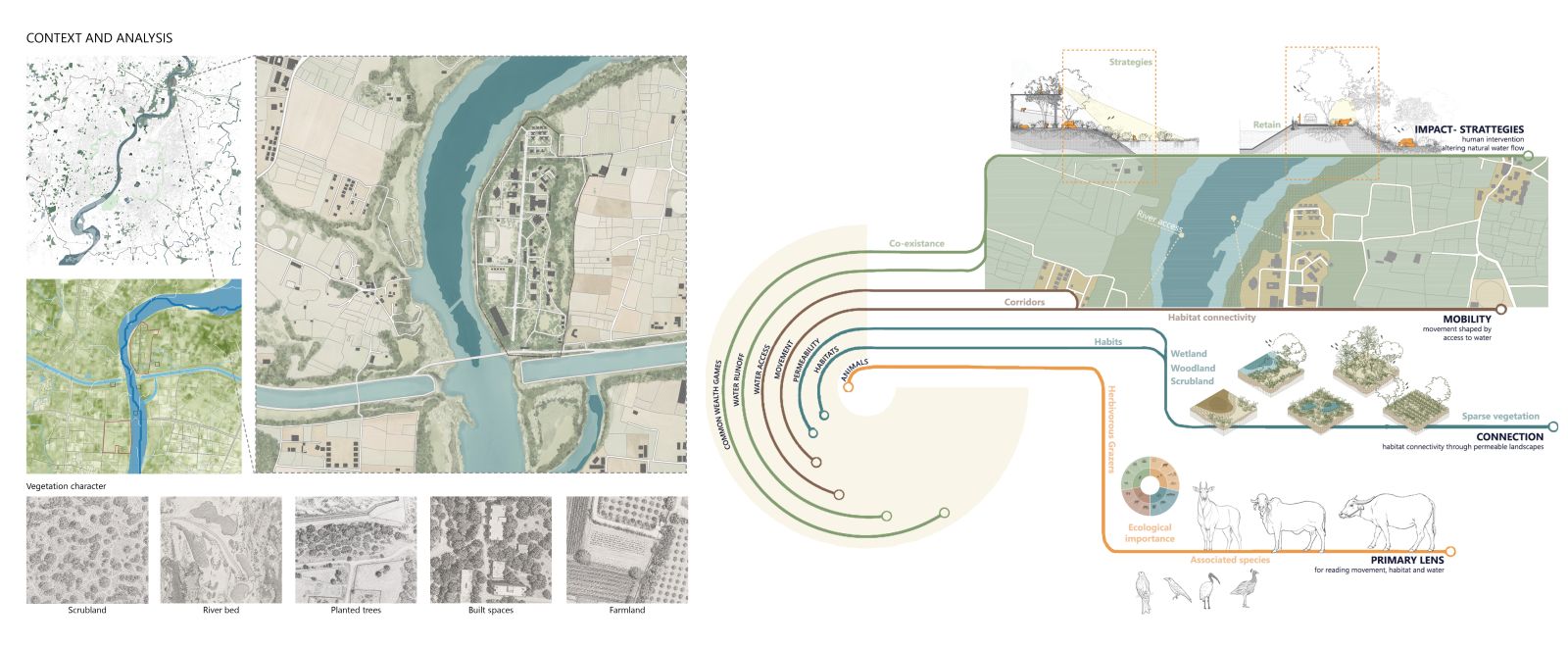
Context and Analysis: Reading the river corridor, landscape patterns, and ecological connections shaping the site.

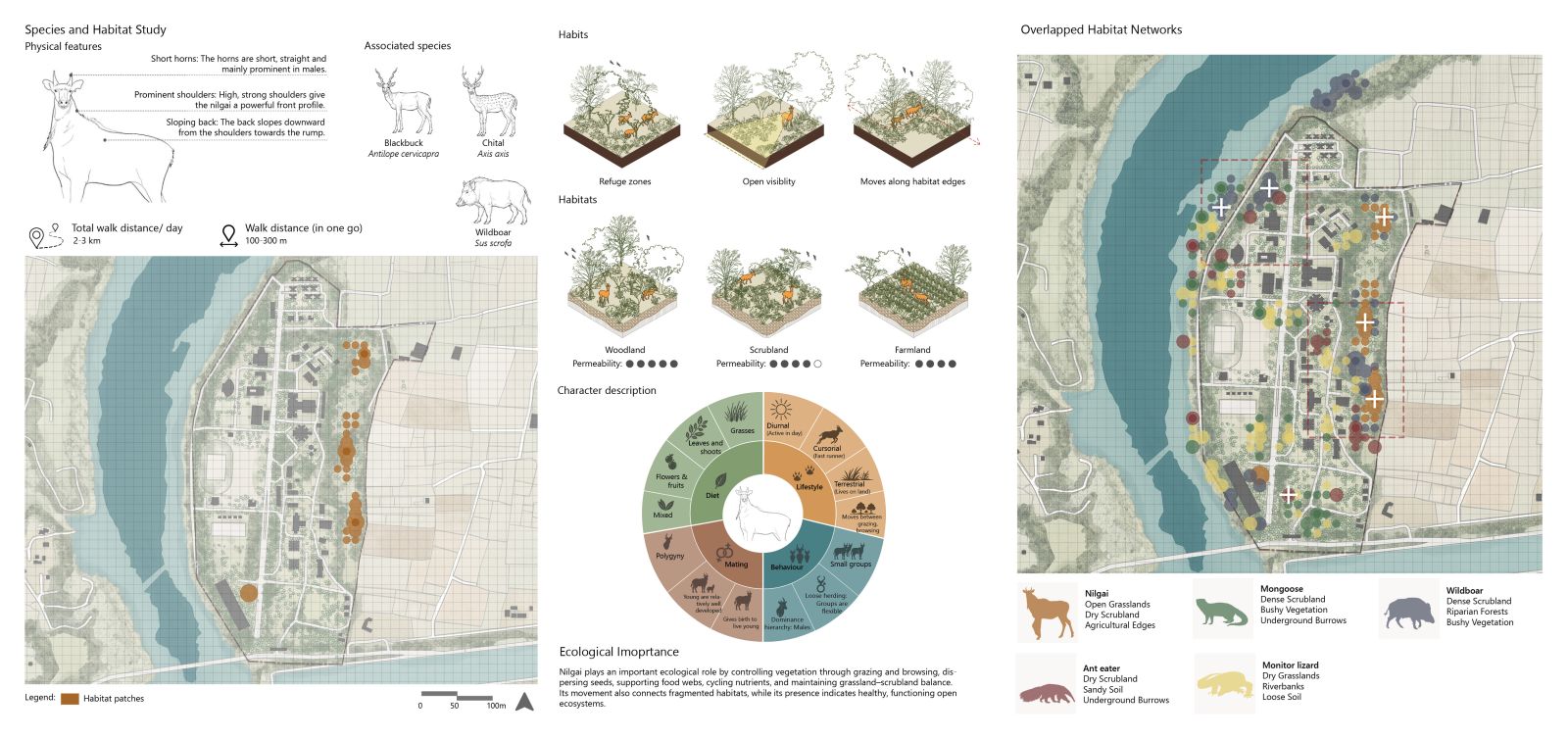
Species and Habitat Study: Identifying species, habitat preferences, movement patterns, and ecological relationships across the site.

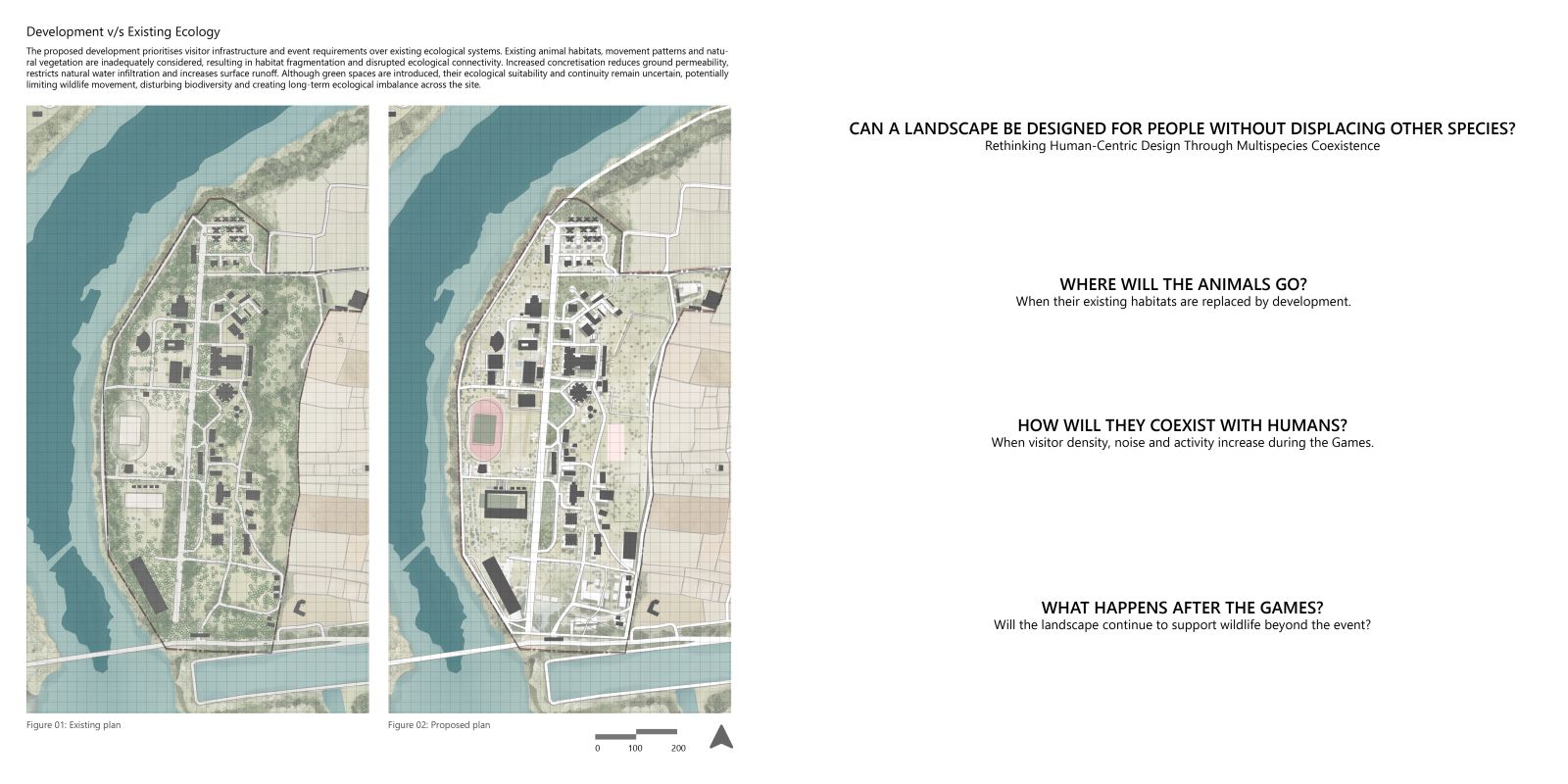
Development vs Existing Ecology: Comparing existing ecology with proposed development to reveal pressures on wildlife.

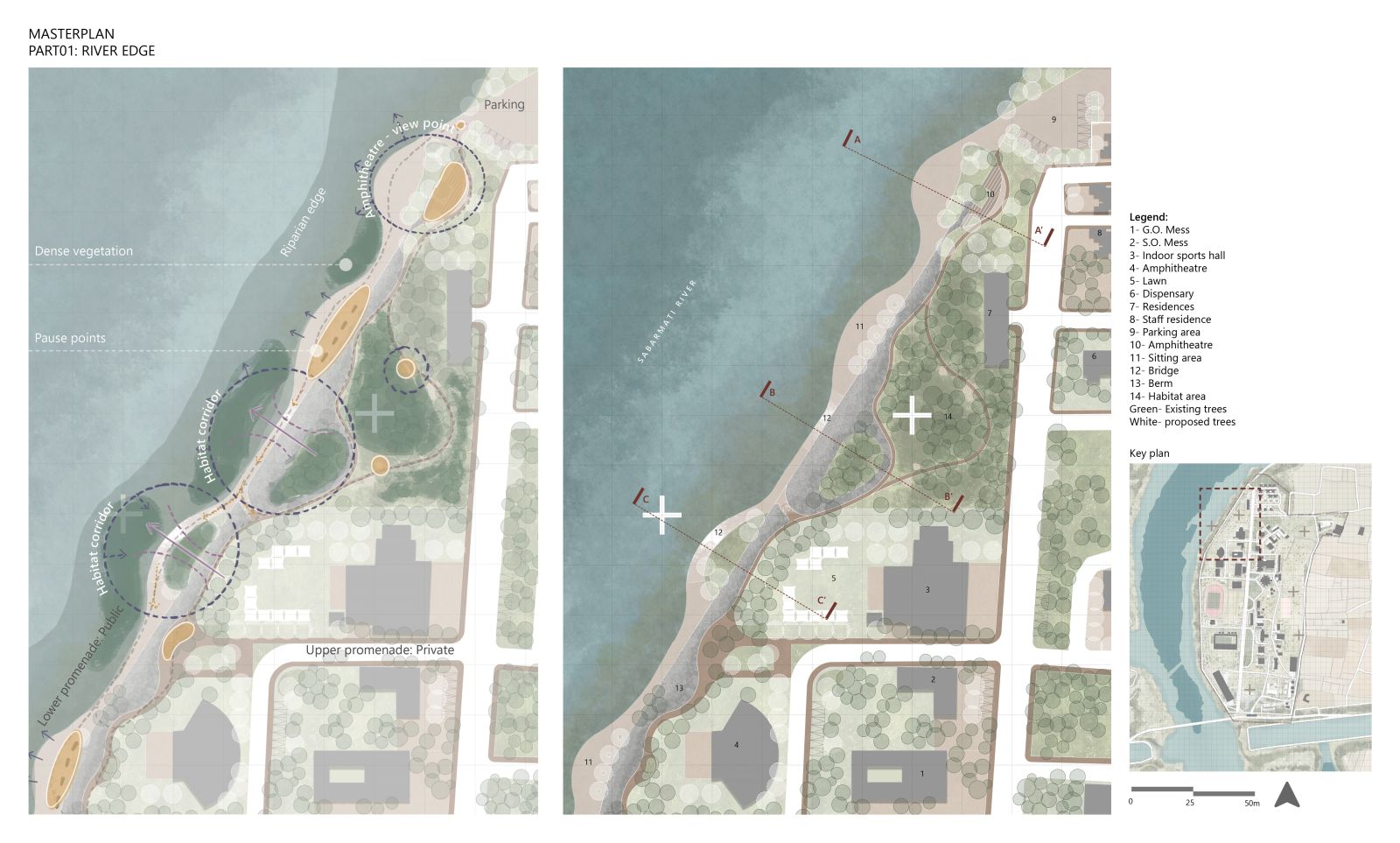
Masterplan – Part 01: River Edge- Reconnecting the river edge through habitat corridors, accessible landscapes, and public spaces.

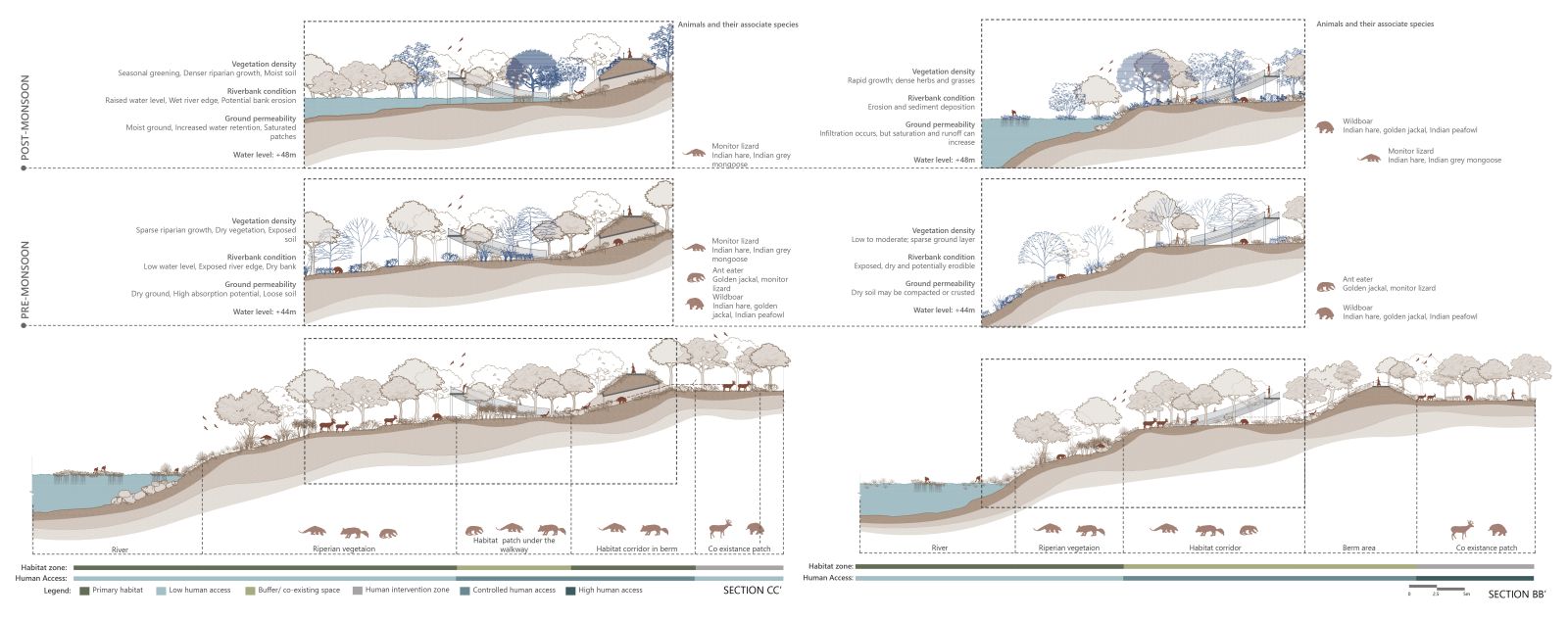
River Edge – Sections: Designing riverbank sections that balance seasonal vegetation, wildlife refuge, and human access.

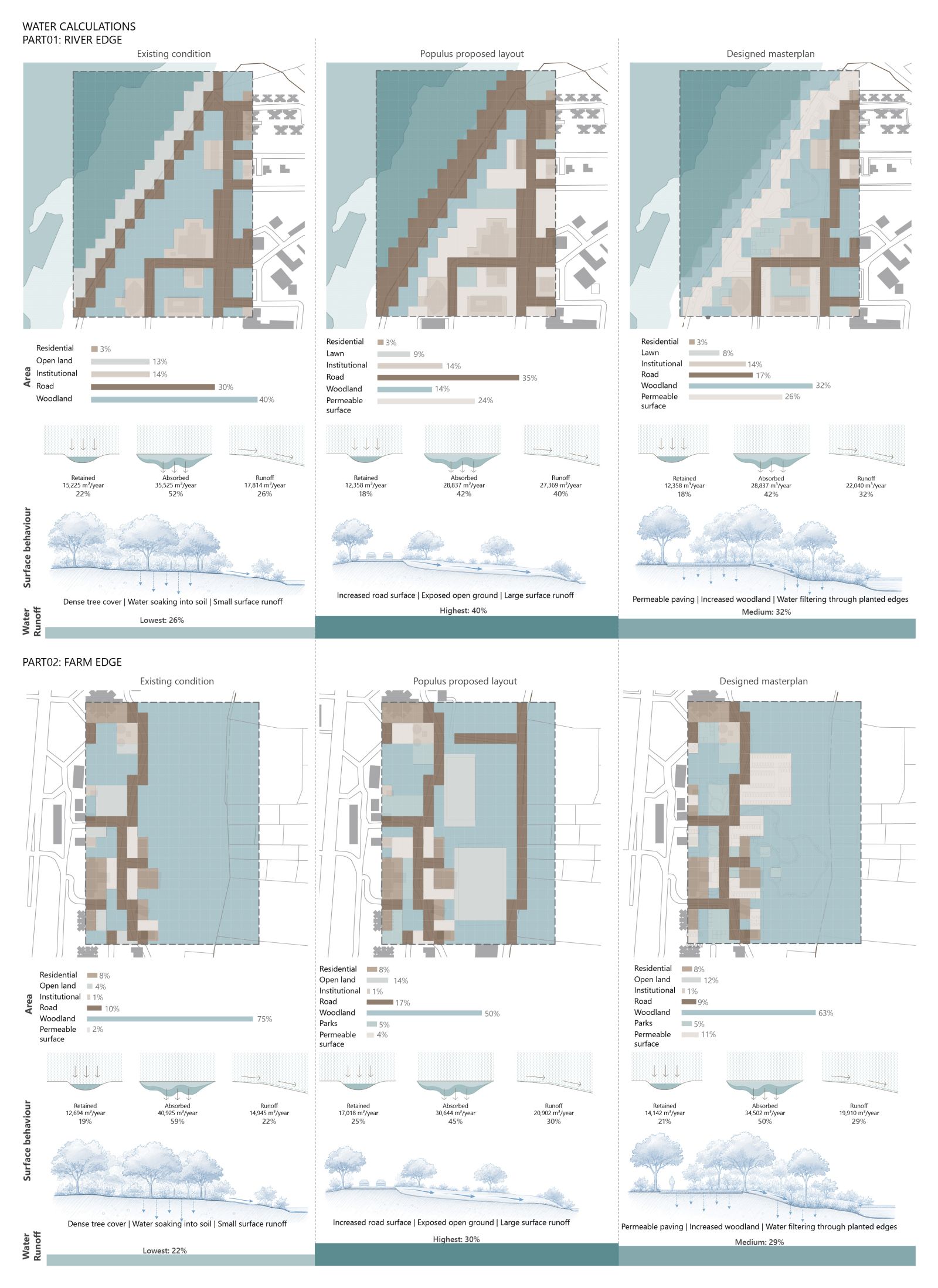
Water Calculations: Evaluating runoff across existing, proposed, and designed river and farm-edge conditions.

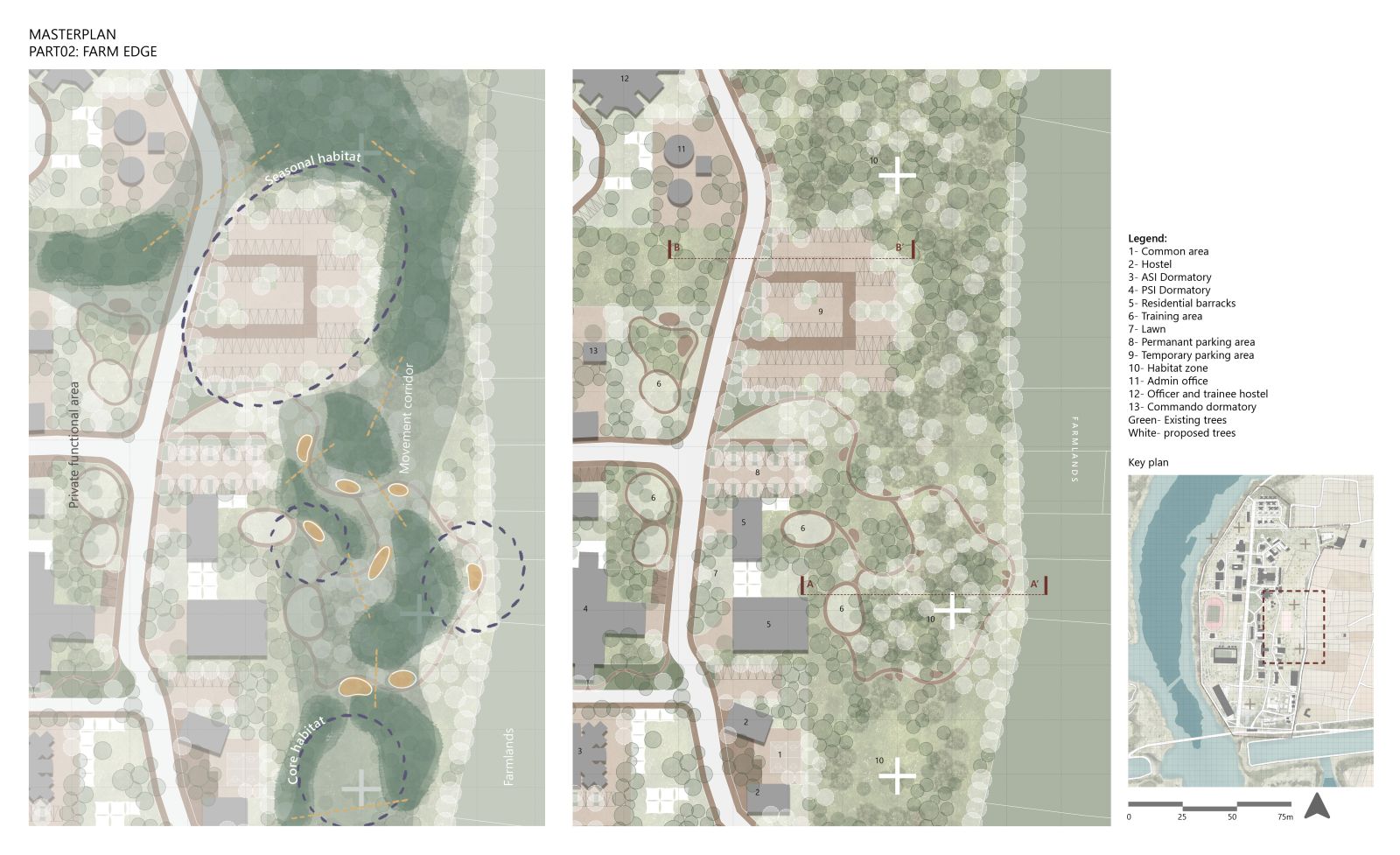
Masterplan – Part 02: Farm Edge- Shaping the farm edge with habitat patches, movement corridors, and permeable planting.

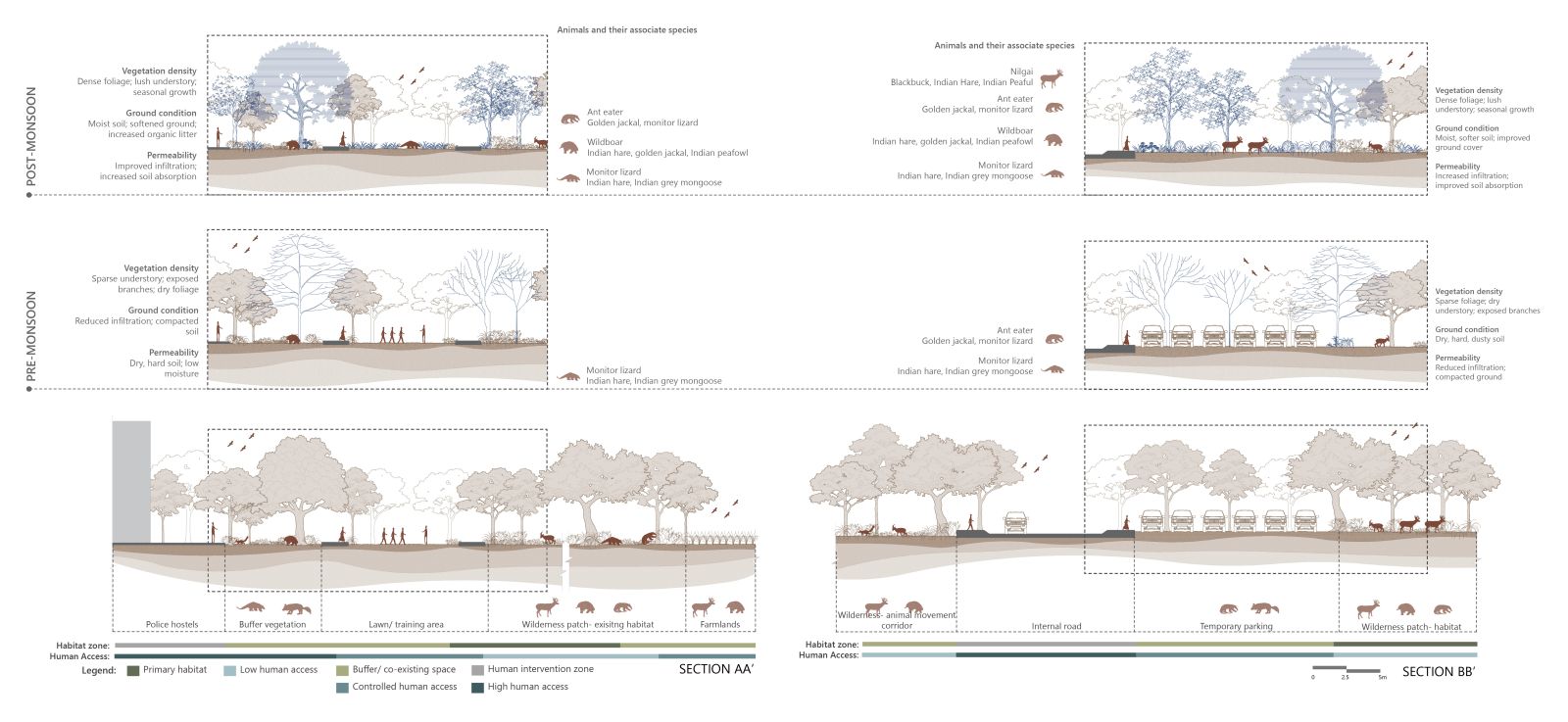
Farm Edge – Sections- Integrating wildlife movement, seasonal vegetation, and human activity through connected landscape sections.

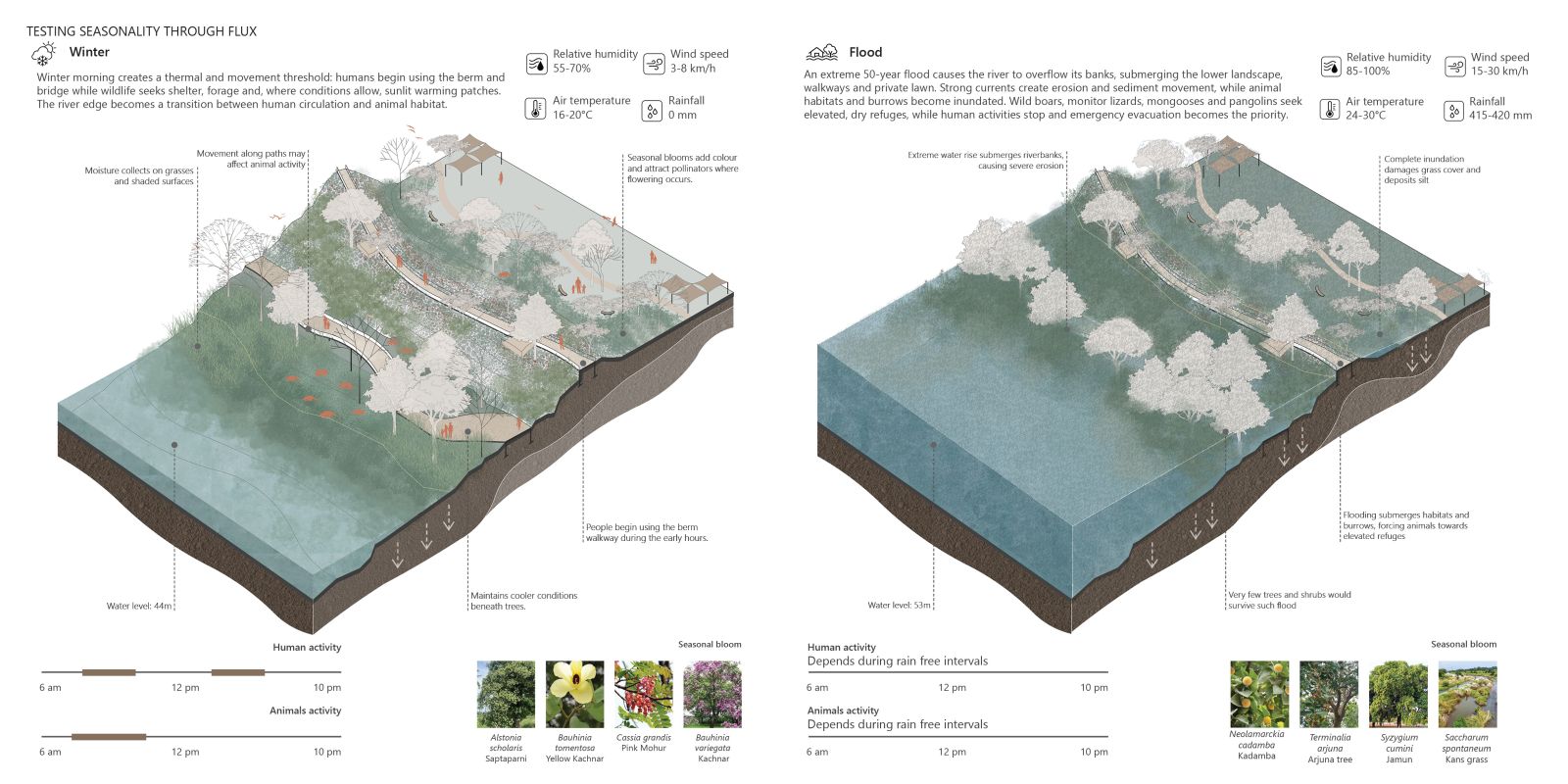
Testing Seasonality Through Flux: Testing seasonal landscape changes under winter and flood conditions through ecological flux.

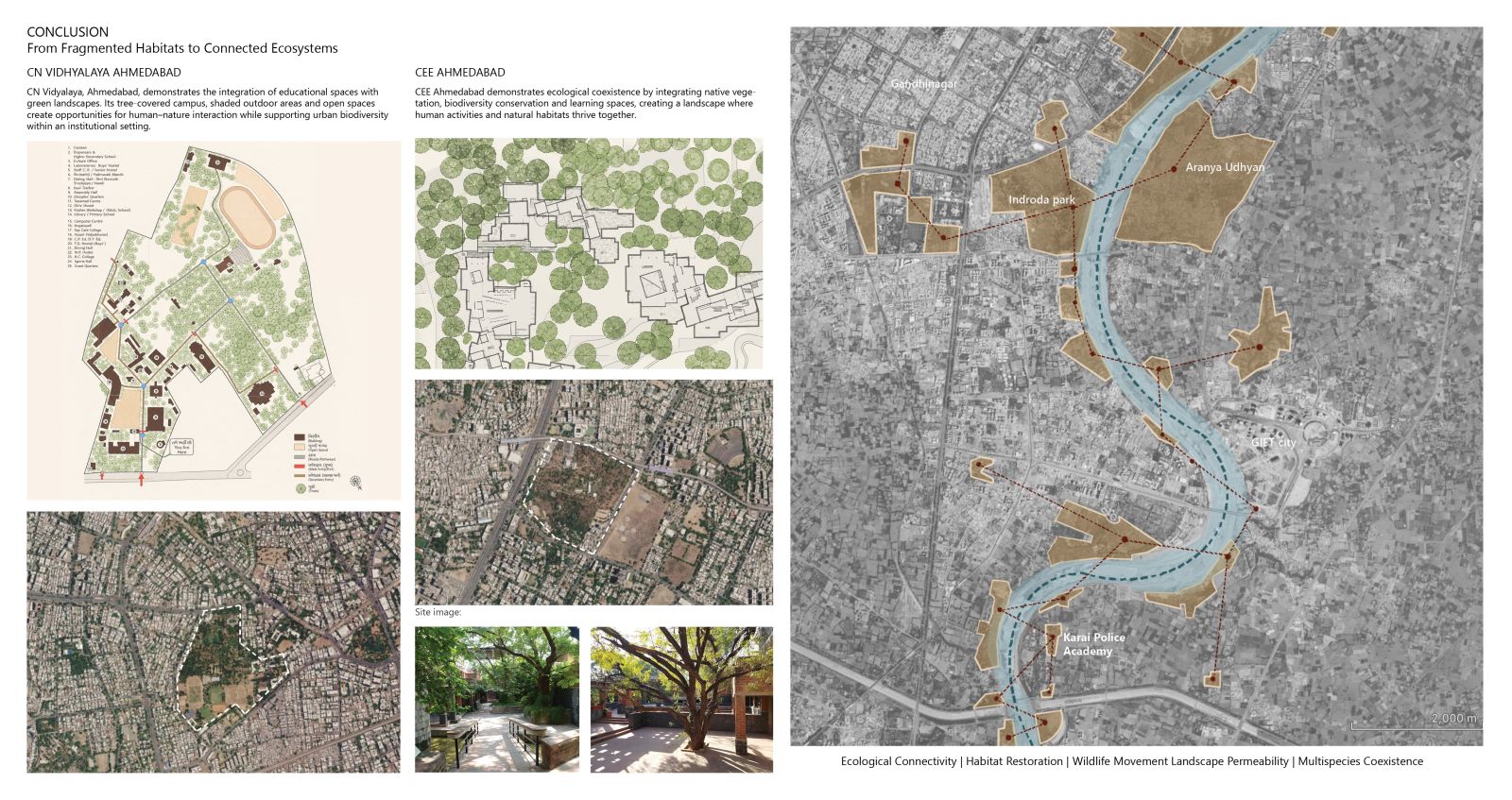
Conclusion – From Fragmented Habitats to Connected Ecosystems Connecting fragmented habitats through restoration, ecological networks, and multispecies landscape coexistence.