Your browser is out-of-date!
For a richer surfing experience on our website, please update your browser. Update my browser now!
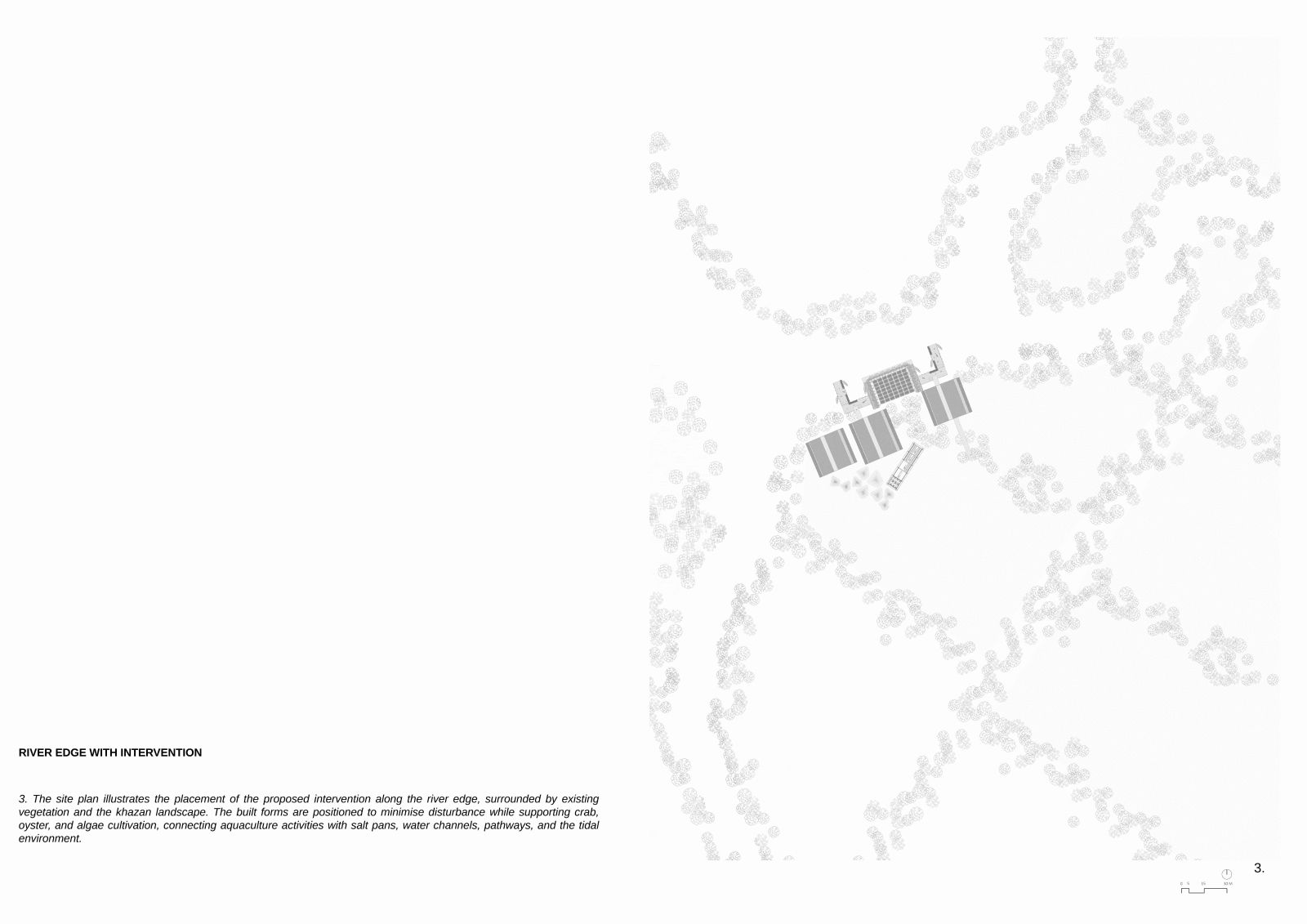
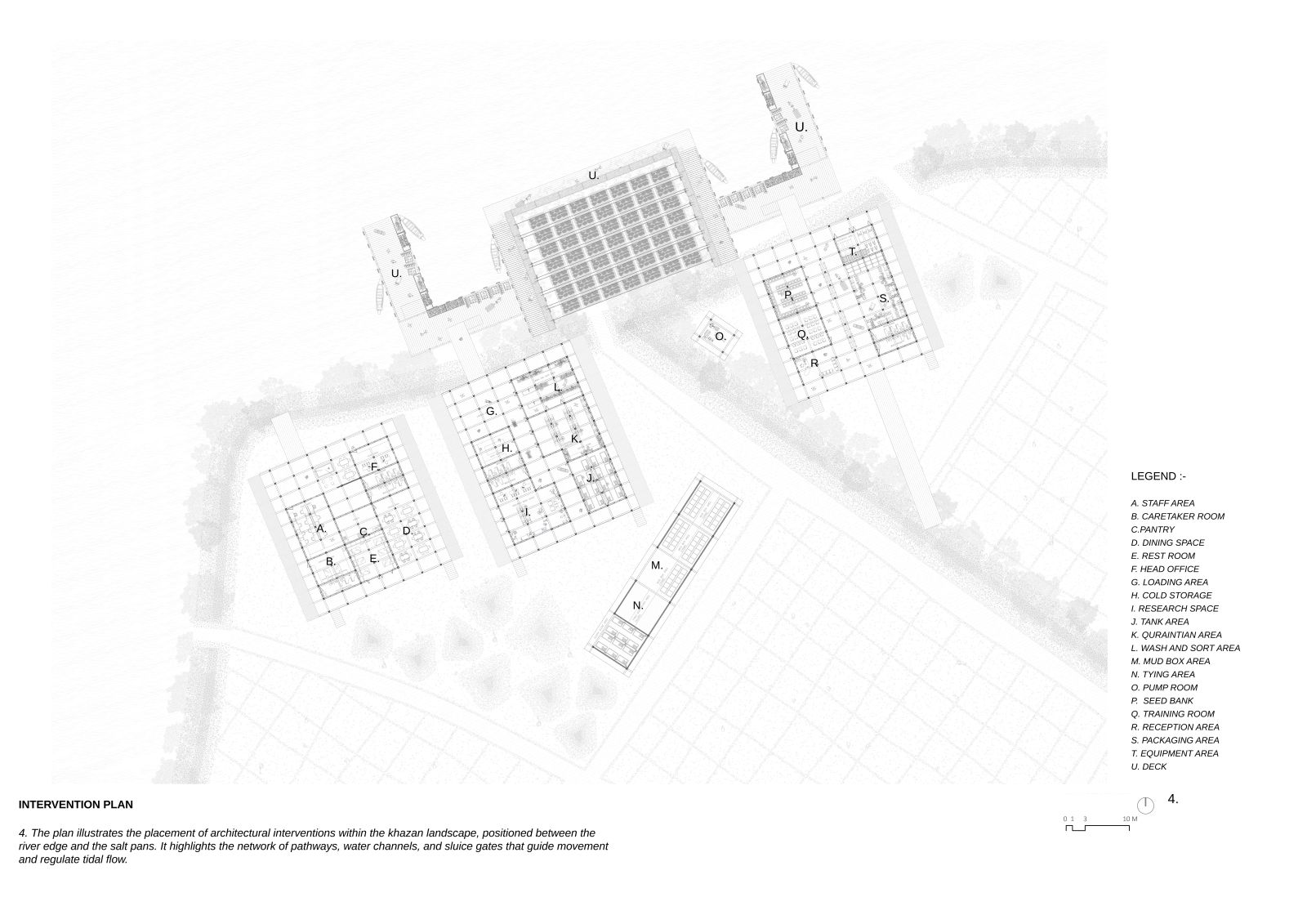
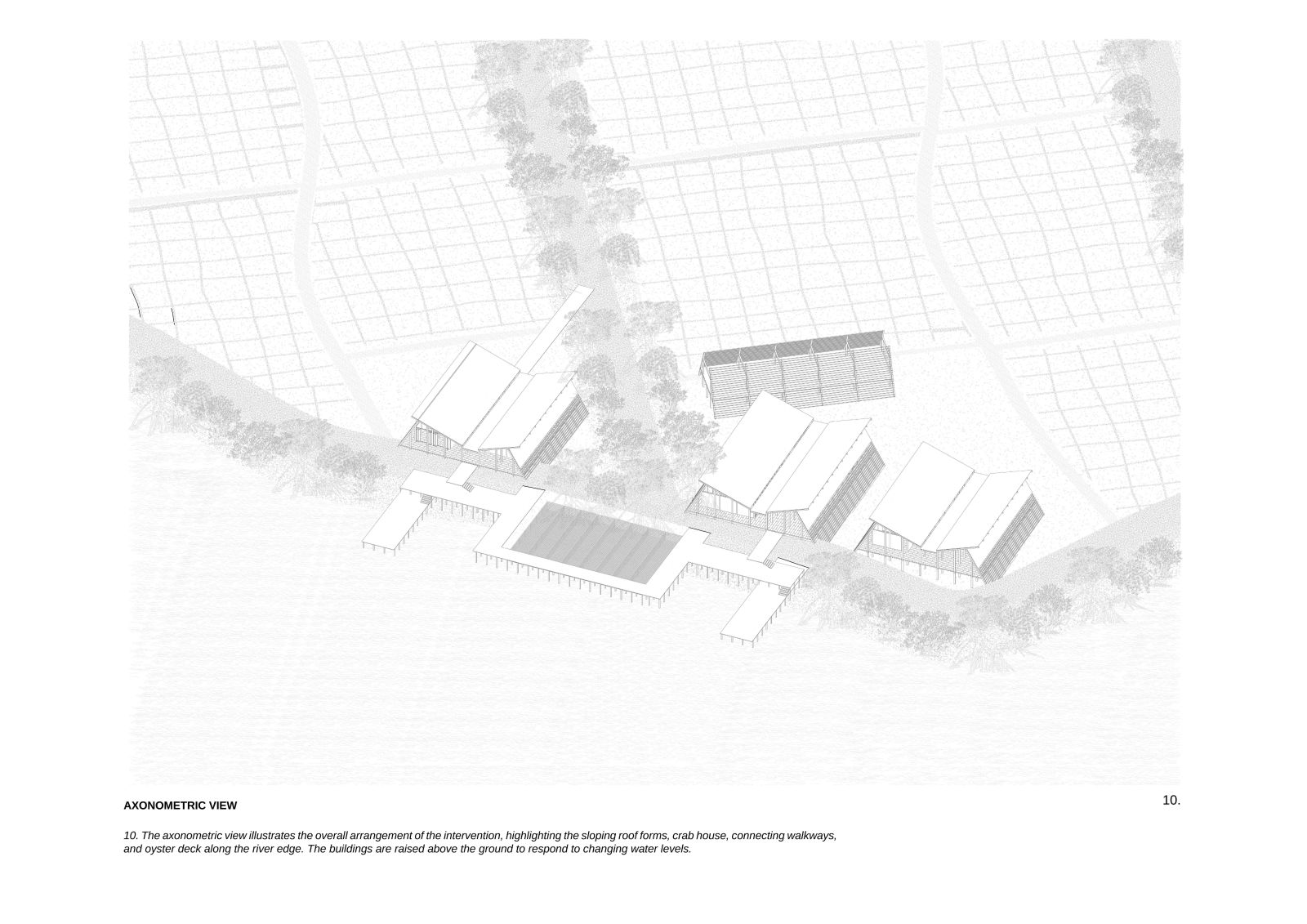
The project sees the khazans not as fixed farmlands, but as a place where fresh and salt water keep meeting and changing. Rain turns into river water, river water meets the sea, and this meeting decides what grows in the khazans, what gets fished, and what gets grazed along the river edge. What is cultivated follows this flux instead of staying in fixed plots. People share and look after this system together, through bunds and gates, with no single owner. However, the balance is breaking down. Salty water is pushing further inland, transport routes are cutting into embankments, less fresh water is coming down from the Ghats, and farming, mining, fishing, and tourism are competing for the same land. At the river edge, fresh water, tide, and mud meet first, and oysters, crabs, and algae react right away. This is also where the bunds need repair most often. Here, ecology becomes real evidence, not just background. My project responds by turning these observations into shared spatial interventions: small, temporary structures built along the existing bunds and gates, using local materials and resources already on the land, such as the bund itself, the shade of the mangroves, and the river edge