The studio will introduce students to the fundamentals of making comics while encouraging
them to rethink the form beyond conventional formats.
Students will learn core principles of visual storytelling: the interplay of text and image, panel
composition, pacing and narrative structure. They will also examine how the physical form of a
comic shapes how a story is experienced.
Rather than seeing the page as a neutral container, the studio will approach comics as objects that
unfold, expand, layer, and invite interaction. Through weekly exercises, students will experiment
with different materials, surfaces, and formats and reflect on how layout, scale, texture, and
structure affect tone and meaning.
The studio culminates in a final project where each student creates an original comic with
narratives rooted in the idea of home. Home may be explored as a place, memory, routine, an
object, or community. Projects can reflect personal, cultural, or political perspectives, including
themes of belonging, migration, and displacement. These experiences can reflect the ways
communities shape and are shaped by the spaces they inhabit.
Students are encouraged to bring these stories to life by combining narrative, format,
construction, and reading experience to create comics that can be felt, seen, and experienced in
unexpected ways.
Studio Unit
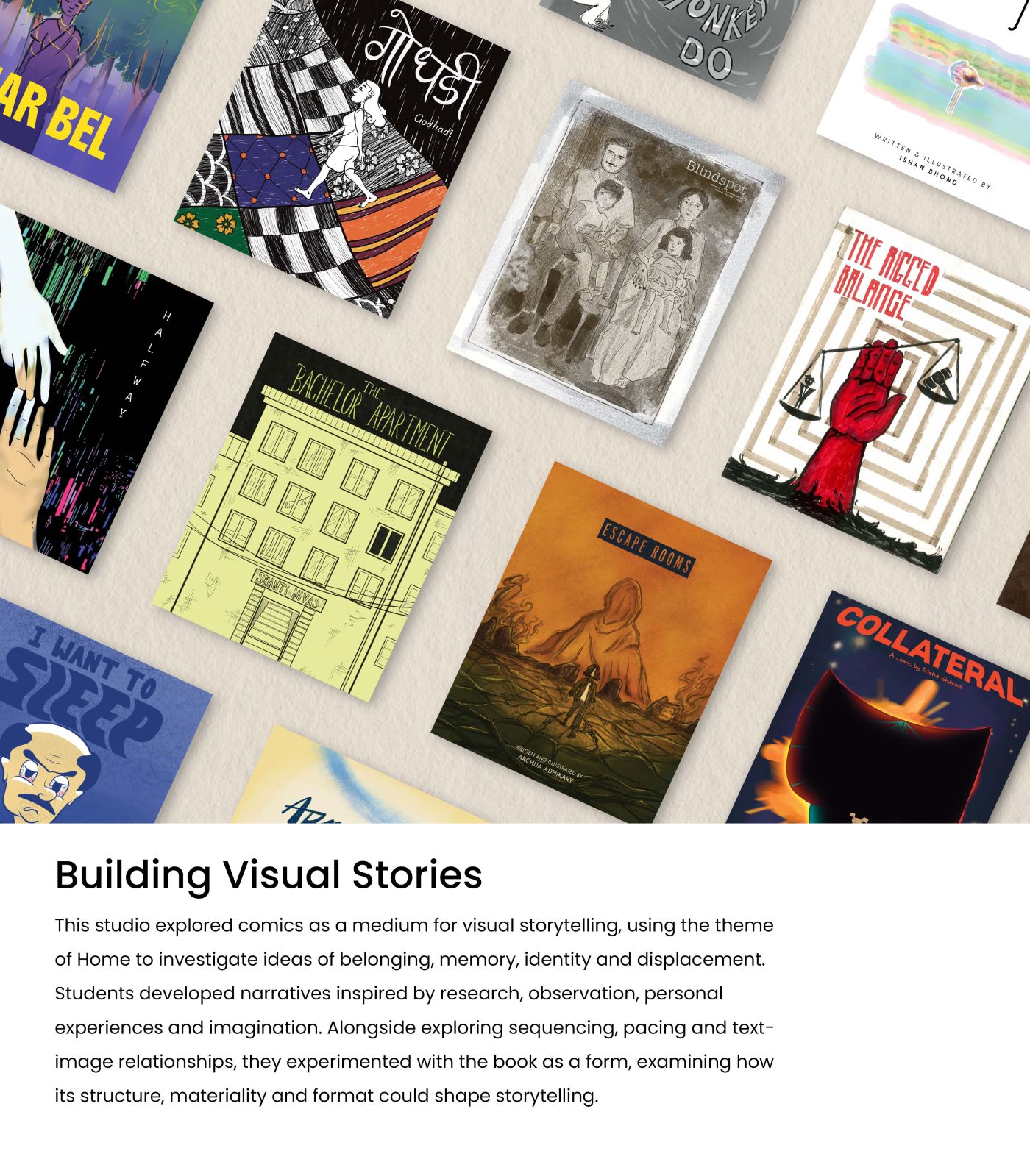
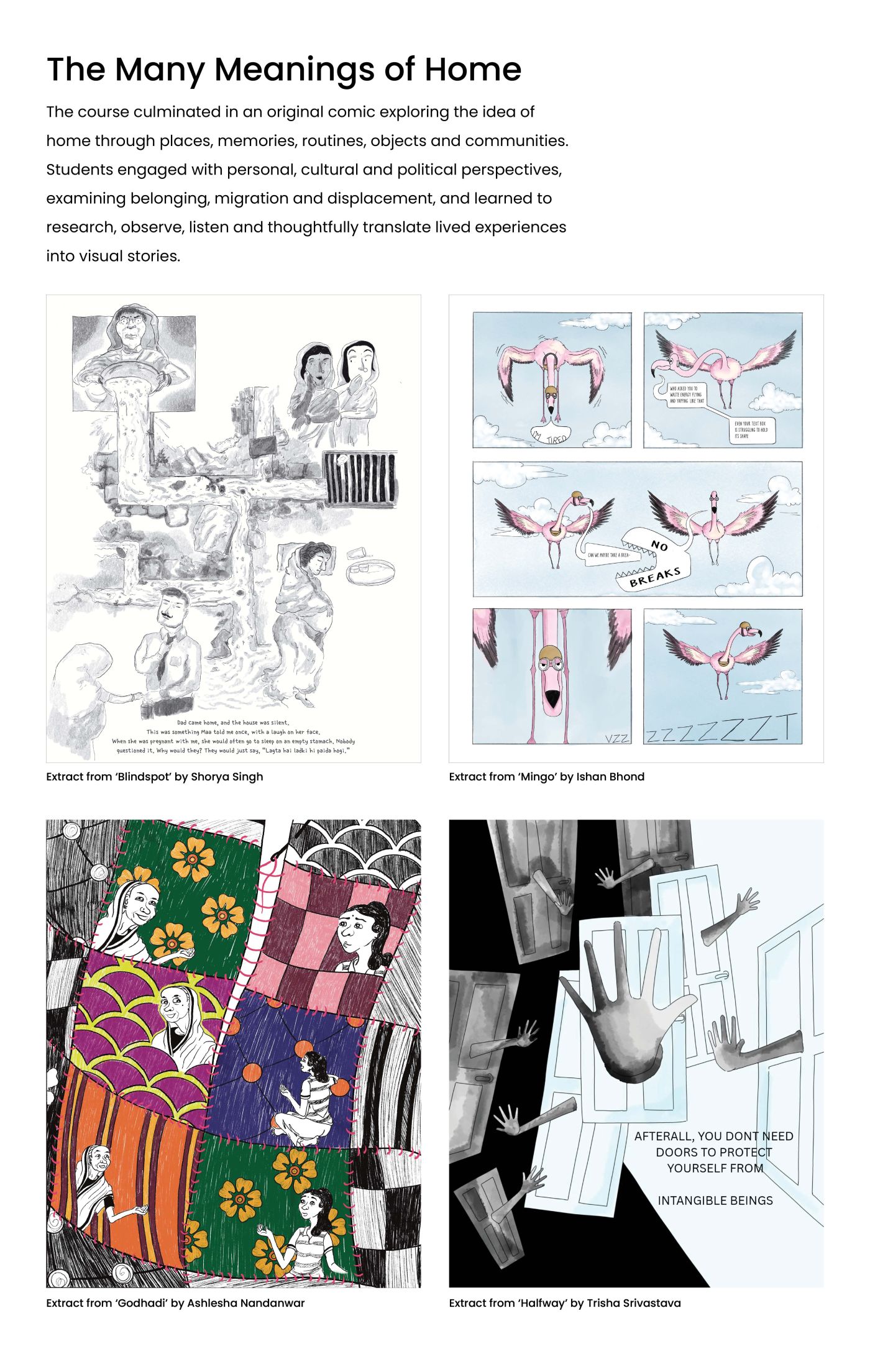
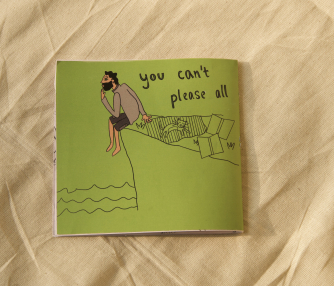
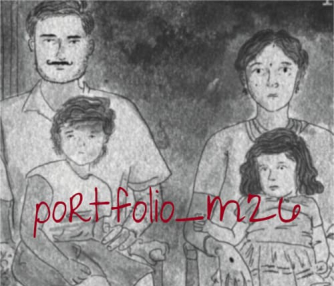
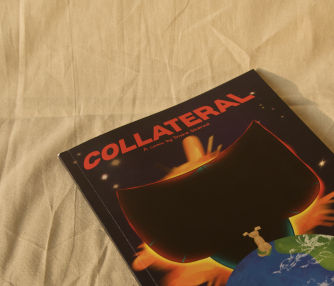
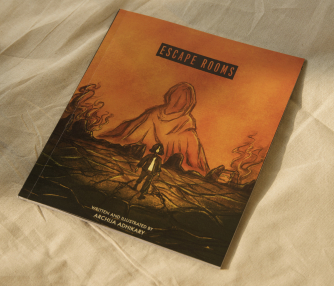
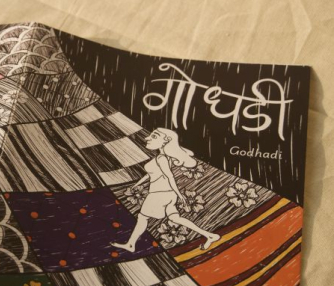
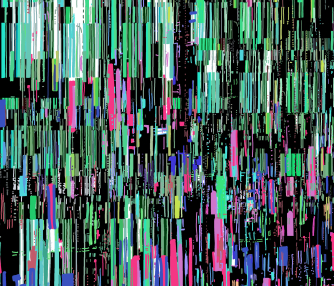
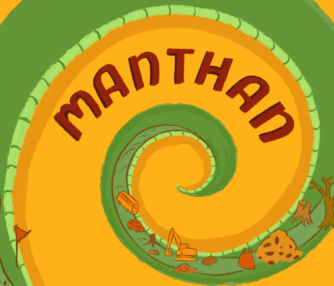
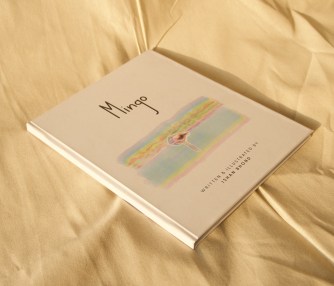
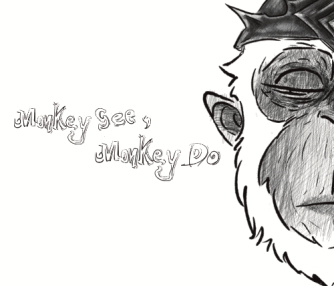
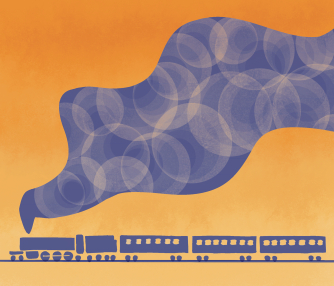
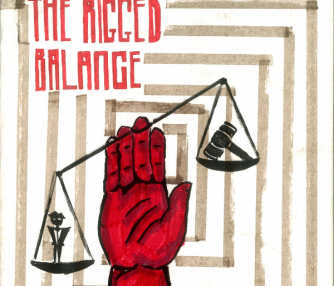
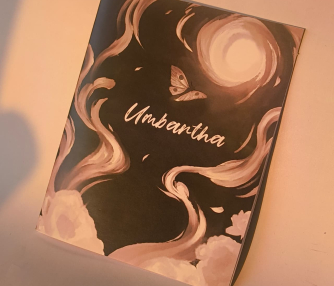
A collection of comic covers made by students across the semester.
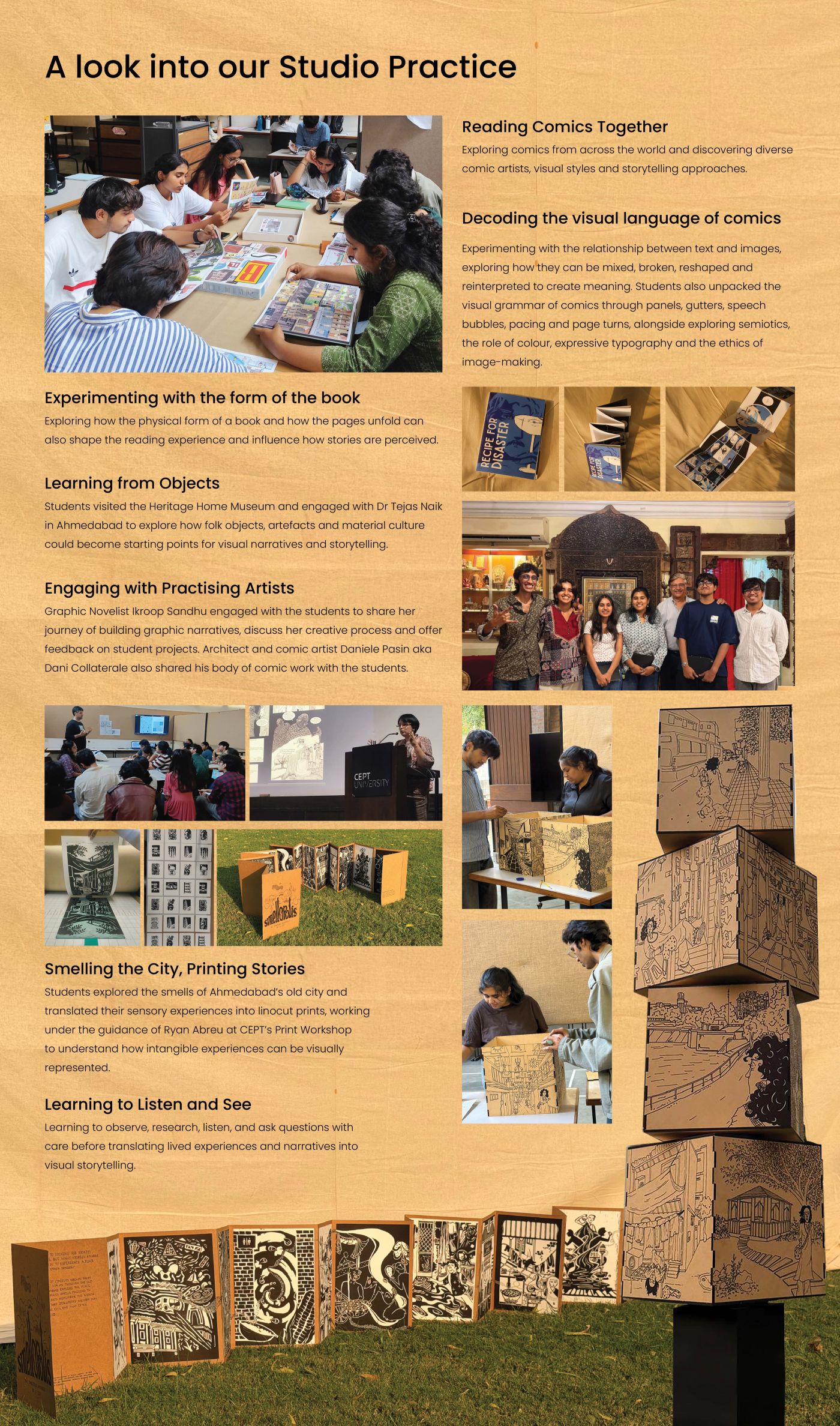
Readings, museum visits, artist interactions and printmaking that shaped the studio's approach to storytelling.
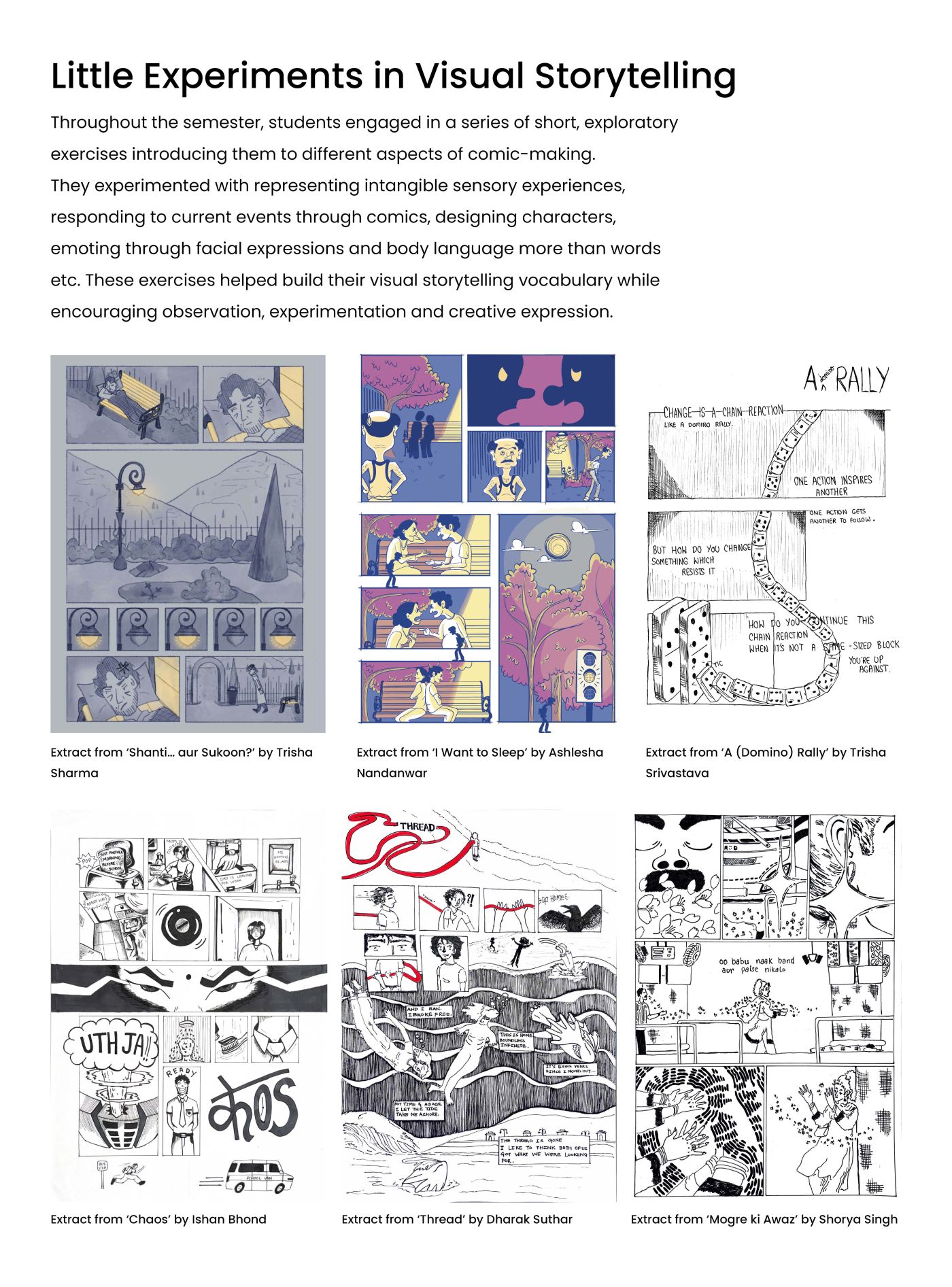
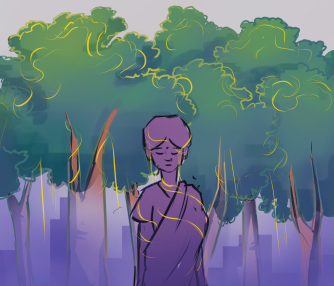
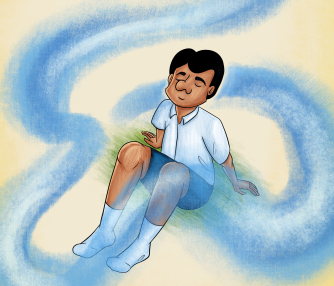
Short exercises exploring sensory experience, current events, character and emotion through comics.
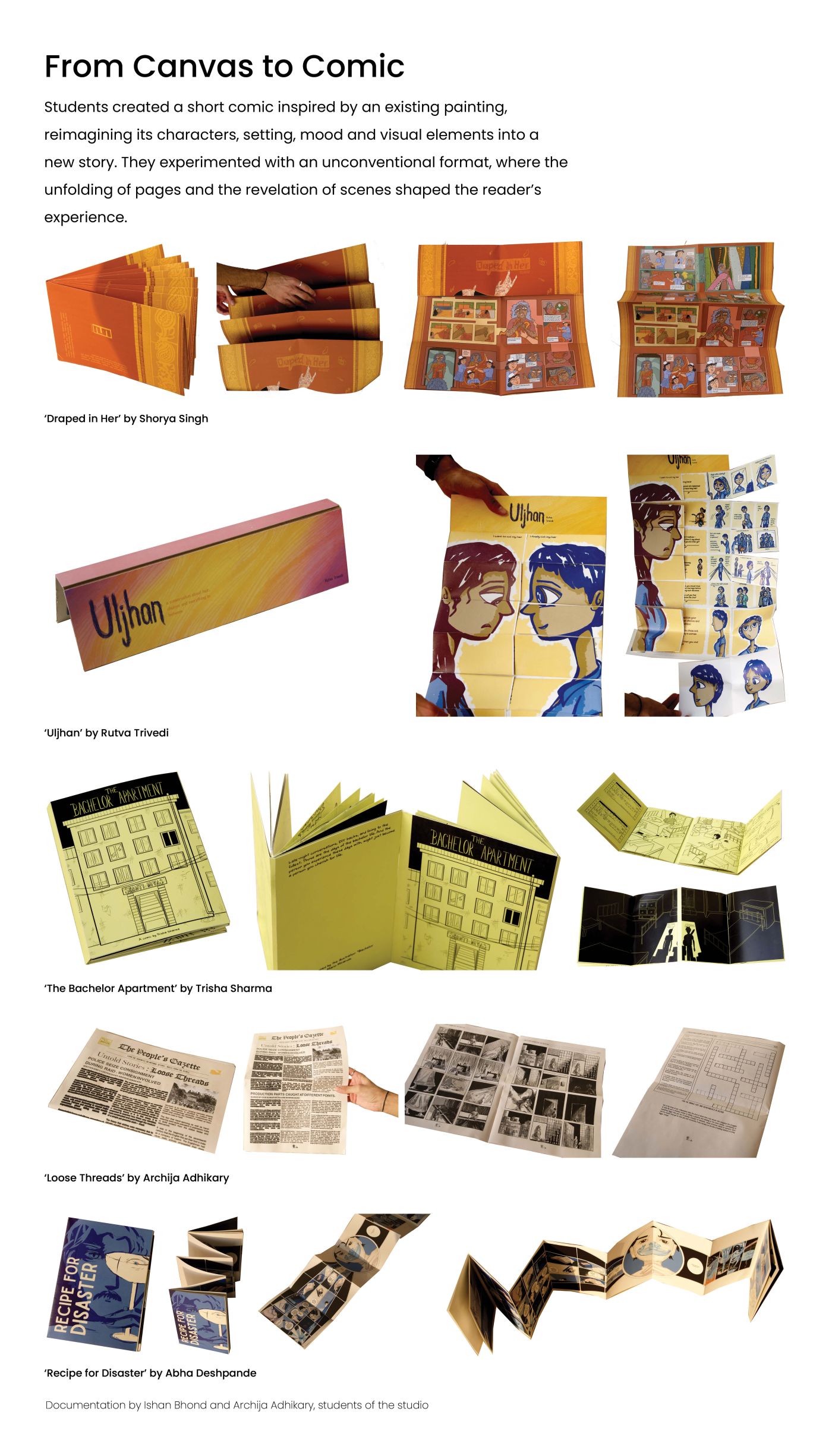
Comics adapted from paintings and told through unconventional book formats.
Final comics exploring home through memory, belonging and displacement.