Ashish Pramod Pradhan

CD4000-1

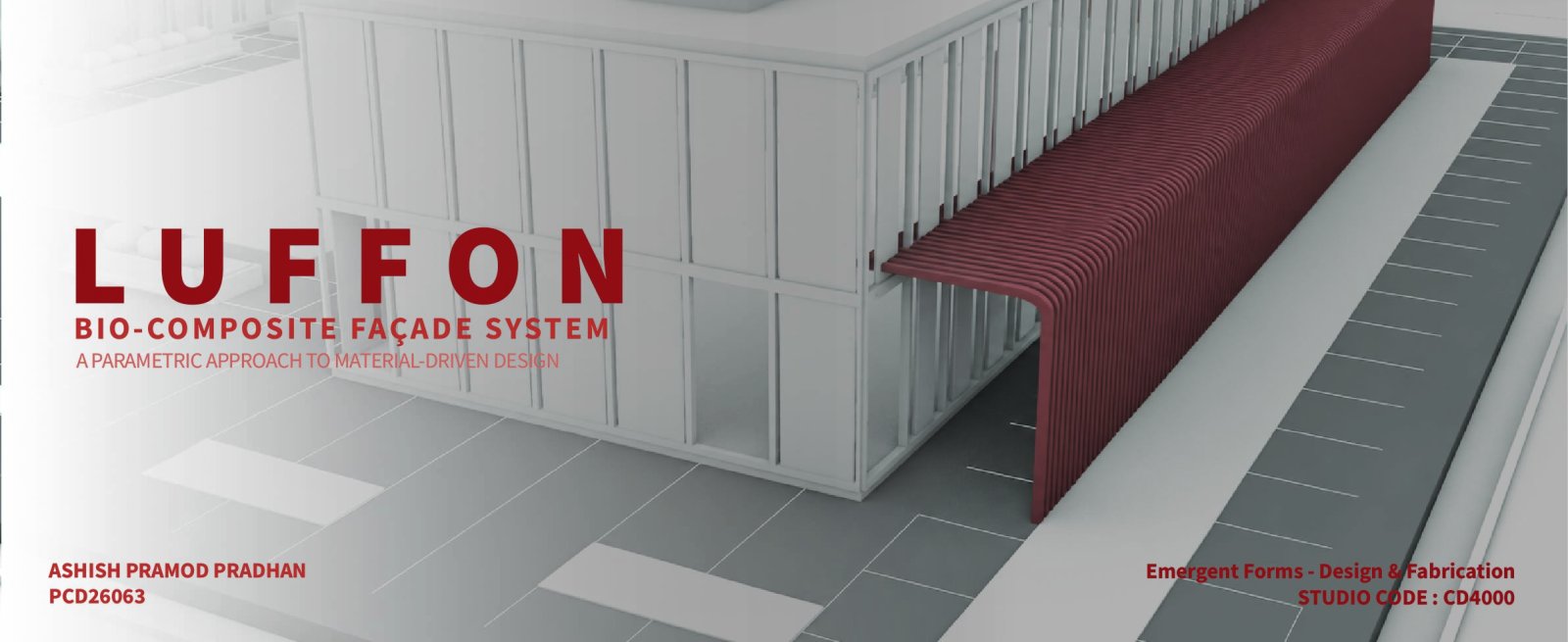
LUFFON – Bio-Composite Façade System

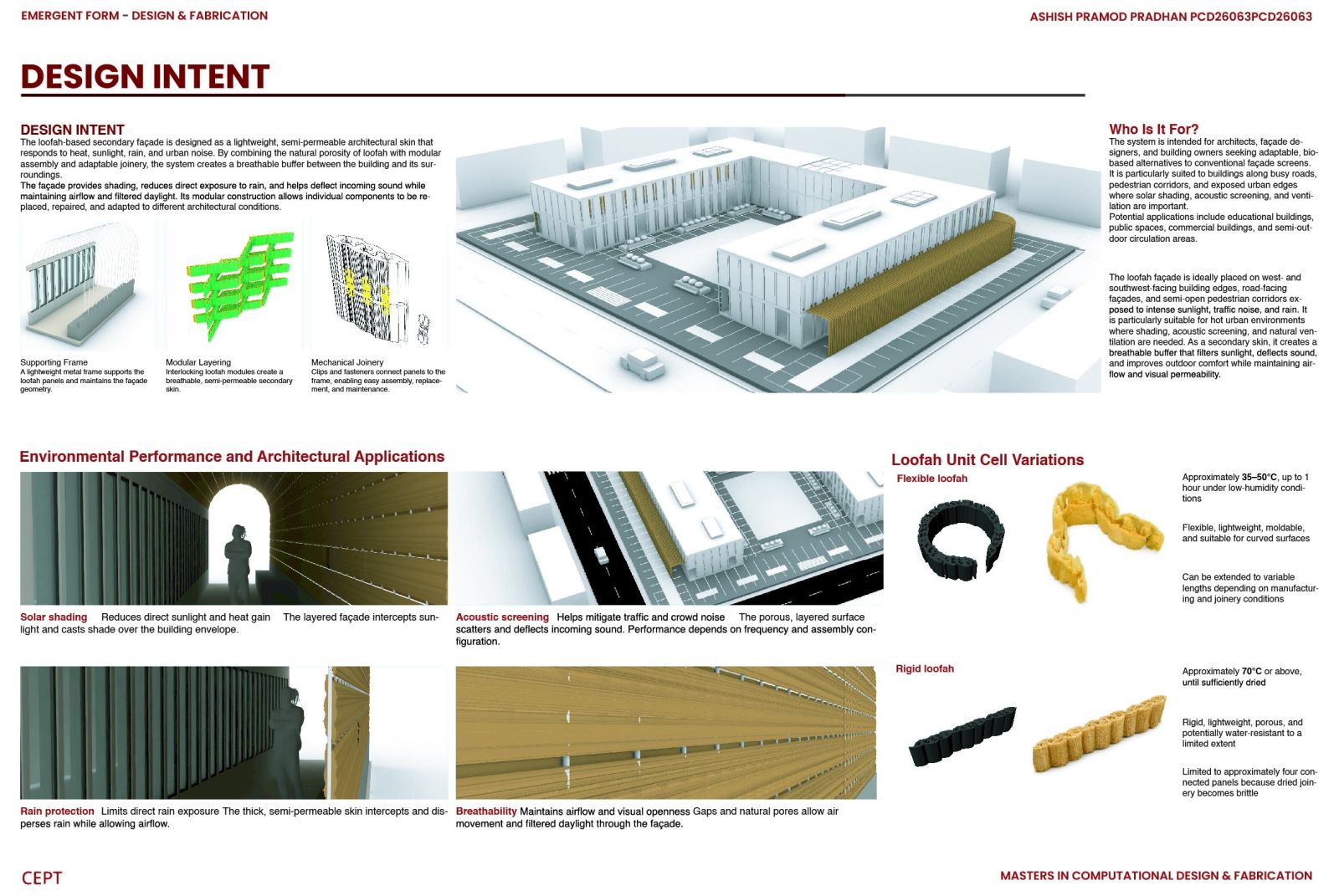
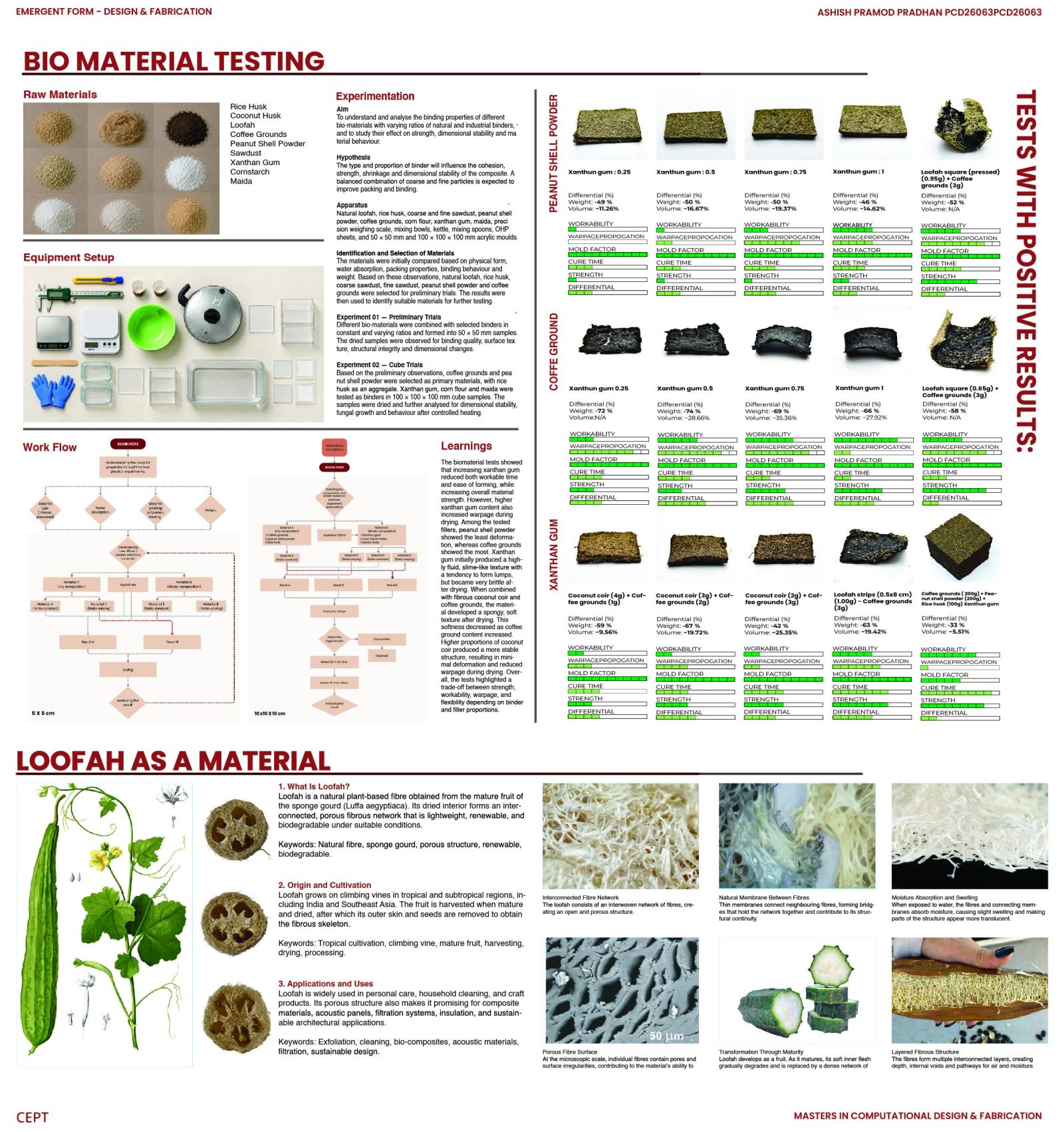
LUFFON explores loofah as a bio-based material for a modular secondary façade system. Through material experimentation, composite development and computational design, natural loofah fibres are transformed into interlocking panels that form a lightweight, semi-permeable architectural skin. The system aims to provide solar shading, acoustic screening, rain protection and natural ventilation while maintaining filtered daylight. Parametric aggregation and mechanical joinery enable adaptable configurations, efficient material use and easy assembly, replacement and maintenance across varied architectural conditions.
Report Content

LUFFON: Bio-Composite Façade System

Design Intent & Architectural Application Establishes the design objectives, architectural context, environmental performance and potential applications of the loofah façade.

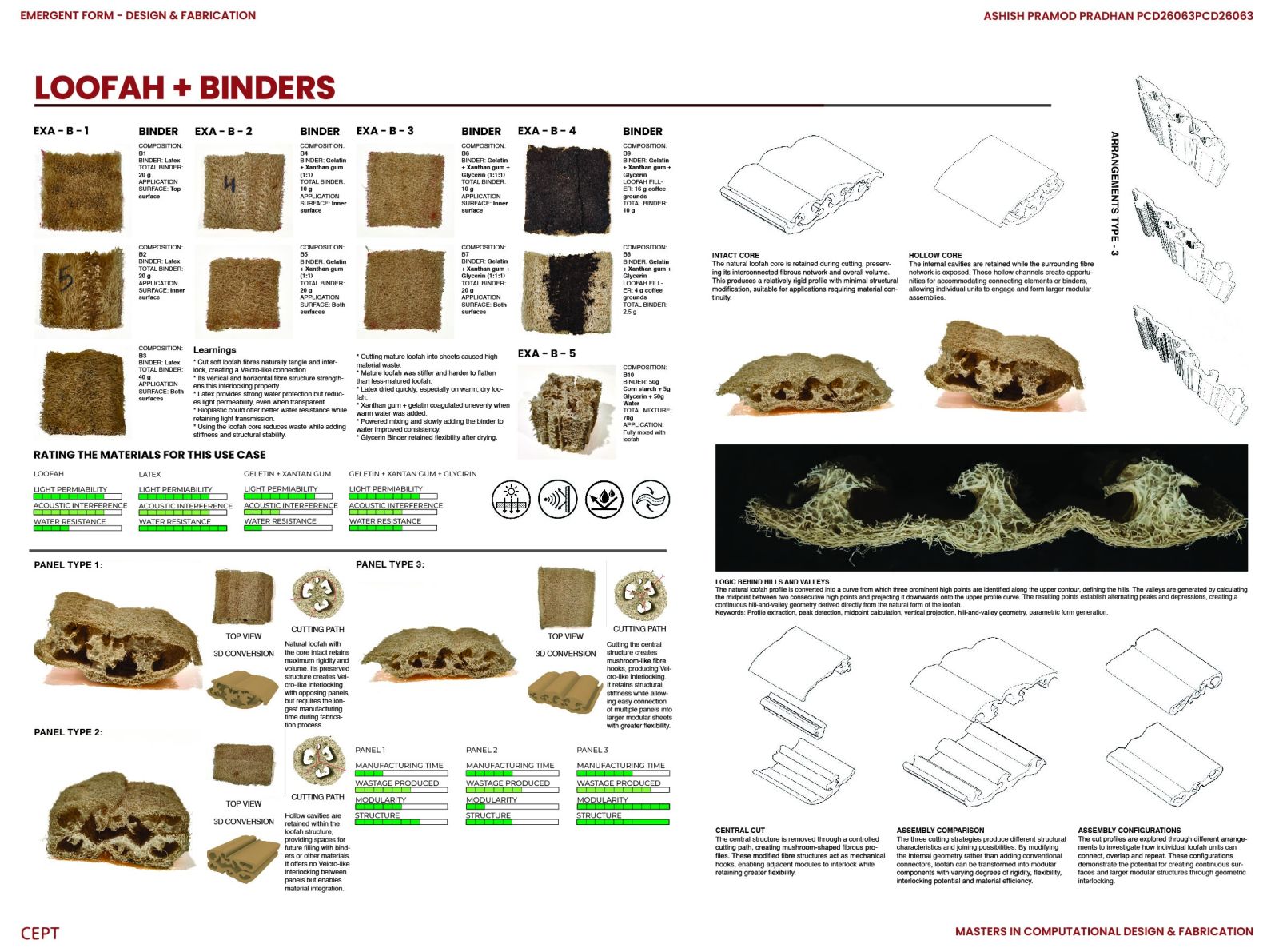
Bio-Material Exploration & Testing Investigates different natural materials and binders through preliminary experiments to understand their strength, stability and material behaviour.

Loofah–Binder Composites & Interlocking Geometry Explores binder combinations, loofah cutting strategies and natural interlocking geometries to develop modular panel systems.

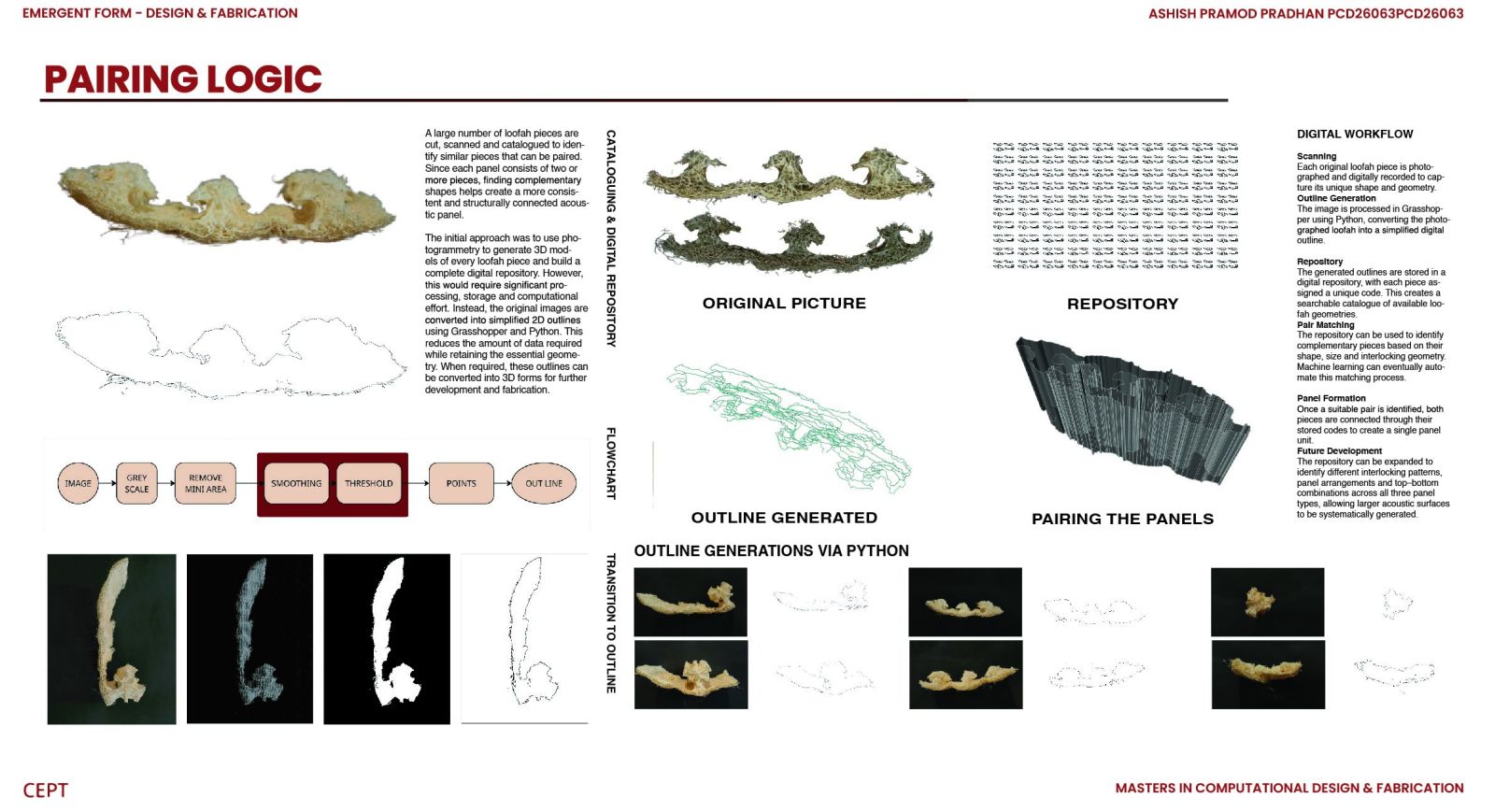
Digital Cataloguing & Pairing Logic Develops a computational workflow to scan, extract, catalogue and match individual loofah geometries for panel formation.

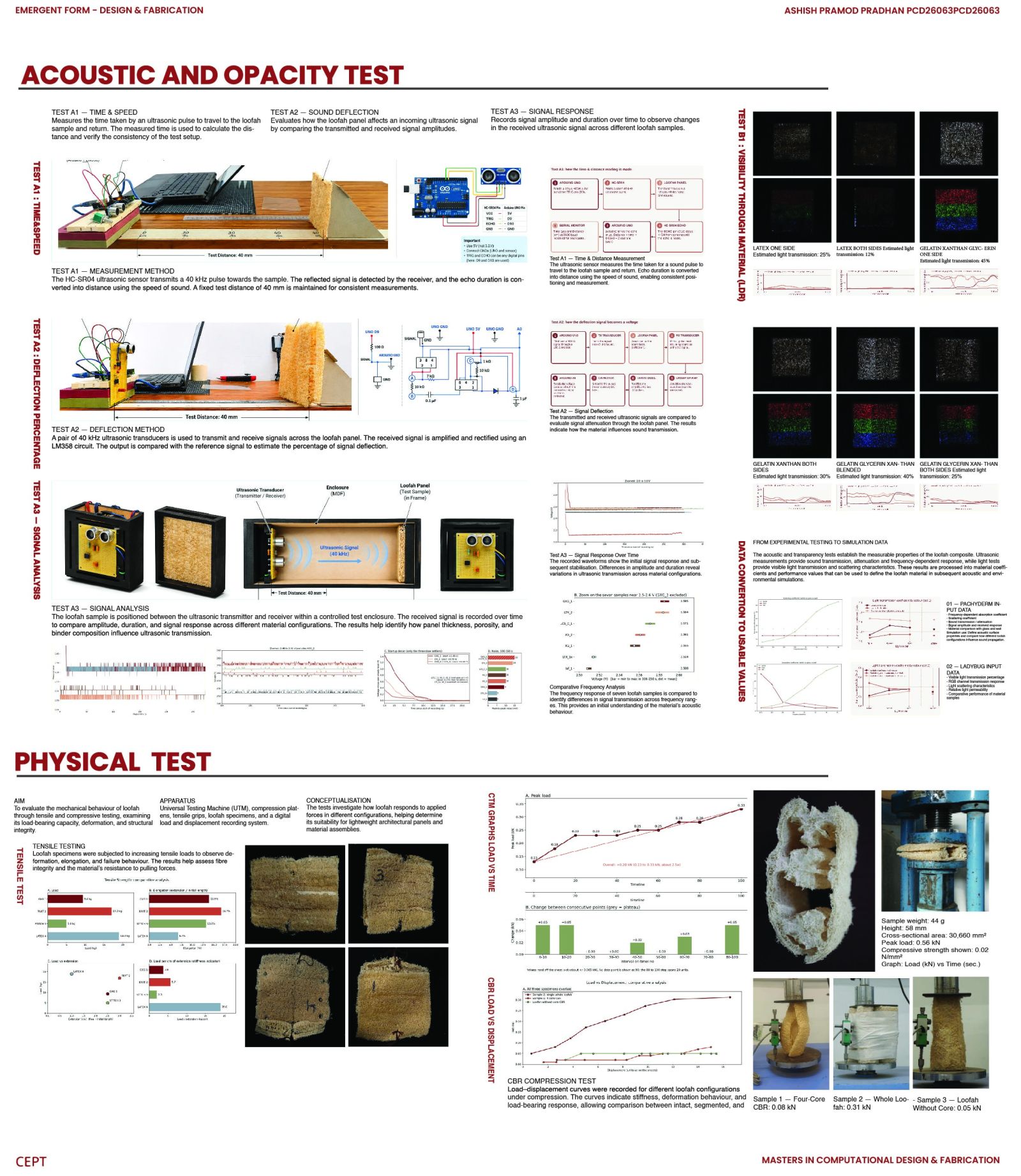
Material Performance & Physical Testing Evaluates the acoustic, light-transmission, tensile and compressive properties of loofah samples through physical experiments.

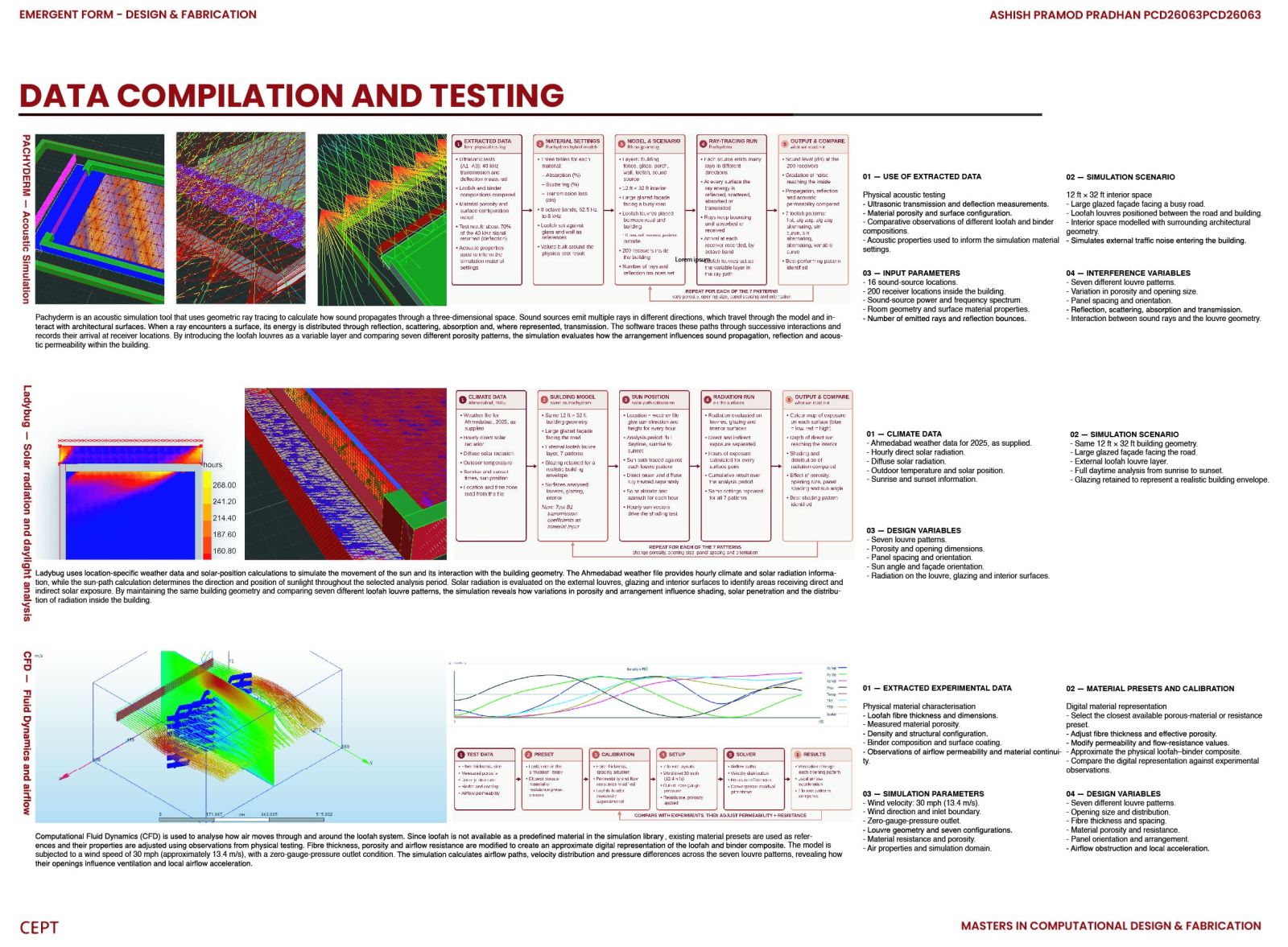
DATA COMPILATION & COMPUTATIONAL SIMULATION Converts experimentally derived material properties into digital inputs for acoustic, solar radiation and airflow simulations to evaluate the façade's environmental performance.

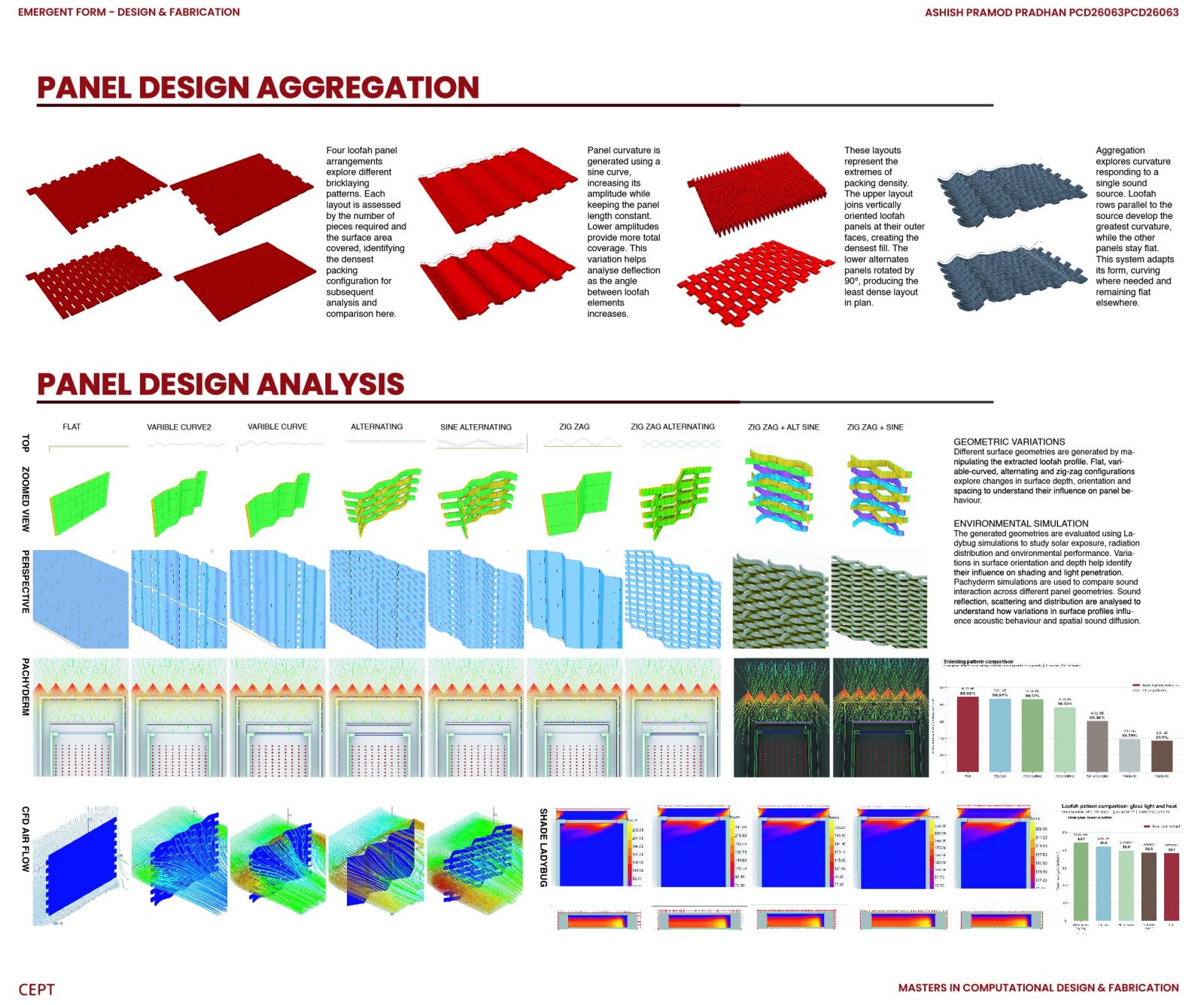
Parametric Panel Aggregation & Performance Analysis Generates and compares different panel arrangements, curvatures and surface geometries through computational and environmental simulations.

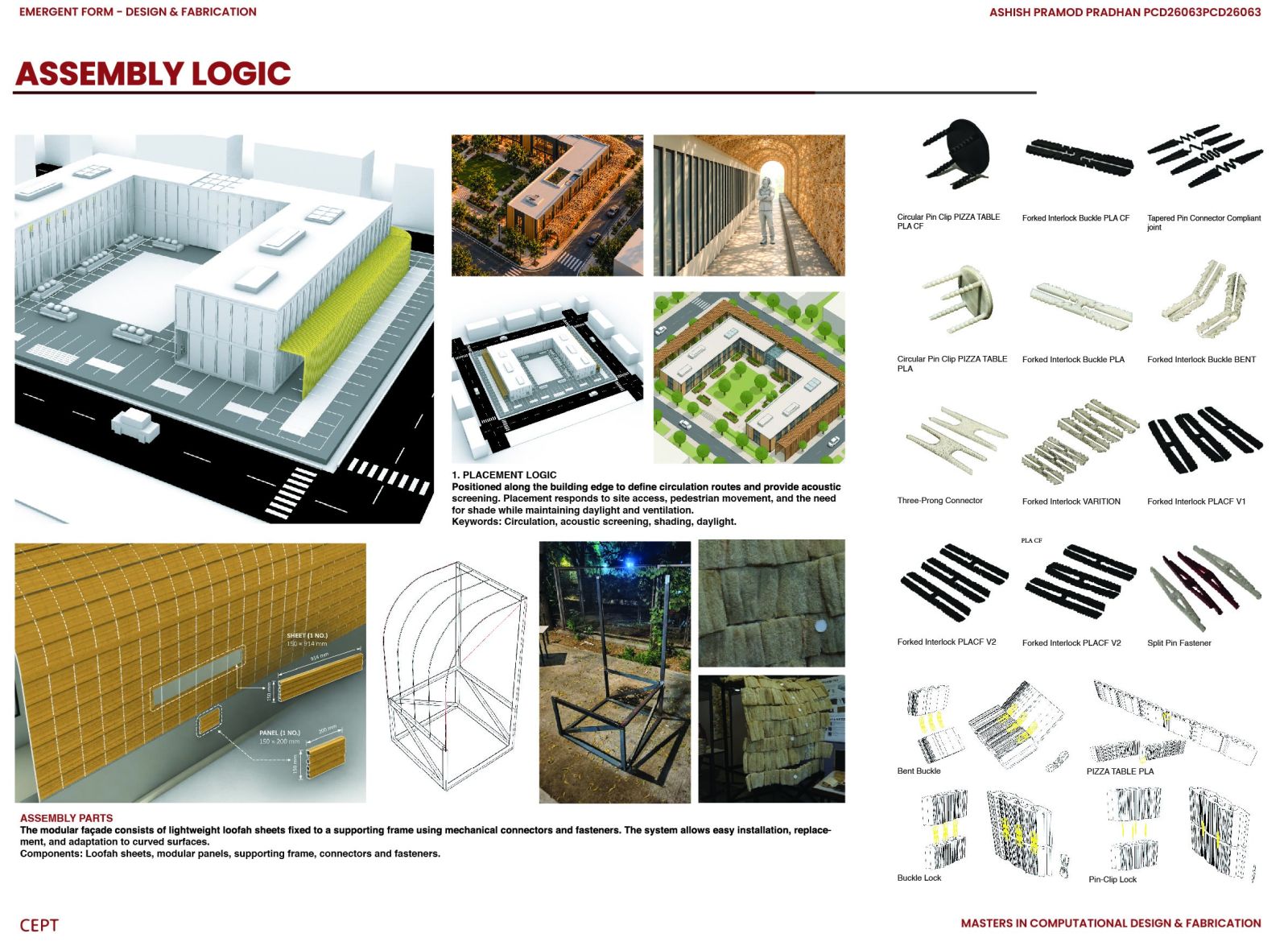
Assembly Logic & Modular Connections Develops the façade's placement strategy, supporting framework and mechanical connectors for modular assembly, replacement and adaptation.

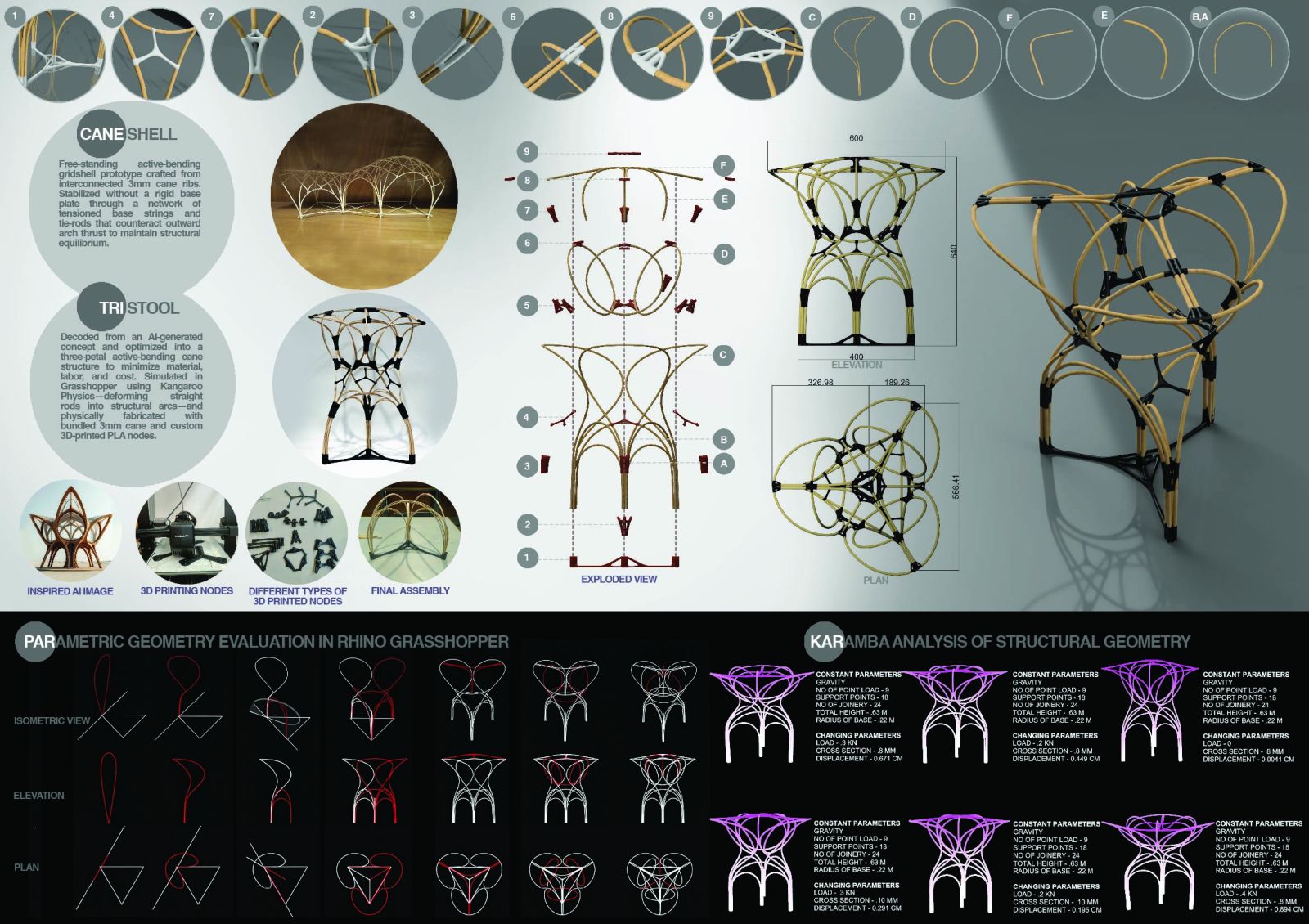
TRI-STOOL | Parametric Cane Structure An exploration of computational form-finding and material behaviour, translating an AI-generated concept into a lightweight, tri-based cane structure through Rhino–Grasshopper modelling, custom 3D-printed PLA joints, and Karamba3D structural analysis to optimise geometry, assembly, and load distribution.