Mohammed Asif S

CD4000-2

Therma Blocks

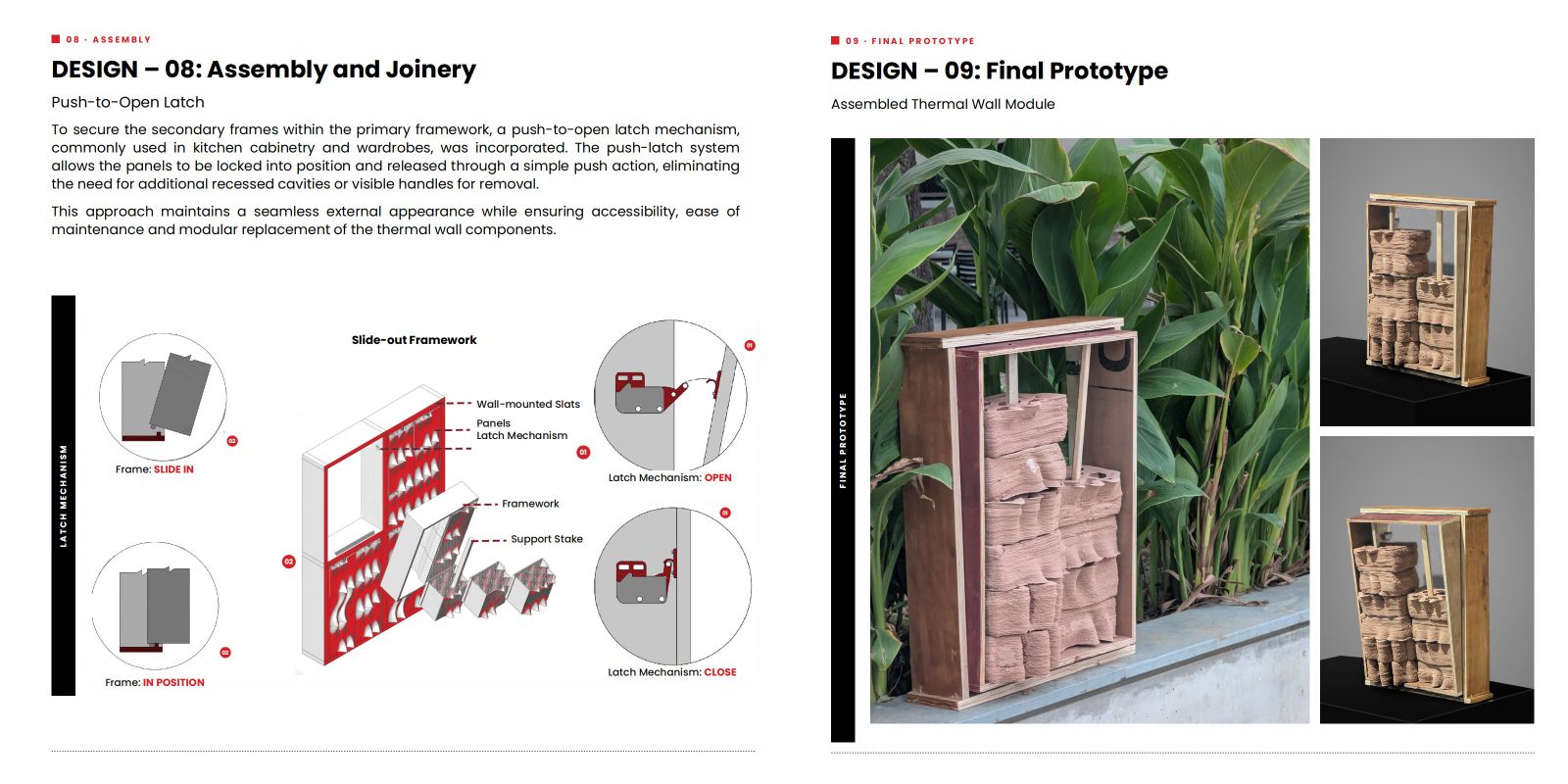
We have developed a 3D-printable material from sawdust, a common wood waste, to make thermal insulation wall panels. First, we tested sawdust with cornstarch and xanthan gum and created a paste that holds its shape and prints smoothly. Then we moved from hand extrusion to Liquid Deposition Modelling on the Delta WASP 2040 3D printer. Our printed samples insulated well, measuring 0.042 to 0.048 W/mK, and lighter samples performed better. We have also designed a thermal brick with air-trapping infill and a self-shading face. Together, these steps show that everyday waste can become a useful, sustainable building material.
Report Content

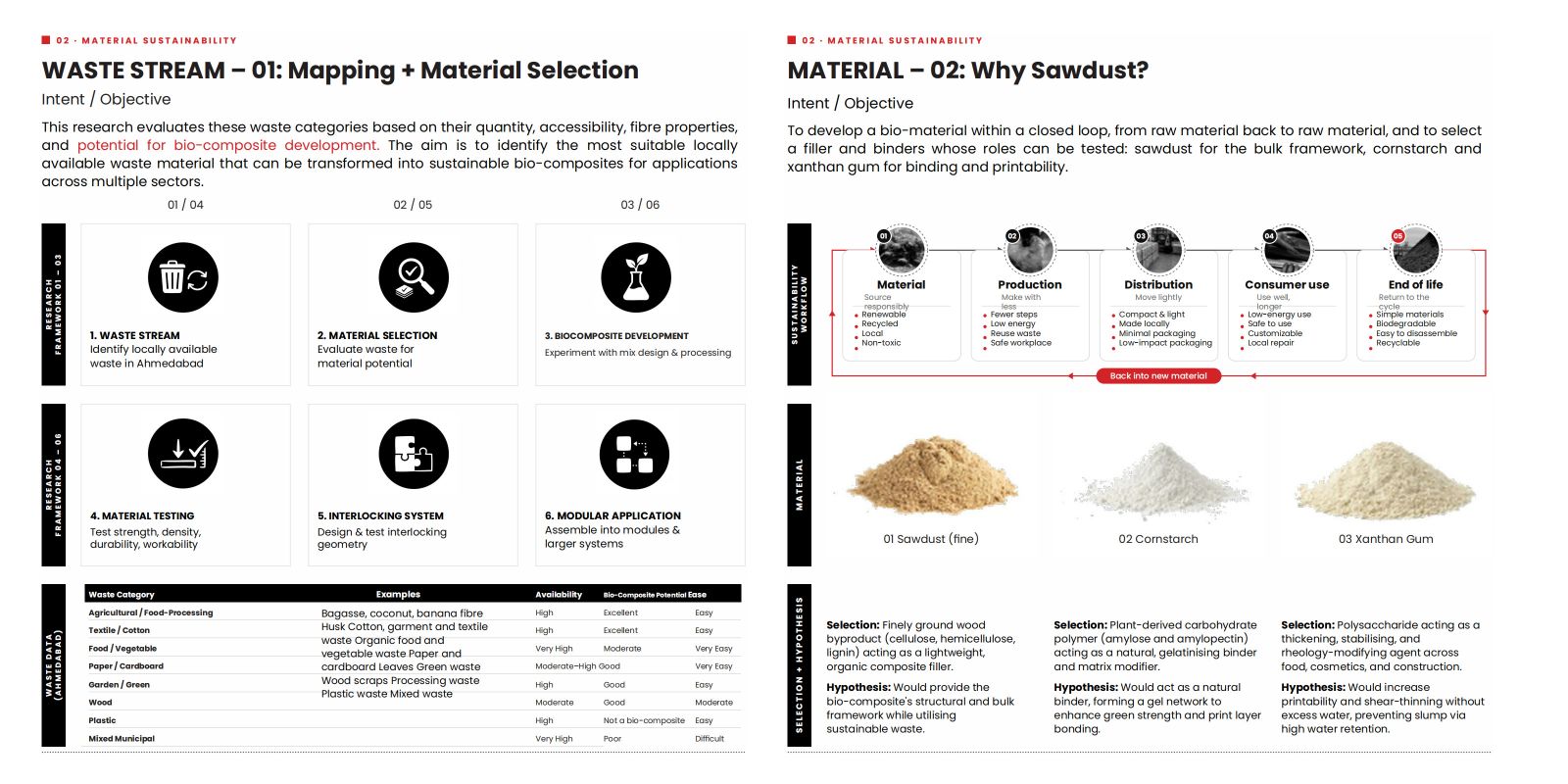
Identifying locally available waste materials and selecting sawdust, cornstarch and xanthan gum for bio-composite development.

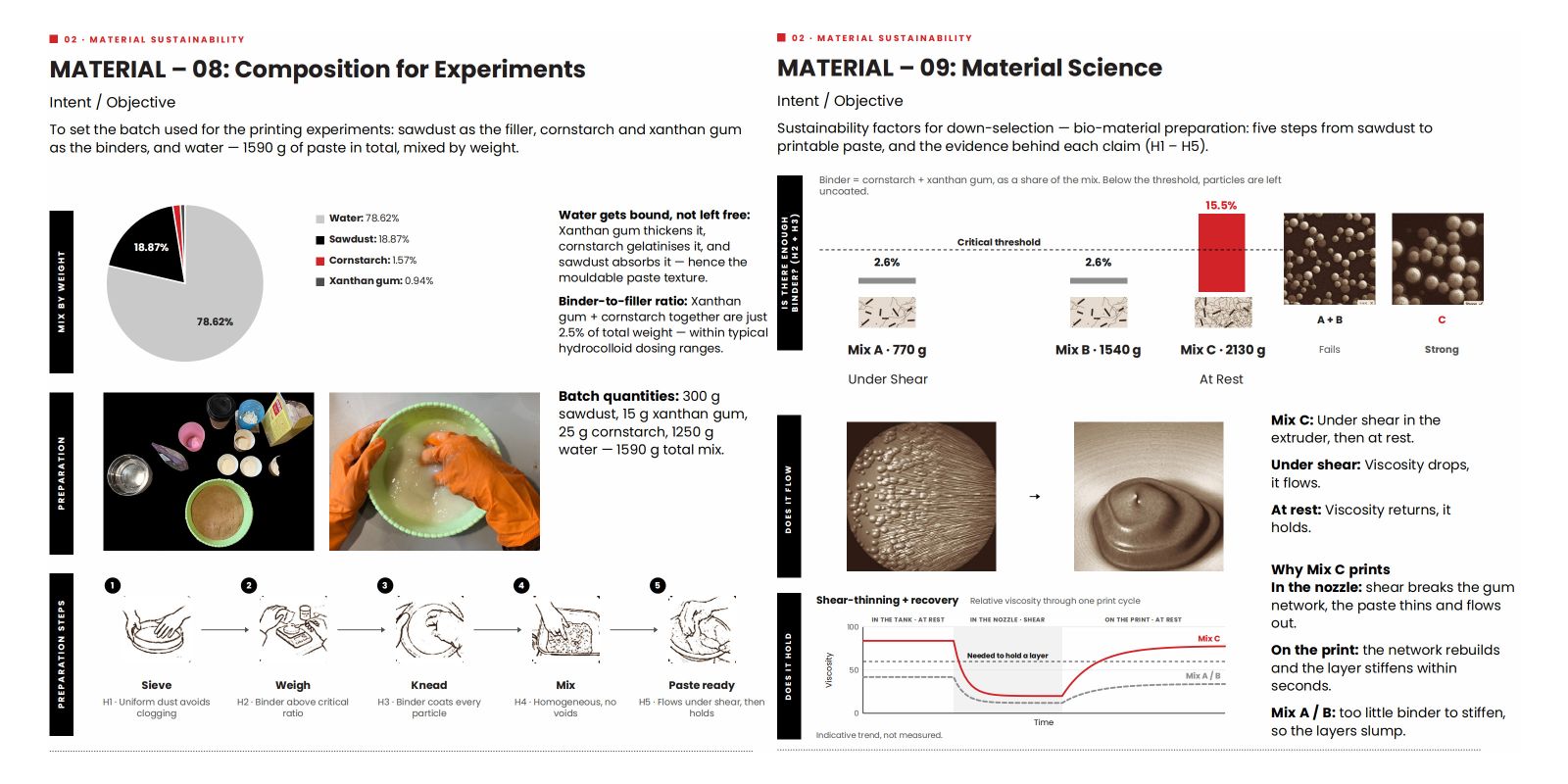
Developing and evaluating the printable paste through material proportions, mixing procedures and binder performance.

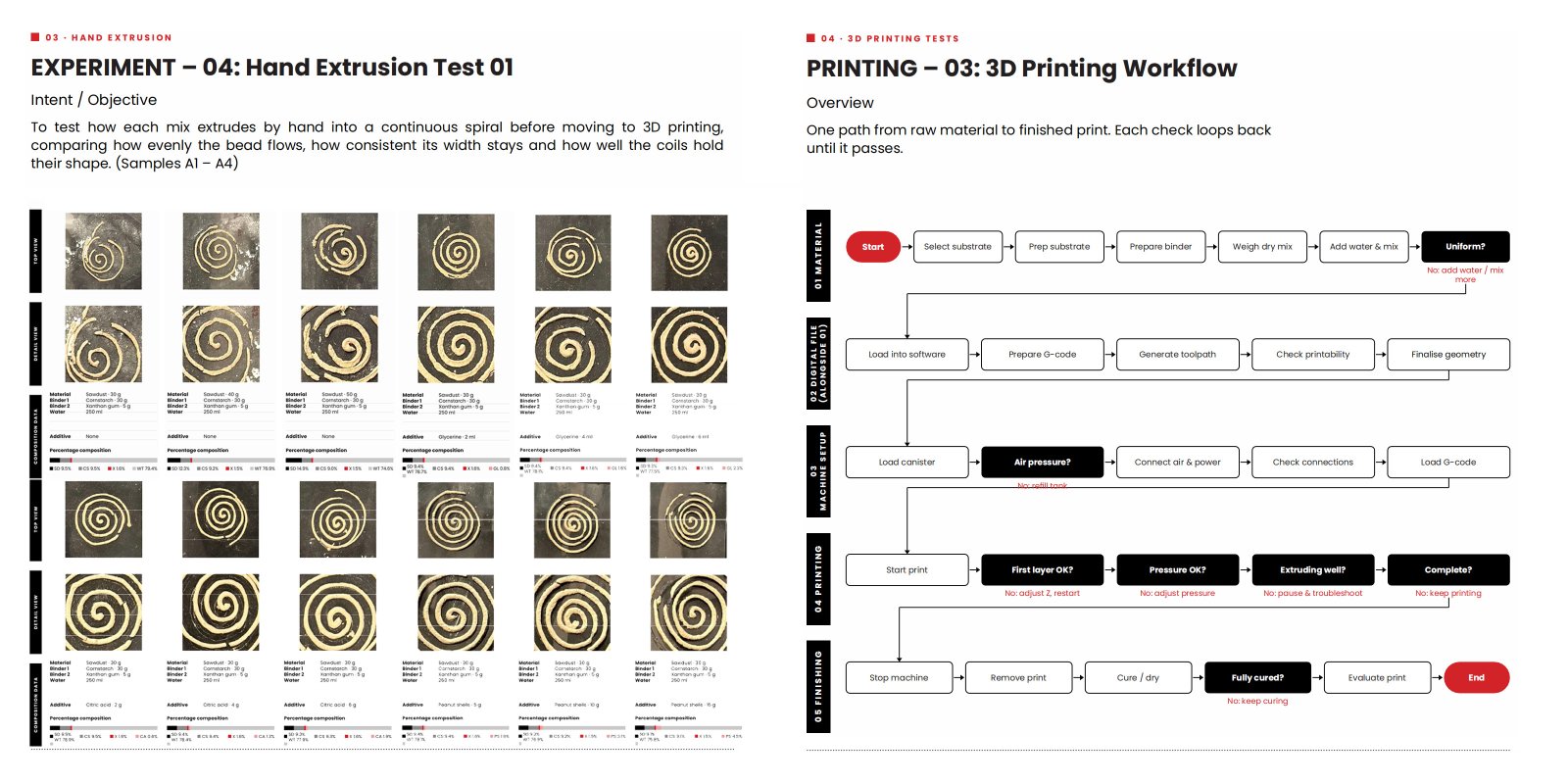
Evaluating hand-extrusion behaviour and establishing a systematic workflow for paste preparation and 3D printing.

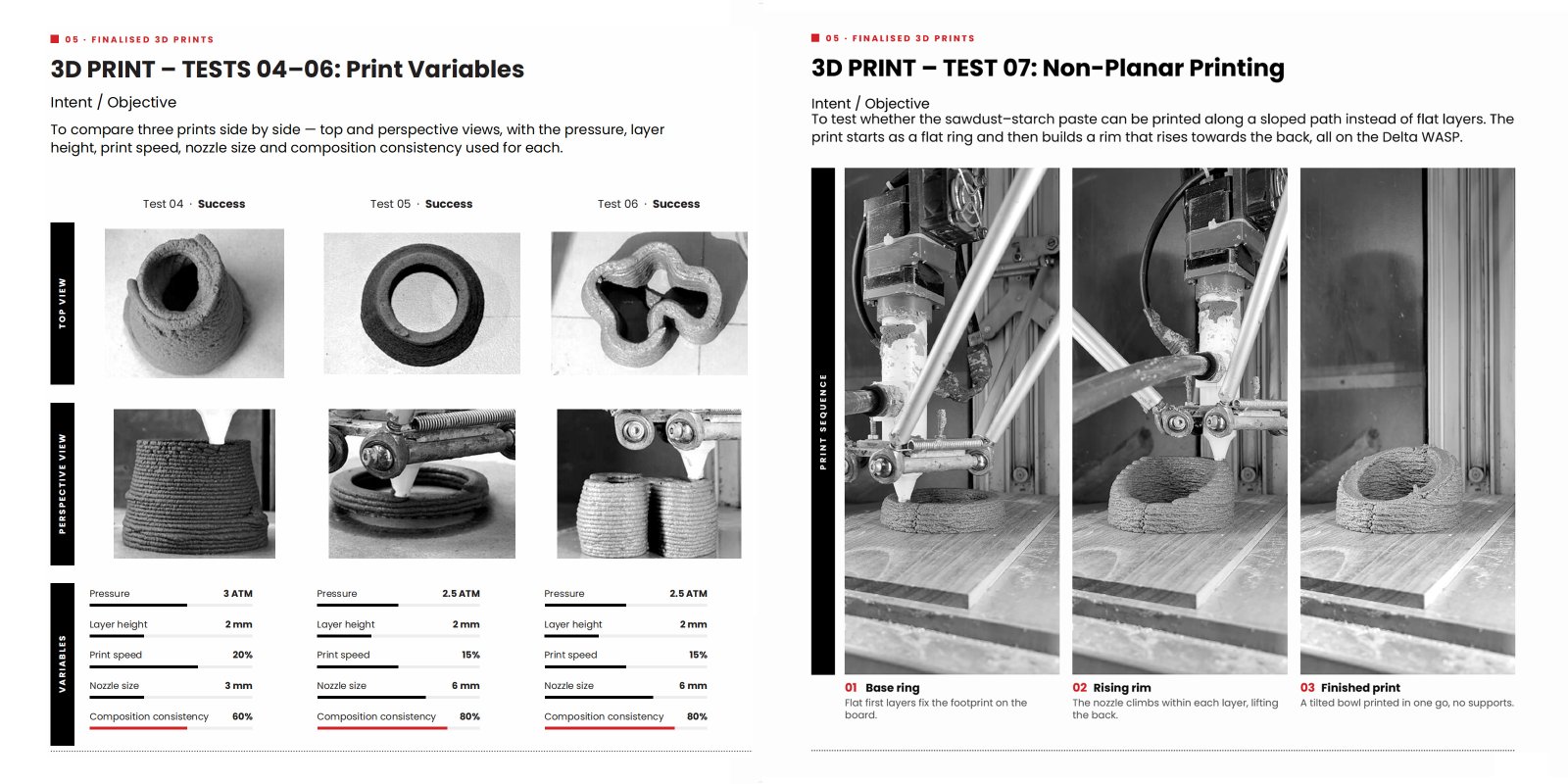
Comparing print variables and testing non-planar fabrication to establish consistent extrusion and geometric stability.

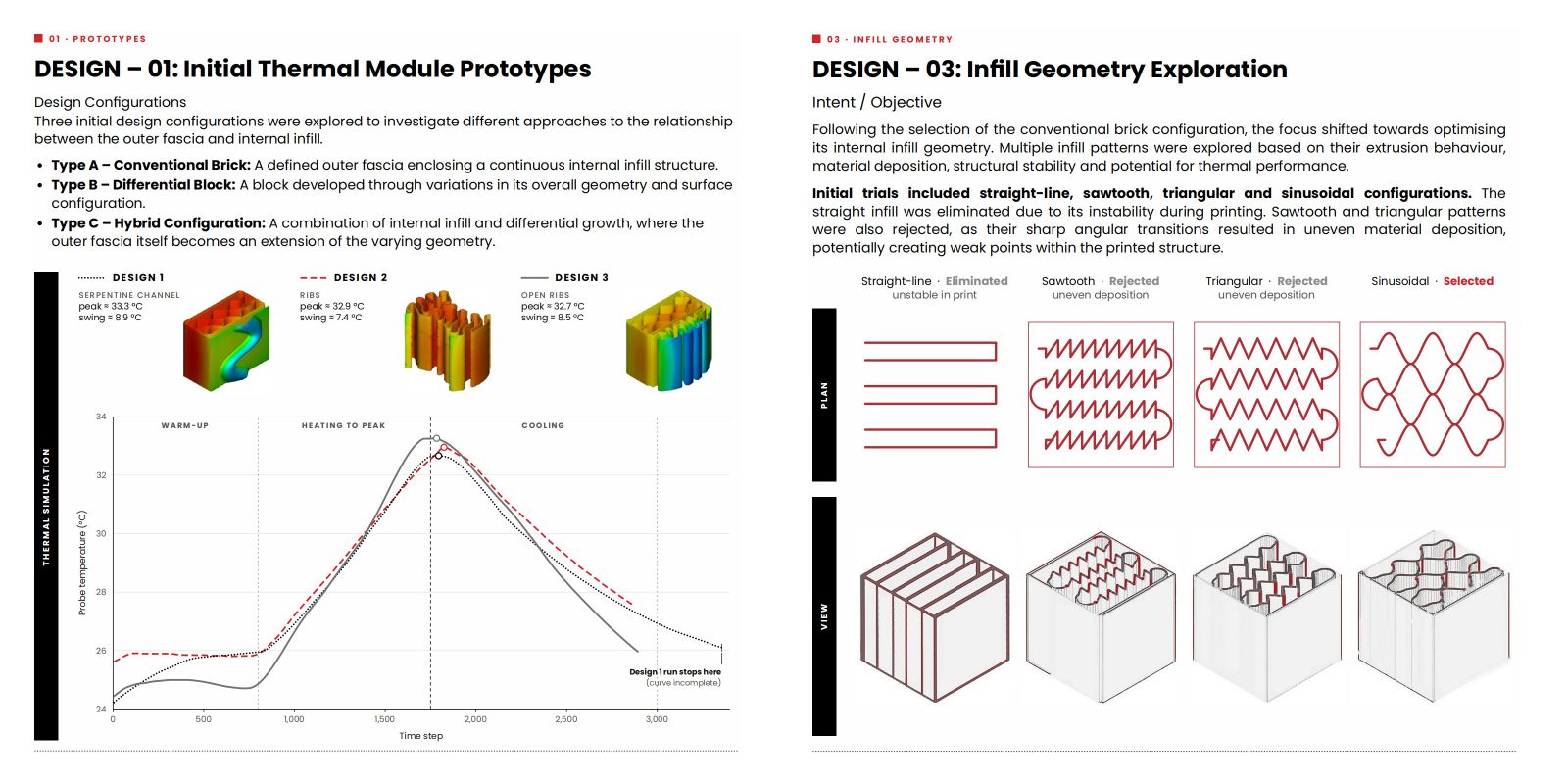
Exploring initial module configurations and identifying suitable infill geometries through thermal simulation.

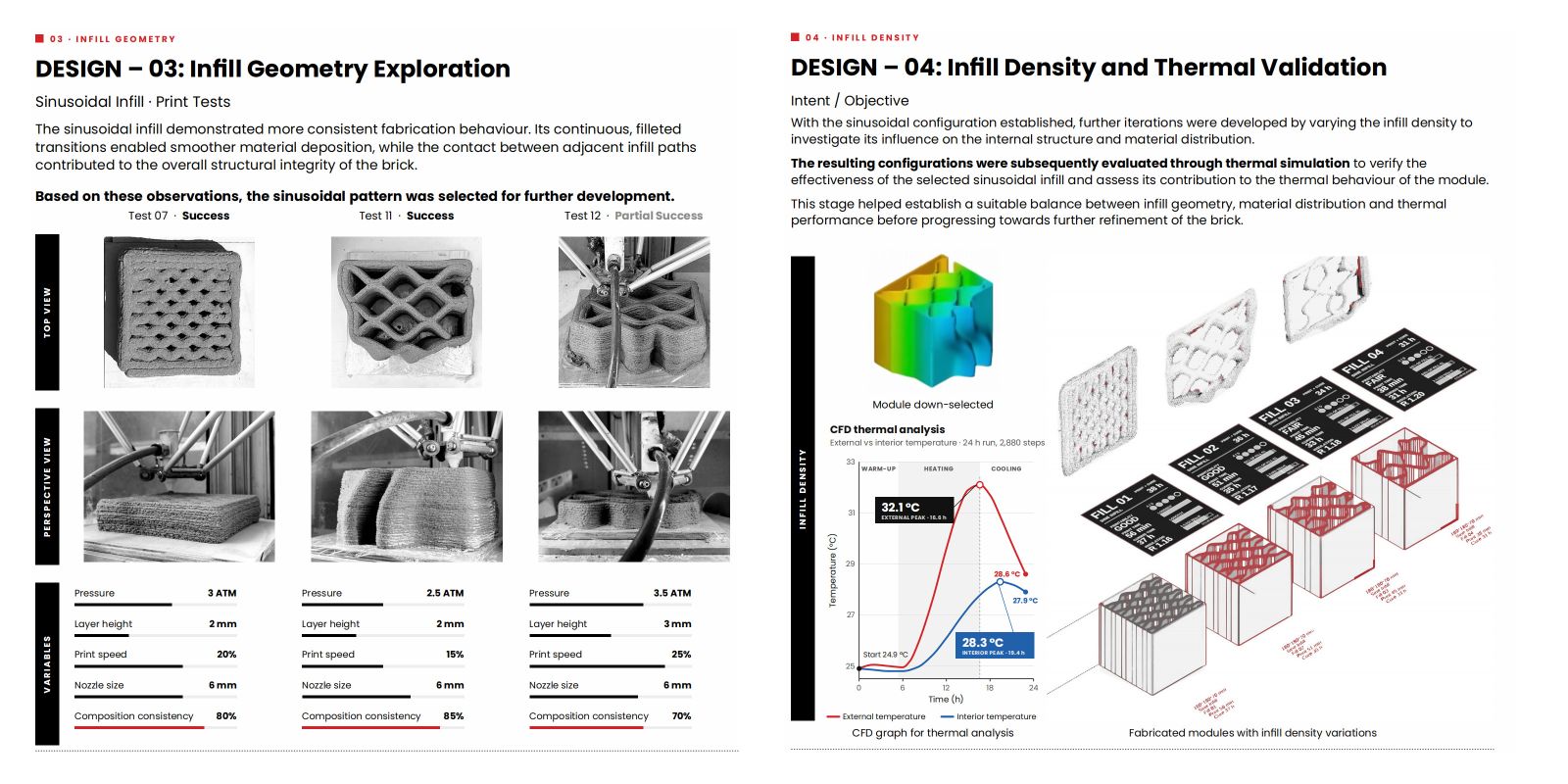
Validating the sinusoidal infill through fabrication trials and thermal simulations to optimize material distribution.

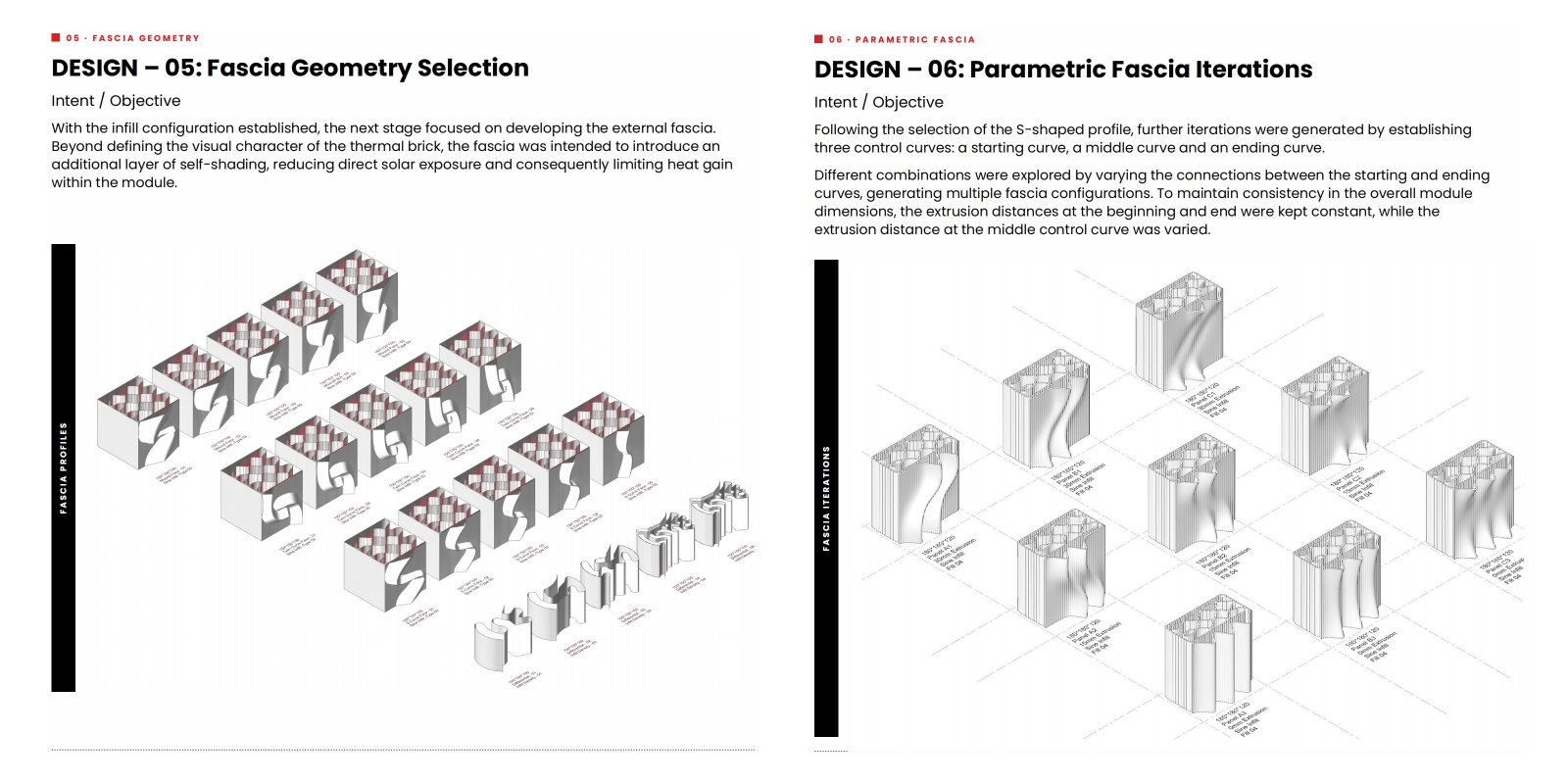
Exploring external fascia profiles to enhance self-shading and establish a variable thermal-brick geometry.

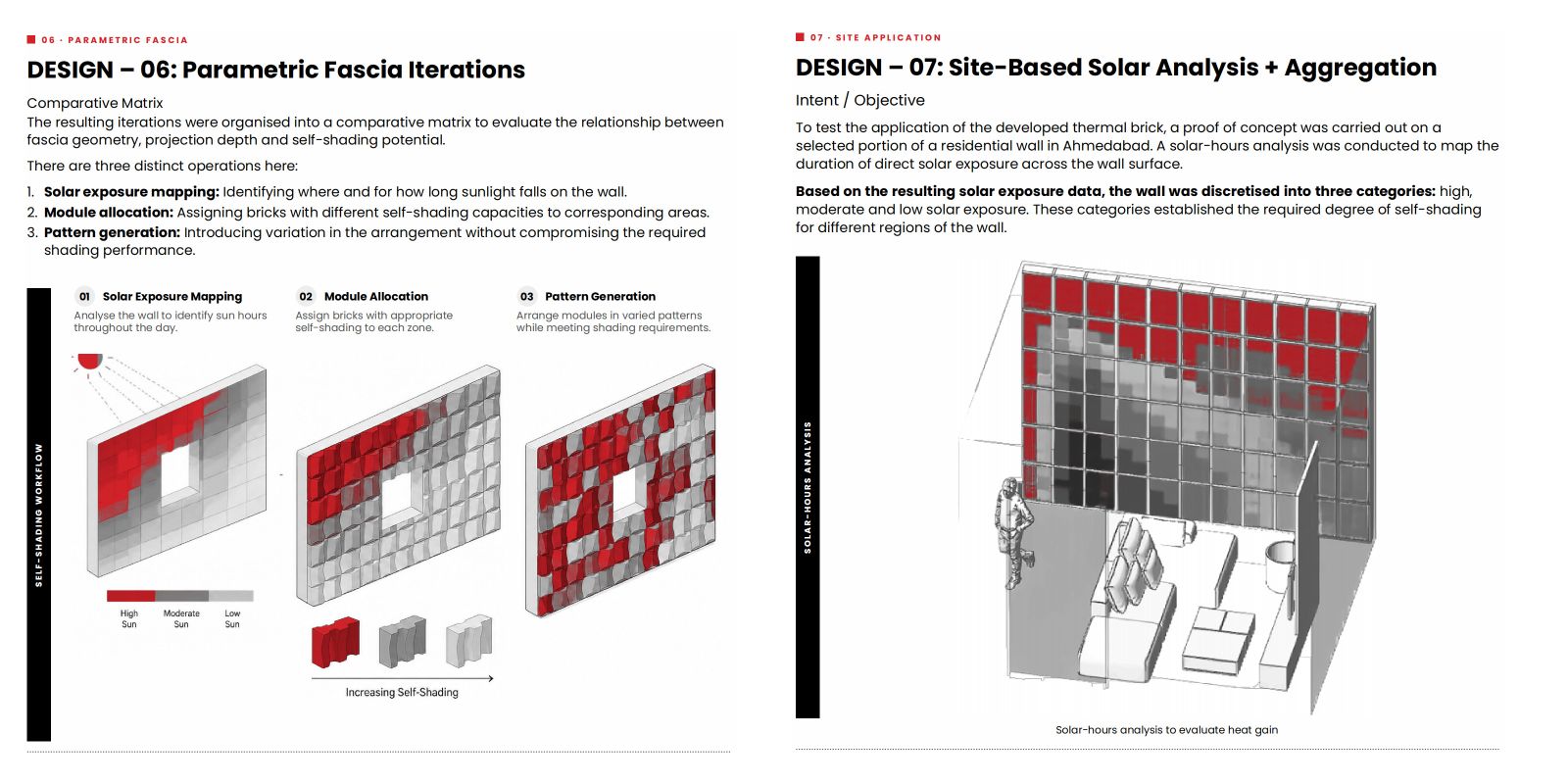
Comparing fascia configurations and mapping solar exposure to determine region-specific shading requirements.

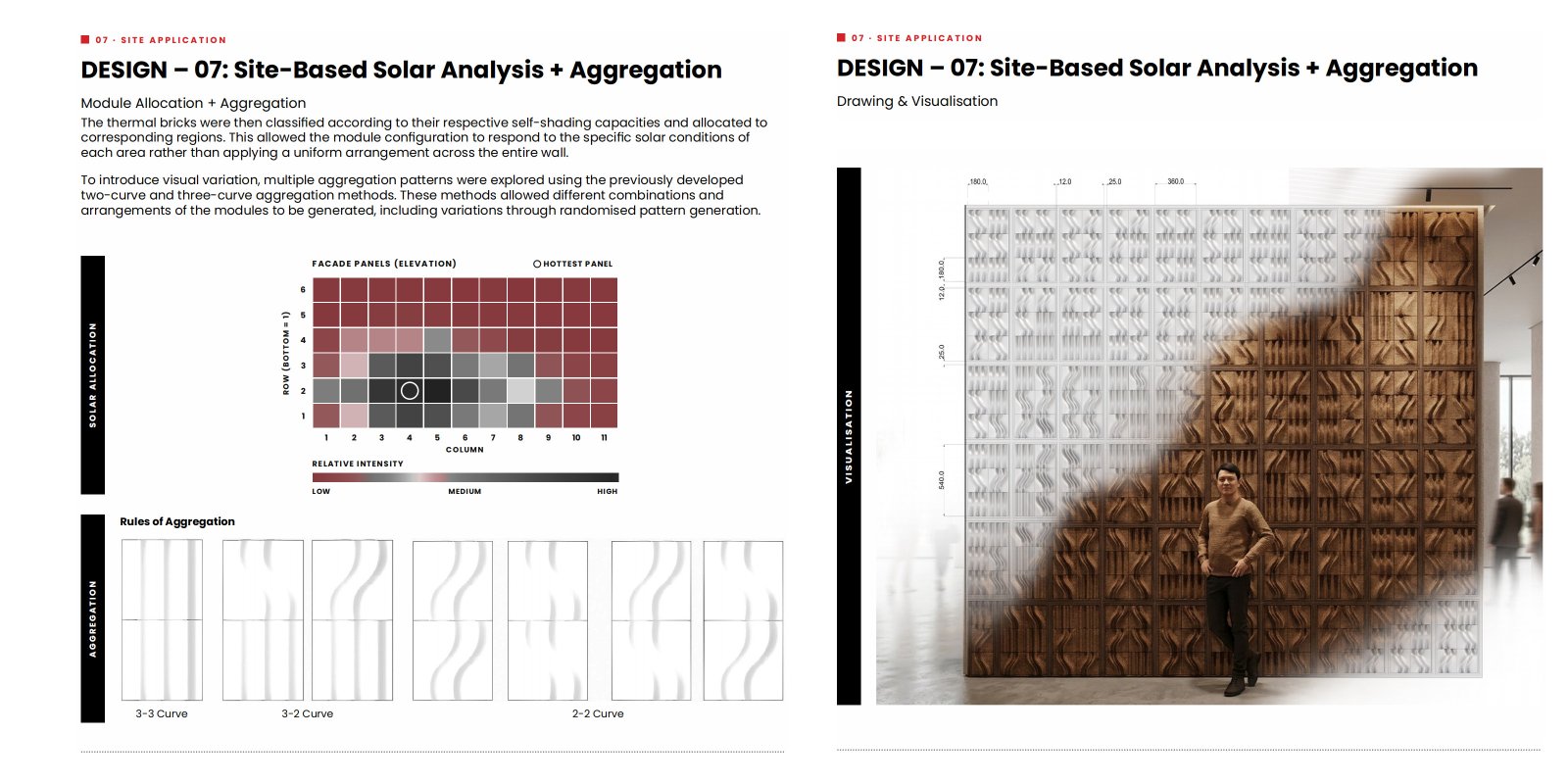
Translating solar exposure data into module allocation rules and generating facade-wide aggregation patterns.

ranslating solar exposure data into module allocation rules and generating facade-wide aggregation patterns.