Your browser is out-of-date!
For a richer surfing experience on our website, please update your browser. Update my browser now!
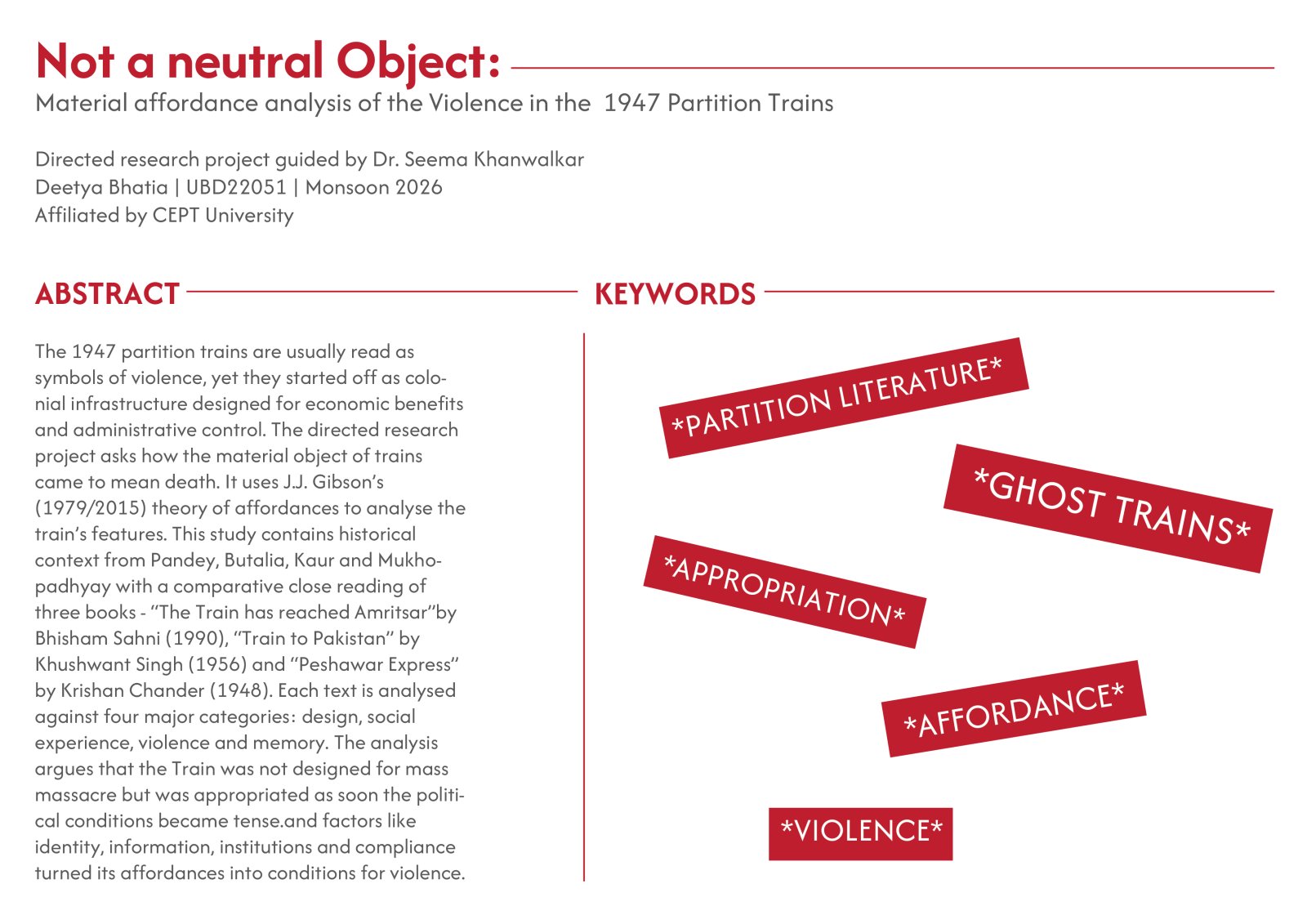
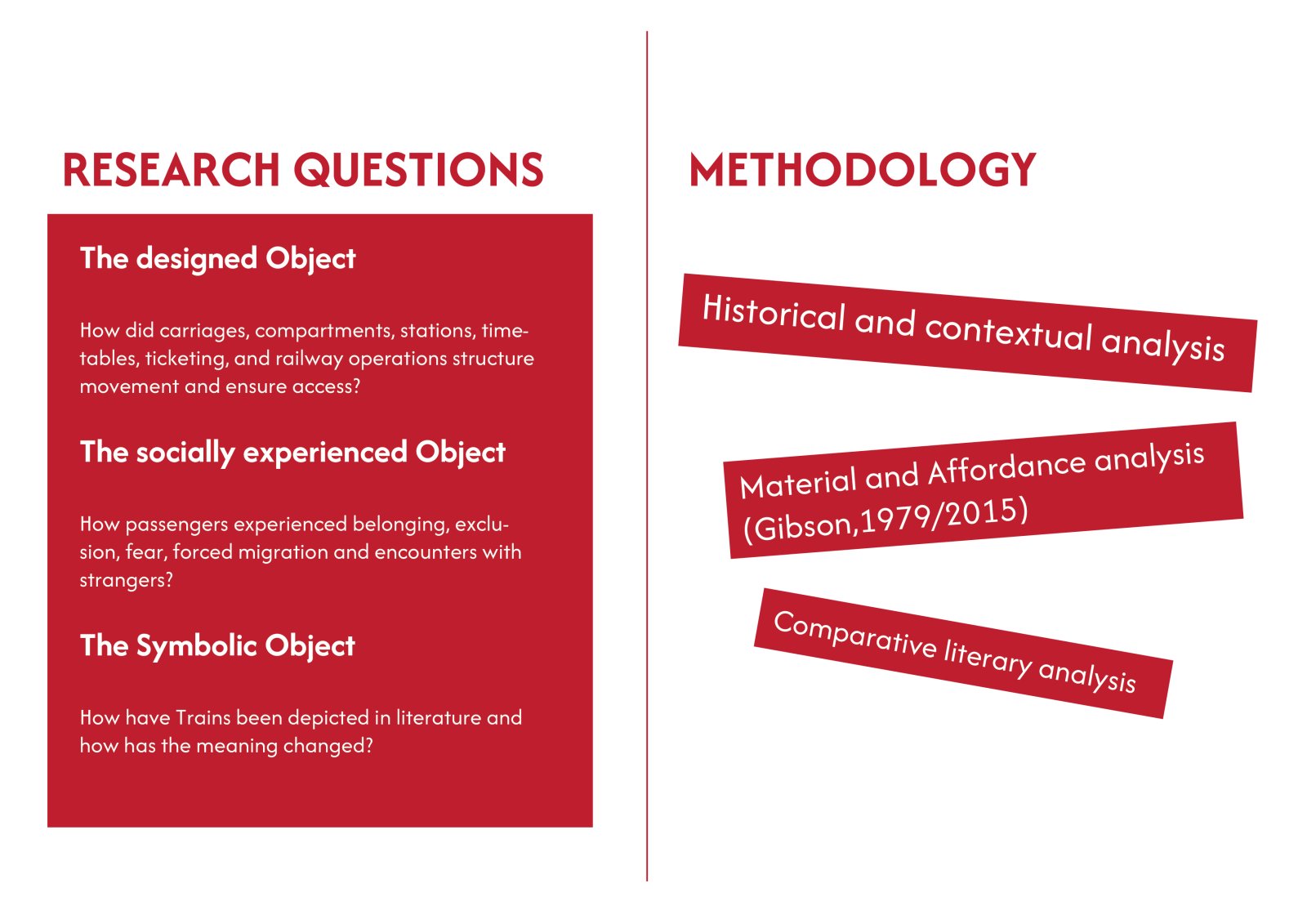
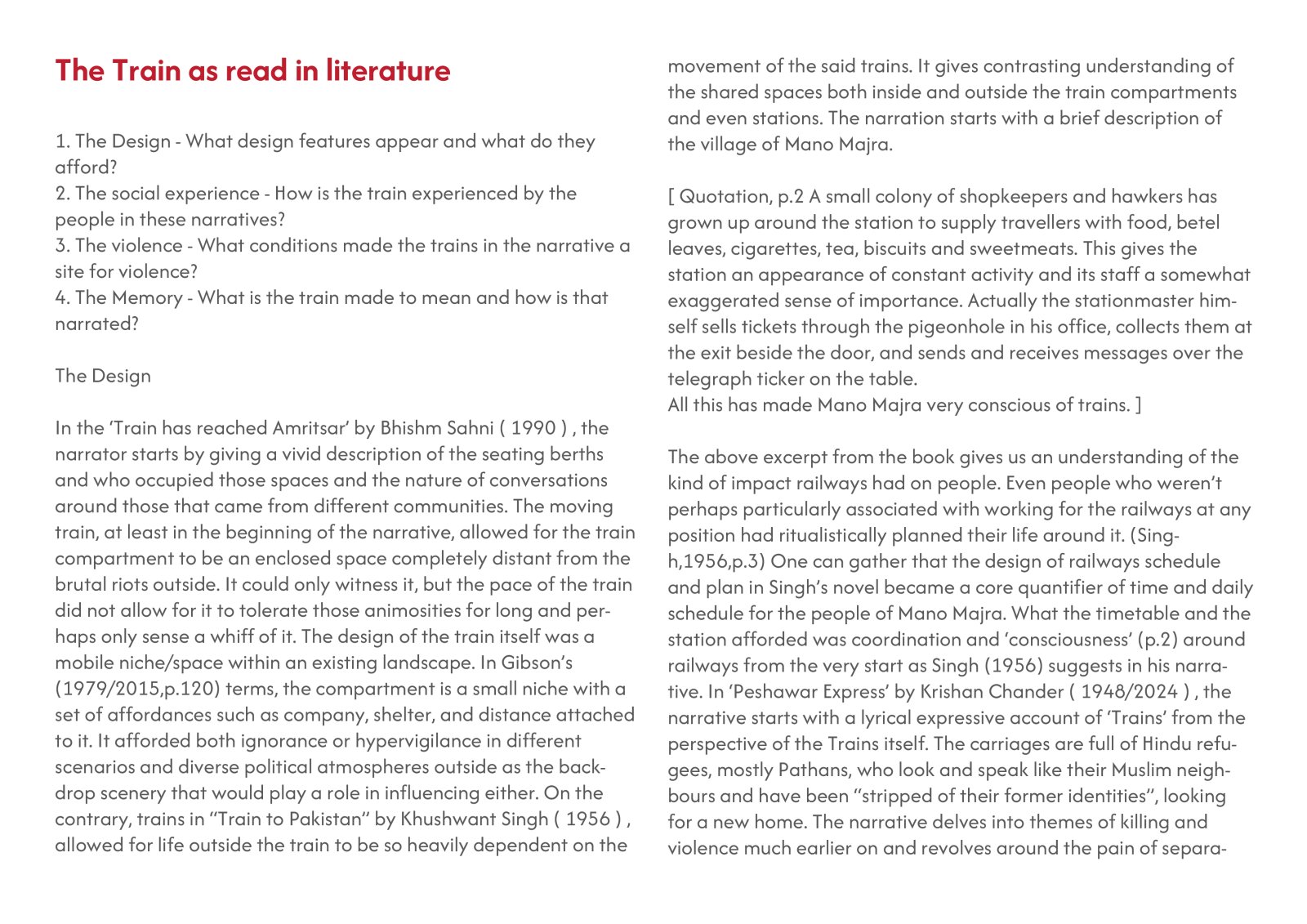
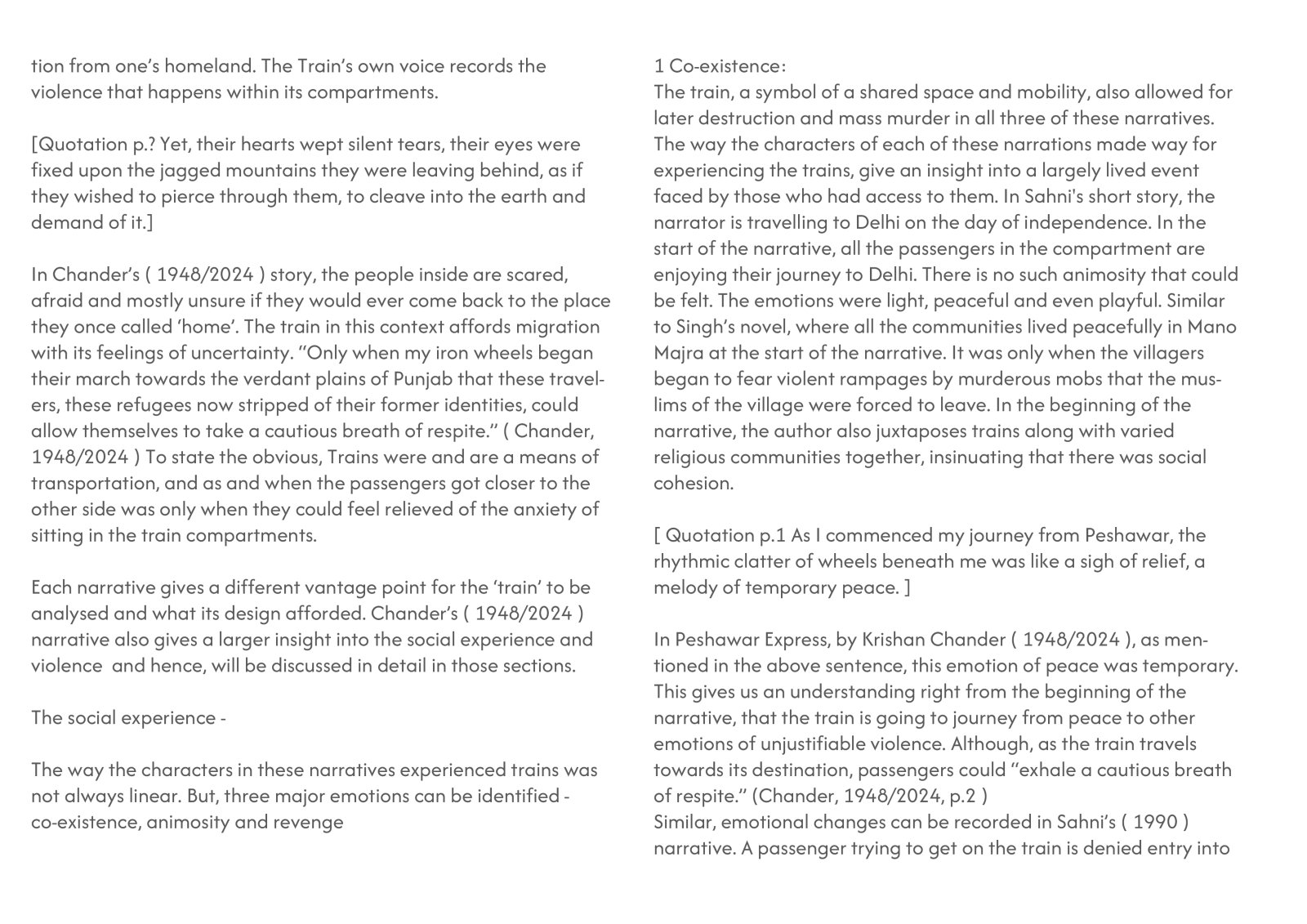
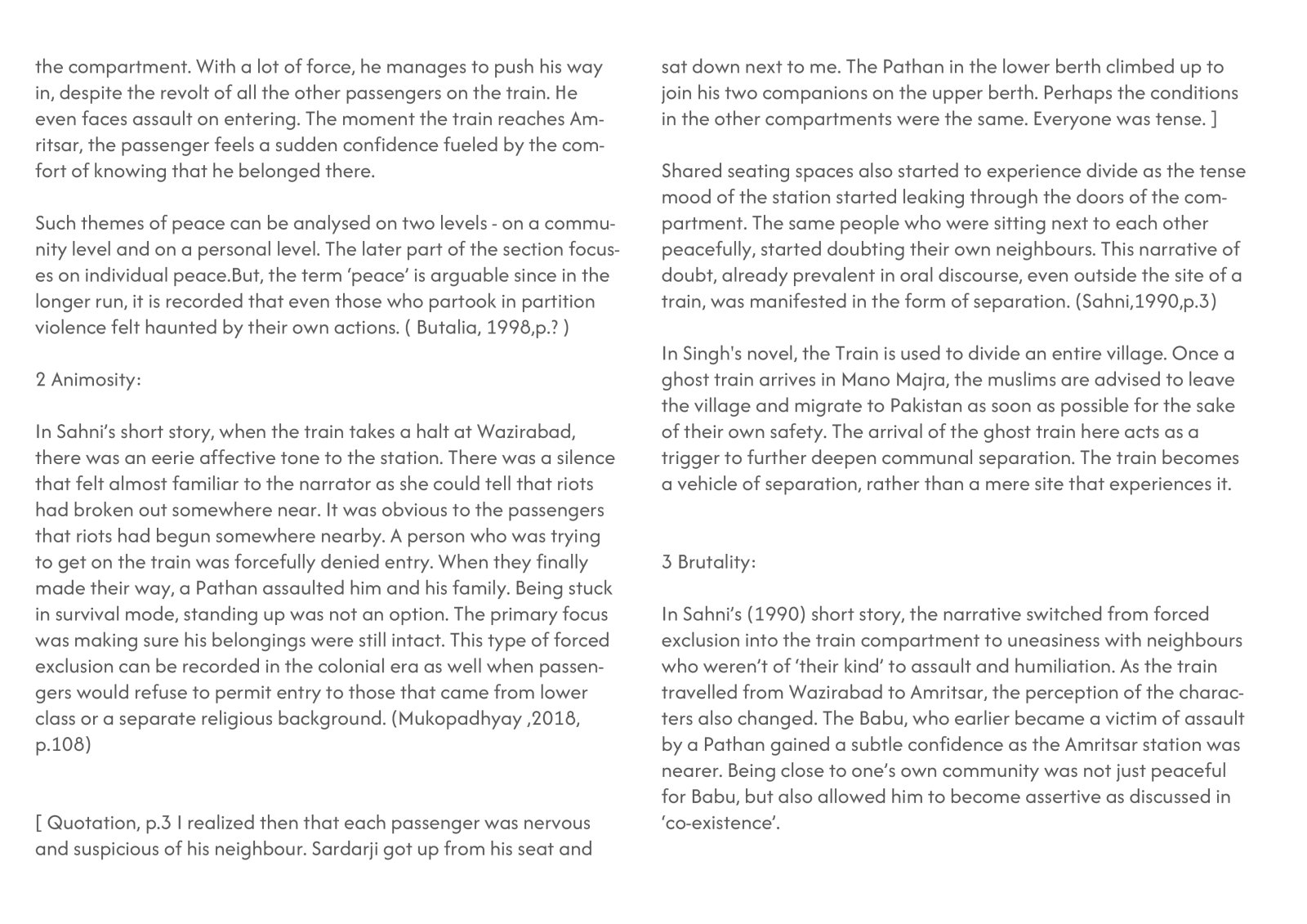
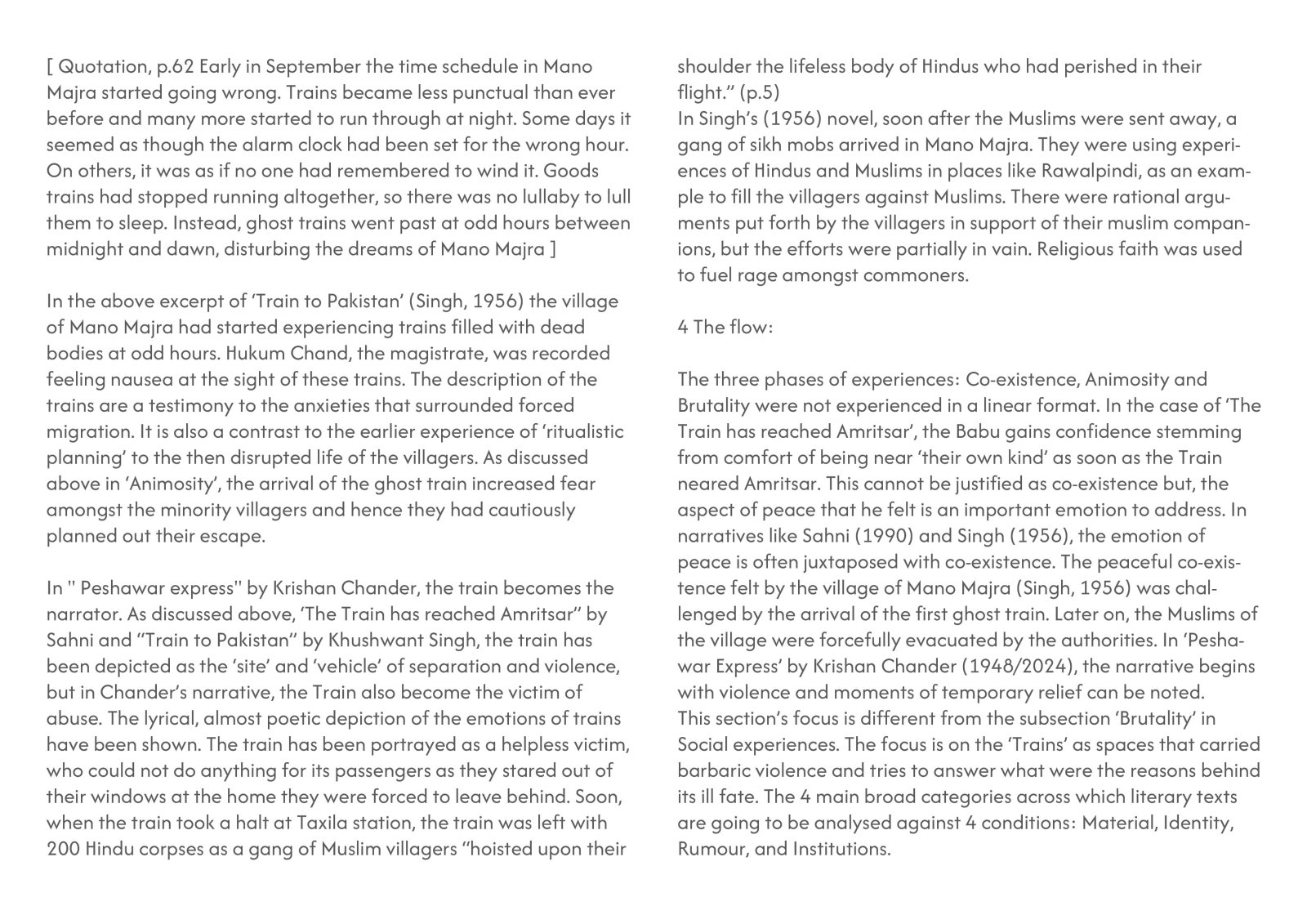
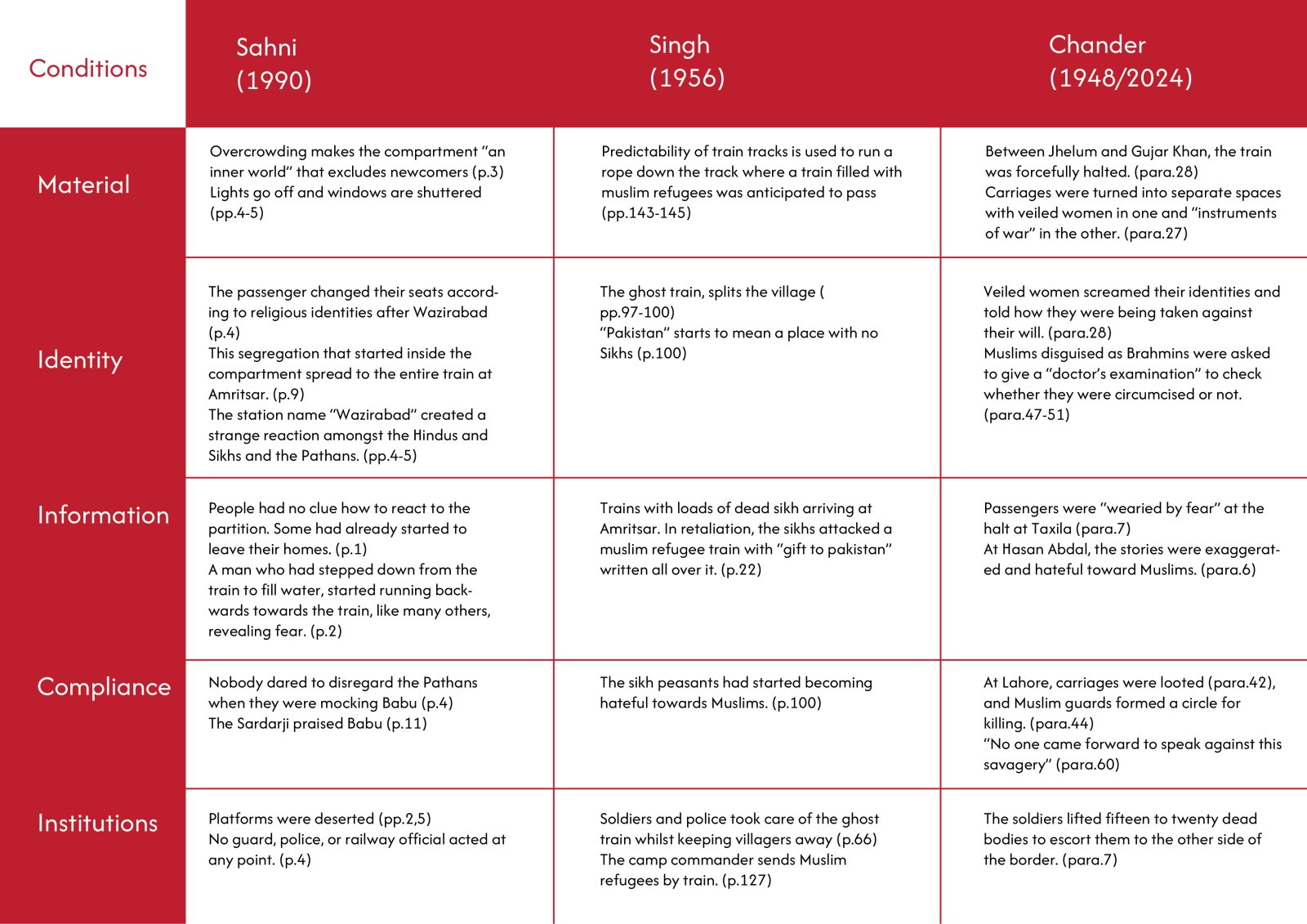
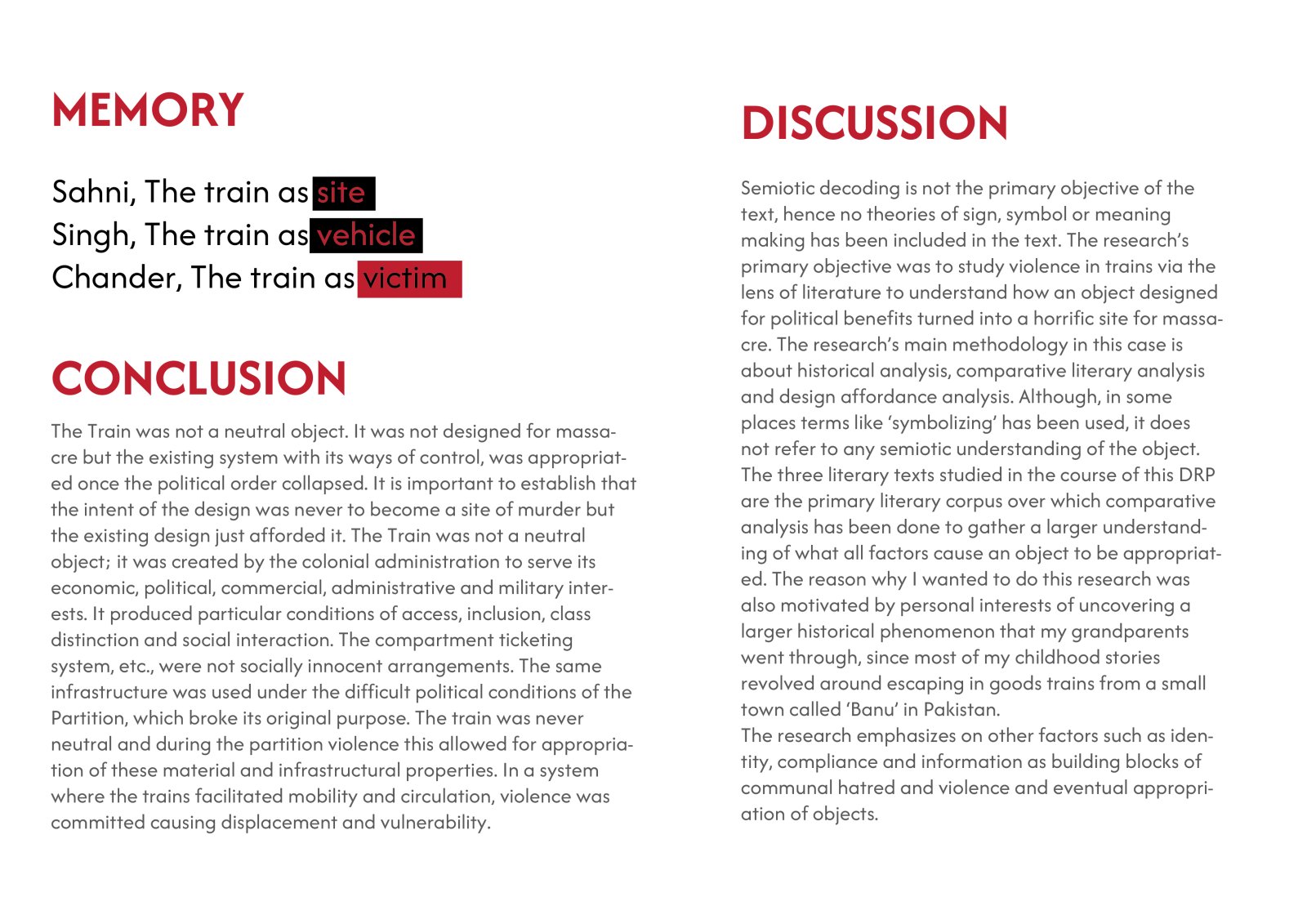
The 1947 Partition of India was more than just a geopolitical divide. It was rather a divide of an entire culture. “Several hundred thousand people were estimated to have been killed; unaccountable numbers raped and converted; and many millions uprooted and transformed into official `refugees' as a result of what have been called the partition riots” (Pandey, 2001, Pg 2). Safe refuge for them, their people and their belongings was all that the people at that time were looking for. (Kaur, 2006, Pg 67). Out of all the travel modes, Trains became the one to be the most associated with Partition Narratives. One can gather by looking at Partition literature such as “Train to Pakistan” where the title suggests the involvement of Trains in The narrative. The imagery of “train” in the process becomes attached to blood and violence of the 1947 partition. The symbolism of the train is often used in literature to talk about the Partition. The horrific and unfortunate transformation of trains that were supposed to carry those forcefully being thrown out to the other side to the fate of being a ‘ghost train’ left many without a family. The research looks at trains as a non neutral object and analyzes them from three major lenses - the material lens, the social lens and the symbolic lens. The study traces the journey of railways right from its manifestation in colonial India and the kind of social impact it created and the later contrast in usage and experience when the partition was announced. The train - an existing technological innovation was appropriated during the 1947 partition. It was not an object of violence but became destined to become one during the political tensions of the time. Moreover, what the design of the train afforded was a signaling to the attackers of a shared space of people who were ‘not their kind’. (Kaur, 2006, p.7) In Gibson’s (1979/2015, p.129) framework, the same carriage could offer shelter to some and entrapment to others.
View Additional Work