Your browser is out-of-date!
For a richer surfing experience on our website, please update your browser. Update my browser now!
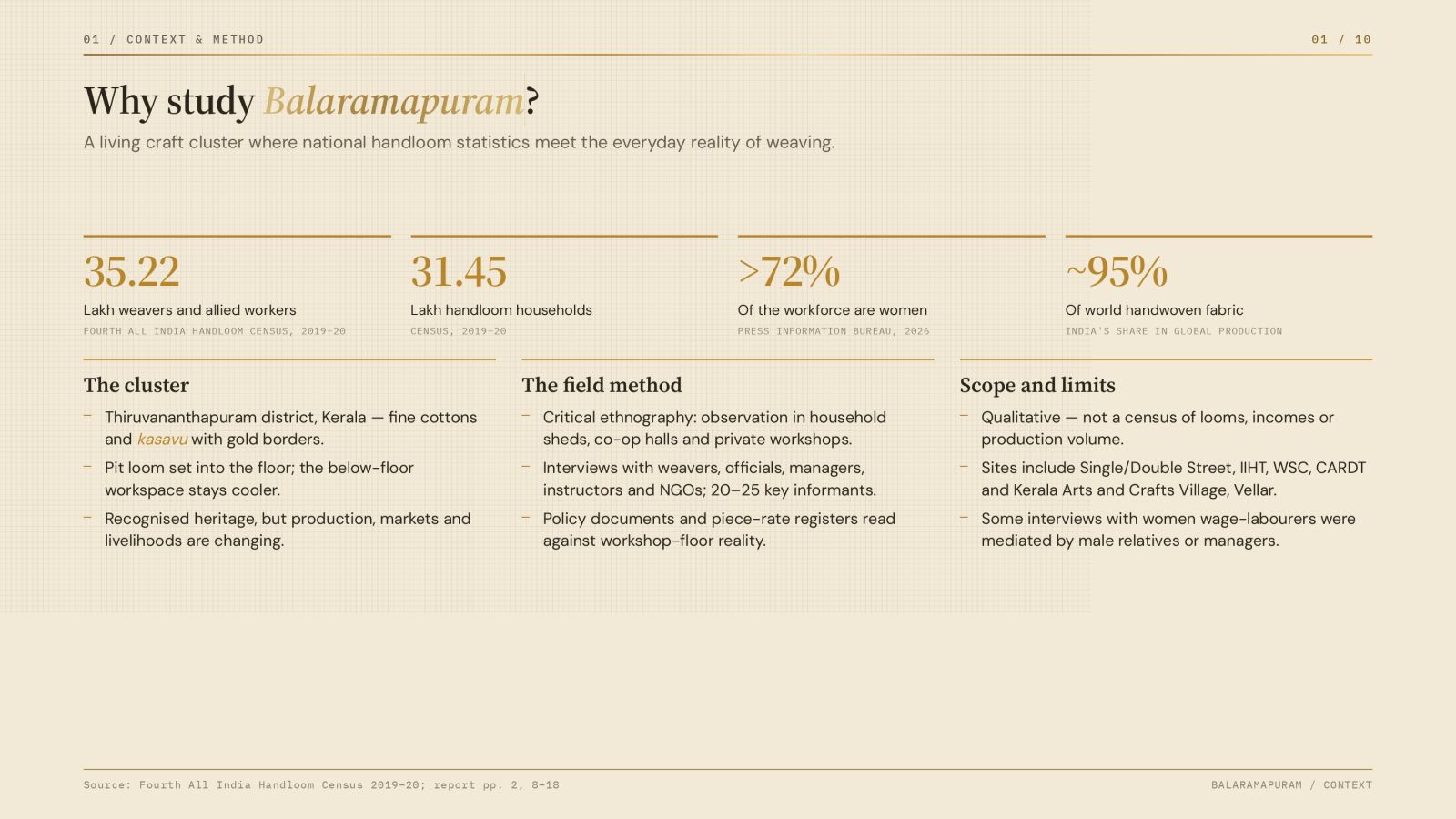
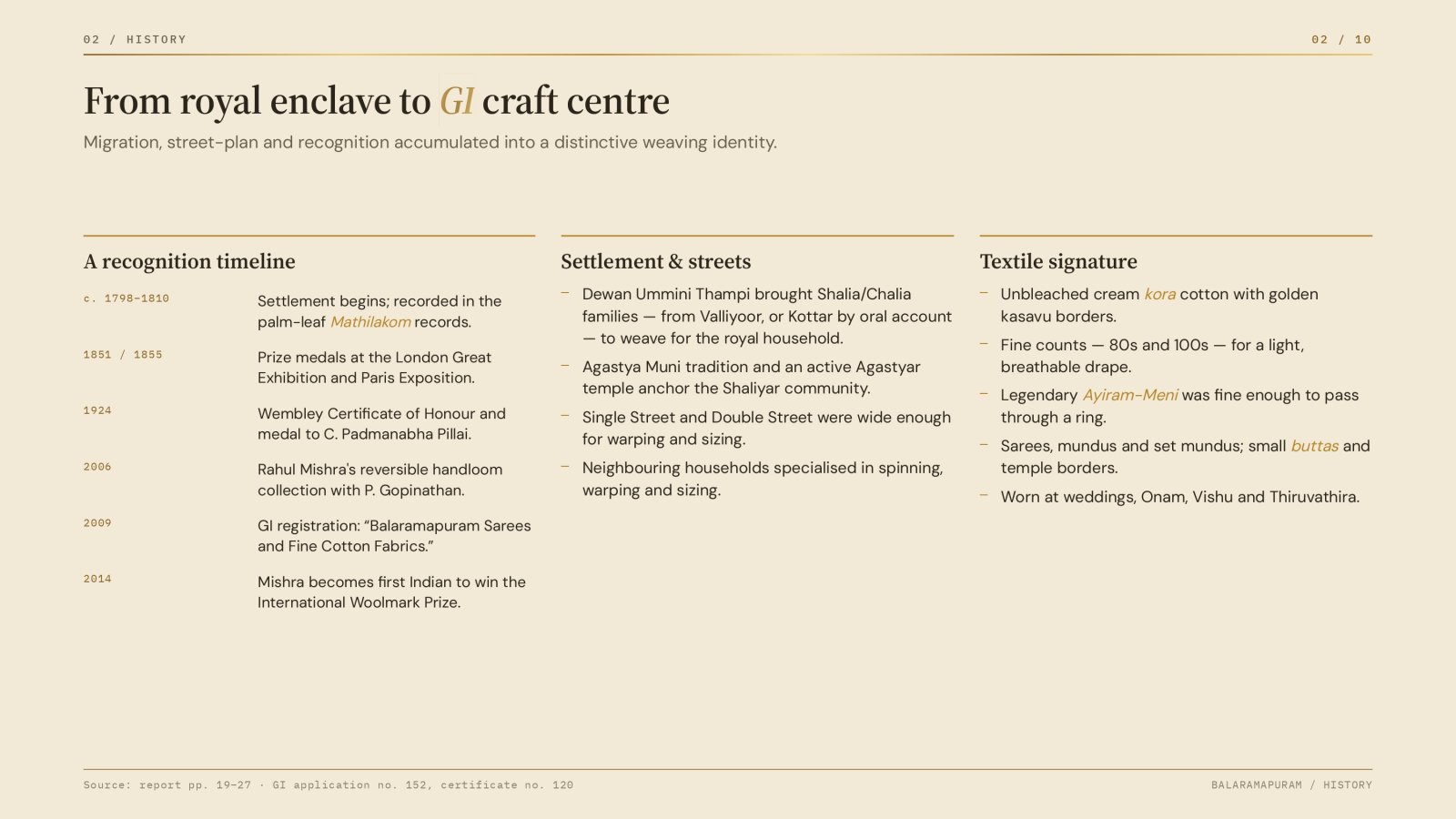
The handloom weaving cluster of Balaramapuram, located in Thiruvananthapuram district of Kerala, is known for its traditional handloom weaving practices, particularly its fine cotton textiles and kasavu fabrics. The cluster represents a living craft heritage shaped by generations of weaving communities, traditional materials and distinctive weaving techniques. Its historical association with the Travancore royal household has contributed to its cultural significance and the development of its craft identity. Over time, changes in production, marketing, consumer demand and employment patterns have influenced the way weaving is practised and the role it plays in the lives of the weaving community.
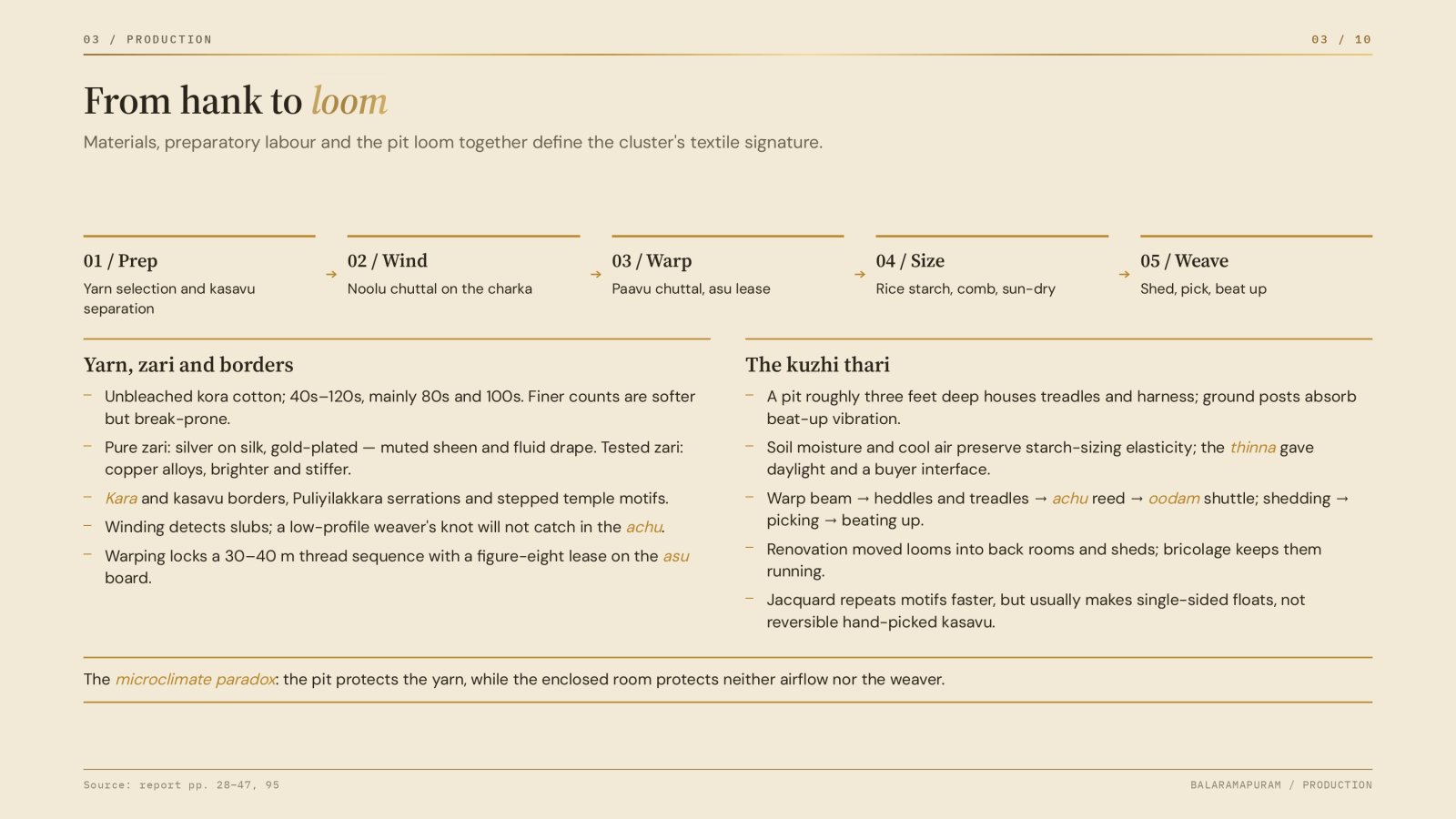
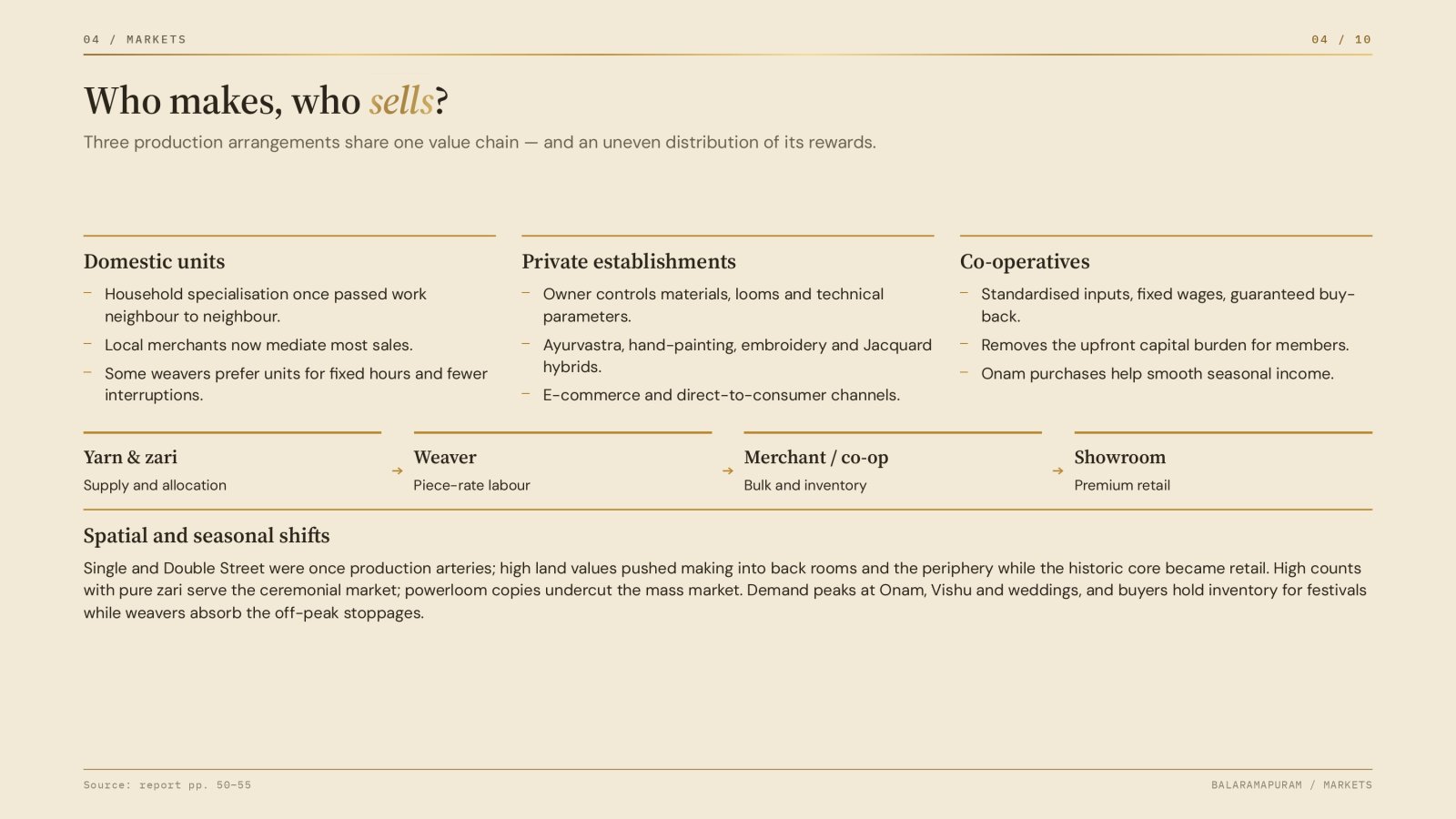
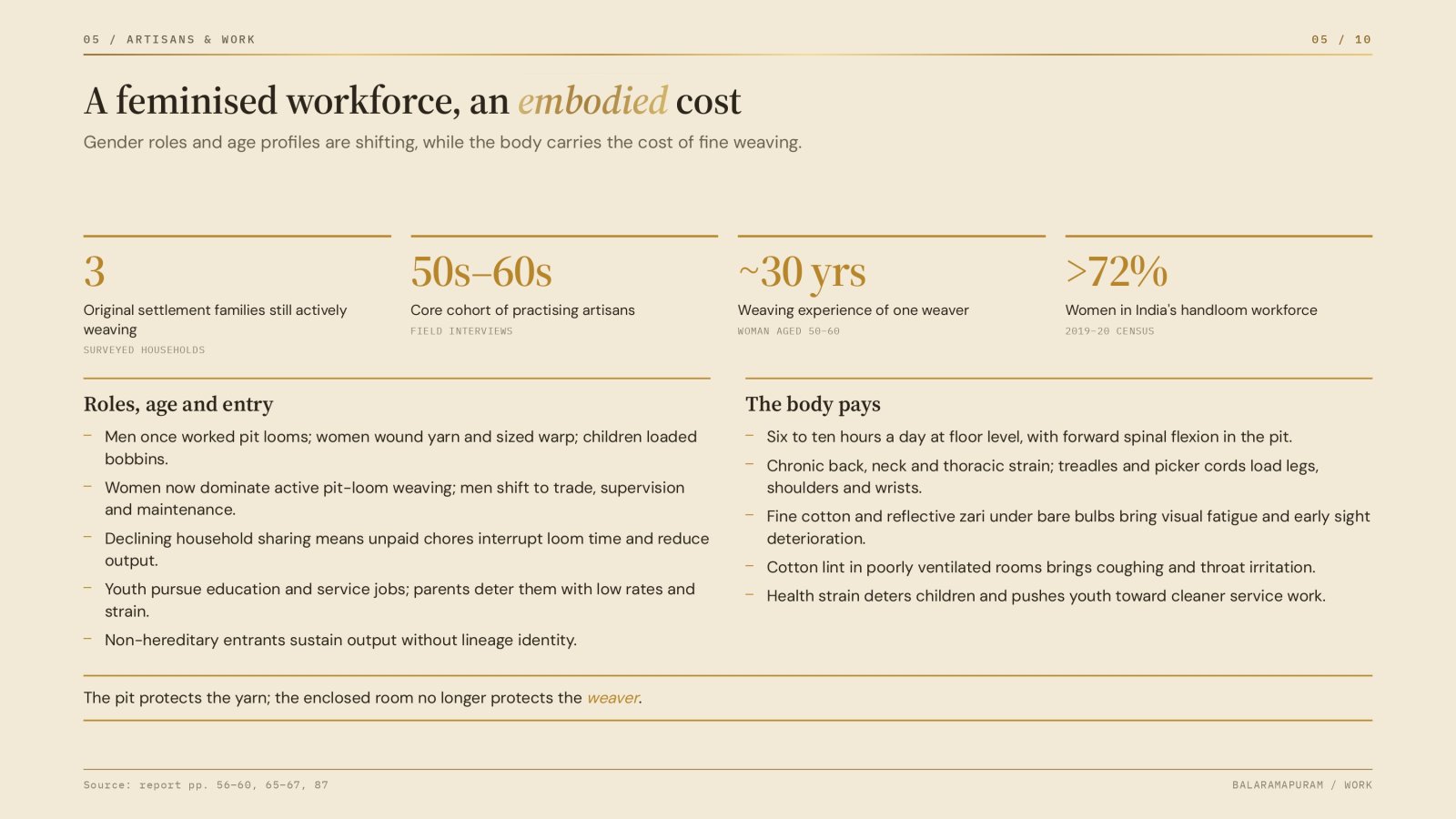
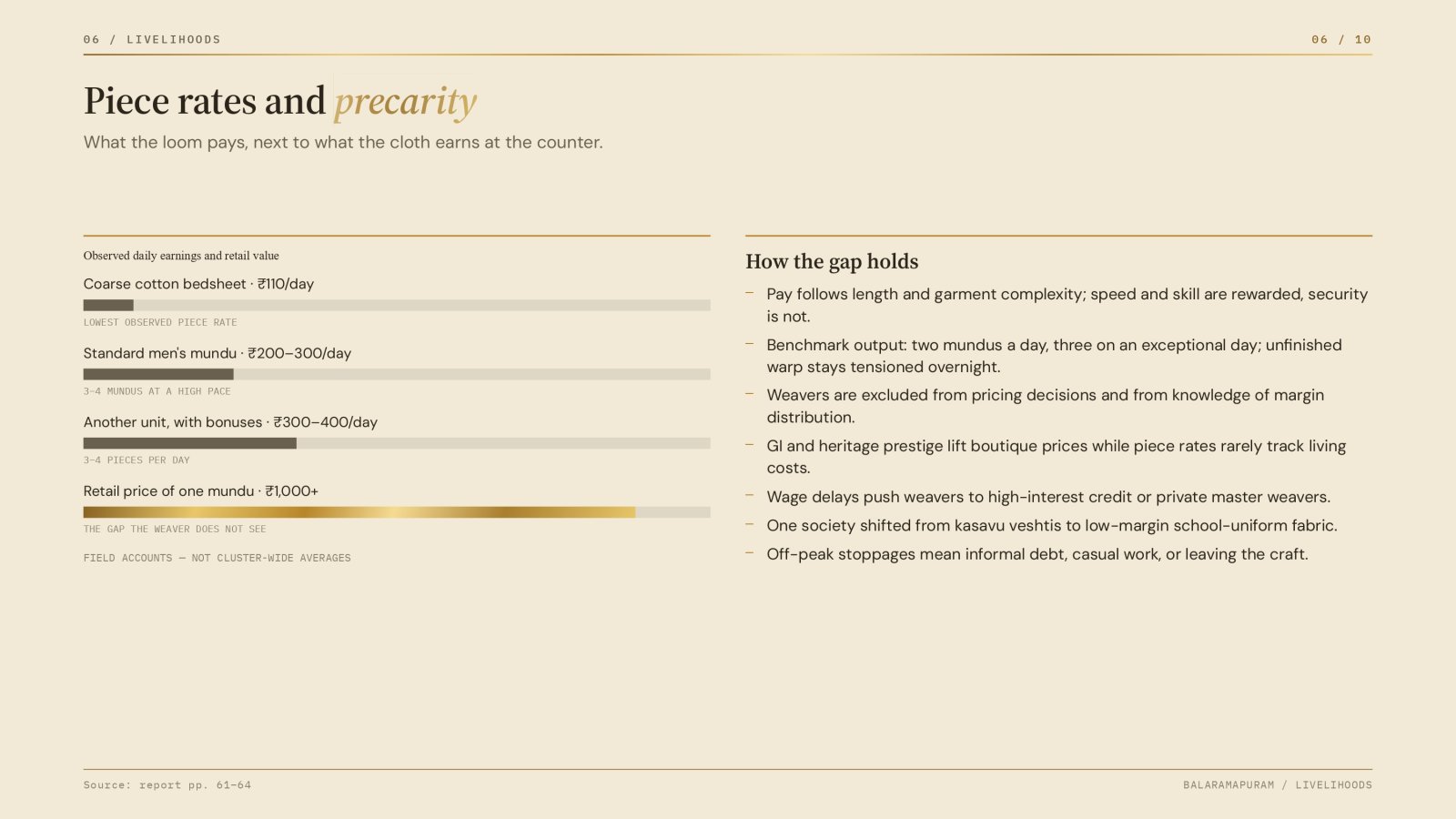
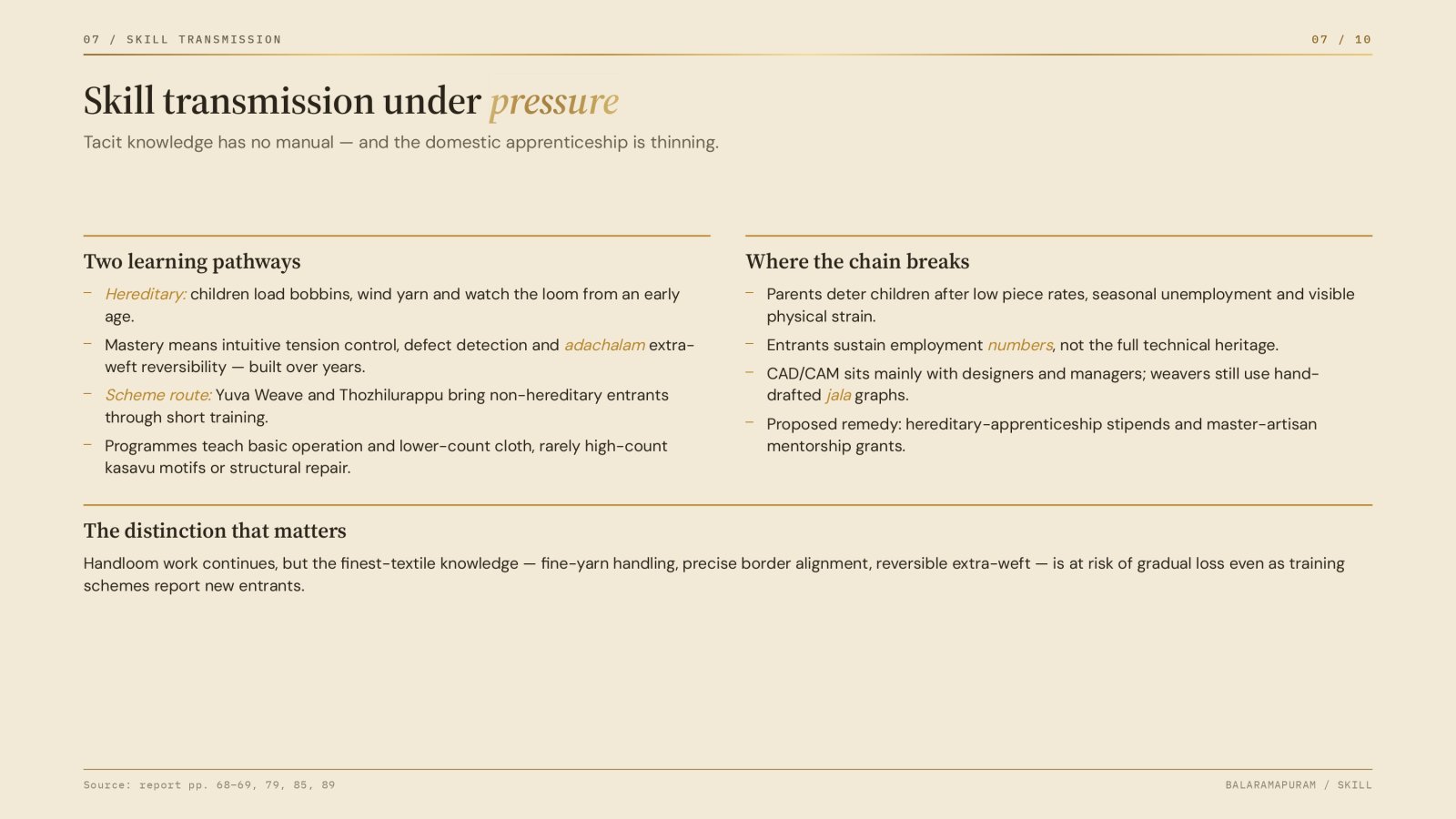
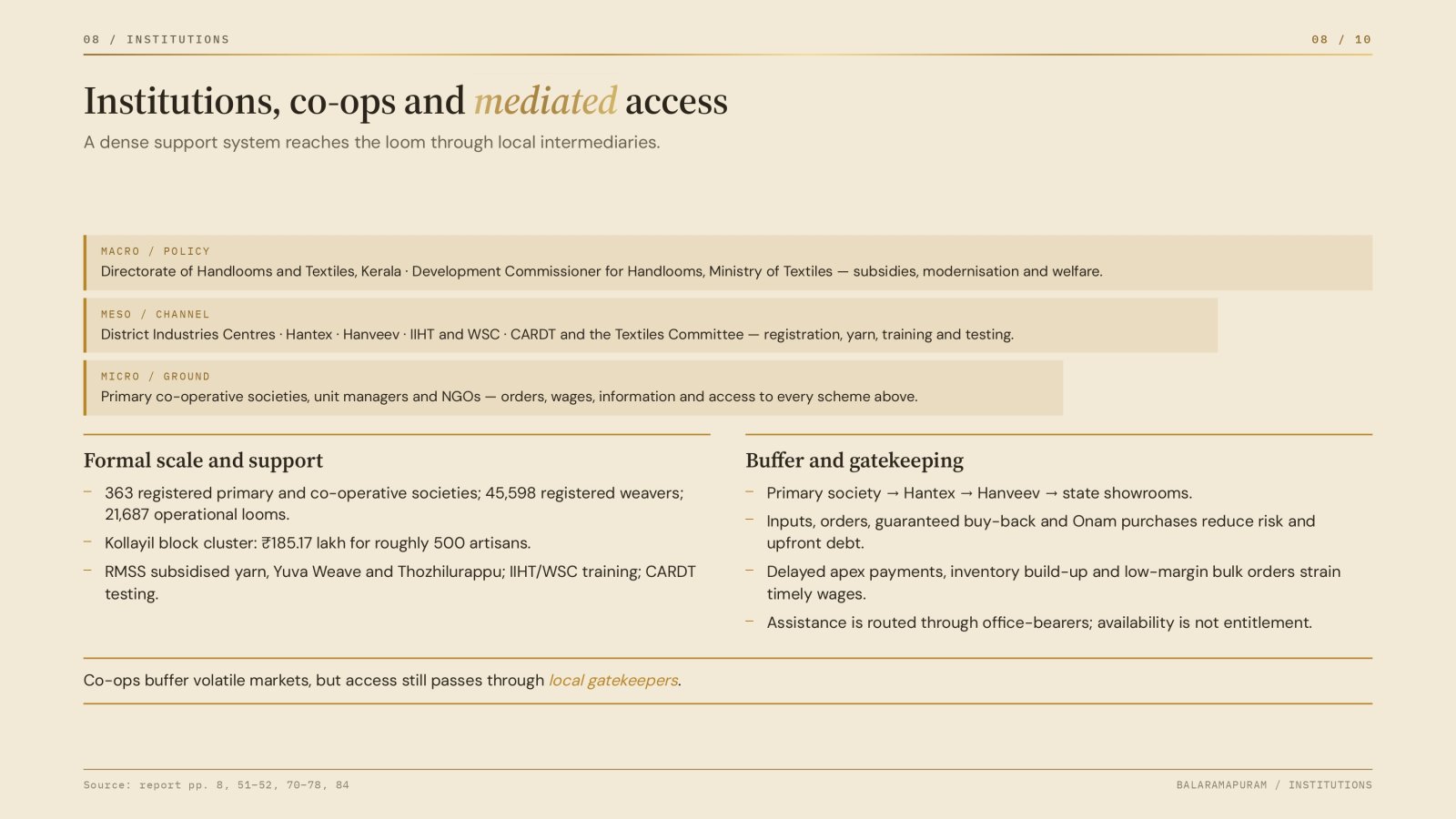
This research examines the historical development of the Balaramapuram weaving cluster and how its craft practices, production systems and livelihoods have changed over time. It explores the relationship between the weaving community, the spaces in which weaving takes place, the market networks and the institutions associated with the craft. The study draws on primary field observations and secondary research, including visits to weaving localities, cooperative societies, handloom establishments and related institutions. It examines the traditional weaving process, working conditions, employment patterns and the economic challenges faced by the weaving community. It aims to understand the present condition of Balaramapuram handloom weaving, the factors influencing its continuity and the challenges faced in sustaining its tradition.