In his 1938 publication 'Fundamentals of Exhibition Design', architect and designer Herbert Bayer described exhibition design as the “apex” of collective making—bringing together graphic design, photography, advertising, industrial design, and architecture. Hyperbole aside, this claim provides a compelling framework through which to reconsider the histories of art, design, and display.
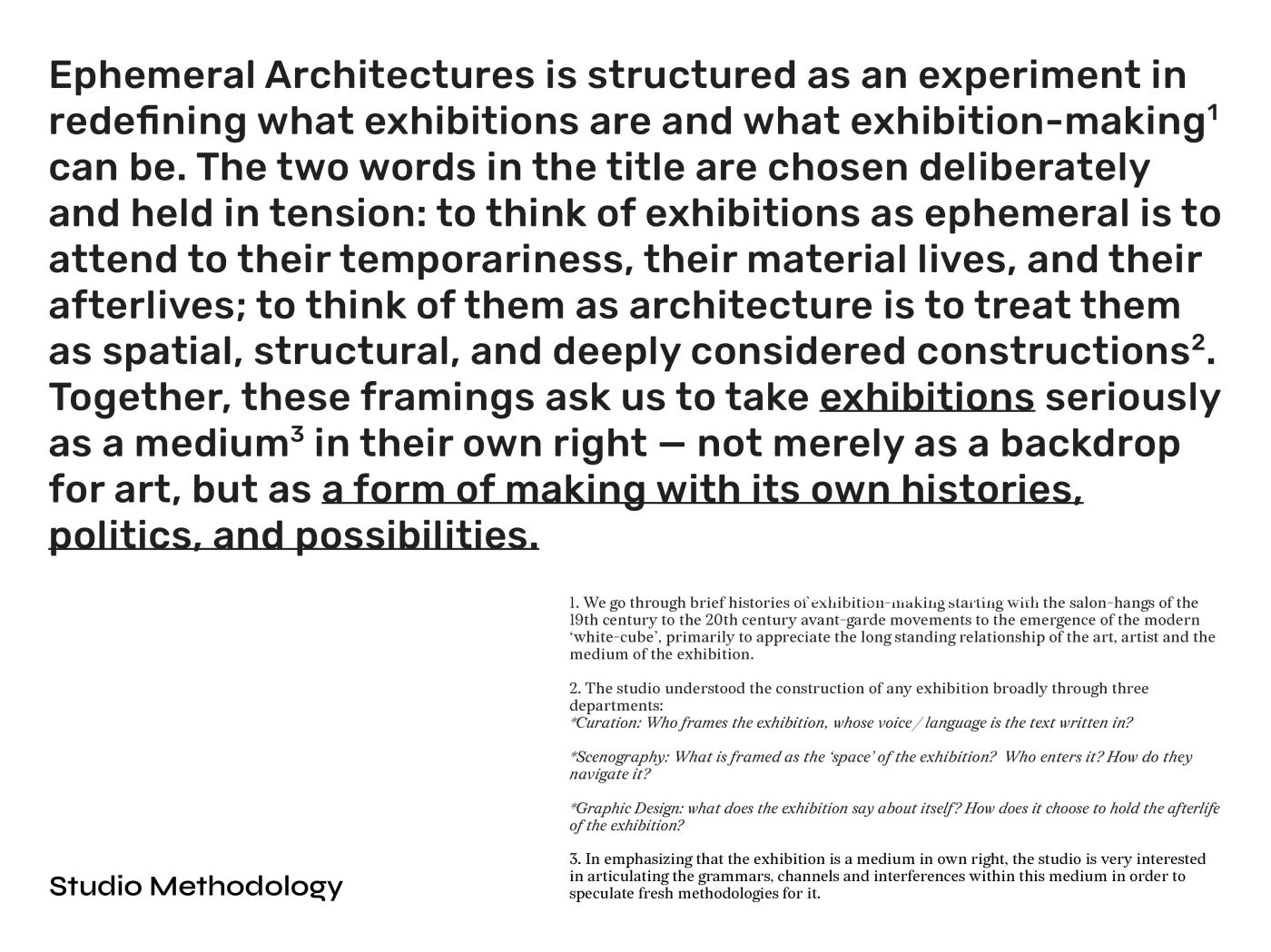
The module begins by rereading key Western art movements—such as Surrealism, Conceptualism, and Modernism, amongst others—through their landmark exhibitions. Rather than focusing on artworks, we examine exhibitions as spatial, material, and graphic constructions. What qualifies as an exhibition? How have histories of print, display technologies, and fabrication shaped the ways exhibitions are constructed and experienced?
Next, the module turns to the aesthetics of exhibition-making across time, with particular attention to the emergence of the “white cube” as a dominant exhibition model in the 1970s. We consider its continued relevance today, questioning its assumptions and limitations within contemporary contexts.
While considering the historical role of exhibitions as emblems of modernisation and cultural progress, in post-independence contexts across South Asia, we conclude by collectively speculating on the future of exhibition-making in South Asia. Working materially, collaboratively, and contextually, we ask: what roles and possibilities might exhibitions hold today and how would they look?
Studio Unit
Beyond possibilities
Exhibitions: Beyond Possibilities
Where ideas transcend boundaries and experiences take shape.
Context setting for exhibition - Histories, politics and possibilities
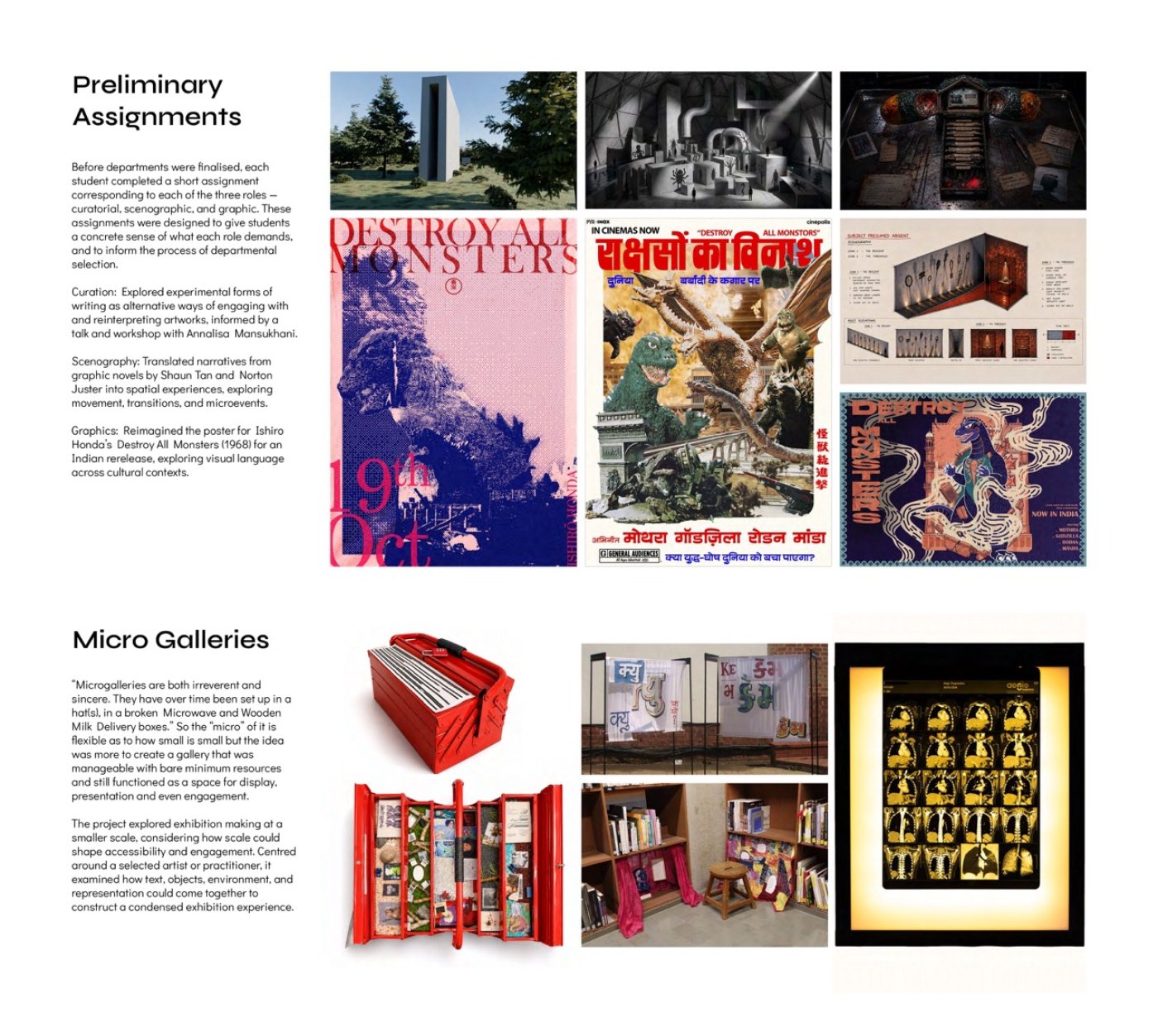
Explorations of mediums, scale and materiality. The making