Surabhi Pradeep Patil

UM4005

Industrial and Business Cluster Analysis

This study identified and analysed the major industrial and business clusters of the Ahmedabad City Region (ACR), assessed their economic significance and competitiveness and provides insights into the city's comparative advantages and opportunities for strengthening existing and emerging clusters. The work maps industrial zones, GIDC estates, industrial parks and Special Economic Zones (SEZs) to showcase the spatial distribution across the region. The as-is assessment includes mapping of local vs traded clusters, natural vs government facilitated clusters, a comparative analysis on parameters such as firm concentration, vacancy rate, sector composition, age. The estates were further assessed through a Node-Place-Market (3V) framework developed by World Bank to understand cluster readiness for potential future economic development. Building on these findings, a productivity-led growth scenario was undertaken with a sectoral focus on Textile and Wearing Apparel. It traced the sector's spatial distribution, value chain and productivity performance, along with the constraints holding it back, to identify where its economic contribution could be strengthened.

View Additional Work
Report Content

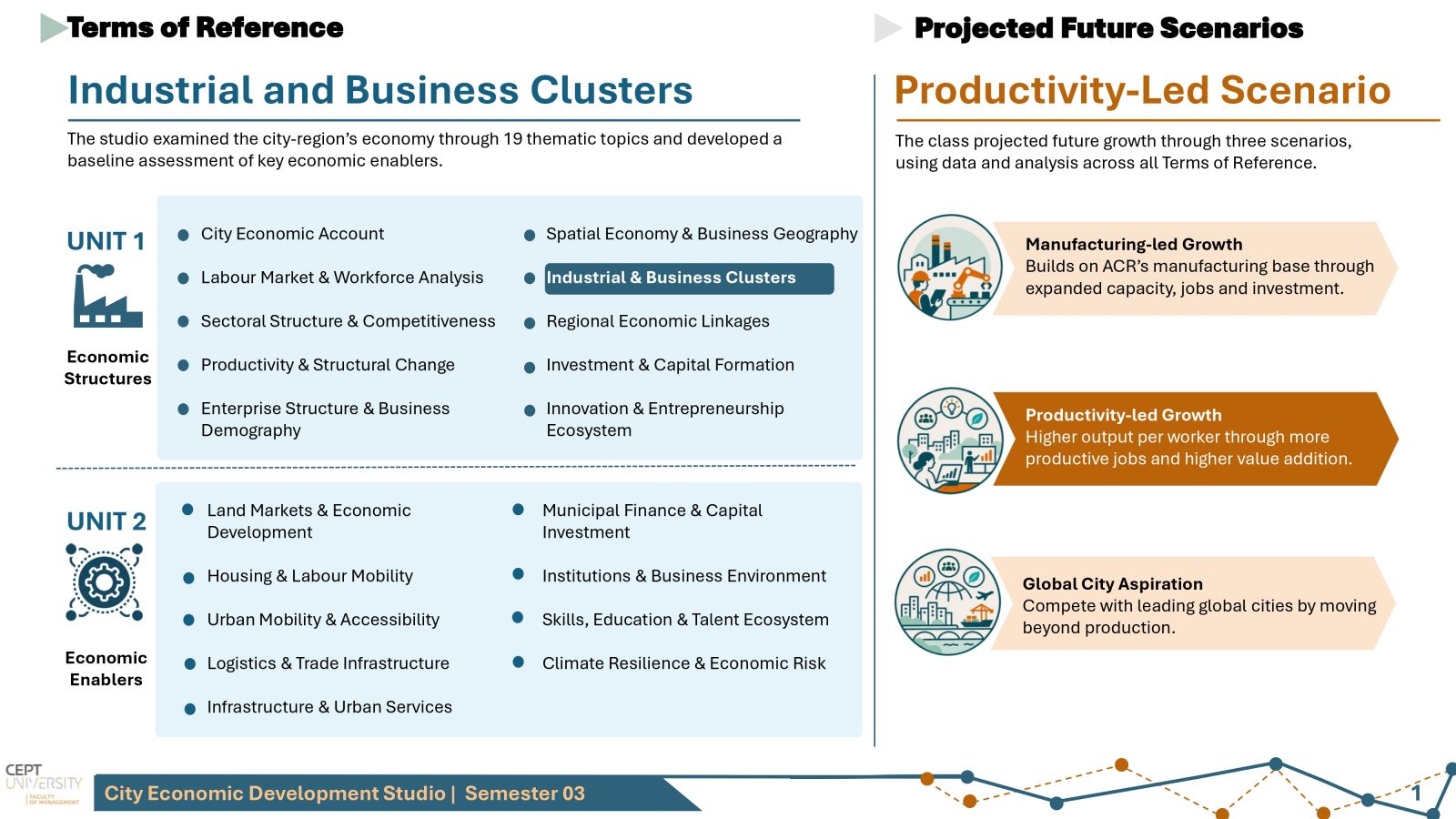
Studio Overview: The Ahmedabad City Region (ACR) was assessed across 19 thematic topics to establish a baseline of its economic structure and enablers. Building on this assessment, three future growth scenarios were developed to explore potential pathways for the region's economic development

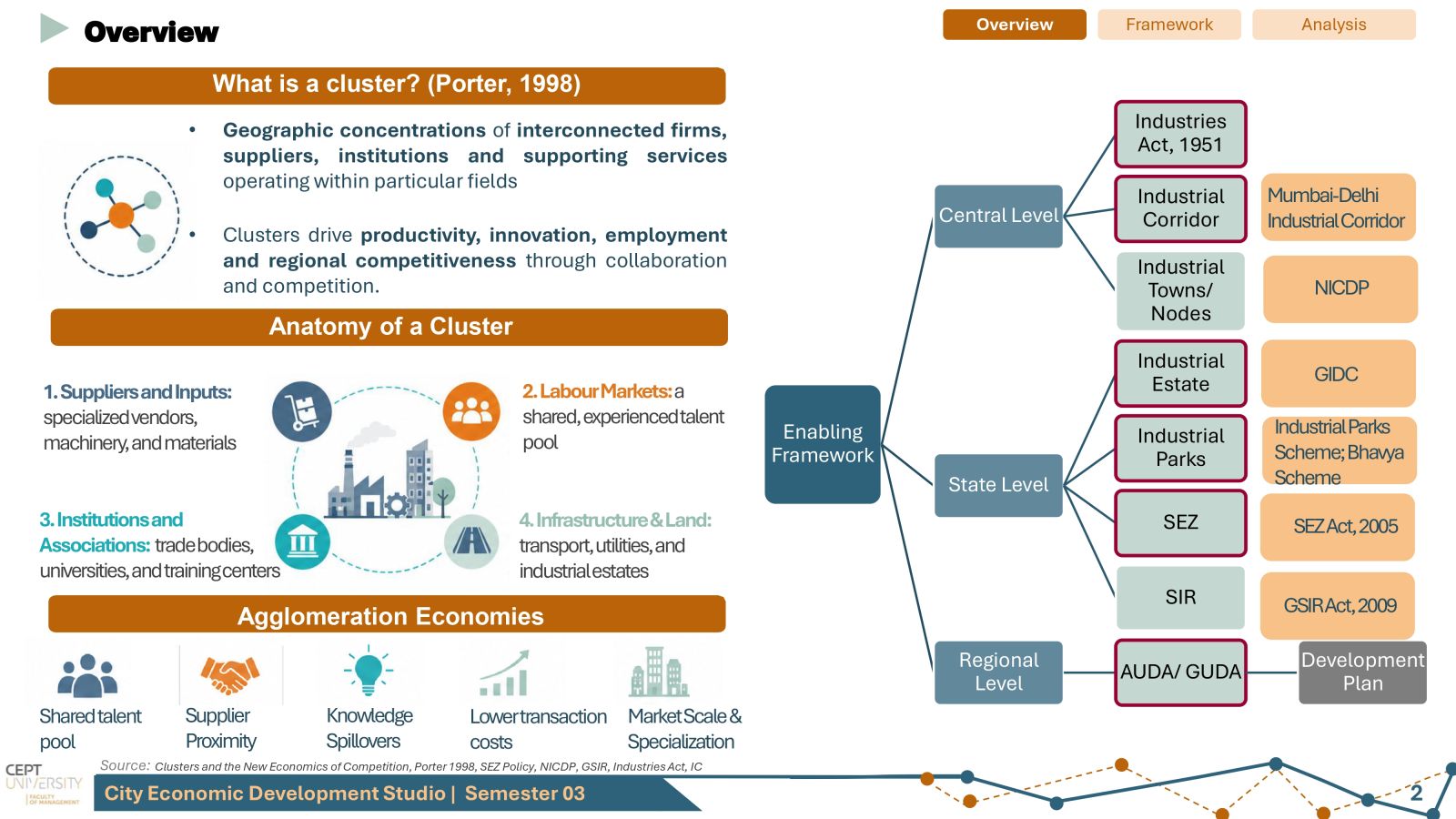
Defining Industrial Clusters: Understanding the theoretical and institutional framework of industrial clusters, agglomeration economies and policy-led industrial development

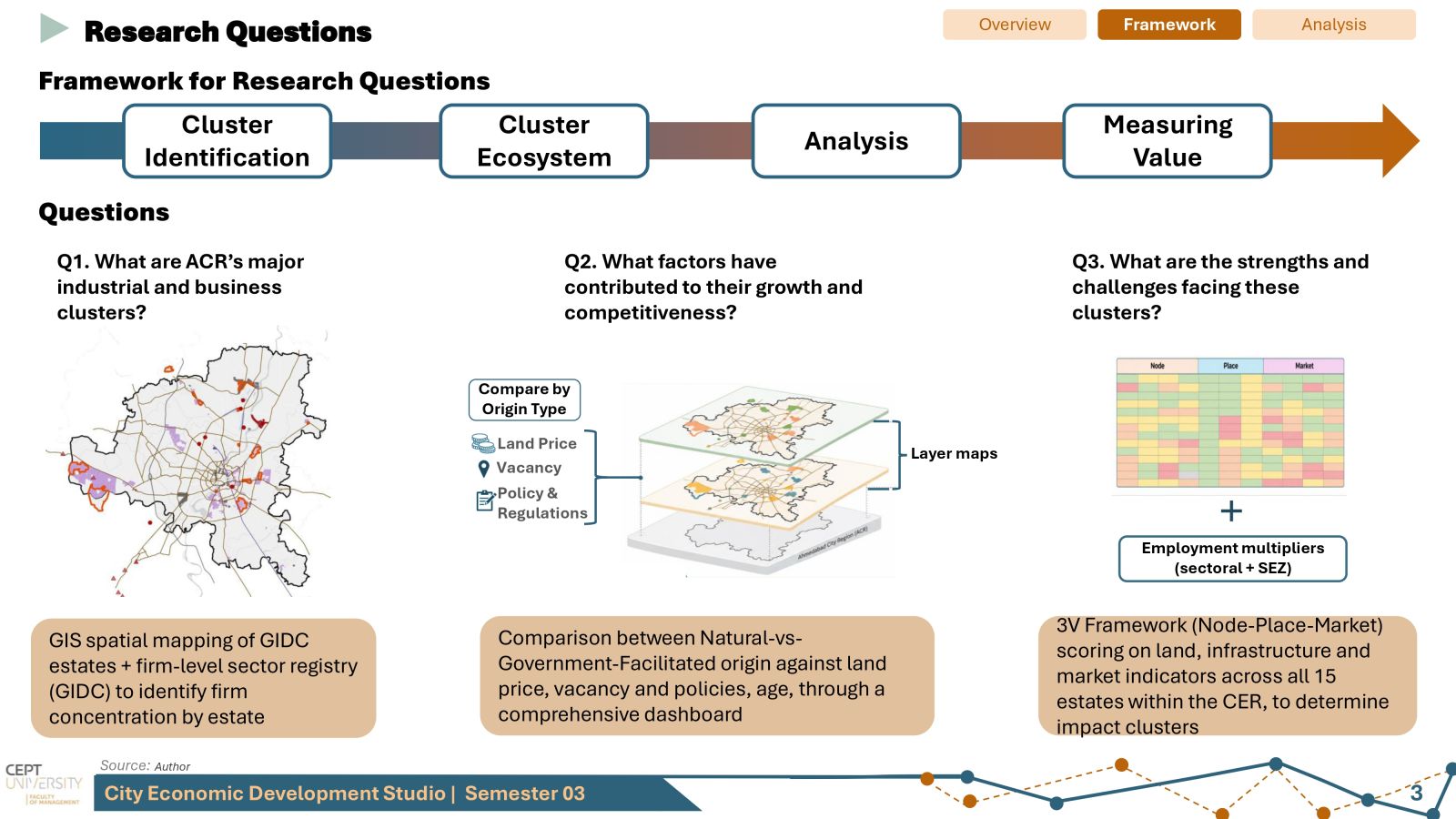
Research Framework: Developing a methodology to identify, map and evaluate ACR's industrial clusters through spatial, economic and competitiveness indicators

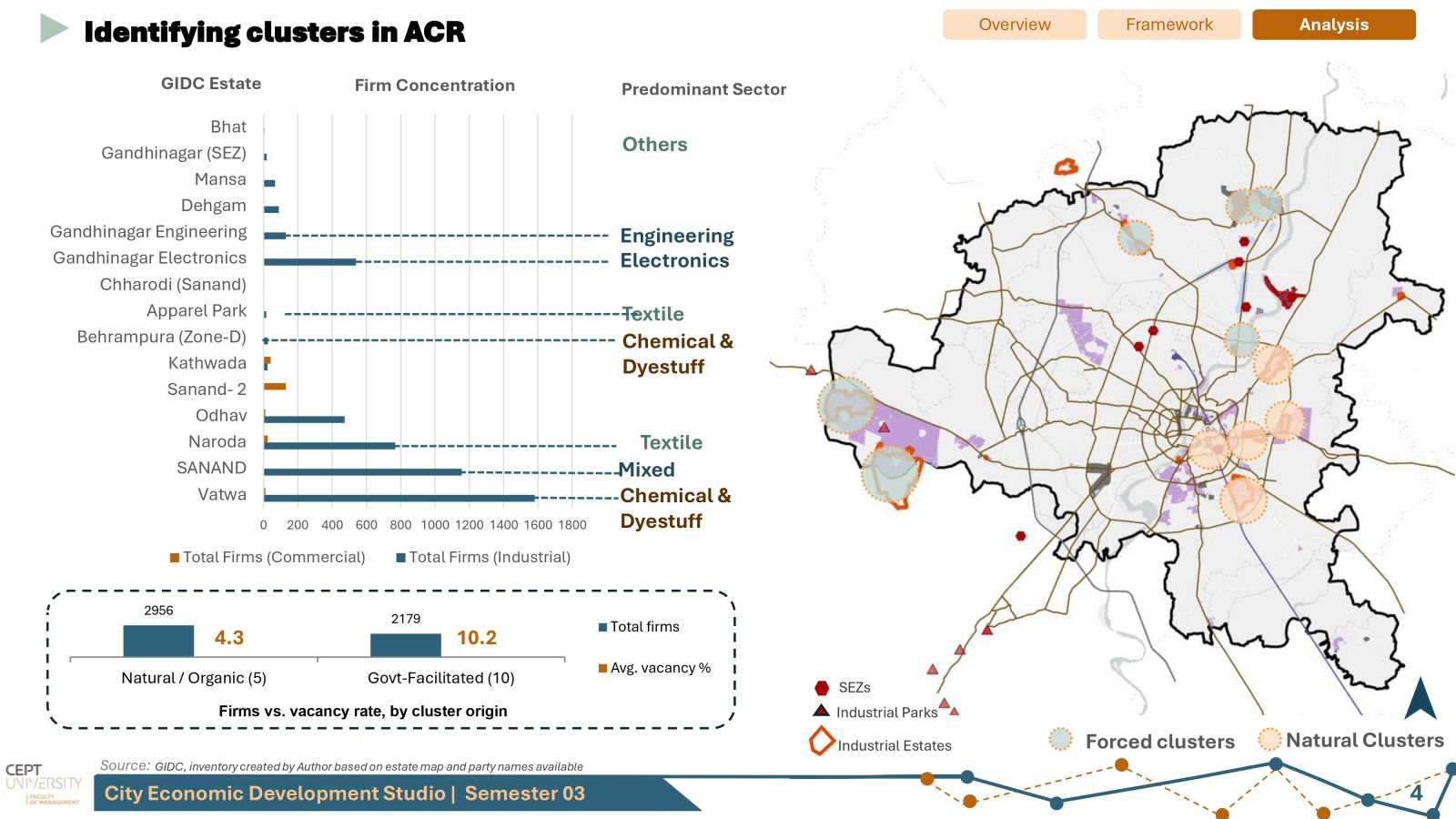
Cluster Identification: GIS Mapping of ACR's industrial geography comprising industrial zones, estates, parks and SEZs. Distinguishing between naturally evolved clusters and government-facilitated clusters to understand firm concentration and relative saturation across estates

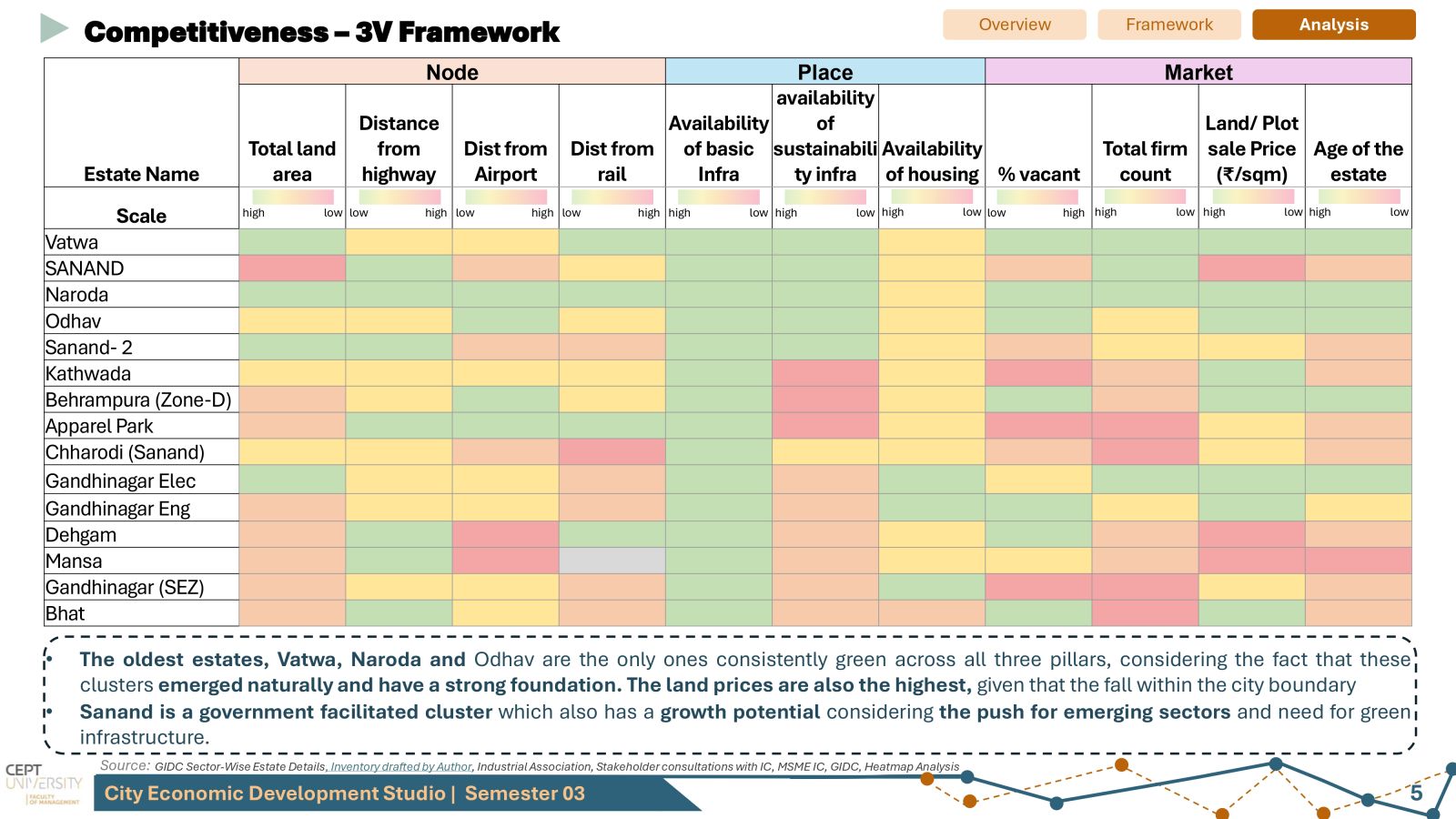
Measuring Cluster Competitiveness: Evaluating the cluster readiness of 15 industrial estates through the Node-Place-Market (3V) framework to understand their existing strengths and potential for future growth. Node captures connectivity and accessibility; Place looks at the land characteristics such as availability, vacancy, housing and other supporting conditions; Market assesses the economic strength

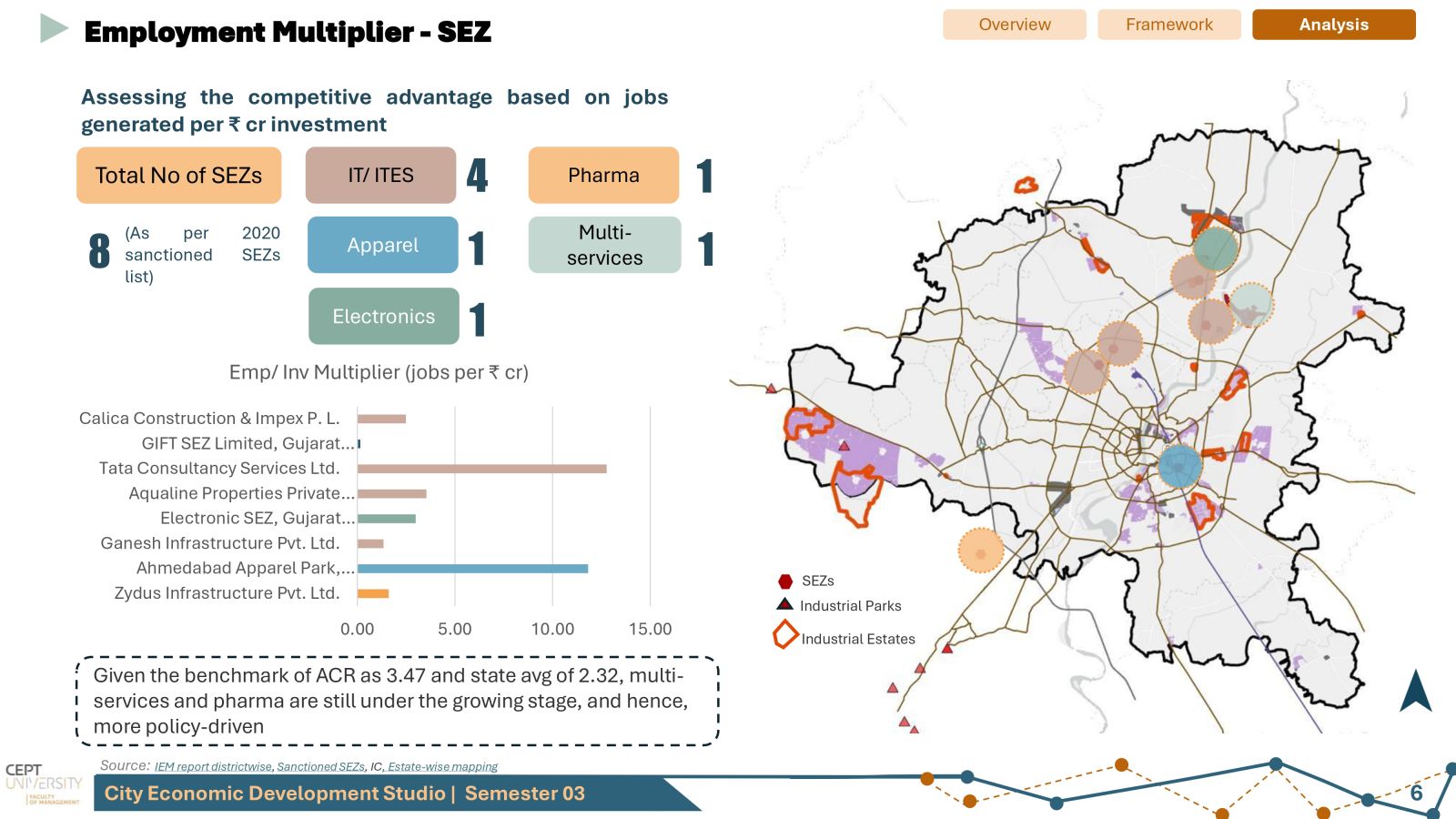
Employment Multipliers: Examining the relationship between investment and employment generation across ACR's Special Economic Zones to assess their economic impact

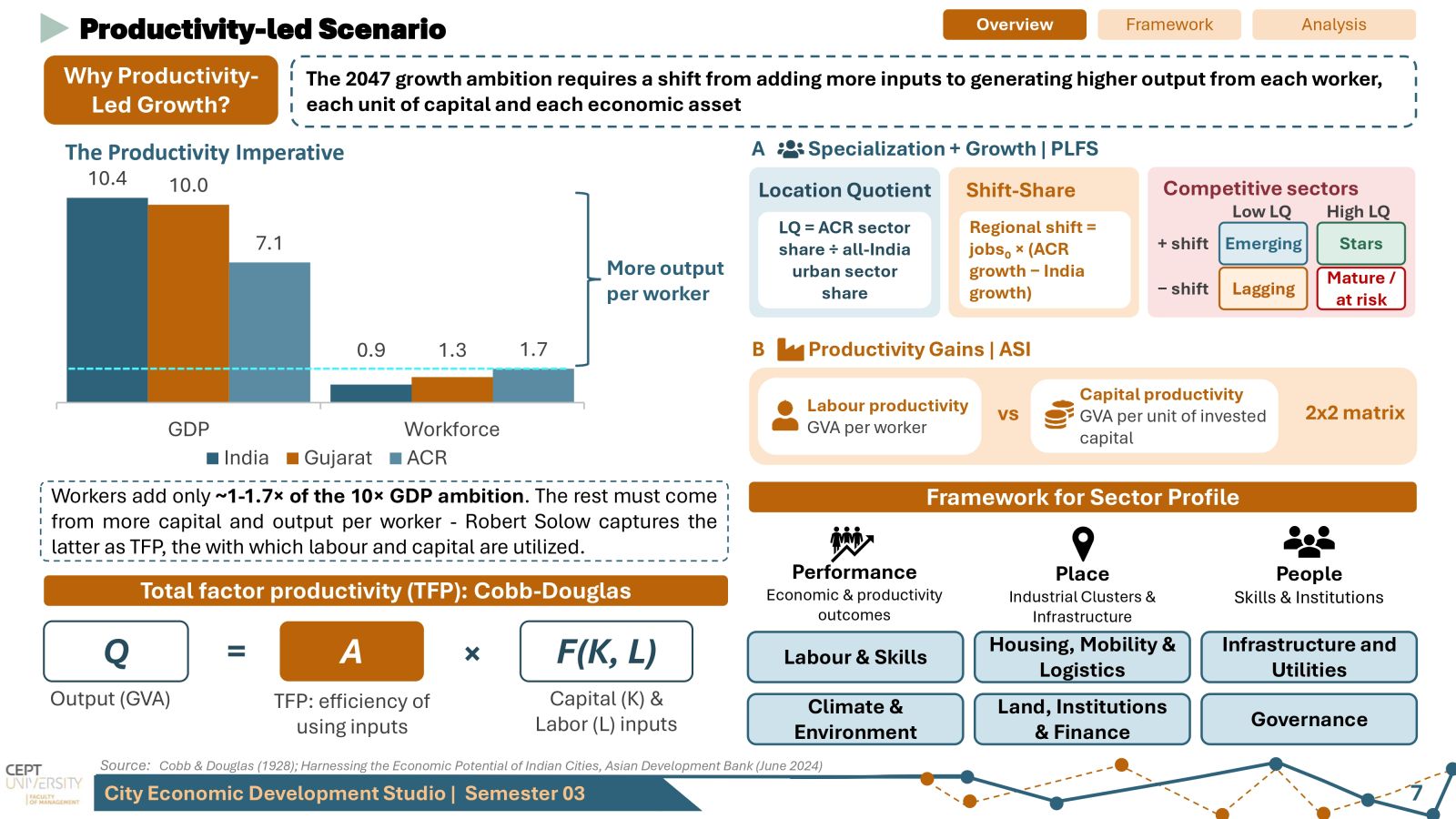
Productivity-led Growth: Translating national and state-level 2047 growth ambitions into a regional productivity-led pathway for ACR through sectoral specialisation and regional competitiveness mapping, identifying high-priority sectors and key productivity indicators and drivers

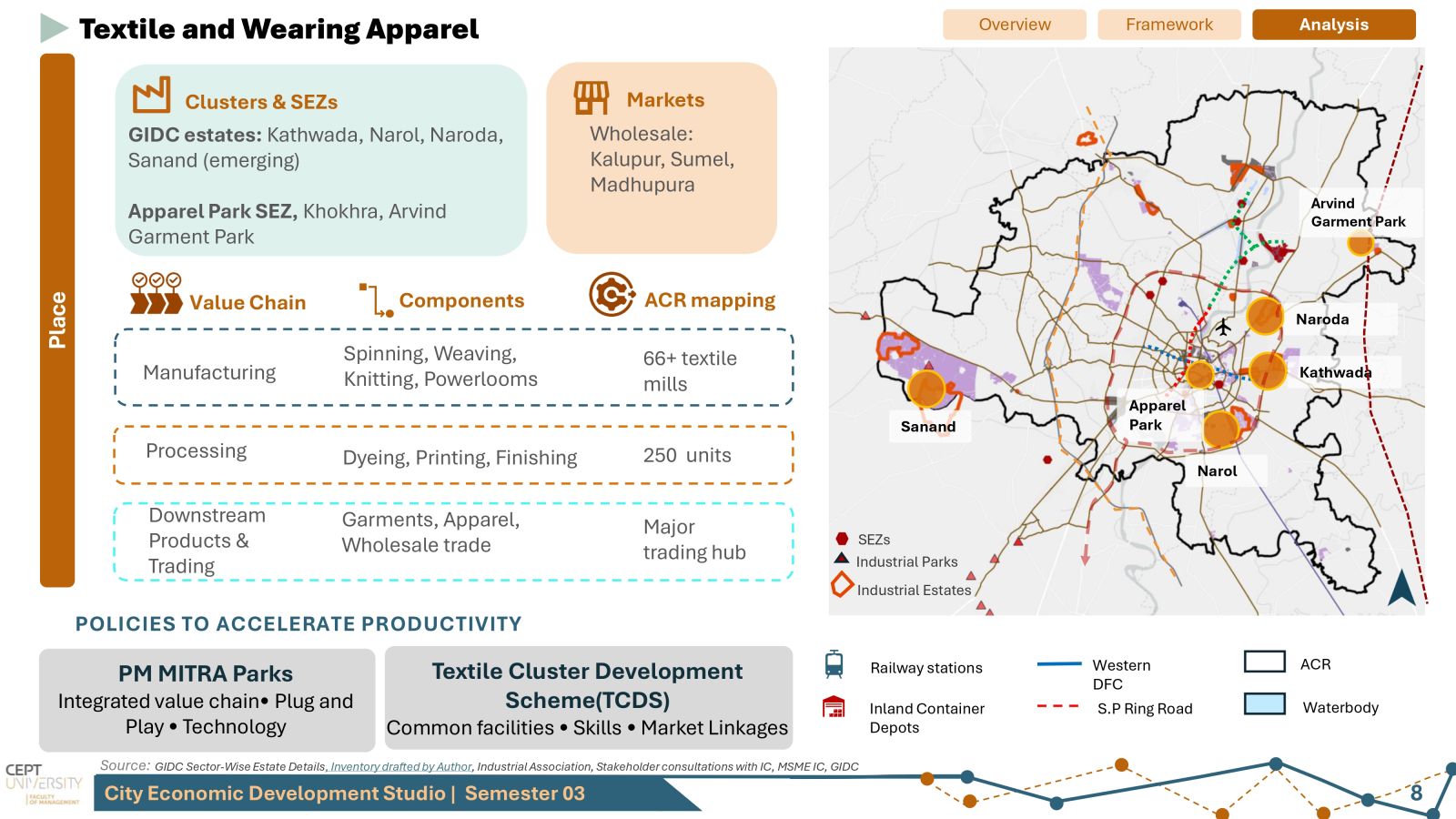
Sector Profile: Deep-dive into the textile and wearing apparel ecosystem through industrial clusters, value chain, logistics and trading networks and regional infrastructure linkages

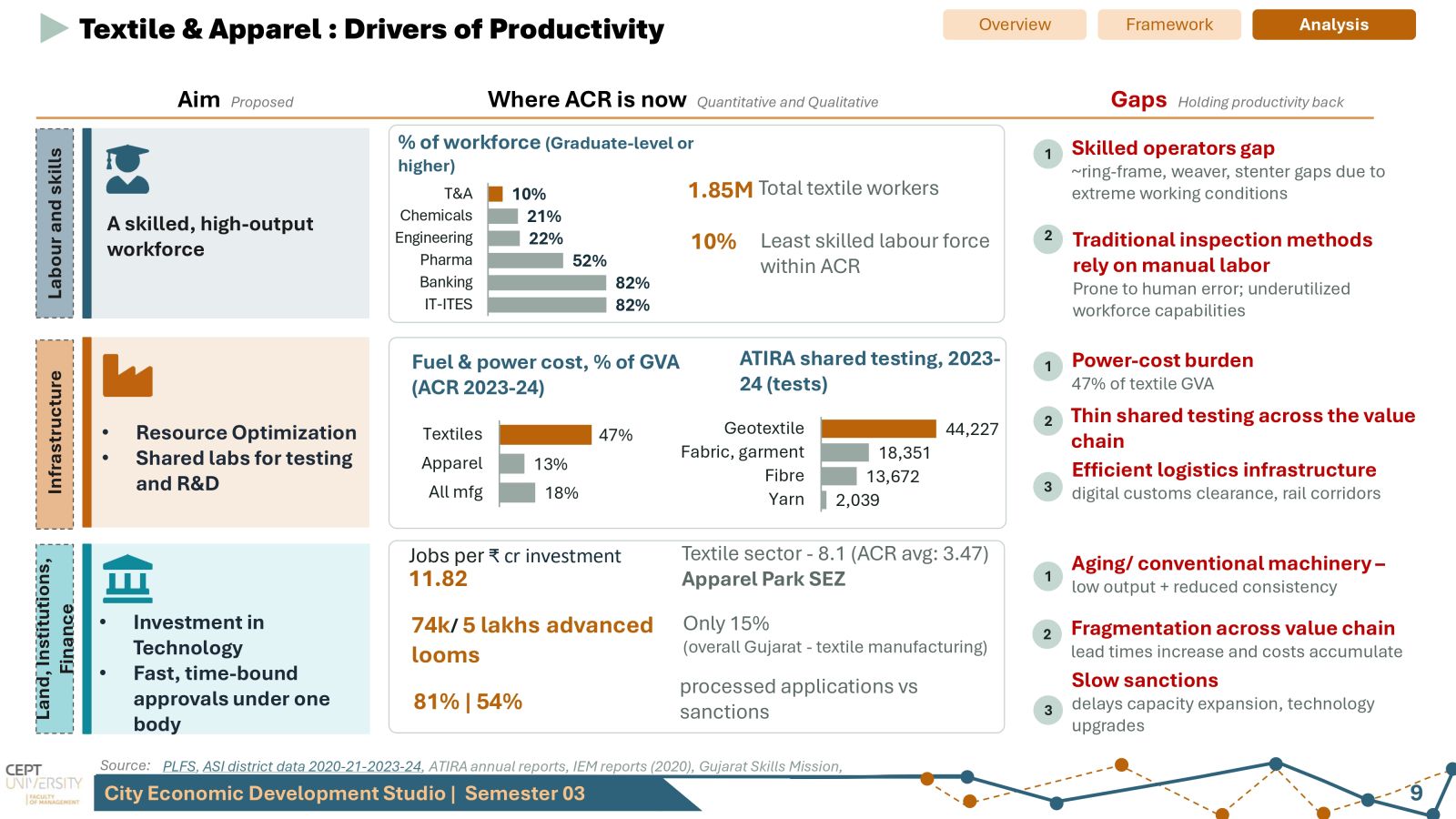
Drivers of Productivity: Identifying the structural gaps affecting textile and wearing apparel productivity across labour, infrastructure, technology, institutions and finance

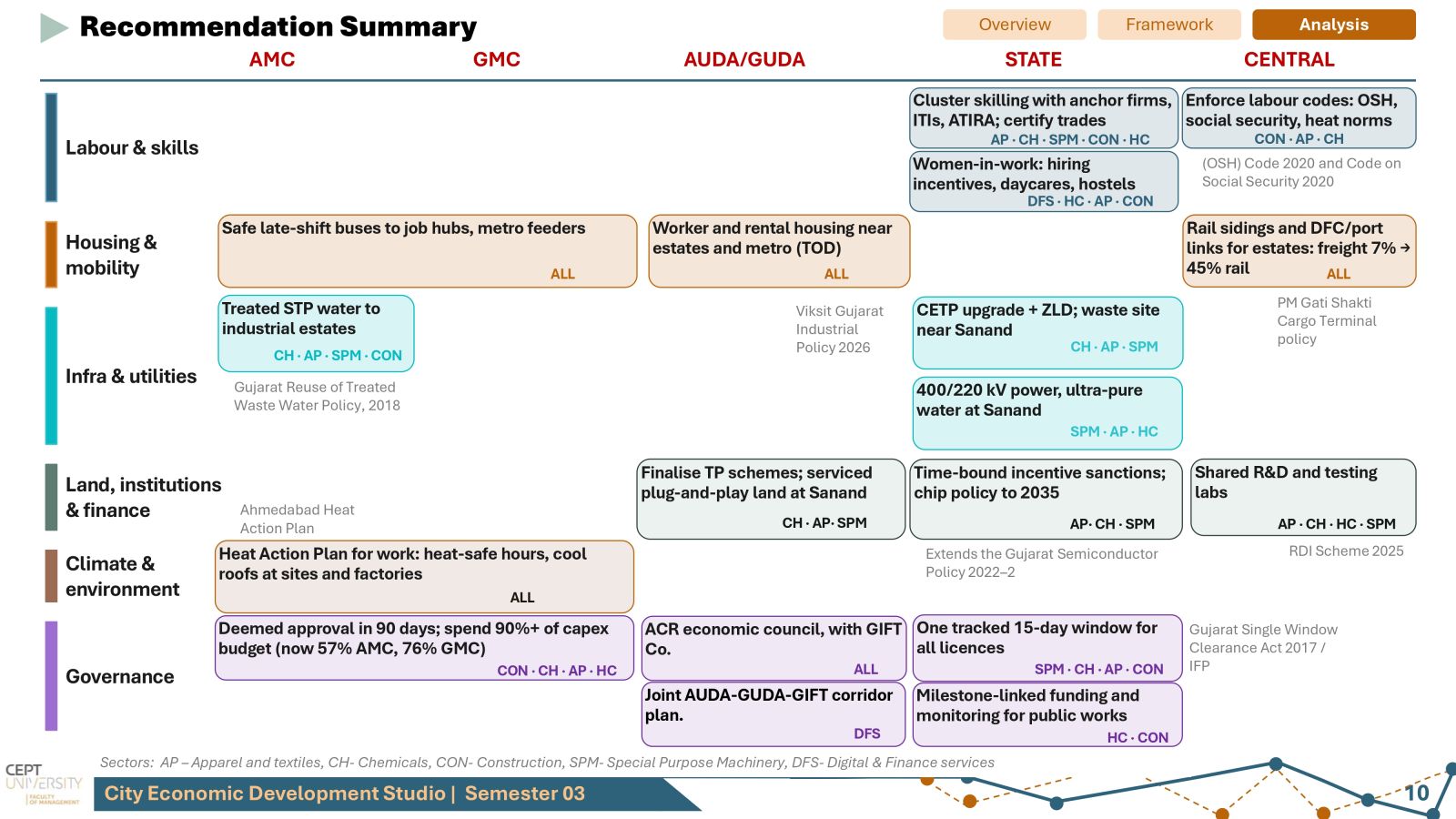
Consolidating cross-sectoral analysis to propose multi-level policy and institutional interventions across six key productivity drivers

Project Video