Khirabdi Tanya Mohanty

UM4005

Investment and Capital Formation

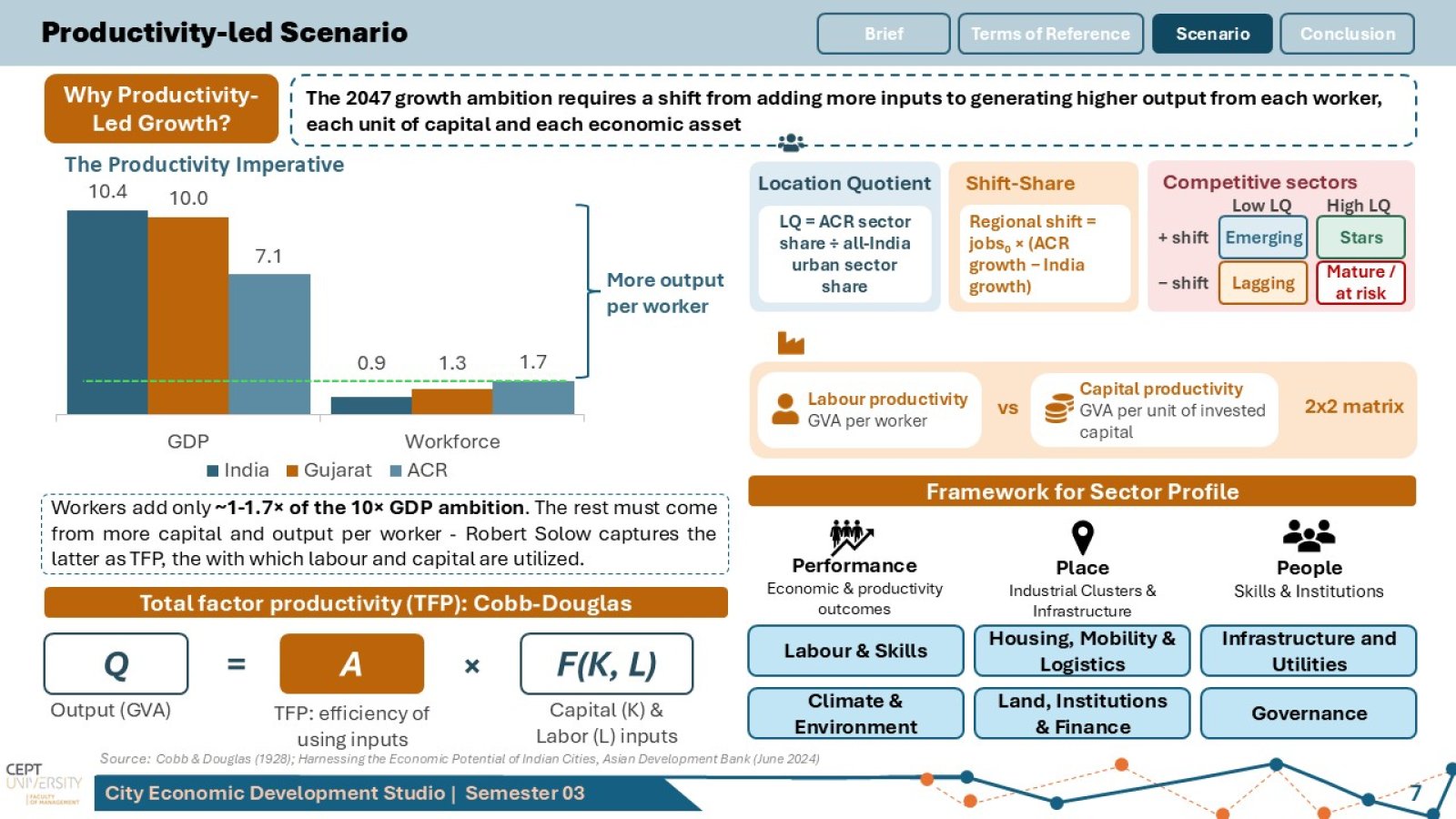
This study looked at how capital flows into the Ahmedabad City Region (ACR): where it comes from, which sectors and places it goes to, and how much of it becomes productive assets. It also shows what this means for the region's competitiveness and for future investment. The study first traced Gujarat's investment landscape across three sources (public capital outlay, private investment intentions and FDI inflows), then narrowed down to ACR and its two districts, Ahmedabad and Gandhinagar. Investment flows were mapped from source to destination to show how capital clusters into the Sanand manufacturing corridor and GIFT City. The as-is assessment compares proposed and commissioned investment and tracks fixed capital, gross and net fixed capital formation (GFCF and NFCF), capital intensity and reinvestment rates over ten years. It also looks at bank credit to industry and services and at sector-wise capital at the sub-sector level. ACR was then benchmarked against Pune and Chennai to judge the scale and stability of its capital base. Building on these findings, a productivity-led growth scenario focused on Digital and Financial Services. It traced the sector's performance, people and place, along with the constraints in skills, housing, mobility and governance that hold back its productivity, to identify where its economic contribution could be strengthened.

View Additional Work
Report Content

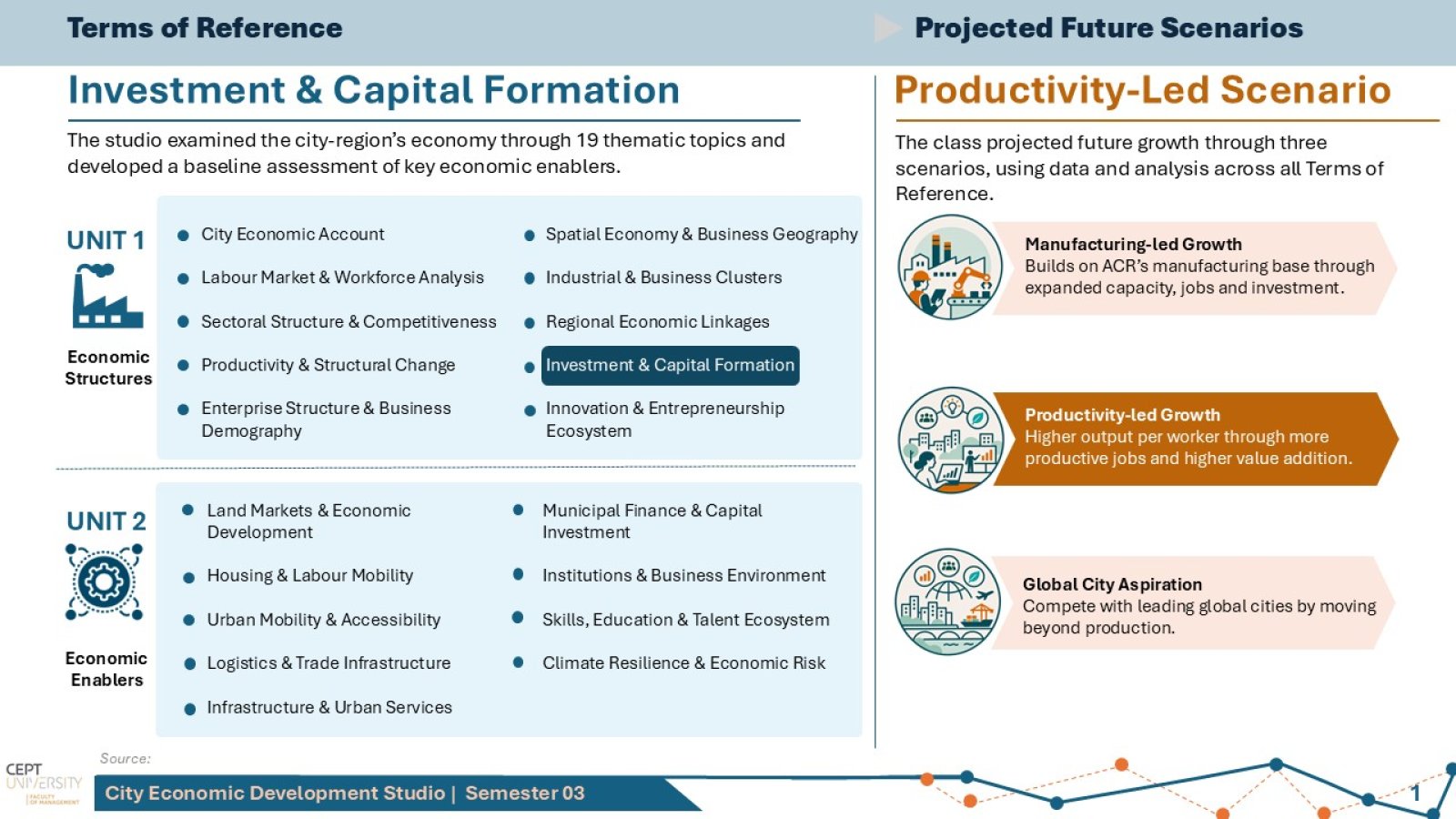
Studio Overview: The Ahmedabad City Region (ACR) was assessed across 19 thematic topics to establish a baseline of its economic structure and enablers. Building on this assessment, three future growth scenarios were developed to explore potential pathways for the region's economic development

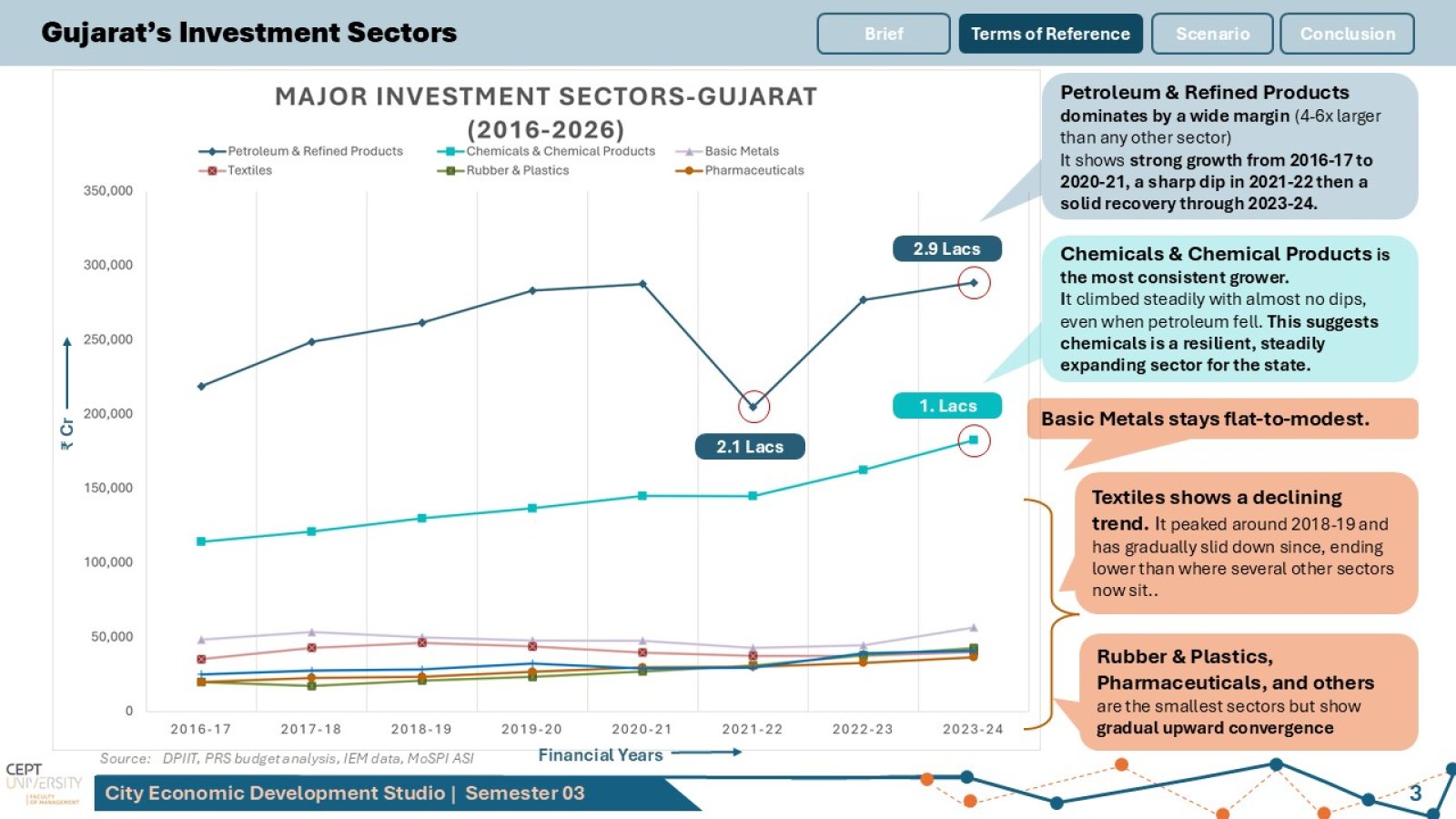
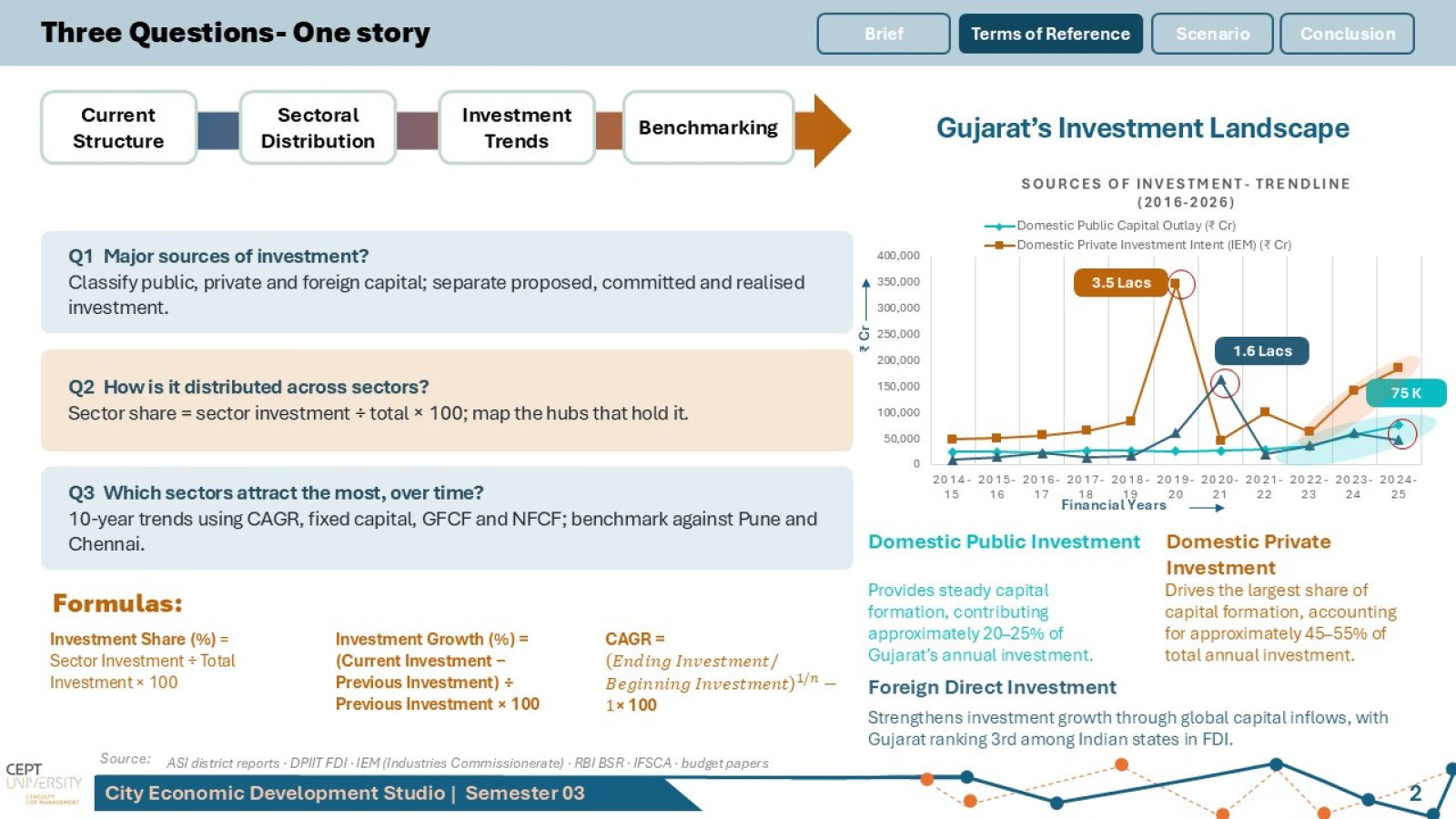
The study asks where ACR's investment comes from, which sectors absorb it and how that has changed over ten years. At the state level, private investment is the largest source but swings with mega-project announcements, while public capital outlay is the steady base.

Gujarat's Investment Sectors

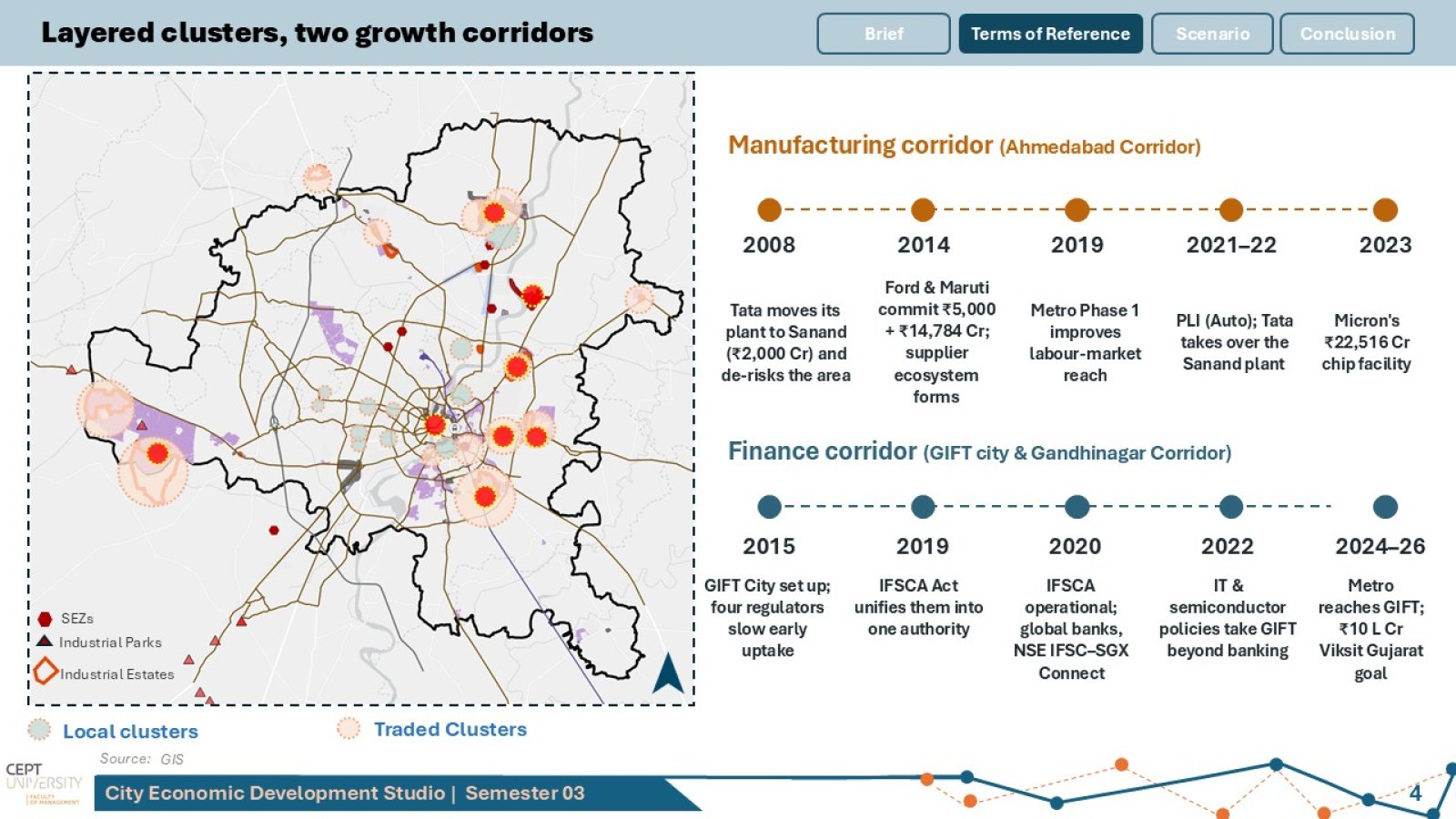
ACR's investment builds on decades of industrial clusters and now moves along two corridors: Sanand for manufacturing, from autos to semiconductors, and GIFT City–Gandhinagar for finance. Each corridor grew from a single anchor investment and the policies that followed it

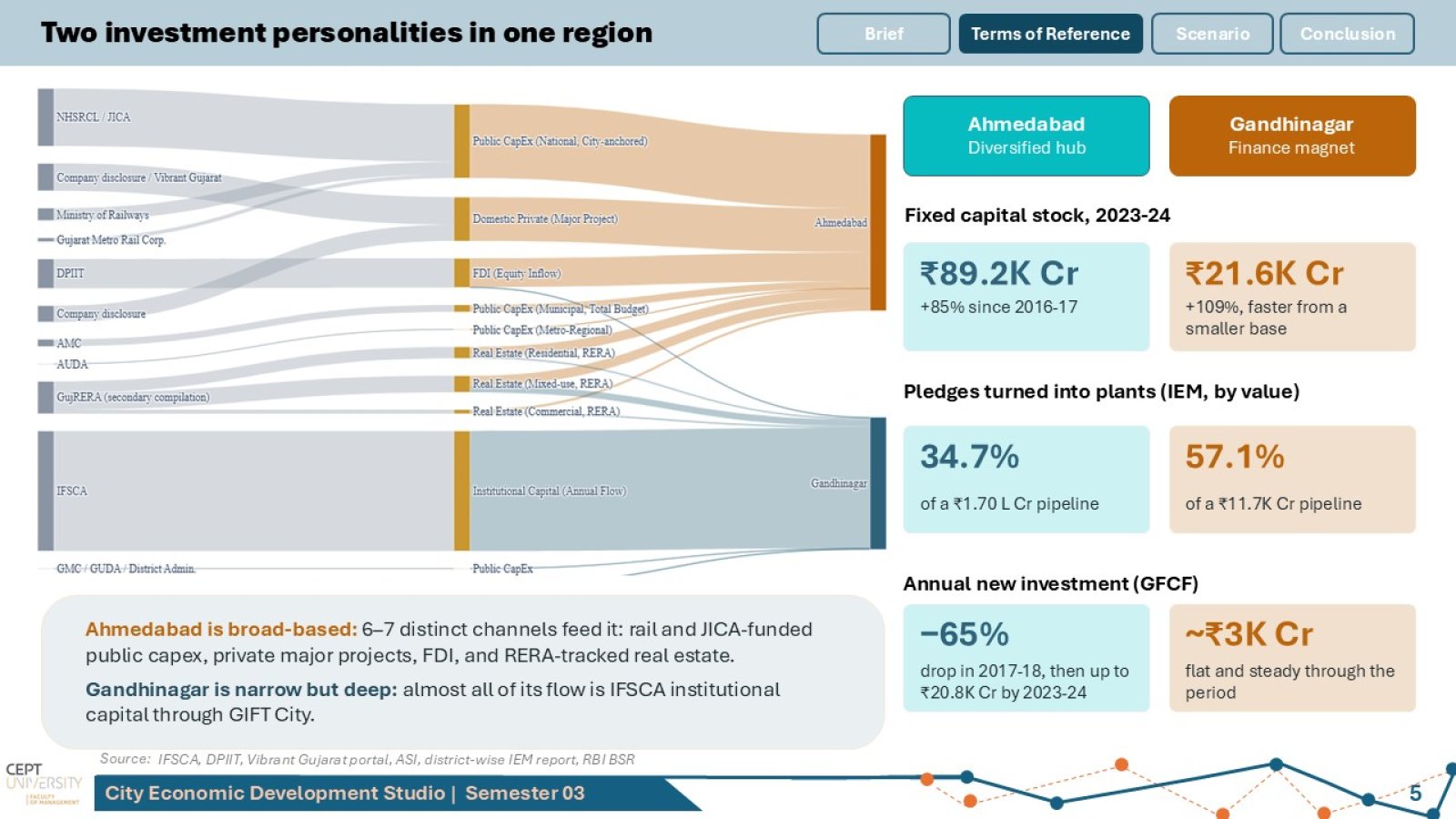
Ahmedabad is a diversified hub fed by six to seven capital channels, while Gandhinagar draws almost all of its capital from IFSCA through GIFT City. Gandhinagar builds more of what it is pledged (57% against 35%), but Ahmedabad's capital base is about four times larger.

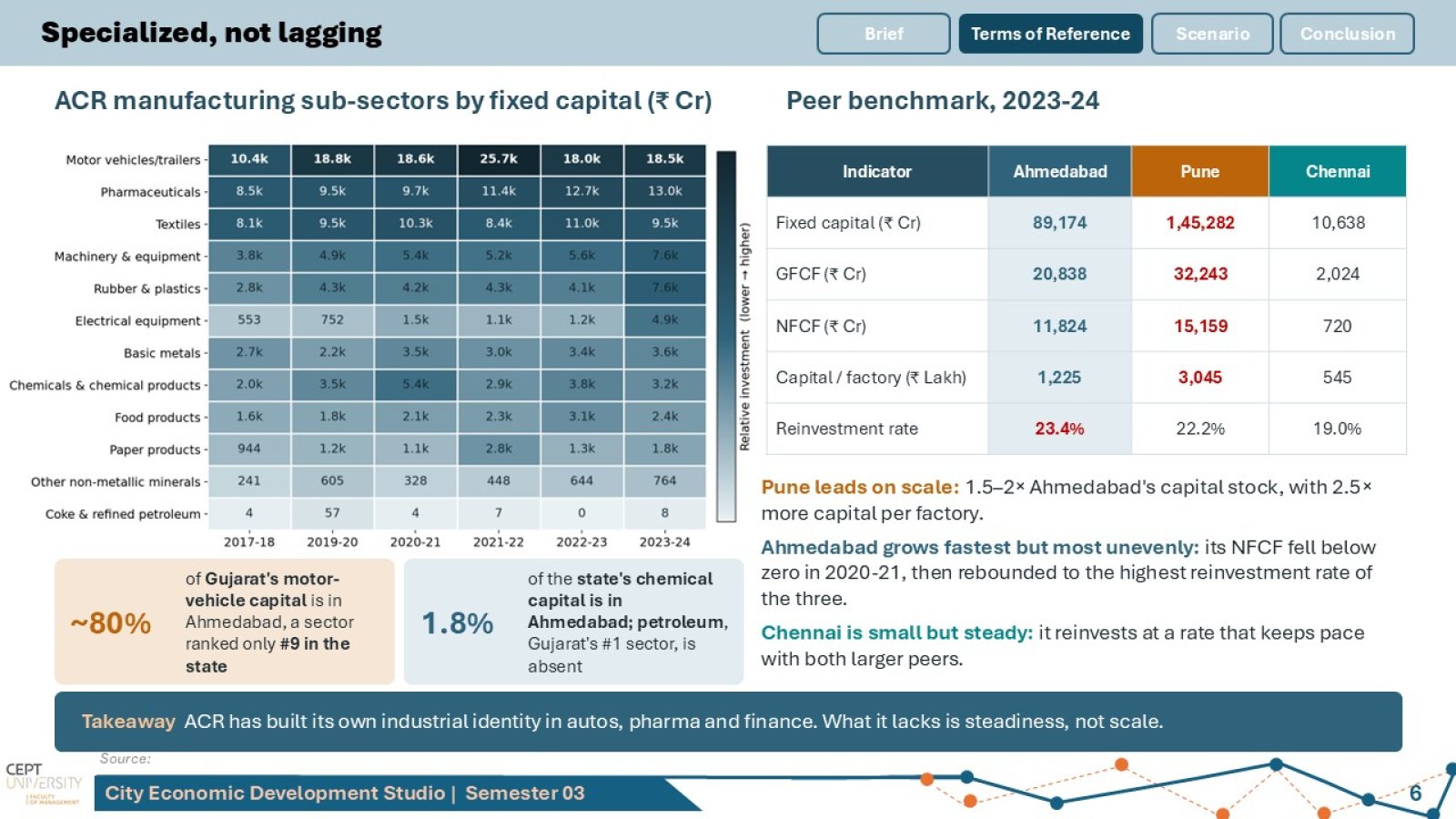
Ahmedabad holds about 80% of Gujarat's motor-vehicle capital and very little of the state's petroleum and chemical capital, so it has built its own industrial identity. Compared with Pune and Chennai, its gap is how steady its investment is, not how much there is.

Sector Profile: Deep-dive into the textile and wearing apparel ecosystem through industrial clusters, value chain, logistics and trading networks and regional infrastructure linkages

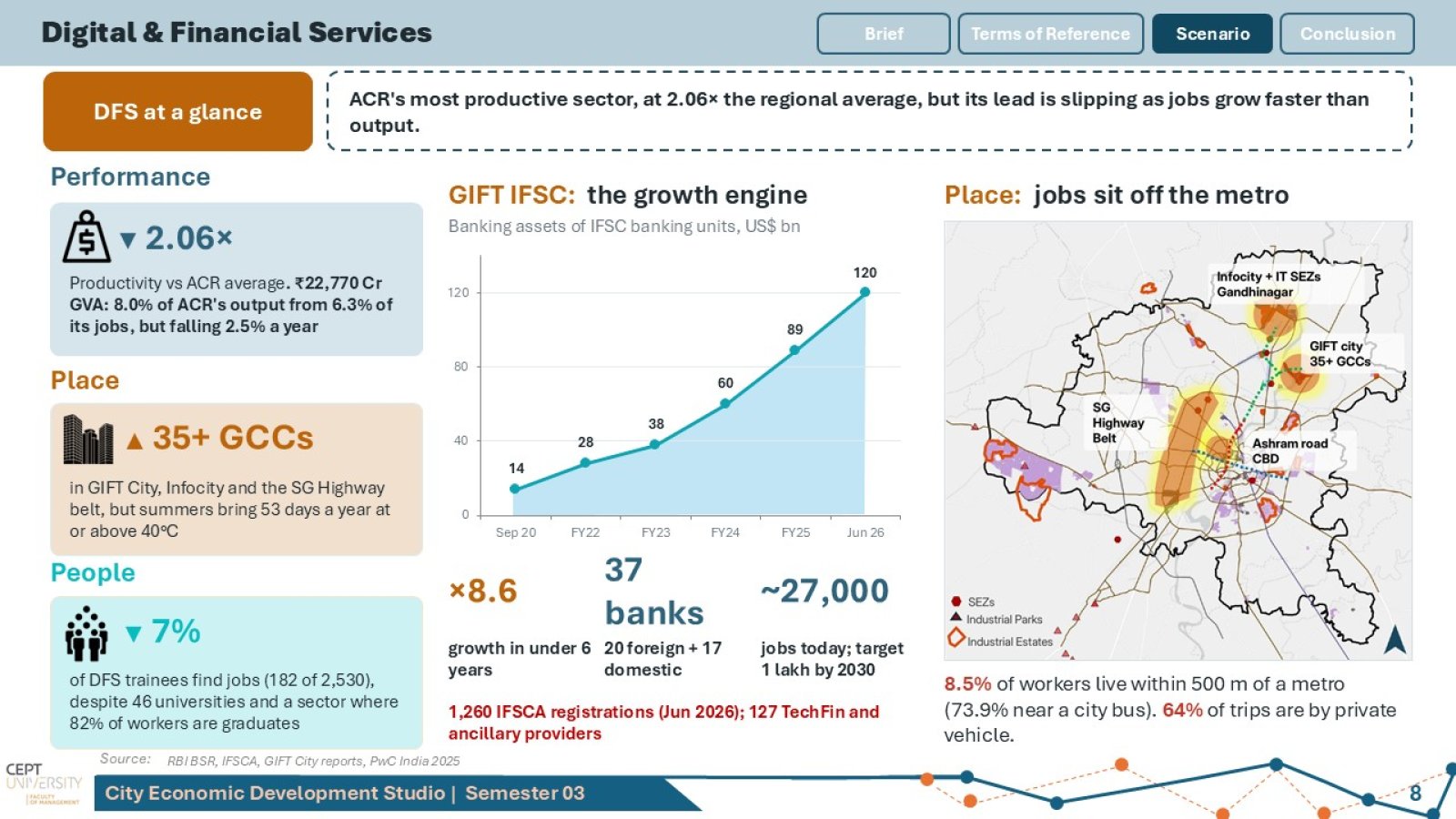
DFS is ACR's most productive sector at 2.06× the regional average, and GIFT IFSC's banking assets have grown 8.6× in under six years.

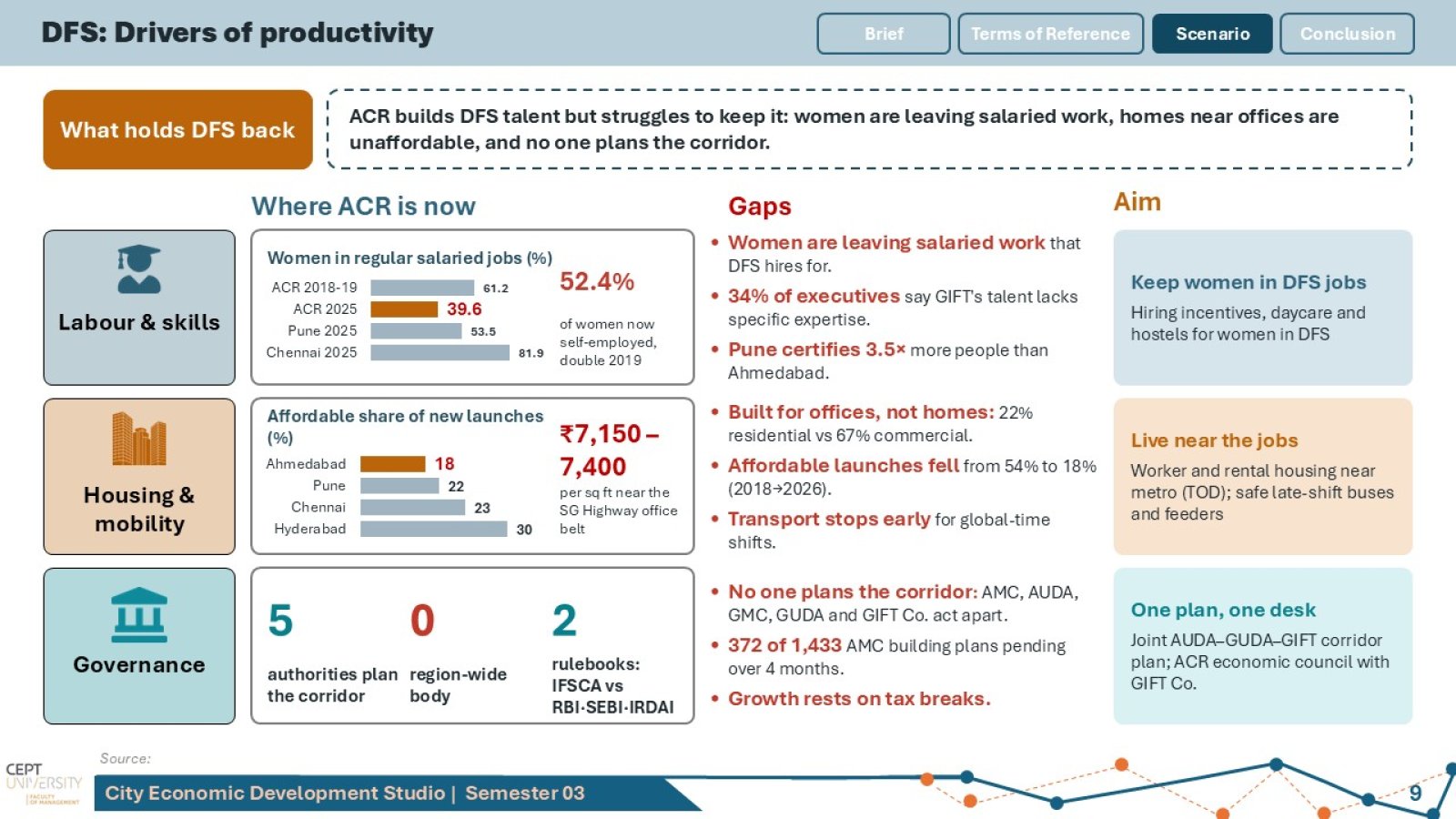
This slide looks at three drivers of productivity in Digital & Financial Services: labour and skills, housing and mobility, and governance. For each one it shows where ACR stands today, the gaps holding productivity back and what to aim for.

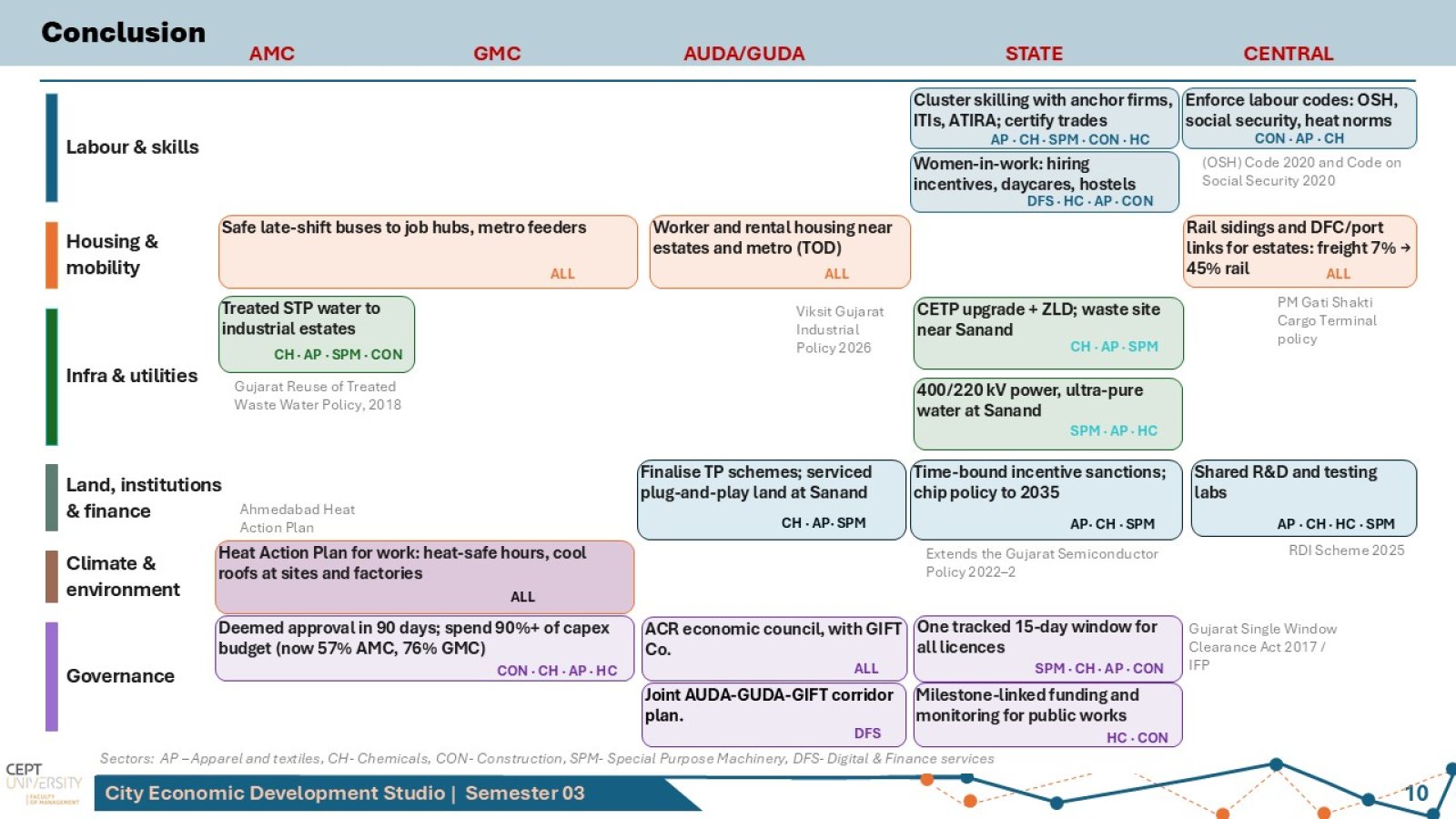
Consolidating cross-sectoral analysis to propose multi-level policy and institutional interventions across six key productivity drivers