• Home
  • FM
  • UM4005
  • Land Market & Economic Development-Global Aspiration

Smriti R Singh

UM4005

Land Market & Economic Development-Global Aspiration

This project examines how land markets influence economic development in the Ahmedabad City Region (ACR). Using spatial analysis, AUDA and GUDA Development Plans, Jantri rates and real estate data, it assesses land-use patterns, land values, accessibility, vacant land and their impact on business location and investment. The study identifies potential growth corridors for industrial, commercial and institutional development. It further evaluates ACR’s global-city aspirations through benchmarking seven indicators, including economic competitiveness, governance, infrastructure, human capital and quality of life. Using the Dynamic Capabilities Framework, it proposes short-, medium- and long-term recommendations focused on sensing, seizing and transforming capabilities.

View Additional Work
Report Content

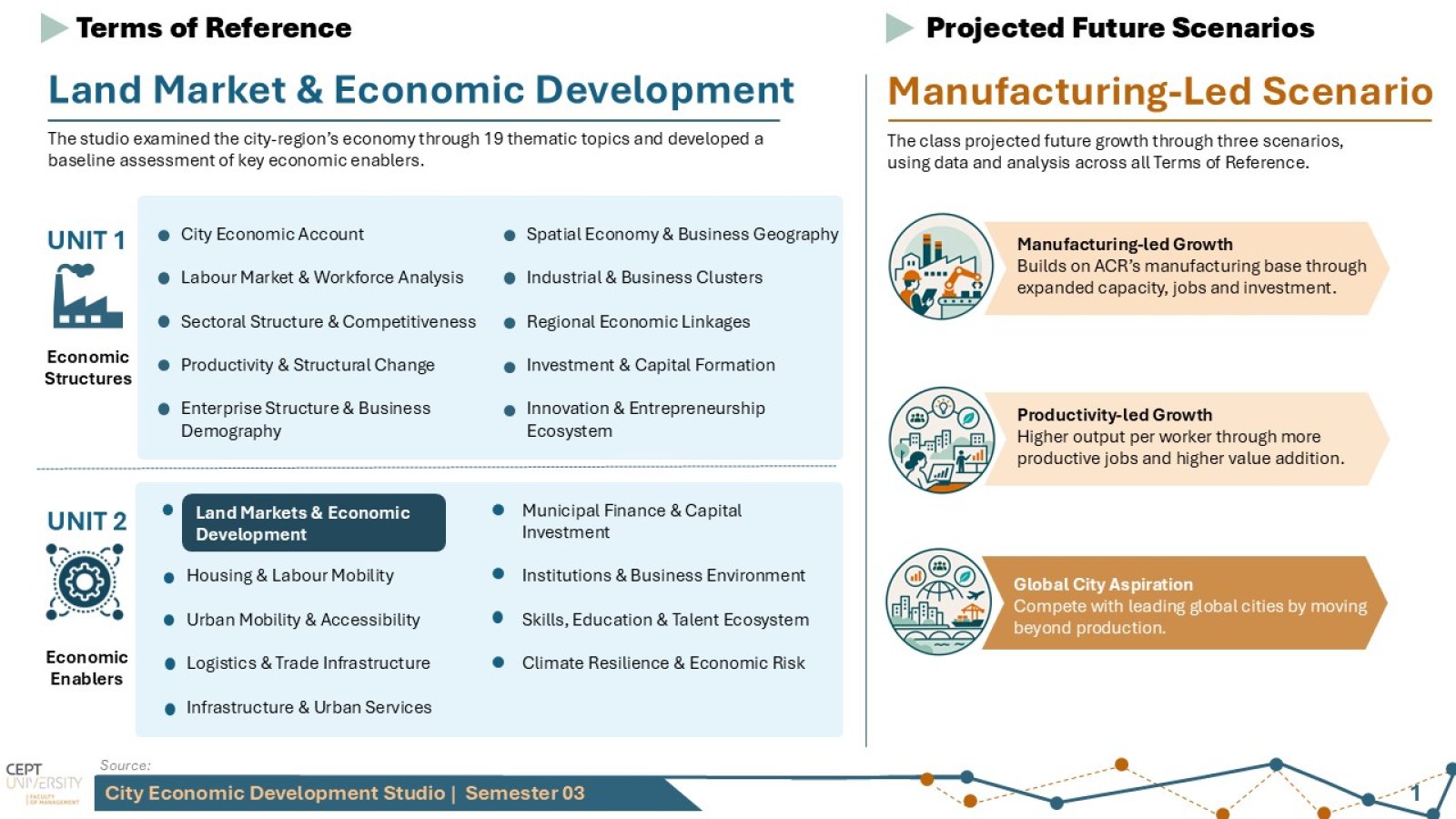
Introduces the 19 thematic areas used to assess ACR’s economic development and the three future growth scenarios explored by the studio.

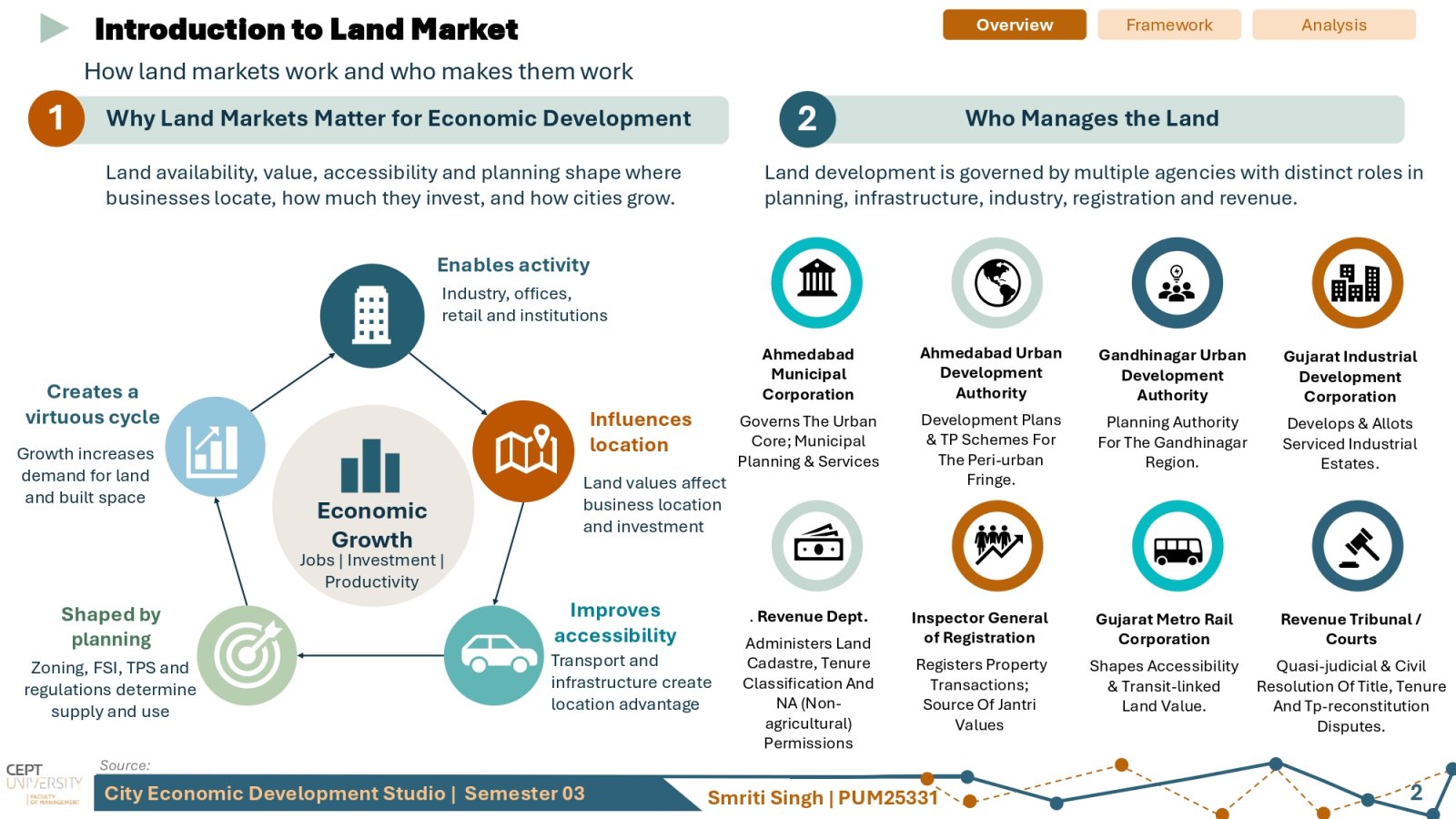
Explains how land availability, values, accessibility and institutional governance influence business location, investment and economic growth.

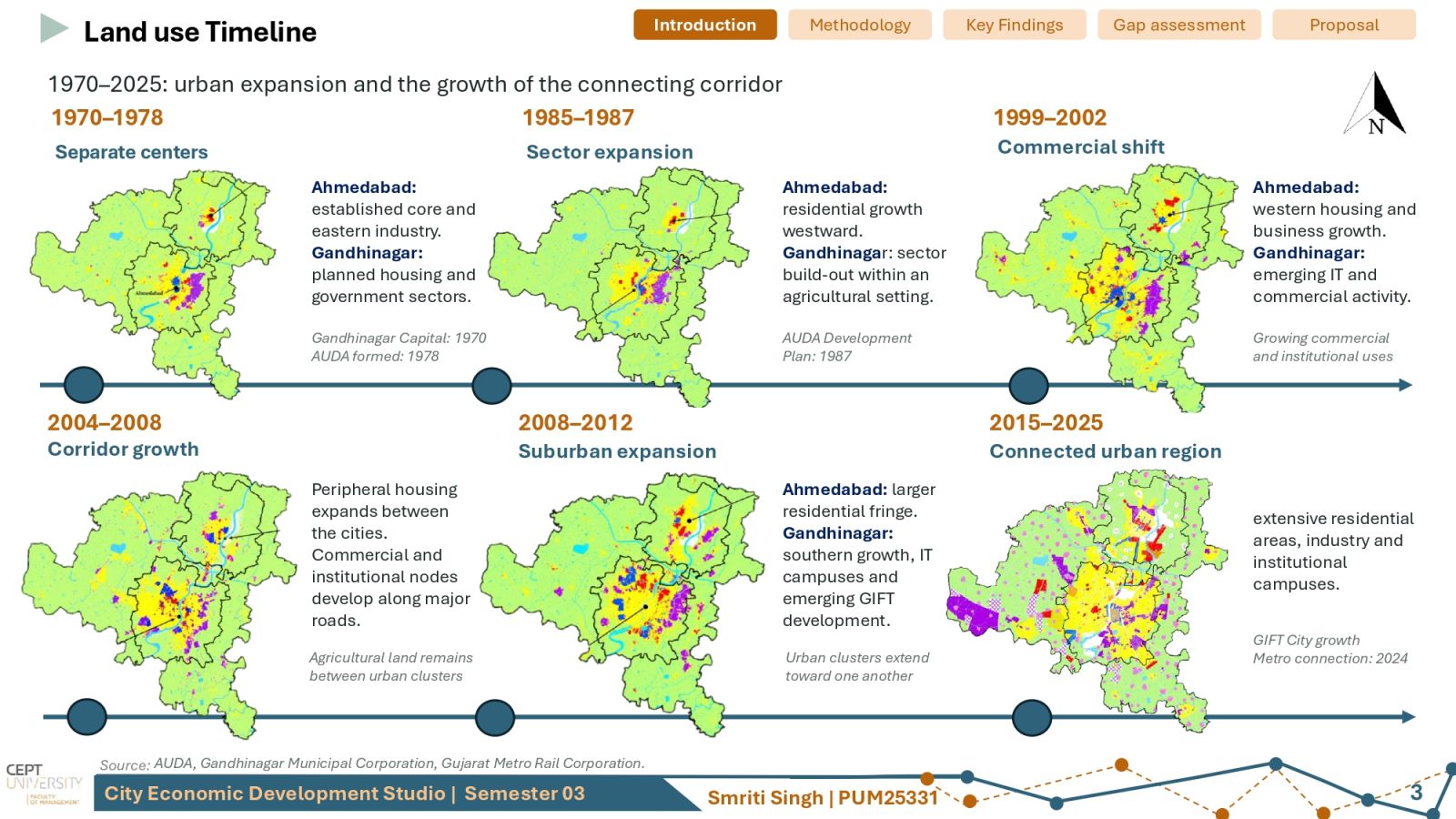
Illustrates the spatial transformation of Ahmedabad and Gandhinagar from separate urban centres into an increasingly connected economic region.

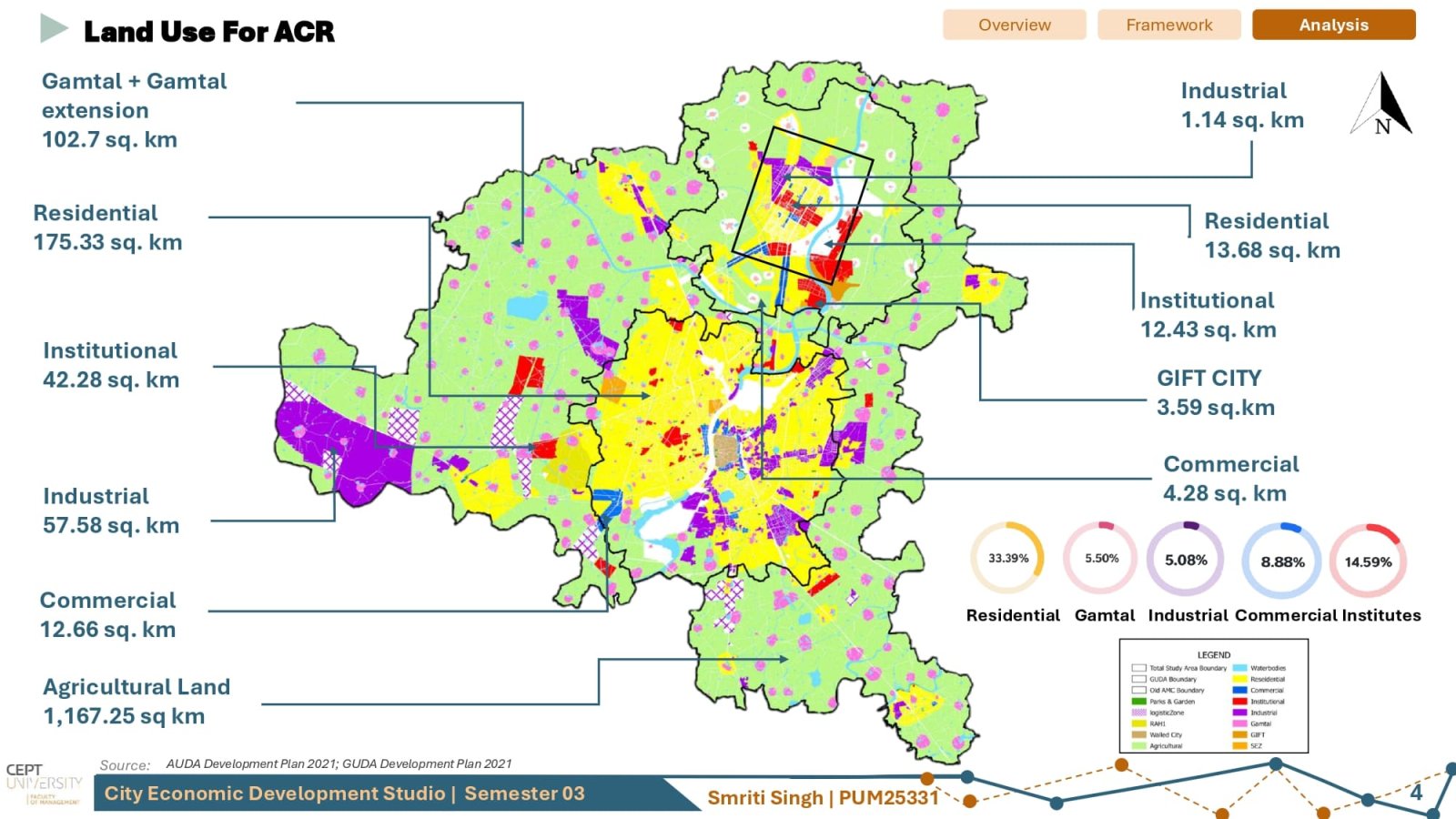
Maps the distribution of residential, industrial, commercial, institutional and agricultural land across AUDA and GUDA planning areas.

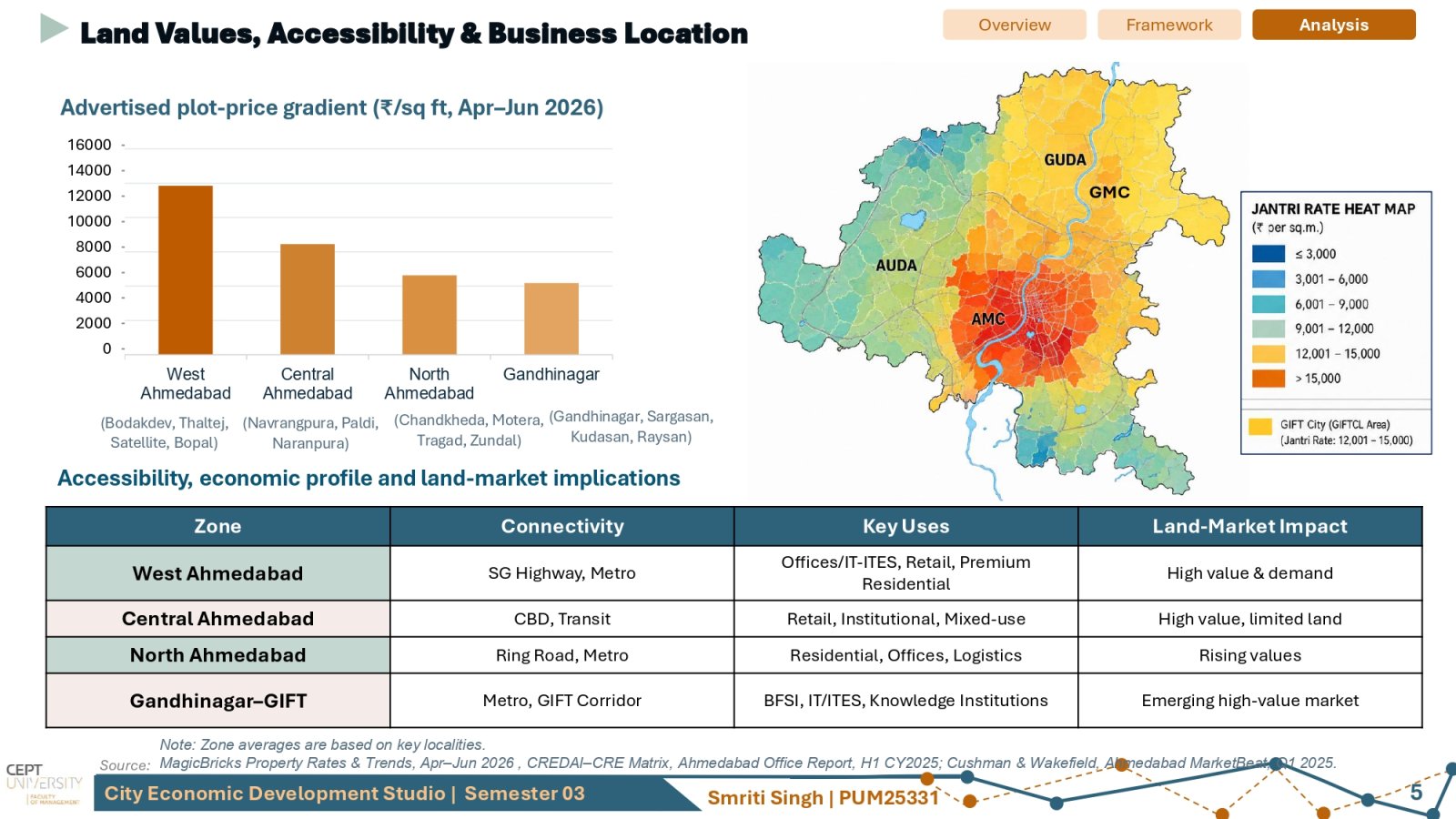
Analyses spatial variations in land prices and Jantri rates, highlighting how connectivity and economic activity influence land values and investment locations.

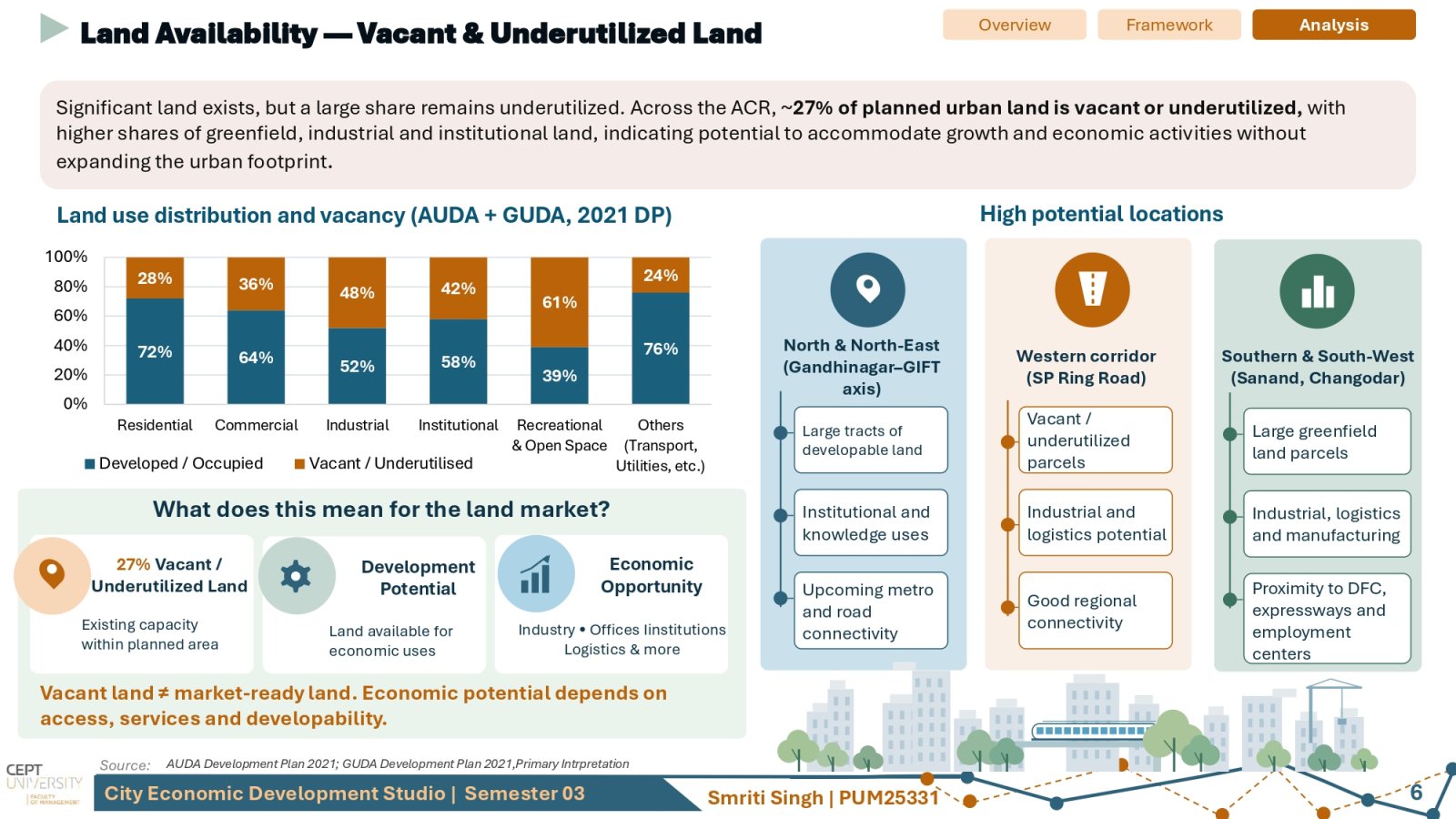
Identifies vacant and underutilised land across ACR, highlighting potential growth corridors and opportunities for future industrial and commercial development.

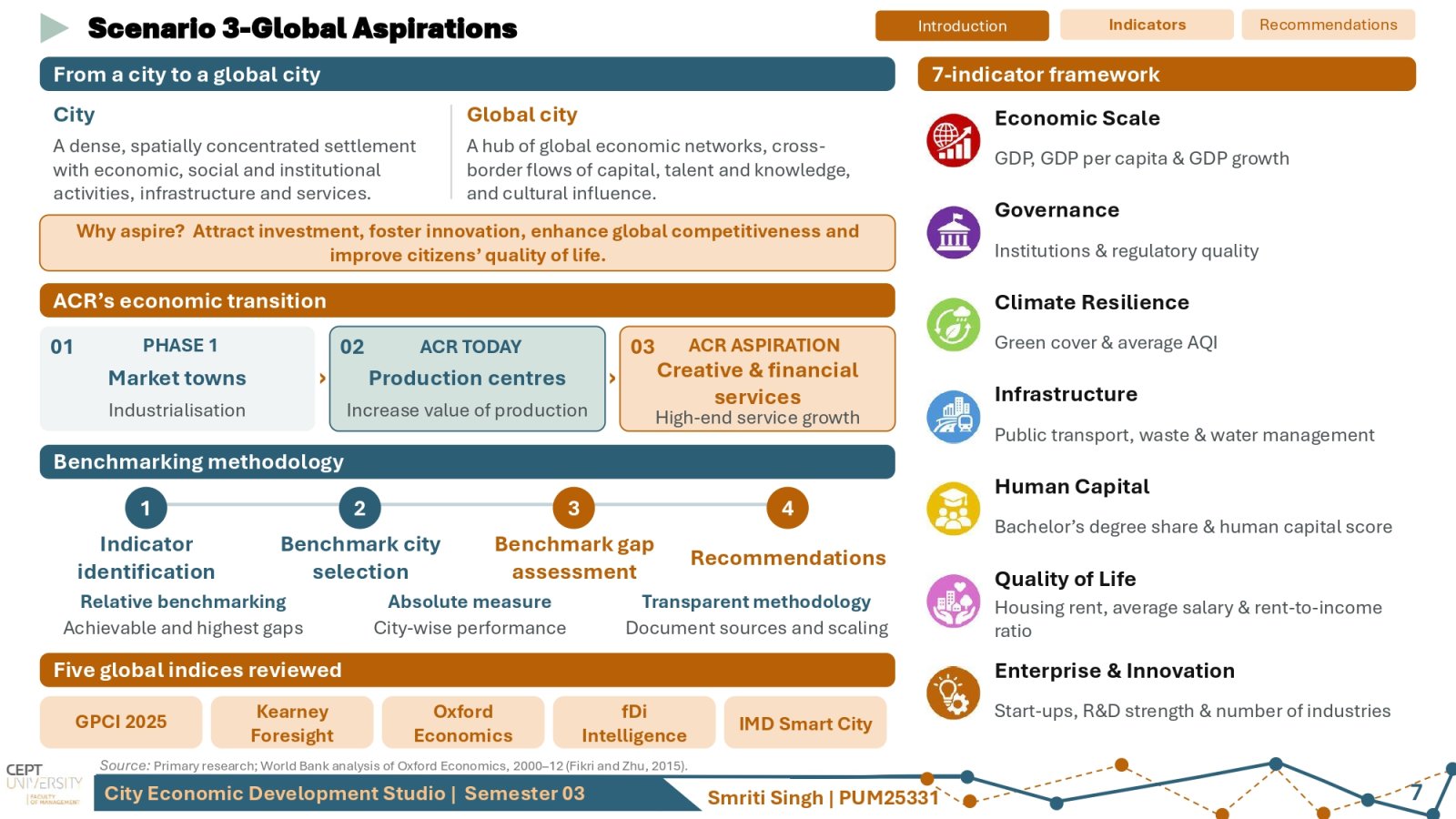
Introduces ACR’s transition towards global competitiveness through a seven-indicator benchmarking framework covering economic, institutional and urban development dimensions.

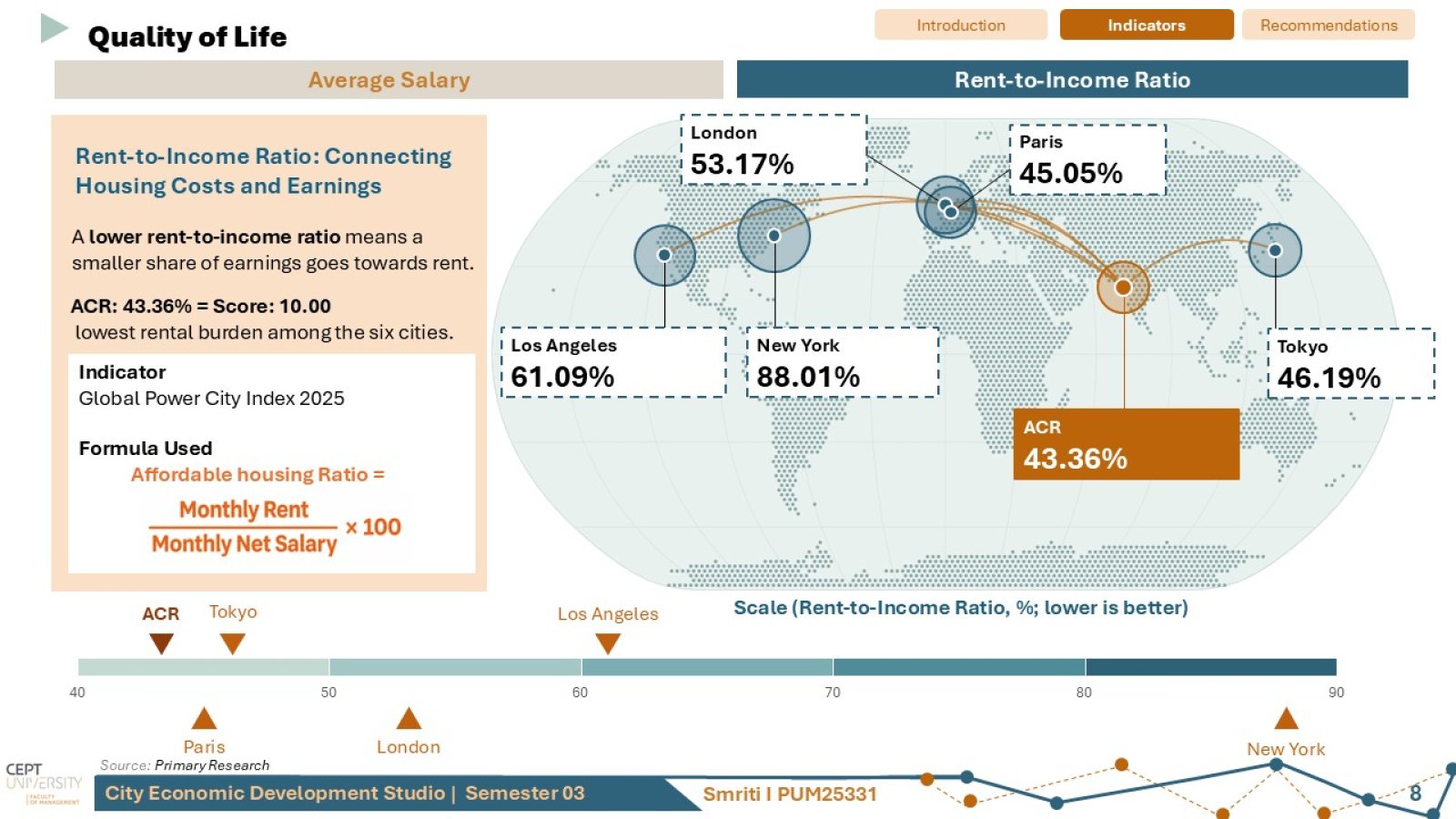
Compares ACR’s housing affordability with global cities using the rent-to-income ratio to assess the relationship between earnings and rental costs.

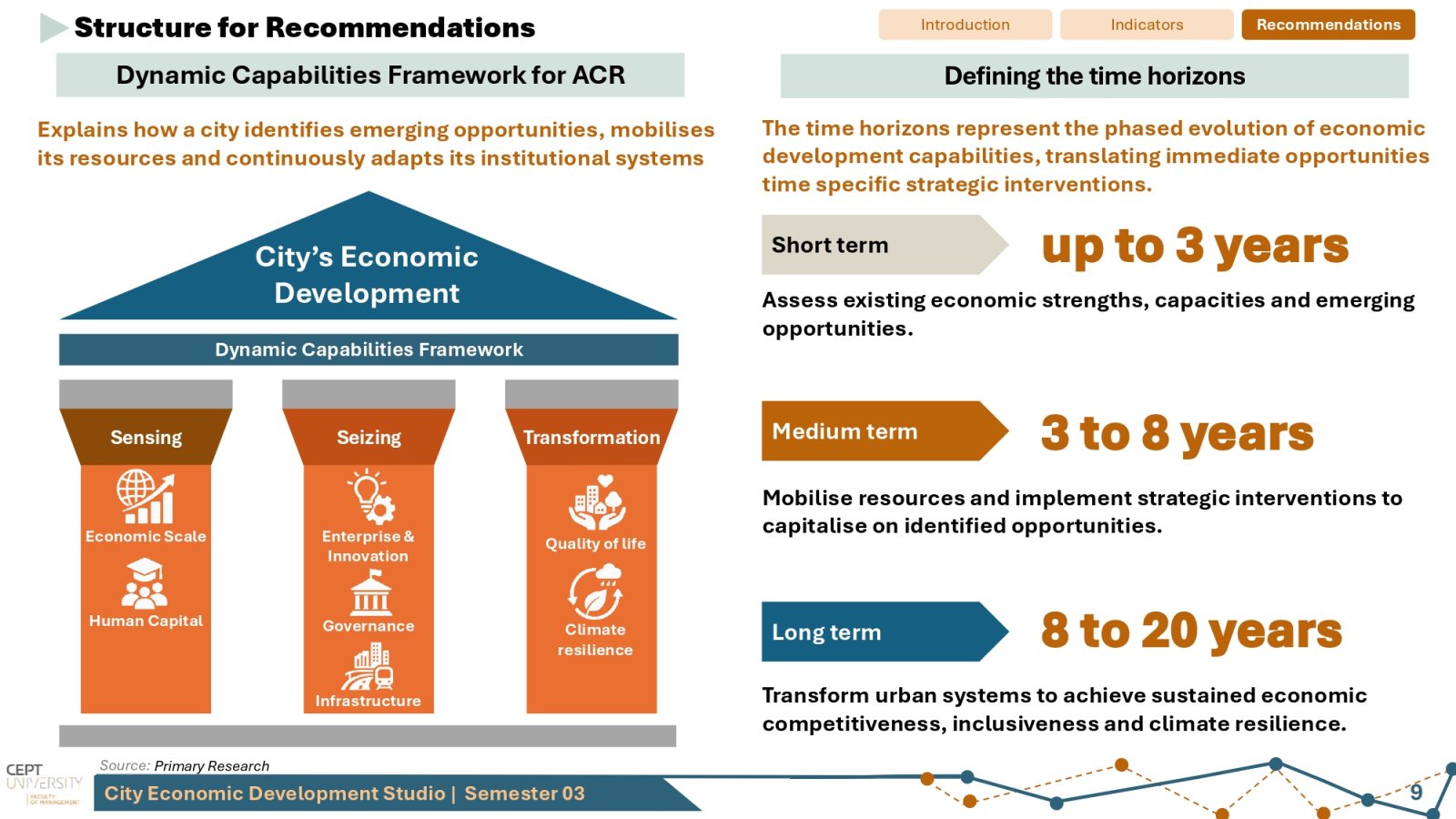
Presents a strategic framework linking sensing, seizing and transforming capabilities to phased economic development priorities for ACR.

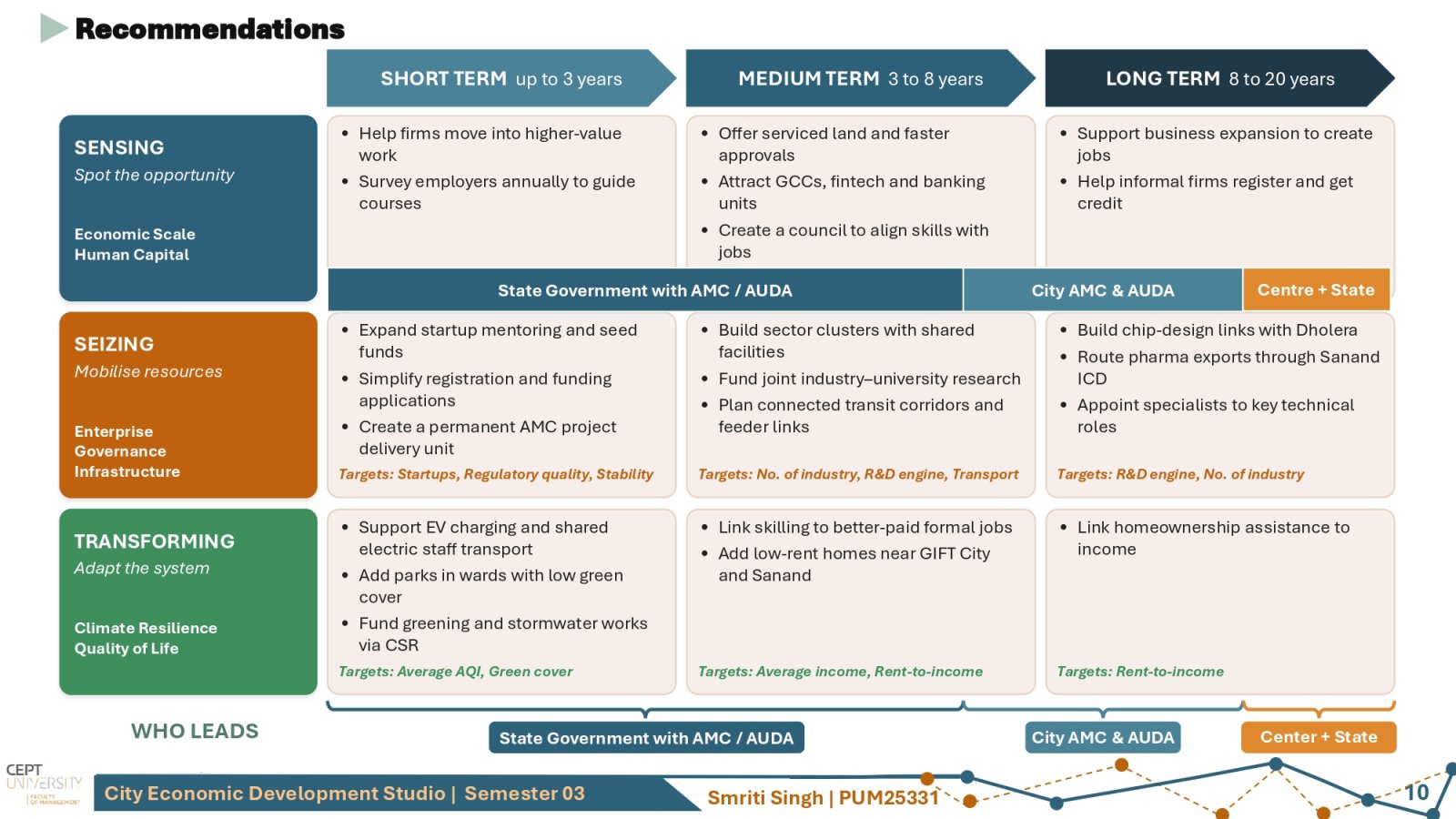
Outlines short-, medium- and long-term interventions to strengthen economic competitiveness, human capital, infrastructure, sustainability and quality of life.

Project Video