• Home
  • FM
  • UM4005
  • Urban Mobility, Accessibility & Manufacturing-Led Growth

Tammewar Aarya Rajesh

UM4005

Urban Mobility, Accessibility & Manufacturing-Led Growth

As part of CEPT University's City Economic Development Studio, I initially worked on Urban Mobility & Accessibility, assessing ACR's road, bus and metro networks, labour accessibility, and the economic costs of private mobility. The studio later transitioned to developing future growth scenarios for the Ahmedabad City Region. I contributed to Scenario 1: Manufacturing-Led Growth, examining industrial land requirements, manufacturing capacity, workforce projections and the infrastructure needed to support expansion towards 2047. The work brought together spatial analysis, secondary data and strategic recommendations to understand the region's future development.

View Additional Work
Report Content

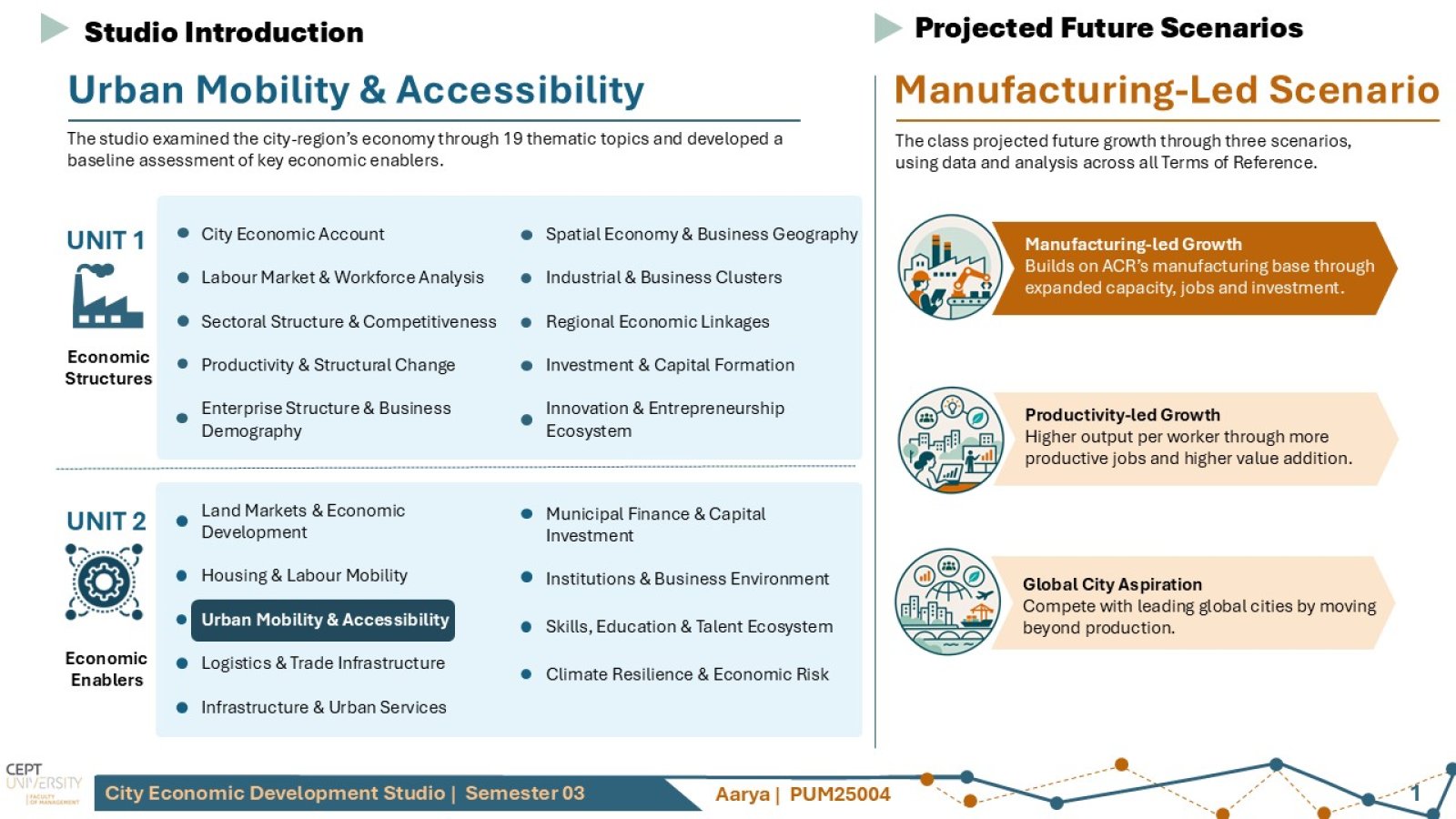
The City Economic Development Studio examined the Ahmedabad City Region through 19 thematic topics, establishing a baseline of its economic structures and enablers. The initial TOR focused on Urban Mobility and Accessibility, before the studio transitioned towards developing three future economic growth scenarios for ACR.

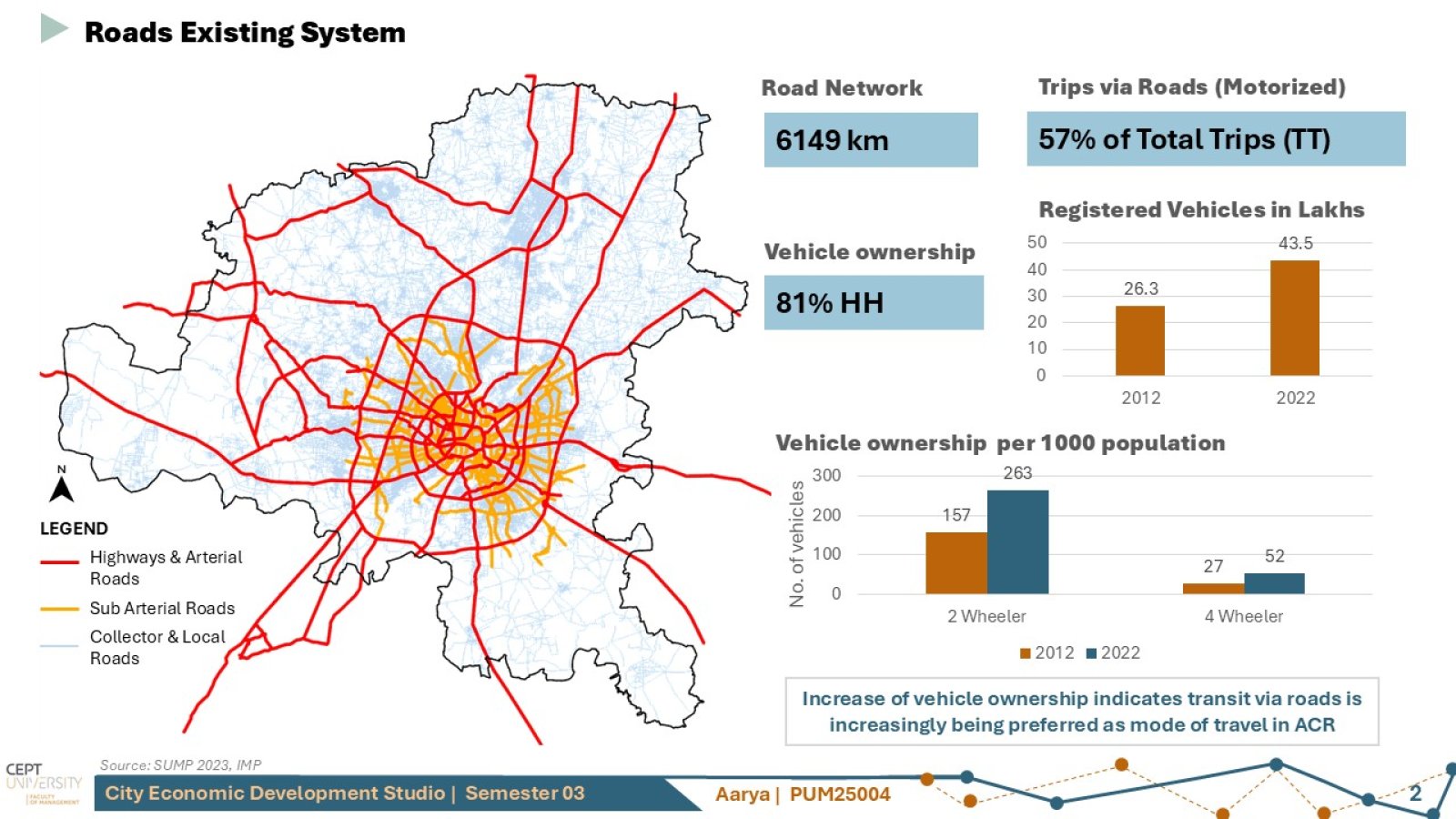
The TOR began by examining ACR's existing road network, assessing its hierarchy, spatial distribution and extent. Vehicle ownership trends between 2012 and 2022 were also analysed to understand the growing dependence on private vehicles.

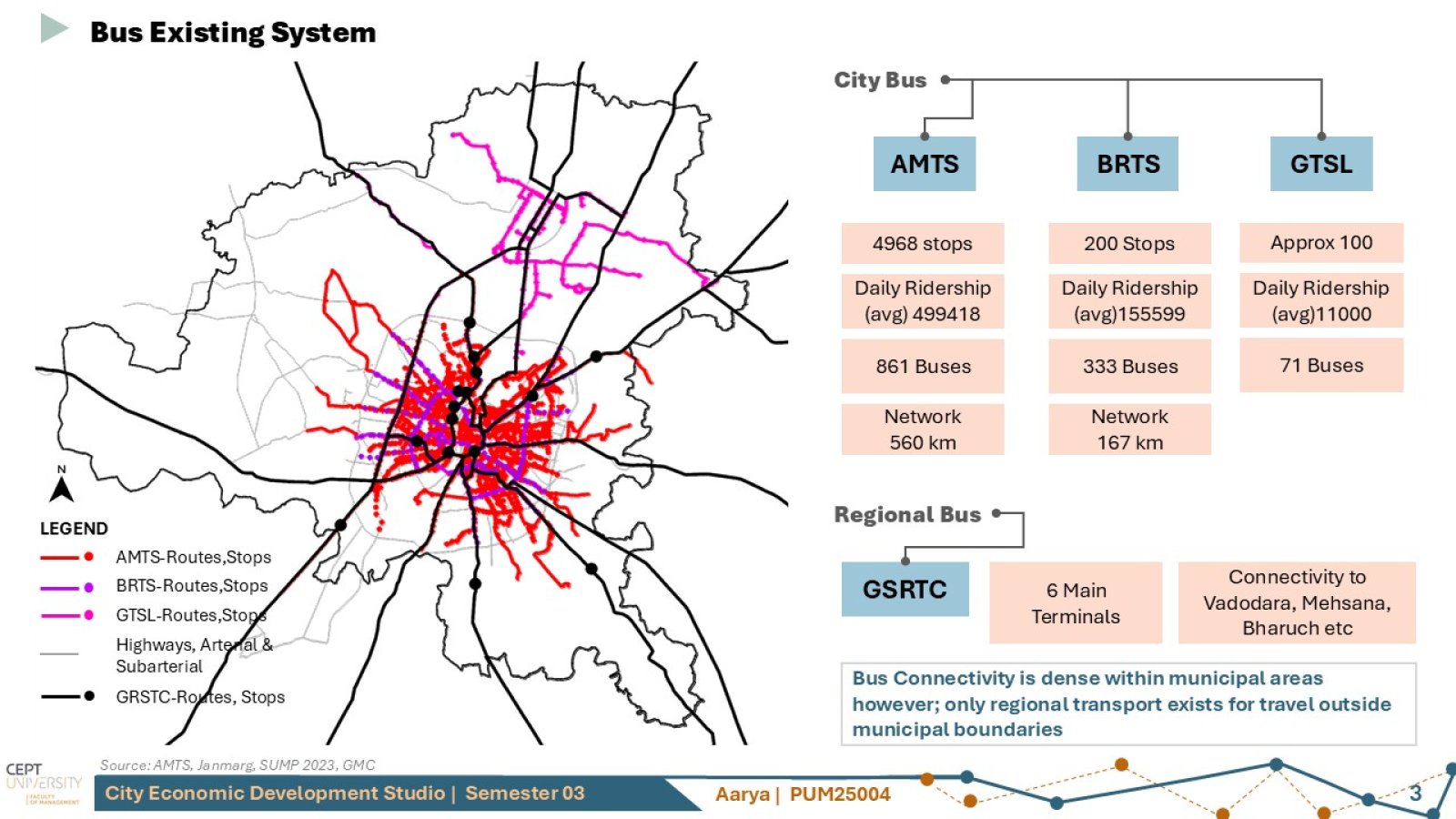
The analysis assessed the existing city and regional bus systems, covering AMTS, BRTS, GTSL and GSRTC. Their network coverage, stops and ridership were examined to understand public transport connectivity across ACR.

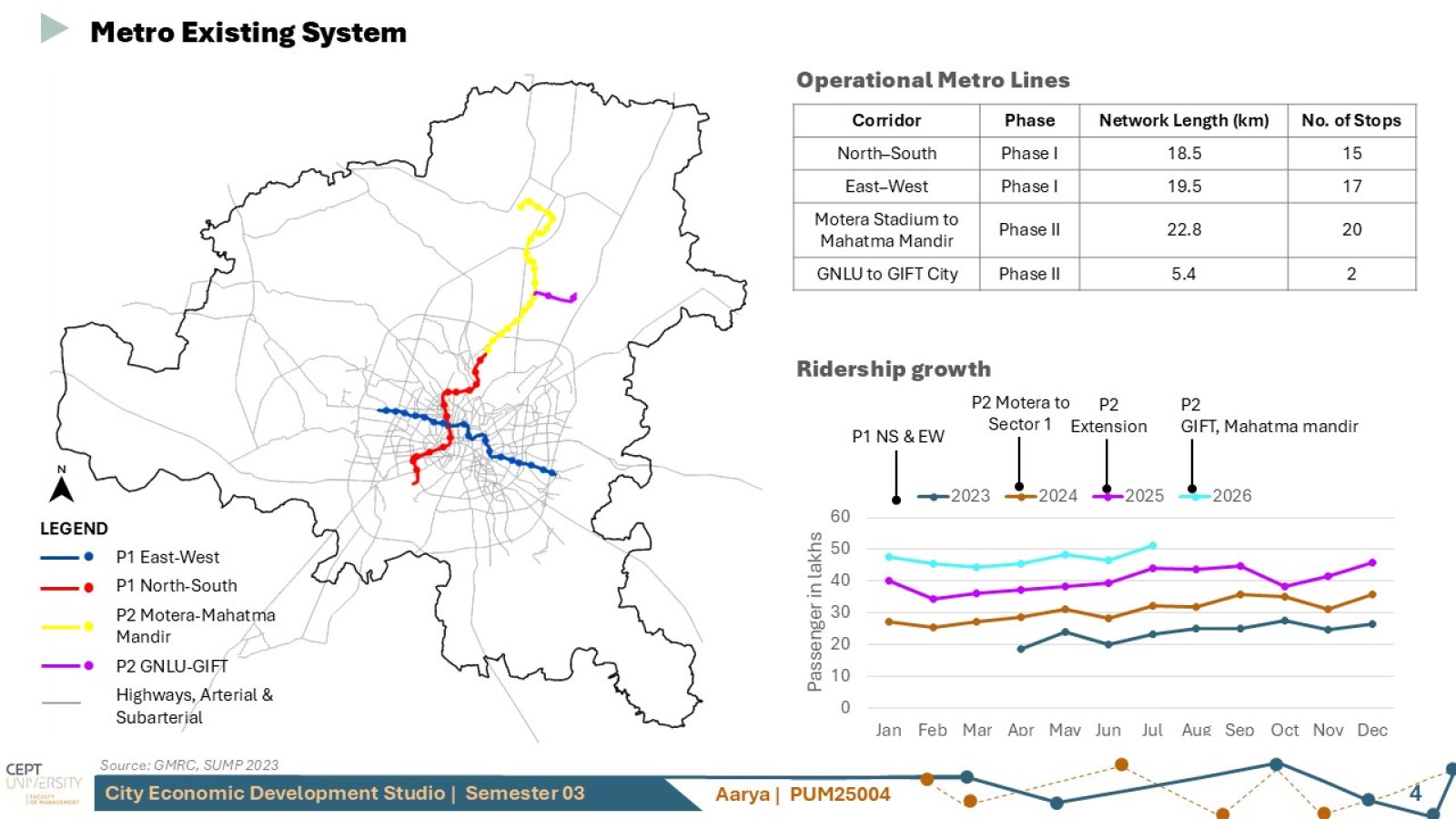
The existing metro system was examined in terms of operational corridors, network length and station coverage. Ridership trends across different phases and extensions were also assessed to understand the evolution of metro connectivity.

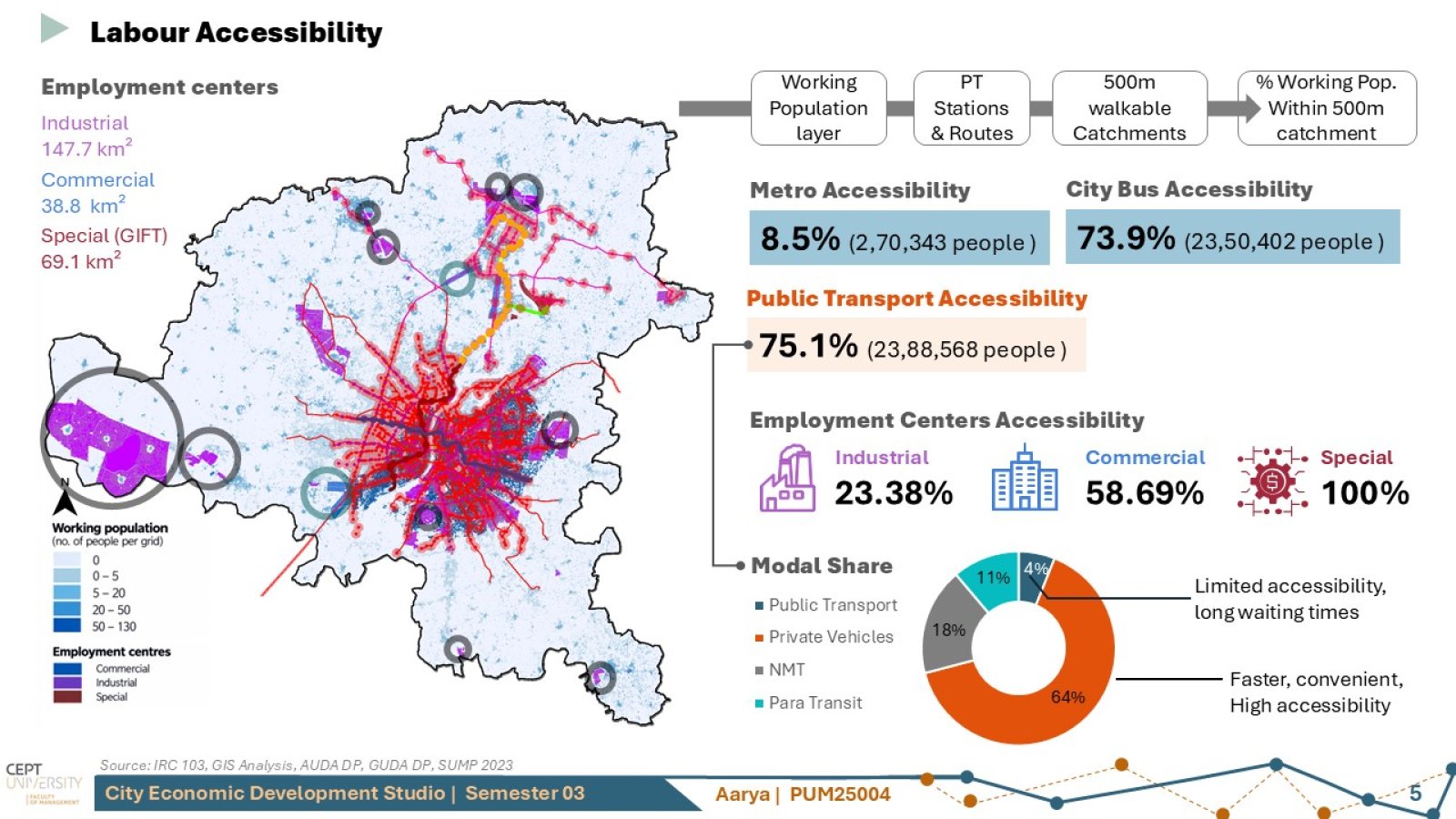
The study evaluated the accessibility of employment centres through public transport. Using 500-metre walking catchments around transit stations and routes, the analysis assessed the working population served and the accessibility of industrial, commercial and special employment areas.

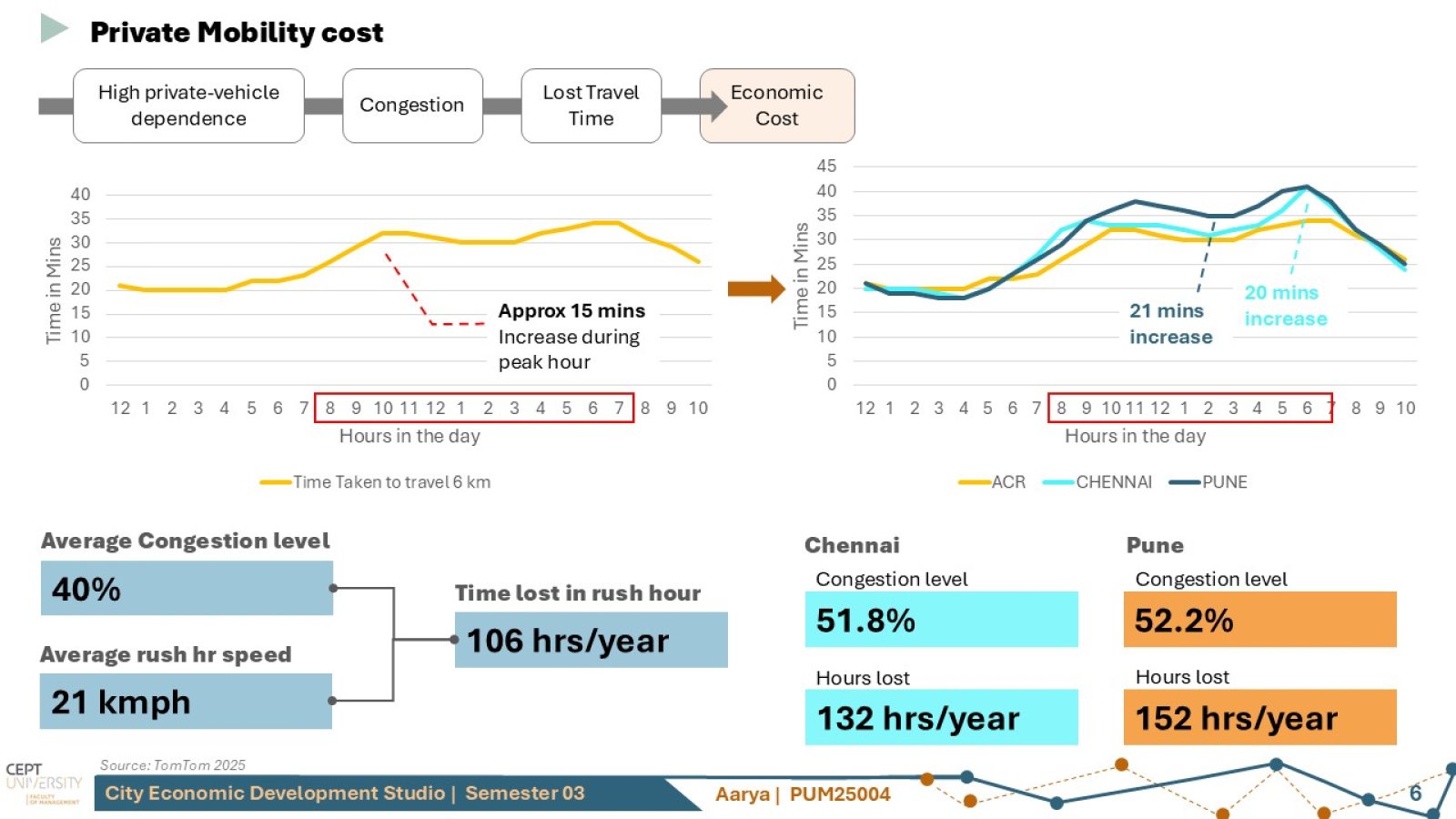
The economic implications of private vehicle dependence were examined through congestion levels, travel-time delays and annual time lost during peak hours. A comparison with Chennai and Pune provided a broader perspective on ACR's congestion conditions.

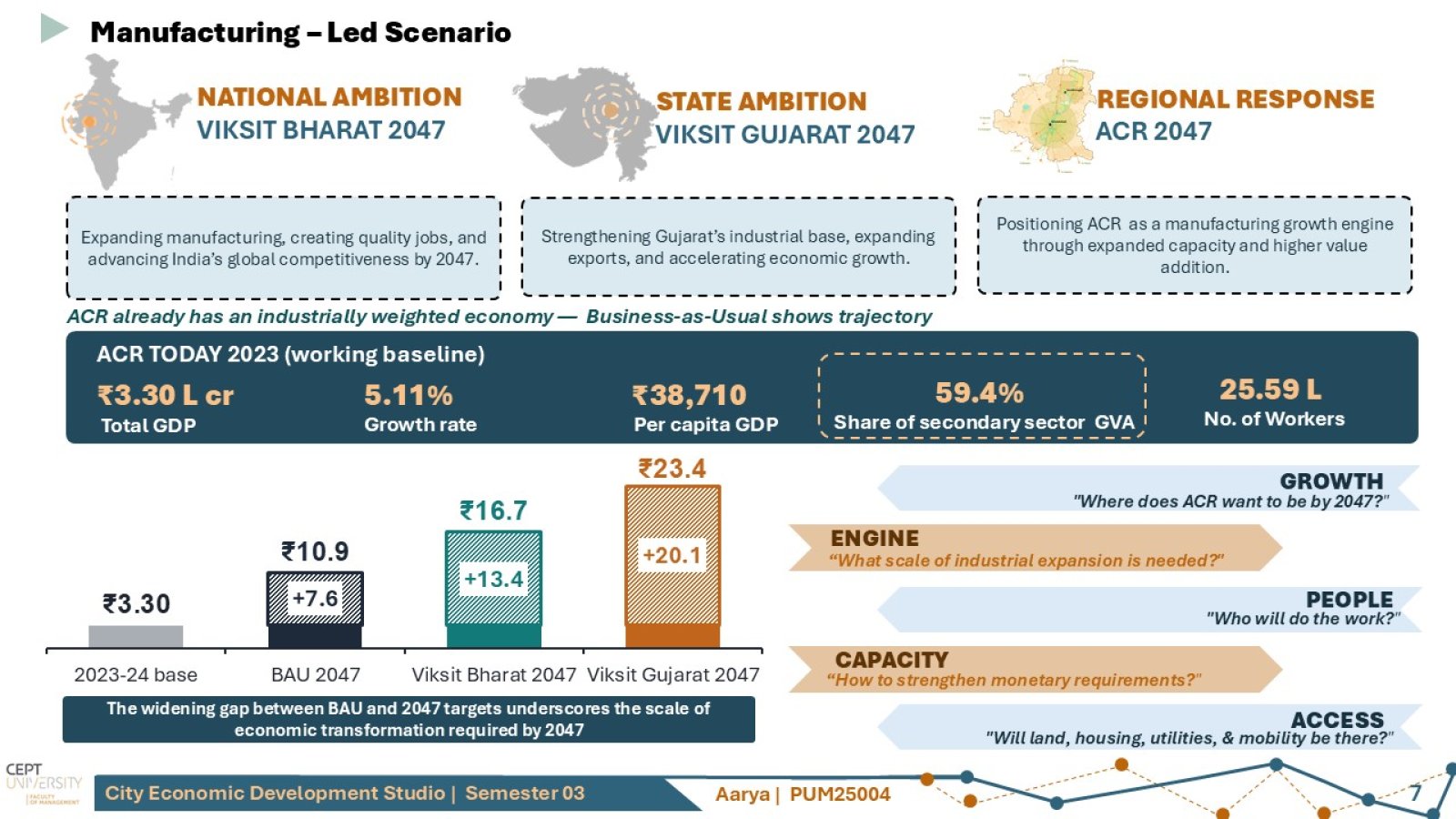
Following the baseline assessment, the studio developed three future economic growth scenarios for ACR. Scenario 1 focused on manufacturing-led growth, building on the region's existing industrial base and examining the capacity, investment and workforce required to support its 2047 ambitions.

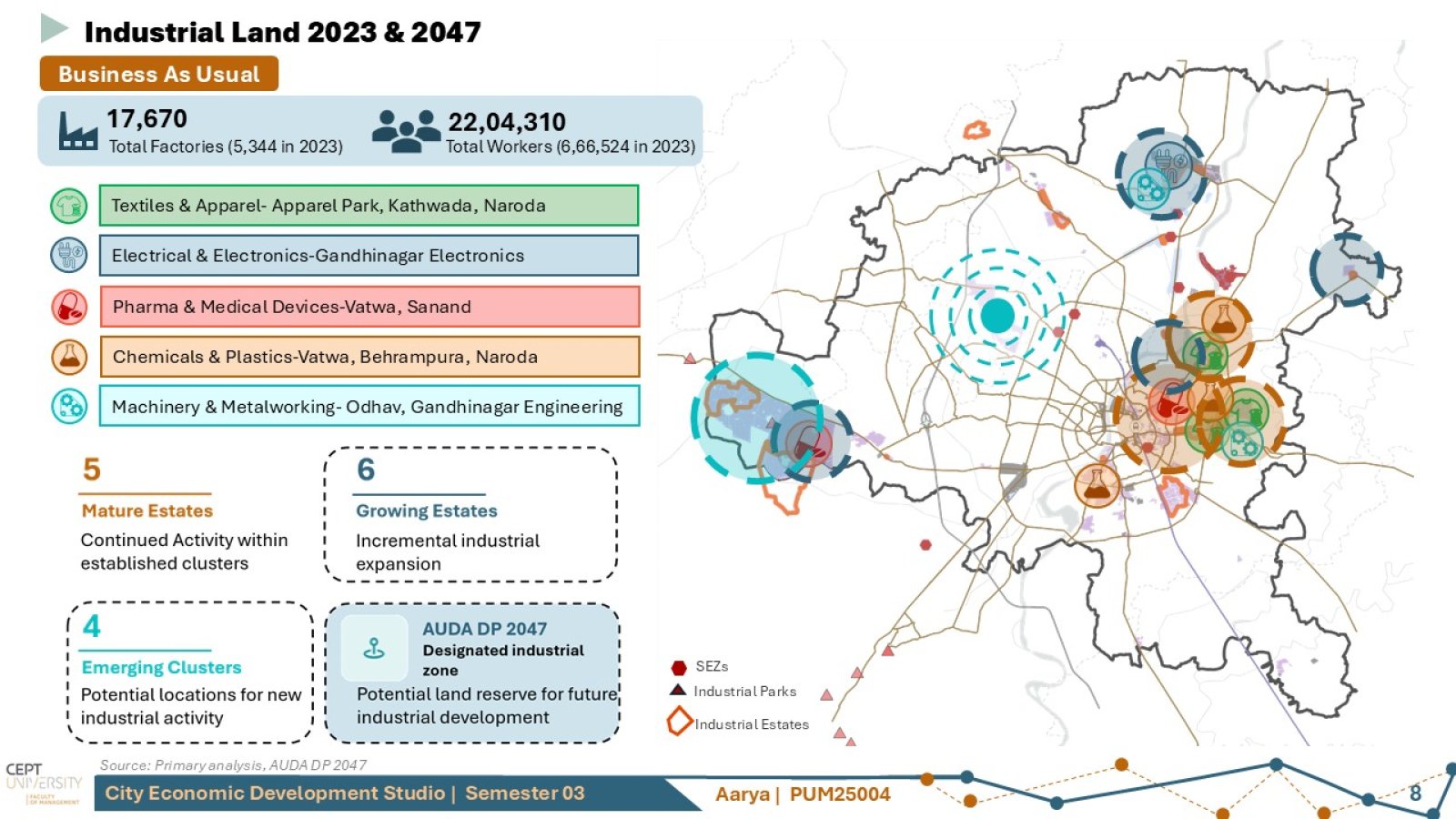
The analysis identified five priority manufacturing sectors and mapped their existing industrial clusters across ACR. Factory and workforce projections under the Business-as-Usual scenario were used to establish the baseline for assessing future industrial expansion.

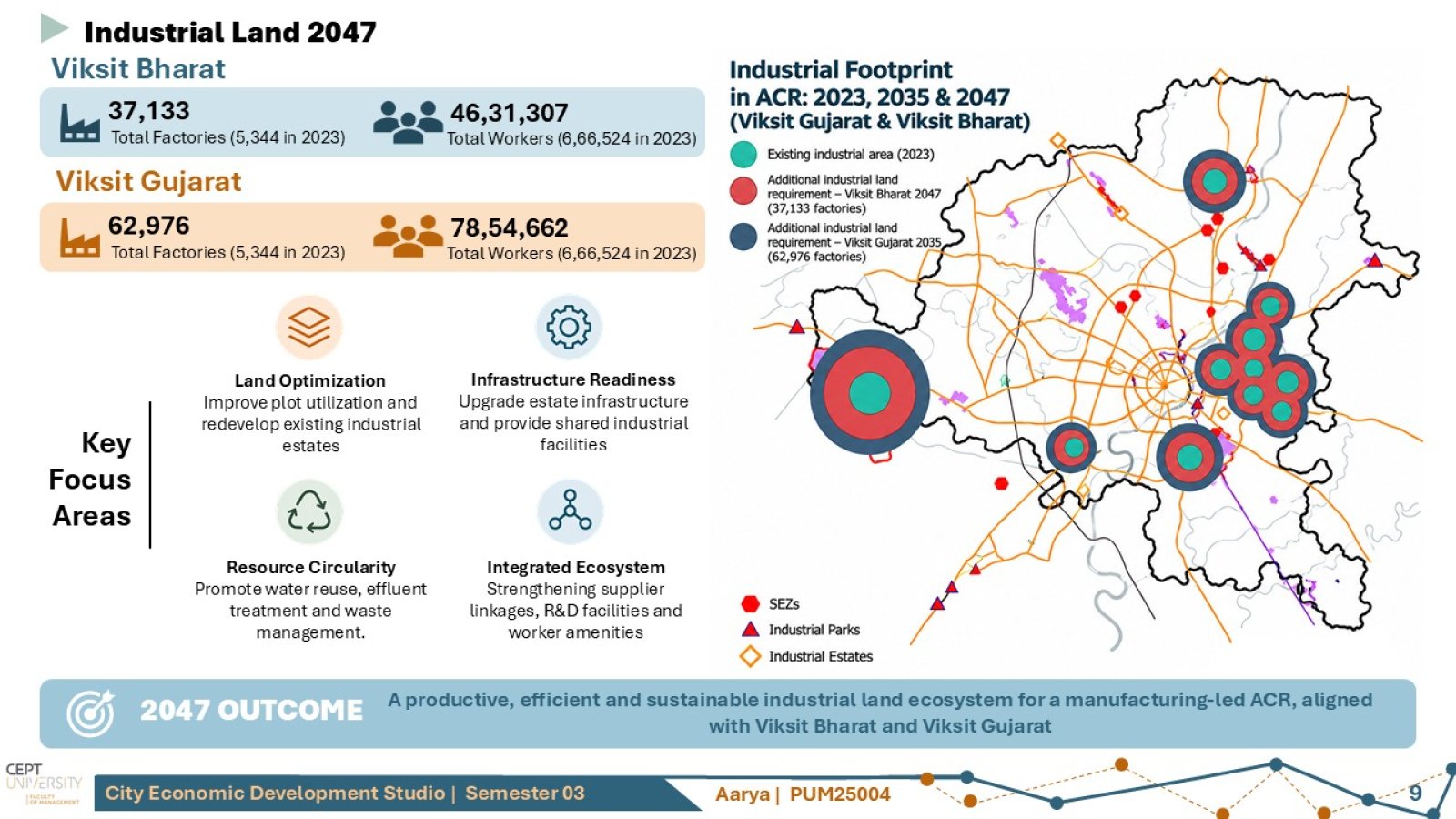
The study assessed industrial expansion under the Viksit Bharat and Viksit Gujarat scenarios, comparing projected factory numbers, workforce requirements and indicative industrial land footprints. Key focus areas were identified to support the accommodation of future industrial growth.

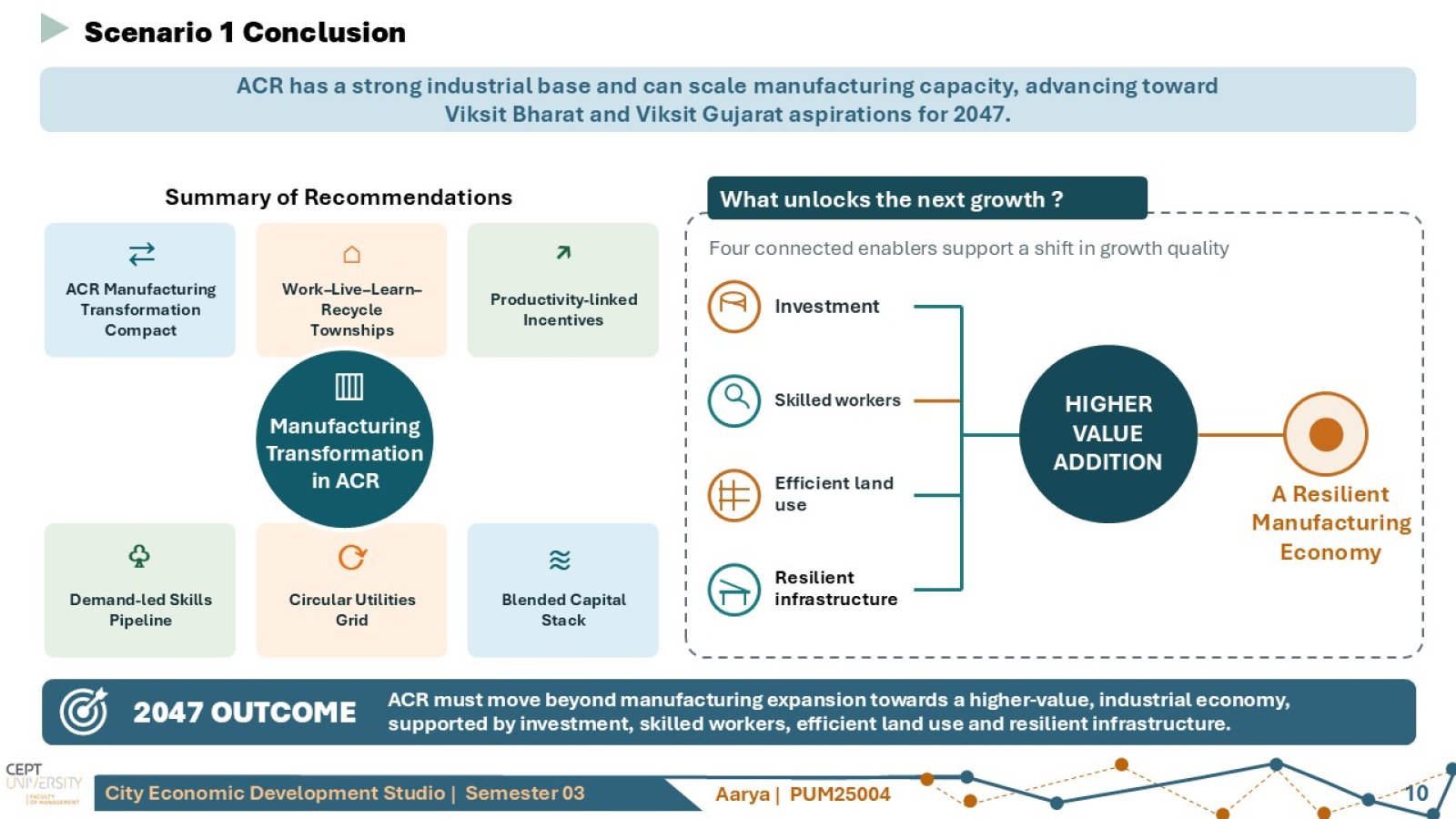
The scenario culminated in six collective recommendations addressing governance, industrial townships, productivity-linked incentives, skills development, blended financing and circular utilities. Together, these interventions outline a framework for strengthening ACR's manufacturing ecosystem towards 2047.

Project Video