Ankit Kishor Pingol

RE4000

ATHENA SIGNATURE BY ATHENA INFRA PVT LTD

In our Finance and Accounting Studio, we worked on Athena Signature, a mixed-use development in Gota–Jagatpur, Ahmedabad. We planned four residential towers with 3 BHK homes and penthouses, along with a separate commercial block facing the road. What stood out to me was how much the timing of money mattered. The joint development agreement reduced the cash needed upfront for land, and testing lower sales prices and higher construction costs showed me how quickly the projected returns could change.

View Additional Work
Report Content

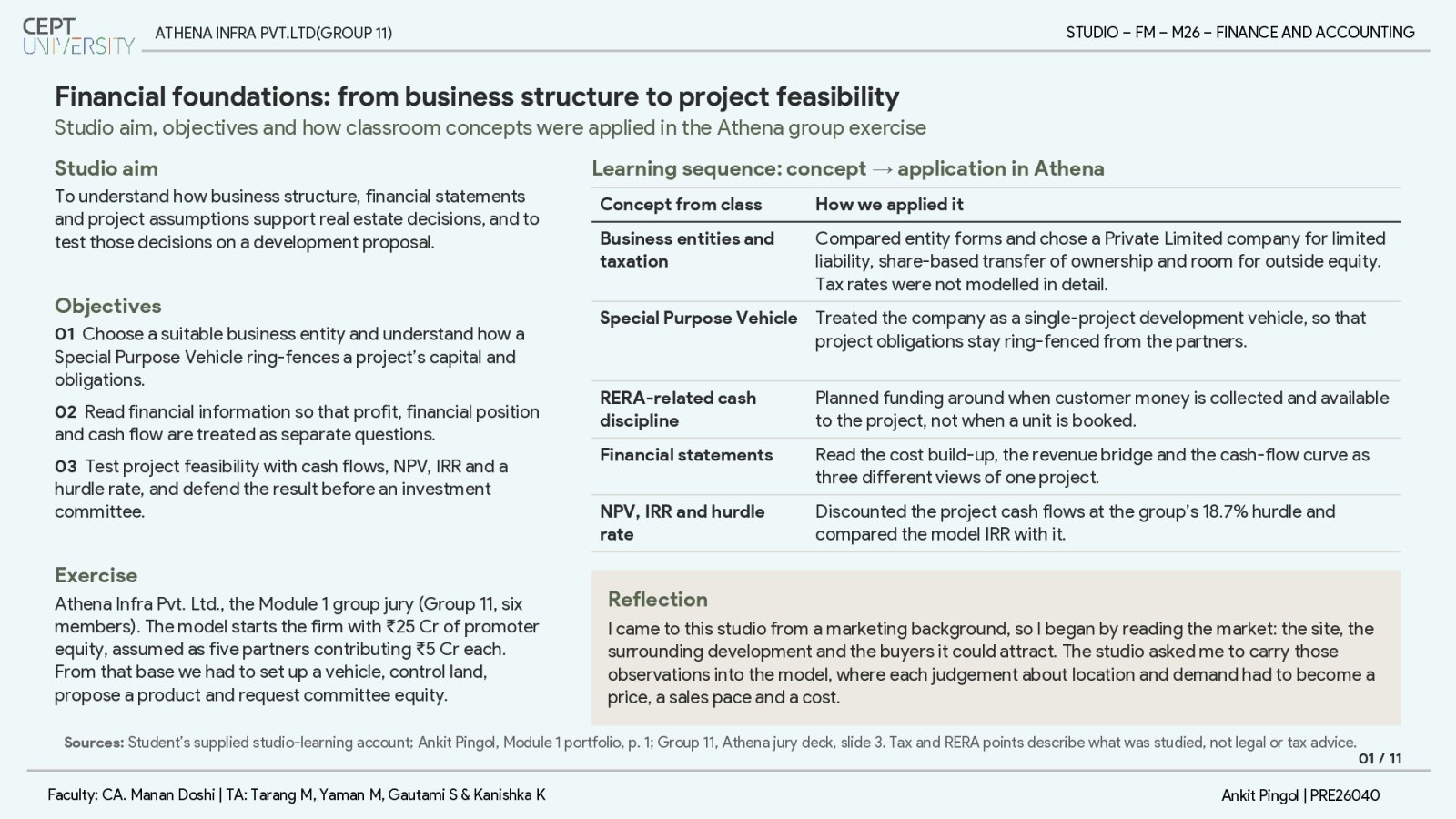
I started by looking at the site and its buyers. The Athena exercise taught me how to turn those observations into assumptions about pricing, sales pace, and costs, and use them to test whether the project was feasible.

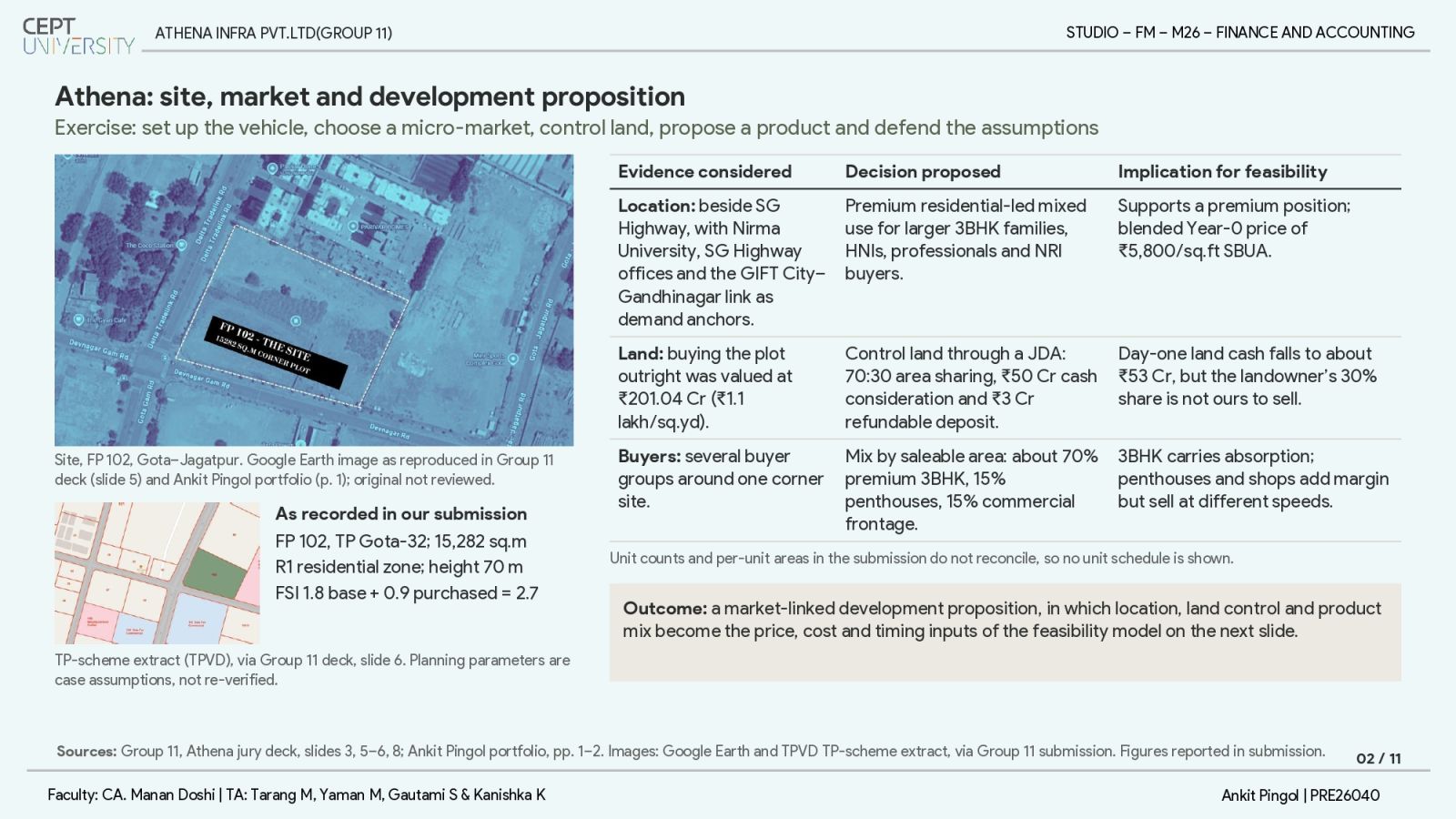
We proposed premium 3 BHK homes, penthouses, and street-facing retail for a corner plot in Gota–Jagatpur. A joint development agreement reduced the cash needed upfront for land and shaped how much of the development Athena could sell.

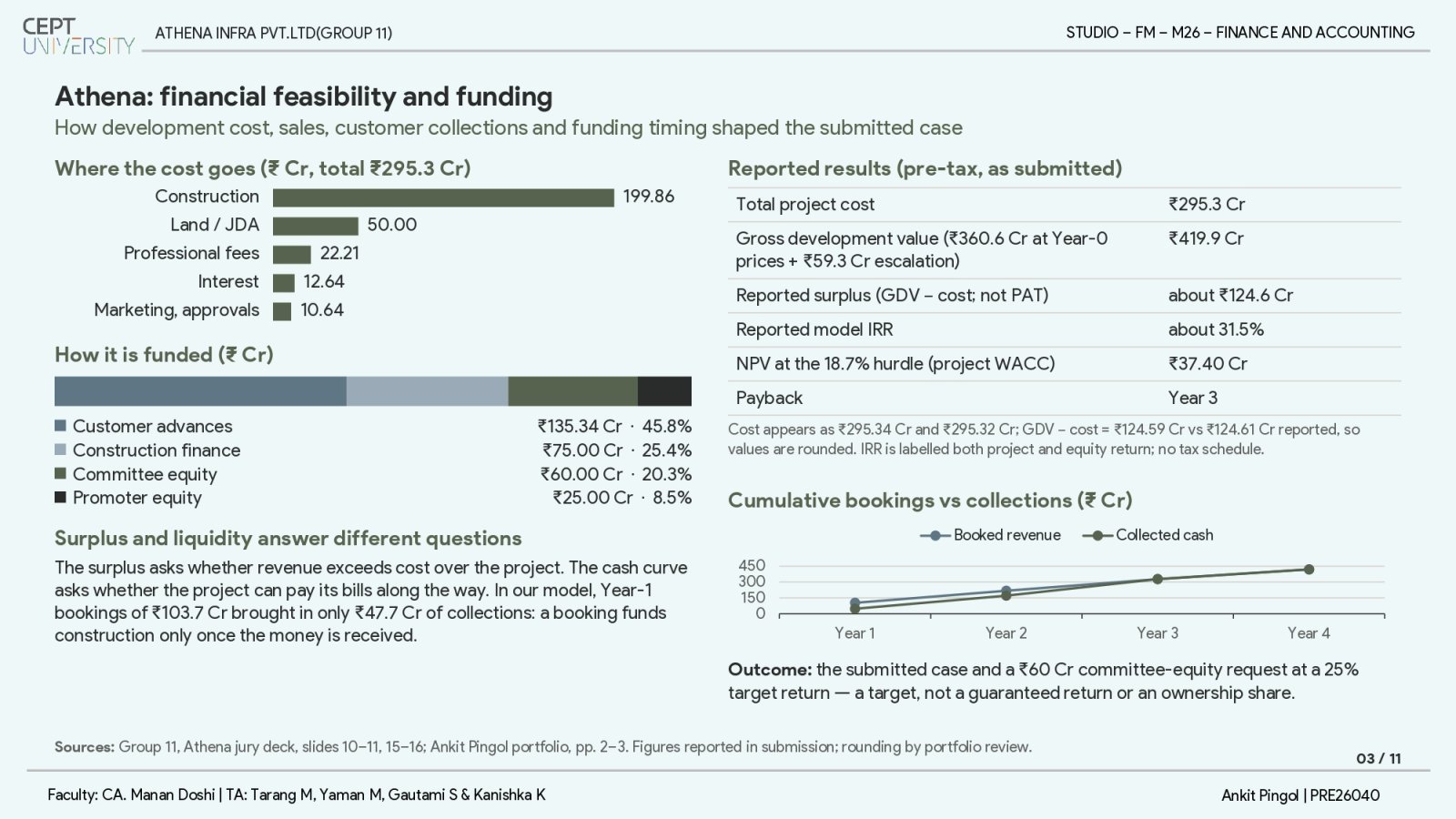
In our model, ?103.7 crore in Year 1 bookings translated into ?47.7 crore in collections. That gap showed me why the timing of customer payments matters when planning how to fund construction.

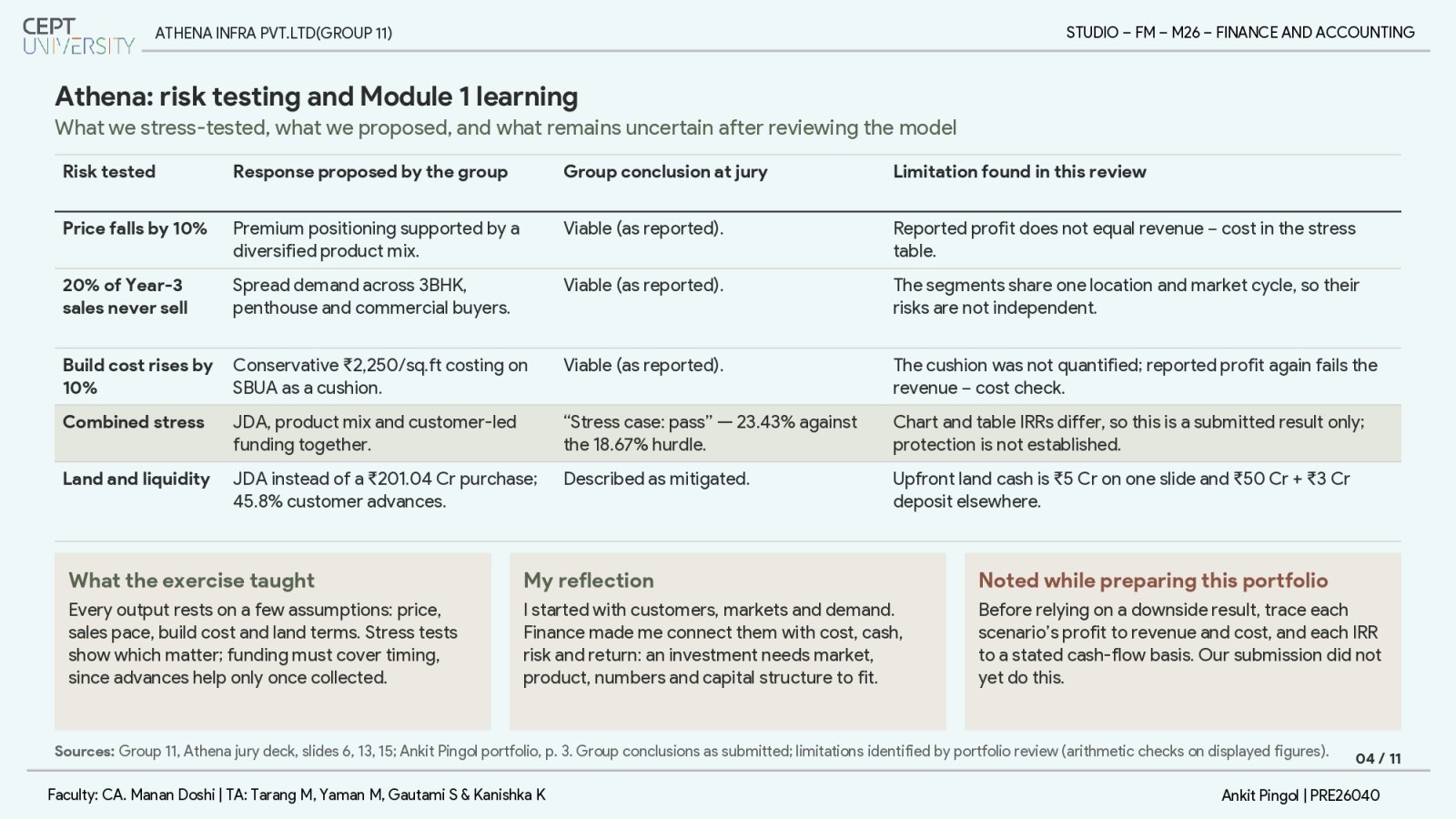
We tested what would happen if prices fell, units went unsold, or construction costs rose. Reviewing the model later taught me to trace each scenario’s reported profit and IRR back to the figures and cash flows behind it.