Zainab Fatma

UM4000-1

Solid Waste Management - Processing & Recycling

Through this project, I studied Vadodara’s existing solid waste management system to understand operational challenges in waste transfer, segregation, and processing. Based on spatial analysis, field observations, and stakeholder interactions, I proposed a decentralized transfer station model integrated with Material Recovery Facilities (MRFs) to improve waste handling efficiency, reduce transportation pressure, and strengthen resource recovery. The proposal envisions a more organized, sustainable, and future-ready waste management network that can support the city’s rapid urban growth and long-term environmental resilience.
Report Content

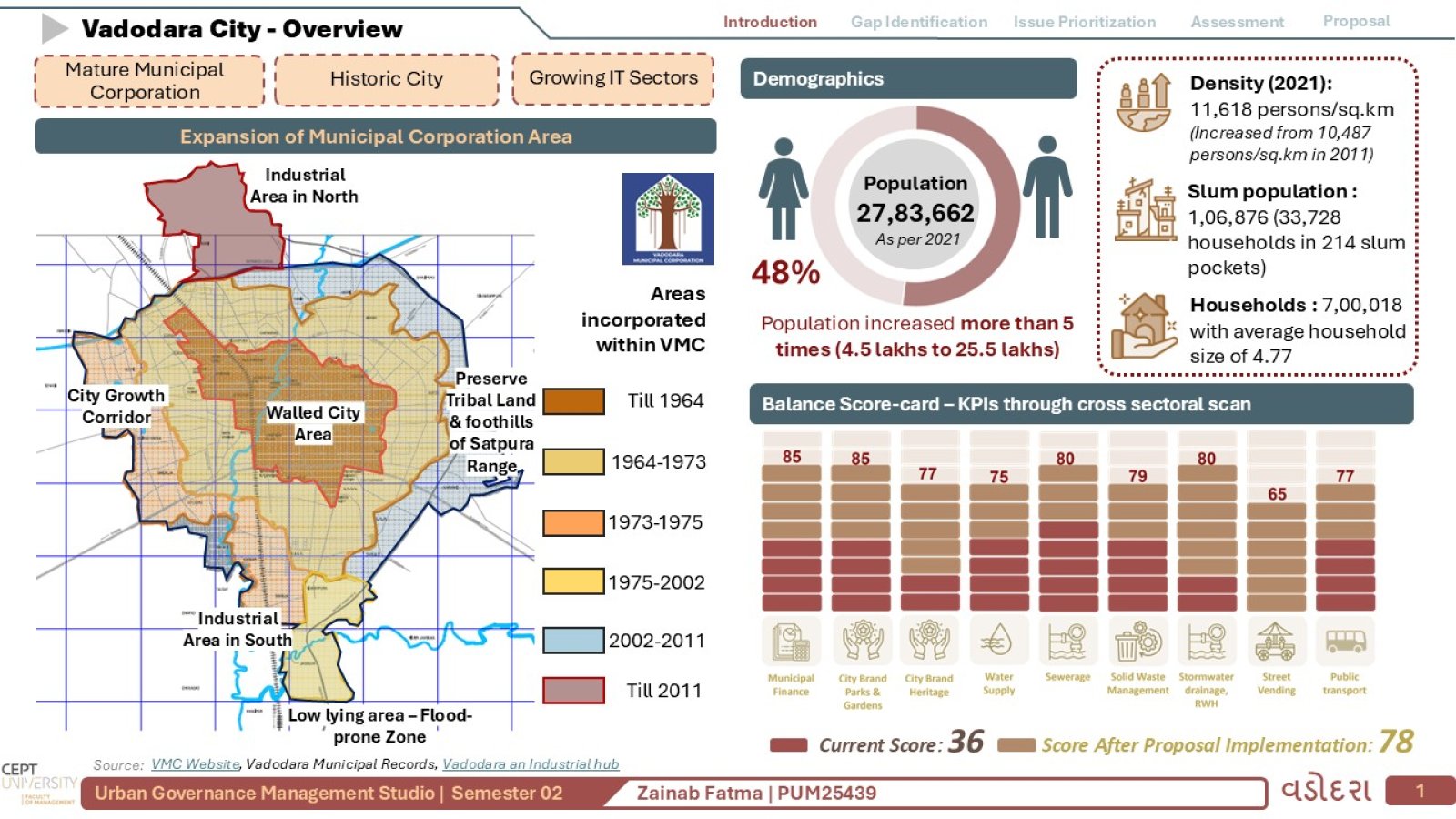
An overview of Vadodara city

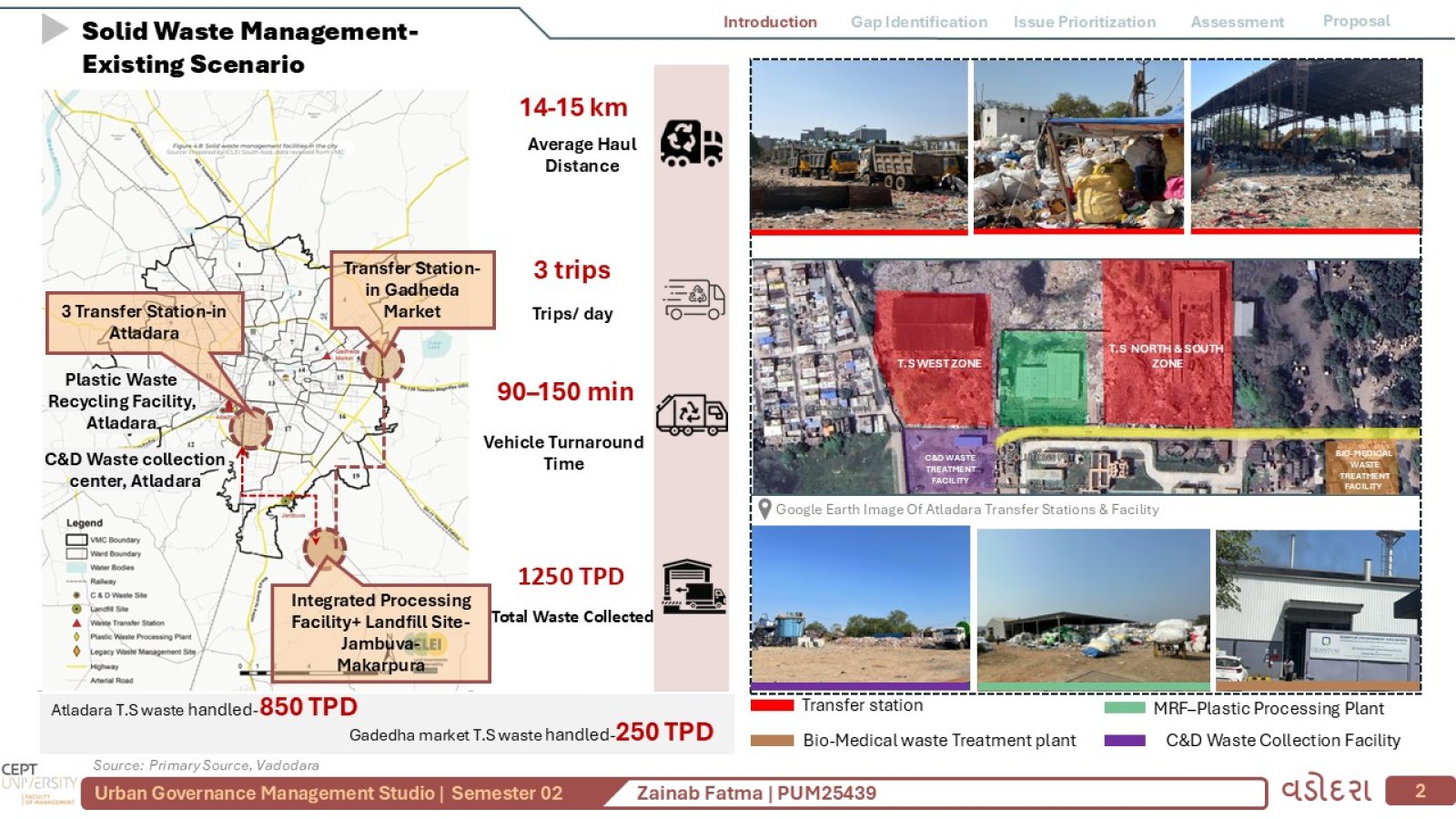
The existing waste management system in Vadodara operates through centralized transfer stations, resulting in high operational load and longer haul distances.

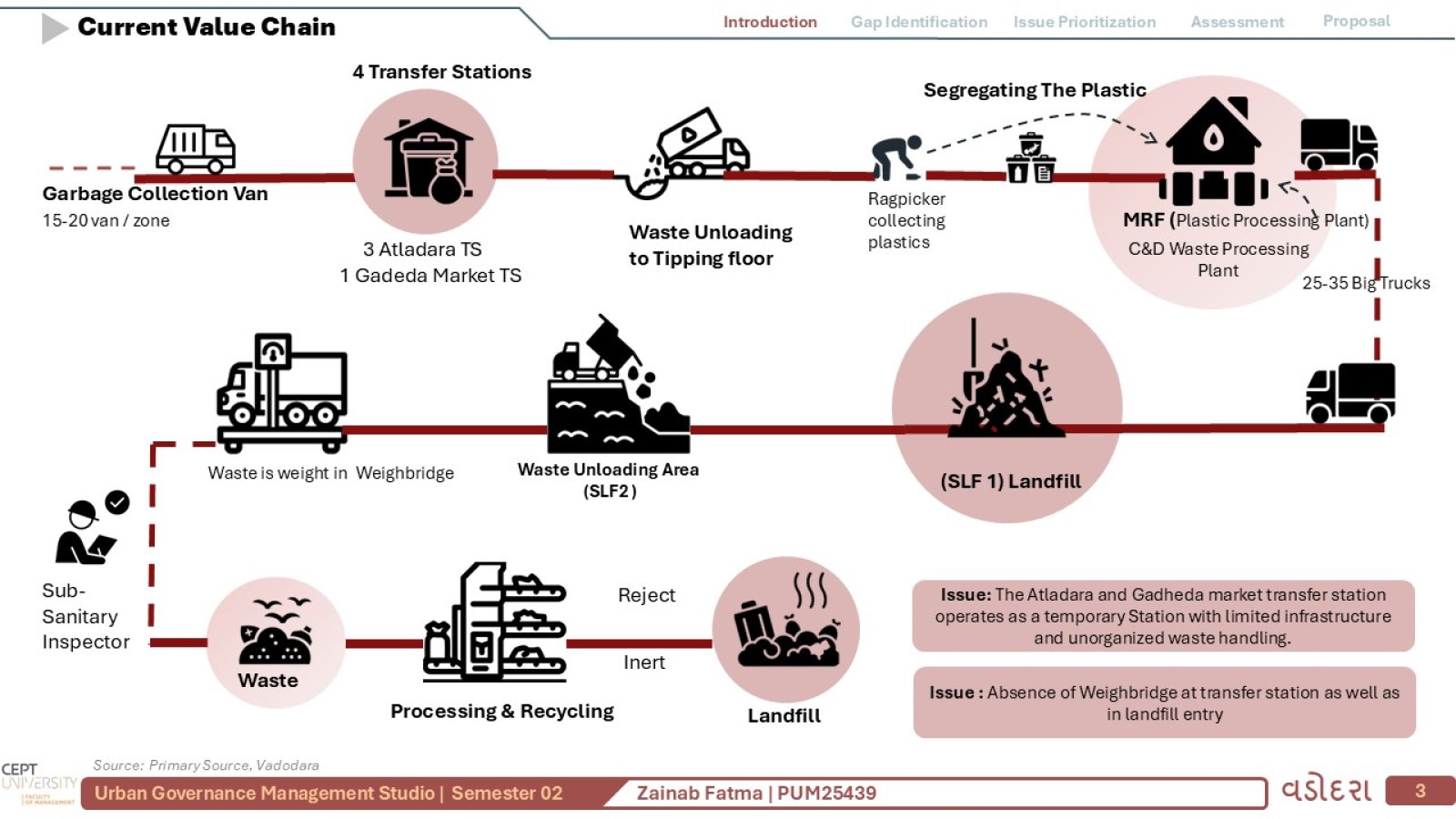
The current waste flow includes collection, transfer, unloading, segregation, recycling, and landfill disposal through multiple operational stages across the city.

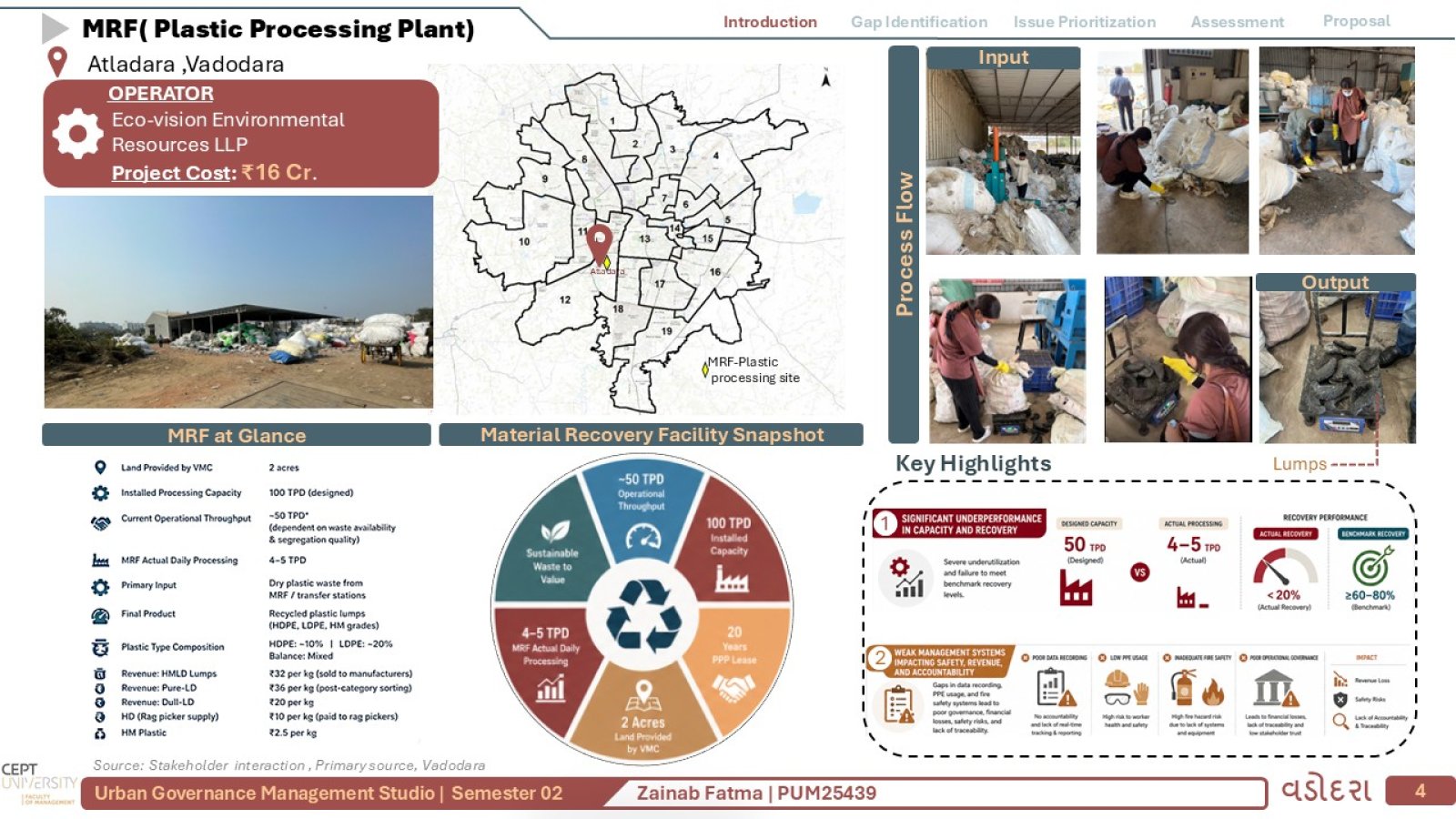
The Material Recovery Facility processes dry waste and plastics collected from transfer stations through segregation, recycling, and recovery operations.

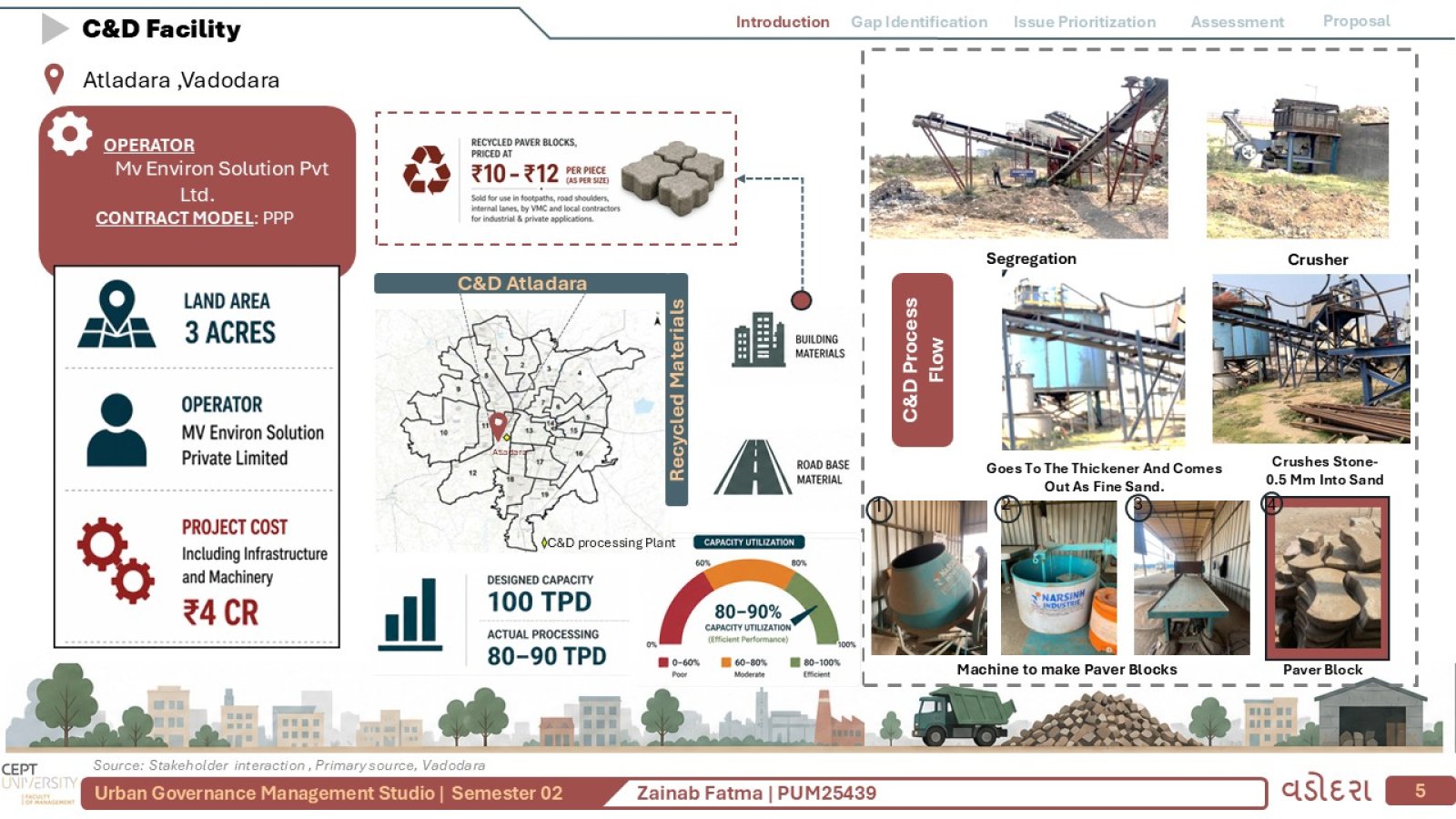
The C&D facility processes construction and demolition waste into recycled materials such as paver blocks and road base products.

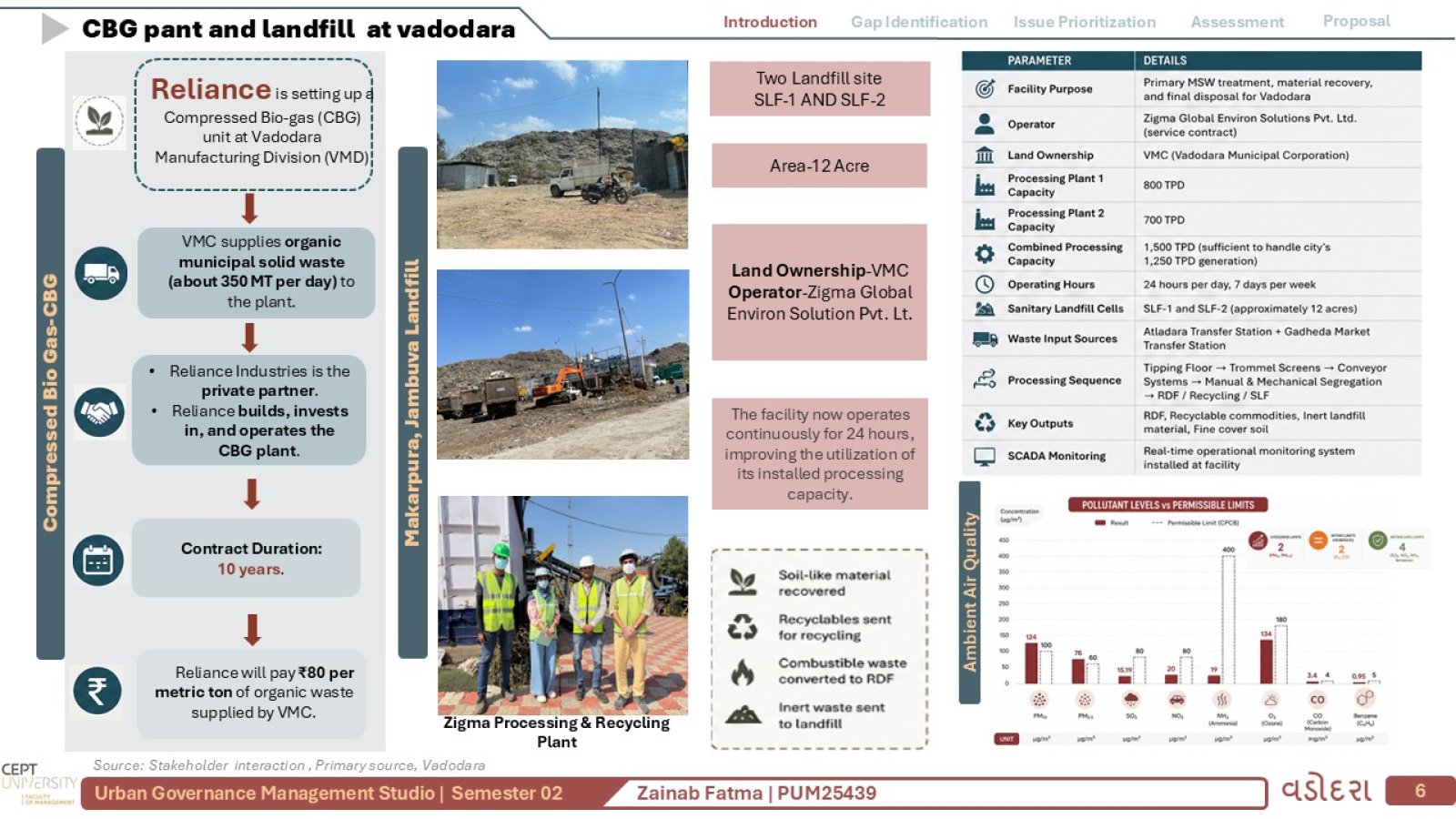
Vadodara’s existing waste management system relies on a centrally located landfill site, requiring municipal waste to travel long haul distances for final processing and disposal.

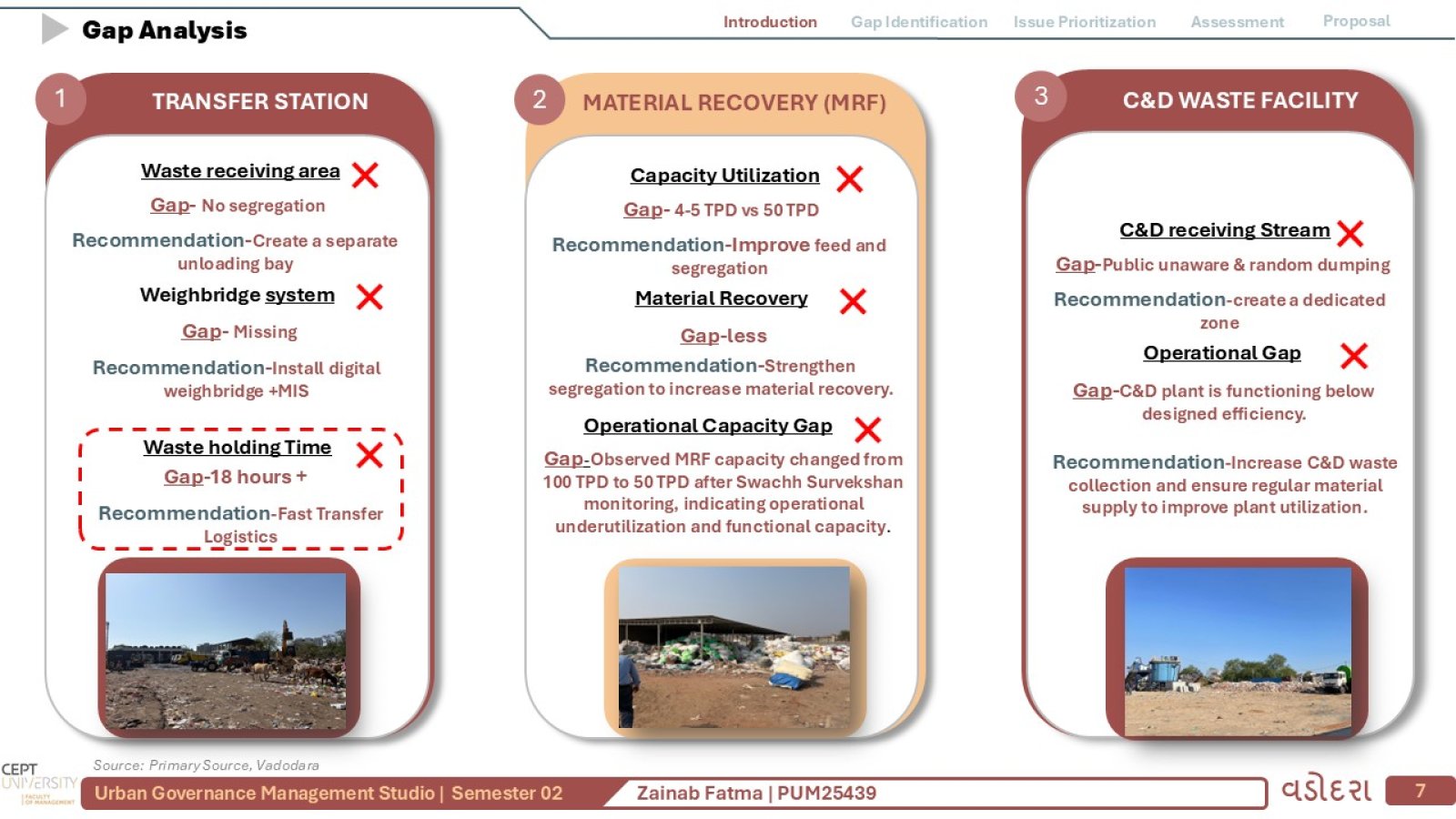
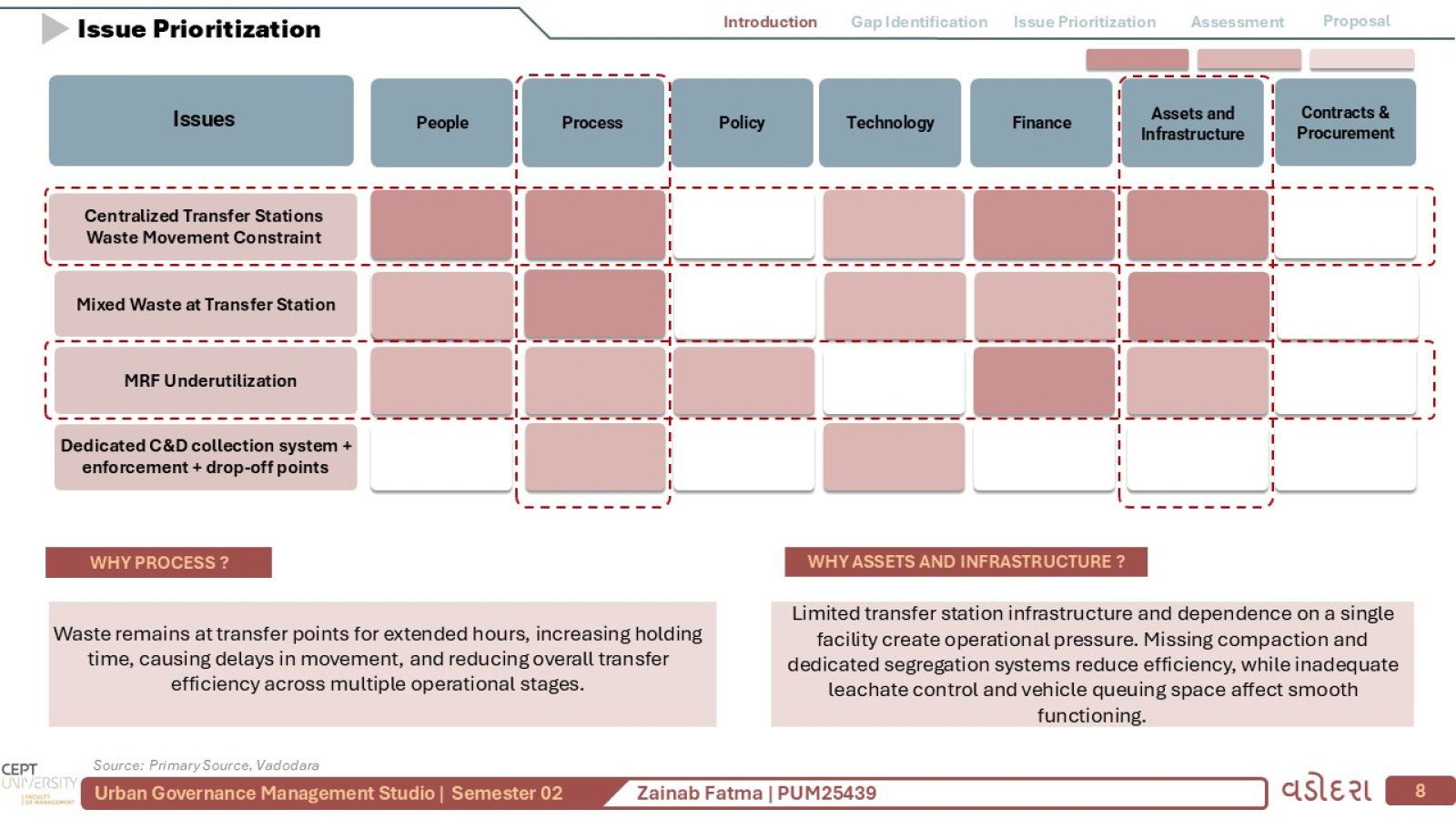
The gap analysis identified operational inefficiencies in waste transfer, segregation, infrastructure capacity, material recovery, and C&D waste management systems.

The issue prioritization identified process inefficiencies and infrastructure gaps affecting waste transfer efficiency, segregation systems, and overall operational performance.

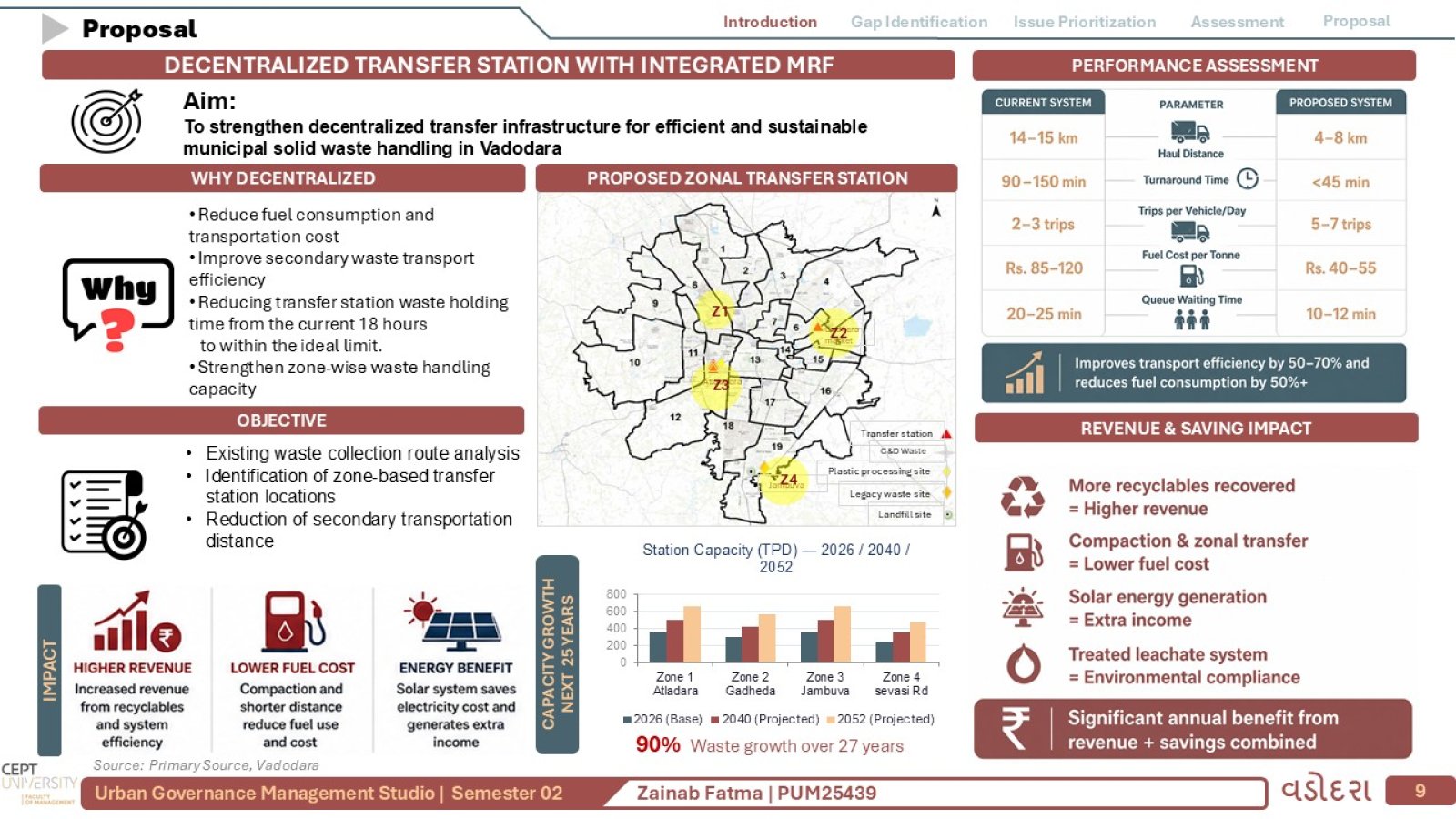
Based on the identified gaps and operational analysis, this project proposes a decentralized transfer station model integrated with MRF systems for Vadodara.

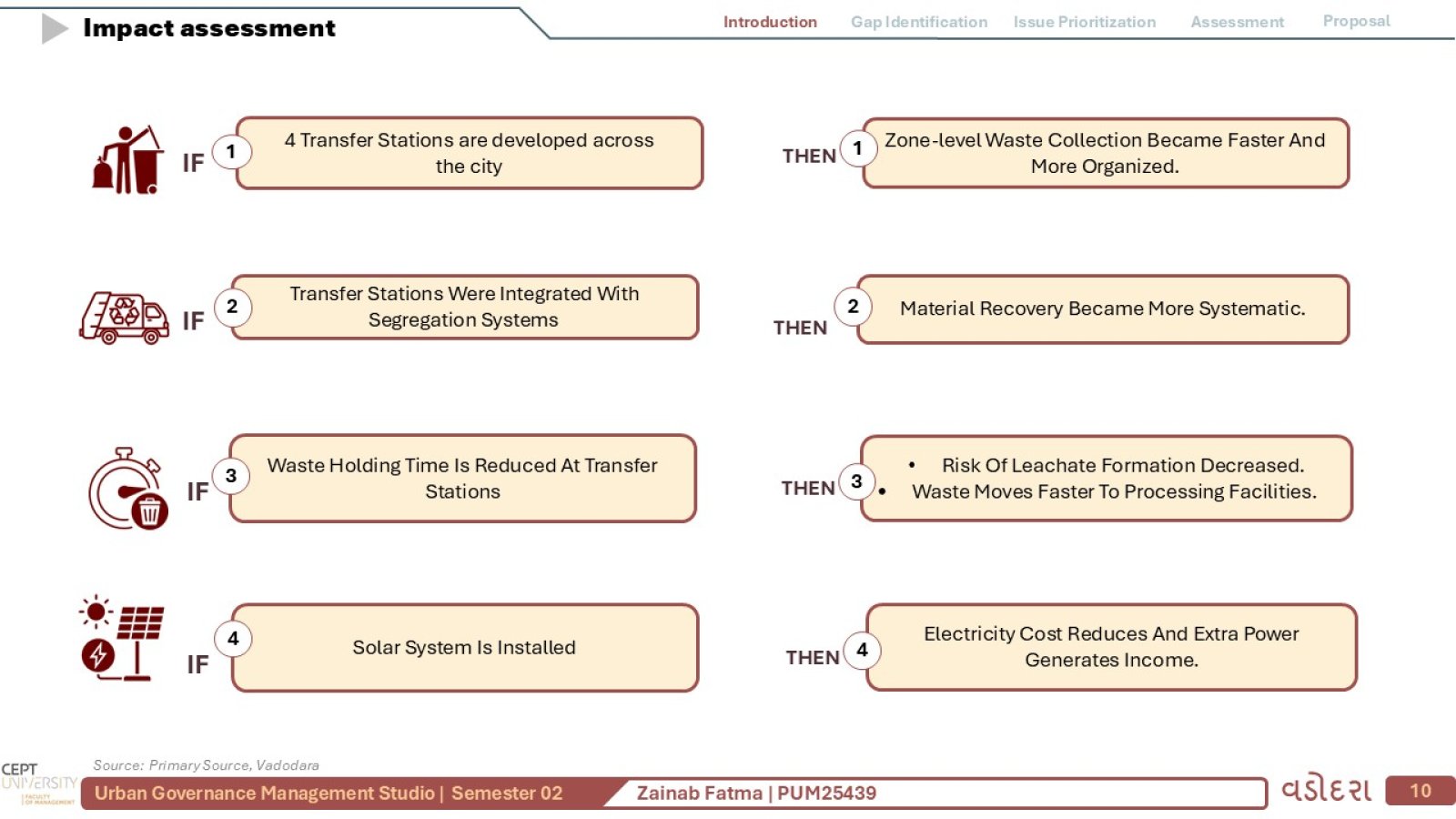
The proposed system improves waste movement, strengthens material recovery, reduces environmental risks, and supports a more efficient urban waste network.