Zahra Joozer Rangwala

UM4000-2

Municipal Finance - Budgeting and Taxation

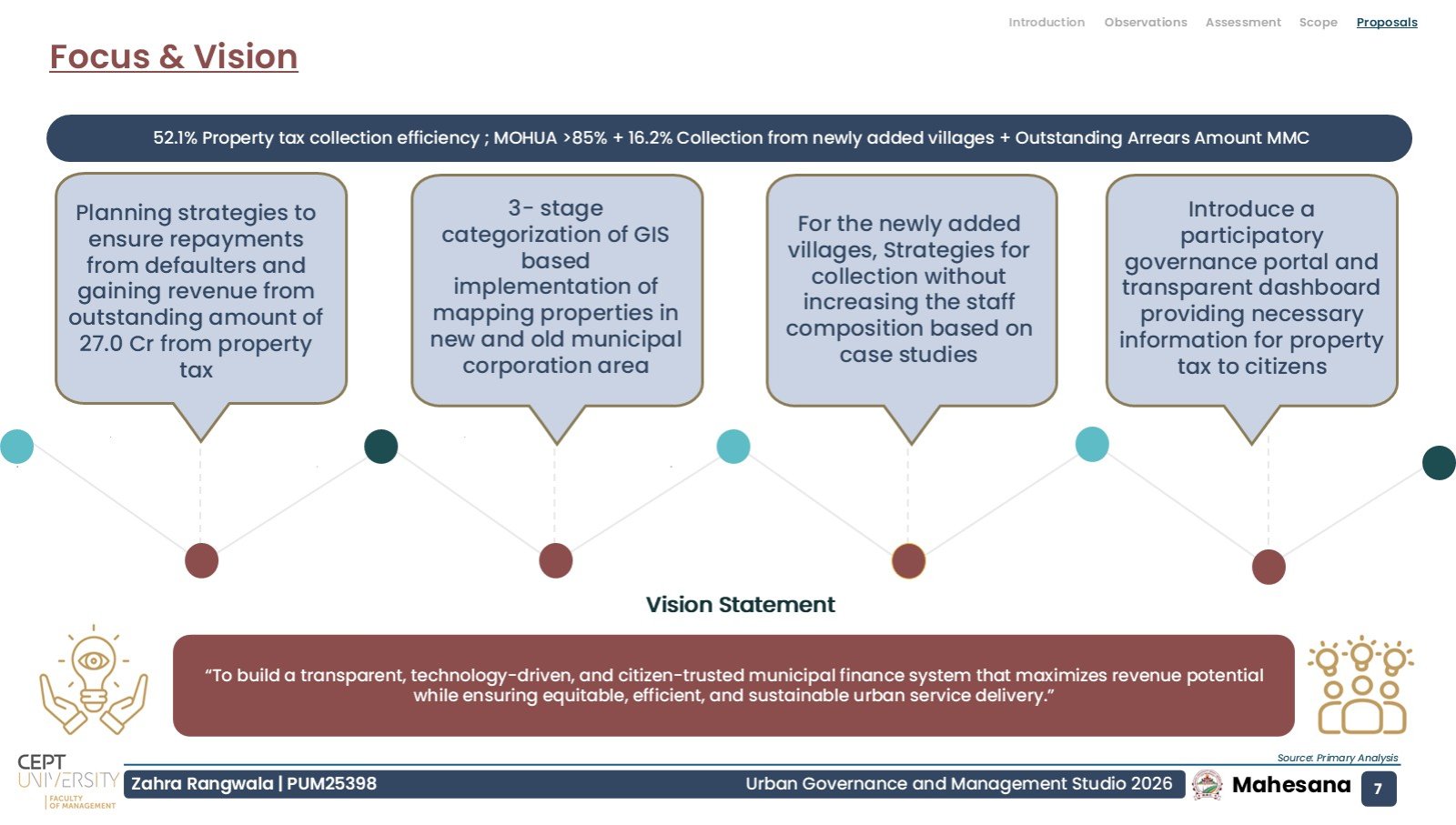
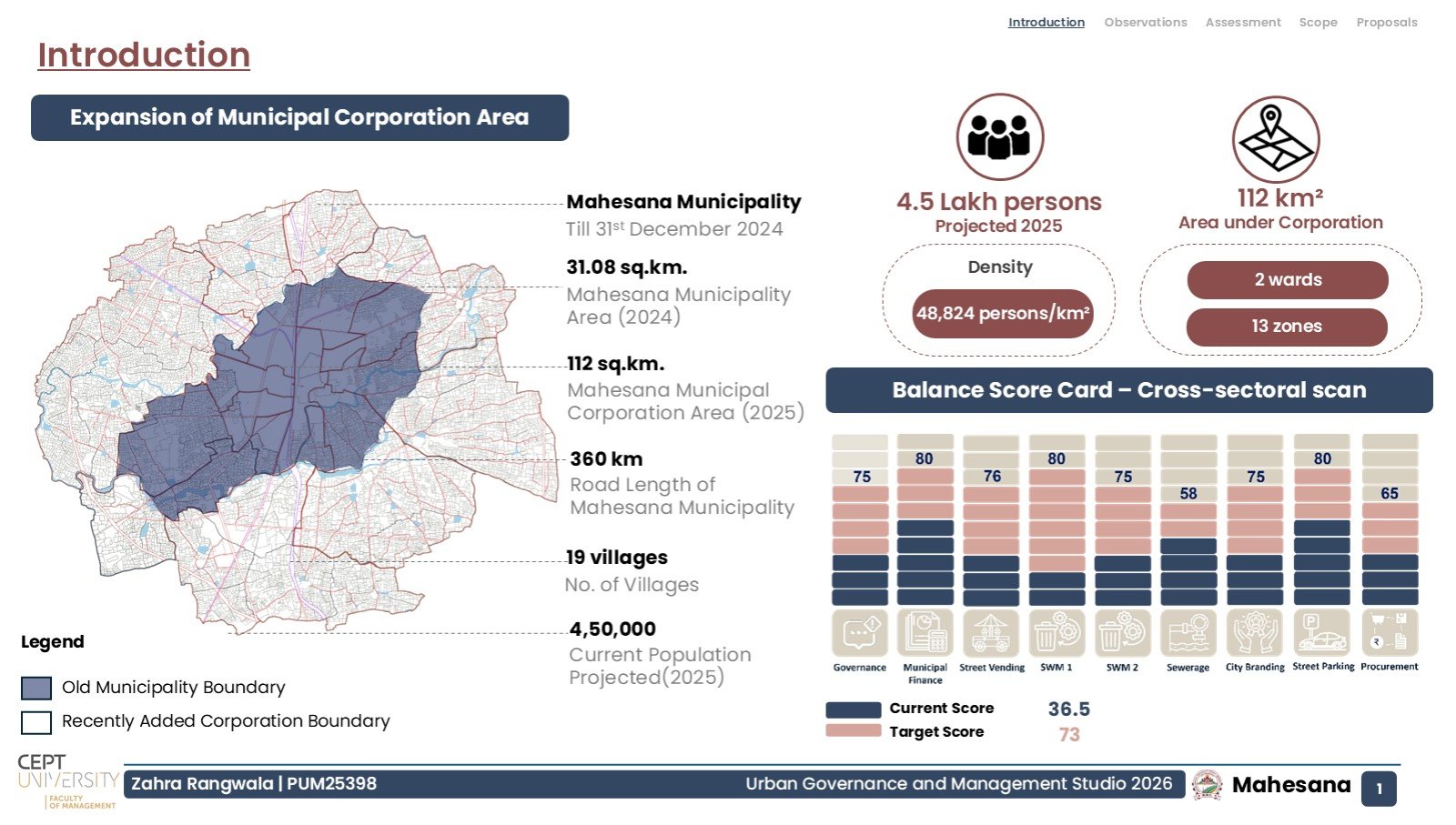
The Municipal Finance system of Mahesana, an evolving municipality transitioning into a full Municipal Corporation, was studied to assess its institutional structure, taxation practices, budgetary frameworks, and financial planning. The project aimed to understand operational roles, revenue mechanisms, and the overall fiscal health of the corporation at a critical juncture of its administrative transformation. A central focus is the stark collection gap exposed by Mahesana's territorial expansion from 31 sq.km. to 112 sq.km., absorbing 19 villages with weak tax integration. The study concludes with targeted proposals for GIS-based property mapping, arrears recovery, and digital collection systems.

View Additional Work
Report Content

Overview of Mahesana City & Context setting for Municipal Finance

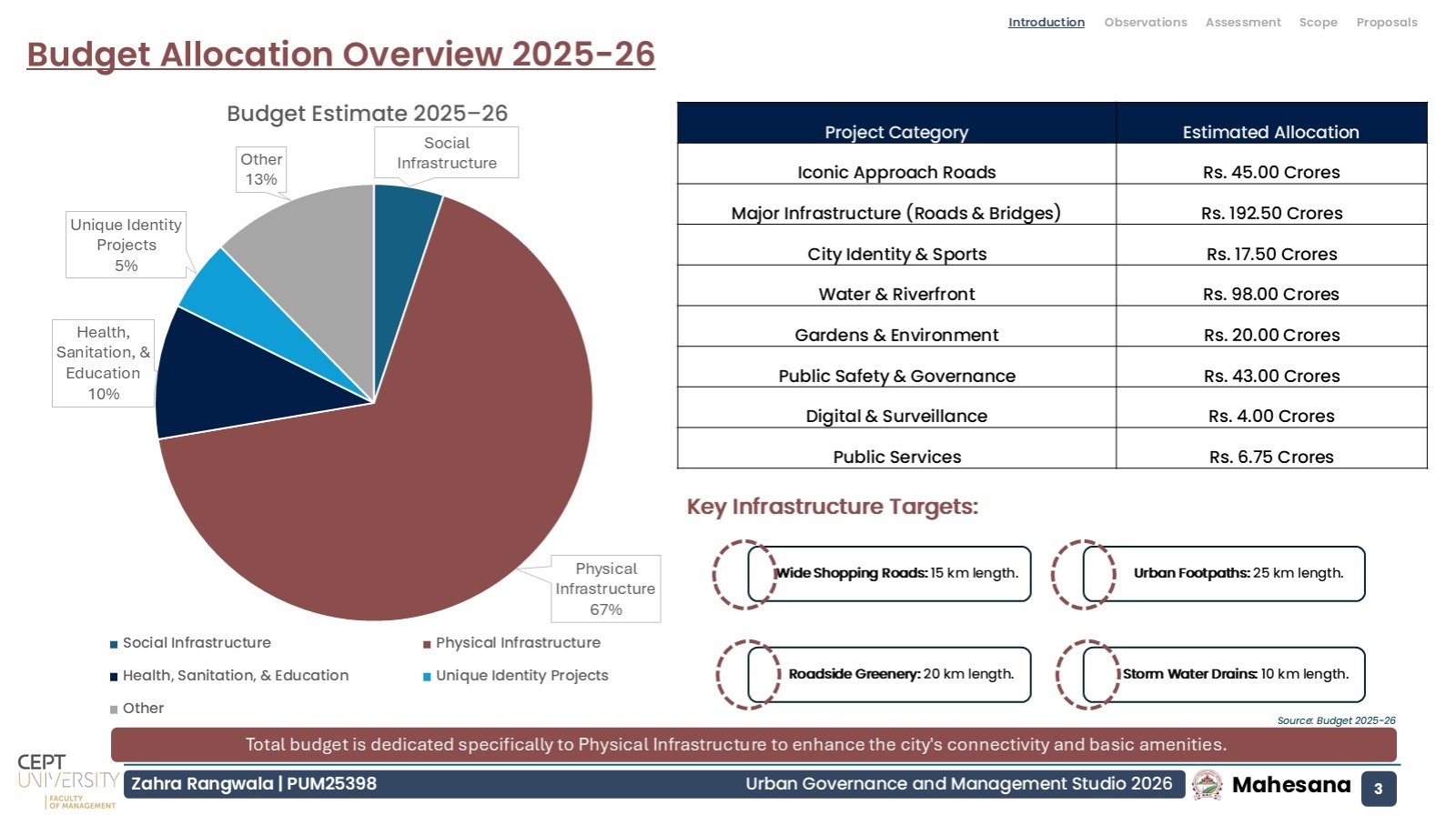
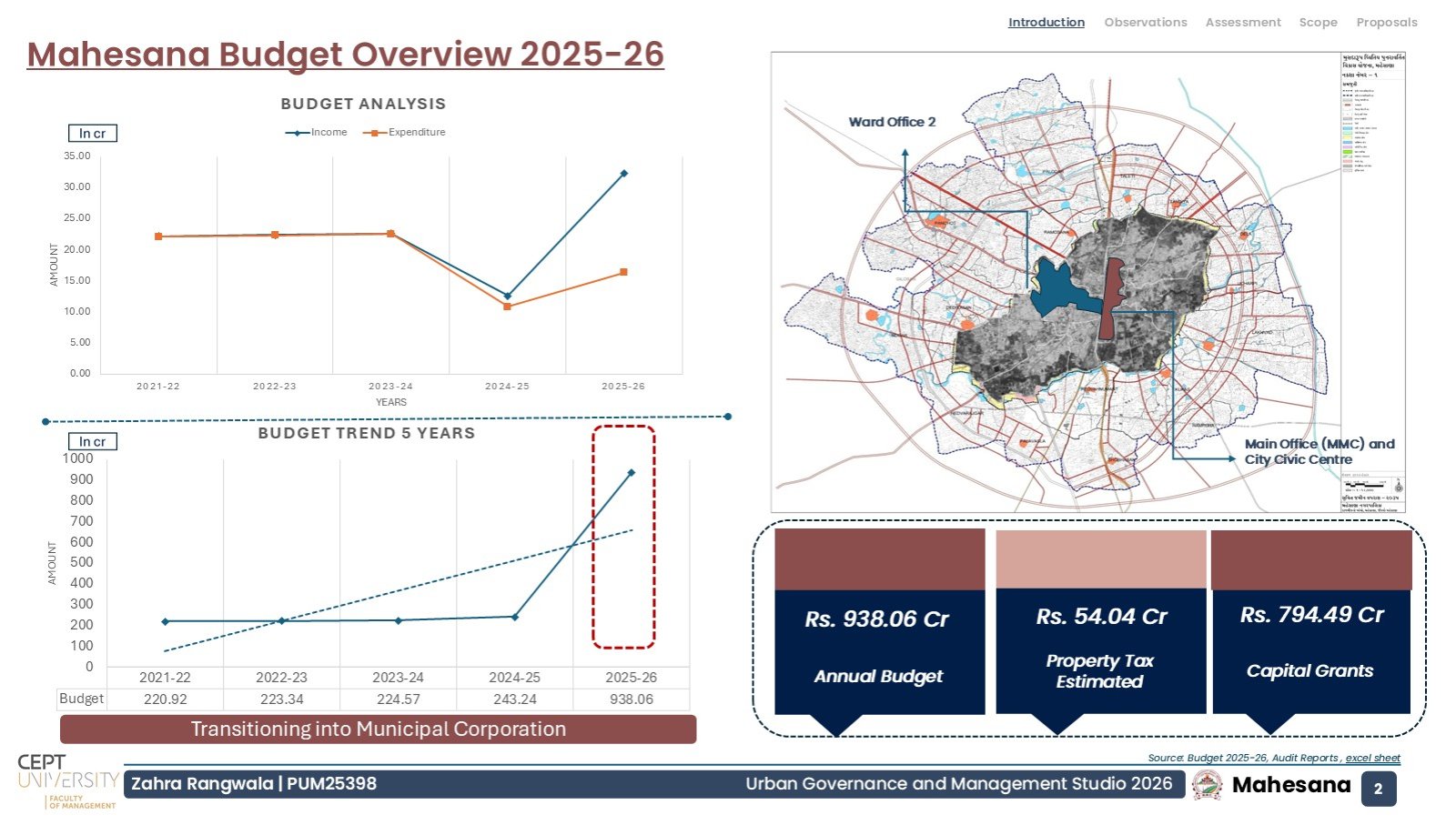
Institutional Overview & Budget Allocation for the year 2025-26.

Major Budget Heads 2025-26 Primarily Focusing on the City's Physical Infrastructure & Identity

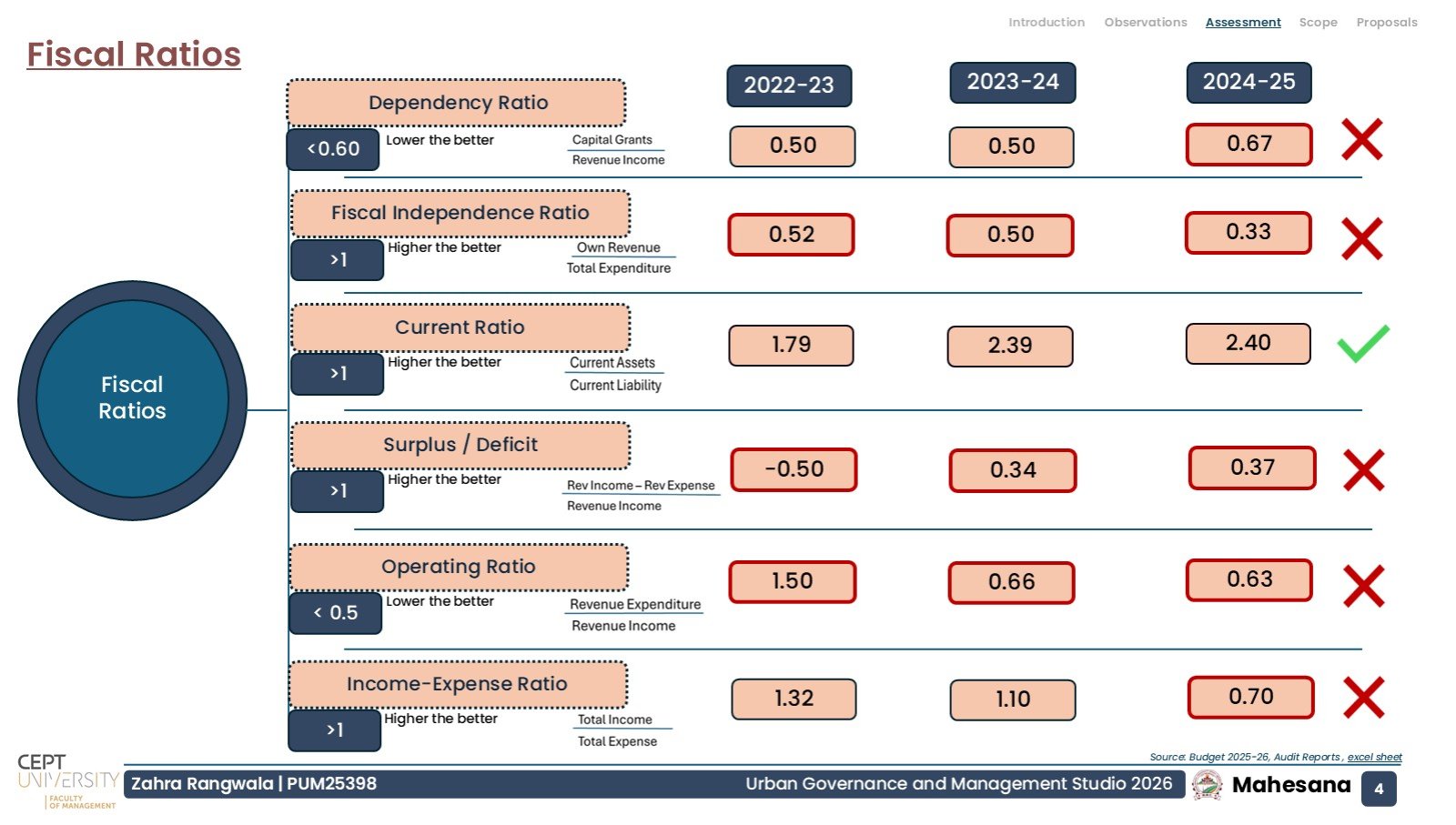
Service -level fiscal performance of Mahesana Municipal Corporation

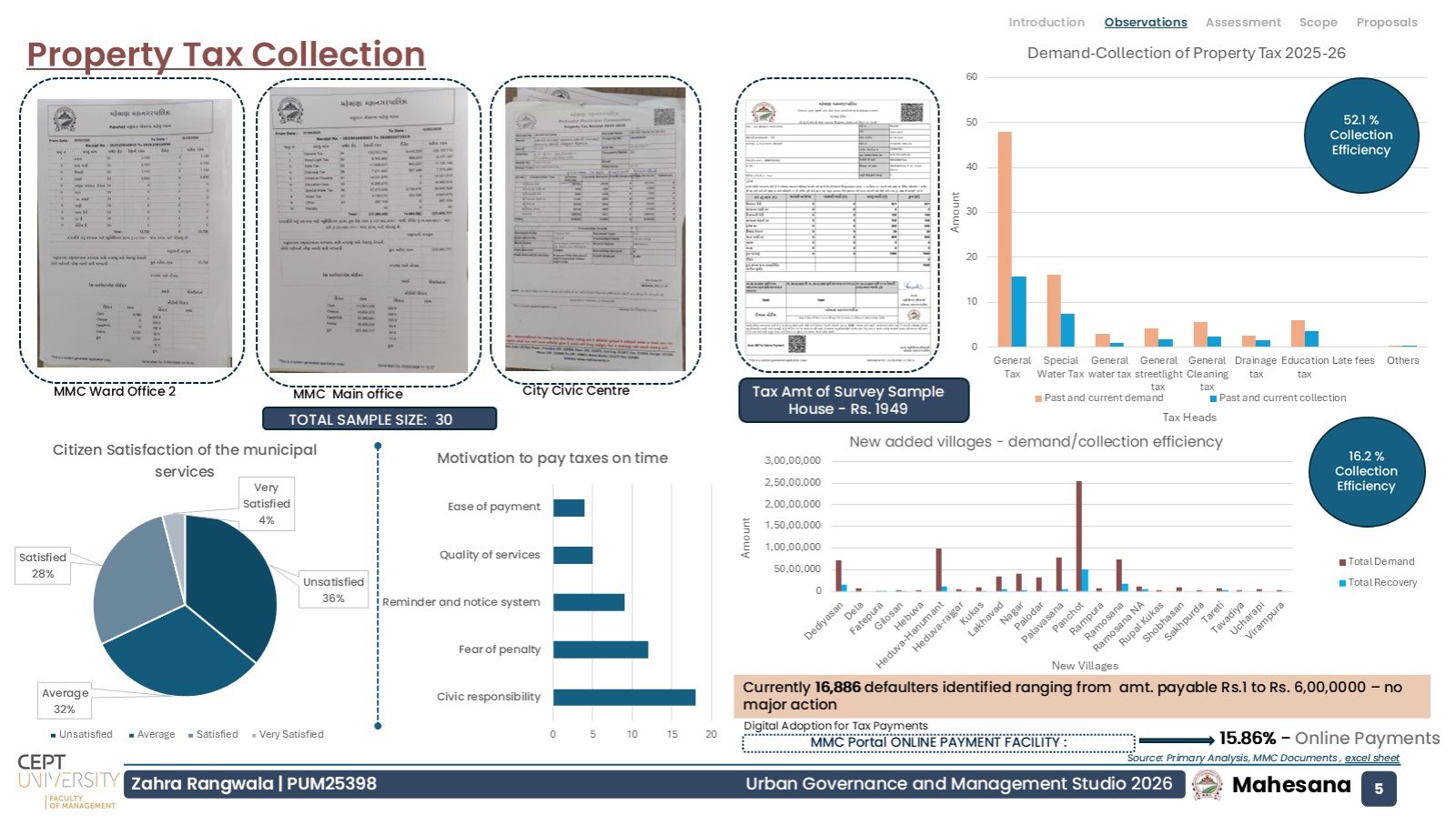
Existing Property Tax Methodology & Collection Analysis

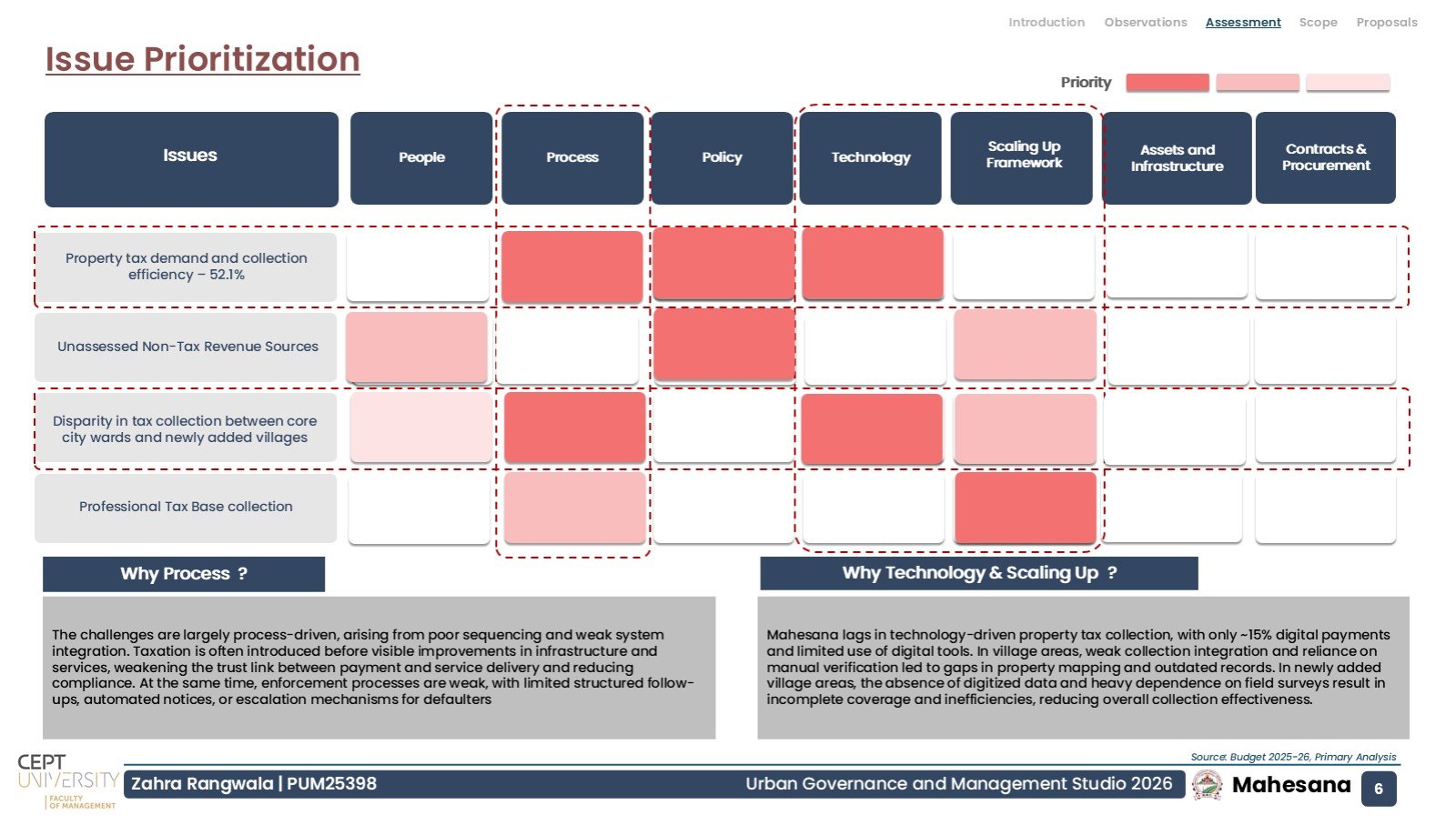
Issue Prioritization Based on Impact and Implementation Ease.

Distilling Observations into Fiscal Priorities and a Roadmap for Institutional Transformation.

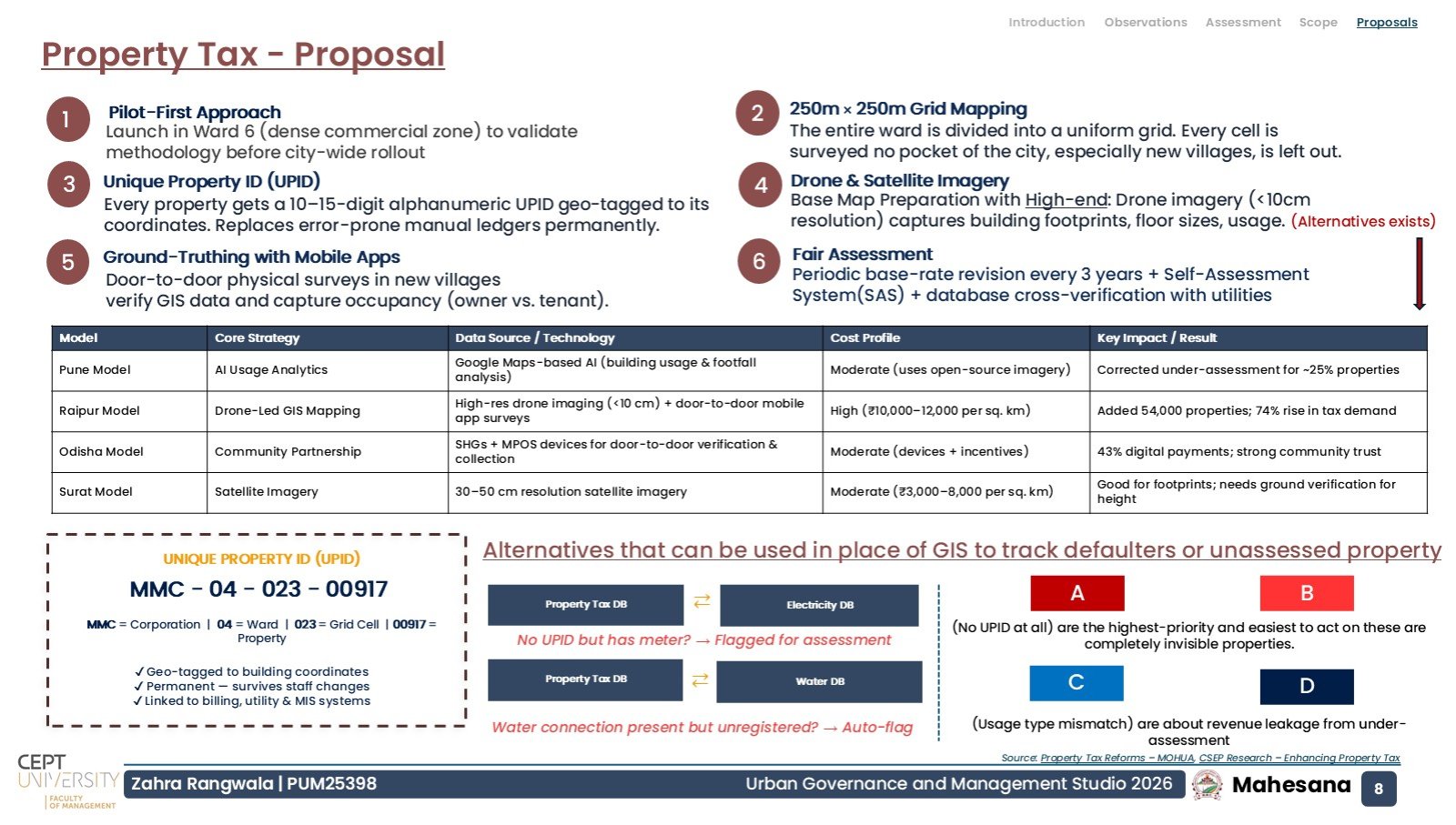
Laying the Grid : Permanent Property Identity as the Foundation of Fiscal Reform - Focused on Creating a Unified, Transparent, and Technology-driven Urban Property Management System with the integration of agency led safeguards

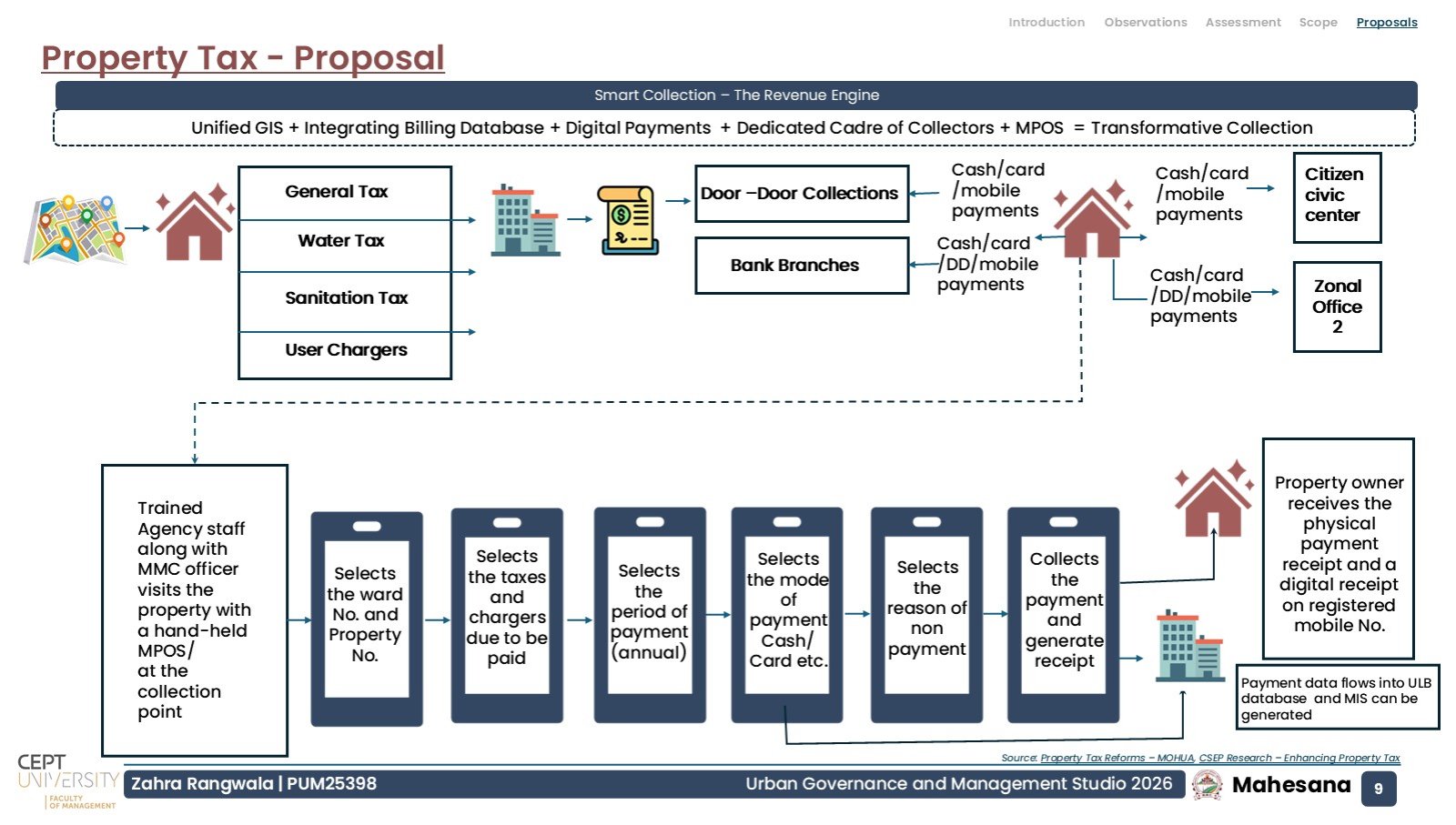
From Demand to Delivery : Rebuilding the Last Mile of Tax Collection, Highlighting The Need To Modernize The Final Interface Between Municipal Administration and Taxpayers Through Digital Tracking, Field Verification, and Citizen-Centric Collection Systems.

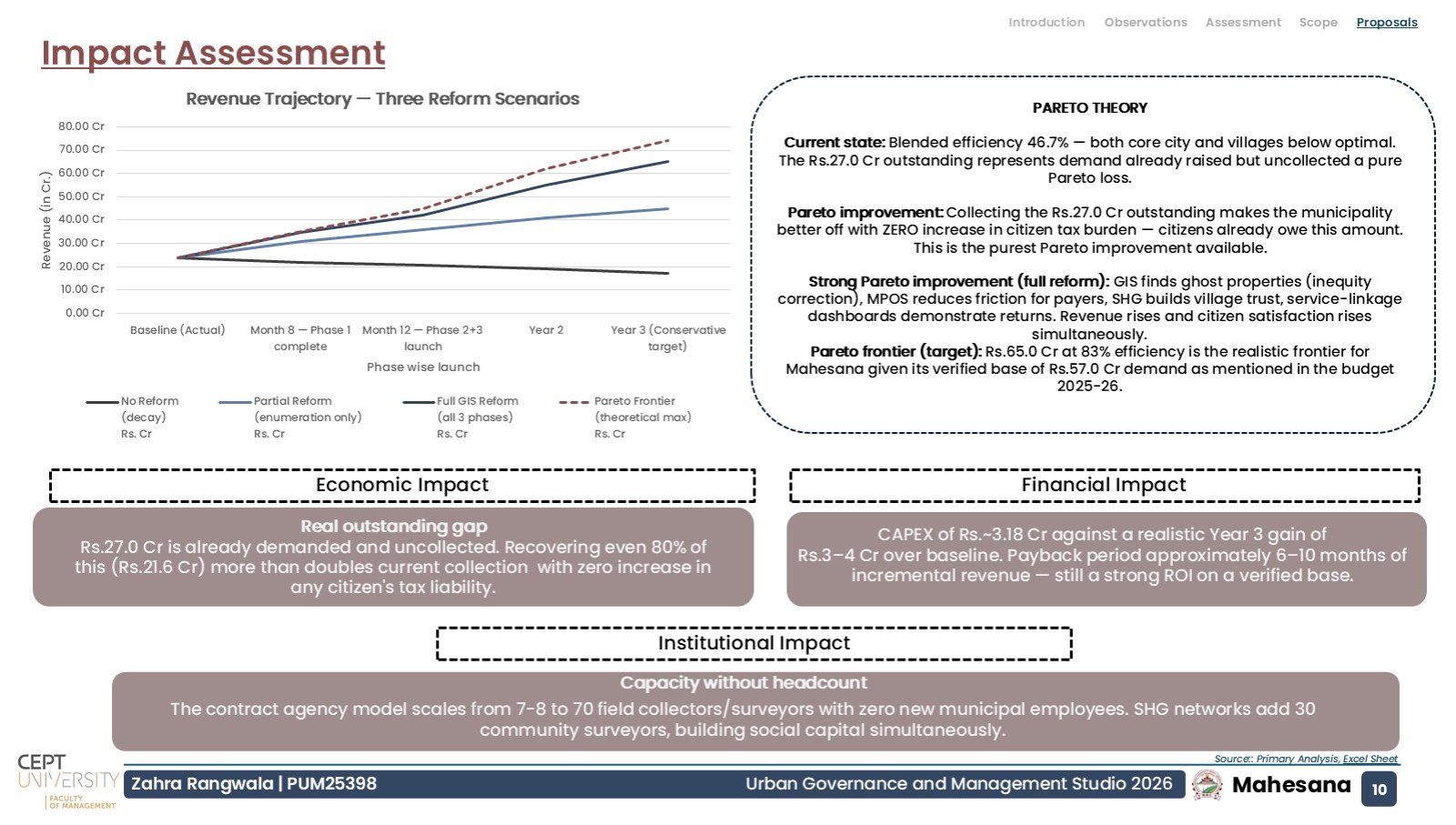
Zero Burden, Maximum Gain : A Pareto Optimization Case for Mahesana's Revenue Reform