Rohan Ramprasad Rathori

UM4000-2

Procurement System Reform - MMC

This study examines critical gaps in Mahesana procurement system along with tender analysis reveals recurring issues such as frequent short bid windows, re-tendering, & tender evaluation misalignment, indicating that the core problem lies in how procurement is conducted, rather than what is procured. To address this, the study proposes a three-tier reform framework, Departmental Procurement Coordinators (DPCs) to strengthen planning and coordination, a Central Procurement Store (CPS) for bulk buying and inventory management, and RAC overseeing strategic tenders. Collectively, these interventions aim to transition MMC from a reactive, siloed system to a more planned, transparent, and data-driven procurement model.
Report Content

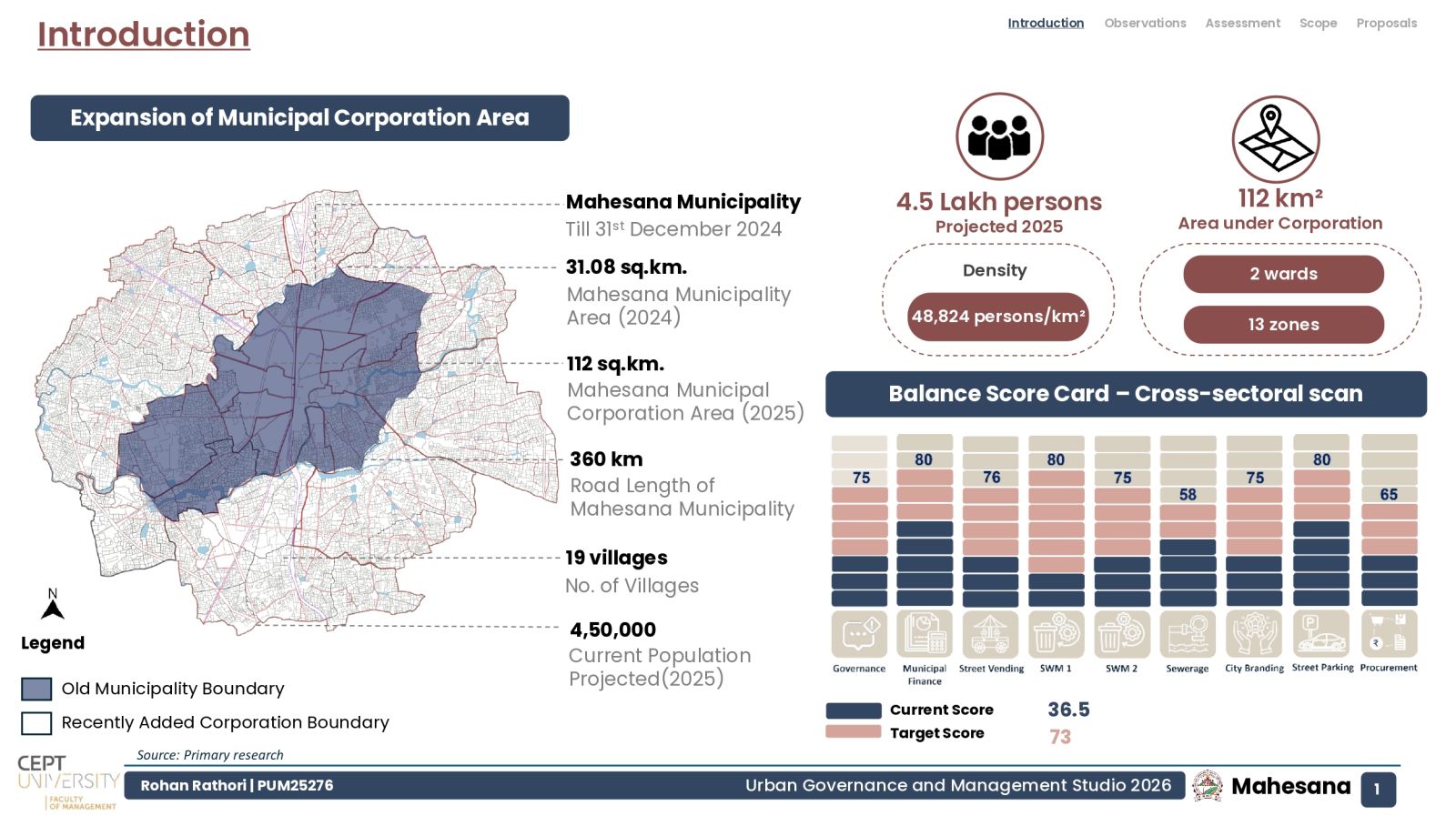
Overview of Mahesana Municipal Corporation

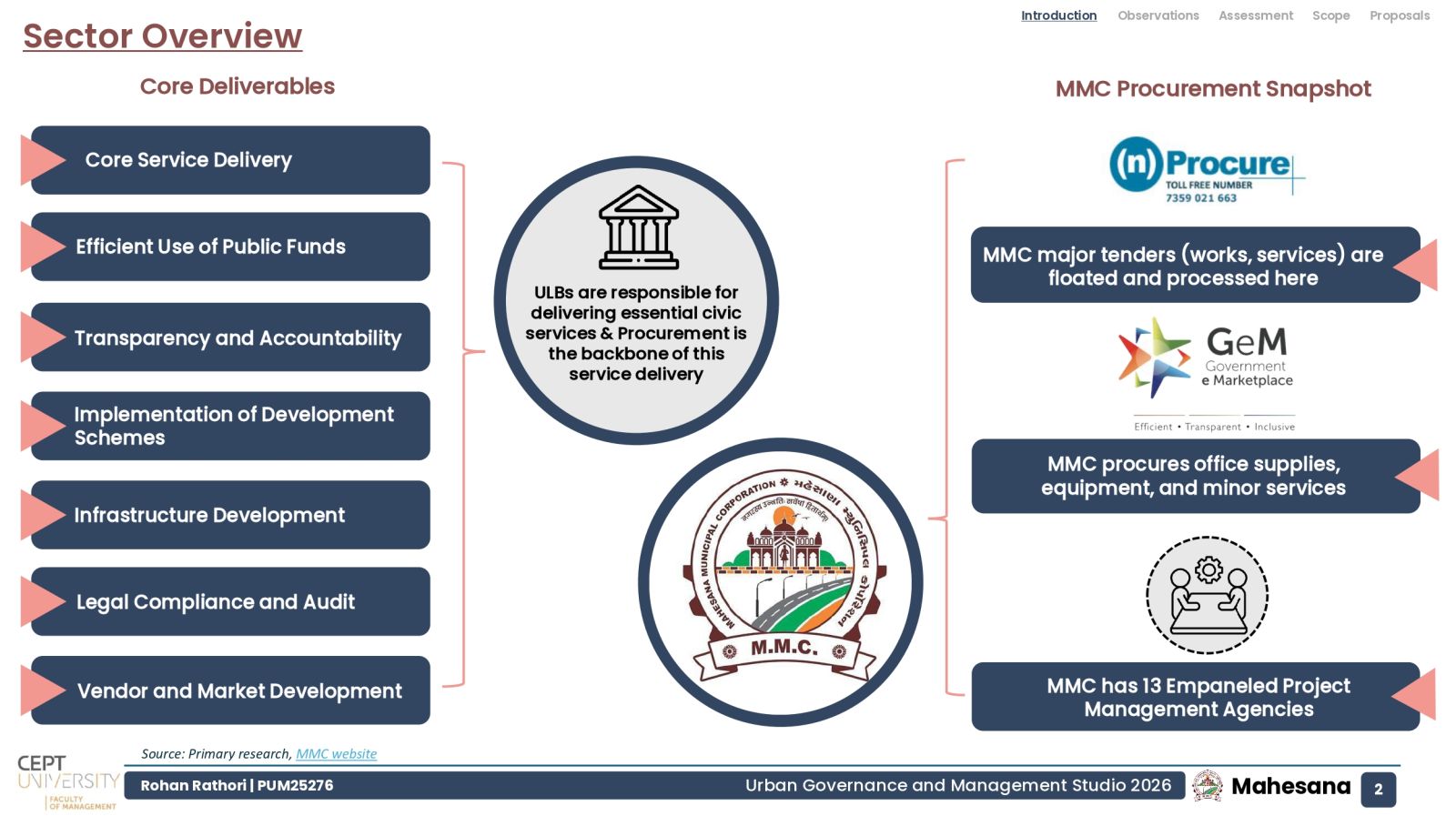
Sectoral overview of MMC's procurement system highlighting core civic deliverables, platform usage & empaneled agency structure at a glance

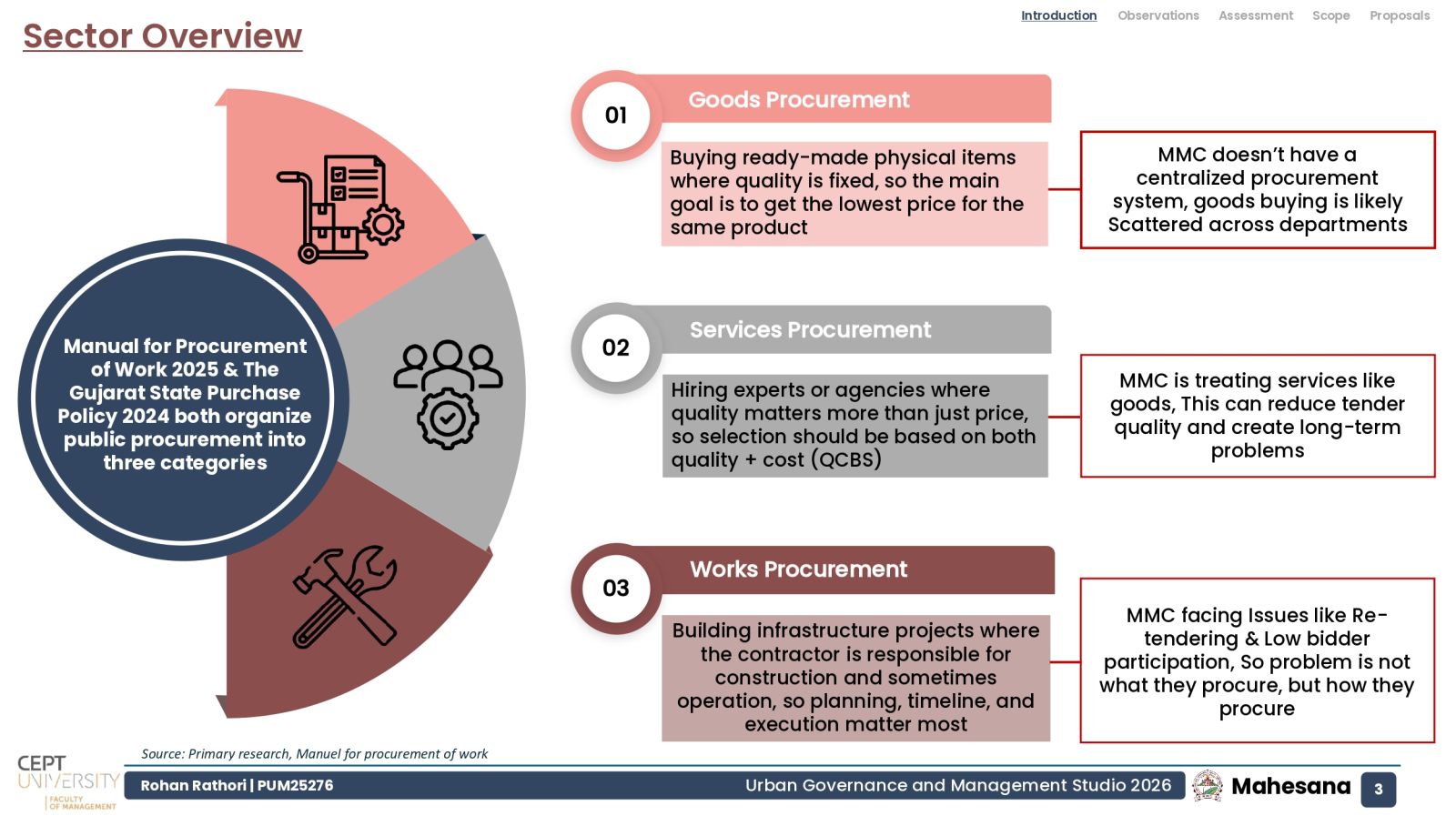
Evaluating procurement policies, categories & Identifying systemic gaps in MMC's procurement execution

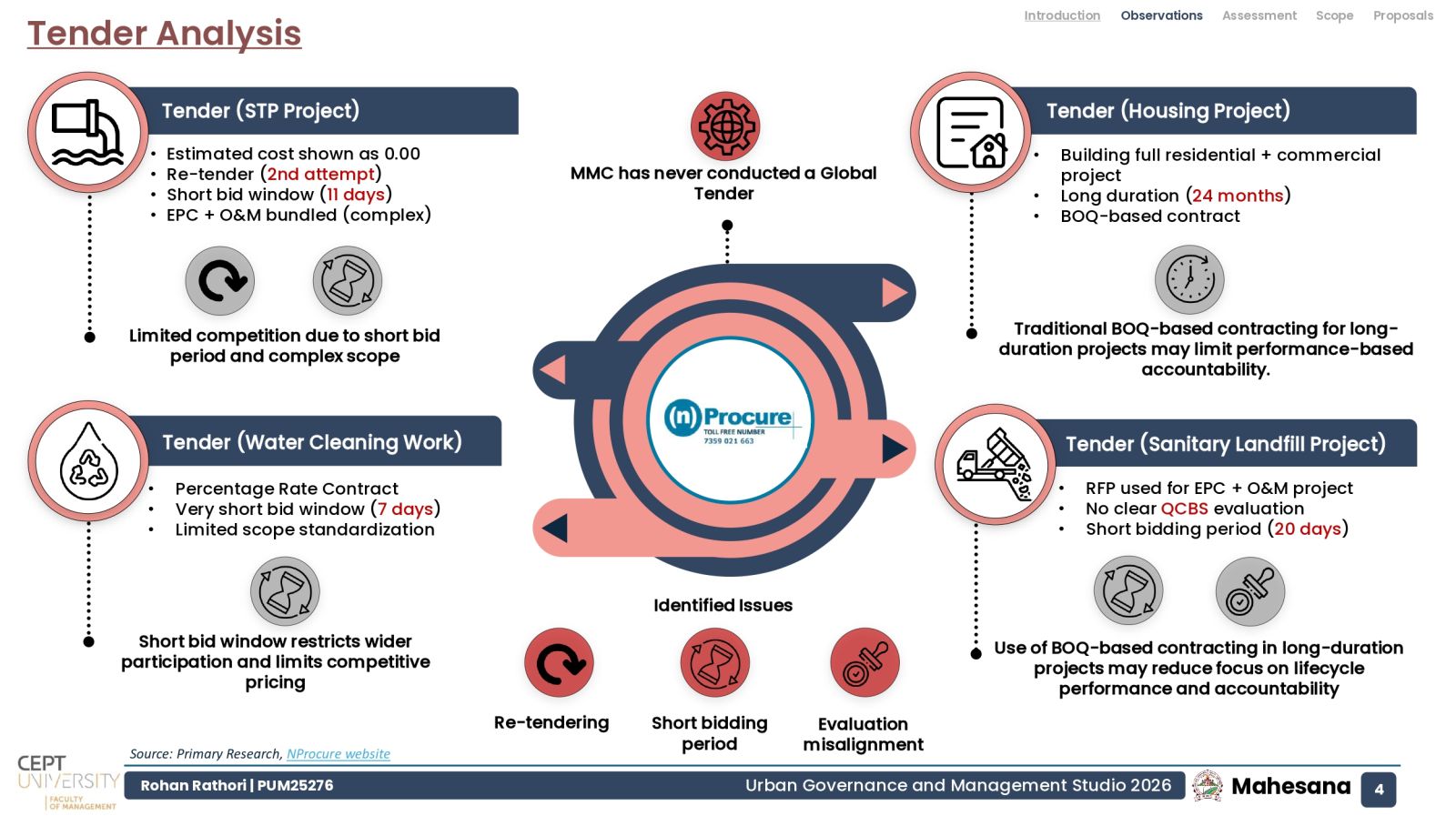
Analysis of MMC tenders revealing a common pattern of short bid windows, re-tendering & misaligned evaluation methods

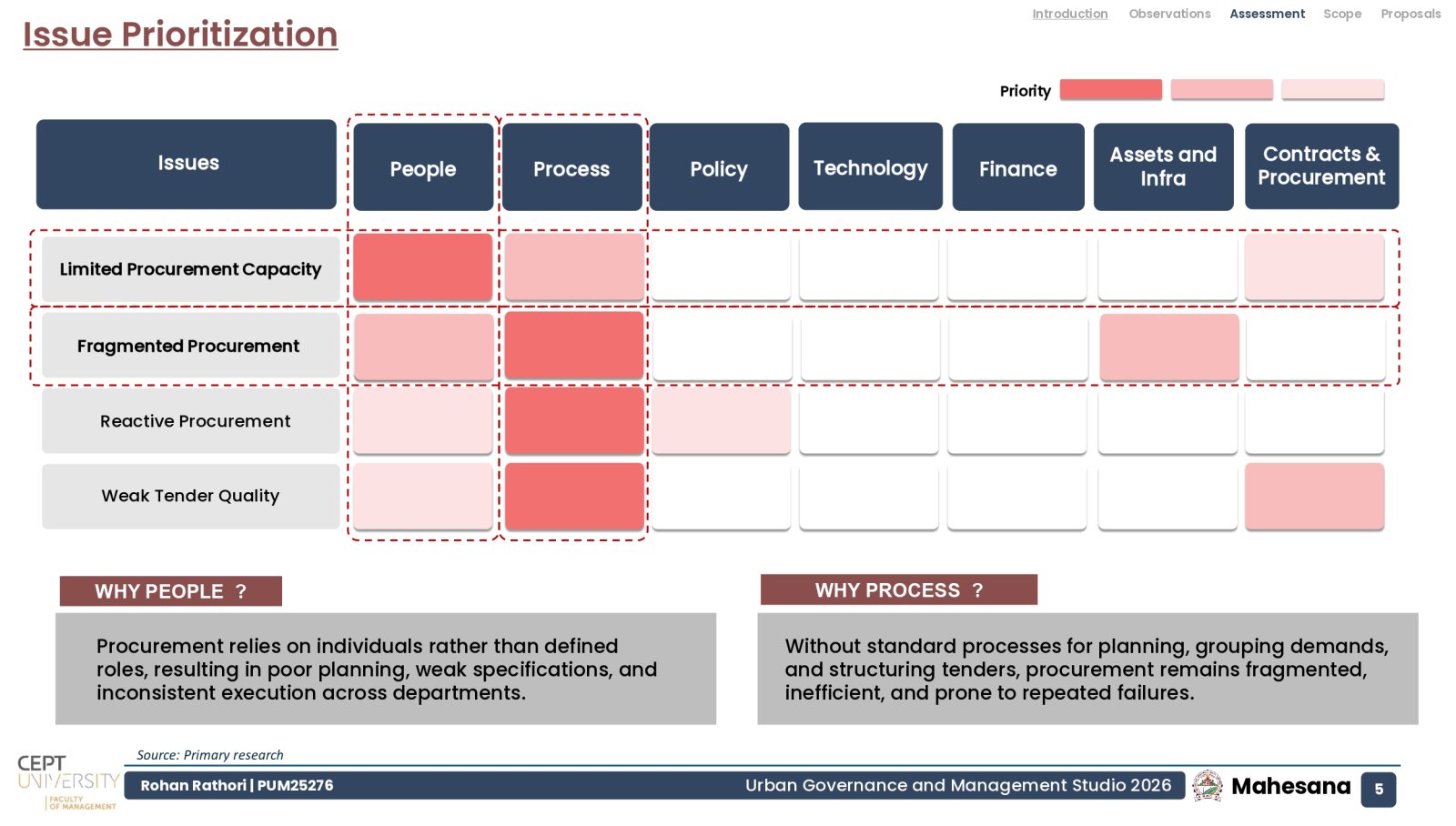
Issue prioritization focuses on People & Process as the highest-impact areas driving fragmented & capacity constrained procurement

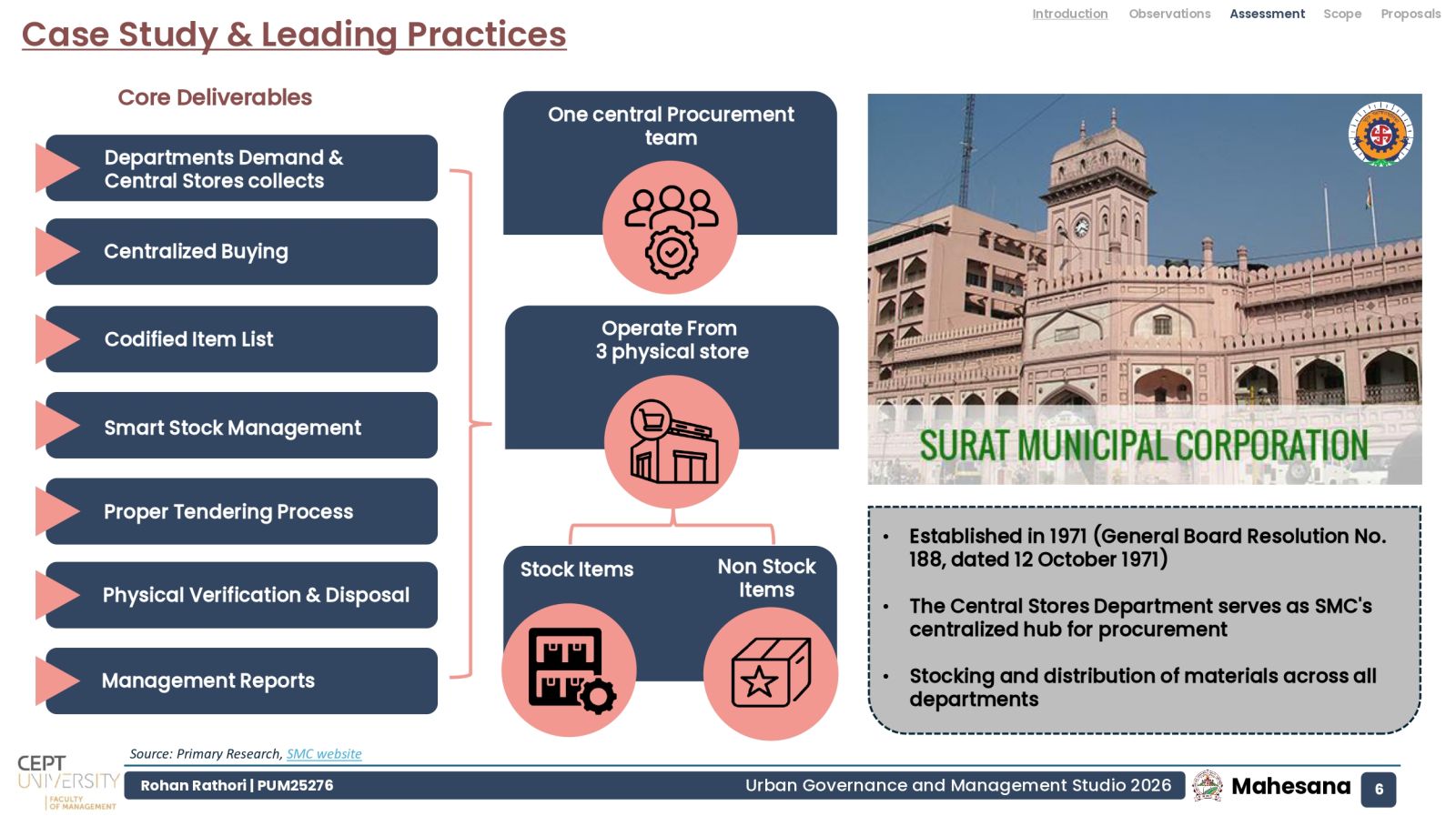
Analyzing Surat Municipal Corporation's centralized procurement model & identifying possible reforms for MMC's procurement system

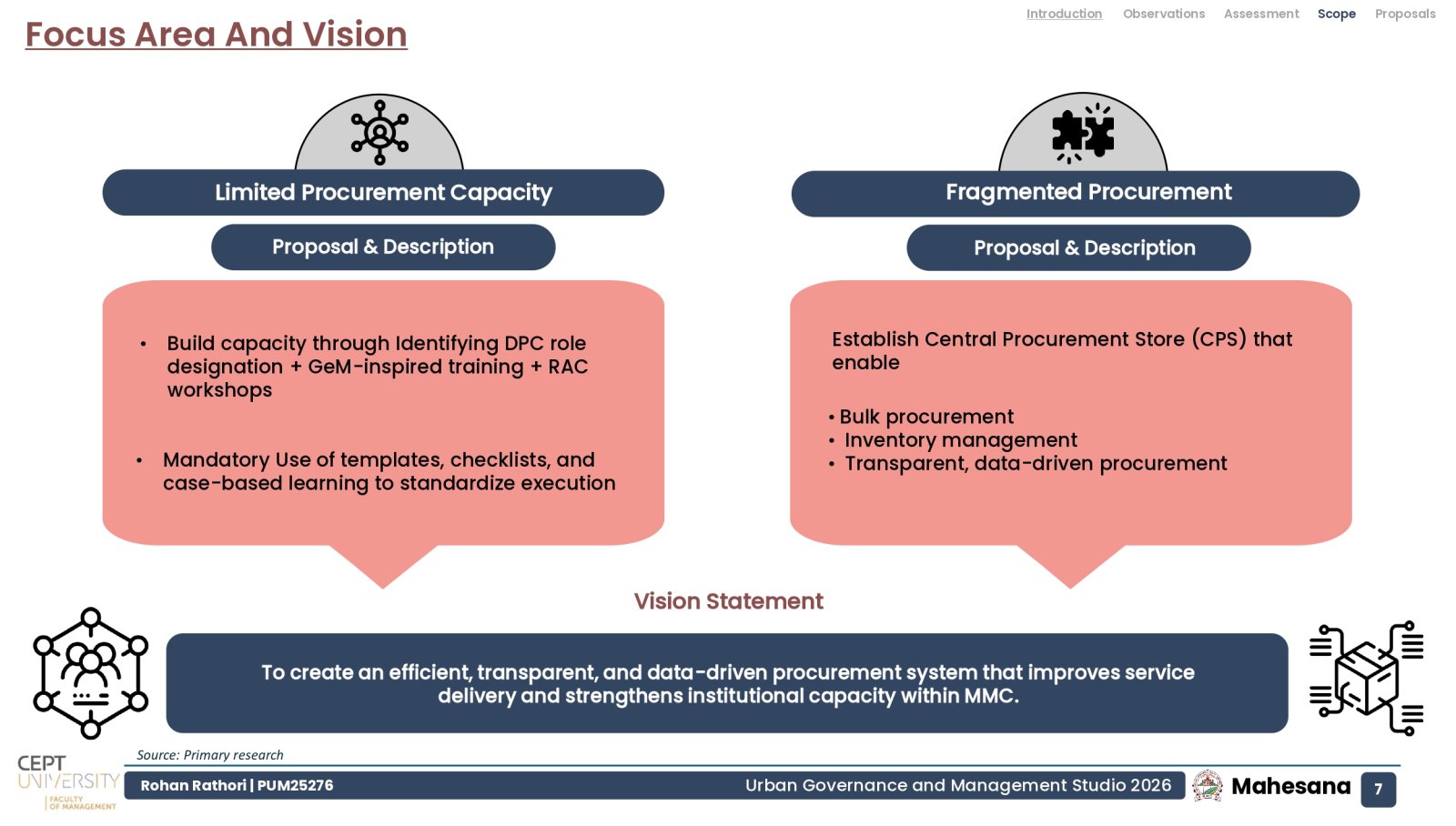
Addressing MMC's two core gaps fragmented & limited procurement capacity, Anchored by a clear vision for transparent, data-driven procurement

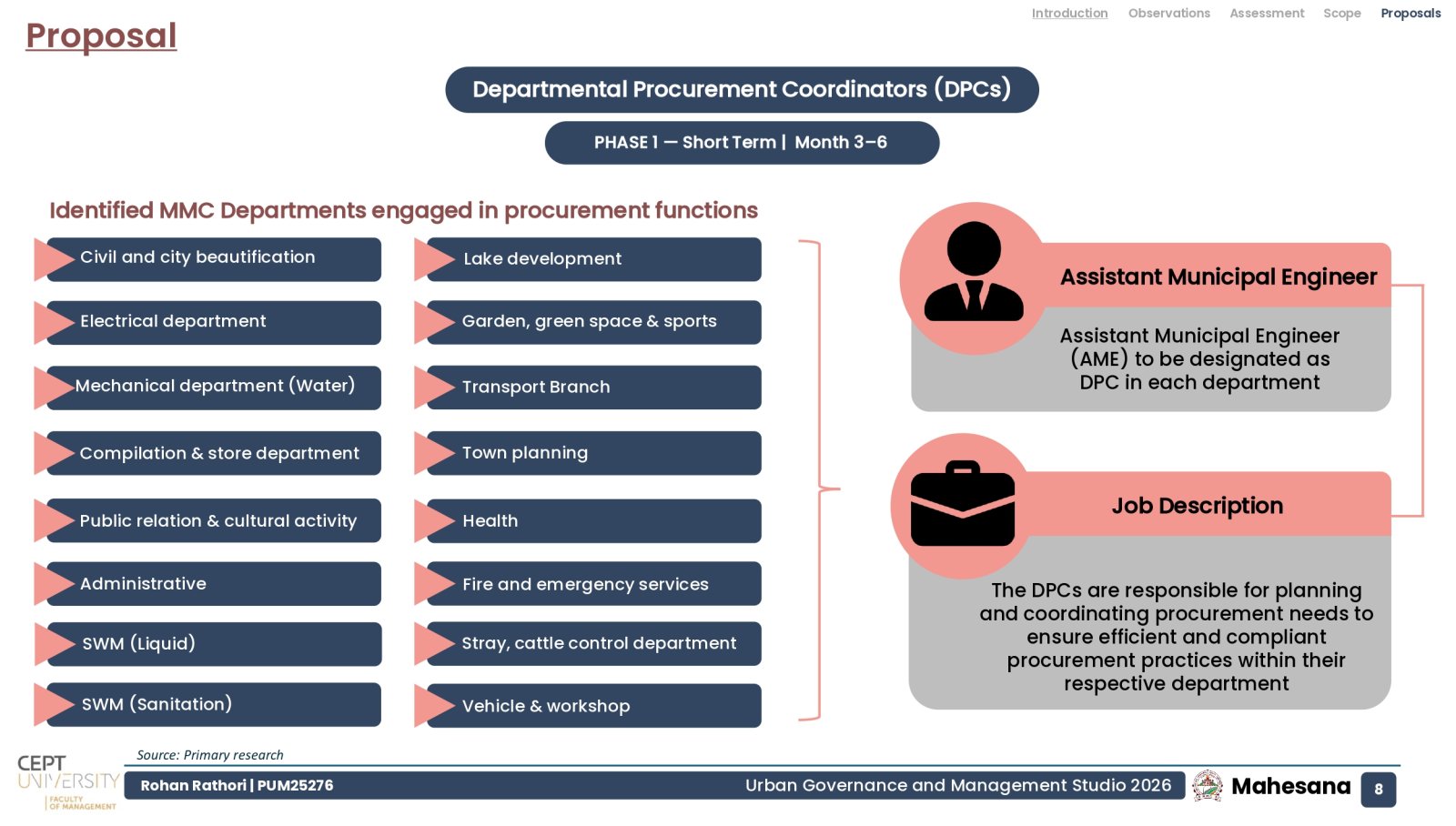
The proposal aims building procurement capacity through Departmental Procurement Coordinators across MMC departments

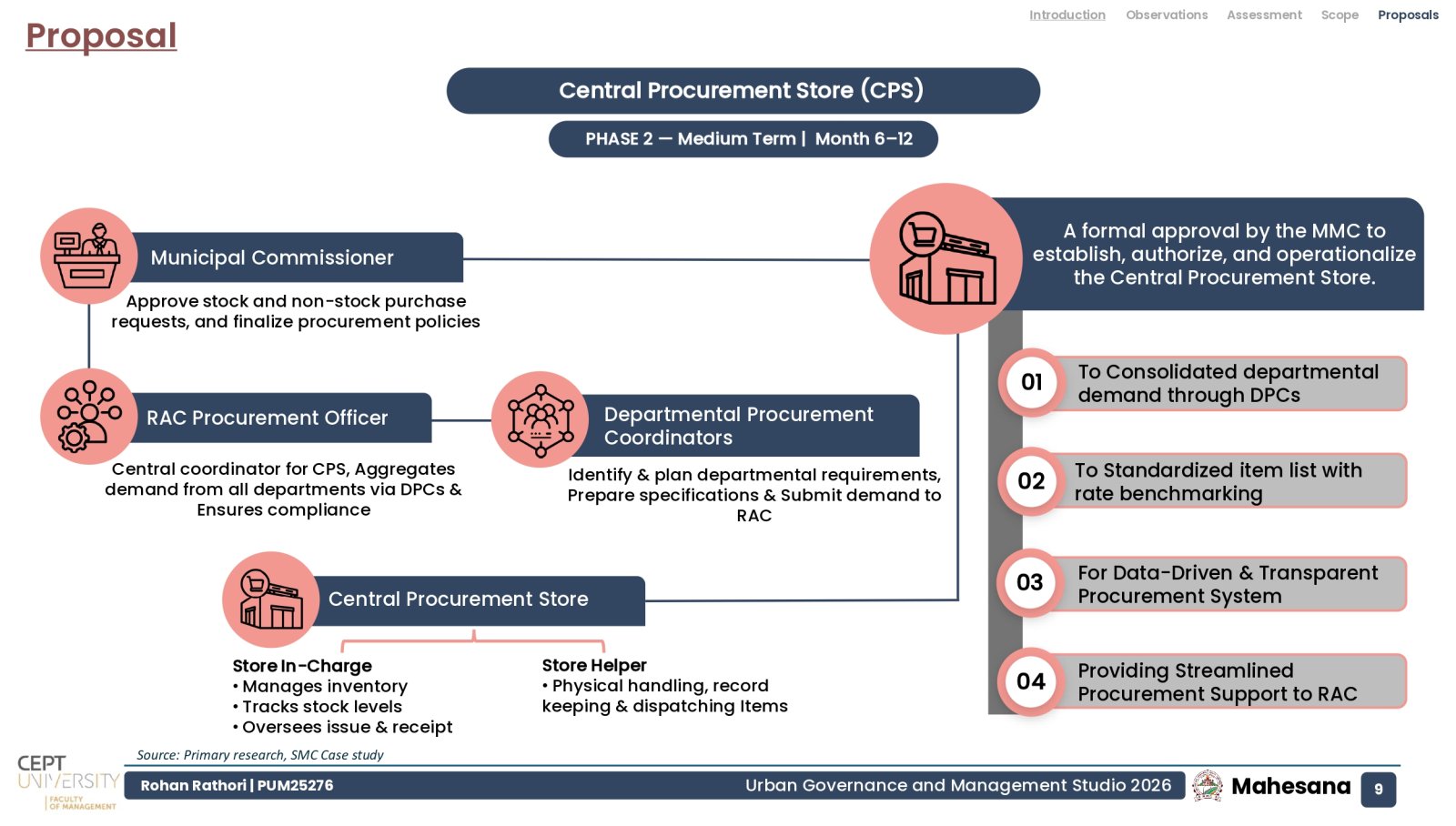
The Proposal phase second focuses on establishing a Central Procurement Store with defined roles

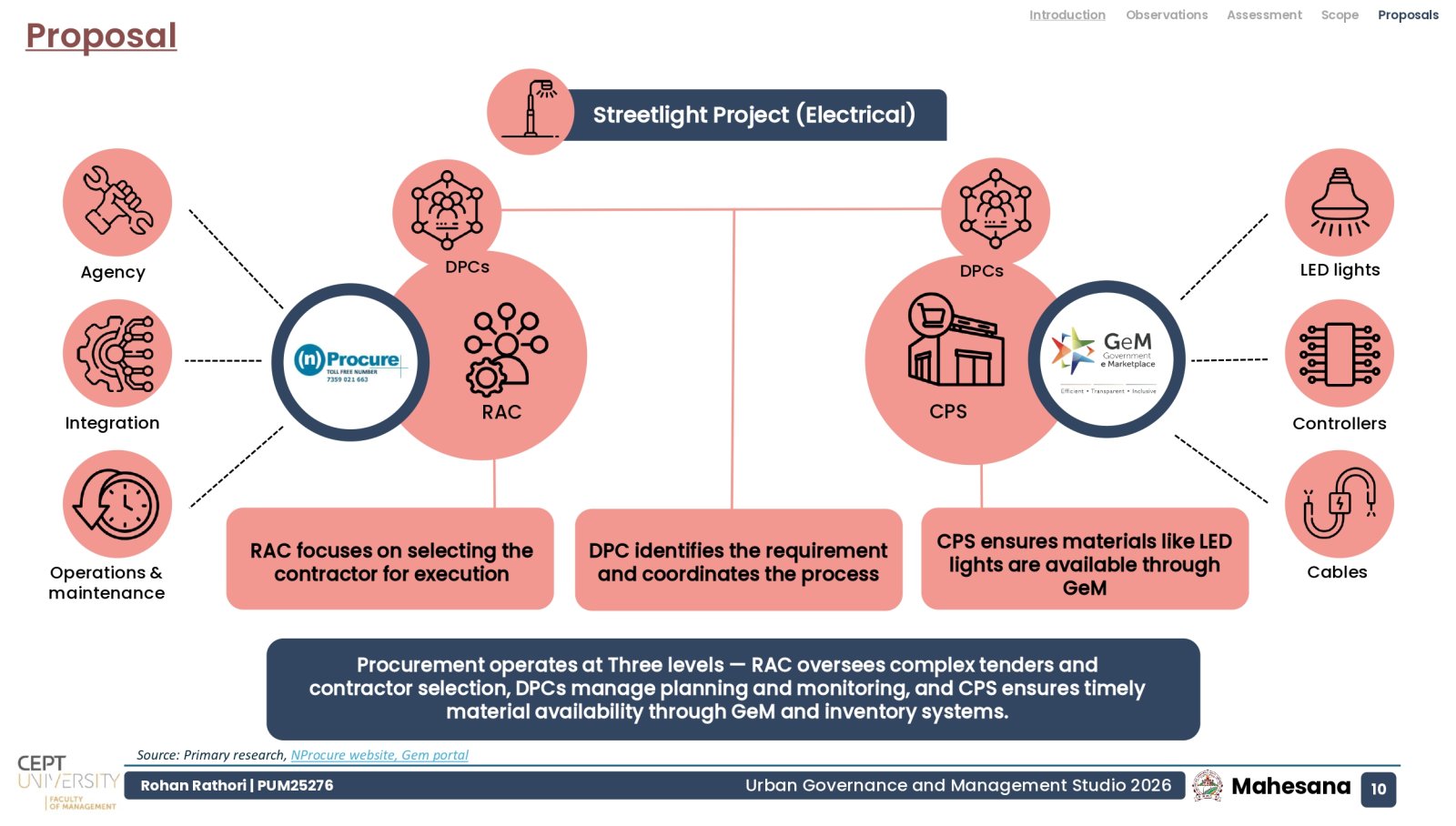
The Proposal final outcome demonstrates the three-tier procurement framework in action through Streetlight Project example