Your browser is out-of-date!
For a richer surfing experience on our website, please update your browser. Update my browser now!
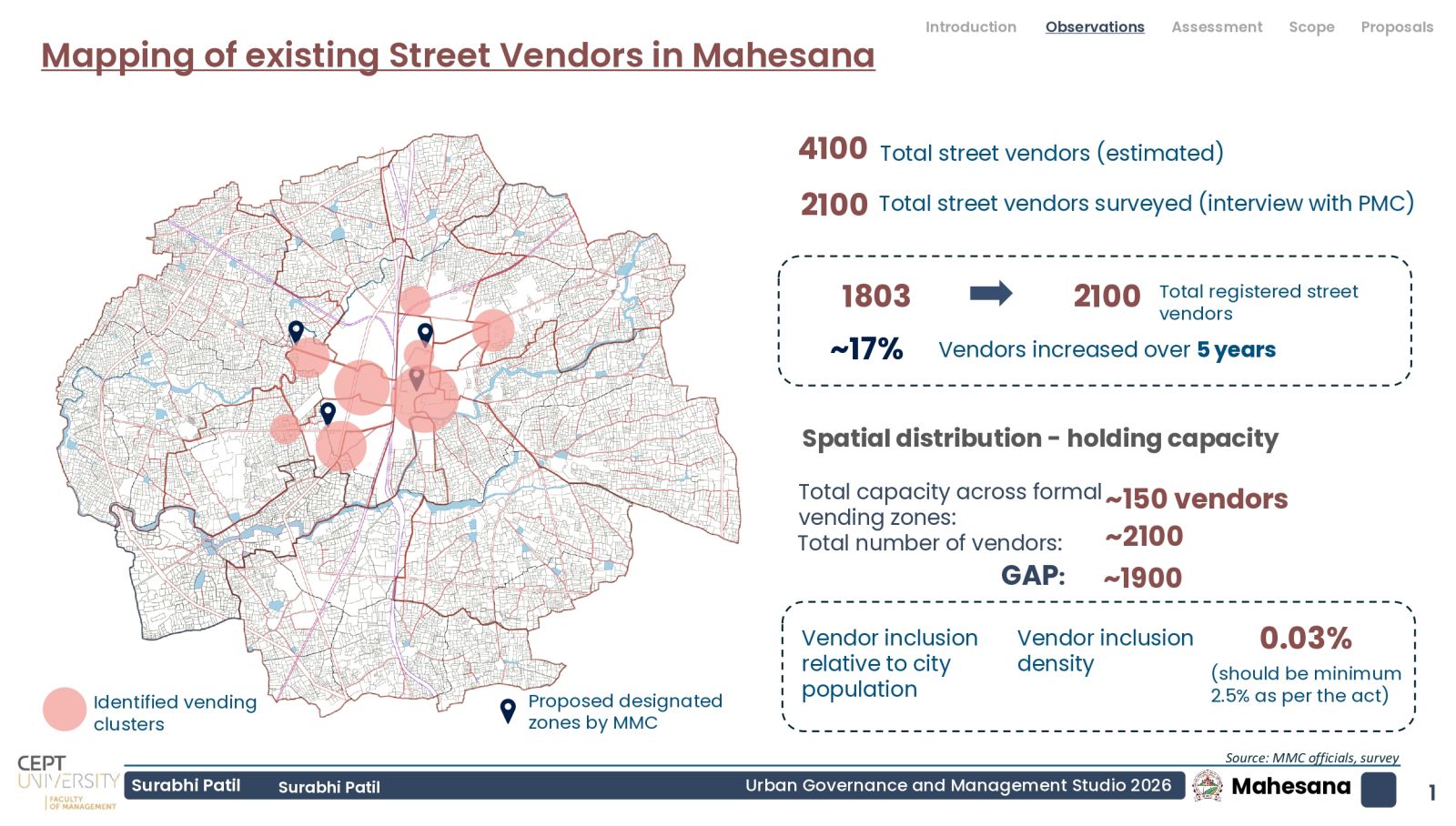
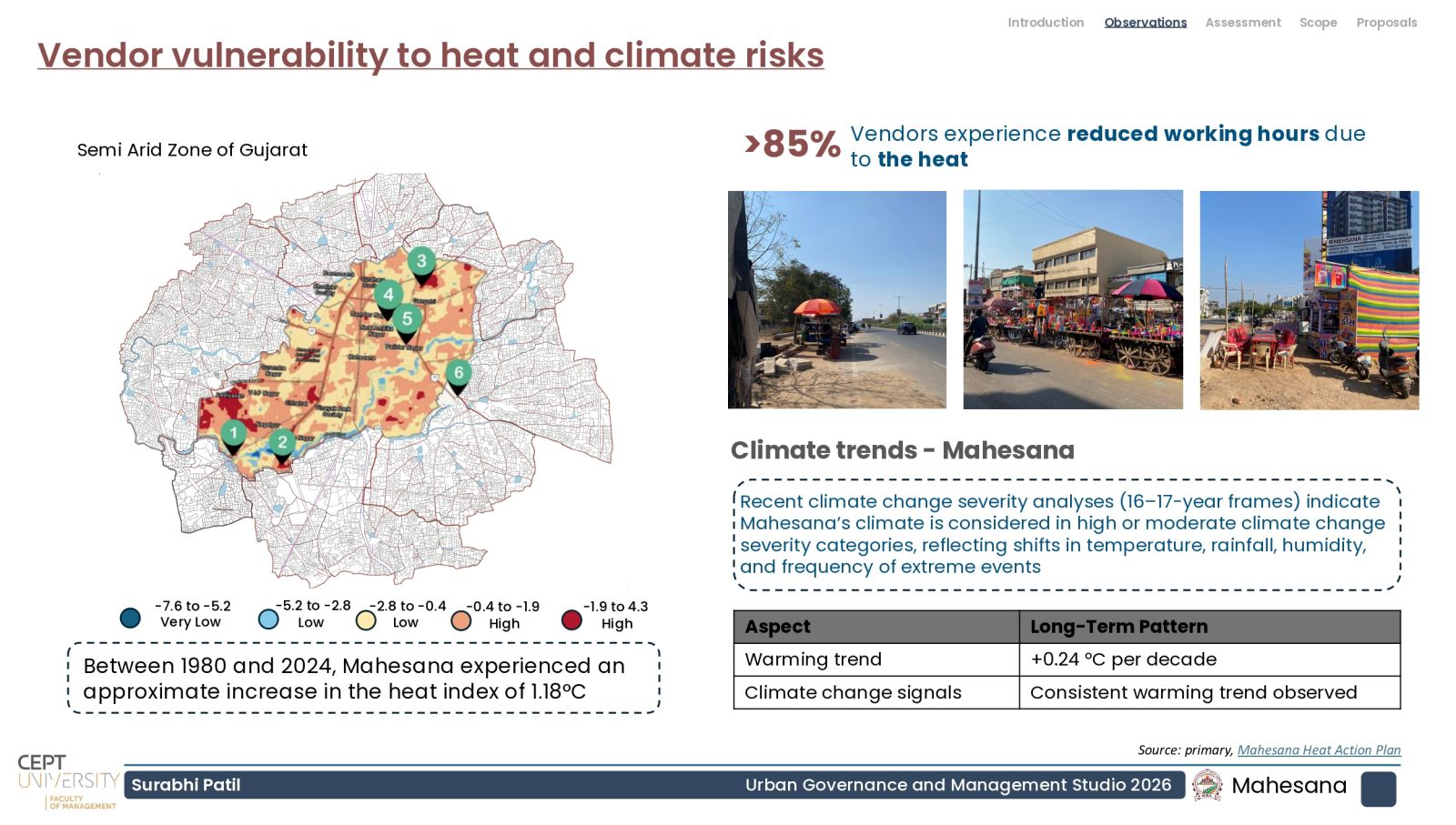
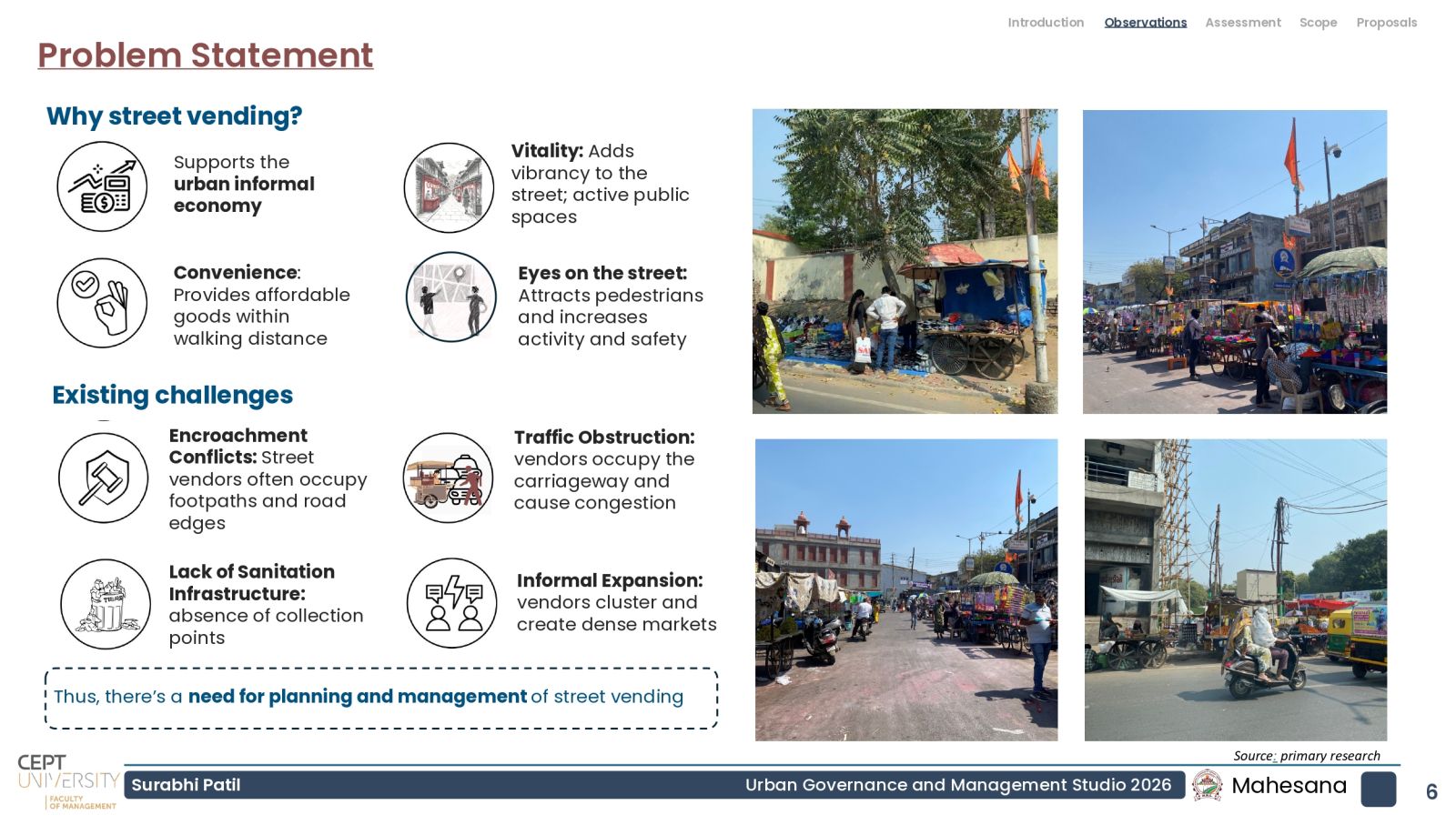
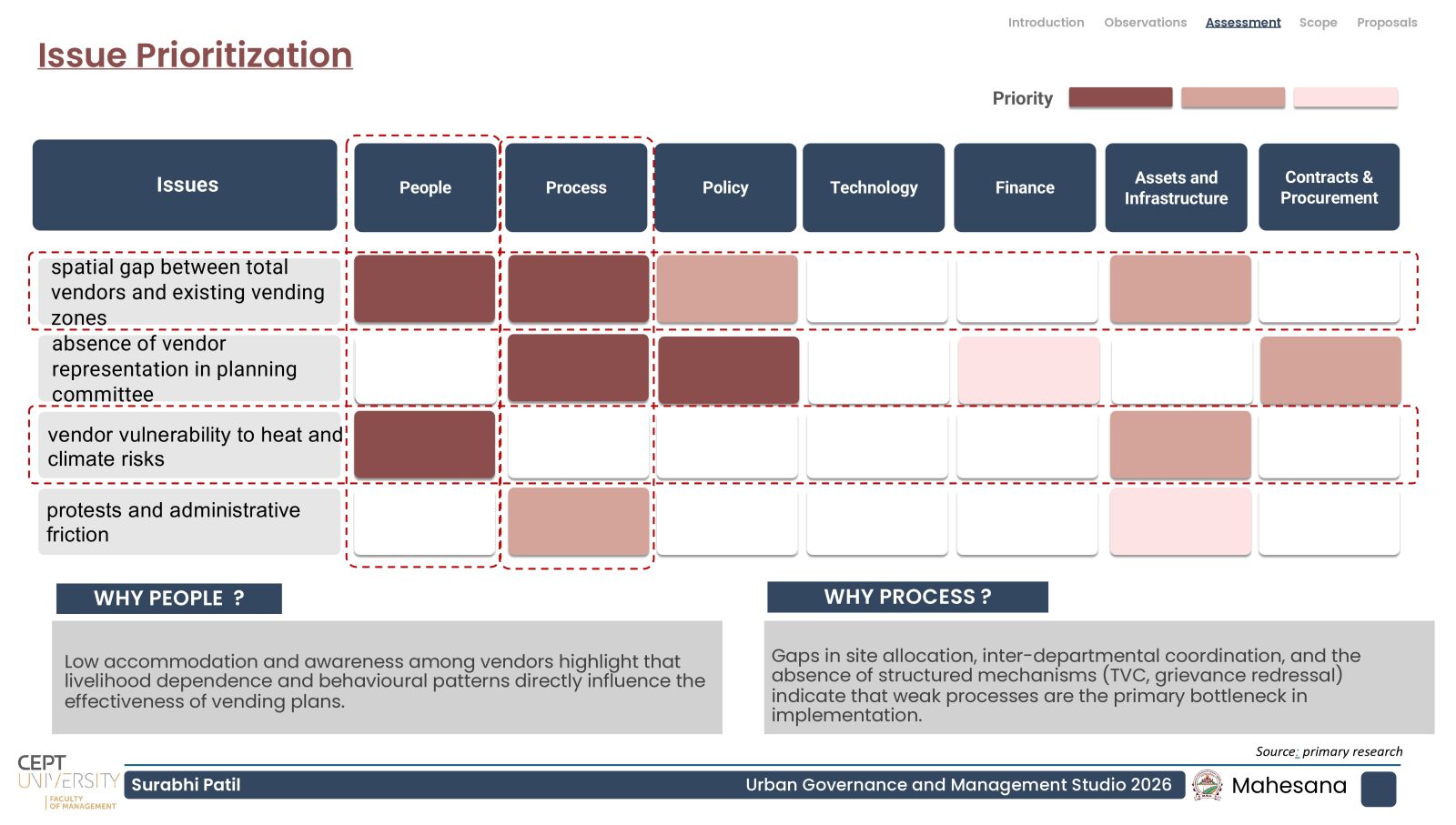
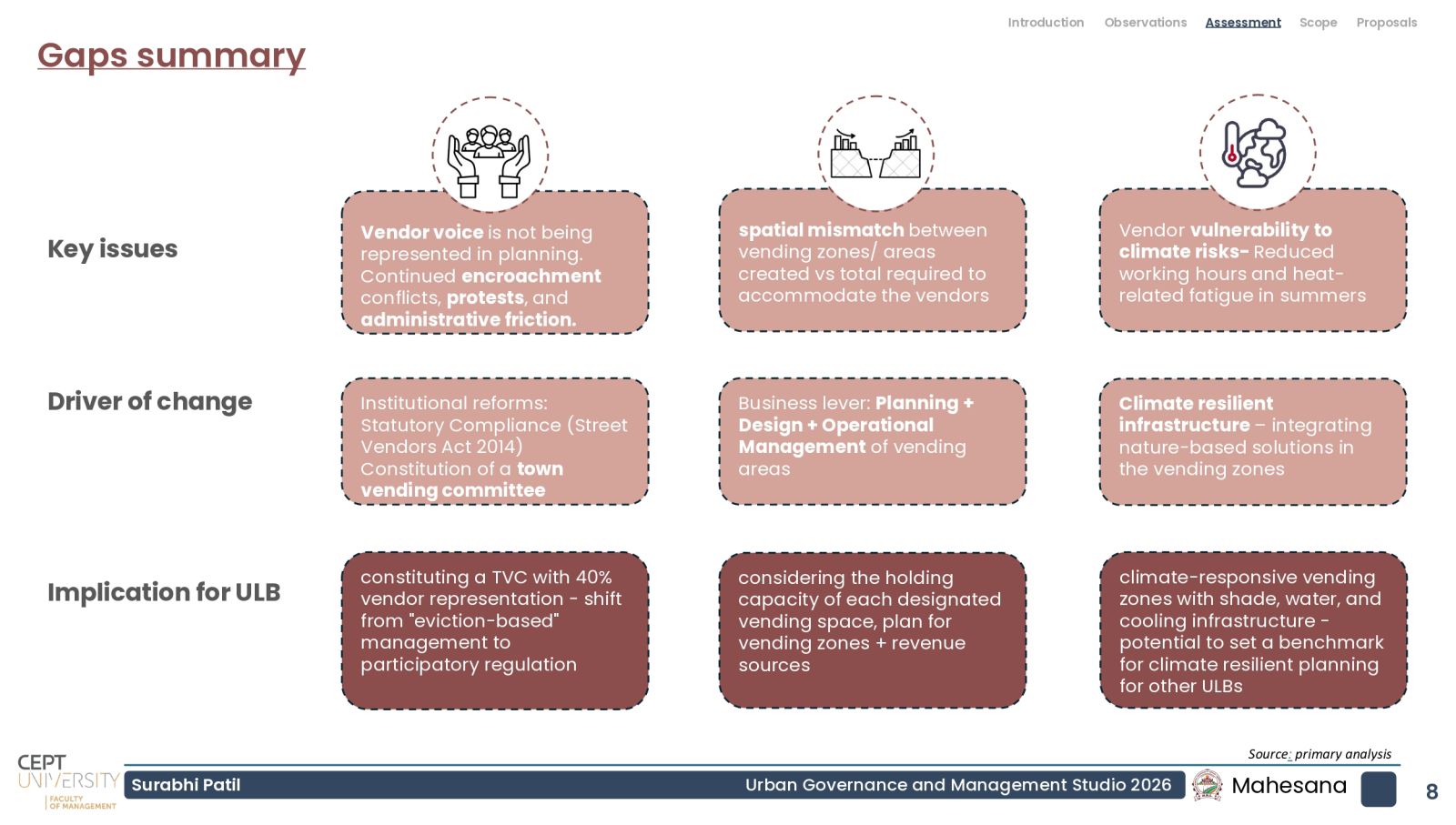
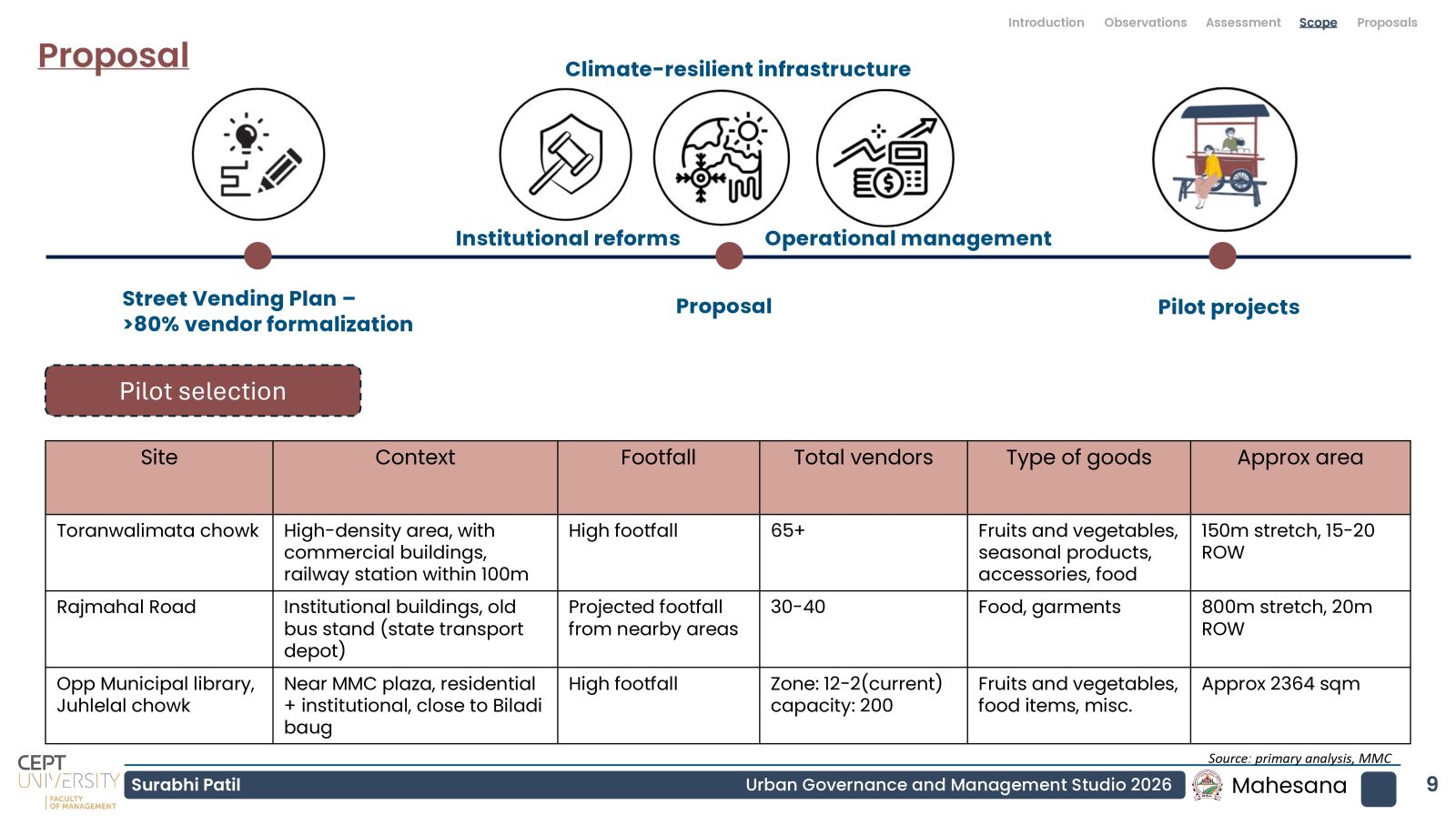
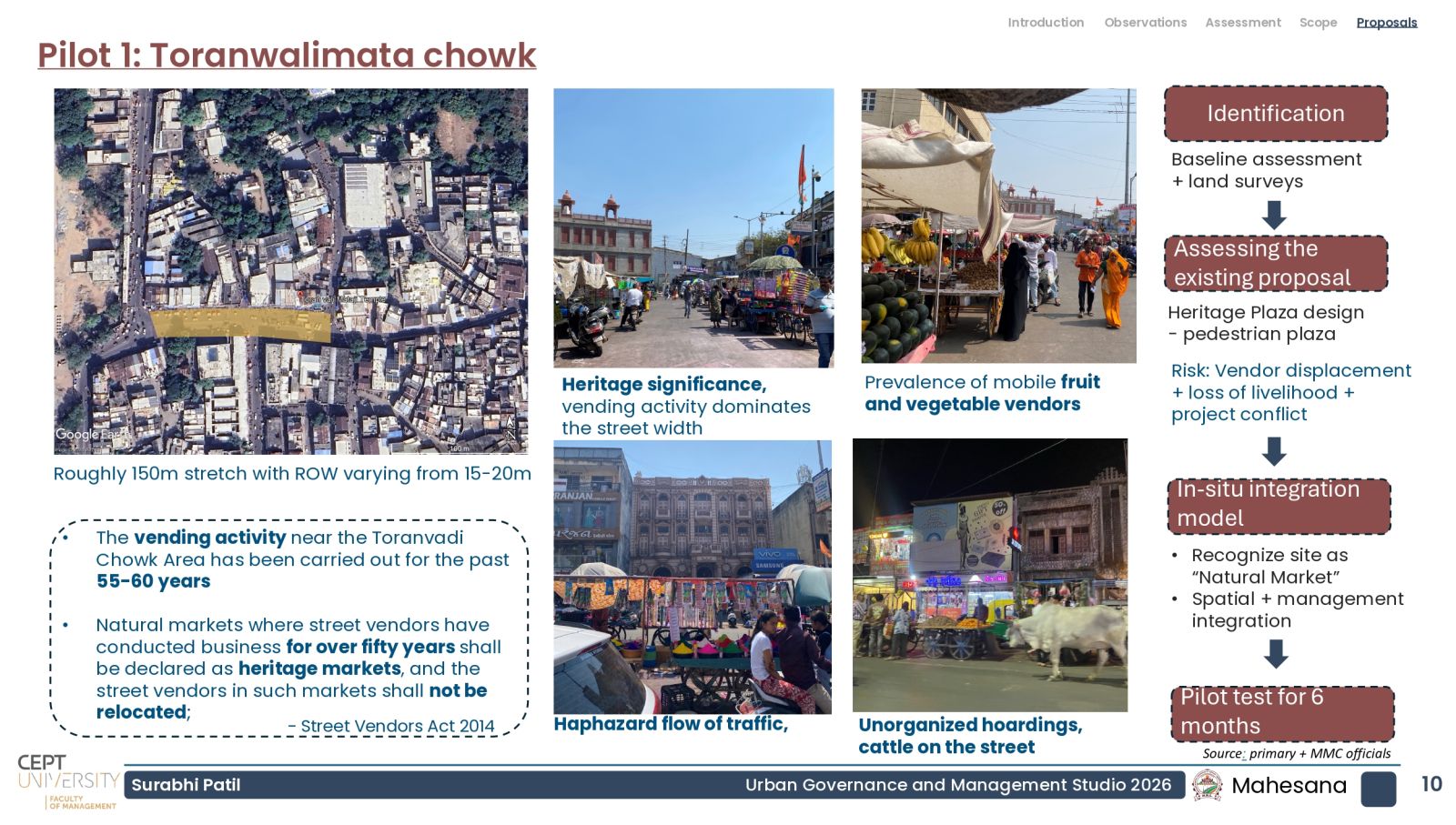
This project explores the current practices of street vending in Mahesana, and identifies key gaps in institutional, spatial, infrastructure and operational systems. One of the key drivers of informal economy, street vending presents the potential to shape livelihoods and the public realm, yet it is often overlooked within broader urban planning and management frameworks. Through the lens of governance, spatial planning and climate, the study proposes a city vending plan with the aim of 80% vendor formalisation via institutional reforms, climate-resilient infrastructure and operational management. A pilot-based implementation framework is recommended across three identified sites to test, both on street and off street vending models, enabling context-specific interventions and scalability for city-wide replication.
View Additional Work