Your browser is out-of-date!
For a richer surfing experience on our website, please update your browser. Update my browser now!
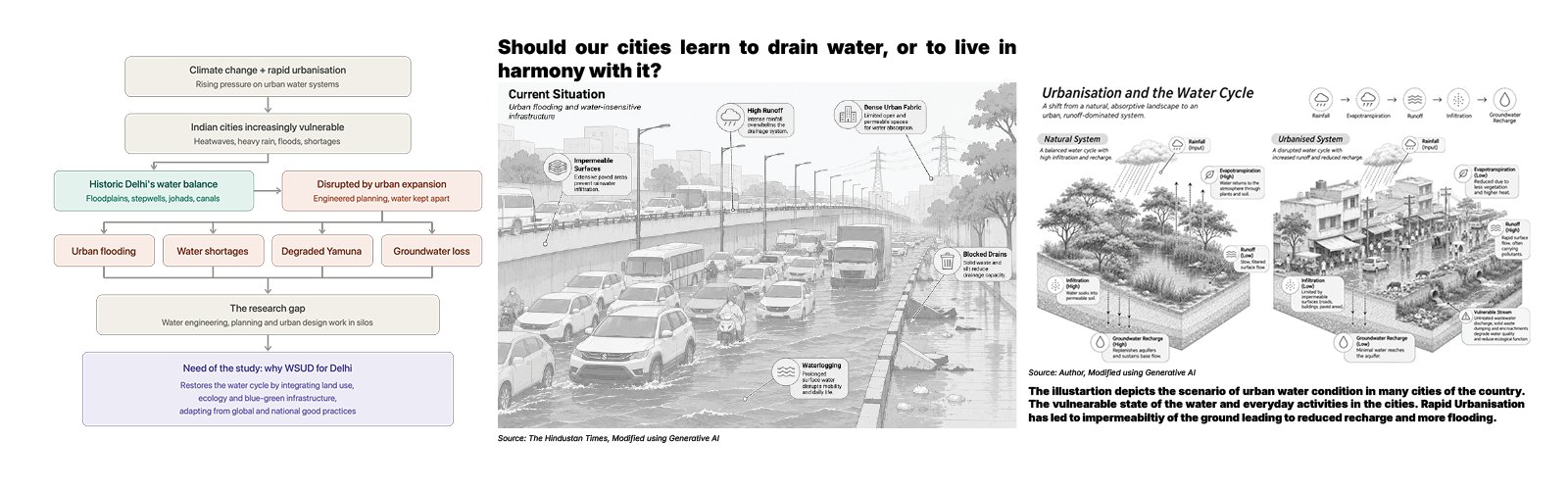
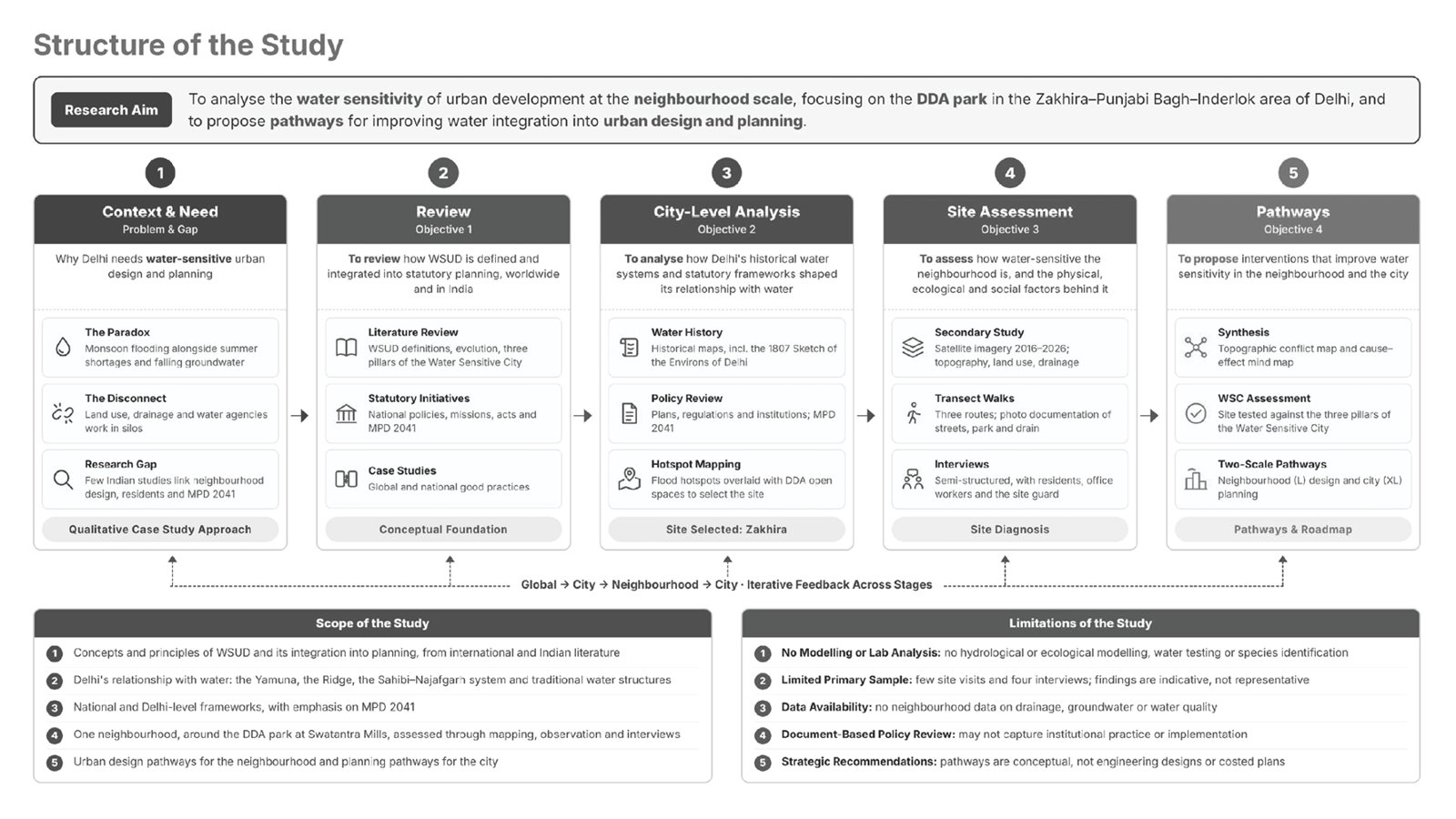
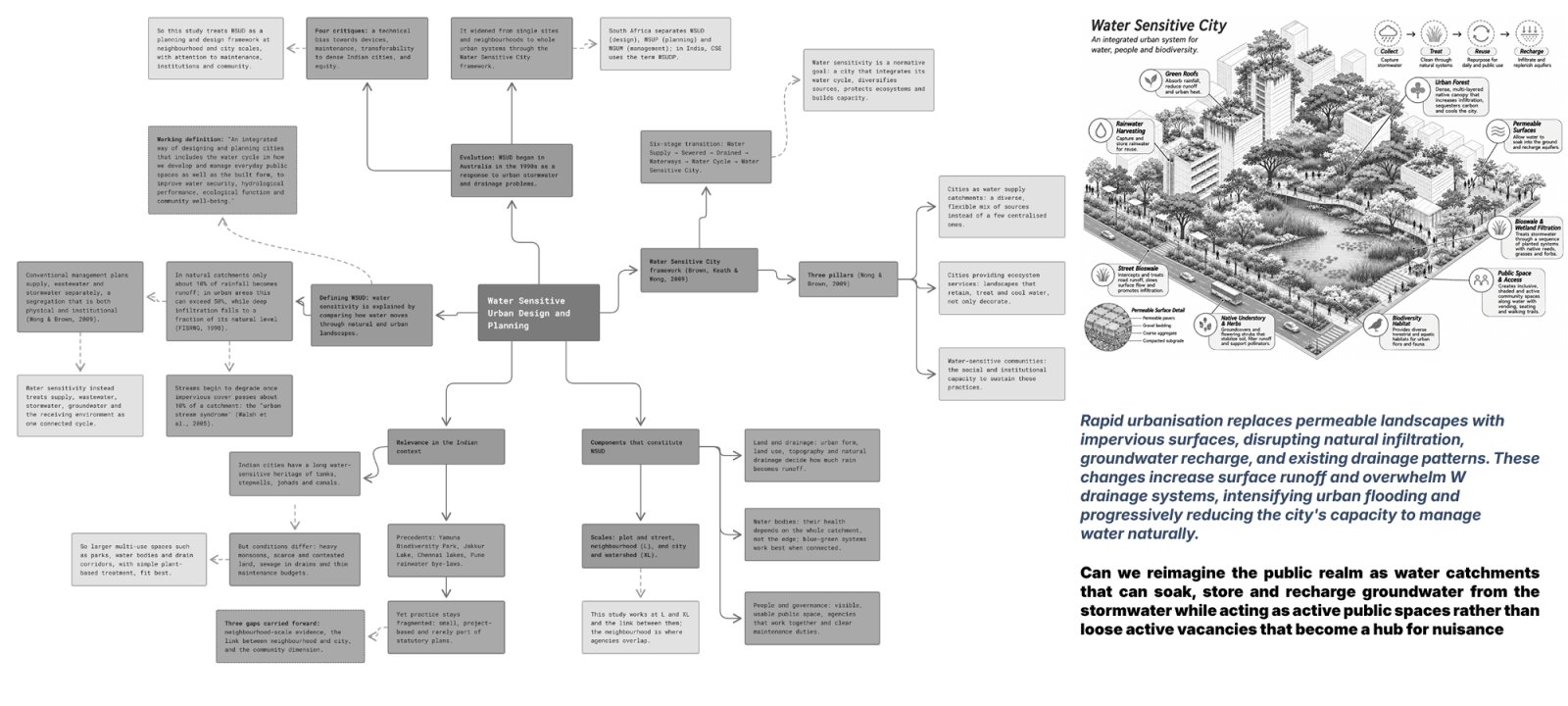
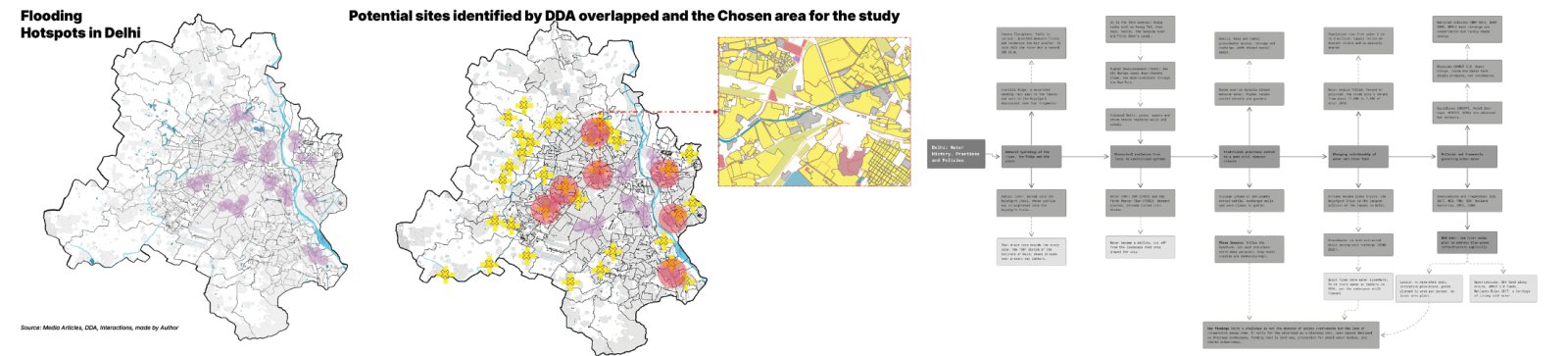
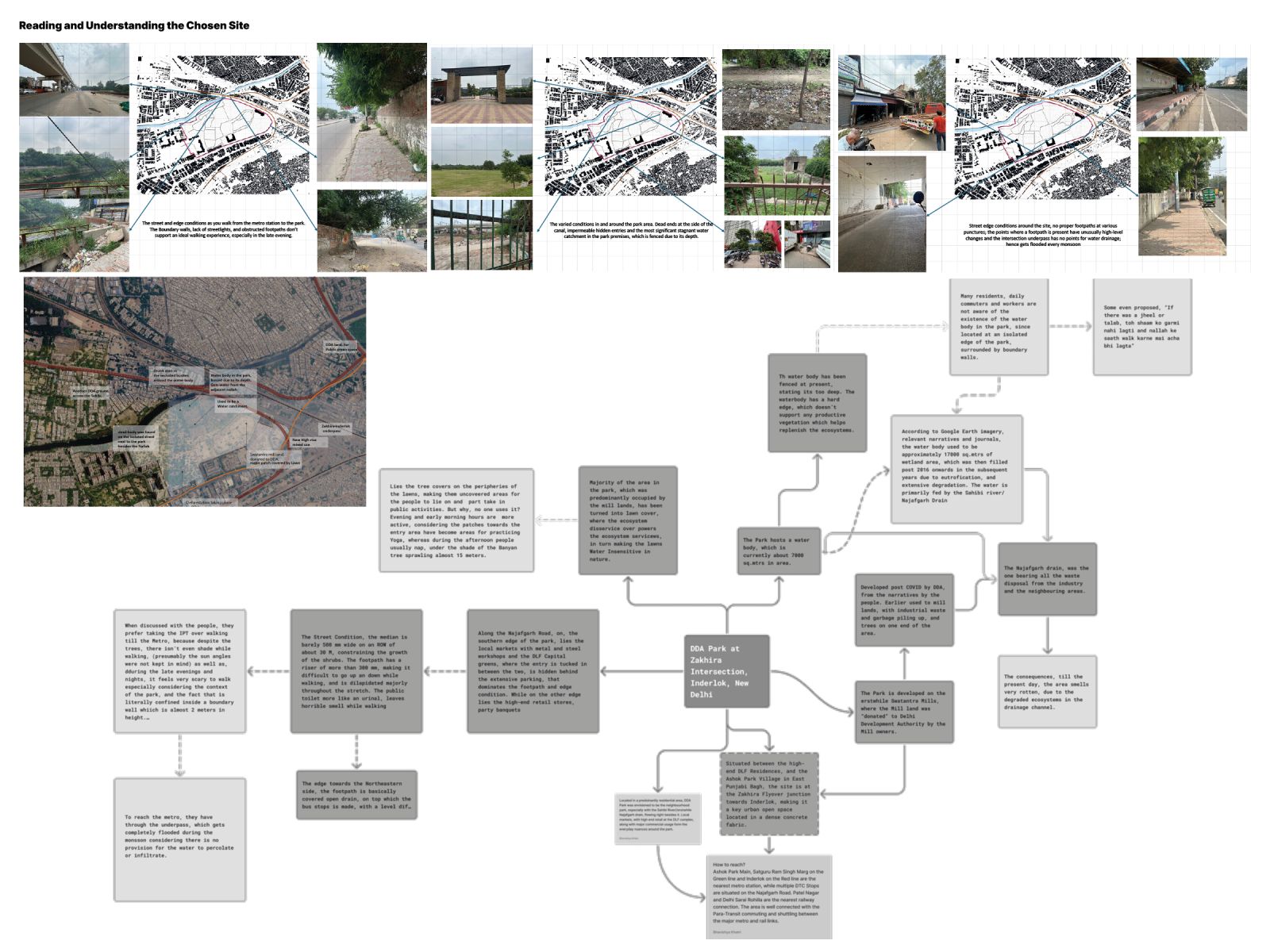
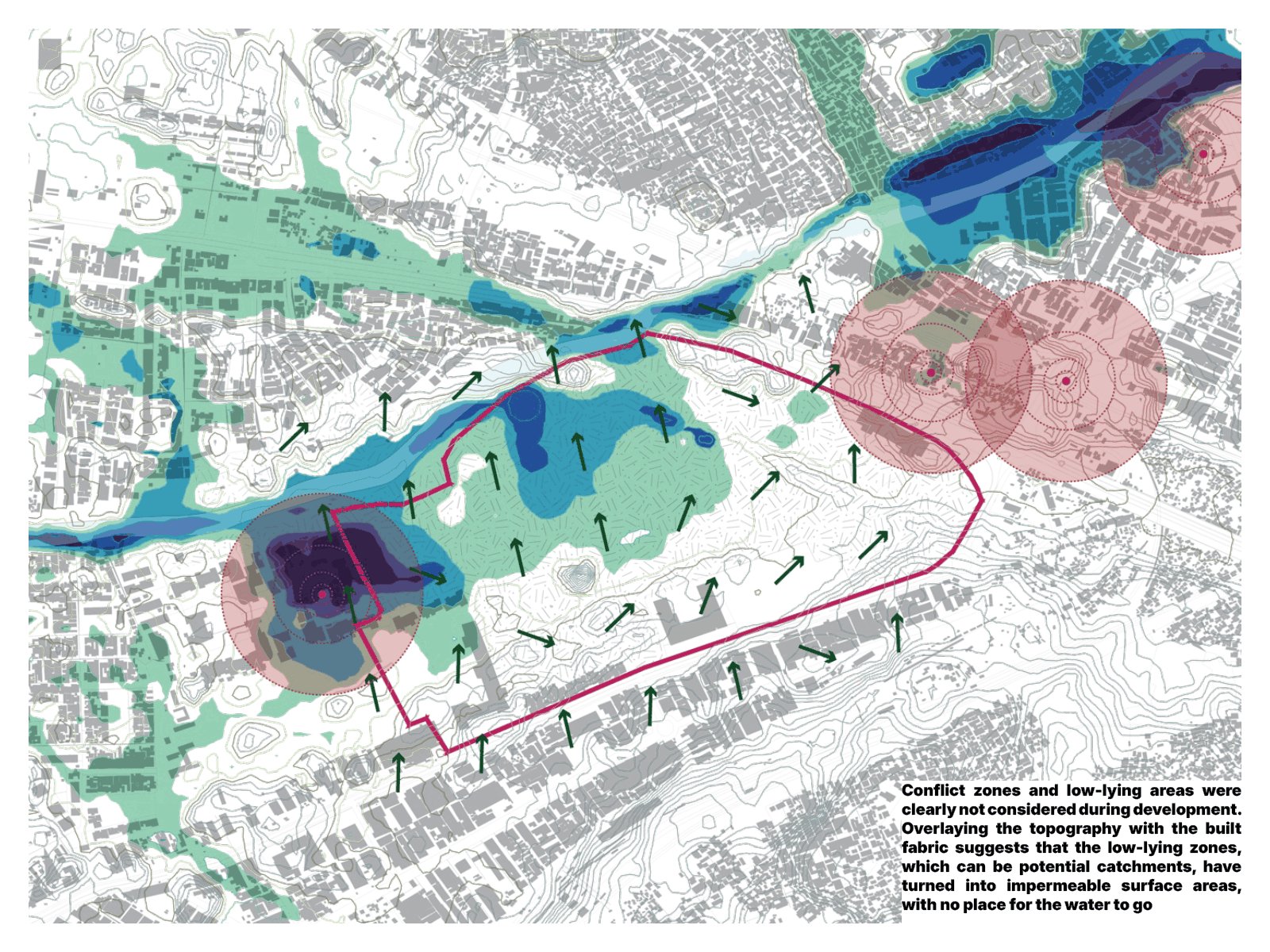
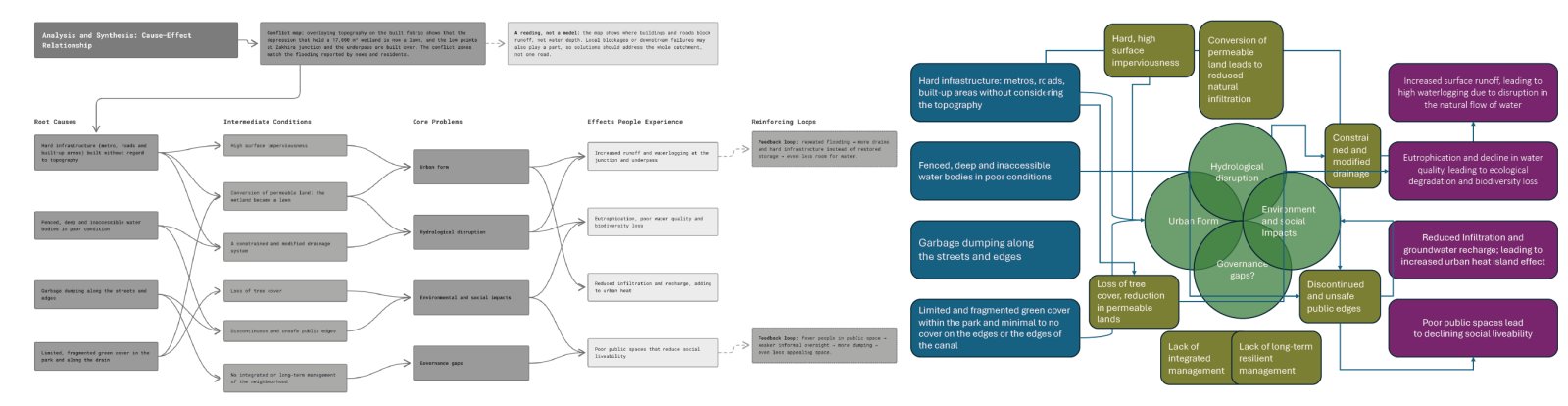
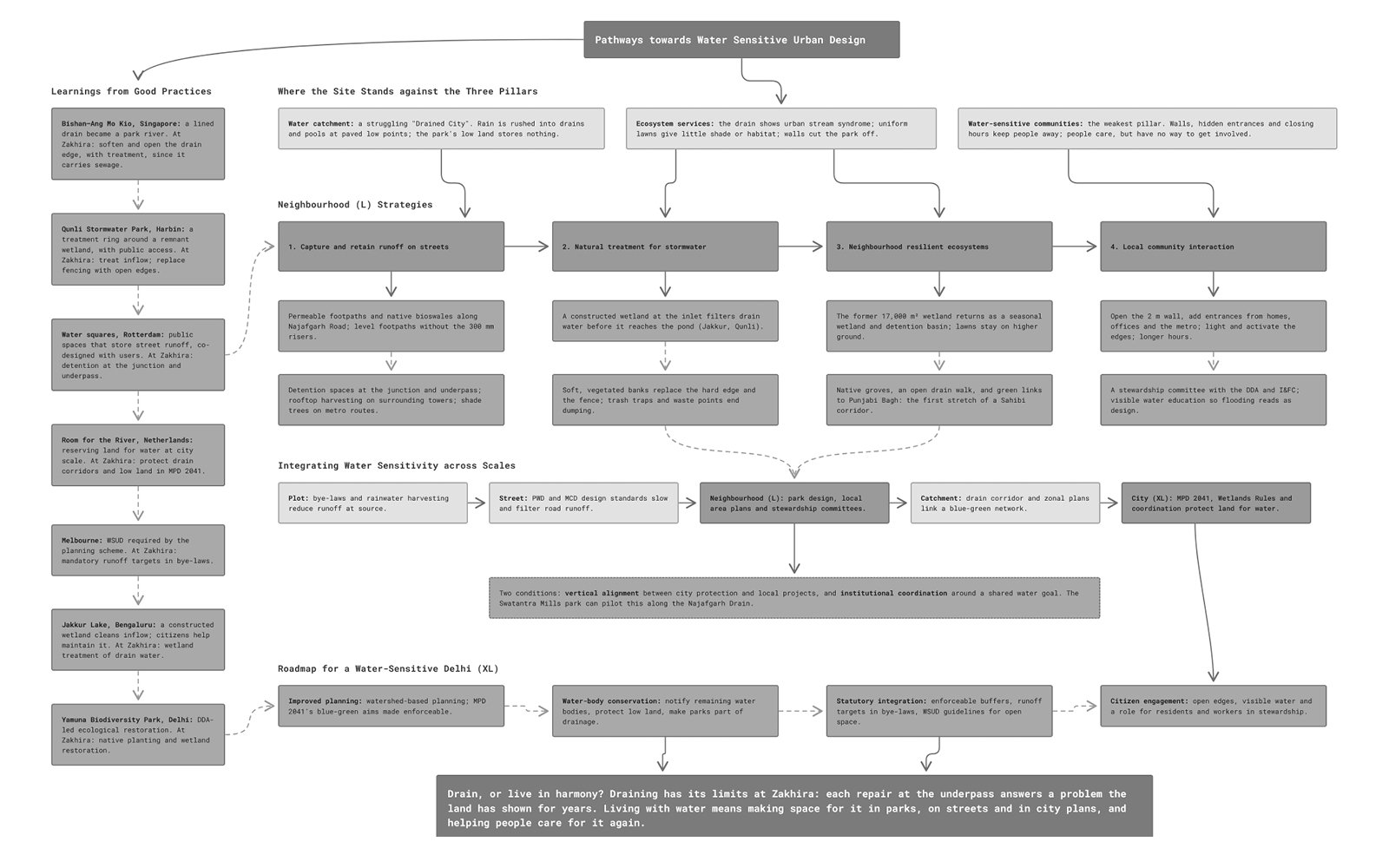
Delhi once balanced its water through Yamuna floodplains and decentralised stormwater systems. Decades of engineered planning separating water from urban design have left the city facing flooding every monsoon, water shortages, and falling groundwater, intensified by climate change. This project explores how Water-Sensitive Urban Design and Planning (WSUDP) can reconnect land use, ecology, blue-green infrastructure and everyday life. Using the DDA Park at Swatantrata Mills as a case site, it combines literature and policy review, field observation and community interviews to develop site-specific design pathways. It argues that water resilience requires integrating land use, water, ecology, people and governance.